



CCR2-RA-[R]
Based on 4 publication(s) in Google Scholar
CCR2-RA-[R] is an allosteric antagonist of the C-C chemokine receptor type 2 (CCR2) with an IC50 of 103 nM.
Nur für Forschungszwecke. Wir verkaufen nicht an Patienten.
- Reinheit : 99.21%
- CAS. Nr.: 512177-83-2
- Formel: C18H19ClFNO3
- Molecular Weight:351.80
-
Speicherung:Powder -20°C, 3 years , 4°C, 2 years ; In solvent -80°C, 2 years , -20°C, 1 year
![CCR2-RA-[R] Chemical Structure](https://file.medchemexpress.com/product_pic/hy-50081.gif "Click to View CCR2-RA-[R] Chemical Structure")

To place orders, for customer services and technical support, please contact: MedChemExpress USA
Tel: 609-228-6898 E-mail: [email protected] [email protected]


-
 Biologische Aktivität
-
Chemical Information
-
Lösungsmittel & Löslichkeit
- Reinheit & Dokumentation
- Verweise
-
 Help & FAQs


-
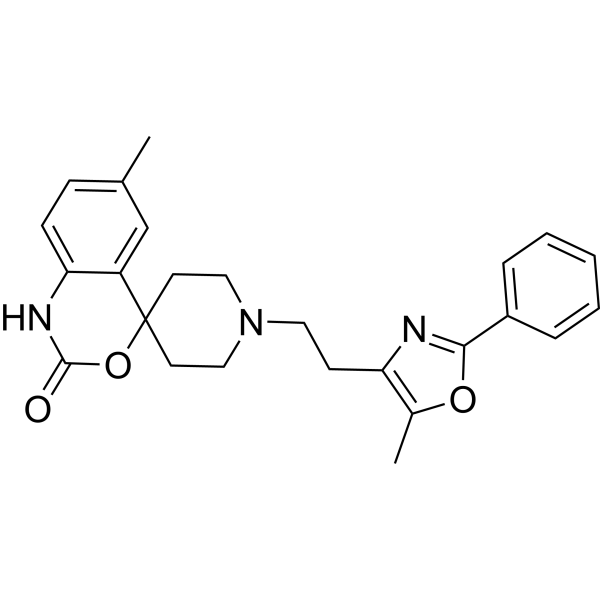
HY-15418
RS 504393CCR2 Antagonist -
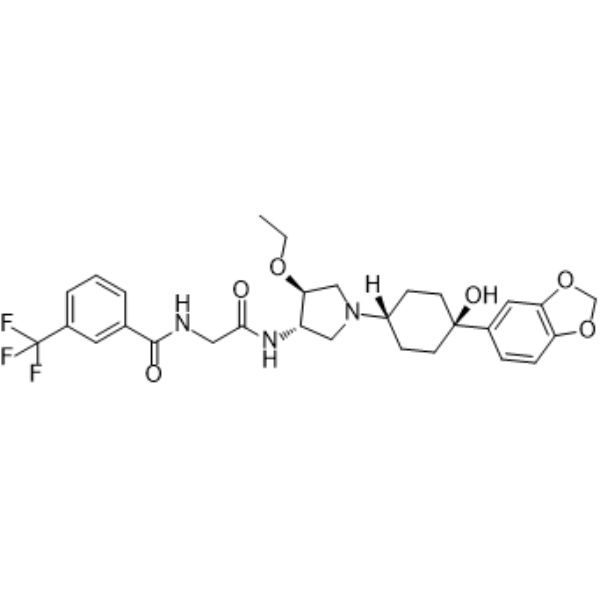
HY-50674
INCB3344CCR2 Antagonis -
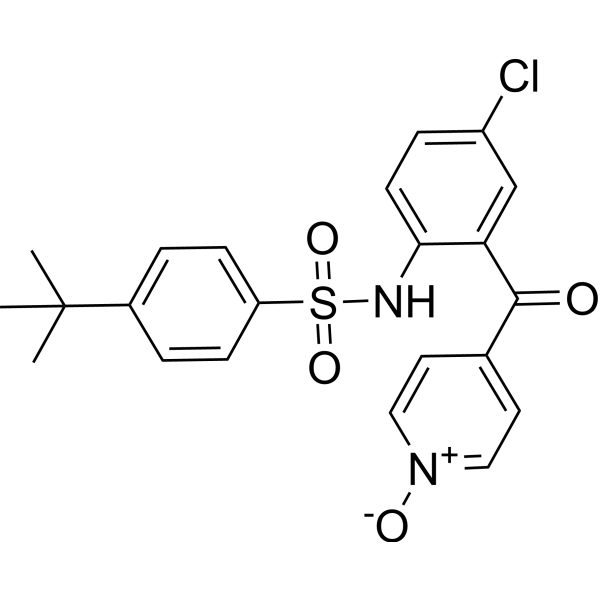
HY-15724
VercirnonCCR9 Antagonist -
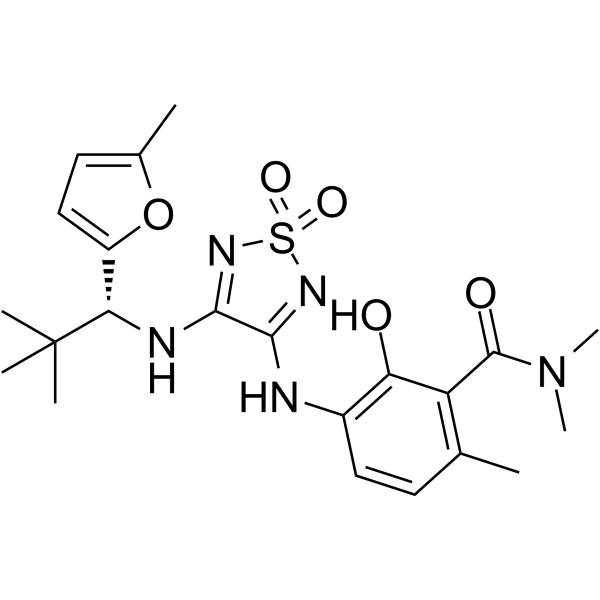
HY-133073
CCR7 Ligand 1CCR7 Antagonist -
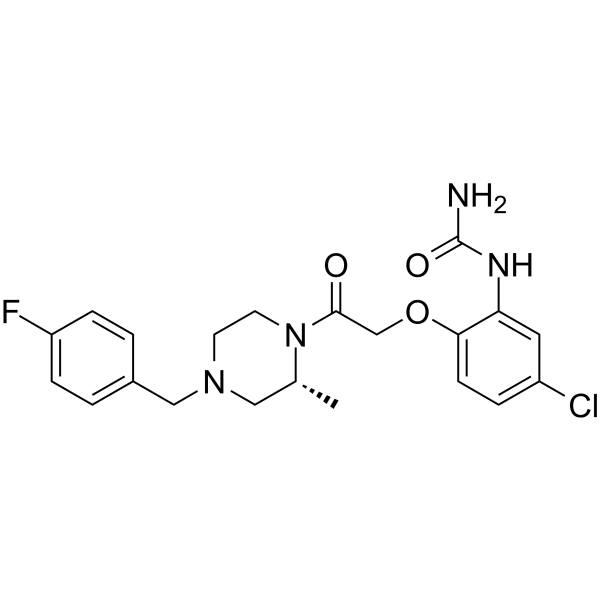
HY-12080
BX471CCR1 Antagonist -
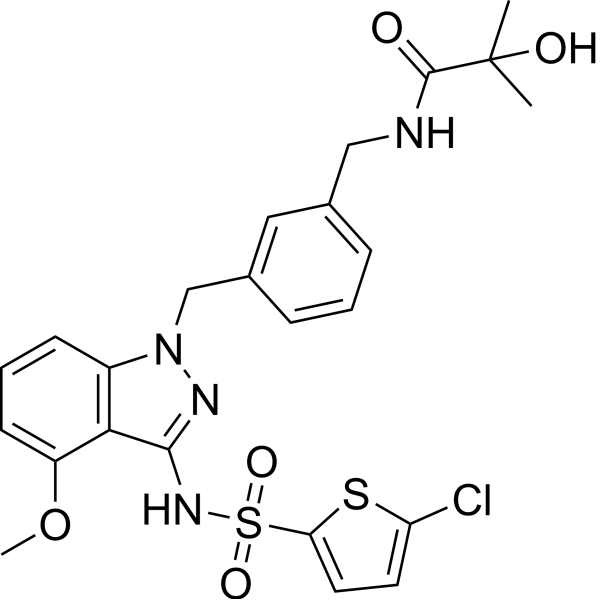
HY-100183
GSK2239633ACCR4 Antagonist -
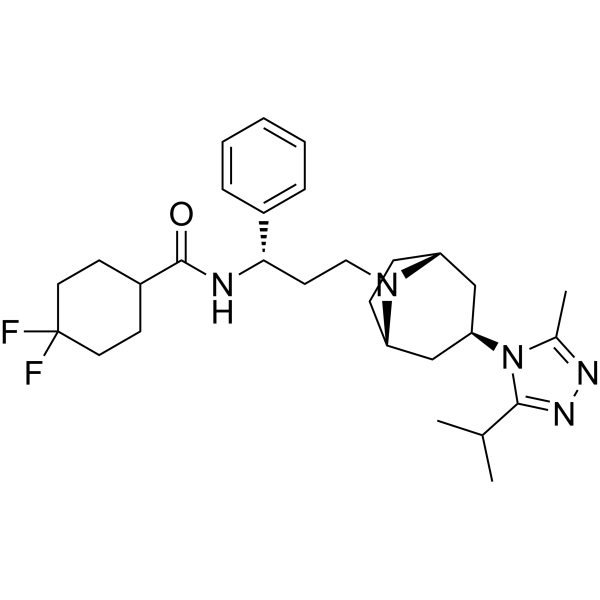
HY-13004
MaravirocCCR5 Antagonist -
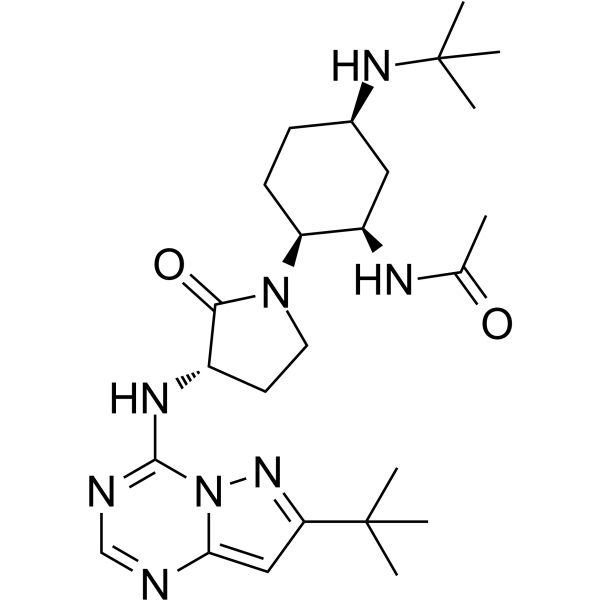
HY-109593
BMS-813160CCR2/CCR5 Antagonist -
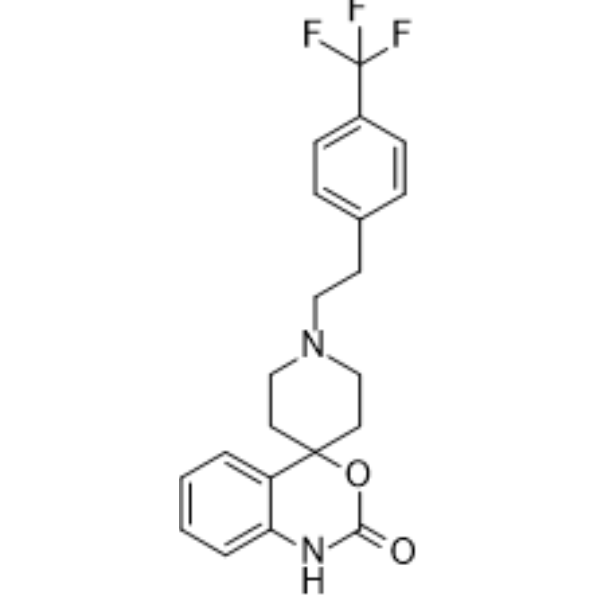
HY-18611A
AbaucinCCR Antagonist -
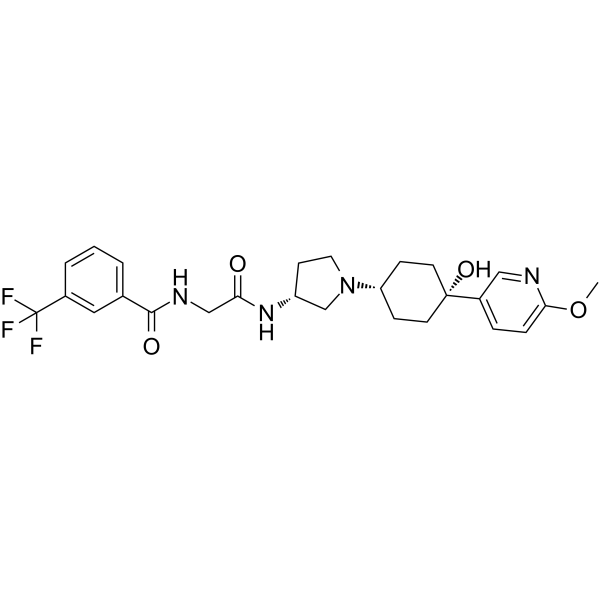
HY-15450A
INCB 3284CCR Antagonist -
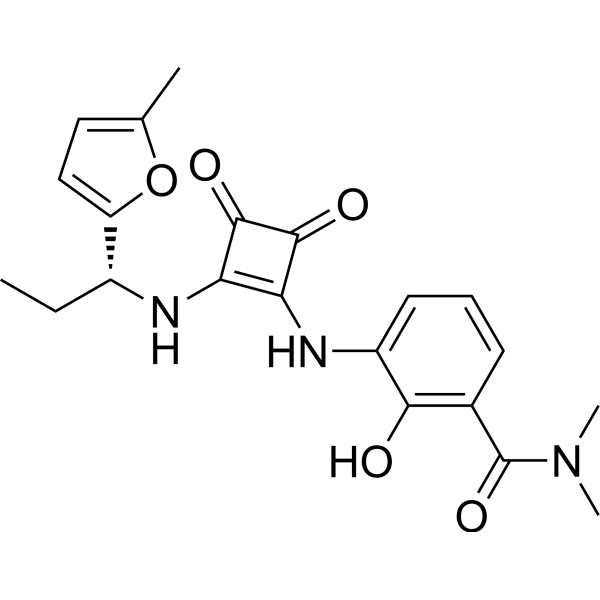
HY-10198
NavarixinCXCR1/2 Antagonist -
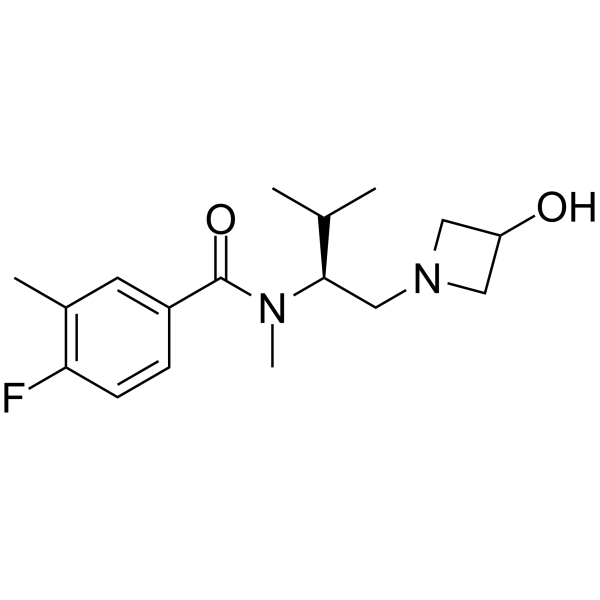
HY-101264
CCR2 antagonist 3CCR2 Antagonist
Publications Citing Use of MedChemExpress (MCE) CCR2-RA-[R]
More

Biologische Aktivität
Beschreibung
IC50 & Target
[1]|
CCR2 103 nM (IC50) |
Cellular Effect
|
Cell Line

|
Type | Value | Description | References |
|---|---|---|---|---|
| U2OS | IC50 |
703 nM
Compound: CCR2-RA-[R]
|
Antagonist activity at human TEV cleavage site-linked CCR5 expressed in human U2OS cells harboring beta-lactamase reporter gene assessed as inhibition of CCL3-induced beta-arrestin recruitment incubated for 30 mins followed by CCL3 stimulation and measure
Antagonist activity at human TEV cleavage site-linked CCR5 expressed in human U2OS cells harboring beta-lactamase reporter gene assessed as inhibition of CCL3-induced beta-arrestin recruitment incubated for 30 mins followed by CCL3 stimulation and measure
|
[PMID: 31742400] |
In Vitro
The chemokine receptor CCR2 is a G protein-coupled receptor that is involved in many diseases characterized by chronic inflammation, and therefore a large variety of CCR2 small molecule antagonists has been developed. CCR2-RA-[R] displaces [125I]CCL2 from CCR2 with an pIC50 value of 6.1. The pKD of CCR2-RA-[R] for CCR2 and CCR5 is 8.8±0.1 and 7.0±0.1, respectively[2]. CCR2-RA-[R] inhibits CCR2 non-competitively by blocking activation-associated conformational changes and formation of the G protein-binding interface. The binding pocket of CCR2-RA-[R] is highly enclosed and possesses a balanced combination of hydrophobic and polar features, all of which favors pocket "druggability" [3].
MedChemExpress (MCE) has not independently confirmed the accuracy of these methods. They are for reference only.


Chemical Information
-
CAS. Nr. 512177-83-2
-
Appearance Solid
-
Molecular Weight 351.80
-
Formel C18H19ClFNO3
-
Color White to yellow
-
SMILES
O=C1C(O)=C(C(C)=O)[C@@H](C2CCCCC2)N1C(C(F)=C3)=CC=C3Cl
-
Versand
Room temperature in continental US; may vary elsewhere.
-
Speicherung
Powder -20°C 3 years 4°C 2 years In solvent -80°C 2 years -20°C 1 year


Publications (4)
-
Journal Impact Factor
-
Most Recent
-
J Ethnopharmacol
Dahuang Zhechong Pill suppresses colorectal cancer liver metastasis via ameliorating exosomal CCL2 primed pre-metastatic niche. [Abstract]2019 Jun 28:238:111878. PMID: 30986521 -
J Cell Mol Med
PDX regulates inflammatory cell infiltration via resident macrophage in LPS-induced lung injury. [Abstract]2020 Sep;24(18):10604-10614. PMID: 32735065 -
J Biochem
2024 Feb 25;175(2):195-204. PMID: 37947138 -


Lösungsmittel & Löslichkeit
In Vitro:
DMSO : 37.5 mg/mL (106.59 mM; ultrasonic and warming and heat to 60°C; Hygroscopic DMSO has a significant impact on the solubility of product, please use newly opened DMSO)
Please refer to the solubility information to select the appropriate solvent. Once prepared, please aliquot and store the solution to prevent product inactivation from repeated freeze-thaw cycles.
Storage method and period of stock solution: -80°C, 2 years; -20°C, 1 year. When stored at -80°C, please use it within 2 years. When stored at -20°C, please use it within 1 year.
Please refer to the solubility information to select the appropriate solvent. Once prepared, please aliquot and store the solution to prevent product inactivation from repeated freeze-thaw cycles.
Storage method and period of stock solution: -80°C, 2 years; -20°C, 1 year. When stored at -80°C, please use it within 2 years. When stored at -20°C, please use it within 1 year.
Konzentration (Stammlösung) × Volumen (Stammlösung) = Konzentration (Ziellösung) × Volumen (Ziellösung)
In Vivo:
Select the appropriate dissolution method based on your experimental animal and administration route.
- For the following dissolution methods, please ensure to first prepare a clear stock solution using an In Vitro approach and then sequentially add co-solvents:
- To ensure reliable experimental results, the clarified stock solution can be appropriately stored based on storage conditions. As for the working solution for In Vivo experiments, it is recommended to prepare freshly and use it on the same day.
- The percentages shown for the solvents indicate their volumetric ratio in the final prepared solution. If precipitation or phase separation occurs during preparation, heat and/or sonication can be used to aid dissolution.
Add each solvent one by one: 10% DMSO 40% PEG300 5% Tween-80 45% Saline
Solubility: ≥ 3.75 mg/mL (10.66 mM); Clear solution
This protocol yields a clear solution of ≥ 3.75 mg/mL (saturation unknown).
Taking 1 mL working solution as an example, add 100 μL DMSO stock solution (37.5 mg/mL) to 400 μL PEG300, and mix evenly; then add 50 μL Tween-80 and mix evenly; then add 450 μL Saline to adjust the volume to 1 mL.
Preparation of Saline: Dissolve 0.9 g sodium chloride in ddH₂O and dilute to 100 mL to obtain a clear Saline solution.
In Vivo Dissolution Calculator
Please enter the basic information of animal experiments:
-
-
-
-
Recommended: Prepare an additional quantity of animals to account for potential losses during experiments.
Please enter your animal formula composition:
-
%DMSO +
Recommended: Keep the proportion of DMSO in working solution below 2% if your animal is weak.
-
%+
-
+%Tween-80 + +
-
%Saline +
The co-solvents required include: DMSO, . All of co-solvents are available by MedChemExpress (MCE). , Tween 80. All of co-solvents are available by MedChemExpress (MCE).
Working solution concentration: 0.22 mg/mL
Method for preparing stock solution: mg drug dissolved in μL DMSO. Stock solution concentration: mg/mL.
1. Take μL DMSO stock solution;
2. Add μL .
μL , mix evenly;
3. Then add μL Tween 80, mix evenly;
4. Then add μL
Please ensure that the stock solution in the first step is dissolved to a clear state, and add co-solvents in sequence. You can use ultrasonic heating (ultrasonic cleaner, recommended frequency 20-40 kHz), vortexing, etc. to assist dissolution.


Reinheit & Dokumentation
-
Data Sheet (280 KB)
-
SDS (254 KB)
- English - EN (254 KB)
- Français - FR (254 KB)
- Deutsch - DE (254 KB)
- Norwegian - NO (254 KB)
- Español - ES (254 KB)
- Swedish - SV (254 KB)
- Italian - IT (254 KB)
- Korean - KR (254 KB)
- Portuguese - PT (254 KB)
-
Handling Instructions (2659 KB)
Verweise
[1]. Zweemer AJ, et al. Multiple binding sites for small-molecule antagonists at the CC chemokine receptor 2. Mol Pharmacol. 2013 Oct;84(4):551-61. [Content Brief]
[2]. Zweemer AJ, et al. Discovery and mapping of an intracellular antagonist binding site at the chemokine receptor CCR2. Mol Pharmacol. 2014 Oct;86(4):358-68. [Content Brief]
[3]. Zheng Y, et al. Structure of CC chemokine receptor 2 with orthosteric and allosteric antagonists. Nature. 2016 Dec 15;540(7633):458-461. [Content Brief]


Complete Stock Solution Preparation Table
Please refer to the solubility information to select the appropriate solvent. Once prepared, please aliquot and store the solution to prevent product inactivation from repeated freeze-thaw cycles.
Storage method and period of stock solution: -80°C, 2 years; -20°C, 1 year. When stored at -80°C, please use it within 2 years. When stored at -20°C, please use it within 1 year.
| Optional Solvent | Concentration Solvent Mass | 1 mg | 5 mg | 10 mg | 25 mg |
|---|---|---|---|---|---|
| DMSO | 1 mM | 2.8425 mL | 14.2126 mL | 28.4252 mL | 71.0631 mL |
| 5 mM | 0.5685 mL | 2.8425 mL | 5.6850 mL | 14.2126 mL | |
| 10 mM | 0.2843 mL | 1.4213 mL | 2.8425 mL | 7.1063 mL | |
| 15 mM | 0.1895 mL | 0.9475 mL | 1.8950 mL | 4.7375 mL | |
| 20 mM | 0.1421 mL | 0.7106 mL | 1.4213 mL | 3.5532 mL | |
| 25 mM | 0.1137 mL | 0.5685 mL | 1.1370 mL | 2.8425 mL | |
| 30 mM | 0.0948 mL | 0.4738 mL | 0.9475 mL | 2.3688 mL | |
| 40 mM | 0.0711 mL | 0.3553 mL | 0.7106 mL | 1.7766 mL | |
| 50 mM | 0.0569 mL | 0.2843 mL | 0.5685 mL | 1.4213 mL | |
| 60 mM | 0.0474 mL | 0.2369 mL | 0.4738 mL | 1.1844 mL | |
| 80 mM | 0.0355 mL | 0.1777 mL | 0.3553 mL | 0.8883 mL | |
| 100 mM | 0.0284 mL | 0.1421 mL | 0.2843 mL | 0.7106 mL |


CCR2-RA-[R] Related Classifications
HY-50081 Related Classifications
 Powered by Bioz