



VGX-1027
Based on 1 publication(s) in Google Scholar
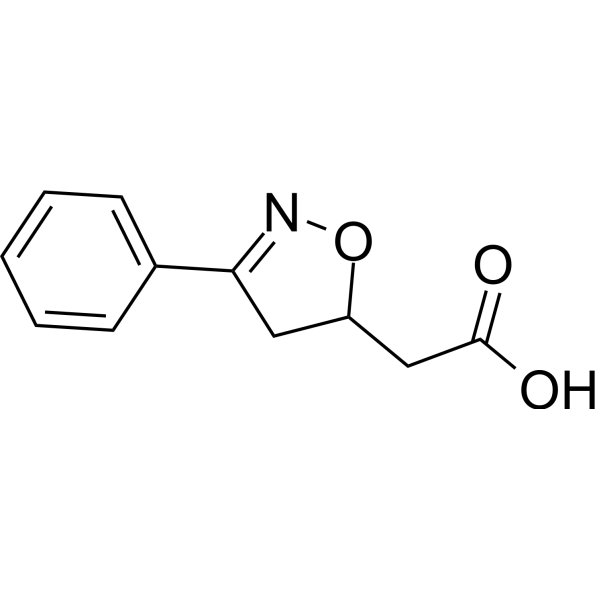
VGX-1027 is an orally active isoxazole compound that exhibits various immunomodulatory properties. VGX-1027 targets macrophages, reducing the production of the proinflammatory mediators TNF-α, IL-1β, IL-10. VGX-1027 has antidiabetogenic effects by limiting cytokine-mediated immunoinflammatory events.
Nur für Forschungszwecke. Wir verkaufen nicht an Patienten.
- Reinheit : 99.67%
- CAS. Nr.: 6501-72-0
- Formel: C11H11NO3
- Molecular Weight:205.21
-
Speicherung:Powder -20°C, 3 years , 4°C, 2 years ; In solvent -80°C, 2 years , -20°C, 1 year

To place orders, for customer services and technical support, please contact: MedChemExpress USA
Tel: 609-228-6898 E-mail: [email protected] [email protected]


-
 Biologische Aktivität
-
Chemical Information
-
Lösungsmittel & Löslichkeit
- Protokoll
- Reinheit & Dokumentation
- Verweise
-
 Help & FAQs


-
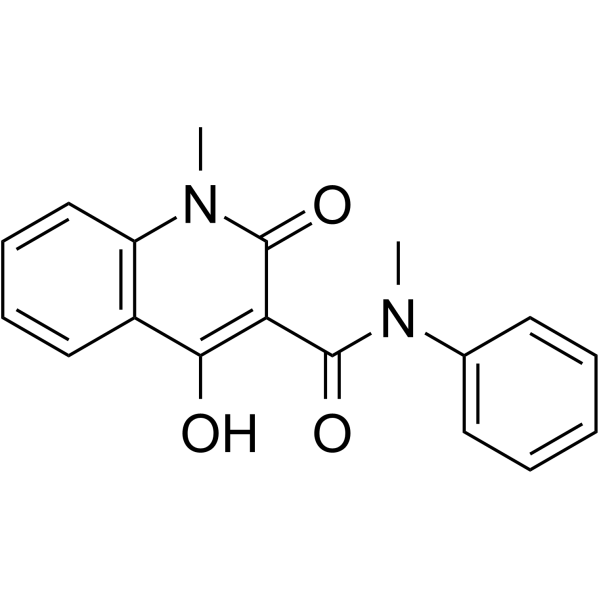
HY-13743
RoquinimexImmunomodulator -
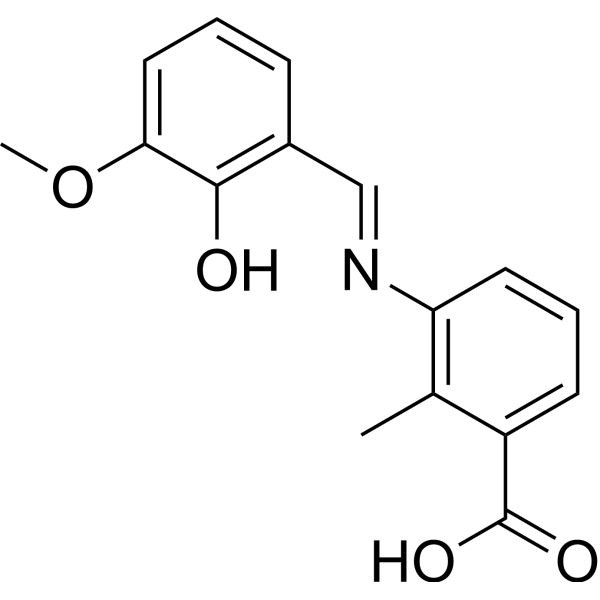
HY-100461
C29TLR2 Inhibitor -
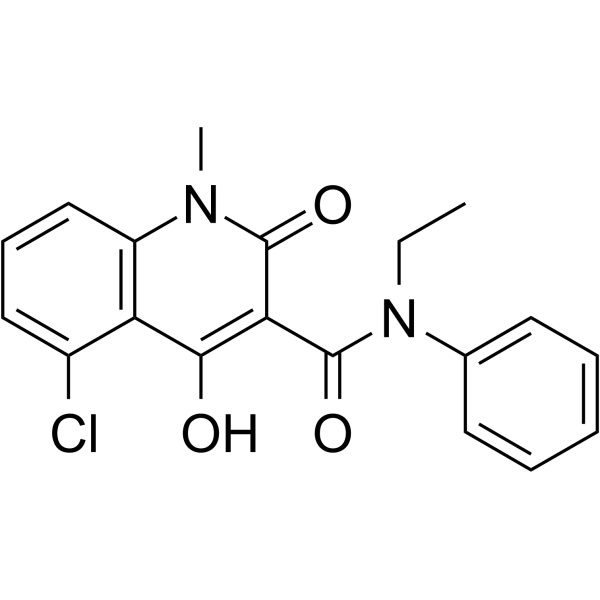
HY-13010
LaquinimodImmunomodulator -
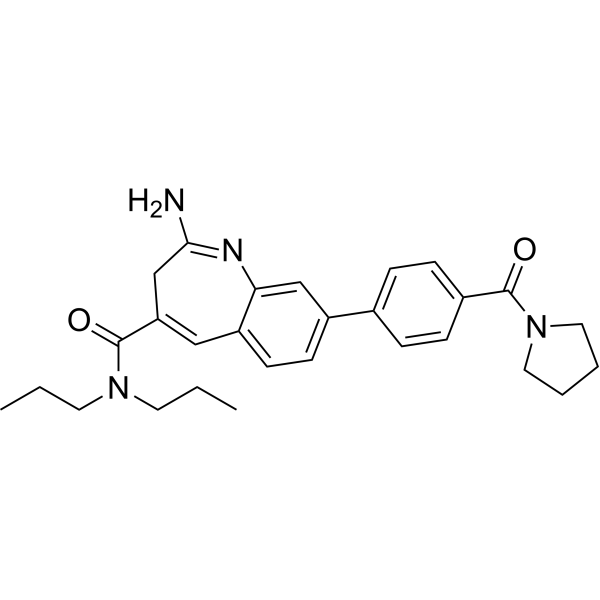
HY-13773
MotolimodTLR8 Agonist -
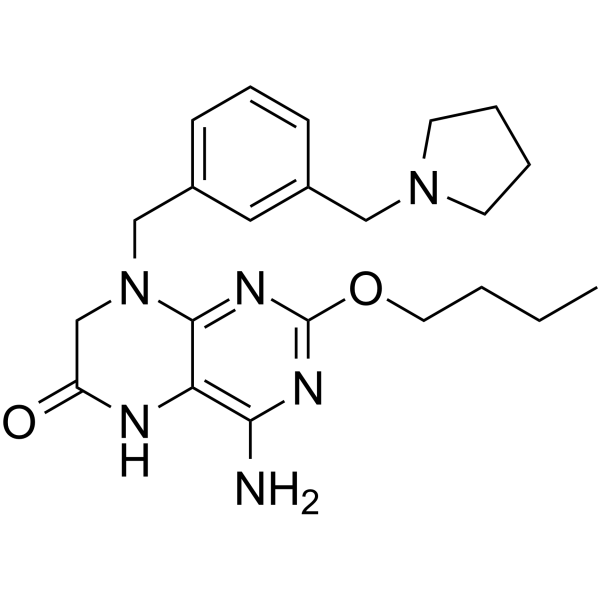
HY-15601
VesatolimodTLR7 Agonist -

HY-13743R
Roquinimex (Standard)Roquinimex Standard -
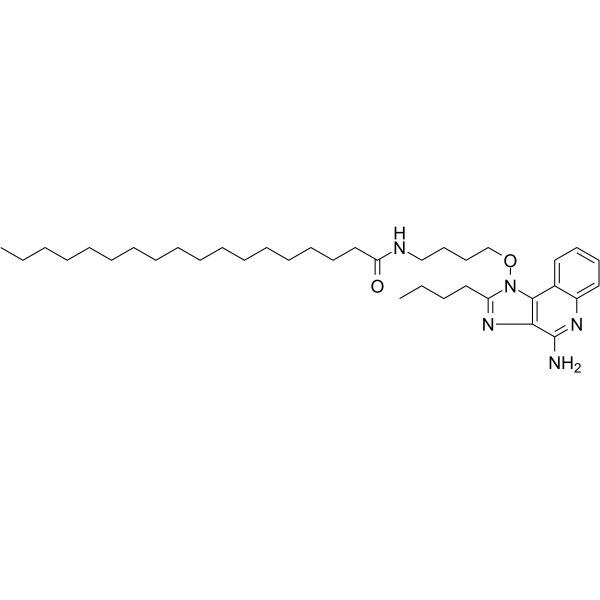
HY-109104
TelratolimodTLR7/8 Agonist -
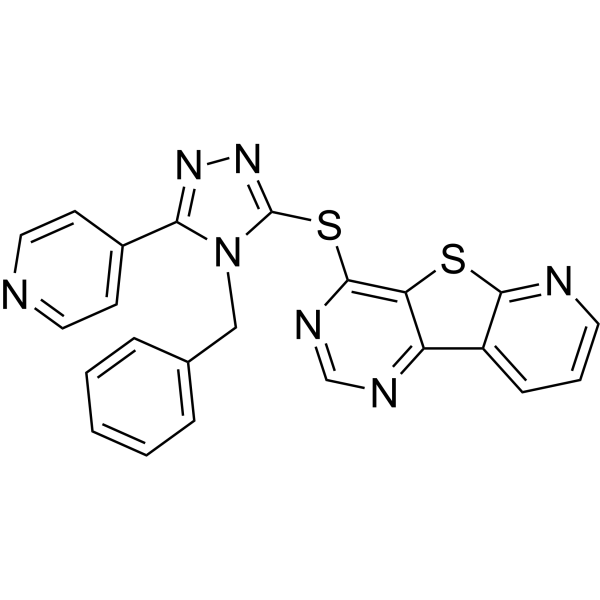
HY-116961
TH1020TLR5/Flagellin Complex Antagonist -
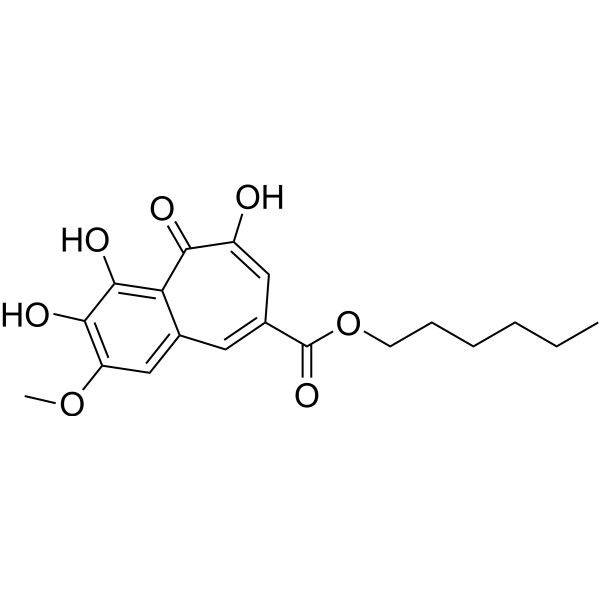
HY-108471
CU-CPT22TLR1/TLR2 Antagonist -
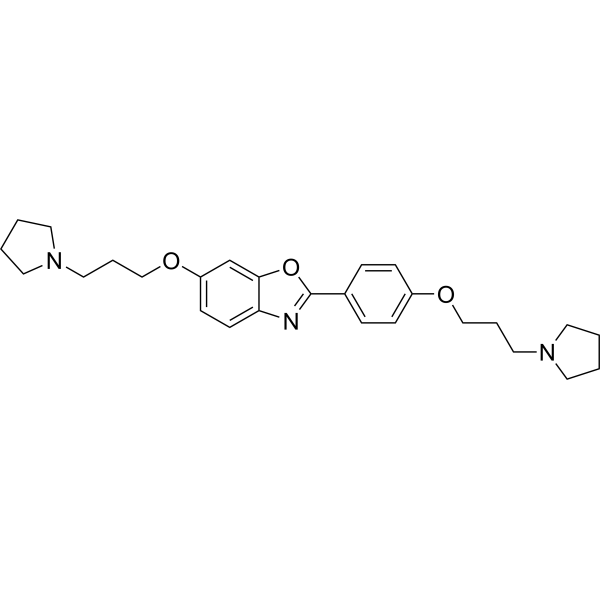
HY-12756
E6446TLR/SCD1 Inhibitor -
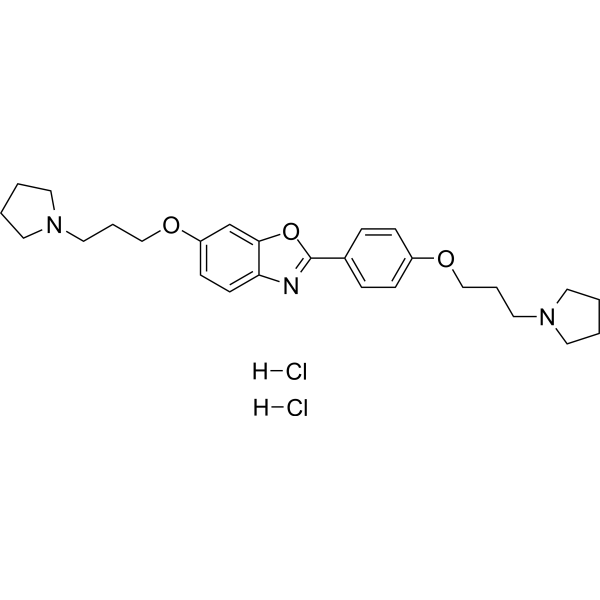
HY-12756A
E6446 dihydrochlorideTLR/SCD1 Inhibitor -
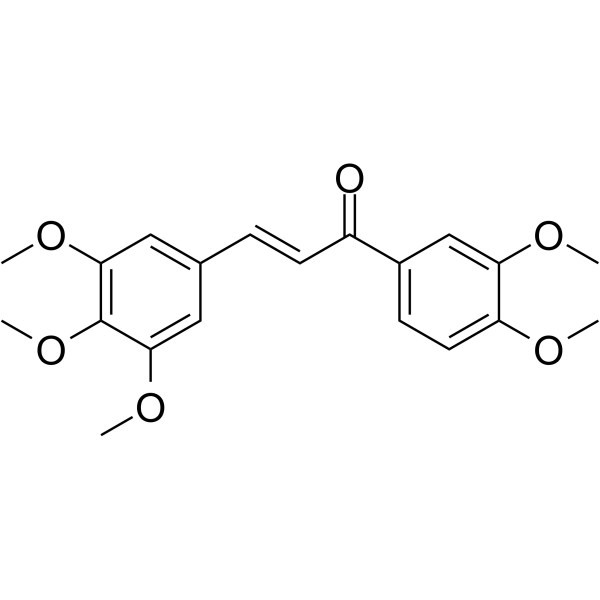
HY-103483
MD2-IN-1MD2 Inhibitor
Publications Citing Use of MedChemExpress (MCE) VGX-1027
MoreAlle TNF Receptor Isoform-spezifische Produkte anzeigen
More

Biologische Aktivität
Beschreibung
|
IL-1β |
IL-10 |
In Vitro
VGX-1027 (37.5, 75, 150, 300 μM; for 24 h) does not affect the viability of tumor cells, including the three malignant rodent cell lines (mouse fibrosarcoma L929, rat astrocytoma C6, and mouse melanoma B16) and the four human cell lines (adenocarcinoma HeLa, breast carcinoma BT20, colon carcinoma LS174, and glioblastoma U251)[2].
MedChemExpress (MCE) has not independently confirmed the accuracy of these methods. They are for reference only.
In Vivo
VGX-1027 (25?mg/kg; ip; single dose) counteracts the uveitis-inducing effect of LPS in eight-week-old male Lewis rats (180-220?g)[3].
MedChemExpress (MCE) has not independently confirmed the accuracy of these methods. They are for reference only.
-
Animal Model:Adult male mice, at 6 to 8 weeks of age with 25 to 30 g[1]
-
Dosage:10, 20 mg/kg for i.p. or 100 mg/kg for p.o.
-
Administration:IP daily for 12 consecutive day or PO daily for 11 consecutive day
-
Result:Successfully counteracted the development of destructive insulitis and hyperglycemia to the mice made diabetic with multiple low doses of Streptozotocin.
Clinical Trial
| NCT Number | Sponsor | Condition | Start Date |
Phase

|
|---|---|---|---|---|
| NCT01329991 | 2011-05 | PHASE1 |


Chemical Information
-
CAS. Nr. 6501-72-0
-
Appearance Solid
-
Molecular Weight 205.21
-
Formel C11H11NO3
-
Color White to off-white
-
SMILES
O=C(O)CC1CC(C2=CC=CC=C2)=NO1
-
Synonyms
GIT 27
-
Versand
Room temperature in continental US; may vary elsewhere.
-
Speicherung
Powder -20°C 3 years 4°C 2 years In solvent -80°C 2 years -20°C 1 year


Publications (1)
-
Journal Impact Factor
-
Most Recent


Lösungsmittel & Löslichkeit
In Vitro:
DMSO : ≥ 56 mg/mL (272.89 mM; Hygroscopic DMSO has a significant impact on the solubility of product, please use newly opened DMSO)
* "≥" means soluble, but saturation unknown.
Please refer to the solubility information to select the appropriate solvent. Once prepared, please aliquot and store the solution to prevent product inactivation from repeated freeze-thaw cycles.
Storage method and period of stock solution: -80°C, 2 years; -20°C, 1 year. When stored at -80°C, please use it within 2 years. When stored at -20°C, please use it within 1 year.
Please refer to the solubility information to select the appropriate solvent. Once prepared, please aliquot and store the solution to prevent product inactivation from repeated freeze-thaw cycles.
Storage method and period of stock solution: -80°C, 2 years; -20°C, 1 year. When stored at -80°C, please use it within 2 years. When stored at -20°C, please use it within 1 year.
Konzentration (Stammlösung) × Volumen (Stammlösung) = Konzentration (Ziellösung) × Volumen (Ziellösung)
In Vivo:
Select the appropriate dissolution method based on your experimental animal and administration route.
- For the following dissolution methods, please ensure to first prepare a clear stock solution using an In Vitro approach and then sequentially add co-solvents:
- To ensure reliable experimental results, the clarified stock solution can be appropriately stored based on storage conditions. As for the working solution for In Vivo experiments, it is recommended to prepare freshly and use it on the same day.
- The percentages shown for the solvents indicate their volumetric ratio in the final prepared solution. If precipitation or phase separation occurs during preparation, heat and/or sonication can be used to aid dissolution.
Add each solvent one by one: 10% DMSO 40% PEG300 5% Tween-80 45% Saline
Solubility: ≥ 2.5 mg/mL (12.18 mM); Clear solution
This protocol yields a clear solution of ≥ 2.5 mg/mL (saturation unknown).
Taking 1 mL working solution as an example, add 100 μL DMSO stock solution (25.0 mg/mL) to 400 μL PEG300, and mix evenly; then add 50 μL Tween-80 and mix evenly; then add 450 μL Saline to adjust the volume to 1 mL.
Preparation of Saline: Dissolve 0.9 g sodium chloride in ddH₂O and dilute to 100 mL to obtain a clear Saline solution.
Add each solvent one by one: 10% DMSO 90% (20% SBE-β-CD in Saline)
Solubility: ≥ 2.5 mg/mL (12.18 mM); Clear solution
This protocol yields a clear solution of ≥ 2.5 mg/mL (saturation unknown).
Taking 1 mL working solution as an example, add 100 μL DMSO stock solution (25.0 mg/mL) to 900 μL 20% SBE-β-CD in Saline, and mix evenly.
Preparation of 20% SBE-β-CD in Saline (4°C, storage for one week): 2 g SBE-β-CD powder is dissolved in 10 mL Saline, completely dissolve until clear.
In Vivo Dissolution Calculator
Please enter the basic information of animal experiments:
-
-
-
-
Recommended: Prepare an additional quantity of animals to account for potential losses during experiments.
Please enter your animal formula composition:
-
%DMSO +
Recommended: Keep the proportion of DMSO in working solution below 2% if your animal is weak.
-
%+
-
+%Tween-80 + +
-
%Saline +
The co-solvents required include: DMSO, . All of co-solvents are available by MedChemExpress (MCE). , Tween 80. All of co-solvents are available by MedChemExpress (MCE).
Working solution concentration: 0.22 mg/mL
Method for preparing stock solution: mg drug dissolved in μL DMSO. Stock solution concentration: mg/mL.
1. Take μL DMSO stock solution;
2. Add μL .
μL , mix evenly;
3. Then add μL Tween 80, mix evenly;
4. Then add μL
Please ensure that the stock solution in the first step is dissolved to a clear state, and add co-solvents in sequence. You can use ultrasonic heating (ultrasonic cleaner, recommended frequency 20-40 kHz), vortexing, etc. to assist dissolution.


Reinheit & Dokumentation
-
Data Sheet (275 KB)
-
SDS (393 KB)
- English - EN (393 KB)
- Français - FR (393 KB)
- Deutsch - DE (393 KB)
- Norwegian - NO (393 KB)
- Español - ES (393 KB)
- Swedish - SV (393 KB)
- Italian - IT (393 KB)
- Korean - KR (393 KB)
- Portuguese - PT (393 KB)
-
Handling Instructions (2659 KB)
Verweise
[1]. Stosic-Grujicic S, et al. A potent immunomodulatory compound, (S,R)-3-Phenyl-4,5-dihydro-5-isoxazole acetic acid, prevents spontaneous and accelerated forms of autoimmune diabetes in NOD mice and inhibits the immunoinflammatory diabetes induced by multiple low doses of streptozotocin in CBA/H mice. J Pharmacol Exp Ther. 2007 Mar;320(3):1038-49. [Content Brief]
[2]. Danijela Maksimovic-Ivanic, et al. Anticancer properties of the novel nitric oxide-donating compound (S,R)-3-phenyl-4,5-dihydro-5-isoxazole acetic acid-nitric oxide in vitro and in vivo. Mol Cancer Ther. 2008 Mar;7(3):510-20. [Content Brief]
[3]. K Mangano, et al. Effects of the immunomodulator, VGX-1027, in endotoxin-induced uveitis in Lewis rats. Br J Pharmacol. 2008 Nov;155(5):722-30. [Content Brief]


Complete Stock Solution Preparation Table
Please refer to the solubility information to select the appropriate solvent. Once prepared, please aliquot and store the solution to prevent product inactivation from repeated freeze-thaw cycles.
Storage method and period of stock solution: -80°C, 2 years; -20°C, 1 year. When stored at -80°C, please use it within 2 years. When stored at -20°C, please use it within 1 year.
| Optional Solvent | Concentration Solvent Mass | 1 mg | 5 mg | 10 mg | 25 mg |
|---|---|---|---|---|---|
| DMSO | 1 mM | 4.8730 mL | 24.3649 mL | 48.7299 mL | 121.8246 mL |
| 5 mM | 0.9746 mL | 4.8730 mL | 9.7460 mL | 24.3649 mL | |
| 10 mM | 0.4873 mL | 2.4365 mL | 4.8730 mL | 12.1825 mL | |
| 15 mM | 0.3249 mL | 1.6243 mL | 3.2487 mL | 8.1216 mL | |
| 20 mM | 0.2436 mL | 1.2182 mL | 2.4365 mL | 6.0912 mL | |
| 25 mM | 0.1949 mL | 0.9746 mL | 1.9492 mL | 4.8730 mL | |
| 30 mM | 0.1624 mL | 0.8122 mL | 1.6243 mL | 4.0608 mL | |
| 40 mM | 0.1218 mL | 0.6091 mL | 1.2182 mL | 3.0456 mL | |
| 50 mM | 0.0975 mL | 0.4873 mL | 0.9746 mL | 2.4365 mL | |
| 60 mM | 0.0812 mL | 0.4061 mL | 0.8122 mL | 2.0304 mL | |
| 80 mM | 0.0609 mL | 0.3046 mL | 0.6091 mL | 1.5228 mL | |
| 100 mM | 0.0487 mL | 0.2436 mL | 0.4873 mL | 1.2182 mL |


VGX-1027 Related Classifications
HY-15507 Related Classifications
 Powered by Bioz