



Raclopride
Based on 11 publication(s) in Google Scholar
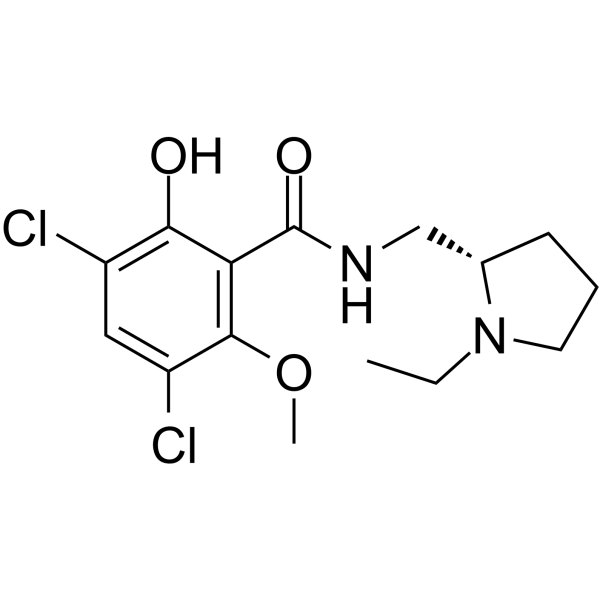
Raclopride is a dopamine D2/D3 receptor antagonist with potential antipsychotic effects. Raclopride binds to D2 and D3 receptors with Kis of 1.8 nM and 3.5 nM, respectively.
Nur für Forschungszwecke. Wir verkaufen nicht an Patienten.
- Reinheit: 99.86%
- CAS. Nr.: 84225-95-6
- Formel: C15H20Cl2N2O3
- Molecular Weight:347.24
-
Speicherung:Powder -20°C, 3 years , 4°C, 2 years ; In solvent -80°C, 2 years , -20°C, 1 year

To place orders, for customer services and technical support, please contact: MedChemExpress USA
Tel: 609-228-6898 E-mail: [email protected] [email protected]


-
 Biologische Aktivität
-
Chemical Information
-
Lösungsmittel & Löslichkeit
- Reinheit & Dokumentation
- Verweise
-
 Help & FAQs


-
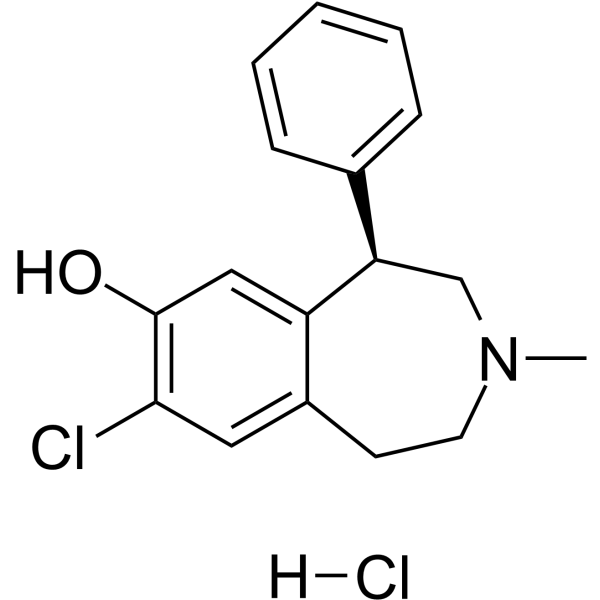
HY-19545A
SCH-23390 hydrochloride
-
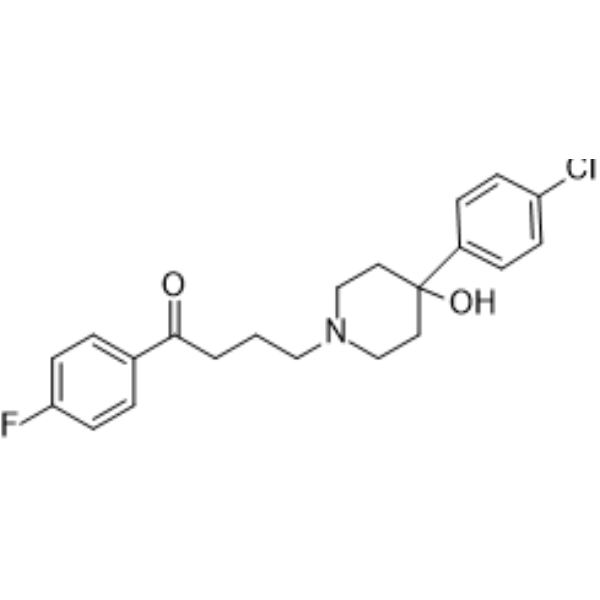
HY-14538
Haloperidol
-
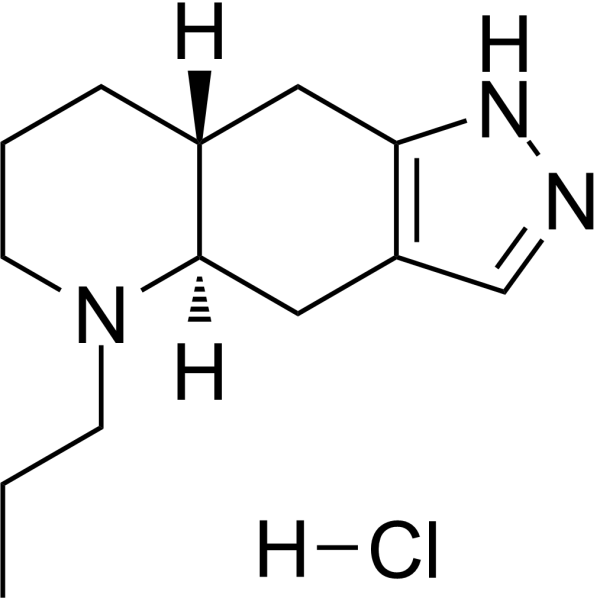
HY-B1752A
Quinpirole hydrochloride
-
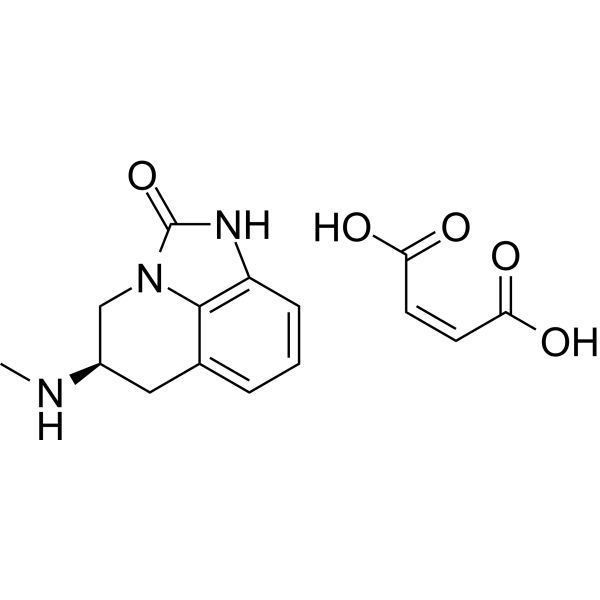
HY-70081A
Sumanirole maleate
-
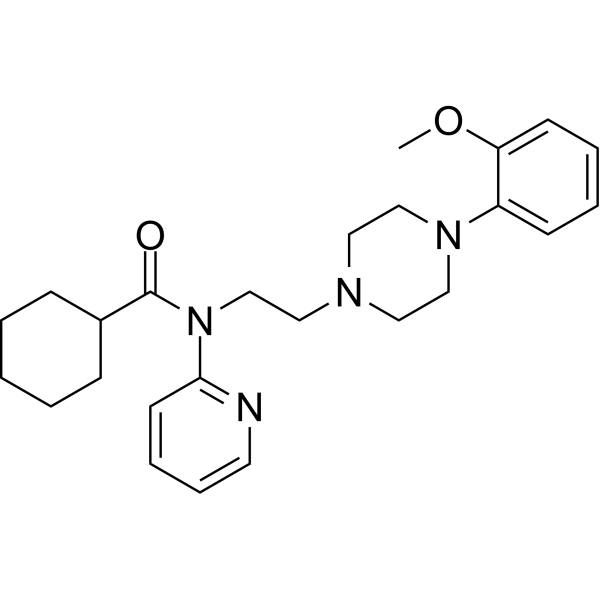
HY-10349
WAY-100635
-
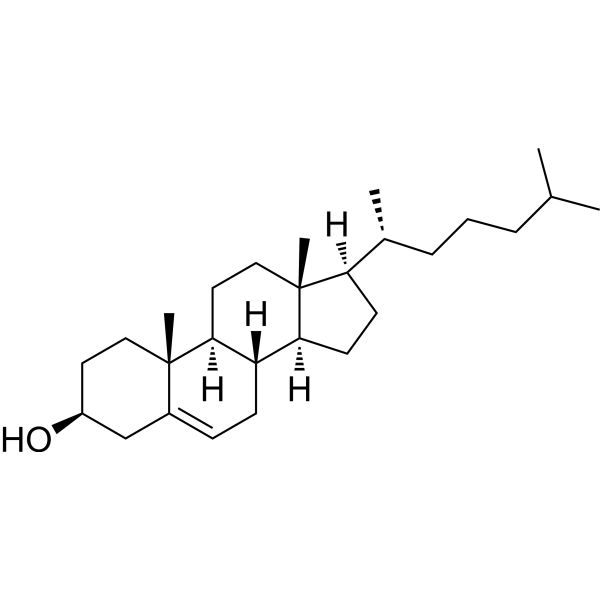
HY-N0322
Cholesterol (from animal)
-
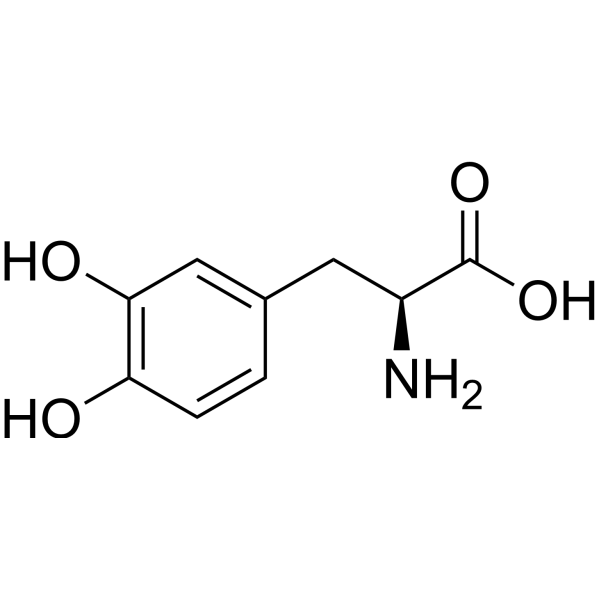
HY-N0304
L-DOPA
-
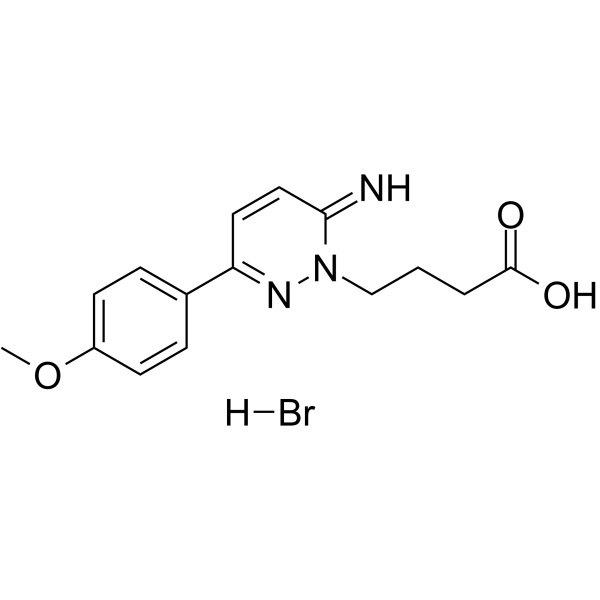
HY-103533
Gabazine
-
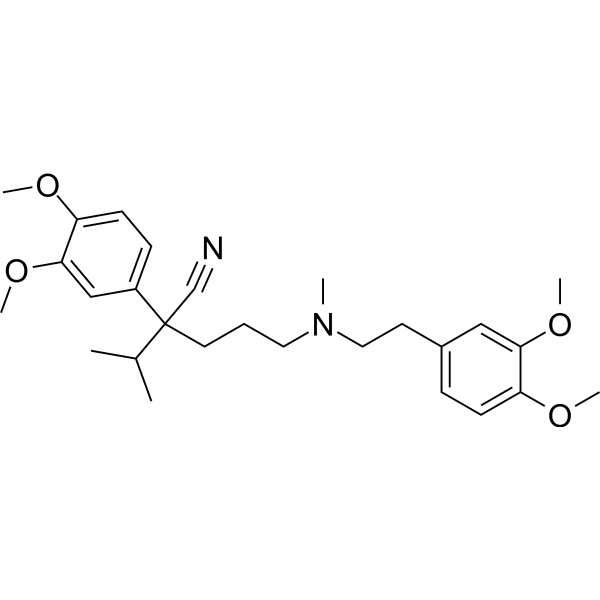
HY-14275
Verapamil
-

HY-103414R
Raclopride (Standard)
-
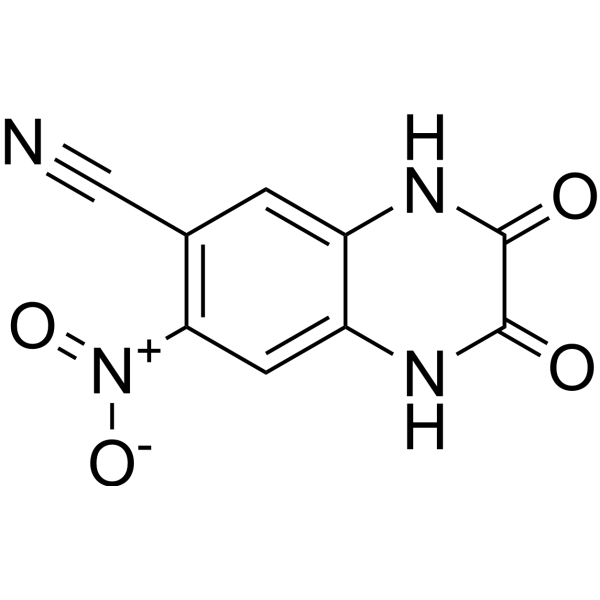
HY-15066
CNQX
-
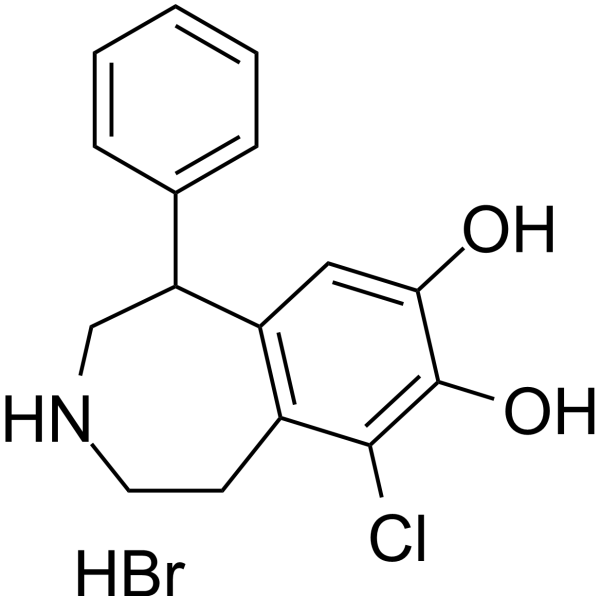
HY-12236
SKF 81297 hydrobromide
Publications Citing Use of MedChemExpress (MCE) Raclopride
More- Nat Commun. 2024 Jun 10;15(1):4947. [Abstract]
- Neuron. 2026 May 19:S0896-6273(26)00332-6. [Abstract]
- Acta Pharmacol Sin. 2026 Jan 14. [Abstract]
- Cell Rep. 2024 Sep 10;43(9):114717. [Abstract]
- Neuropsychopharmacology. 2024 Aug;49(9):1468-1480. [Abstract]
- Transl Psychiatry. 2024 Feb 6;14(1):79. [Abstract]
- J Integr Agric. 2026 May 22.
- Brain Res Bull. 2025 Aug:228:111409. [Abstract]
- Insect Biochem Mol Biol. 2025 May:180:104312. [Abstract]
- J Neurosci. 2024 Aug 21;44(34):e0740242024. [Abstract]
- J Pharm Biomed Anal. 2024 Sep 15:248:116289. [Abstract]
 Customer Validation & Images

-
In Vivo Efficacy Study
-
In Vivo Efficacy Study

-
In Vivo Imaging

-
In Vivo Efficacy Study

-
In Vivo Efficacy Study
Alle Dopamine Receptor Isoform-spezifische Produkte anzeigen
More

Biologische Aktivität
|
D2 Receptor 1.8 nM (Ki) |
D3 Receptor 3.5 nM (Ki) |
D4 Receptor 2400 nM (Ki) |
D1 Receptor 18000 nM (Ki) |


Chemical Information
-
CAS. Nr. 84225-95-6
-
Appearance Solid
-
Molecular Weight 347.24
-
Formel C15H20Cl2N2O3
-
Color White to yellow
-
SMILES
O=C(NC[C@H]1N(CC)CCC1)C2=C(OC)C(Cl)=CC(Cl)=C2O
-
Versand
Room temperature in continental US; may vary elsewhere.
-
Speicherung
Powder -20°C 3 years 4°C 2 years In solvent -80°C 2 years -20°C 1 year


Publications (11)
-
Journal Impact Factor
-
Most Recent
-
Nat Commun
Midbrain glutamatergic circuit mechanism of resilience to socially transferred allodynia in male mice. [Abstract]2024 Jun 10;15(1):4947. PMID: 38858350 -
Neuron
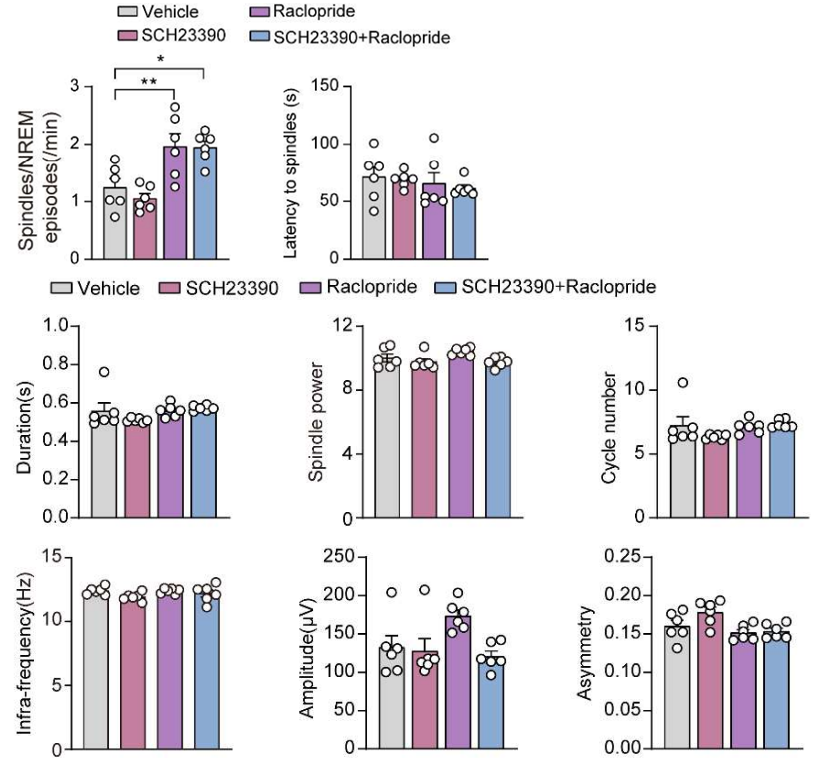
Hyperexcitable VTA-mPFC dopaminergic circuit disrupts sleep spindle and mediates sleep fragmentation after chronic social defeat stress. [Abstract]2026 May 19:S0896-6273(26)00332-6. PMID: 42161276
Raclopride purchased from MedChemExpress. Usage Cited in: Neuron. 2026 May 19:S0896-6273(26)00332-6. [Abstract]
Raclopride (1 μg/0.3 μL; ICV) alone and combined antagonist treatment both increased spindle density, with minimal effects on other spindle parameters in C57BL/6J mice.
-
Acta Pharmacol Sin
G protein-dependent dopamine D2 receptor signaling mediates cocaine-primed reinstatement. [Abstract]2026 Jan 14. PMID: 41535707
Raclopride purchased from MedChemExpress. Usage Cited in: Acta Pharmacol Sin. 2026 Jan 14. [Abstract]
Graphs of active nose pokes with Raclopride (0.3 mg/kg; s.c.; single dose) [i: Vehicle n = 10, Raclopride n = 11, Fgroup×session(1, 19) = 23.944, P < 0.001, two-way RM ANOVA test] treatment in cocaine-primed reinstatement test. The results showed that during the reinstatement test, active nose pokes were inhibited by Raclopride.
Raclopride purchased from MedChemExpress. Usage Cited in: Acta Pharmacol Sin. 2026 Jan 14. [Abstract]
Raclopride (a D2R full antagonist, 0.3 mg/kg; s.c.; single dose; C57BL/6 J mice) significantly increased cAMP signaling in the NAcC.
-
Cell Rep
Deletion of histamine H2 receptor in VTA dopaminergic neurons of mice induces behavior reminiscent of mania. [Abstract]2024 Sep 10;43(9):114717. PMID: 39264811
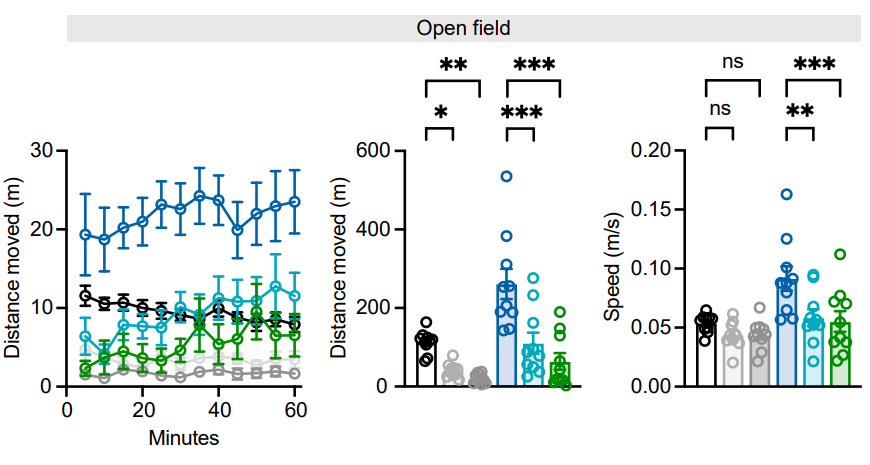
Raclopride purchased from MedChemExpress. Usage Cited in: Cell Rep. 2024 Sep 10;43(9):114717. [Abstract]
Locomotor activity depicted in 5-min segments (left), total distance moved (middle), and speed (right) in the open field over a 60-min period. In the OFT, both SCH-23390 (0.125 mg/kg; i.p.; single dose; HY-19545A) and Raclopride (1 mg/kg; i.p.; single dose) reduced the hyperactivity of VTADA-shHrh2 mice. Additionally, both SCH-23390 and Raclopride decreased locomotor activity in VTADA-GFP mice during the OFT without affecting their travel speed.
-
Neuropsychopharmacology
2024 Aug;49(9):1468-1480. PMID: 38734818 -
Transl Psychiatry
Prefrontal cortical dopamine deficit may cause impaired glucose metabolism in schizophrenia. [Abstract]2024 Feb 6;14(1):79. PMID: 38320995 -
-
Brain Res Bull
Dopaminergic neurons in the ventral periaqueductal gray projecting to the dorsal lateral septum regulate comorbid pain and anxiety. [Abstract]2025 Aug:228:111409. PMID: 40449627
Raclopride purchased from MedChemExpress. Usage Cited in: Brain Res Bull. 2025 Aug:228:111409. [Abstract]
D2 receptor antagonist Behavioral (0.2 μg/side, 400 nL; ICV; SNI mice) reversed the alleviation of static and dynamic mechanical allodynia induced by the activation of vPAG-LSD dopaminergic projections and significantly increased the duration of spontaneous paw lifting and licking.
-
Insect Biochem Mol Biol
Molecular and pharmacological characterization of the dopamine receptors in the oriental fruit fly, Bactrocera dorsalis. [Abstract]2025 May:180:104312. PMID: 40245998 -
J Neurosci
Acute Ongoing Nociception Delays Recovery of Consciousness from Sevoflurane Anesthesia via a Midbrain Circuit. [Abstract]2024 Aug 21;44(34):e0740242024. PMID: 39019613 -
J Pharm Biomed Anal
Integrating UPLC-MS/MS with in Silico and in Vitro Screening Accelerates the Discovery of Active Compounds in Stephania epigaea. [Abstract]2024 Sep 15:248:116289. PMID: 38901158


Lösungsmittel & Löslichkeit
DMSO : 100 mg/mL (287.99 mM; Need ultrasonic; Hygroscopic DMSO has a significant impact on the solubility of product, please use newly opened DMSO)
H2O : < 0.1 mg/mL (insoluble)
Please refer to the solubility information to select the appropriate solvent. Once prepared, please aliquot and store the solution to prevent product inactivation from repeated freeze-thaw cycles.
Storage method and period of stock solution: -80°C, 2 years; -20°C, 1 year. When stored at -80°C, please use it within 2 years. When stored at -20°C, please use it within 1 year.
Please refer to the solubility information to select the appropriate solvent. Once prepared, please aliquot and store the solution to prevent product inactivation from repeated freeze-thaw cycles.
Storage method and period of stock solution: -80°C, 2 years; -20°C, 1 year. When stored at -80°C, please use it within 2 years. When stored at -20°C, please use it within 1 year.
Konzentration (Stammlösung) × Volumen (Stammlösung) = Konzentration (Ziellösung) × Volumen (Ziellösung)
Select the appropriate dissolution method based on your experimental animal and administration route.
- For the following dissolution methods, please ensure to first prepare a clear stock solution using an In Vitro approach and then sequentially add co-solvents:
- To ensure reliable experimental results, the clarified stock solution can be appropriately stored based on storage conditions. As for the working solution for In Vivo experiments, it is recommended to prepare freshly and use it on the same day.
- The percentages shown for the solvents indicate their volumetric ratio in the final prepared solution. If precipitation or phase separation occurs during preparation, heat and/or sonication can be used to aid dissolution.
Add each solvent one by one: 10% DMSO 40% PEG300 5% Tween-80 45% Saline
Solubility: ≥ 2.5 mg/mL (7.20 mM); Clear solution
This protocol yields a clear solution of ≥ 2.5 mg/mL (saturation unknown).
Taking 1 mL working solution as an example, add 100 μL DMSO stock solution (25.0 mg/mL) to 400 μL PEG300, and mix evenly; then add 50 μL Tween-80 and mix evenly; then add 450 μL Saline to adjust the volume to 1 mL.
Preparation of Saline: Dissolve 0.9 g sodium chloride in ddH₂O and dilute to 100 mL to obtain a clear Saline solution.
Add each solvent one by one: 10% DMSO 90% (20% SBE-β-CD in Saline)
Solubility: ≥ 2.5 mg/mL (7.20 mM); Clear solution
This protocol yields a clear solution of ≥ 2.5 mg/mL (saturation unknown).
Taking 1 mL working solution as an example, add 100 μL DMSO stock solution (25.0 mg/mL) to 900 μL 20% SBE-β-CD in Saline, and mix evenly.
Preparation of 20% SBE-β-CD in Saline (4°C, storage for one week): 2 g SBE-β-CD powder is dissolved in 10 mL Saline, completely dissolve until clear.
Please enter the basic information of animal experiments:
-
-
-
-
Recommended: Prepare an additional quantity of animals to account for potential losses during experiments.
Please enter your animal formula composition:
-
%DMSO +
Recommended: Keep the proportion of DMSO in working solution below 2% if your animal is weak.
-
%+
-
+%Tween-80 + +
-
%Saline +
The co-solvents required include: DMSO, . All of co-solvents are available by MedChemExpress (MCE). , Tween 80. All of co-solvents are available by MedChemExpress (MCE).
Working solution concentration: 0.22 mg/mL
Method for preparing stock solution: mg drug dissolved in μL DMSO. Stock solution concentration: mg/mL.
1. Take μL DMSO stock solution;
2. Add μL .
μL , mix evenly;
3. Then add μL Tween 80, mix evenly;
4. Then add μL
Please ensure that the stock solution in the first step is dissolved to a clear state, and add co-solvents in sequence. You can use ultrasonic heating (ultrasonic cleaner, recommended frequency 20-40 kHz), vortexing, etc. to assist dissolution.


Reinheit & Dokumentation
-
Data Sheet (275 KB)
-
SDS (393 KB)
- English - EN (393 KB)
- Français - FR (393 KB)
- Deutsch - DE (393 KB)
- Norwegian - NO (393 KB)
- Español - ES (393 KB)
- Swedish - SV (393 KB)
- Italian - IT (393 KB)
- Korean - KR (393 KB)
- Portuguese - PT (393 KB)
-
Handling Instructions (2659 KB)
Verweise


Complete Stock Solution Preparation Table
Please refer to the solubility information to select the appropriate solvent. Once prepared, please aliquot and store the solution to prevent product inactivation from repeated freeze-thaw cycles.
Storage method and period of stock solution: -80°C, 2 years; -20°C, 1 year. When stored at -80°C, please use it within 2 years. When stored at -20°C, please use it within 1 year.
| Optional Solvent | Concentration Solvent Mass | 1 mg | 5 mg | 10 mg | 25 mg |
|---|---|---|---|---|---|
| DMSO | 1 mM | 2.8799 mL | 14.3993 mL | 28.7985 mL | 71.9963 mL |
| 5 mM | 0.5760 mL | 2.8799 mL | 5.7597 mL | 14.3993 mL | |
| 10 mM | 0.2880 mL | 1.4399 mL | 2.8799 mL | 7.1996 mL | |
| 15 mM | 0.1920 mL | 0.9600 mL | 1.9199 mL | 4.7998 mL | |
| 20 mM | 0.1440 mL | 0.7200 mL | 1.4399 mL | 3.5998 mL | |
| 25 mM | 0.1152 mL | 0.5760 mL | 1.1519 mL | 2.8799 mL | |
| 30 mM | 0.0960 mL | 0.4800 mL | 0.9600 mL | 2.3999 mL | |
| 40 mM | 0.0720 mL | 0.3600 mL | 0.7200 mL | 1.7999 mL | |
| 50 mM | 0.0576 mL | 0.2880 mL | 0.5760 mL | 1.4399 mL | |
| 60 mM | 0.0480 mL | 0.2400 mL | 0.4800 mL | 1.1999 mL | |
| 80 mM | 0.0360 mL | 0.1800 mL | 0.3600 mL | 0.9000 mL | |
| 100 mM | 0.0288 mL | 0.1440 mL | 0.2880 mL | 0.7200 mL |


Raclopride Related Classifications
HY-103414 Related Classifications
 Powered by Bioz