



Terconazole

Based on 1 Customer Validation
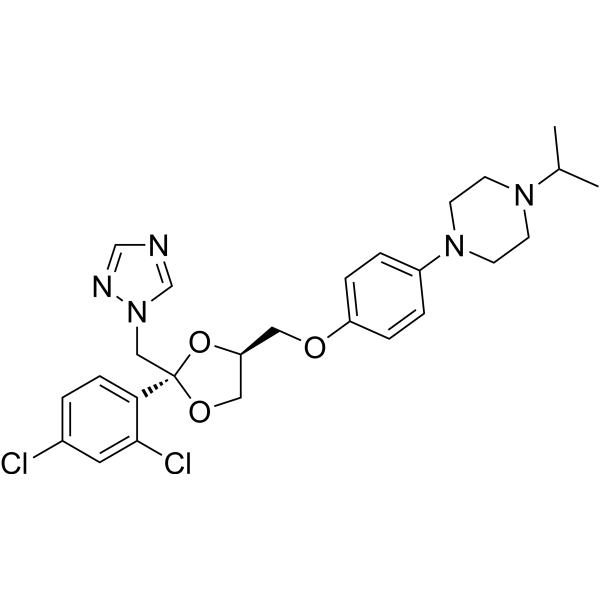
Terconazole is a broad-spectrum antifungal medication for the treatment of vaginal yeast infection.
Nos produits utilisent uniquement pour la recherche. Nous ne vendons pas aux patients.
- Pureté : 99.93%
- CAS No.: 67915-31-5
- Formule: C26H31Cl2N5O3
- Masse moléculaire:532.46
-
Stockage:Powder -20°C, 3 years , 4°C, 2 years ; In solvent -80°C, 2 years , -20°C, 1 year

To place orders, for customer services and technical support, please contact: MedChemExpress USA
Tel: 609-228-6898 E-mail: [email protected] [email protected]


-
 Activité biologique
-
Chemical Information
-
Solvant et solubilité
- Protocole
- Pureté et documentation
- Références
-
 Help & FAQs


-
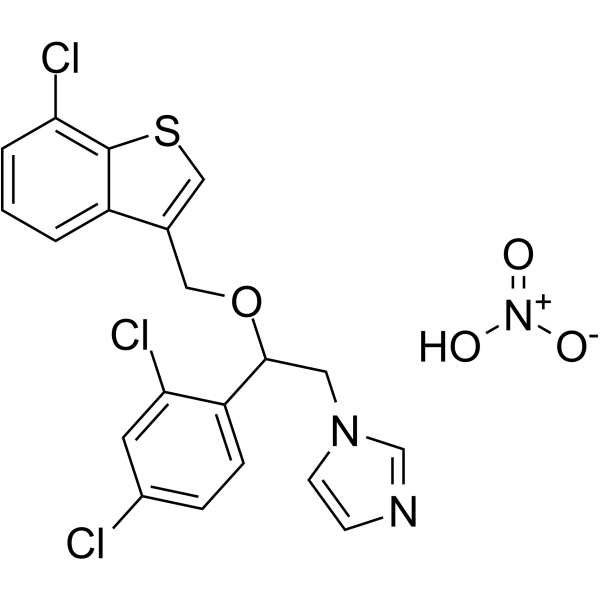
HY-B0736A
Sertaconazole nitrateAntifungal Agent -
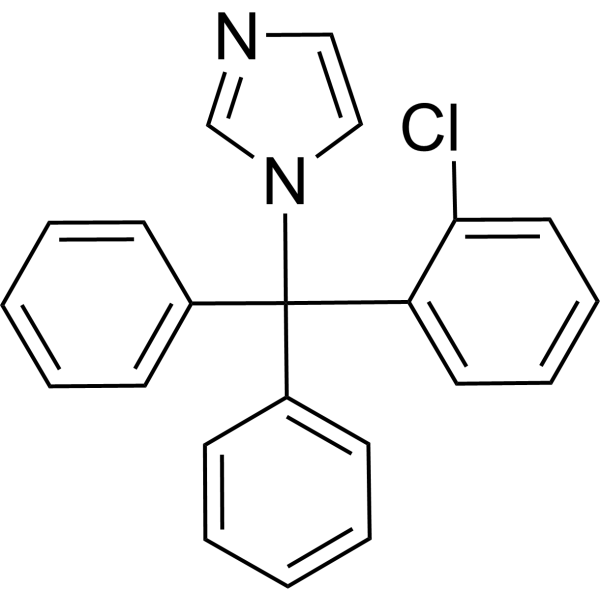
HY-10882
ClotrimazoleAutophagy Inhibitor -
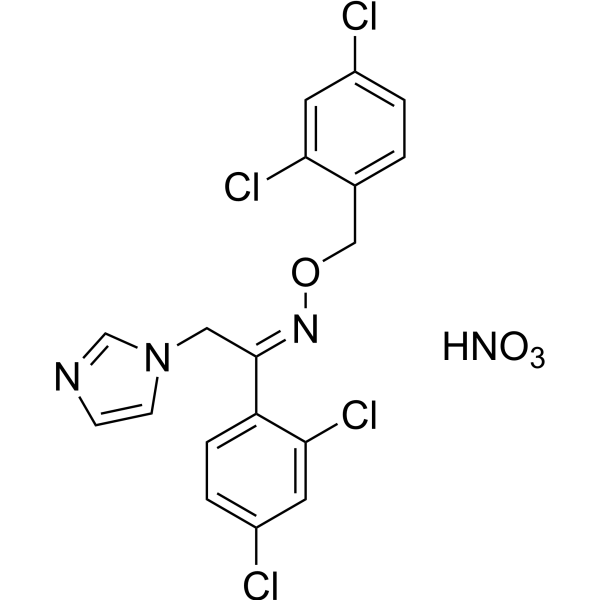
HY-B1324
Oxiconazole nitrateAntifungal Agent -
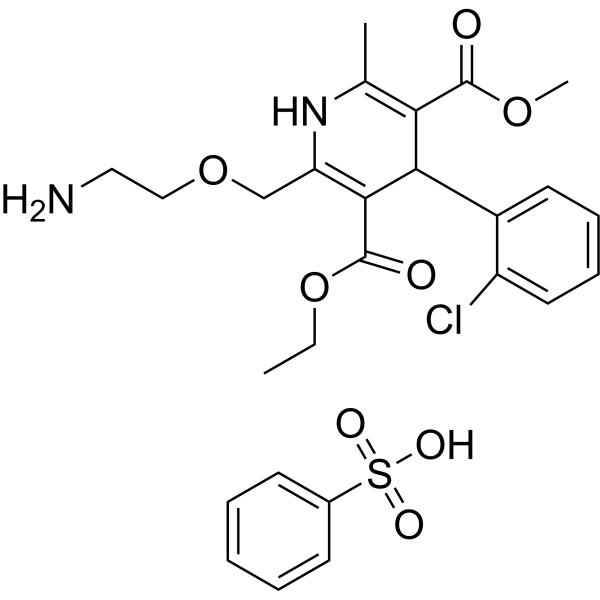
HY-B0317B
Amlodipine besylateCalcium Channel Blocker -

HY-B1790R
Terconazole (Standard)Fungal Inhibitor -
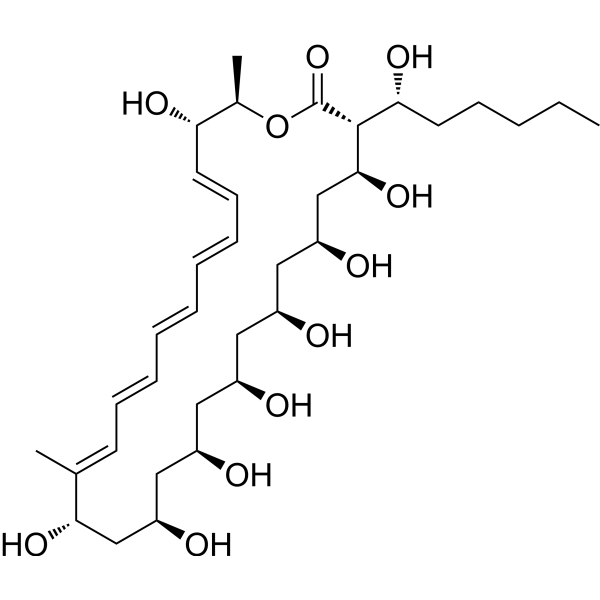
HY-N6718
Filipin IIIFungal Inhibitor -
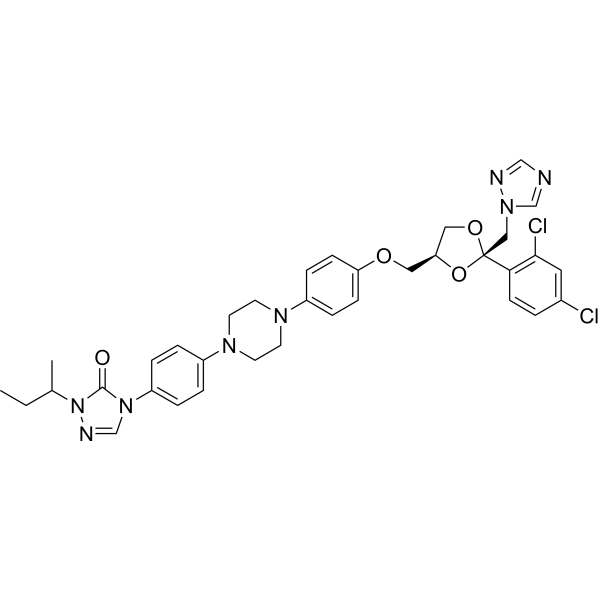
HY-17514
ItraconazoleAntifungal Agent -

HY-17514R
Itraconazole (Standard)Antifungal Agent -
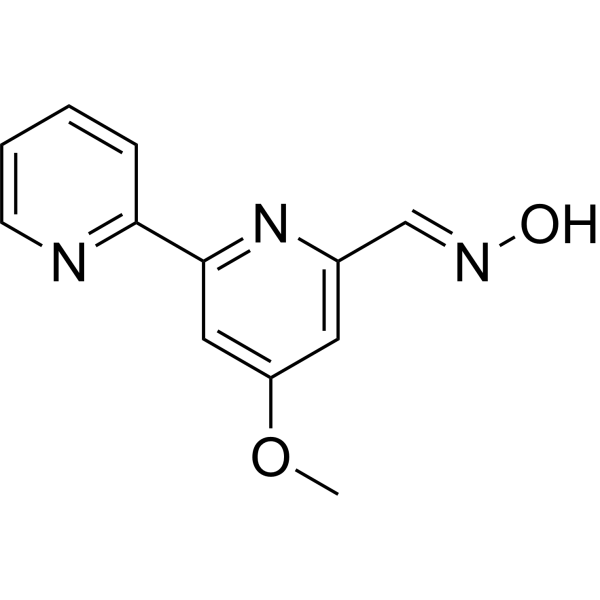
HY-114495
Caerulomycin ASmad3 Activator, STAT1 Inhibitor, GATA-3 Inhibitor -
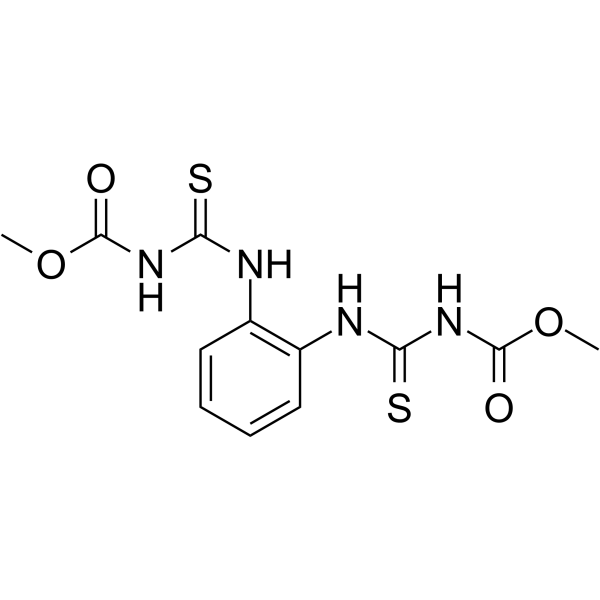
HY-B0842
Thiophanate-Methylpesticide residue/fungicide -
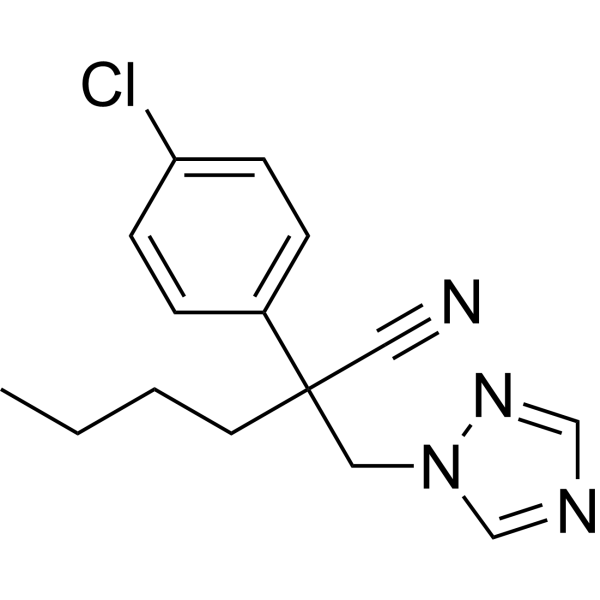
HY-B2148
MyclobutanilFungal Inhibitor -
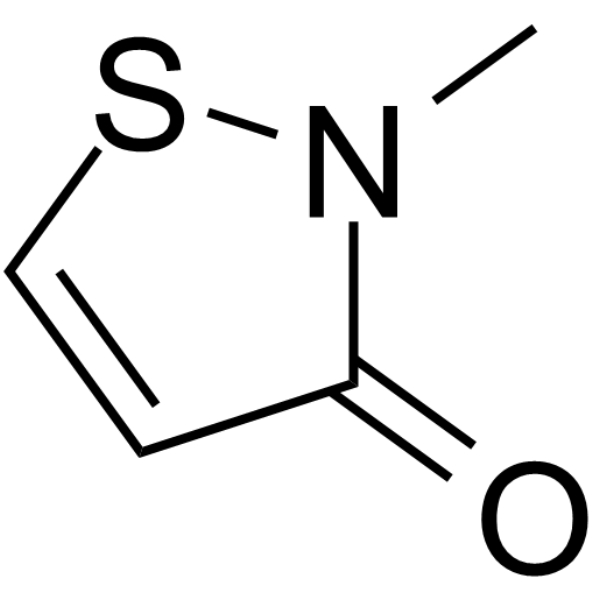
HY-W010520
MethylisothiazolinoneBacterial/Fungal Inhibitor, Preservative Agent


Activité biologique
Description
Cellular Effect
|
Cell Line

|
Type | Value | Description | References |
|---|---|---|---|---|
| HepG2 | EC50 |
14.1 μM
Compound: Terconazole
|
Activation of human PXR expressed in human HepG2 (DPX-2) cells assessed as induction of CYP3A4 after 24 hrs by luminescent analysis
Activation of human PXR expressed in human HepG2 (DPX-2) cells assessed as induction of CYP3A4 after 24 hrs by luminescent analysis
|
[PMID: 20966043] |
| HepG2 | EC50 |
8.9 μM
Compound: Terconazole
|
Activation of human PXR expressed in human HepG2 (DPX-2) cells after 24 hrs by luciferase reporter gene based luminescent analysis
Activation of human PXR expressed in human HepG2 (DPX-2) cells after 24 hrs by luciferase reporter gene based luminescent analysis
|
[PMID: 20966043] |
| HepG2 | EC50 |
9.1 μM
Compound: Terconazole
|
Activation of rat PXR expressed in human HepG2 cells after 24 hrs by luciferase reporter gene based luminescent analysis
Activation of rat PXR expressed in human HepG2 cells after 24 hrs by luciferase reporter gene based luminescent analysis
|
[PMID: 20966043] |
| Vero C1008 | CC50 |
41.46 μM
Compound: Terconazole Vetranal
|
CC50 determination at MOI 0.004 using CellTiter- Glo (CTG) assay, performed 3 days post-infection in Vero E6 cells
CC50 determination at MOI 0.004 using CellTiter- Glo (CTG) assay, performed 3 days post-infection in Vero E6 cells
|
10.1101/2020.03.25.008482 |
| Vero C1008 | CC50 |
41.46 μM
Compound: Terconazole Vetranal
|
CC50 determination at MOI 0.01 using CellTiter- Glo (CTG) assay, performed 3 days post-infection in Vero E6 cells
CC50 determination at MOI 0.01 using CellTiter- Glo (CTG) assay, performed 3 days post-infection in Vero E6 cells
|
10.1101/2020.03.25.008482 |
| Vero C1008 | IC50 |
11.92 μM
Compound: Terconazole Vetranal
|
IC50 determination at MOI 0.004 using CellTiter- Glo (CTG) assay, performed 3 days post-infection in SARS-CoV-2 infected Vero E6 cells
IC50 determination at MOI 0.004 using CellTiter- Glo (CTG) assay, performed 3 days post-infection in SARS-CoV-2 infected Vero E6 cells
|
10.1101/2020.03.25.008482 |
| Vero C1008 | IC50 |
16.14 μM
Compound: Terconazole Vetranal
|
IC50 determination at MOI 0.01 using CellTiter- Glo (CTG) assay, performed 3 days post-infection in SARS-CoV-2 infected Vero E6 cells
IC50 determination at MOI 0.01 using CellTiter- Glo (CTG) assay, performed 3 days post-infection in SARS-CoV-2 infected Vero E6 cells
|
10.1101/2020.03.25.008482 |
In Vitro
Terconazole inhibits the growth of Candida albicans ATCC 44859 in a concentration-related manner, but with modest effects noted at levels from 0.1 to 10 μM when the yeast is grown on media favoring the cell form. The inhibitory potency of terconazole on yeast cell viability varies with the strain and species of Candida tested. The susceptibility of C. albicans ATCC 44859 to terconazole is markedly enhanced when the yeast is grown on Eagle minimum essential medium, which favors mycelium formation. There is a progression of changes, from loss of mycelia formation at 0.1 μM terconazole through complete necrosis at 100 μM[1]. Terconazole blocks the morphogenetic transformation from the yeast into the filamentous form at concentrations of 0.008 to 0.05 microgram/mL[2].
MedChemExpress (MCE) has not independently confirmed the accuracy of these methods. They are for reference only.
In Vivo
MedChemExpress (MCE) has not independently confirmed the accuracy of these methods. They are for reference only.
Essai clinique
| NCT Number | Sponsor | Condition | Start Date |
Phase
|
|---|---|---|---|---|
| NCT01329991 | Plexxikon| | 2011-05 | PHASE1 |


Chemical Information
-
CAS No. 67915-31-5
-
Appearance Solid
-
Masse moléculaire 532.46
-
Formule C26H31Cl2N5O3
-
Color White to off-white
-
SMILES
CC(N1CCN(C2=CC=C(OC[C@@H]3O[C@@](CN4N=CN=C4)(C5=CC=C(Cl)C=C5Cl)OC3)C=C2)CC1)C
-
Synonyms
R42470
-
Livraison
Room temperature in continental US; may vary elsewhere.
-
Stockage
Powder -20°C 3 years 4°C 2 years In solvent -80°C 2 years -20°C 1 year


Solvant et solubilité
In Vitro:
DMSO : ≥ 30 mg/mL (56.34 mM; Hygroscopic DMSO has a significant impact on the solubility of product, please use newly opened DMSO)
* "≥" means soluble, but saturation unknown.
Please refer to the solubility information to select the appropriate solvent. Once prepared, please aliquot and store the solution to prevent product inactivation from repeated freeze-thaw cycles.
Storage method and period of stock solution: -80°C, 2 years; -20°C, 1 year. When stored at -80°C, please use it within 2 years. When stored at -20°C, please use it within 1 year.
Please refer to the solubility information to select the appropriate solvent. Once prepared, please aliquot and store the solution to prevent product inactivation from repeated freeze-thaw cycles.
Storage method and period of stock solution: -80°C, 2 years; -20°C, 1 year. When stored at -80°C, please use it within 2 years. When stored at -20°C, please use it within 1 year.
Concentration (start) × Volume (start) = Concentration (final) × Volume (final)
In Vivo:
Select the appropriate dissolution method based on your experimental animal and administration route.
- For the following dissolution methods, please ensure to first prepare a clear stock solution using an In Vitro approach and then sequentially add co-solvents:
- To ensure reliable experimental results, the clarified stock solution can be appropriately stored based on storage conditions. As for the working solution for In Vivo experiments, it is recommended to prepare freshly and use it on the same day.
- The percentages shown for the solvents indicate their volumetric ratio in the final prepared solution. If precipitation or phase separation occurs during preparation, heat and/or sonication can be used to aid dissolution.
Add each solvent one by one: 10% DMSO 40% PEG300 5% Tween-80 45% Saline
Solubility: ≥ 2.08 mg/mL (3.91 mM); Clear solution
This protocol yields a clear solution of ≥ 2.08 mg/mL (saturation unknown).
Taking 1 mL working solution as an example, add 100 μL DMSO stock solution (20.8 mg/mL) to 400 μL PEG300, and mix evenly; then add 50 μL Tween-80 and mix evenly; then add 450 μL Saline to adjust the volume to 1 mL.
Preparation of Saline: Dissolve 0.9 g sodium chloride in ddH₂O and dilute to 100 mL to obtain a clear Saline solution.
Add each solvent one by one: 10% DMSO 90% (20% SBE-β-CD in Saline)
Solubility: ≥ 2.08 mg/mL (3.91 mM); Clear solution
This protocol yields a clear solution of ≥ 2.08 mg/mL (saturation unknown).
Taking 1 mL working solution as an example, add 100 μL DMSO stock solution (20.8 mg/mL) to 900 μL 20% SBE-β-CD in Saline, and mix evenly.
Preparation of 20% SBE-β-CD in Saline (4°C, storage for one week): 2 g SBE-β-CD powder is dissolved in 10 mL Saline, completely dissolve until clear.
In Vivo Dissolution Calculator
Please enter the basic information of animal experiments:
-
-
-
-
Recommended: Prepare an additional quantity of animals to account for potential losses during experiments.
Please enter your animal formula composition:
-
%DMSO +
Recommended: Keep the proportion of DMSO in working solution below 2% if your animal is weak.
-
%+
-
+%Tween-80 + +
-
%Saline +
The co-solvents required include: DMSO, . All of co-solvents are available by MedChemExpress (MCE). , Tween 80. All of co-solvents are available by MedChemExpress (MCE).
Working solution concentration: 0.22 mg/mL
Method for preparing stock solution: mg drug dissolved in μL DMSO. Stock solution concentration: mg/mL.
1. Take μL DMSO stock solution;
2. Add μL .
μL , mix evenly;
3. Then add μL Tween 80, mix evenly;
4. Then add μL
Please ensure that the stock solution in the first step is dissolved to a clear state, and add co-solvents in sequence. You can use ultrasonic heating (ultrasonic cleaner, recommended frequency 20-40 kHz), vortexing, etc. to assist dissolution.


Pureté et documentation
-
Fiche technique (274 KB)
-
SDS (393 KB)
- English - EN (393 KB)
- Français - FR (393 KB)
- Deutsch - DE (393 KB)
- Norwegian - NO (393 KB)
- Español - ES (393 KB)
- Swedish - SV (393 KB)
- Italian - IT (393 KB)
- Korean - KR (393 KB)
- Portuguese - PT (393 KB)
-
Instruction de manipulation (2659 KB)
Références
[1]. Tolman EL, et al. Anticandidal activities of terconazole, a broad-spectrum antimycotic. Antimicrob Agents Chemother. 1986 Jun;29(6):986-91. [Content Brief]
[2]. Van Cutsem J, et al. The in vitro activity of terconazole against yeasts: its topical long-acting therapeutic efficacy in experimental vaginal candidiasis in rats. Am J Obstet Gynecol. 1991 Oct;165(4 Pt 2):1200-6. [Content Brief]


Complete Stock Solution Preparation Table
Please refer to the solubility information to select the appropriate solvent. Once prepared, please aliquot and store the solution to prevent product inactivation from repeated freeze-thaw cycles.
Storage method and period of stock solution: -80°C, 2 years; -20°C, 1 year. When stored at -80°C, please use it within 2 years. When stored at -20°C, please use it within 1 year.
| Optional Solvent | Concentration Solvent Mass | 1 mg | 5 mg | 10 mg | 25 mg |
|---|---|---|---|---|---|
| DMSO | 1 mM | 1.8781 mL | 9.3904 mL | 18.7808 mL | 46.9519 mL |
| 5 mM | 0.3756 mL | 1.8781 mL | 3.7562 mL | 9.3904 mL | |
| 10 mM | 0.1878 mL | 0.9390 mL | 1.8781 mL | 4.6952 mL | |
| 15 mM | 0.1252 mL | 0.6260 mL | 1.2521 mL | 3.1301 mL | |
| 20 mM | 0.0939 mL | 0.4695 mL | 0.9390 mL | 2.3476 mL | |
| 25 mM | 0.0751 mL | 0.3756 mL | 0.7512 mL | 1.8781 mL | |
| 30 mM | 0.0626 mL | 0.3130 mL | 0.6260 mL | 1.5651 mL | |
| 40 mM | 0.0470 mL | 0.2348 mL | 0.4695 mL | 1.1738 mL | |
| 50 mM | 0.0376 mL | 0.1878 mL | 0.3756 mL | 0.9390 mL |


Terconazole Related Classifications
HY-B1790 Related Classifications
 Powered by Bioz