



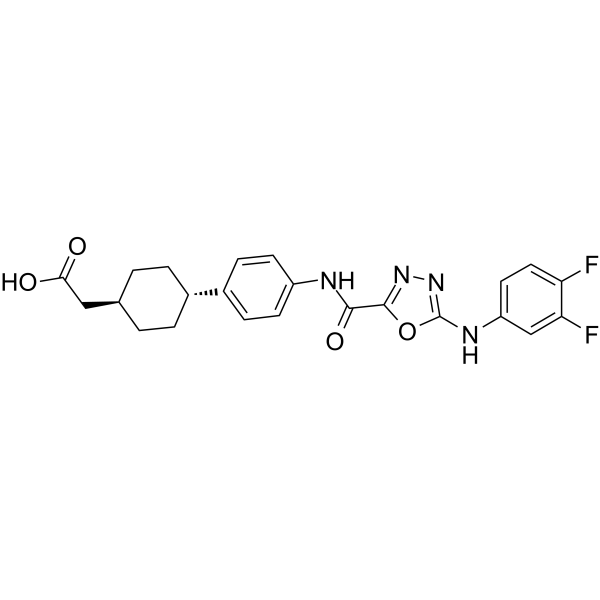
AZD3988
Based on 2 publication(s) in Google Scholar
AZD3988 is an orally active diacylglycerol acyl transferase-1 (DGAT-1) inhibitor. AZD3988 has excellent DGAT-1 (human) potency with an IC50 value of 0. 6 nM. AZD3988 can be used for the research of metabolic diseases such as diabetes, obesity.
Nos produits utilisent uniquement pour la recherche. Nous ne vendons pas aux patients.
- Pureté : 99.89%
- CAS No.: 892489-52-0
- Formule: C23H22F2N4O4
- Masse moléculaire:456.44
-
Stockage:Powder -20°C, 3 years , 4°C, 2 years ; In solvent -80°C, 6 months , -20°C, 1 month

To place orders, for customer services and technical support, please contact: MedChemExpress USA
Tel: 609-228-6898 E-mail: [email protected] [email protected]


-
 Activité biologique
-
Chemical Information
-
Solvant et solubilité
- Protocole
- Pureté et documentation
- Références
-
 Help & FAQs


-
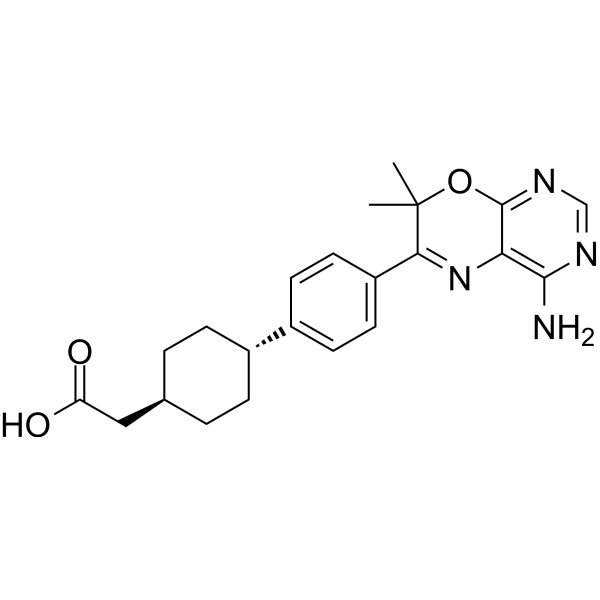
HY-32219
T863DGAT1 Inhibitor -
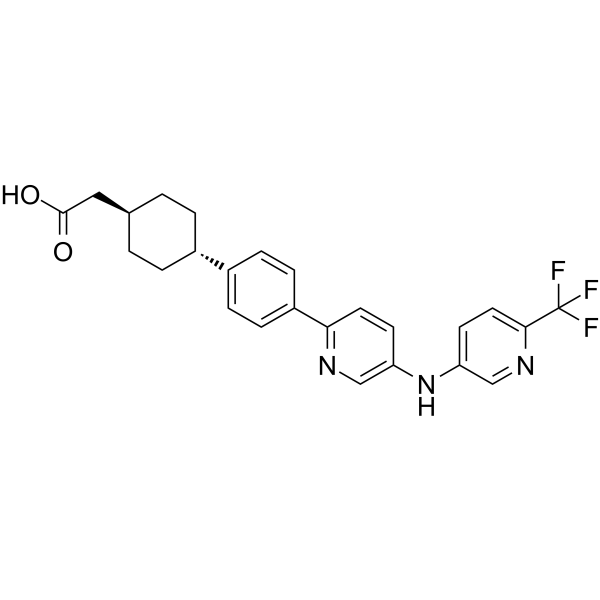
HY-16278
PradigastatDGAT1 Inhibitor -
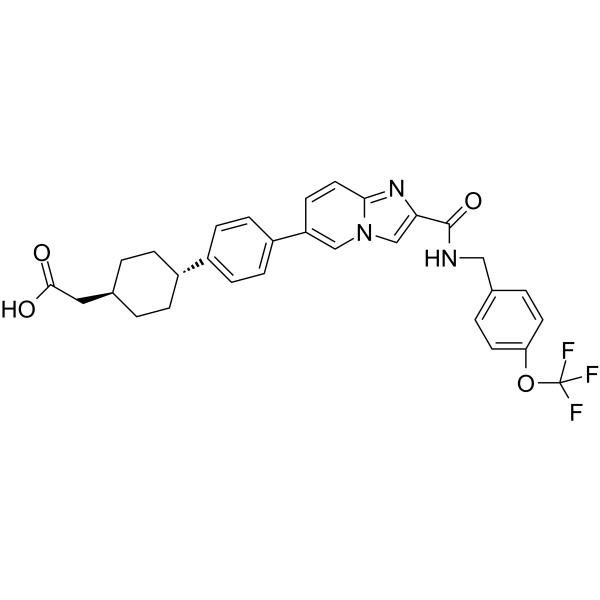
HY-12425
DGAT1-IN-1DGAT1 Inhibitor -
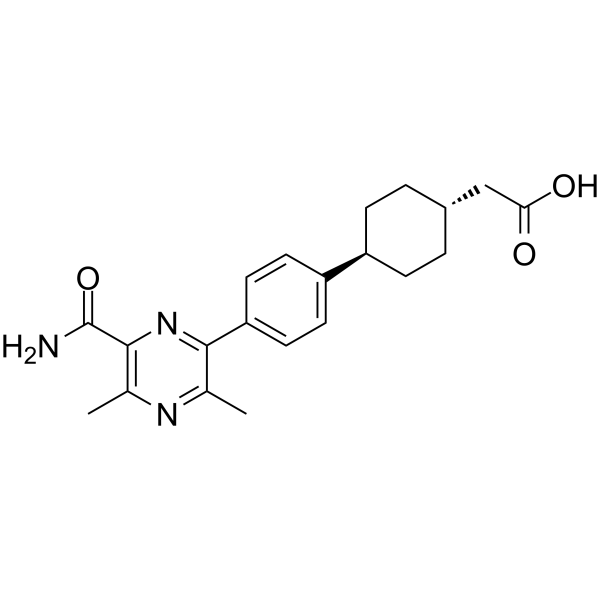
HY-15497
AZD7687DGAT1 Inhibitor -
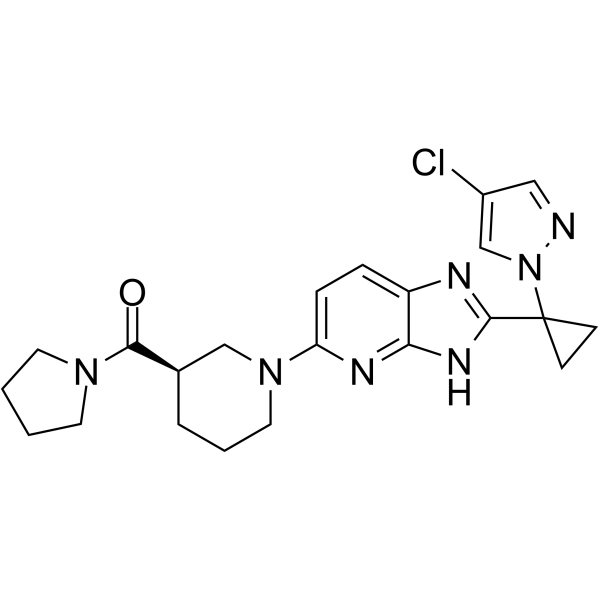
HY-108341
PF-06424439 -
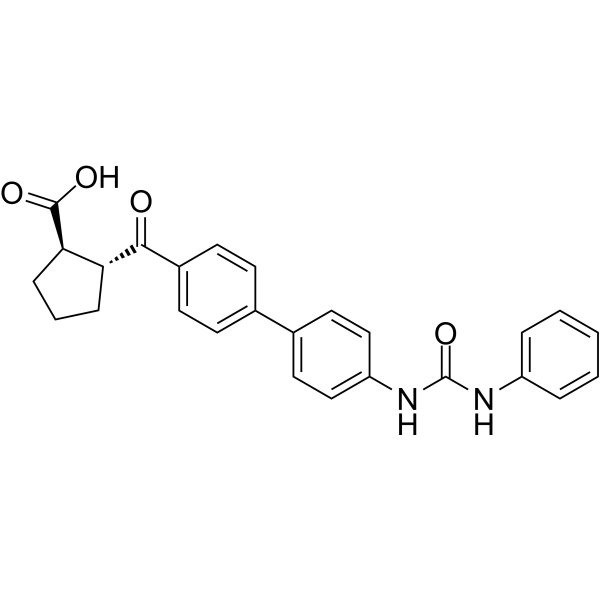
HY-10038
A 922500DGAT-1 Inhibitor -
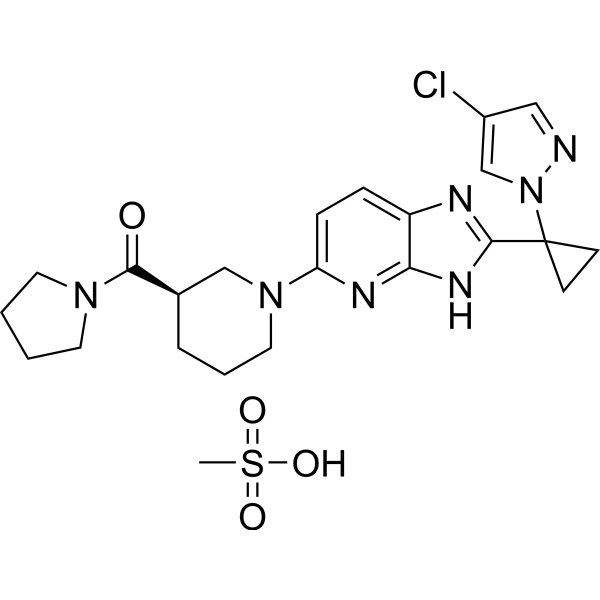
HY-108341A
PF-06424439 methanesulfonateDGAT2 Inhibitor -
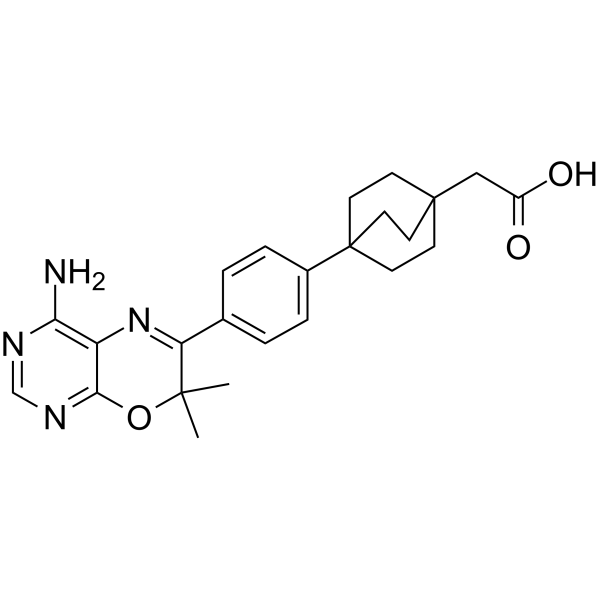
HY-50670
DGAT-1 inhibitor 2DGAT-1 Inhibitor -
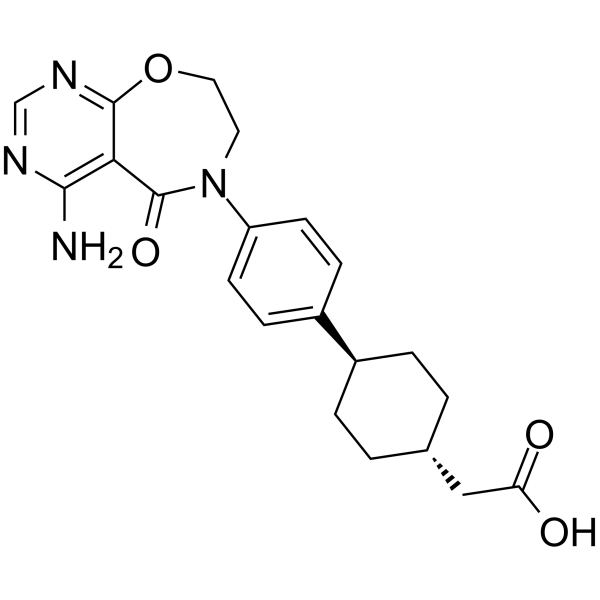
HY-13009
PF-04620110DGAT-1 Inhibitor -
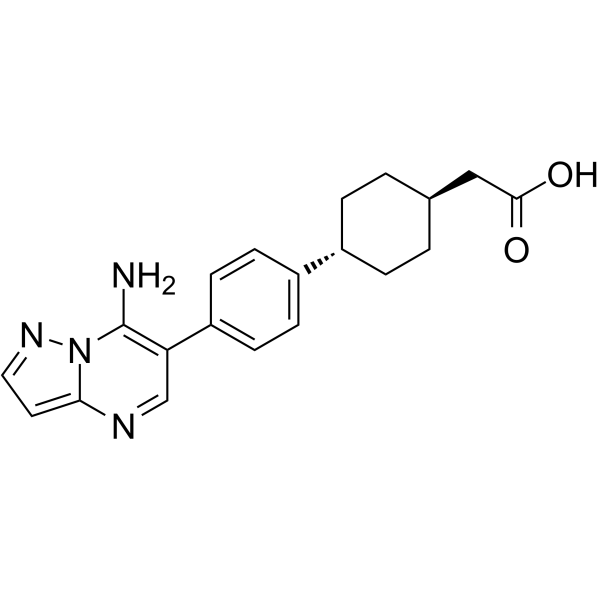
HY-15197
ABT-046DGAT-1 Inhibitor -
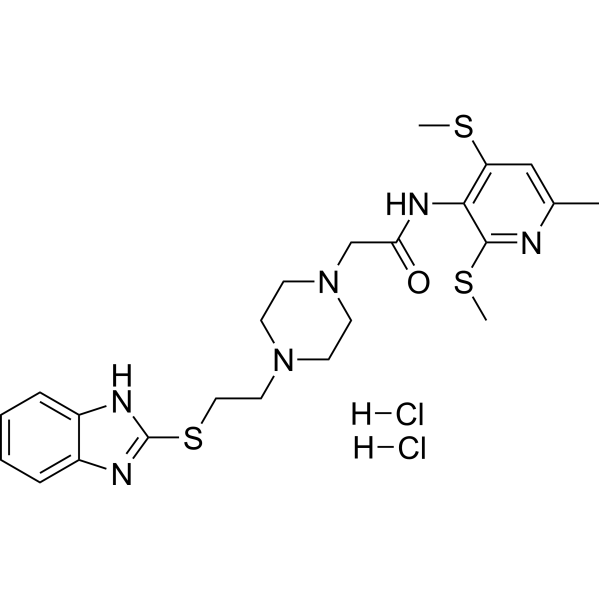
HY-100400A
K-604 dihydrochlorideACAT1 Inhibitor -
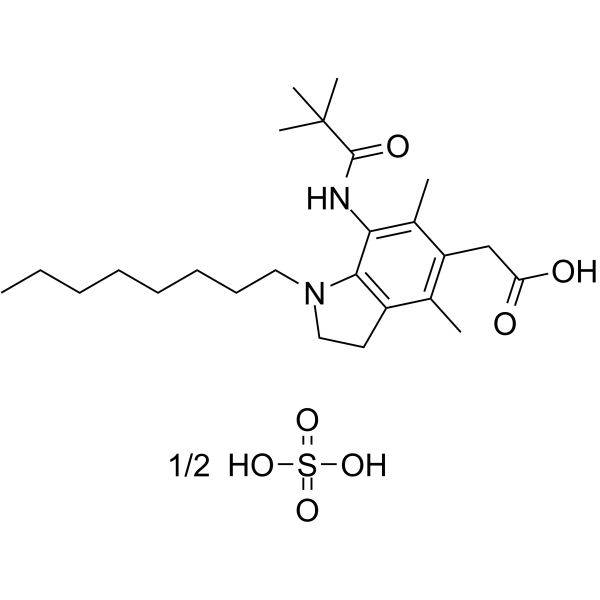
HY-100401A
Pactimibe sulfateACAT1/2 Inhibitor
Publications Citing Use of MedChemExpress (MCE) AZD3988
More

Activité biologique
Description
IC50 & Target
IC50: 0.6 nM (h DGAT-1), 0.5 nM (Rat DGAT-1), 1.1 nM (Mouse DGAT-1)[1]
Cellular Effect
|
Cell Line

|
Type | Value | Description | References |
|---|---|---|---|---|
| HuTu80 | IC50 |
0.0005 μM
Compound: 53, AZD3988
|
Inhibition of DGAT1-mediated triacylglycerol synthesis in human HuTu80 cells
Inhibition of DGAT1-mediated triacylglycerol synthesis in human HuTu80 cells
|
[PMID: 22608962] |
| HuTu80 | IC50 |
0.5 nM
Compound: 53, AZD3988
|
Inhibition of DGAT1-mediated triacylglycerol synthesis in human HuTu80 cells
Inhibition of DGAT1-mediated triacylglycerol synthesis in human HuTu80 cells
|
[PMID: 22608962] |
| Sf9 | IC50 |
0.0006 μM
Compound: 53, AZD3988
|
Inhibition of human recombinant DGAT1 expressed in baculovirus infected insect sf9 cells using [14C] oleoyl coenzyme A after 30 mins by scintillation counting
Inhibition of human recombinant DGAT1 expressed in baculovirus infected insect sf9 cells using [14C] oleoyl coenzyme A after 30 mins by scintillation counting
|
[PMID: 22608962] |
| Sf9 | IC50 |
0.6 nM
Compound: 53, AZD3988
|
Inhibition of human recombinant DGAT1 expressed in baculovirus infected insect sf9 cells using [14C] oleoyl coenzyme A after 30 mins by scintillation counting
Inhibition of human recombinant DGAT1 expressed in baculovirus infected insect sf9 cells using [14C] oleoyl coenzyme A after 30 mins by scintillation counting
|
[PMID: 22608962] |
| Sf9 | IC50 |
36 nM
Compound: 6
|
Inhibition of human DGAT1 expressed in Sf9 insect cells using 1,2-dioleoyl-sn-glycerol and [14C]-palmitoyl-CoA substrate by scintillation counting analysis
Inhibition of human DGAT1 expressed in Sf9 insect cells using 1,2-dioleoyl-sn-glycerol and [14C]-palmitoyl-CoA substrate by scintillation counting analysis
|
[PMID: 24900877] |
In Vitro
AZD3988 (compound 53) (10 μM) can inhibit DGAT-1 with IC50 values of 0. 6 nM (human), 0. 5nM (rat), 1.1 nM (mouse) and 0.5 nM (HuTu 80 cell), respectively[1].
MedChemExpress (MCE) has not independently confirmed the accuracy of these methods. They are for reference only.
In Vivo
MedChemExpress (MCE) has not independently confirmed the accuracy of these methods. They are for reference only.
-
Animal Model:Mouse, Rats and Dog[1]
-
Dosage:0.5, 1, 2, 5 mg/kg
-
Administration:IV at 0.5 mg/kg (mouse), 2 mg/kg (rat) and 1 mg/kg (dog) and po at 1 mg/kg (mouse), 5 mg/kg(rat) and 1 mg/kg (dog)
-
Result:
Species Clp (mL/min/kg) Vdss(L/kg) IV half-life (h) po half-life (h) po Cmax(lM) Bioavailability (%) Mouse 4.6 0.99 4.9 4.7 1.9 >100 Rat 1.1 0.35 3.4 5.8 20 >100 Dog 2.5 0.36 1.8 5.7 1.5 32


Chemical Information
-
CAS No. 892489-52-0
-
Appearance Solid
-
Masse moléculaire 456.44
-
Formule C23H22F2N4O4
-
Color White to off-white
-
SMILES
O=C(NC1=CC=C(C=C1)[C@H](CC2)CC[C@@H]2CC(O)=O)C3=NN=C(NC4=CC=C(C(F)=C4)F)O3
-
Livraison
Room temperature in continental US; may vary elsewhere.
-
Stockage
Powder -20°C 3 years 4°C 2 years In solvent -80°C 6 months -20°C 1 month


Publications (2)
-
Journal Impact Factor
-
Most Recent
-
Nat Commun
Human iPSC-based Modeling of Pulmonary Fibrosis Reveals p300/CBP Inhibition Suppresses Alveolar Transitional Cell State. [Abstract]2026 Feb 12;17(1):1214. PMID: 41680175 -


Solvant et solubilité
In Vitro:
DMSO : 16.67 mg/mL (36.52 mM; Need ultrasonic; Hygroscopic DMSO has a significant impact on the solubility of product, please use newly opened DMSO)
Please refer to the solubility information to select the appropriate solvent. Once prepared, please aliquot and store the solution to prevent product inactivation from repeated freeze-thaw cycles.
Storage method and period of stock solution: -80°C, 6 months; -20°C, 1 month. When stored at -80°C, please use it within 6 months. When stored at -20°C, please use it within 1 month.
Please refer to the solubility information to select the appropriate solvent. Once prepared, please aliquot and store the solution to prevent product inactivation from repeated freeze-thaw cycles.
Storage method and period of stock solution: -80°C, 6 months; -20°C, 1 month. When stored at -80°C, please use it within 6 months. When stored at -20°C, please use it within 1 month.
Concentration (start) × Volume (start) = Concentration (final) × Volume (final)
In Vivo:
Select the appropriate dissolution method based on your experimental animal and administration route.
- For the following dissolution methods, please ensure to first prepare a clear stock solution using an In Vitro approach and then sequentially add co-solvents:
- To ensure reliable experimental results, the clarified stock solution can be appropriately stored based on storage conditions. As for the working solution for In Vivo experiments, it is recommended to prepare freshly and use it on the same day.
- The percentages shown for the solvents indicate their volumetric ratio in the final prepared solution. If precipitation or phase separation occurs during preparation, heat and/or sonication can be used to aid dissolution.
Add each solvent one by one: 10% DMSO 90% (20% SBE-β-CD in Saline)
Solubility: ≥ 1.67 mg/mL (3.66 mM); Clear solution
This protocol yields a clear solution of ≥ 1.67 mg/mL (saturation unknown).
Taking 1 mL working solution as an example, add 100 μL DMSO stock solution (16.7 mg/mL) to 900 μL 20% SBE-β-CD in Saline, and mix evenly.
Preparation of 20% SBE-β-CD in Saline (4°C, storage for one week): 2 g SBE-β-CD powder is dissolved in 10 mL Saline, completely dissolve until clear.
In Vivo Dissolution Calculator
Please enter the basic information of animal experiments:
-
-
-
-
Recommended: Prepare an additional quantity of animals to account for potential losses during experiments.
Please enter your animal formula composition:
-
%DMSO +
Recommended: Keep the proportion of DMSO in working solution below 2% if your animal is weak.
-
%+
-
+%Tween-80 + +
-
%Saline +
The co-solvents required include: DMSO, . All of co-solvents are available by MedChemExpress (MCE). , Tween 80. All of co-solvents are available by MedChemExpress (MCE).
Working solution concentration: 0.22 mg/mL
Method for preparing stock solution: mg drug dissolved in μL DMSO. Stock solution concentration: mg/mL.
1. Take μL DMSO stock solution;
2. Add μL .
μL , mix evenly;
3. Then add μL Tween 80, mix evenly;
4. Then add μL
Please ensure that the stock solution in the first step is dissolved to a clear state, and add co-solvents in sequence. You can use ultrasonic heating (ultrasonic cleaner, recommended frequency 20-40 kHz), vortexing, etc. to assist dissolution.


Pureté et documentation
-
Fiche technique (273 KB)
-
SDS (251 KB)
- English - EN (251 KB)
- Français - FR (251 KB)
- Deutsch - DE (251 KB)
- Norwegian - NO (251 KB)
- Español - ES (251 KB)
- Swedish - SV (251 KB)
- Italian - IT (251 KB)
- Korean - KR (251 KB)
- Portuguese - PT (251 KB)
-
Instruction de manipulation (2659 KB)
Références


Complete Stock Solution Preparation Table
Please refer to the solubility information to select the appropriate solvent. Once prepared, please aliquot and store the solution to prevent product inactivation from repeated freeze-thaw cycles.
Storage method and period of stock solution: -80°C, 6 months; -20°C, 1 month. When stored at -80°C, please use it within 6 months. When stored at -20°C, please use it within 1 month.
| Optional Solvent | Concentration Solvent Mass | 1 mg | 5 mg | 10 mg | 25 mg |
|---|---|---|---|---|---|
| DMSO | 1 mM | 2.1909 mL | 10.9543 mL | 21.9087 mL | 54.7717 mL |
| 5 mM | 0.4382 mL | 2.1909 mL | 4.3817 mL | 10.9543 mL | |
| 10 mM | 0.2191 mL | 1.0954 mL | 2.1909 mL | 5.4772 mL | |
| 15 mM | 0.1461 mL | 0.7303 mL | 1.4606 mL | 3.6514 mL | |
| 20 mM | 0.1095 mL | 0.5477 mL | 1.0954 mL | 2.7386 mL | |
| 25 mM | 0.0876 mL | 0.4382 mL | 0.8763 mL | 2.1909 mL | |
| 30 mM | 0.0730 mL | 0.3651 mL | 0.7303 mL | 1.8257 mL |


AZD3988 Related Classifications
HY-50861 Related Classifications
 Powered by Bioz