



CTCE-9908
Based on 1 publication(s) in Google Scholar
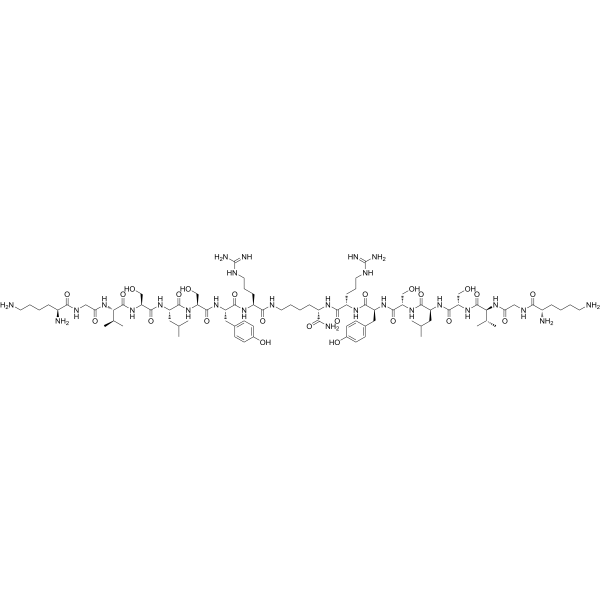
CTCE-9908 is a potent and selective CXCR4 antagonist. CTCE-9908 induces mitotic catastrophe, cytotoxicity and inhibits migration in CXCR4-expressing ovarian cancer cells.
For research use only. We do not sell to patients.
- Purity : 99.54%
- CAS No.: 1030384-98-5
- Formula: C86H147N27O23
- Molecular Weight:1927.25
-
Storage:
Stored under nitrogen, away from moisture.
Powder -80°C, 2 years , -20°C, 1 year* In solvent : -80°C, 6 months; -20°C, 1 month (stored under nitrogen, away from moisture)

To place orders, for customer services and technical support, please contact: MedChemExpress USA
Tel: 609-228-6898 E-mail: [email protected] [email protected]


-
 Biological Activity
-
Chemical Information
-
Solvent & Solubility
- Protocols
- Purity & Documentation
- References
-
 Help & FAQs


-
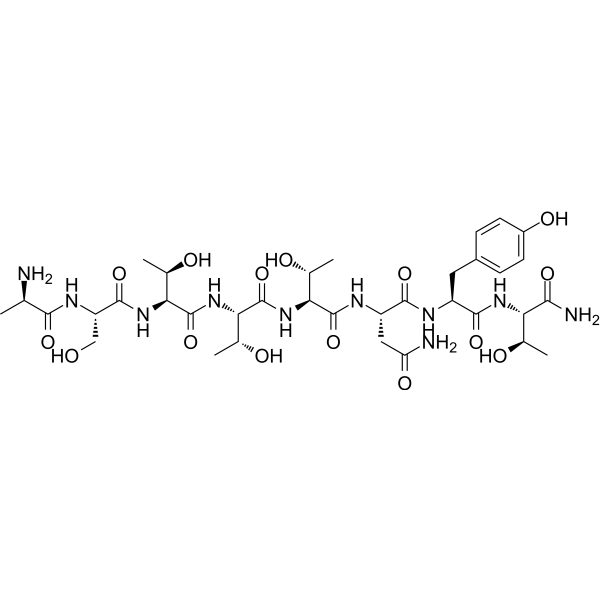
HY-P1034
DAPTACCR5 Inhibitor -
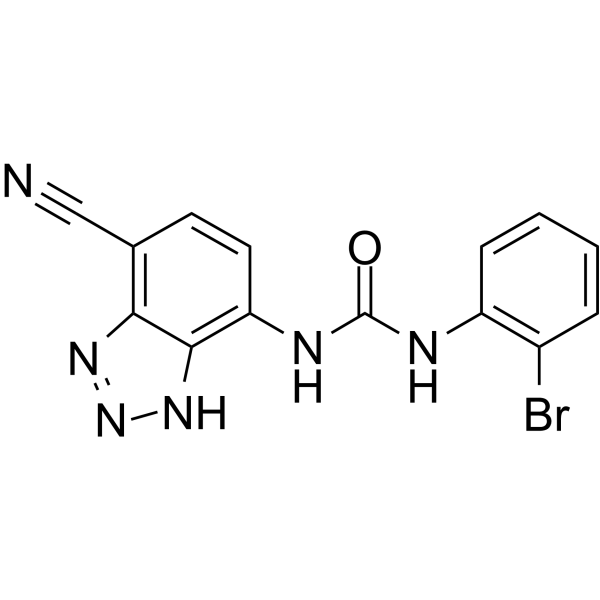
HY-50688
SB-265610CXCR2 Antagonist -
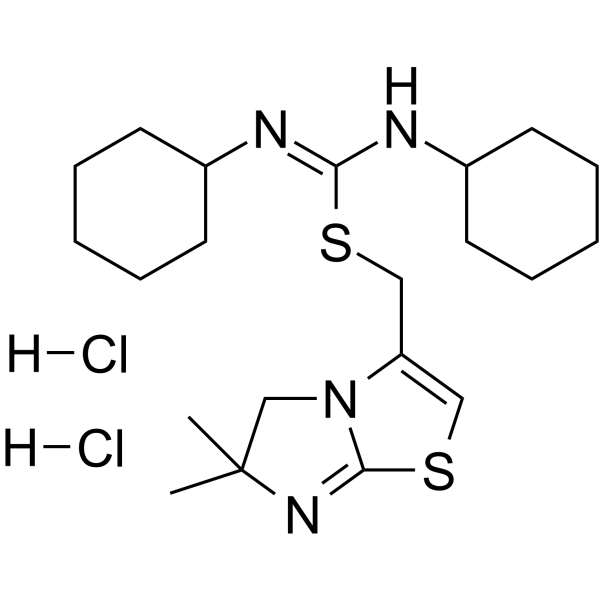
HY-101458A
IT1t dihydrochlorideCXCR4 Antagonist -
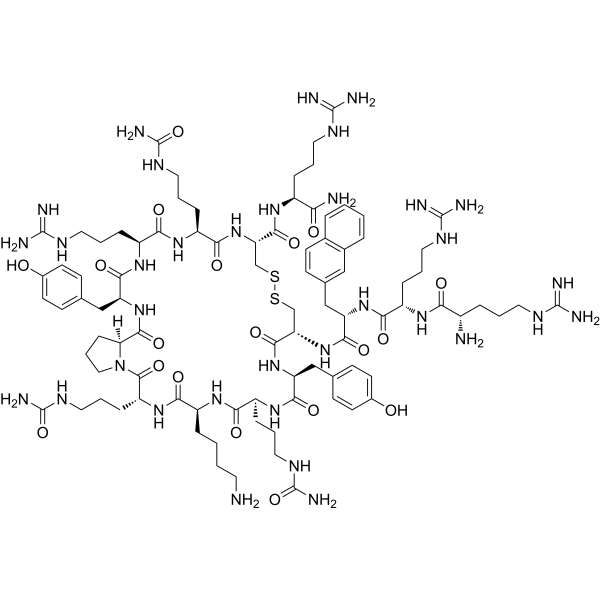
HY-P1102
TC14012CXCR4 Antagonist -
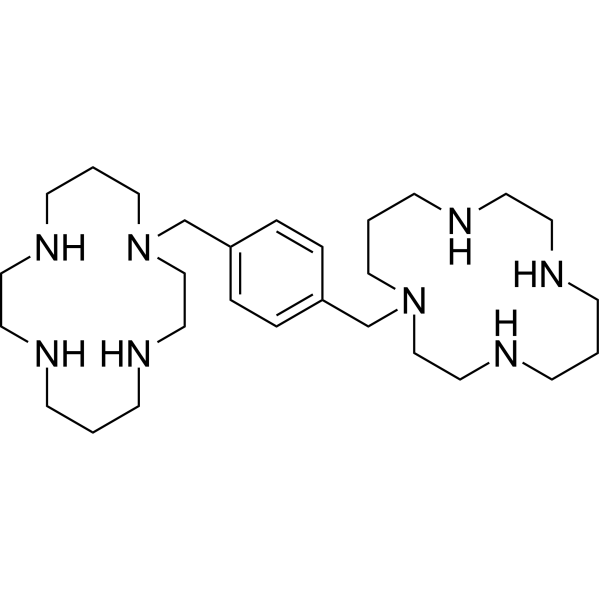
HY-10046
PlerixaforCXCR4 Antagonist -
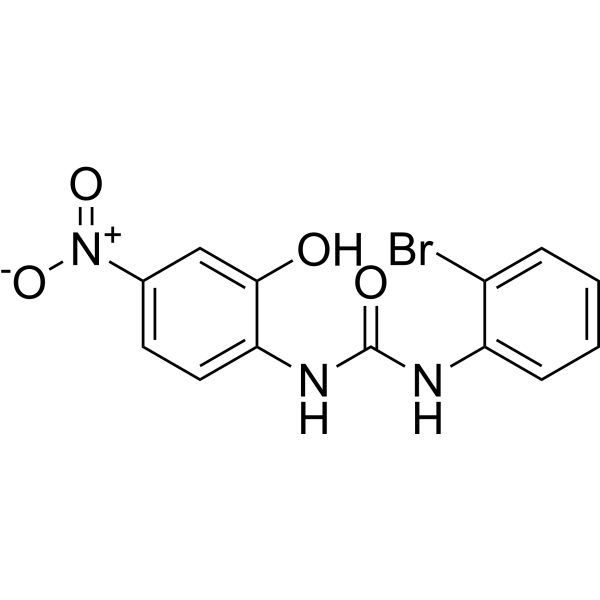
HY-16711
SB225002CXCR2 Antagonist -
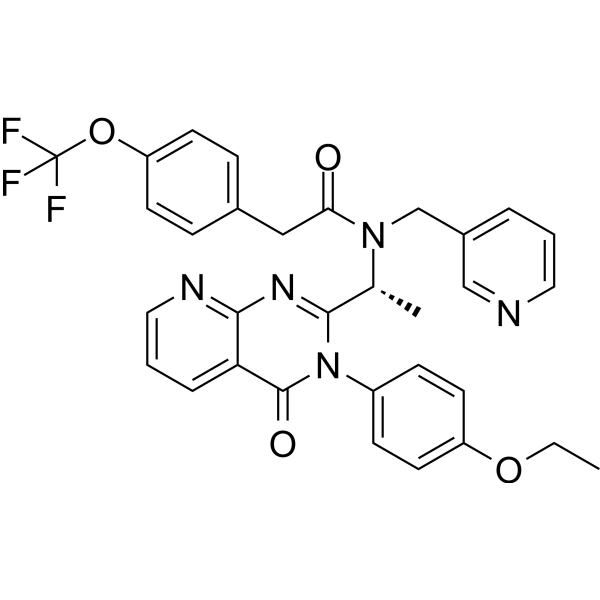
HY-15319
AMG 487CXCR3 Antagonist -
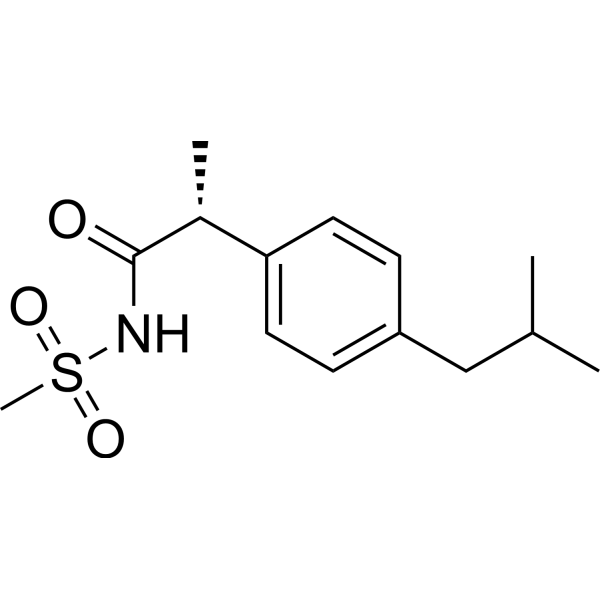
HY-15251
ReparixinCXCR1/2 Inhibitor -
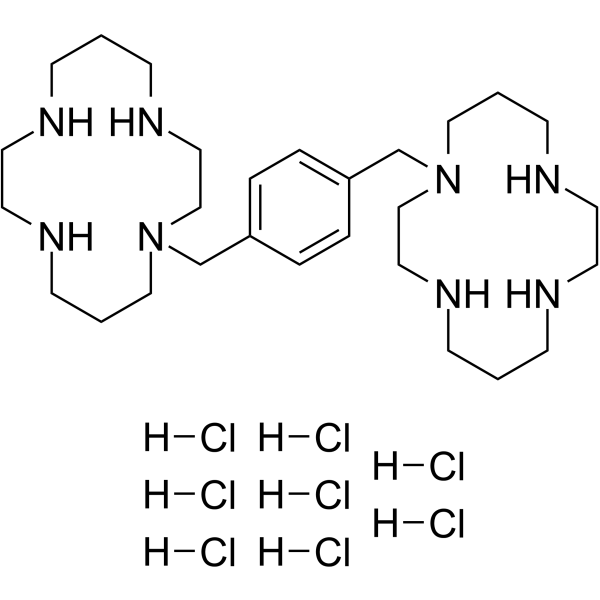
HY-50912
Plerixafor octahydrochlorideCXCR4 Antagonist -
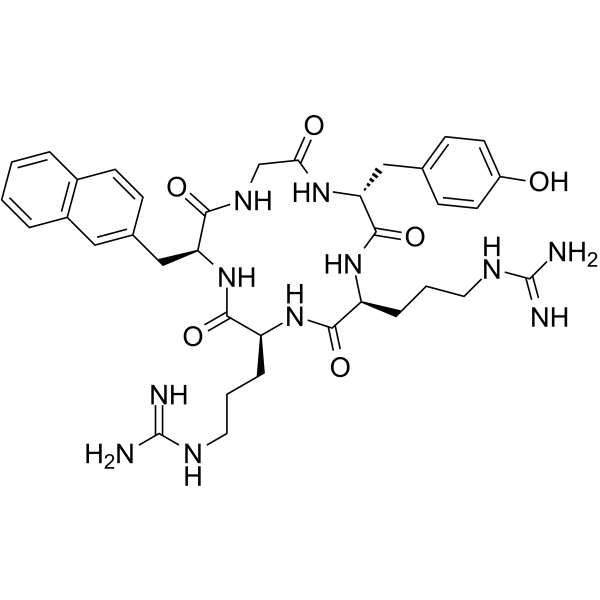
HY-P1104
FC131CXCR4 Antagonist -
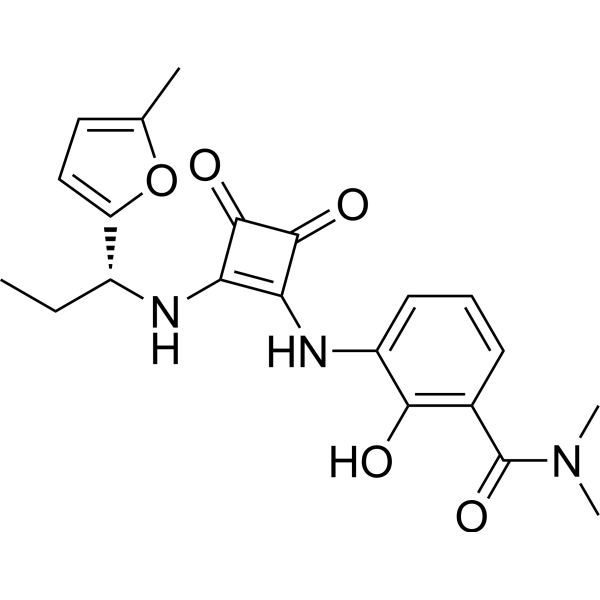
HY-10198
NavarixinCXCR1/2 Antagonist -
HY-19855
AZD-5069CXCR2 Antagonist
Publications Citing Use of MedChemExpress (MCE) CTCE-9908
More

Biological Activity
Description
IC50 & Target
[1]|
CXCR4 |
In Vitro
CTCE-9908 (0-300 μg/mL; for 10 d) inhibits migration and growth in CXCR4-expressing in ovarian cancer cell lines (IGROV, TOV21G and SKOV3). CTCE-9908 inhibits ovarian cancer cell migration to CXCL12. CTCE-9908 does not cause apoptosis or cellular senescence, but induces multinucleation, G2-M arrest, and abnormal mitosis in ovarian cancer cells. CTCE-9908 deregulates DNA damage checkpoint proteins and spindle assembly checkpoint proteins at G2-M phases of the cell cycle[1].
MedChemExpress (MCE) has not independently confirmed the accuracy of these methods. They are for reference only. Further protocols information, click here.
In Vivo
MedChemExpress (MCE) has not independently confirmed the accuracy of these methods. They are for reference only.


Chemical Information
-
CAS No. 1030384-98-5
-
Appearance Solid
-
Molecular Weight 1927.25
-
Formula C86H147N27O23
-
Color White to off-white
-
Sequence
Sequence 1:Lys-Gly-Val-Ser-Leu-Ser-Tyr-Arg-Lys-NH2;Sequence 1':Lys-Gly-Val-Ser-Leu-Ser-Tyr-Arg (Amide bridge:Lys9-Arg8’)
-
Sequence Shortening
Sequence 1:KGVSLSYRK-NH2;Sequence 1':KGVSLSYR (Amide bridge:Lys9-Arg8’)
-
Shipping
Room temperature in continental US; may vary elsewhere.
-
Storage
Stored under nitrogen, away from moisture
Powder -80°C 2 years -20°C 1 year * In solvent : -80°C, 6 months; -20°C, 1 month (stored under nitrogen, away from moisture)


Publications (1)
-
Journal Impact Factor
-
Most Recent


Solvent & Solubility
In Vitro:
H2O : 33.33 mg/mL (17.29 mM; Need ultrasonic)
Please refer to the solubility information to select the appropriate solvent. Once prepared, please aliquot and store the solution to prevent product inactivation from repeated freeze-thaw cycles.
Storage method and period of stock solution: -80°C, 6 months; -20°C, 1 month (stored under nitrogen, away from moisture). When stored at -80°C, please use it within 6 months. When stored at -20°C, please use it within 1 month.
* Note: If you choose water as the stock solution, please dilute it to the working solution, then filter and sterilize it with a 0.22 μm filter before use.
Please refer to the solubility information to select the appropriate solvent. Once prepared, please aliquot and store the solution to prevent product inactivation from repeated freeze-thaw cycles.
Storage method and period of stock solution: -80°C, 6 months; -20°C, 1 month (stored under nitrogen, away from moisture). When stored at -80°C, please use it within 6 months. When stored at -20°C, please use it within 1 month.
* Note: If you choose water as the stock solution, please dilute it to the working solution, then filter and sterilize it with a 0.22 μm filter before use.
Concentration (start) × Volume (start) = Concentration (final) × Volume (final)

Protocols
-
Cell Cytotoxicity Assay
Cytotoxicity assays are usually based on the assessment of cell membrane damage, which can also be indirectly detected by measuring cell viability. Detection methods include MTT assay, CKK-8 assay, LDH assay and ATP assay, etc.
-
Mammalian live/dead viability and cytotoxicity staining
Live/dead viability and cytotoxicity staining assays are based on the simultaneous detection of intracellular esterase activity in metabolically active (viable) cells and membrane integrity loss in non-viable cells. In commonly used dual-staining approaches, membrane-permeant fluorogenic substrates are converted by intracellular esterases into fluorescent products in live cells, while impermeant DNA-binding dyes selectively enter cells with compromised plasma membranes and label nucleic acids in dead or dying cells, enabling discrimination between viable and non-viable populations by fluorescence microscopy or flow cytometry.
-
Cell migration
Cell migration is a method that plays an important role in wound healing, cell differentiation, embryonic development, etc.
-
Cell Viability Determination by MTT Colorimetric Assay
The following protocol uses the MTT colorimetric assay as a classic literature-established method for assessing cell viability/metabolic activity in cultured mammalian cells. MTT[3-(4,5-dimethylthiazol-2-yl)-2,5-diphenyltetrazolium bromide] is reduced by metabolically active cells to a colored formazan product; the amount of formazan is quantified spectrophotometrically and provides an indirect measure of metabolically active viable cells. Importantly, MTT reduction reflects cellular oxidoreductase/metabolic activity rather than an absolute direct count of living cells, so changes in cellular metabolism can alter the signal independently of cell number.


Purity & Documentation
-
Data Sheet (272 KB)
-
SDS (252 KB)
- English - EN (252 KB)
- Français - FR (252 KB)
- Deutsch - DE (252 KB)
- Norwegian - NO (252 KB)
- Español - ES (252 KB)
- Swedish - SV (252 KB)
- Italian - IT (252 KB)
- Korean - KR (252 KB)
- Portuguese - PT (252 KB)
-
Handling Instructions (2659 KB)
References
[1]. Joseph Kwong, et al. An antagonist of the chemokine receptor CXCR4 induces mitotic catastrophe in ovarian cancer cells. Mol Cancer Ther. 2009 Jul;8(7):1893-905. [Content Brief]
[2]. Saima Hassan, et al. CXCR4 peptide antagonist inhibits primary breast tumor growth, metastasis and enhances the efficacy of anti-VEGF treatment or docetaxel in a transgenic mouse model. Int J Cancer. 2011 Jul 1;129(1):225-32. [Content Brief]


Complete Stock Solution Preparation Table
Please refer to the solubility information to select the appropriate solvent. Once prepared, please aliquot and store the solution to prevent product inactivation from repeated freeze-thaw cycles.
Storage method and period of stock solution: -80°C, 6 months; -20°C, 1 month (stored under nitrogen, away from moisture). When stored at -80°C, please use it within 6 months. When stored at -20°C, please use it within 1 month.
| Optional Solvent | Concentration Solvent Mass | 1 mg | 5 mg | 10 mg | 25 mg |
|---|---|---|---|---|---|
| H2O | 1 mM | 0.5189 mL | 2.5944 mL | 5.1887 mL | 12.9719 mL |
| 5 mM | 0.1038 mL | 0.5189 mL | 1.0377 mL | 2.5944 mL | |
| 10 mM | 0.0519 mL | 0.2594 mL | 0.5189 mL | 1.2972 mL | |
| 15 mM | 0.0346 mL | 0.1730 mL | 0.3459 mL | 0.8648 mL |
* Note: If you choose water as the stock solution, please dilute it to the working solution, then filter and sterilize it with a 0.22 μm filter before use.


CTCE-9908 Related Classifications
HY-P1103 Related Classifications
 Powered by Bioz