



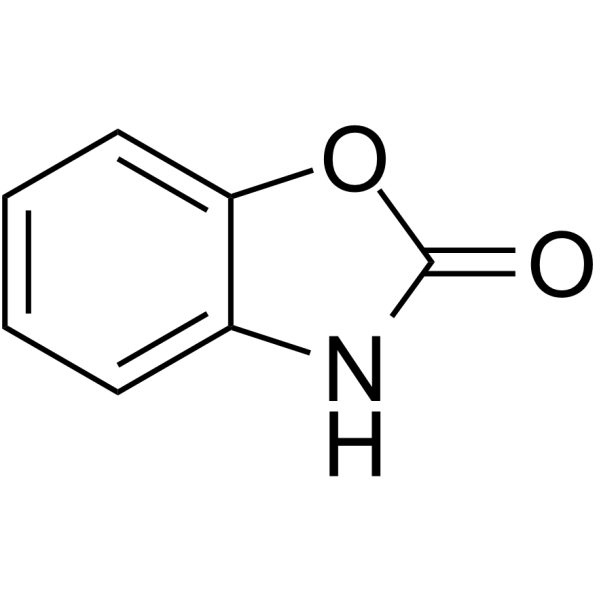
2-Benzoxazolinone
Based on 1 publication(s) in Google Scholar
2-Benzoxazolinone is an anti-leishmanial agent with an LC50 of 40 μg/mL against L. donovani. A building block in chemical synthesis. 1,3-Benzoxazol-2(3H)-one derivatives have antimicrobial activity against a selection of Gram-positive, Gram-negative bacteria and yeasts. Derivatives as anti-quorum sensing agent.
Nur für Forschungszwecke. Wir verkaufen nicht an Patienten.
- Reinheit : 99.87%
- CAS. Nr.: 59-49-4
- Formel: C7H5NO2
- Molecular Weight:135.12
-
Speicherung:Powder -20°C, 3 years , 4°C, 2 years ; In solvent -80°C, 2 years , -20°C, 1 year

To place orders, for customer services and technical support, please contact: MedChemExpress USA
Tel: 609-228-6898 E-mail: [email protected] [email protected]


-
 Biologische Aktivität
-
Chemical Information
-
Lösungsmittel & Löslichkeit
- Protokoll
- Reinheit & Dokumentation
- Verweise
-
 Help & FAQs


-

HY-W015818R
2-Benzoxazolinone (Standard) -
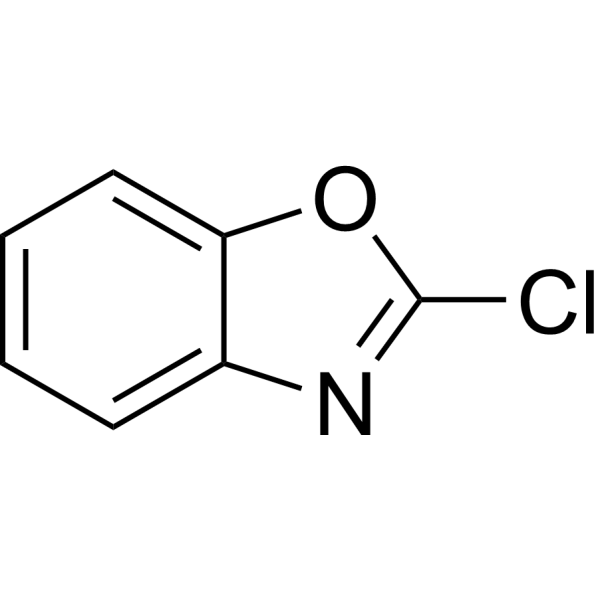
HY-W019606
2-ChlorobenzoxazoleDrug Intermediate -
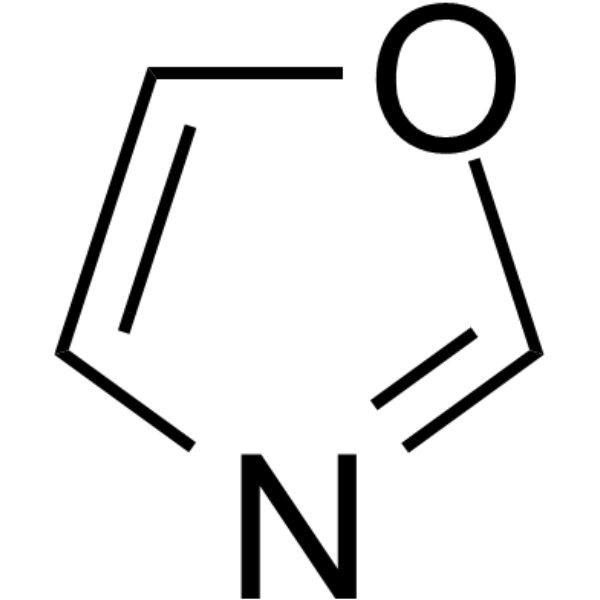
HY-34631
OxazoleBiochemical Reagent -

HY-69155
Oxazole-4-carboxylic acidMetal-organic Framework -
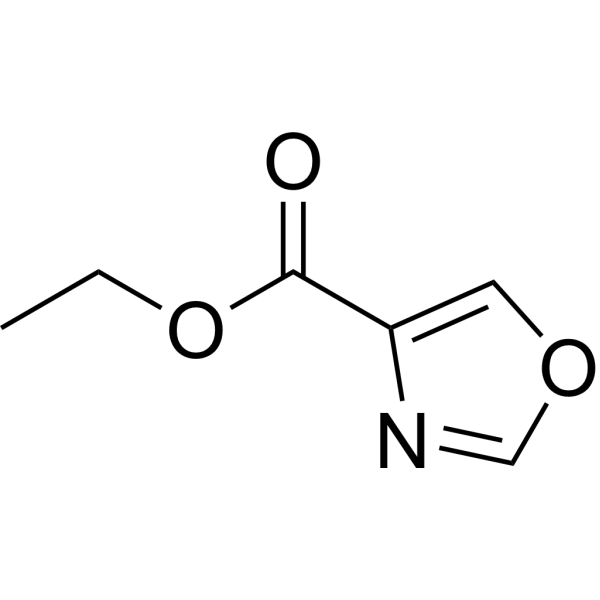
HY-69111
Ethyl oxazole-4-carboxylateBiochemical Reagent -
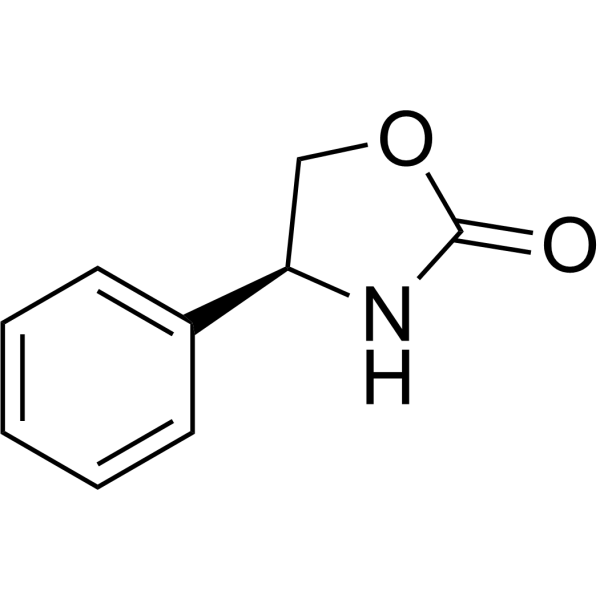
HY-W019727
(S)-4-Phenyloxazolidin-2-oneBiochemical Reagent -
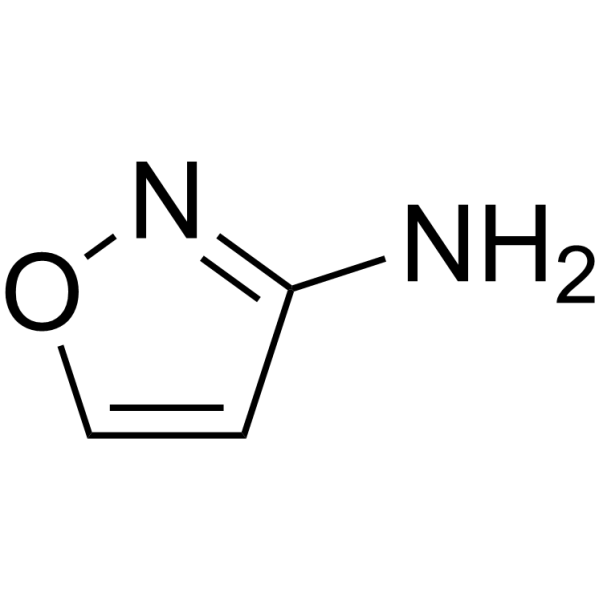
HY-W007329
Isoxazol-3-amineBiochemical Reagent -
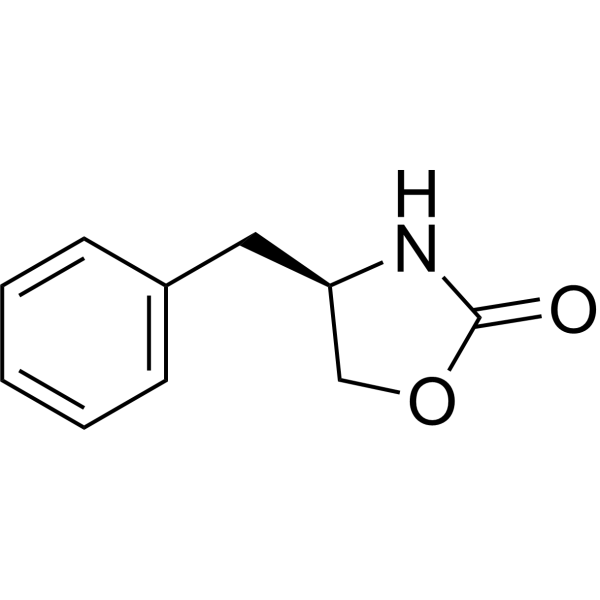
HY-W007664
(R)-4-Benzyl-2-oxazolidinoneAromatase Inhibitor Precursor -
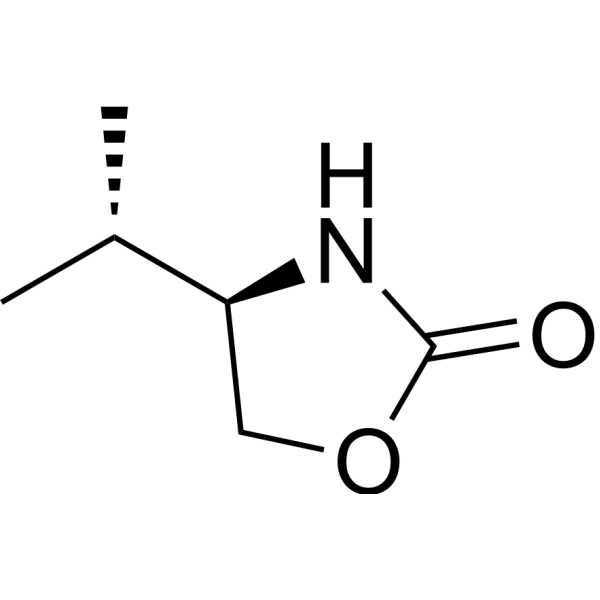
HY-W002320
(R)-4-Isopropyloxazolidin-2-oneBiochemical Reagent -

HY-W019727R
(S)-4-Phenyloxazolidin-2-one (Standard)Biochemical Reagent
Publications Citing Use of MedChemExpress (MCE) 2-Benzoxazolinone
MoreAlle Parasite Isoform-spezifische Produkte anzeigen
More

Biologische Aktivität
Beschreibung
IC50 & Target
|
Leishmania |
In Vitro
2-Benzoxazolinone (0.1-5 mM) induces oxidative stress in mung bean through generation of ROS and upregulation of activities of various scavenging enzymes[2].
MedChemExpress (MCE) has not independently confirmed the accuracy of these methods. They are for reference only. Further protocols information, click here.


Chemical Information
-
CAS. Nr. 59-49-4
-
Appearance Solid
-
Molecular Weight 135.12
-
Formel C7H5NO2
-
SMILES
O=C1OC2=CC=CC=C2N1
-
Synonyms
2-Benzoxazolone; 1,3-Benzoxazol-2(3H)-one; 2-Hydroxybenzoxazole
-
Structure Classification
-
Initial Source
-
Versand
Room temperature in continental US; may vary elsewhere.
-
Speicherung
Powder -20°C 3 years 4°C 2 years In solvent -80°C 2 years -20°C 1 year


Publications (1)
-
Journal Impact Factor
-
Most Recent


Lösungsmittel & Löslichkeit
In Vitro:
DMSO : 100 mg/mL (740.07 mM; Need ultrasonic; Hygroscopic DMSO has a significant impact on the solubility of product, please use newly opened DMSO)
H2O : 3.85 mg/mL (28.49 mM; Need ultrasonic)
Please refer to the solubility information to select the appropriate solvent. Once prepared, please aliquot and store the solution to prevent product inactivation from repeated freeze-thaw cycles.
Storage method and period of stock solution: -80°C, 2 years; -20°C, 1 year. When stored at -80°C, please use it within 2 years. When stored at -20°C, please use it within 1 year.
* Note: If you choose water as the stock solution, please dilute it to the working solution, then filter and sterilize it with a 0.22 μm filter before use.
Please refer to the solubility information to select the appropriate solvent. Once prepared, please aliquot and store the solution to prevent product inactivation from repeated freeze-thaw cycles.
Storage method and period of stock solution: -80°C, 2 years; -20°C, 1 year. When stored at -80°C, please use it within 2 years. When stored at -20°C, please use it within 1 year.
* Note: If you choose water as the stock solution, please dilute it to the working solution, then filter and sterilize it with a 0.22 μm filter before use.
Konzentration (Stammlösung) × Volumen (Stammlösung) = Konzentration (Ziellösung) × Volumen (Ziellösung)
In Vivo:
Select the appropriate dissolution method based on your experimental animal and administration route.
- For the following dissolution methods, please ensure to first prepare a clear stock solution using an In Vitro approach and then sequentially add co-solvents:
- To ensure reliable experimental results, the clarified stock solution can be appropriately stored based on storage conditions. As for the working solution for In Vivo experiments, it is recommended to prepare freshly and use it on the same day.
- The percentages shown for the solvents indicate their volumetric ratio in the final prepared solution. If precipitation or phase separation occurs during preparation, heat and/or sonication can be used to aid dissolution.
Add each solvent one by one: 10% DMSO 40% PEG300 5% Tween-80 45% Saline
Solubility: ≥ 2.5 mg/mL (18.50 mM); Clear solution
This protocol yields a clear solution of ≥ 2.5 mg/mL (saturation unknown).
Taking 1 mL working solution as an example, add 100 μL DMSO stock solution (25.0 mg/mL) to 400 μL PEG300, and mix evenly; then add 50 μL Tween-80 and mix evenly; then add 450 μL Saline to adjust the volume to 1 mL.
Preparation of Saline: Dissolve 0.9 g sodium chloride in ddH₂O and dilute to 100 mL to obtain a clear Saline solution.
Add each solvent one by one: 10% DMSO 90% (20% SBE-β-CD in Saline)
Solubility: ≥ 2.5 mg/mL (18.50 mM); Clear solution
This protocol yields a clear solution of ≥ 2.5 mg/mL (saturation unknown).
Taking 1 mL working solution as an example, add 100 μL DMSO stock solution (25.0 mg/mL) to 900 μL 20% SBE-β-CD in Saline, and mix evenly.
Preparation of 20% SBE-β-CD in Saline (4°C, storage for one week): 2 g SBE-β-CD powder is dissolved in 10 mL Saline, completely dissolve until clear.
For the following dissolution methods, please prepare the working solution directly:
It is recommended to prepare fresh solutions and use them promptly within a short period of time.
The percentages shown for the solvents indicate their volumetric ratio in the final prepared solution. If precipitation or phase separation occurs during preparation, heat and/or sonication can be used to aid dissolution.
Add each solvent one by one: PBS
Solubility: 5 mg/mL (37.00 mM); Clear solution; Need ultrasonic and warming and heat to 60°C
In Vivo Dissolution Calculator
Please enter the basic information of animal experiments:
-
-
-
-
Recommended: Prepare an additional quantity of animals to account for potential losses during experiments.
Please enter your animal formula composition:
-
%DMSO +
Recommended: Keep the proportion of DMSO in working solution below 2% if your animal is weak.
-
%+
-
+%Tween-80 + +
-
%Saline +
The co-solvents required include: DMSO, . All of co-solvents are available by MedChemExpress (MCE). , Tween 80. All of co-solvents are available by MedChemExpress (MCE).
Working solution concentration: 0.22 mg/mL
Method for preparing stock solution: mg drug dissolved in μL DMSO. Stock solution concentration: mg/mL.
1. Take μL DMSO stock solution;
2. Add μL .
μL , mix evenly;
3. Then add μL Tween 80, mix evenly;
4. Then add μL
Please ensure that the stock solution in the first step is dissolved to a clear state, and add co-solvents in sequence. You can use ultrasonic heating (ultrasonic cleaner, recommended frequency 20-40 kHz), vortexing, etc. to assist dissolution.

Protokoll
-
Research Protocol for Infectious Diseases
Infectious-disease experiments test how pathogens interact with host barriers, innate immune receptors, inflammatory signaling, pathogen replication, and tissue injury; pattern-recognition receptors such as TLRs, RIG-I-like receptors, NOD-like receptors, and inflammasomes detect microbial molecules and activate NF-κB, interferon, and cytokine responses. The central hypothesis is that infection severity reflects the balance between pathogen burden and host response: protective inflammation restricts pathogen growth, whereas excessive or mislocalized inflammation contributes to tissue damage and disease phenotype. Unresolved questions include which host pathways are protective versus pathogenic, why some infection models fail to translate to human disease, and which combined readouts best predict clinically relevant infection outcomes.
-
Gram Staining of Tissue Sections
Gram staining of tissue sections is a histochemical technique used to differentiate Gram-positive and Gram-negative bacteria within histological specimens based on differences in bacterial cell wall structure and dye retention, adapted from classical bacteriological Gram staining into tissue-compatible “histological Gram stain” variants. In tissue applications, modifications of the Brown-Hopps and Brown-Brenn methods are commonly used to improve differentiation of microorganisms embedded within host connective tissue and to reduce overstaining or loss of Gram-negative signal, which are known limitations of earlier approaches. The principle relies on crystal violet-iodine complex retention in Gram-positive organisms and subsequent decolorization and counterstaining steps that allow contrast visualization of Gram-negative organisms against tissue background.


Reinheit & Dokumentation
-
Data Sheet (276 KB)
-
SDS (394 KB)
- English - EN (394 KB)
- Français - FR (394 KB)
- Deutsch - DE (394 KB)
- Norwegian - NO (394 KB)
- Español - ES (394 KB)
- Swedish - SV (394 KB)
- Italian - IT (394 KB)
- Korean - KR (394 KB)
- Portuguese - PT (394 KB)
-
Handling Instructions (2659 KB)
Verweise
[1]. Kapil A, et al. Leishmanicidal activity of 2-benzoxazolinone from Acanthus illicifolius in vitro. Planta Med. 1994 Apr;60(2):187-8. [Content Brief]
[3]. Krawiecka M, et al. Synthesis and biological activity of novel series of 1,3-benzoxazol-2(3H)-one derivatives. Acta Pol Pharm. 2013 Mar-Apr;70(2):245-53. [Content Brief]
[4]. Miandji AM, et al. Synthesis and biological activities of some 1,3-benzoxazol-2(3H)-one derivatives as anti-quorum sensing agents. Arzneimittelforschung. 2012 Jul;62(7):330-4. [Content Brief]


Complete Stock Solution Preparation Table
Please refer to the solubility information to select the appropriate solvent. Once prepared, please aliquot and store the solution to prevent product inactivation from repeated freeze-thaw cycles.
Storage method and period of stock solution: -80°C, 2 years; -20°C, 1 year. When stored at -80°C, please use it within 2 years. When stored at -20°C, please use it within 1 year.
| Optional Solvent | Concentration Solvent Mass | 1 mg | 5 mg | 10 mg | 25 mg |
|---|---|---|---|---|---|
| H2O / DMSO | 1 mM | 7.4007 mL | 37.0036 mL | 74.0072 mL | 185.0180 mL |
| 5 mM | 1.4801 mL | 7.4007 mL | 14.8014 mL | 37.0036 mL | |
| 10 mM | 0.7401 mL | 3.7004 mL | 7.4007 mL | 18.5018 mL | |
| 15 mM | 0.4934 mL | 2.4669 mL | 4.9338 mL | 12.3345 mL | |
| 20 mM | 0.3700 mL | 1.8502 mL | 3.7004 mL | 9.2509 mL | |
| 25 mM | 0.2960 mL | 1.4801 mL | 2.9603 mL | 7.4007 mL | |
| DMSO | 30 mM | 0.2467 mL | 1.2335 mL | 2.4669 mL | 6.1673 mL |
| 40 mM | 0.1850 mL | 0.9251 mL | 1.8502 mL | 4.6254 mL | |
| 50 mM | 0.1480 mL | 0.7401 mL | 1.4801 mL | 3.7004 mL | |
| 60 mM | 0.1233 mL | 0.6167 mL | 1.2335 mL | 3.0836 mL | |
| 80 mM | 0.0925 mL | 0.4625 mL | 0.9251 mL | 2.3127 mL | |
| 100 mM | 0.0740 mL | 0.3700 mL | 0.7401 mL | 1.8502 mL |
* Note: If you choose water as the stock solution, please dilute it to the working solution, then filter and sterilize it with a 0.22 μm filter before use.


2-Benzoxazolinone Related Classifications
HY-W015818 Related Classifications
 Powered by Bioz