



D-Mannitol (Standard)

Based on 1 Customer Validation
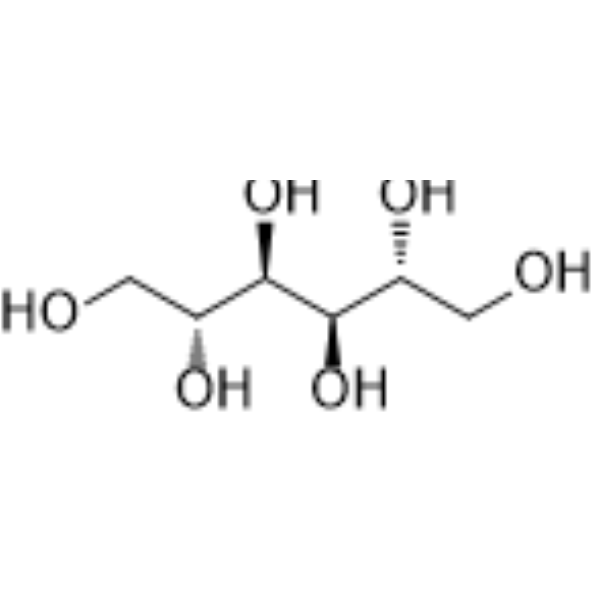
D-Mannitol (Standard) is the analytical standard of D-Mannitol (HY-N0378). This product is intended for research and analytical applications. D-Mannitol (Mannitol) is an oral, resistant sugar widely used in the food and pharmaceutical industries to promote the absorption and retention of calcium and magnesium through cecal fermentation, while acting as a osmotic diuretic to reduce tissue edema. D-Mannitol can enhance brown fat formation, improve insulin effect, reduce blood sugar levels, And through the start the β3-adrenergic receptor (β3-AR), PGC1α and PKA induced by means of white fat cells into brown fat cells. D-Mannitol is commonly used to maintain osmotic pressure between the plant cytoplasm and the culture medium and protect cells when the cell wall is weakened or even removed.
For research use only. We do not sell to patients.
- Purity : 99.96%
- CAS No.: 69-65-8
- Formula: C6H14O6
- Molecular Weight:182.17
-
Storage:
Please store the product under the recommended conditions in the Certificate of Analysis.

To place orders, for customer services and technical support, please contact: MedChemExpress USA
Tel: 609-228-6898 E-mail: [email protected] [email protected]


-
 Product Information
-
Chemical Information
- Purity & Documentation
-
 Help & FAQs


-
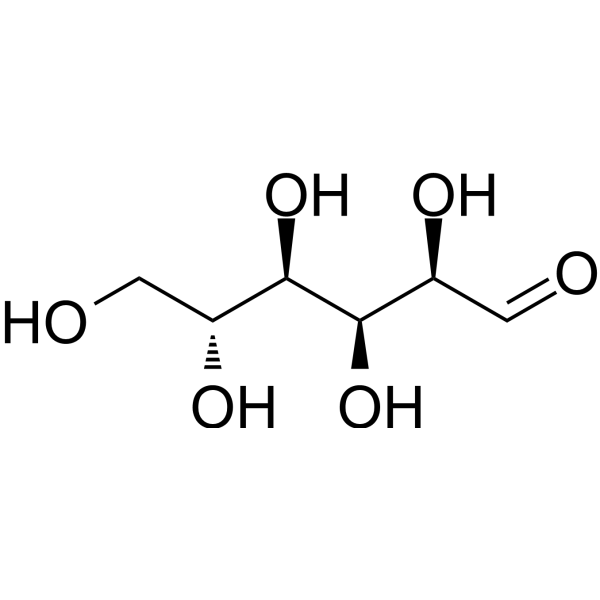
HY-B0389
D-GlucoseMonosaccharide -

HY-B0400R
D-Sorbitol (Standard)Sugar Alcohol -
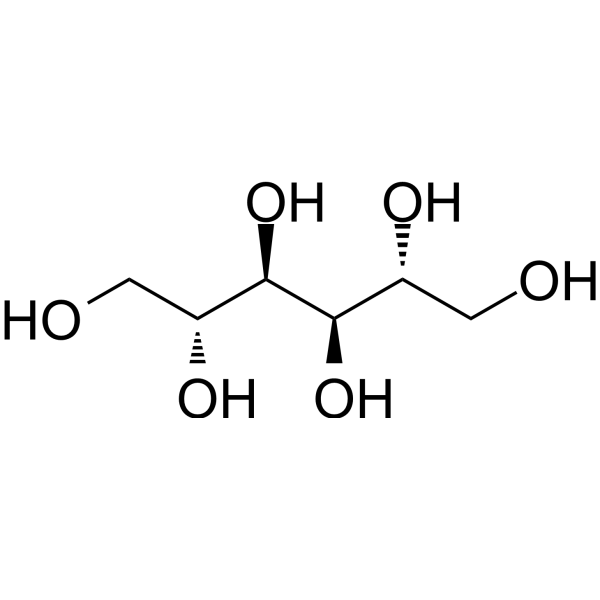
HY-N0378
D-MannitolResistant Sugar/Osmotic Diuretics -
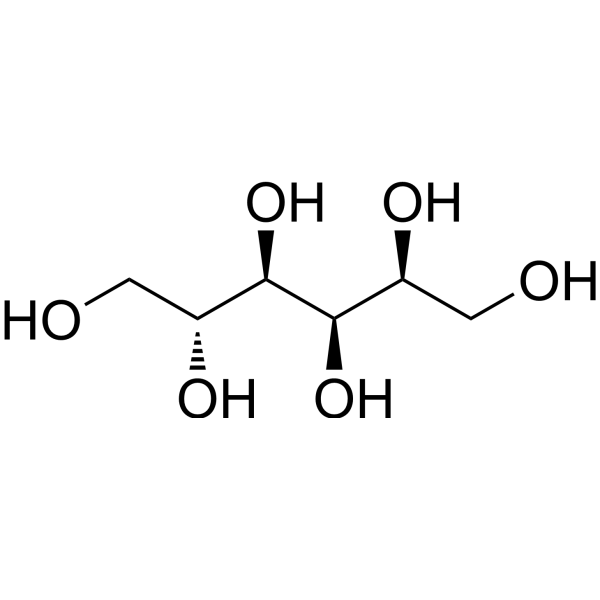
HY-B0400
D-SorbitolSugar Alcohol -
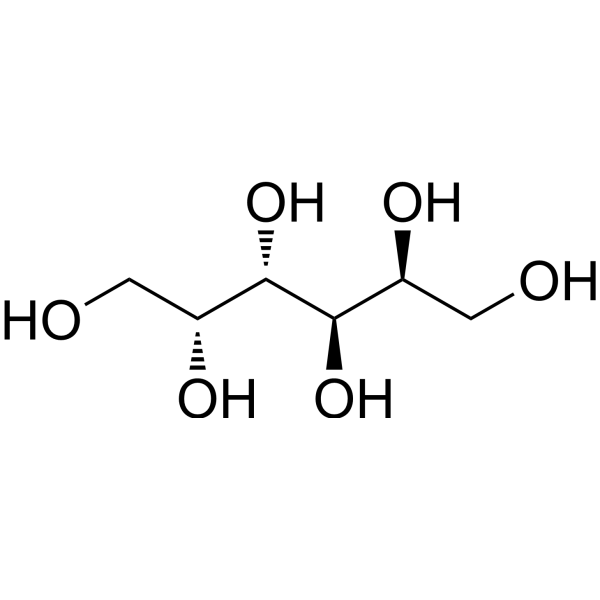
HY-Y0418
DulciteSugar Alcohol -
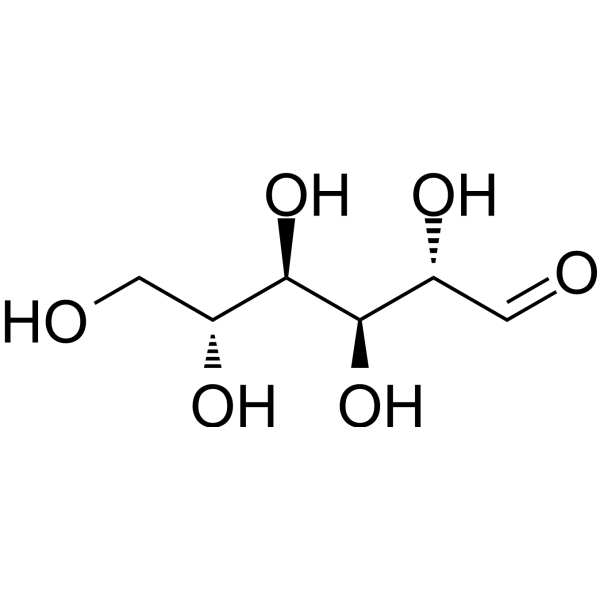
HY-N0379
D-MannoseEndogenous Metabolite -
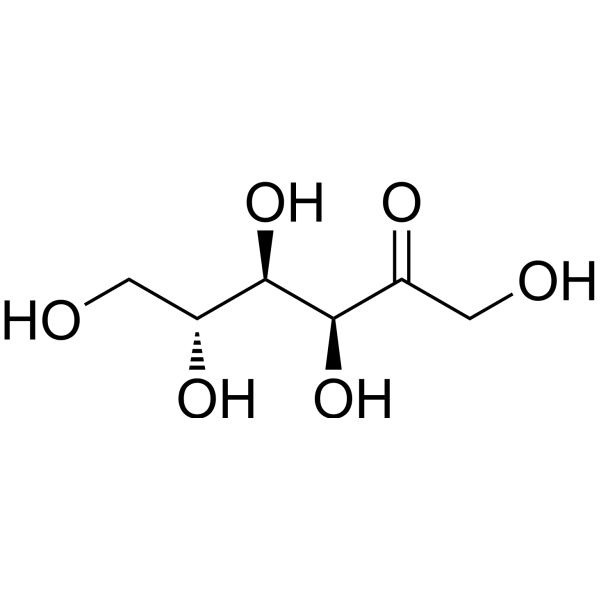
HY-N7092
D-FructoseEndogenous Metabolite -
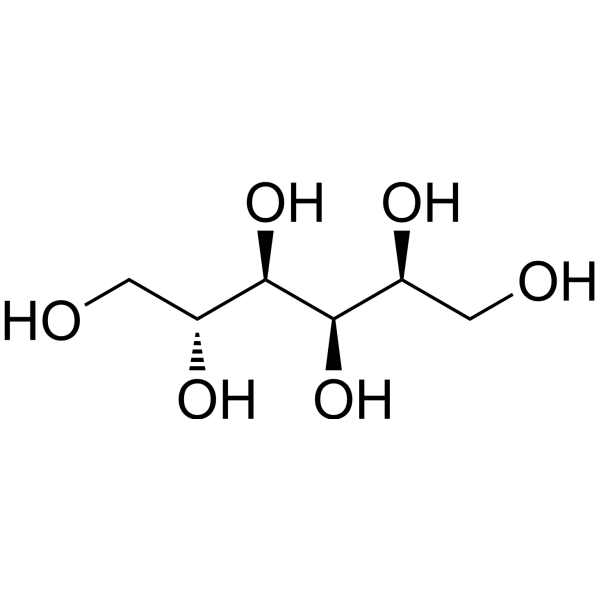
HY-B0400B
D-Sorbitol, for cell cultureSix-Carbon Sugar Alcohol -

HY-N0378AGL
D-Mannitol, M200 (GMP Like)Resistant Sugar -

HY-N0378BGL
D-Mannitol, M100 (GMP Like)Resistant Sugar -

HY-N7092R
D-Fructose (Standard)Endogenous Metabolite -

HY-N0379R
D-Mannose (Standard)Endogenous Metabolite


Product Information
Information
Application
The compound is the grade of analytical standard, which is the reference standard supplied assay. It is commonly used in qualitative, quantitative and methodological research experiments in HPLC, GC and MS.


Chemical Information
-
CAS No. 69-65-8
-
Appearance Solid
-
Molecular Weight 182.17
-
Formula C6H14O6
-
Color White to off-white
-
SMILES
OC[C@H]([C@H]([C@@H]([C@@H](CO)O)O)O)O
-
Synonyms
Mannitol(Standard); Mannite (Standard)
-
Structure Classification
-
Initial Source
-
Shipping
Room temperature in continental US; may vary elsewhere.
-
Storage
Please store the product under the recommended conditions in the Certificate of Analysis.


Purity & Documentation
-
SDS (394 KB)
- English - EN (394 KB)
- Français - FR (394 KB)
- Deutsch - DE (394 KB)
- Norwegian - NO (394 KB)
- Español - ES (394 KB)
- Swedish - SV (394 KB)
- Italian - IT (394 KB)
- Korean - KR (394 KB)
- Portuguese - PT (394 KB)
-
Handling Instructions (2659 KB)
References
[1]. Tan, K., et al., The mannitol operon repressor MtlR belongs to a new class of transcription regulators in bacteria. J Biol Chem, 2009. 284(52): p. 36670-9. [Content Brief]
[2]. Nishiyama, A., et al., Mannitol lowers fat digestibility and body fat accumulation in both normal and cecectomized rats. J Nutr Sci Vitaminol (Tokyo), 2009. 55(3): p. 242-51. [Content Brief]
[3]. Hanieh, H. and E. Sakaguchi, Effect of D-mannitol on feed digestion and cecotrophic system in rabbits. Anim Sci J, 2009. 80(2): p. 157-62. [Content Brief]
[4]. Kaufmann AM, et al. Aggravation of vasogenic cerebral edema by multiple-dose mannitol. J Neurosurg. 1992;77(4):584-589. [Content Brief]
[5]. Xiao J, et al. Sakaguchi E. Mannitol improves absorption and retention of calcium and magnesium in growing rats. Nutrition. 2013;29(1):325-331. [Content Brief]
[6]. Paczynski RP, et al. Multiple-dose mannitol reduces brain water content in a rat model of cortical infarction. Stroke. 1997;28(7):1437-1444. [Content Brief]
[7]. Jeon HJ, et al. D-Mannitol Induces a Brown Fat-like Phenotype via a β3-Adrenergic Receptor-Dependent Mechanism. Cells. 2021;10(4):768. Published 2021 Mar 31. [Content Brief]


D-Mannitol (Standard) Related Classifications
HY-N0378R Related Classifications
 Powered by Bioz