



Dipentyl phthalate

Based on 1 Customer Validation
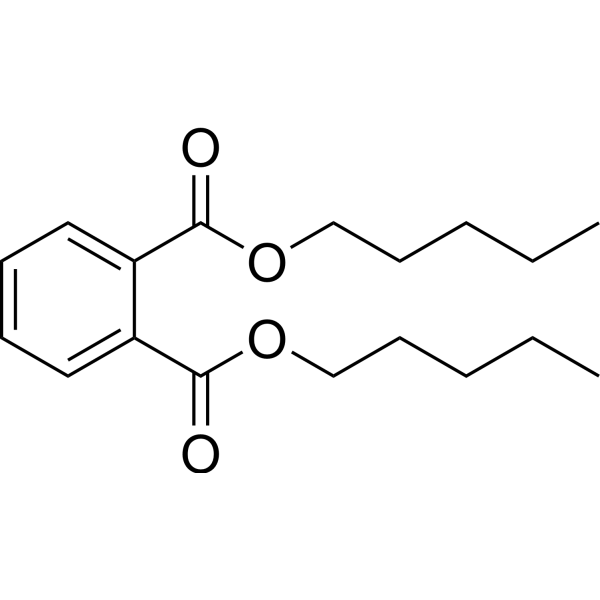
Dipentyl phthalate is an endocrine-disrupting phthalate plasticizer. Dipentyl phthalate increases AMPK phosphorylation and decreases AKT1 phosphorylation and SIRT1 levels. Dipentyl phthalate reduces adrenocorticotropic hormone levels. Dipentyl phthalate is a testicular toxicant.
For research use only. We do not sell to patients.
- Purity : 99.5%
- CAS No.: 131-18-0
- Formula: C18H26O4
- Molecular Weight:306.40
-
Storage:
Store at room temperature 3 years.
In solvent -80°C, 2 years , -20°C, 1 year

To place orders, for customer services and technical support, please contact: MedChemExpress USA
Tel: 609-228-6898 E-mail: [email protected] [email protected]


-
 Biological Activity
-
Chemical Information
-
Solvent & Solubility
- Protocols
- Purity & Documentation
- References
-
 Help & FAQs


-
HY-Y0304
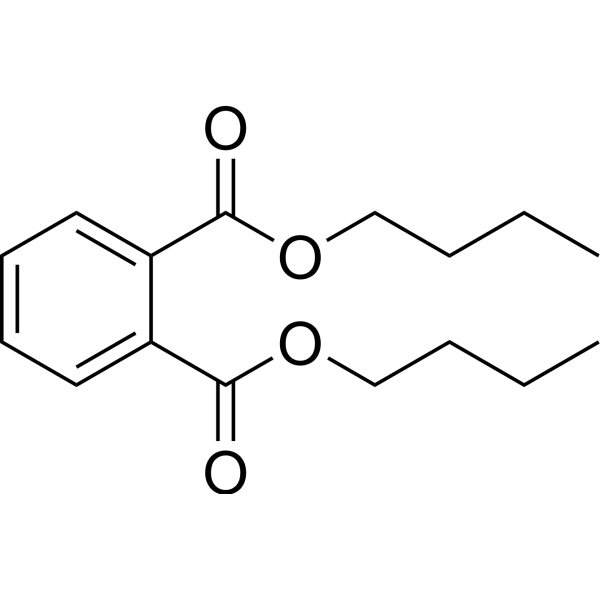
Dibutyl phthalatePlasticizer -

HY-W013816R
Dipentyl phthalate (Standard)Plasticizer -
HY-B1945
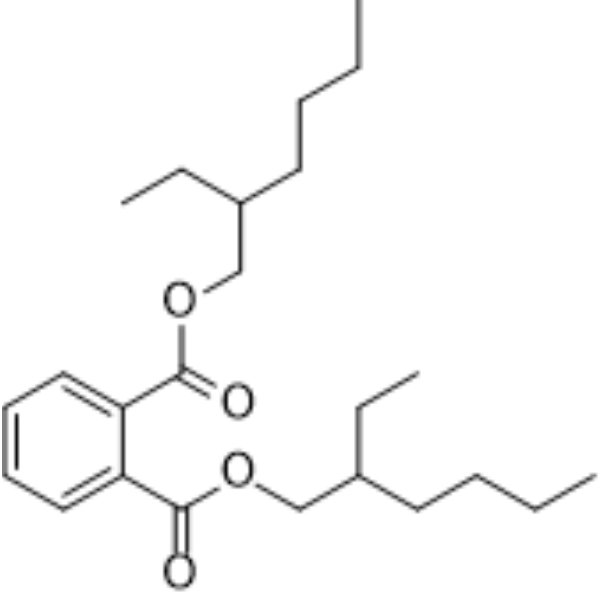
DEHPEndogenous Metabolite -

HY-B1945R
DEHP (Standard)Endogenous Metabolite -
HY-15142
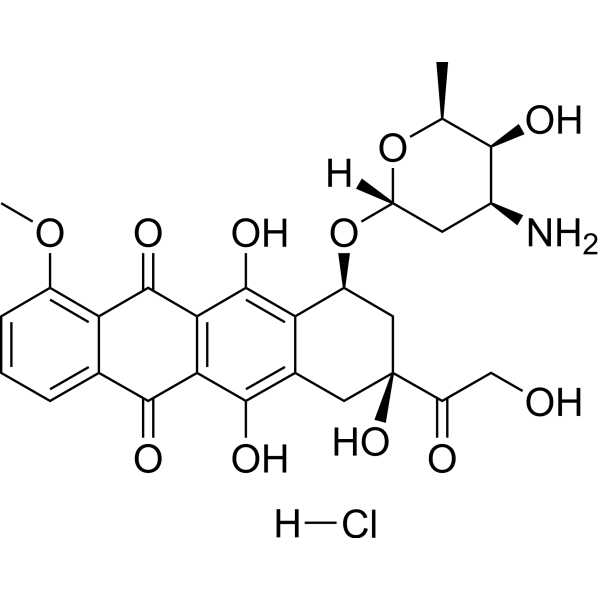
Doxorubicin hydrochlorideTopoisomerase Inhibitor -

HY-Y0284
Diethyl phthalatePlasticizer -
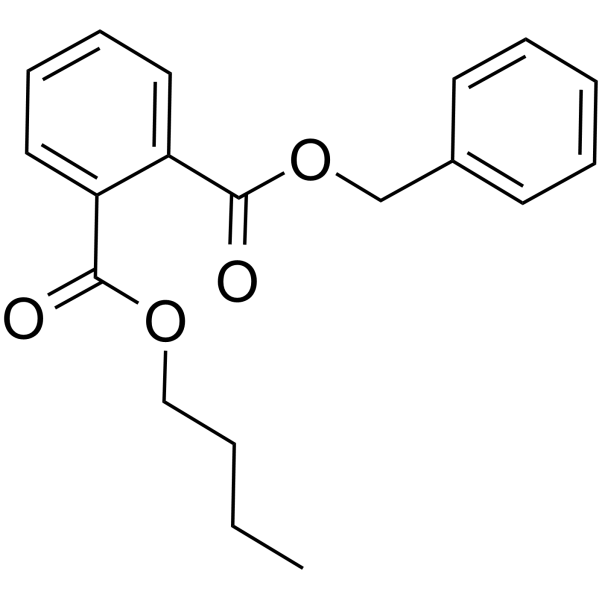
HY-W011338
Benzyl butyl phthalateAhR Activator -

HY-15142R
Doxorubicin hydrochloride (Standard)Topoisomerase Inhibitor -
![Benzo[k]fluoranthene](https://file.medchemexpress.com/product_pic/hy-23498.gif)
HY-23498
Benzo[k]fluoranthenePAH -

HY-W013755
Dioctyl phthalatePlasticizer -
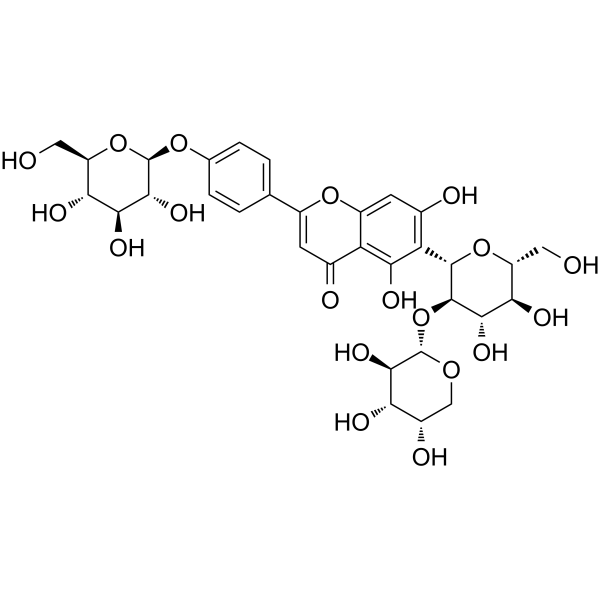
HY-N1419
VaccarinAKT/ERK/AMPK Agonists
All AMPK Isoforms
More

Biological Activity
Description


Chemical Information
-
CAS No. 131-18-0
-
Appearance Liquid (Density: 1.025 g/cm3)
-
Molecular Weight 306.40
-
Formula C18H26O4
-
Color Colorless to light yellow
-
SMILES
O=C(OCCCCC)C1=CC=CC=C1C(OCCCCC)=O
-
Shipping
Room temperature in continental US; may vary elsewhere.
-
Storage
Store at room temperature 3 years
In solvent -80°C 2 years -20°C 1 year


Solvent & Solubility
In Vitro:
DMSO : ≥ 100 mg/mL (326.37 mM; Hygroscopic DMSO has a significant impact on the solubility of product, please use newly opened DMSO)
* "≥" means soluble, but saturation unknown.
Please refer to the solubility information to select the appropriate solvent. Once prepared, please aliquot and store the solution to prevent product inactivation from repeated freeze-thaw cycles.
Storage method and period of stock solution: -80°C, 2 years; -20°C, 1 year. When stored at -80°C, please use it within 2 years. When stored at -20°C, please use it within 1 year.
Please refer to the solubility information to select the appropriate solvent. Once prepared, please aliquot and store the solution to prevent product inactivation from repeated freeze-thaw cycles.
Storage method and period of stock solution: -80°C, 2 years; -20°C, 1 year. When stored at -80°C, please use it within 2 years. When stored at -20°C, please use it within 1 year.
Concentration (start) × Volume (start) = Concentration (final) × Volume (final)


Purity & Documentation
-
Data Sheet (272 KB)
-
SDS (622 KB)
- English - EN (622 KB)
- Français - FR (622 KB)
- Deutsch - DE (622 KB)
- Norwegian - NO (622 KB)
- Español - ES (622 KB)
- Swedish - SV (622 KB)
- Italian - IT (622 KB)
- Korean - KR (622 KB)
- Portuguese - PT (622 KB)
-
Handling Instructions (2659 KB)
References
[1]. Haiqiong Chen, et al. Exposure to dipentyl phthalate in utero disrupts the adrenal cortex function of adult male rats by inhibiting SIRT1/PGC-1α and inducing AMPK phosphorylation. Environ Toxicol. 2023 May;38(5):997-1010. [Content Brief]
[2]. Bethany R Hannas, et al. Dipentyl phthalate dosing during sexual differentiation disrupts fetal testis function and postnatal development of the male Sprague-Dawley rat with greater relative potency than other phthalates. Toxicol Sci. 2011 Mar;120(1):184-93. [Content Brief]


Complete Stock Solution Preparation Table
Please refer to the solubility information to select the appropriate solvent. Once prepared, please aliquot and store the solution to prevent product inactivation from repeated freeze-thaw cycles.
Storage method and period of stock solution: -80°C, 2 years; -20°C, 1 year. When stored at -80°C, please use it within 2 years. When stored at -20°C, please use it within 1 year.
| Optional Solvent | Concentration Solvent Mass | 1 mg | 5 mg | 10 mg | 25 mg |
|---|---|---|---|---|---|
| DMSO | 1 mM | 3.2637 mL | 16.3185 mL | 32.6371 mL | 81.5927 mL |
| 5 mM | 0.6527 mL | 3.2637 mL | 6.5274 mL | 16.3185 mL | |
| 10 mM | 0.3264 mL | 1.6319 mL | 3.2637 mL | 8.1593 mL | |
| 15 mM | 0.2176 mL | 1.0879 mL | 2.1758 mL | 5.4395 mL | |
| 20 mM | 0.1632 mL | 0.8159 mL | 1.6319 mL | 4.0796 mL | |
| 25 mM | 0.1305 mL | 0.6527 mL | 1.3055 mL | 3.2637 mL | |
| 30 mM | 0.1088 mL | 0.5440 mL | 1.0879 mL | 2.7198 mL | |
| 40 mM | 0.0816 mL | 0.4080 mL | 0.8159 mL | 2.0398 mL | |
| 50 mM | 0.0653 mL | 0.3264 mL | 0.6527 mL | 1.6319 mL | |
| 60 mM | 0.0544 mL | 0.2720 mL | 0.5440 mL | 1.3599 mL | |
| 80 mM | 0.0408 mL | 0.2040 mL | 0.4080 mL | 1.0199 mL | |
| 100 mM | 0.0326 mL | 0.1632 mL | 0.3264 mL | 0.8159 mL |


Dipentyl phthalate Related Classifications
HY-W013816 Related Classifications
 Powered by Bioz