



N0S Dyes
- 1
- 2
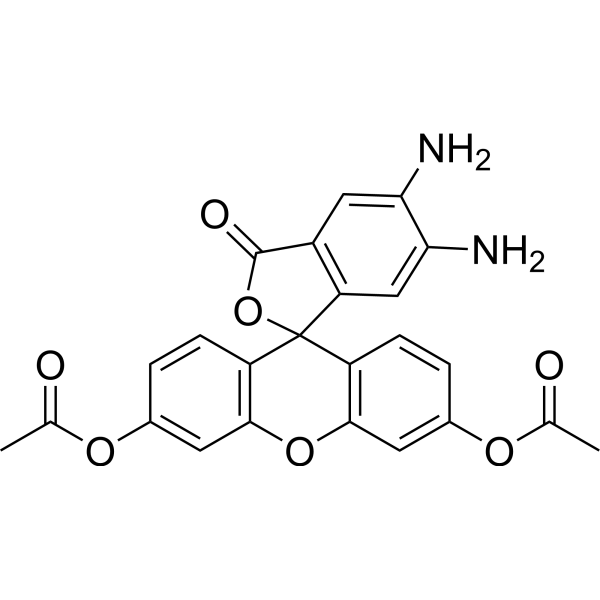
- Fòrmula: C24H18N2O7
- Peso molecular: 446.41
DAF-2DA (5,6-Diaminofluorescein diacetat) is most widely probe for NO measurement.
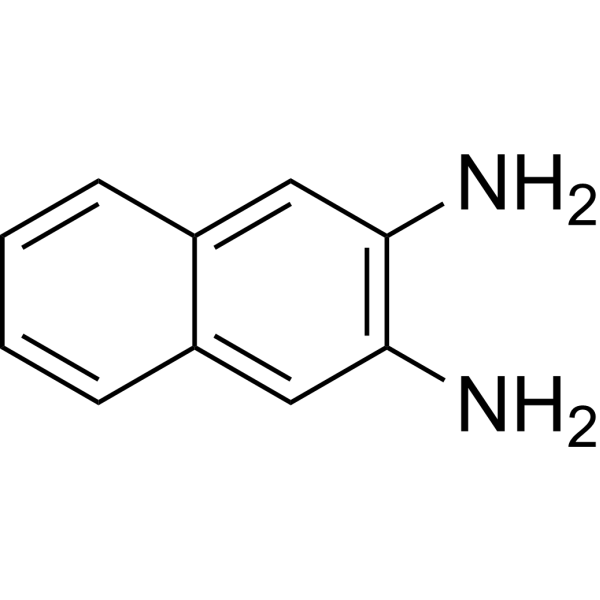
- Fòrmula: C10H10N2
- Peso molecular: 158.20
2,3-Diaminonaphthalene is a fluorescent reagent used to detect selenium and nitric oxide (NO). 2,3-Diaminonaphthalene binds to selenium to form pyrazolene selenol, with excitation/emission maxima at 365 nm and 525 nm, respectively. 2,3-Diaminonaphthalene binds to NO2− to form the fluorescent product, 1-(H)-napthotriazole, with excitation/emission maxima at 360 nm and 440 nm, respectively.
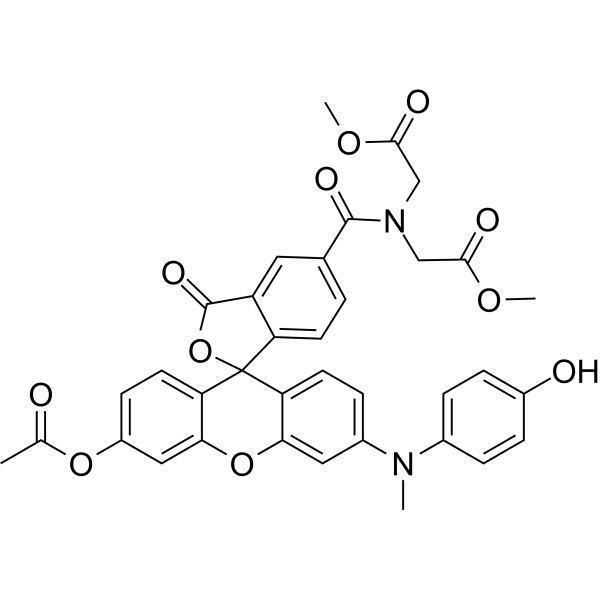
- Fòrmula: C36H30N2O11
- Peso molecular: 666.63
HKGreen-4I is a highly sensitive green fluorescent probe for the specific detection of ONOO- in living cells with a maximum excitation wavelength and emission wavelength of 520 nm and 543 nm, respectively.
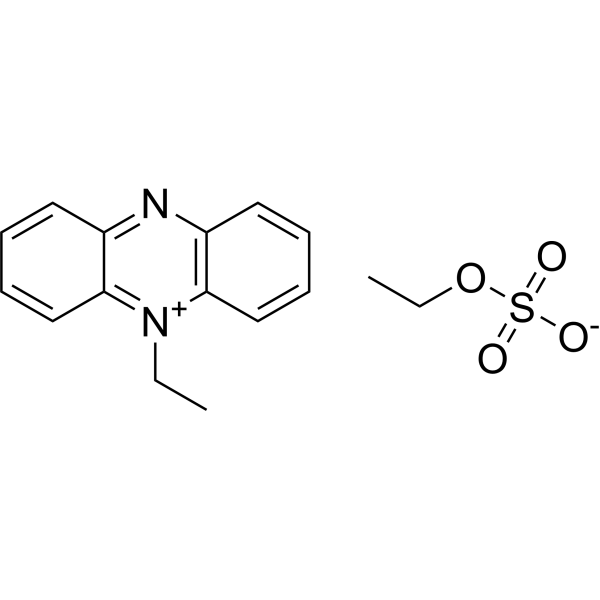
- Fòrmula: C16H18N2O4S
- Peso molecular: 334.39
Phenazine ethosulfate is a cationic dye (Ex=390 nm, Em=530 nm) and electron acceptor that can be used in dye-linked enzyme assays. Phenazine ethosulfate exhibits weak, pH-dependent fluorescence properties and serves as an oxidative substrate. Phenazine ethosulfate promotes the reduction of equine heart metmyoglobin to ferrohemoglobin. As an intermediate, Phenazine ethosulfate can be used in combination with ascorbic acid for the detection of nitric oxide reductase activity.
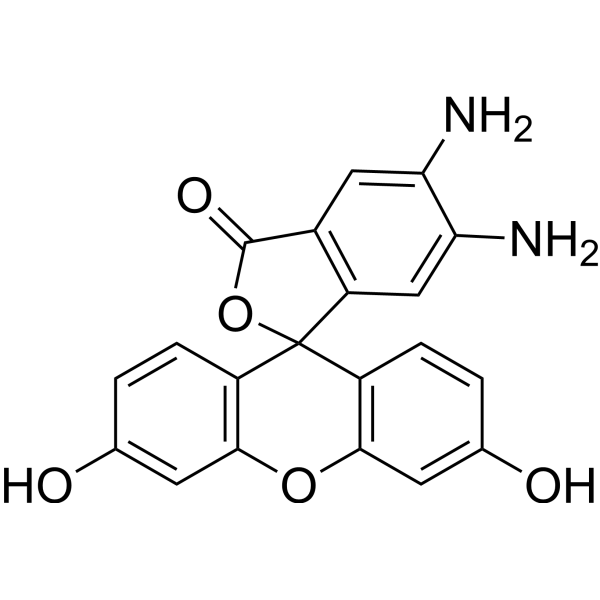
- Fòrmula: C20H14N2O5
- Peso molecular: 362.34
4,5-Diaminofluorescein is a fluorescent detector for nitric oxide (NO) in cells and tissues.

- Fòrmula: C64H59BF2N14O4
- Peso molecular: 1137.05
BOD-Tz-TMR is a fluorescent probe used for nitric oxide (NO) detection and atherosclerotic plaque imaging.BOD-Tz-TMR has a detection limit of 31 nM for NO. BOD-Tz-TMR functions via Förster resonance energy transfer (FRET) and bioorthogonal reactions, in which the tetrazine linker quenches fluorescence through the energy transfer to dark state (ETDS) mechanism. The interaction of BOD-Tz-TMR with NO triggers a ratiometric shift in fluorescence from BODIPY (Ex/Em: 488 nm/512 nm, green channel) to TMR (Em: 592 nm, red channel). BOD-Tz-TMR labels macrophages through a bioorthogonal reaction with BCN, enabling its targeted accumulation at atherosclerotic plaque sites to detect endogenous NO associated with lesion progression. BOD-Tz-TMR can be used in studies related to atherosclerosis.

- Fòrmula: C34H38N2O2
- Peso molecular: 506.68
TPE-2E N-oxide is a fluorescent probe used for hypoxia detection and tumor hypoxia imaging. Due to its active intramolecular motion, TPE-2E N-oxide shows no fluorescence in aqueous solution. In hypoxic environments, its N-oxide group undergoes two-electron reduction by CYP450 reductase and other heme protein reductases expressed under hypoxia, forming hydrophobic aggregates that trigger aggregation-induced emission through the restriction of intramolecular motion. TPE-2E N-oxide exhibits selective lipid droplet localization in cells. The absorption wavelength of TPE-2E N-oxide in dichloromethane is 313 nm; in a 99% hexane/dichloromethane mixed system, its excitation wavelength is 330 nm and emission wavelength is 460 nm. For in vitro cell imaging, excitation is performed at 405 nm, with an emission wavelength range of 430-560 nm.

- Fòrmula: C18H16BF2N3
- Peso molecular: 323.15
PNO1 is a fluorescent probe for pulmonary fibrosis detection. The detection mechanism of PNO1 relies on sensing upregulated nitric oxide (NO) in the pulmonary fibrosis (PF) microenvironment. PNO1 contains an aniline group that reacts with NO or its derivatives under acidic conditions to form an N-nitrosylated intermediate, which is subsequently converted into a diazonium salt and undergoes deamination, eliminating the intramolecular electron transfer quenching effect and triggering a fluorescence turn-on response. The excitation wavelength of PNO1 includes 545 nm in in vitro solution studies, while an excitation range of 520-550 nm is used for cell, tissue and in vivo imaging; its emission wavelength centers at 572 nm in the unreacted state, and shifts to 559 nm with enhanced fluorescence intensity upon binding to NO. PNO1 can be used for pulmonary fibrosis research.
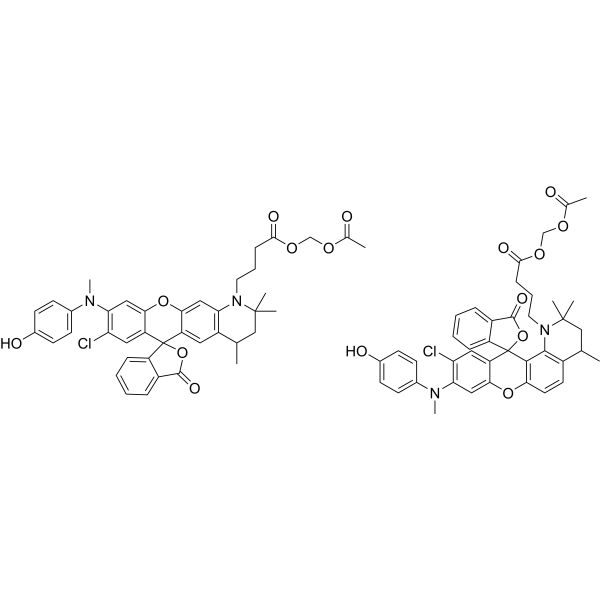
- Fòrmula: C80H78Cl2N4O16
- Peso molecular: 1422.40
HKYellow-AM (6/12-mixture) is a yellow fluorescent probe that can detect ONOO- in living cells and tissues with high selectivity and sensitivity without cytotoxicity.
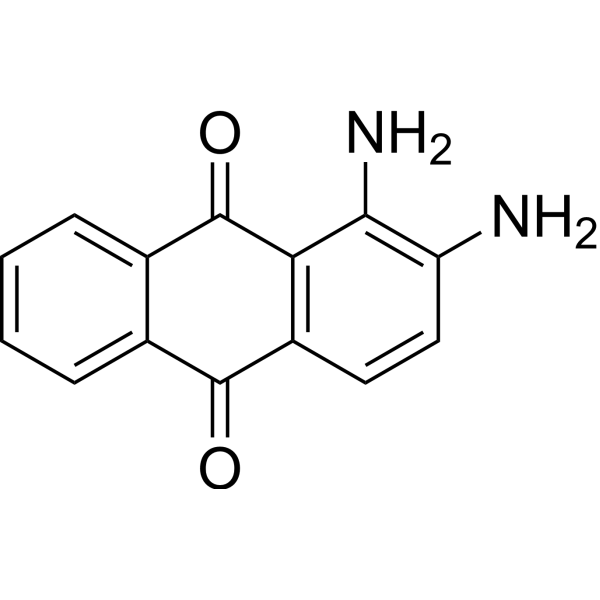
- Fòrmula: C14H10N2O2
- Peso molecular: 238.25
1,2-Diaminoanthraquinone is a sensitivity, specificity and nontoxic nitric oxide (NO) fluorescent probe. 1,2-Diaminoanthraquinone can be used to detect NO productions in live cell and animals with a maximum of absorption at about 540 nm and a detection limit of 5 μM for NO.
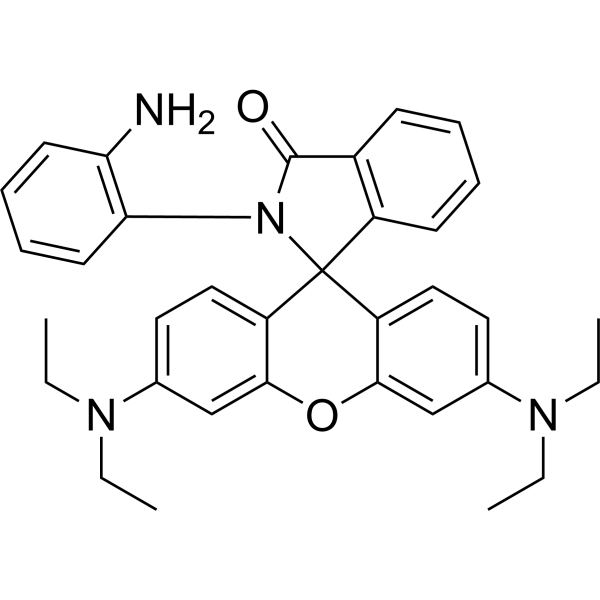
- Fòrmula: C34H36N4O2
- Peso molecular: 532.68
RB-OPD (NO-red) is a o-phenylenediamine (OPD)-locked rhodamine nitric oxide (NO) fluorescent probe with great sensitivity and selectivity (λex=550 nm, λem=590 nm).

- Fòrmula: C20H10F2O5
- Peso molecular: 368.29
2',7'-Difluorofluorescein (Oregon green 488) is a fluorescein derivative and a pH-sensitive fluorescent probe (pKa ~4.7). Upon excitation at 488 nm, 2',7'-Difluorofluorescein exhibits pH-sensitive fluorescence intensity through the formation of dianions, while its pH sensitivity decreases under excitation at 450 nm, allowing its use in ratiometric pH analysis. 2',7'-Difluorofluorescein can be used for the quantitative analysis of pH values in the range of 2-7 in submicron aerosol particles. 2',7'-Difluorofluorescein undergoes buffer-mediated and buffer-free excited-state proton transfer between different protonated forms, and its cationic form undergoes rapid excited-state deprotonation. 2',7'-Difluorofluorescein is resistant to photodegradation, maintains stable absorption and fluorescence properties within the physiological pH range, and serves as a fluorescent protein label, a component of Ca2+ indicators, a fluorescent imaging agent, and an anisotropy probe.

- Fòrmula: C48H54BF2IN8O5
- Peso molecular: 998.71

- Fòrmula: C28H31N5O3S
- Peso molecular: 517.64
PYSNO is a lysosome-targeted fluorescent probe based on a pyridazinone skeleton (λem=515-565 nm, λex=405 nm) that can be used to track nitric oxide (NO) production in vivo. PYSNO exhibits a rapid, highly sensitive and highly selective "turn-on" response to endogenous and exogenous NO by blocking photoinduced electron transfer and regulating radiative decay rates. PYSNO enables precise in vivo monitoring in a mouse model of myocardial fibrosis and can be applied to the research of related diseases.

- Fòrmula: C30H36BN3O4S
- Peso molecular: 545.50

- Fòrmula: C27H27N3O2
- Peso molecular: 425.52
NIR-PN1 is a blood-brain barrier-permeable near-infrared fluorescent indicator targeting peroxynitrite anion (ONOO−) (Ex/Em = 510 nm/670 nm). NIR-PN1 reacts with ONOO− to trigger a strong near-infrared fluorescence enhancement, enabling the detection of ONOO− flux. NIR-PN1 allows the imaging of ONOO− flux in various Parkinson's disease models. NIR-PN1 is applicable to Parkinson's disease-related research.

- Fòrmula: C37H51B2NO6Si
- Peso molecular: 655.51

- Fòrmula: C34H31F2N3O11
- Peso molecular: 695.62

- Fòrmula: C25H19N5O4
- Peso molecular: 453.45
HDAC-IN-101 is a HDAC1 inhibitor and nitroreductase/pH-activated fluorescent inducer, with an IC50 of 65 nM against human HDAC1. HDAC-IN-101 blocks cancer cell proliferation by inhibiting HDAC1. HDAC-IN-101 is reduced by overexpressed nitroreductase to generate H6AQ (Ex/Em = 450 nm/500 nm), a product that emits fluorescence under low pH conditions. HDAC-IN-101 is applicable for cancer-related research.

- Fòrmula: C41H42N6O5S
- Peso molecular: 730.87
Golgi-NO is a Golgi-targeted fluorescent probe for nitric oxide (NO) (Ex/Em: 560 nm/589 nm). Golgi-NO exhibits excellent selectivity for various potential interfering substances. Golgi-NO can be used to study the function of NO within the Golgi apparatus in disease models such as Alzheimer's disease (AD).
- 1
- 2



