



Curdlan
Based on 2 publication(s) in Google Scholar
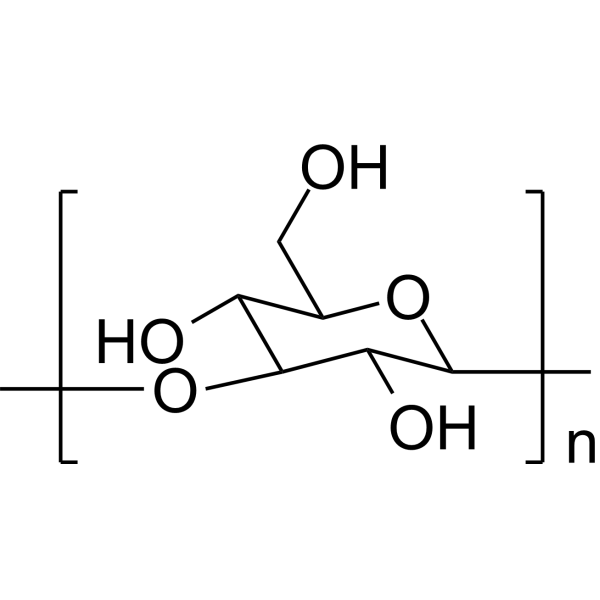
Curdlan is a polysaccharide found in bacteria, consisting of a glucose homopolymer with β-1,3-glycosidic linkages. Curdlan can be recognized by Dectin-1 (a C-type lectin receptor), inducing immune responses in tissue mast cells and enhancing dendritic cell effects in tumor immunity. Curdlan holds potential for research in cancer and immune-inflammatory diseases.
For research use only. We do not sell to patients.
- Purity : 98.01%
- CAS No.: 54724-00-4
- Formula: (C6H10O5)n
-
Storage:Powder -20°C, 3 years , 4°C, 2 years ; In solvent -80°C, 6 months , -20°C, 1 month

To place orders, for customer services and technical support, please contact: MedChemExpress USA
Tel: 609-228-6898 E-mail: [email protected] [email protected]


-
 Biological Activity
-
Chemical Information
- Purity & Documentation
- References
-
 Help & FAQs


-
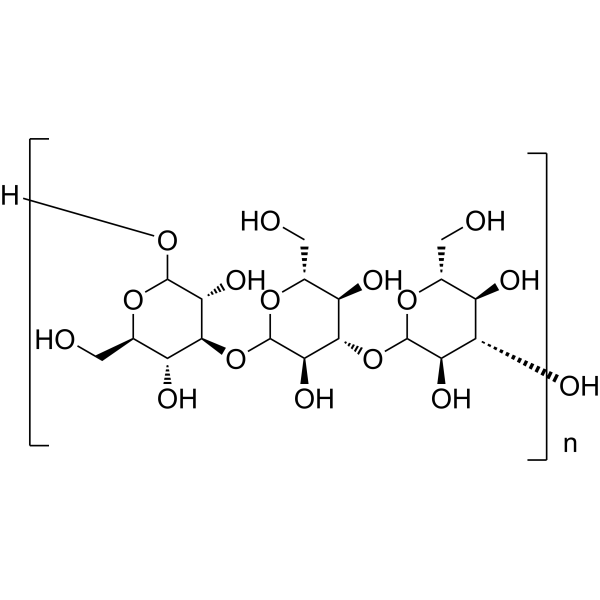
HY-119109
LaminaranImmunotherapy Agent -
HY-134816
D-GlucanDectin-1 Activator -
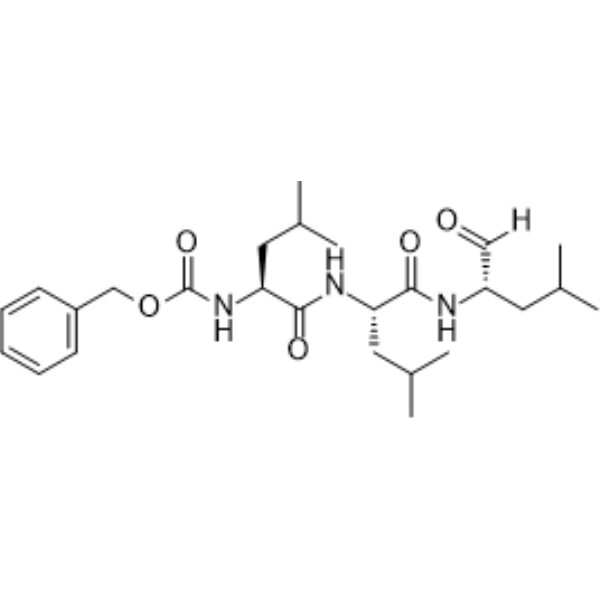
HY-13259
MG-132Proteasome Inhibitor -
HY-18739
Phorbol 12-myristate 13-acetatePKC Activator -
HY-Y1888
Corn oil -

HY-W145522
Pullulan, Viscosity(10%):15-180mPa.sGlucosic Polysaccharide -
HY-Y0873
PEG300Neutral Polymer -
HY-B0015
PaclitaxelAntitumor Agent -
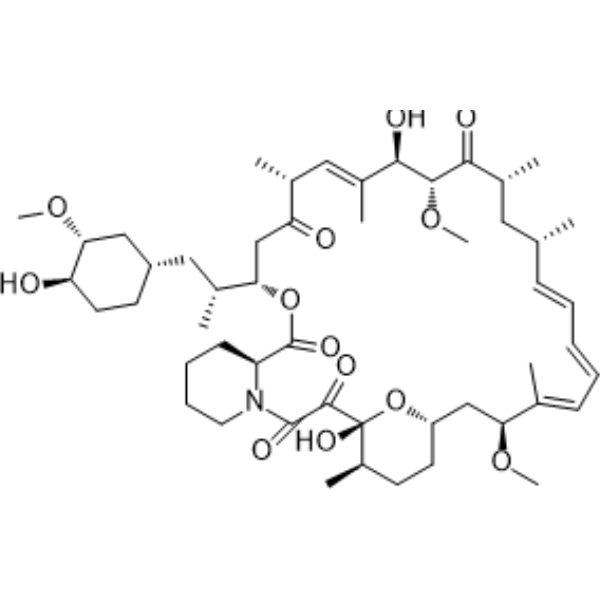
HY-10219
RapamycinmTOR Inhibitor -
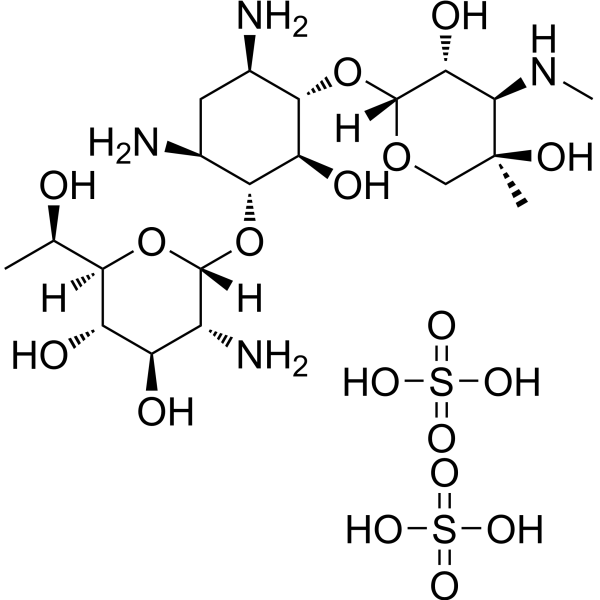
HY-17561
G-418 disulfateAminoglycoside Antibiotic -
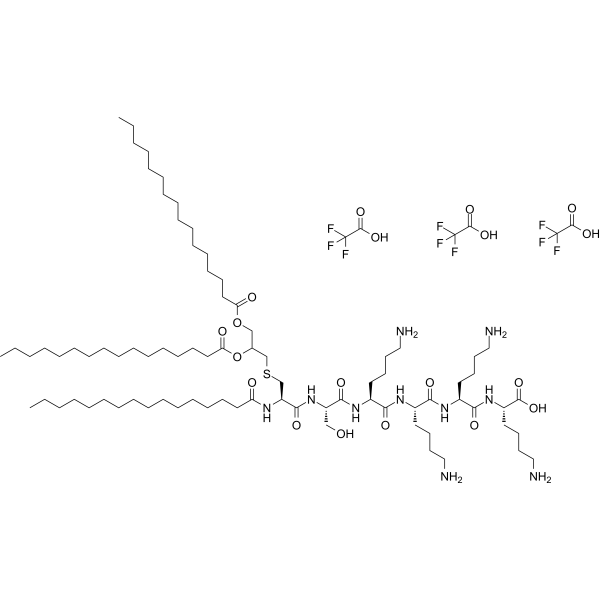
HY-P1180A
Pam3CSK4 TFATLR1/2 Agonist -
HY-N6653
LentinanNrf2 Activator
Publications Citing Use of MedChemExpress (MCE) Curdlan
More Customer Validation & Images

-
In Vivo Efficacy Study
-
In Vivo Efficacy Study
-
Histological Imaging/Staining
-
Flow Cytometry
-
Flow Cytometry


Biological Activity
Description
IC50 & Target
|
Dectin-1 |
In Vitro
Curdlan (10, 30, 100 μg/mL, 48 hours) activates dendritic cells by upregulating the expression of Dectin-1 and TLR4[2]. Curdlan (10, 30, 100 μg/mL, 24 hours) activates the immune effects of dendritic cells by regulating the cell cycle, enhancing dendritic cell migration ability, and increasing NO production[2]. Curdlan (50 μg/mL, 1 hour) induces tissue mast cells to modulate immune responses via the Dectin-1 receptor, stimulating their migration, synthesis of pro-inflammatory mediators, and production of ROS[3].
MedChemExpress (MCE) has not independently confirmed the accuracy of these methods. They are for reference only.
-
Cell Line:LPS-induced mouse dendritic cells (BM cells from C57BL/6 mice)
-
Concentration:10 μg/mL, 30 μg/mL, 100 μg/mL
-
Incubation Time:48 hours
-
Result:Increased the protein expression of Dectin-1 and TLR4.
-
Cell Line:LPS-induced mouse dendritic cells (BM cells from C57BL/6 mice)
-
Concentration:10 μg/mL, 30 μg/mL, 100 μg/mL
-
Incubation Time:24 hours
-
Result:Significantly enhanced the migration ability of dendritic cells.
-
Cell Line:LPS-induced mouse dendritic cells (BM cells from C57BL/6 mice)
-
Concentration:10 μg/mL, 30 μg/mL, 100 μg/mL
-
Incubation Time:24 hours
-
Result:Increased the proportion of dendritic cells in the G0/G1 phase.
In Vivo
MedChemExpress (MCE) has not independently confirmed the accuracy of these methods. They are for reference only.
-
Animal Model:B16F10 melanoma model in C57BL/6 mice (B16F10 cells were implanted subcutaneously into syngeneic mice)[2]
-
Dosage:10 mg/kg or 100 μg/mL
-
Administration:Method 1: Intraperitoneal injection (i.p.), every two days for 14 days (accompanied by subcutaneous injection of dendritic cells once a day for 14 days) Method 2: Pre-treated dendritic cells with curdlan (100 μg/mL) in vitro for 48 hours, then injected the dendritic cells subcutaneously into mice once a day for a total of 14 days. Note: B dendritic cells were activated by 16F10 melanoma cell lysate.
-
Result:Enhanced the antitumor immune response of dendritic cells.


Chemical Information
-
CAS No. 54724-00-4
-
Appearance Solid
-
Formula (C6H10O5)n
-
Color White to yellow
-
SMILES
OC[C@H]1O[C@@H](C)[C@H](O)C(OC)[C@@H]1O.[n]
-
Shipping
Room temperature in continental US; may vary elsewhere.
-
Storage
Powder -20°C 3 years 4°C 2 years In solvent -80°C 6 months -20°C 1 month


Publications (2)
-
Journal Impact Factor
-
Most Recent
-
Int J Biol Macromol
Curdlan/chitosan NIR-responsive in situ forming gel: An injectable scaffold for the treatment of epiphyseal plate injury. [Abstract]2025 May;308(Pt 1):142052. PMID: 40090650 -
Curdlan purchased from MedChemExpress. Usage Cited in: Int Immunopharmacol. 2026 Jan 28.
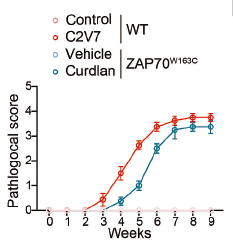
Curdlan (3 mg; i.p.; once a week for twice) developed robust polyarthritis in BALB/c mice within four weeks.
Curdlan purchased from MedChemExpress. Usage Cited in: Int Immunopharmacol. 2026 Jan 28.
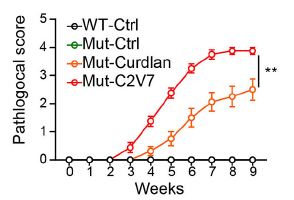
Curdlan (3 mg; i.p.; once a week for twice) induced inflammation in BALB/c-ZAP70W163C mice.
Curdlan purchased from MedChemExpress. Usage Cited in: Int Immunopharmacol. 2026 Jan 28.
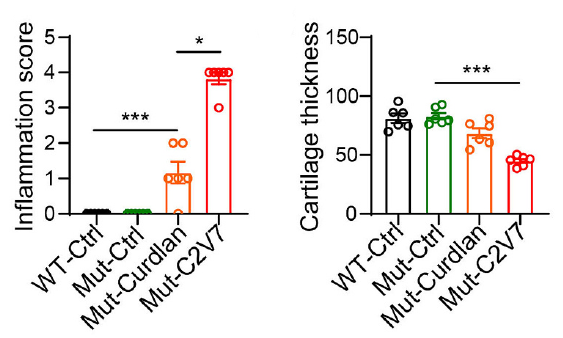
Curdlan (3 mg; i.p.; once a week for twice) exacerbated inflammatory infiltrates and cartilage degradation in SKG mice.
Curdlan purchased from MedChemExpress. Usage Cited in: Int Immunopharmacol. 2026 Jan 28.
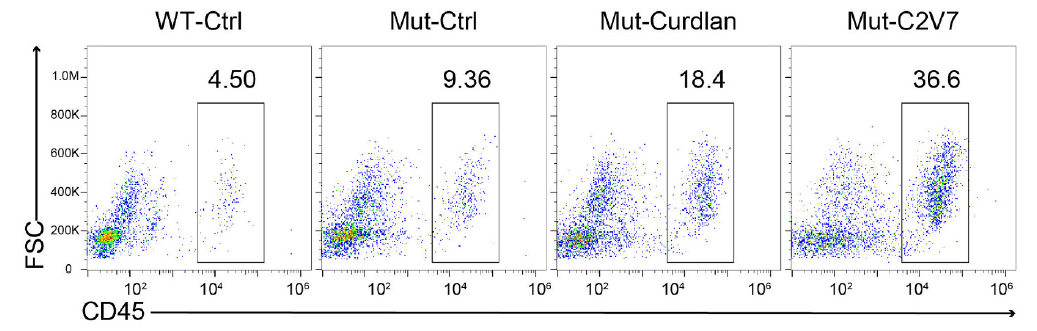
Curdlan (3 mg; i.p.; once a week for twice) significantly increased the proportion of CD45+ immune cells in the joints of SKG mice.
Curdlan purchased from MedChemExpress. Usage Cited in: Int Immunopharmacol. 2026 Jan 28.
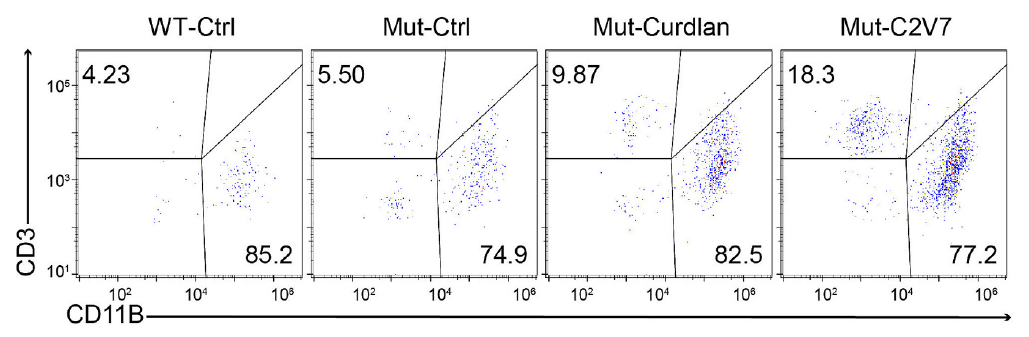
Curdlan (3 mg; i.p.; once a week for twice) significantly increased proportions of CD3+ T cells and CD11b+ myeloid cells in the soft tissues of SKG mouse ankle joints.


Purity & Documentation
-
Data Sheet (288 KB)
-
SDS (252 KB)
- English - EN (252 KB)
- Français - FR (252 KB)
- Deutsch - DE (252 KB)
- Norwegian - NO (252 KB)
- Español - ES (252 KB)
- Swedish - SV (252 KB)
- Italian - IT (252 KB)
- Korean - KR (252 KB)
- Portuguese - PT (252 KB)
-
Handling Instructions (2659 KB)
References
[1]. Masanori Miwa, et al. Food Applications of Curdlan. Food Hydrocolloids pp 119-124.
[2]. Kim HS, et al. Curdlan activates dendritic cells through dectin-1 and toll-like receptor 4 signaling. Int Immunopharmacol. 2016 Oct;39:71-78. [Content Brief]
[3]. Żelechowska P, et al. Curdlan stimulates tissue mast cells to synthesize pro-inflammatory mediators, generate ROS, and migrate via Dectin-1 receptor. Cell Immunol. 2020 May;351:104079. [Content Brief]

Calculators
Concentration (start) × Volume (start) = Concentration (final) × Volume (final)


Curdlan Related Classifications
HY-131166 Related Classifications
 Powered by Bioz