



Lck Inhibitor
Based on 2 publication(s) in Google Scholar
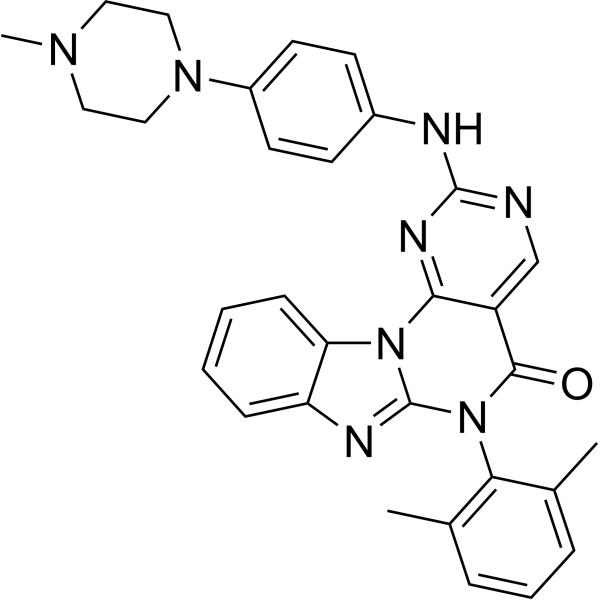
Lck Inhibitor is a potent, orally active Lck (lymphocyte specific kinase) inhibitor with IC50s of 7, 2.1, 4.2 and 200 nM for Lck, Lyn, Src and Syk kinases, respectively. Lck Inhibitor shows >1000-fold selectivity for Lck over MAPK, CDK and RSK family representatives. Lck Inhibitor inhibits T cell proliferation and in vivo models of arthritis.
For research use only. We do not sell to patients.
- Purity : 99.65%
- CAS No.: 847950-09-8
- Formula: C31H30N8O
- Molecular Weight:530.62
-
Storage:Powder -20°C, 3 years , 4°C, 2 years ; In solvent -80°C, 2 years , -20°C, 1 year

To place orders, for customer services and technical support, please contact: MedChemExpress USA
Tel: 609-228-6898 E-mail: [email protected] [email protected]


-
 Biological Activity
-
Chemical Information
-
Solvent & Solubility
- Protocols
- Purity & Documentation
- References
-
 Help & FAQs


-
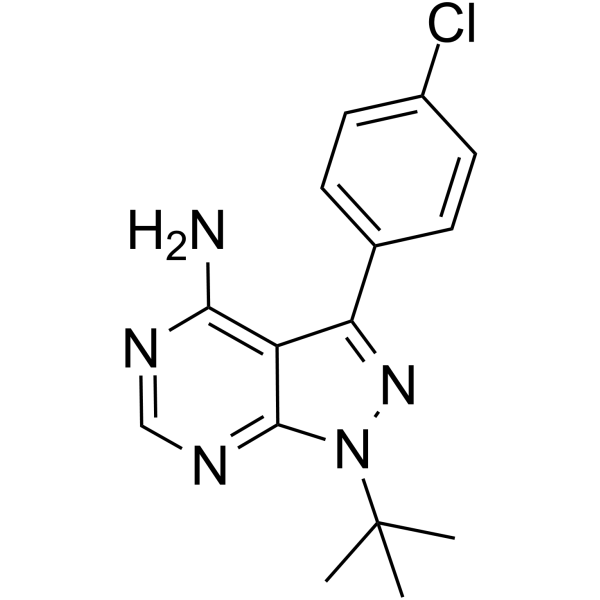
HY-13805
PP2Src Inhibitor -
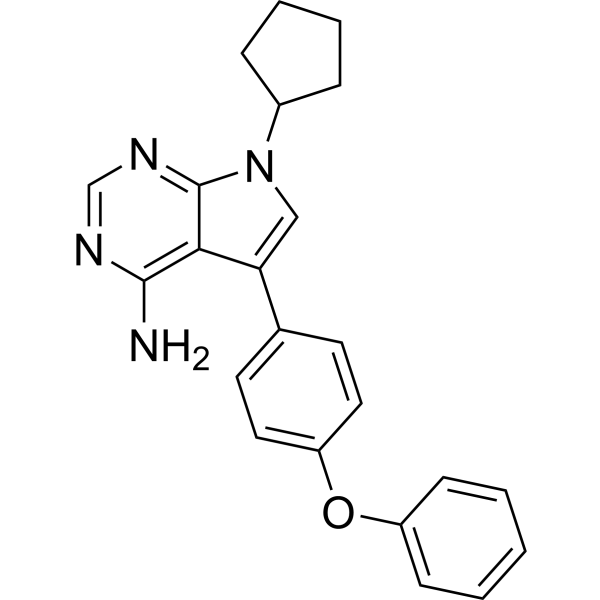
HY-108318
RK-24466Lck Inhibitor -
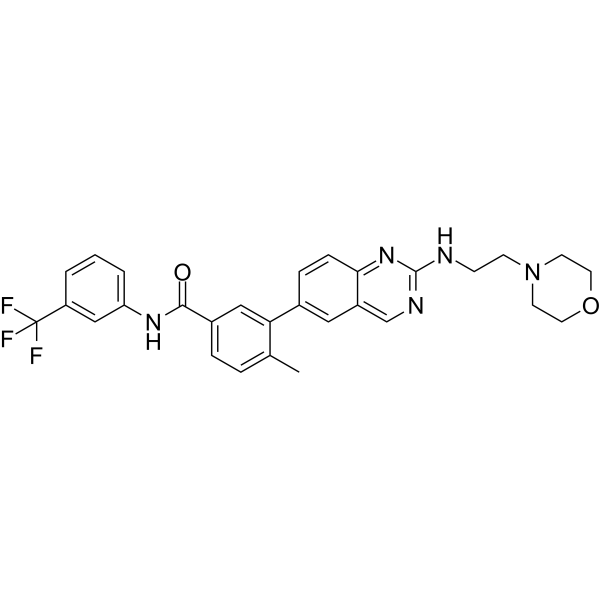
HY-18303
AMG-47aLck Inhibitor -
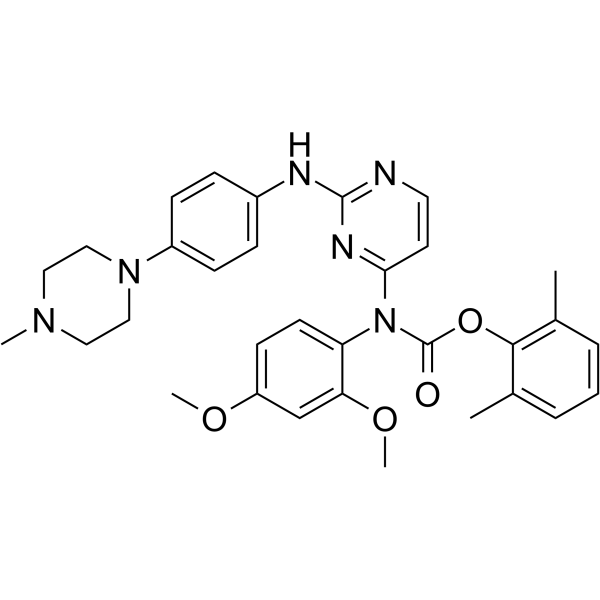
HY-12299
WH-4-023Src Inhibitor -
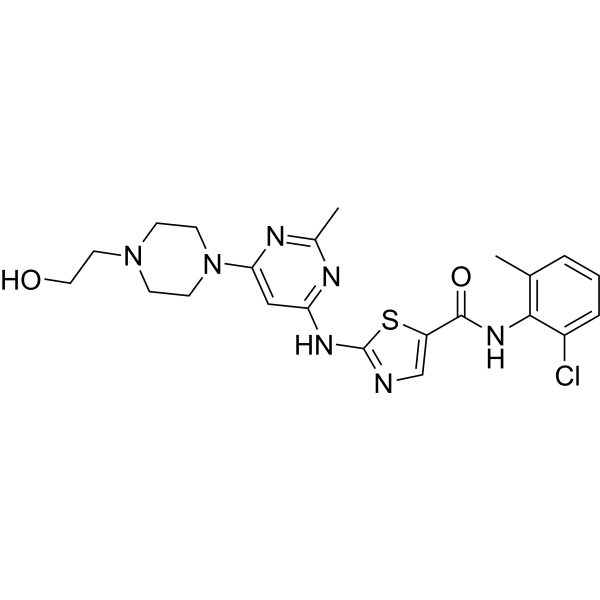
HY-10181
DasatinibSrc/Bcr-Abl Inhibitor -
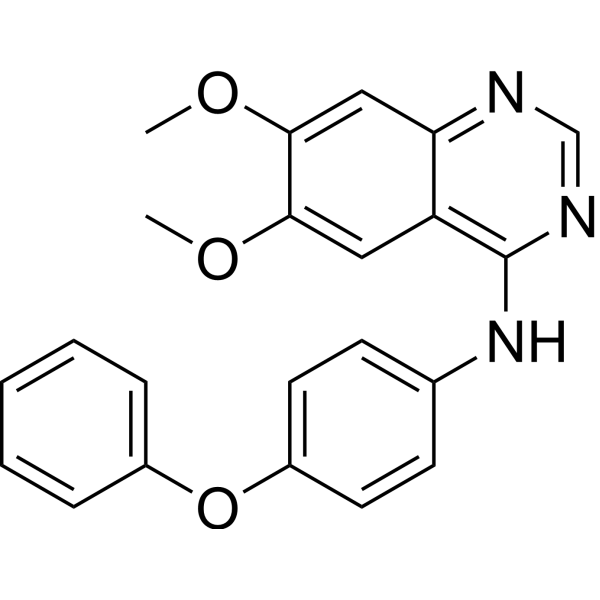
HY-101053
Src Inhibitor 1Src Inhibitor -
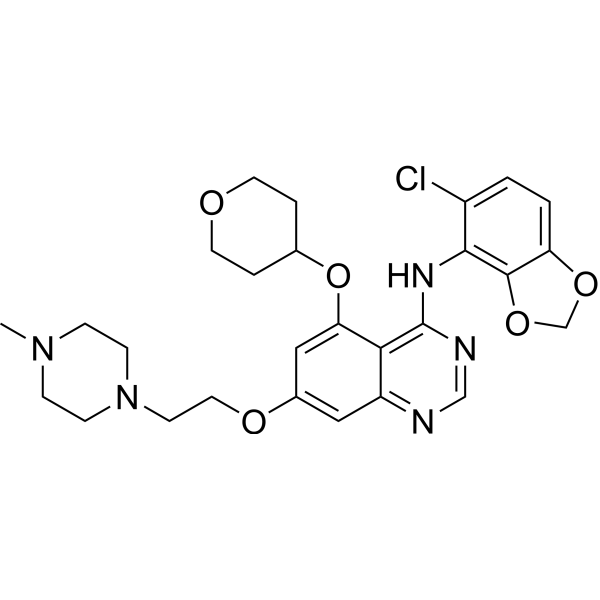
HY-10234
SaracatinibSrc Inhibitor -
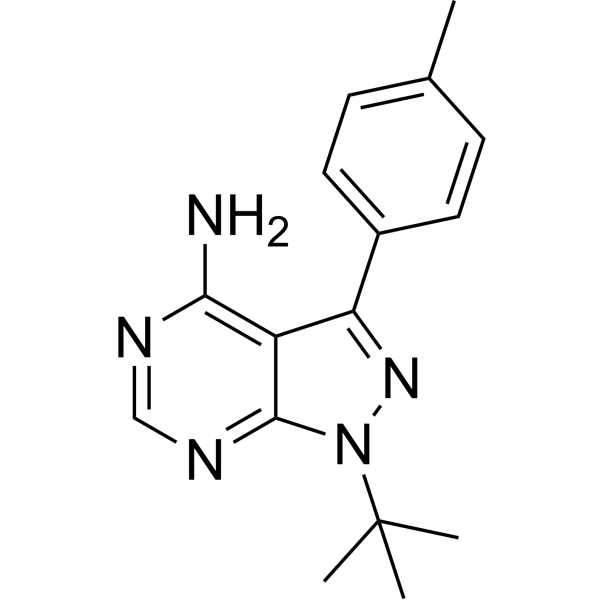
HY-13804
PP1Src Inhibitor -
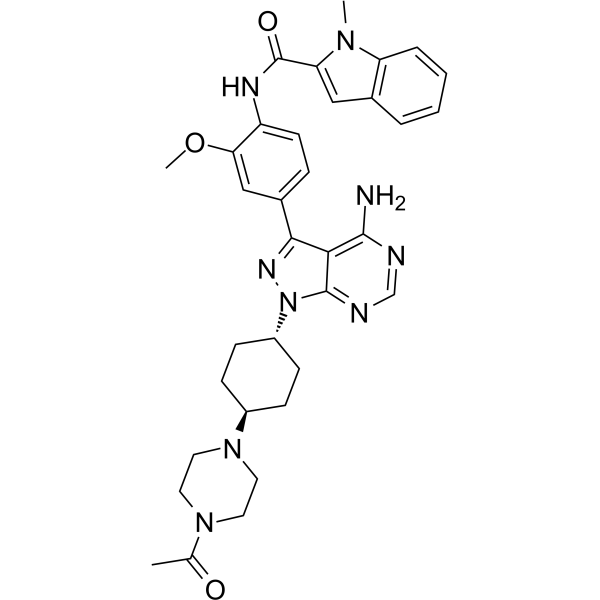
HY-11011
A-770041Lck Inhibitor -
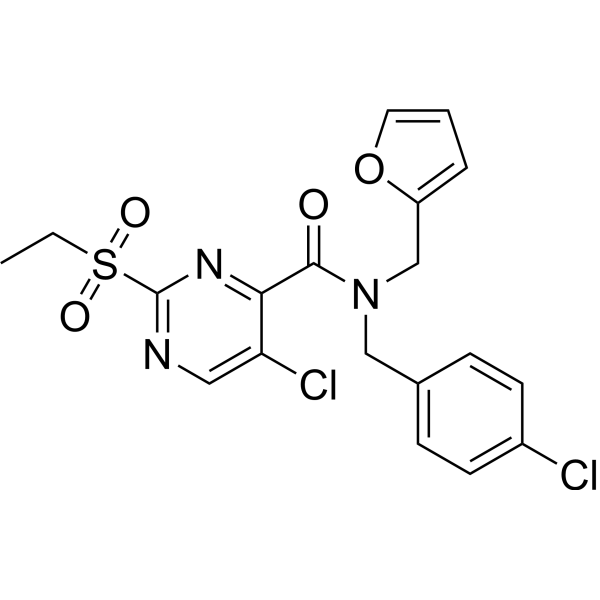
HY-136179
ZAP-180013ZAP-70 Inhibitor -
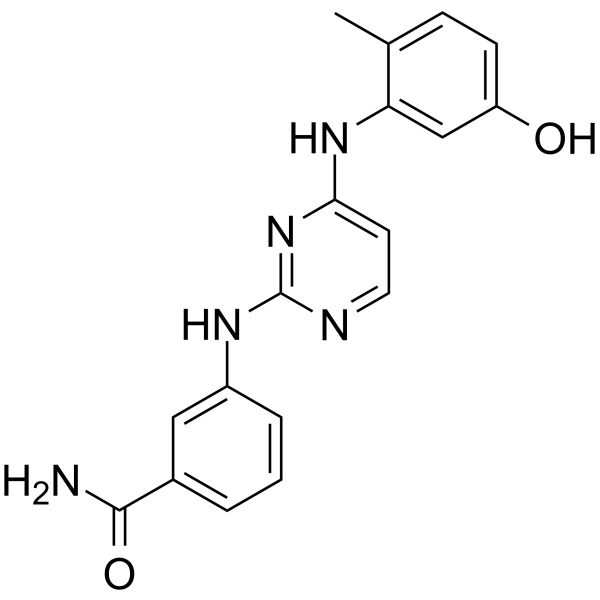
HY-10644
Lck inhibitor 2Tyrosine Kinase Inhibitor -
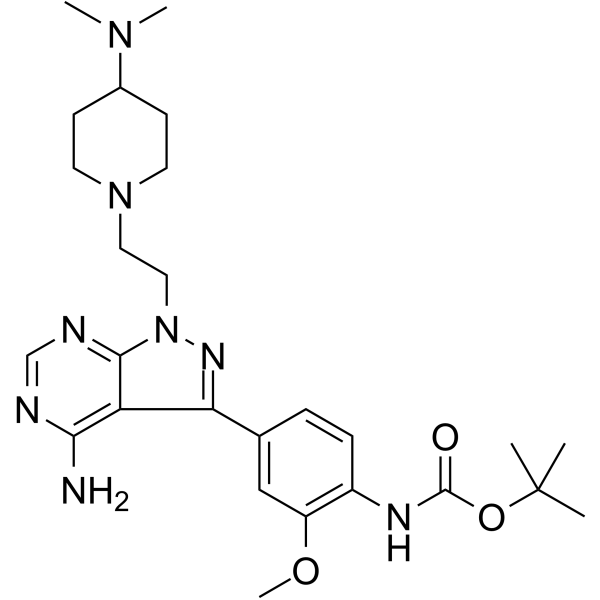
HY-112096
eCF506YES1/SRC inhibitor
Publications Citing Use of MedChemExpress (MCE) Lck Inhibitor
More Customer Validation & Images

-
WB
-
Flow Cytometry
-
Flow Cytometry


Biological Activity
Description
Cellular Effect
|
Cell Line

|
Type | Value | Description | References |
|---|---|---|---|---|
| Jurkat | IC50 |
0.49 μM
Compound: 25
|
Cytotoxicity against human Jurkat T cells assessed as cell viability after 72 hrs
Cytotoxicity against human Jurkat T cells assessed as cell viability after 72 hrs
|
[PMID: 18278858] |
| Jurkat | IC50 |
1.2 μM
Compound: 25
|
Inhibition of anti-CD3/CD28-induced IL2 secretion in human jurkat cells
Inhibition of anti-CD3/CD28-induced IL2 secretion in human jurkat cells
|
[PMID: 18278858] |
| Jurkat | IC50 |
1.6 μM
Compound: 25
|
Inhibition of human T-cell receptor zeta chain phosphorylation in Jurkat cells
Inhibition of human T-cell receptor zeta chain phosphorylation in Jurkat cells
|
[PMID: 18278858] |
| Lymphocyte | IC50 |
0.047 μM
Compound: 25
|
Inhibition of T cell activation in human peripheral blood lymphocytes by mixed lymphocyte reaction
Inhibition of T cell activation in human peripheral blood lymphocytes by mixed lymphocyte reaction
|
[PMID: 18278858] |
| T-cell | IC50 |
0.46 μM
Compound: 25
|
Inhibition of anti-CD3/CD28-induced IL2 production in human T cells
Inhibition of anti-CD3/CD28-induced IL2 production in human T cells
|
[PMID: 18278858] |
| T-cell | IC50 |
0.53 μM
Compound: 25
|
Inhibition of anti-CD3/CD28-induced human T cell proliferation
Inhibition of anti-CD3/CD28-induced human T cell proliferation
|
[PMID: 18278858] |
| T-cell | IC50 |
5.8 μM
Compound: 25
|
Inhibition of anti-CD3/CD28-induced IL2 secretion in human T cells stimulated with phorbol myristic acid and calcium ionophore
Inhibition of anti-CD3/CD28-induced IL2 secretion in human T cells stimulated with phorbol myristic acid and calcium ionophore
|
[PMID: 18278858] |
In Vitro
Lck Inhibitor (compound 25) exhibits good potency in the T-cell receptor-induced IL-2 secretion assay (IL-2, IC50=0.46 μM) and also inhibits subsequent T-cell proliferation (T-cell prolif, IC50=0.53 μM) in the same human T-cells. Lck Inhibitor also inhibits a human mixed lymphocyte reaction (huMLR) with a 10-fold increase in potency as compared to the other invitro cell assays utilizing purified human cells. Lck Inhibitor also displays inhibition of a mechanism-based biochemical cell assay probing Lck-dependent TCR-chain phosphorylation (TCR-chain). Lck Inhibitor shows a 10-fold reduction in potency when IL-2 is induced in a receptor-independent fashion by stimulating with phorbo lester and calcium ionophore (PMA/iono). Lck Inhibitor exhibits a similar level of potency when tested in a general proliferation assay using the human T-cell line, Jurkat (JKT)[1].
MedChemExpress (MCE) has not independently confirmed the accuracy of these methods. They are for reference only.
In Vivo
Lck Inhibitor (p.o.; 5 mg/kg) treatment shows the Cmax, AUC0-∞, tmax and F% are 82 ng/mL, 862 ng h/mL, and 17%, respectively[1].
MedChemExpress (MCE) has not independently confirmed the accuracy of these methods. They are for reference only.
-
Animal Model:Male Lewis rat (adjuvant-inducedarthritis model) [1]
-
Dosage:0, 30, and 60 mg/kg
-
Administration:P.o.; once daily; from day 9 today 17
-
Result:Showed a dose-dependent inhibition of arthritis, with an ED50 estimated at 24 mg/kg.
-
Animal Model:Sprague-Dawley Rats[1]
-
Dosage:P.o. (Pharmacokinetic Analysis)
-
Administration:5 mg/kg
-
Result:The Cmax, AUC0-∞, tmax and F% were 82 ng/mL, 862 ng h/mL, and 17%, respectively.
- BrdU Incorporation Assay
- Somatic Cell Culture
- CFSE Dye Dilution Proliferation Assay
- Dye-dilution cell tracking and proliferation staining
- CCK-8/WST-8 Cell Proliferation Assay
- Protocol for Cell Cycle
- Cell Counting-Based Growth Curve Assay
- Colony Formation (Clonogenic) Assay
- Research Protocol for Cancer Immunology
- Cell Viability Determination by MTT Colorimetric Assay
- EdU Incorporation Assay (Click Chemistry-Based DNA Synthesis Measurement)
- Collagen-Induced Arthritis
- Ki-67 Immunostaining Proliferation Assay
- PCNA Immunodetection Proliferation Assay
- Protocol for Cell Counting and Cell Density Analysis
- MTT Cell Proliferation Assay


Chemical Information
-
CAS No. 847950-09-8
-
Appearance Solid
-
Molecular Weight 530.62
-
Formula C31H30N8O
-
Color Light yellow to yellow
-
SMILES
O=C1N(C2=C(C)C=CC=C2C)C3=NC4=CC=CC=C4N3C5=NC(NC6=CC=C(N7CCN(C)CC7)C=C6)=NC=C15
-
Shipping
Room temperature in continental US; may vary elsewhere.
-
Storage
Powder -20°C 3 years 4°C 2 years In solvent -80°C 2 years -20°C 1 year


Publications (2)
-
Journal Impact Factor
-
Most Recent
-
Cell Rep Med
SOX4-ZIP14-zinc metabolism mediates oncogenesis and suppresses T cell immunity in nasopharyngeal carcinoma. [Abstract]2025 Aug 13:102300. PMID: 40818459
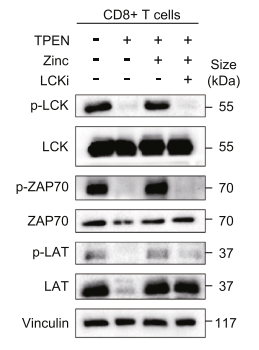
Lck Inhibitor purchased from MedChemExpress. Usage Cited in: Cell Rep Med. 2025 Aug 13:102300. [Abstract]
Immunoblot analysis of CD8+ T cells activated in medium containing zinc and/or TPEN and/or LCK inhibitor (LCKi) for the indicated time periods.
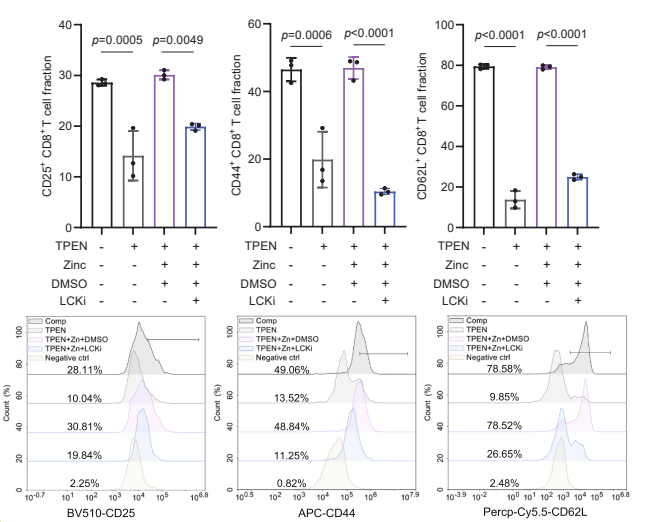
Lck Inhibitor purchased from MedChemExpress. Usage Cited in: Cell Rep Med. 2025 Aug 13:102300. [Abstract]
The effect of zinc, TPEN, and LCK inhibitor (LCKi) in CD8+ T cell activation marker expression level change was analyzed through flow cytometry.
-
J Immunother Cancer
Anticancer effects of ikarugamycin and astemizole identified in a screen for stimulators of cellular immune responses. [Abstract]2023 Jul;11(7):e006785. PMID: 37419511
Lck Inhibitor purchased from MedChemExpress. Usage Cited in: J Immunother Cancer. 2023 Jul;11(7):e006785. [Abstract]
Jurkat-LCK T cells were treated with dimethyl sulfoxide (DMSO), AST (1 μM), AST (1 μM) plus LCK inhibitor (LCKi; 1 μM), and human T Cell TransAct nanobeads (105 cells per µL) in different time points and were measured by flow cytometry.


Solvent & Solubility
In Vitro:
DMSO : 100 mg/mL (188.46 mM; Need ultrasonic; Hygroscopic DMSO has a significant impact on the solubility of product, please use newly opened DMSO)
Please refer to the solubility information to select the appropriate solvent. Once prepared, please aliquot and store the solution to prevent product inactivation from repeated freeze-thaw cycles.
Storage method and period of stock solution: -80°C, 2 years; -20°C, 1 year. When stored at -80°C, please use it within 2 years. When stored at -20°C, please use it within 1 year.
Please refer to the solubility information to select the appropriate solvent. Once prepared, please aliquot and store the solution to prevent product inactivation from repeated freeze-thaw cycles.
Storage method and period of stock solution: -80°C, 2 years; -20°C, 1 year. When stored at -80°C, please use it within 2 years. When stored at -20°C, please use it within 1 year.
Concentration (start) × Volume (start) = Concentration (final) × Volume (final)
In Vivo:
Select the appropriate dissolution method based on your experimental animal and administration route.
- For the following dissolution methods, please ensure to first prepare a clear stock solution using an In Vitro approach and then sequentially add co-solvents:
- To ensure reliable experimental results, the clarified stock solution can be appropriately stored based on storage conditions. As for the working solution for In Vivo experiments, it is recommended to prepare freshly and use it on the same day.
- The percentages shown for the solvents indicate their volumetric ratio in the final prepared solution. If precipitation or phase separation occurs during preparation, heat and/or sonication can be used to aid dissolution.
Add each solvent one by one: 10% DMSO 40% PEG300 5% Tween-80 45% Saline
Solubility: ≥ 2.5 mg/mL (4.71 mM); Clear solution
This protocol yields a clear solution of ≥ 2.5 mg/mL (saturation unknown).
Taking 1 mL working solution as an example, add 100 μL DMSO stock solution (25.0 mg/mL) to 400 μL PEG300, and mix evenly; then add 50 μL Tween-80 and mix evenly; then add 450 μL Saline to adjust the volume to 1 mL.
Preparation of Saline: Dissolve 0.9 g sodium chloride in ddH₂O and dilute to 100 mL to obtain a clear Saline solution.
In Vivo Dissolution Calculator
Please enter the basic information of animal experiments:
-
-
-
-
Recommended: Prepare an additional quantity of animals to account for potential losses during experiments.
Please enter your animal formula composition:
-
%DMSO +
Recommended: Keep the proportion of DMSO in working solution below 2% if your animal is weak.
-
%+
-
+%Tween-80 + +
-
%Saline +
The co-solvents required include: DMSO, . All of co-solvents are available by MedChemExpress (MCE). , Tween 80. All of co-solvents are available by MedChemExpress (MCE).
Working solution concentration: 0.22 mg/mL
Method for preparing stock solution: mg drug dissolved in μL DMSO. Stock solution concentration: mg/mL.
1. Take μL DMSO stock solution;
2. Add μL .
μL , mix evenly;
3. Then add μL Tween 80, mix evenly;
4. Then add μL
Please ensure that the stock solution in the first step is dissolved to a clear state, and add co-solvents in sequence. You can use ultrasonic heating (ultrasonic cleaner, recommended frequency 20-40 kHz), vortexing, etc. to assist dissolution.


Purity & Documentation
-
Data Sheet (285 KB)
-
SDS (251 KB)
- English - EN (251 KB)
- Français - FR (251 KB)
- Deutsch - DE (251 KB)
- Norwegian - NO (251 KB)
- Español - ES (251 KB)
- Swedish - SV (251 KB)
- Italian - IT (251 KB)
- Korean - KR (251 KB)
- Portuguese - PT (251 KB)
-
Handling Instructions (2659 KB)
References
[1]. Martin, Matthew W.; Newcomb, John; Nunes, Joseph J.; et al. Structure-Based Design of Novel 2-Amino-6-phenyl-pyrimido[5',4':5,6]pyrimido[1,2-a]benzimidazol-5(6H)-ones as Potent and Orally Active Inhibitors of Lymphocyte Specific Kinase (Lck): Synthesis, SAR, and In Vivo Anti-Inflammatory Activity. Journal of Medicinal Chemistry (2008), 51(6), 1637-1648. [Content Brief]
[2]. Liew, Chin Y.; Ma, Xiao H.; Liu, Xianghui; Yap, Chun W. SVM Model for Virtual Screening of Lck Inhibitors. Journal of Chemical Information and Modeling (2009), 49(4), 877-885. [Content Brief]


Complete Stock Solution Preparation Table
Please refer to the solubility information to select the appropriate solvent. Once prepared, please aliquot and store the solution to prevent product inactivation from repeated freeze-thaw cycles.
Storage method and period of stock solution: -80°C, 2 years; -20°C, 1 year. When stored at -80°C, please use it within 2 years. When stored at -20°C, please use it within 1 year.
| Optional Solvent | Concentration Solvent Mass | 1 mg | 5 mg | 10 mg | 25 mg |
|---|---|---|---|---|---|
| DMSO | 1 mM | 1.8846 mL | 9.4229 mL | 18.8459 mL | 47.1147 mL |
| 5 mM | 0.3769 mL | 1.8846 mL | 3.7692 mL | 9.4229 mL | |
| 10 mM | 0.1885 mL | 0.9423 mL | 1.8846 mL | 4.7115 mL | |
| 15 mM | 0.1256 mL | 0.6282 mL | 1.2564 mL | 3.1410 mL | |
| 20 mM | 0.0942 mL | 0.4711 mL | 0.9423 mL | 2.3557 mL | |
| 25 mM | 0.0754 mL | 0.3769 mL | 0.7538 mL | 1.8846 mL | |
| 30 mM | 0.0628 mL | 0.3141 mL | 0.6282 mL | 1.5705 mL | |
| 40 mM | 0.0471 mL | 0.2356 mL | 0.4711 mL | 1.1779 mL | |
| 50 mM | 0.0377 mL | 0.1885 mL | 0.3769 mL | 0.9423 mL | |
| 60 mM | 0.0314 mL | 0.1570 mL | 0.3141 mL | 0.7852 mL | |
| 80 mM | 0.0236 mL | 0.1178 mL | 0.2356 mL | 0.5889 mL | |
| 100 mM | 0.0188 mL | 0.0942 mL | 0.1885 mL | 0.4711 mL |


Lck Inhibitor Related Classifications
HY-12072 Related Classifications
 Powered by Bioz