



Furosemide hydrochloride
Based on 11 publication(s) in Google Scholar
Furosemide hydrochloride is an orally active GABAA receptor antagonist. Furosemide hydrochloride inhibits carbonic anhydrase, the sodium-chloride cotransporter, sodium reabsorption, tubuloglomerular feedback, and GABA-induced chloride flux. Furosemide hydrochloride can be used as a diuretic reagent. Furosemide hydrochloride is applied in the research of hepatic necrosis, sepsis-associated acute kidney injury, hypoalbuminemia-related fluid retention, and congestive heart failure.
For research use only. We do not sell to patients.
- CAS No.: 42461-27-8
- Formula: C12H12Cl2N2O5S
- Molecular Weight:367.21
-
Storage:
Please store the product under the recommended conditions in the Certificate of Analysis.


To place orders, for customer services and technical support, please contact: MedChemExpress USA
Tel: 609-228-6898 E-mail: [email protected] [email protected]


-
 Biological Activity
-
Chemical Information
- Protocols
- Purity & Documentation
- References
-
 Help & FAQs


Publications Citing Use of MedChemExpress (MCE) Furosemide hydrochloride
More- Nat Aging. 2025 May;5(5):848-867. [Abstract]
- Sci Adv. 2025 Nov 21;11(47):eady6562. [Abstract]
- EMBO J. 2025 Mar;44(5):1540-1562. [Abstract]
- Emerg Contam. 2026 Feb 23.
- Eur J Pharmacol. 2025 Jun 5:996:177447. [Abstract]
- Mol Nutr Food Res. 2026 Aug;70(15):e70571.
- iScience. 2026 Apr 2;29(5):115549. [Abstract]
- iScience. 2025 Nov 12;28(12):114030. [Abstract]
- J Orthop Surg Res. 2024 Feb 19;19(1):147. [Abstract]
- Nanotoxicology. 2026 May 19:1-18. [Abstract]
- J Pharm Biomed Anal. 2021 Feb 20:195:113870. [Abstract]
 Customer Validation & Images

-
Bio/Physico-chemical Assay
-
Bio/Physico-chemical Assay
-
Bio/Physico-chemical Assay
-
Cell Proliferation/Viability Assay
-
ELISA


Biological Activity
Description
In Vitro
Furosemide (300 μM; 90 min) hydrochloride enhances basal [35S]-TBPS binding in rat cerebellar membranes (an effect blocked by SR 95531 (Gabazine) (HY-103533) and Ro 5-4864 (4'-Chlorodiazepam) (HY-124268)) and exhibits additive GABA antagonism with SR 95531, while having no such effects in rat cerebrocortical membranes; it also decreases [3H]-Ro 5-4864 binding in both membrane types at concentrations above 30 μM[7].
Furosemide (0.1-1000 μM; 90 min) hydrochloride antagonizes GABA-induced inhibition of [35S]-TBPS binding in human cerebellar cortical membranes, but does not enhance basal binding in the absence of GABA[7].
Furosemide (300 μM; 90 min) hydrochloride reverses GABA-induced inhibition of [35S]-TBPS binding in recombinant GABAA receptors (dependent only on α6 and β3 subunits), but enhances basal binding exclusively in α6β3γ2 receptors[7].
MedChemExpress (MCE) has not independently confirmed the accuracy of these methods. They are for reference only.
In Vivo
Furosemide (4 mg/kg; i.v.; bolus followed by continuous infusion) hydrochloride reduces renal interstitial protein concentration and oncotic pressure in healthy male Munich-Wistar rats when volume status is maintained[1].
Furosemide (4 mg/kg; i.v.; bolus followed by continuous infusion) hydrochloride increases renal interstitial volume index in healthy male Munich-Wistar rats when volume status is maintained[1].
Furosemide (0.5-2 mg/kg; i.v., i.m.; single dose) hydrochloride alone induces robust diuresis and natriuresis in normal rats but not in analbuminemic rats, while co-administration with equimolar albumin restores diuretic efficacy in analbuminemic rats by increasing urinary Furosemide recovery to 18% of the administered dose[5].
Furosemide (5 mg/kg; i.v.; prime followed by 5 mg/kg/hr continuous infusion) hydrochloride acutely abolishes renal blood flow autoregulation and increases renal blood flow even in the presence of prostaglandin synthesis inhibition, demonstrating prostaglandins do not mediate these effects[9].
MedChemExpress (MCE) has not independently confirmed the accuracy of these methods. They are for reference only.
-
Animal Model:Munich-Wistar (male, 215-295 g)[1]
-
Dosage:4 mg/kg (bolus); 4 mg/kg per hour (continuous infusion)
-
Administration:i.v.; bolus followed by continuous infusion
-
Result:Decreased whole-kidney glomerular filtration rate from 0.97 to 0.66 mL/min in 3% volume depletion group.
Decreased single nephron filtration rate from 28 to 20 nl/min in 3% volume depletion group.
Decreased mean arterial pressure from 118 to 100 mmHg in 3% volume depletion group.
Increased hematocrit from 56 to 59% in 3% volume depletion group.
Increased urinary sodium excretion from 0.06 to 2.1 μEq/min in 3% volume depletion group.
Increased urinary potassium excretion from 0.3 to 1.0 μEq/min in 3% volume depletion group.
Decreased absolute proximal reabsorption from 13 to 10 nl/min in 3% volume depletion group.
Decreased absolute loop-of-Henle reabsorption from 9 to 5 nl/min in 3% volume depletion group.
Eliminated proximal-distal single nephron filtration rate difference in both groups.
Maintained whole-kidney glomerular filtration rate at 1.1 mL/min in volume replacement group.
Maintained single nephron filtration rate at 31 nl/min (distal collection) and 33 nl/min (late proximal collection) in volume replacement group.
Increased urine flow from 2 to 84 μl/min in volume replacement group.
Decreased mean arterial pressure from 114 to 106 mmHg in volume replacement group.
Maintained hematocrit at 55% in volume replacement group.
Increased urinary sodium excretion from 0.09 to 15.2 μEq/min in volume replacement group.
Increased urinary potassium excretion from 0.4 to 2.7 μEq/min in volume replacement group.
Maintained absolute proximal reabsorption at 13 nl/min in volume replacement group.
Decreased absolute loop-of-Henle reabsorption from 10 to 8 nl/min in volume replacement group.
Increased distal tubular flow rate from 5 to 10 nl/min in volume replacement group.
Increased interstitial hydrostatic pressure from 4 to 11 mmHg in volume replacement group.
Decreased interstitial oncotic pressure from 4.6 to 2.0 mmHg in volume replacement group.
Decreased afferent arteriolar resistance from 29 to 22×109 dynes·sec·cm-5 in volume replacement group.
Increased renal interstitial volume index from 12.1 to 19.6% of wet renal cortical tissue weight in volume replacement group.
-
Animal Model:Munich-Wistar (male)[1]
-
Dosage:4 mg/kg (bolus); 4 mg/kg per hour (continuous infusion)
-
Administration:i.v.; bolus followed by continuous infusion
-
Result:Decreased interstitial protein concentration from 1.7 to 0.8 g/dl.
Maintained systemic plasma protein concentration at 5.6 g/dl (control) and 5.3 g/dl (post-furosemide).
Increased ratio of plasma albumin to interstitial albumin concentration from 2.5:1 to 4.9:1.
Decreased interstitial oncotic pressure from 4.6 to 2.0 mmHg.
-
Animal Model:Munich-Wistar (male, 227-235 g)[1]
-
Dosage:4 mg/kg (bolus); 4 mg/kg per hour (continuous infusion)
-
Administration:i.v.; bolus followed by continuous infusion
-
Result:Maintained blood volume at 11.4 mL (control) and 11.2 mL (post-furosemide).
Maintained hematocrit at 56% (control) and 57% (post-furosemide).
Increased renal interstitial volume index from 12.1 to 19.6% of wet renal cortical tissue weight.
-
Animal Model:Swiss albino (male, 20-25 g, National Institutes of Health stock)[2]
-
Dosage:100 mg/kg; 200 mg/kg; 300 mg/kg; 400 mg/kg; 500 mg/kg
-
Administration:i.p.; single dose
-
Result:Exhibited 0% mortality and 100% no hepatic necrosis at 100 mg/kg.
Exhibited 0% mortality, 16% slight necrosis, and 84% no necrosis at 200 mg/kg.
Exhibited 2% mortality, 4% necrosis affecting 26-50% of hepatocytes, 16% necrosis affecting 6-25% of hepatocytes, 48% slight necrosis, and 32% no necrosis at 300 mg/kg.
Exhibited 4% mortality, 6% necrosis affecting >50% of hepatocytes, 18% necrosis affecting 26-50% of hepatocytes, 36% necrosis affecting 6-25% of hepatocytes, 32% slight necrosis, and 8% no necrosis at 400 mg/kg; nucleolar changes and single cell necrosis appeared within 3 hours, midzonal and centrilobular necrosis by 6 hours, massive confluent necrosis by 12 hours, necrosis peaked at 24-48 hours, and regeneration started by 48-72 hours.
Exhibited 20% mortality, 20% necrosis affecting >50% of hepatocytes, 35% necrosis affecting 26-50% of hepatocytes, 40% necrosis affecting 6-25% of hepatocytes, and 5% slight necrosis at 500 mg/kg.
Reached ~1.5 nmol/mg protein of in vivo covalent binding to hepatic protein, occurring a few hours before histological necrosis.
Abolished both covalent binding and hepatic necrosis following pretreatment with cytochrome P-450 inhibitors.
Showed no prevention of liver damage with fluid resuscitation using Ringer's lactate in 5% glucose.
-
Animal Model:Analbuminemic mutant rats (NAR, fed ad libitum, no fasting); normal rats (fed ad libitum, no fasting)[5]
-
Dosage:0.5 mg/kg (normal rat i.v. diuresis; NAR albumin co-administration); 2 mg/kg (NAR plasma clearance); 0.5-2 mg/kg (i.m. dose-response)
-
Administration:i.v.; single dose over 10 seconds; i.m.; single dose
-
Result:Rapidly and sustainably increased urine volume and sodium excretion in normal rats following 0.5 mg/kg i.v. dose.
Failed to enhance diuresis in NAR following 0.5 mg/kg i.v. dose.
Dose-dependently increased urine volume and sodium excretion in normal rats via i.m. administration, with responses significantly less pronounced in NAR.
Reduced urinary recovery of furosemide to about three times lower in NAR than in normal rats across tested i.m. doses.
Produced total plasma clearance of 24.4 mL/min×kg and distribution volume of 545.5 mL/kg in NAR, compared to 9.4 mL/min×kg and 59.6 mL/kg in normal rats following 2 mg/kg i.v. dose.
Resulted in urinary recovery of furosemide of 7% of the dose in NAR versus 26% in normal rats following 2 mg/kg i.v. dose.
Increased urine volume in NAR to a peak at 10 minutes post-administration, and raised urinary recovery of furosemide in NAR to 18% of the dose when administered at 0.5 mg/kg i.v. mixed with equimolar albumin.
-
Animal Model:Yorkshire pigs (male and female, 7 to 10 weeks of age, tachycardia-induced congestive heart failure via permanent transvenous pacemaker implantation set to 200 beats/min after 48-hour recovery)[6]
-
Dosage:1 mg/kg
-
Administration:i.m.; daily
-
Result:Shortened mean time to development of significant left ventricular systolic dysfunction to 21.4 days.
Raised serum aldosterone levels to 43.0 ng/dL at day 14 of pacing.
Reduced serum sodium levels to 133.0 mmol/L at day 14 of pacing.
Significantly increased basal sodium-calcium exchanger (NCX) peak outward currents compared with placebo-treated failing animals.
Significantly reduced responsiveness of NCX currents to isoproterenol stimulation compared with placebo-treated failing animals.
-
Animal Model:Either sex, weighing 20 kg (range 15-25 kg; sodium pentobarbital-anesthetized, unilateral renal artery constriction)[9]
-
Dosage:5 mg/kg (prime); 5 mg/kg/hr (continuous infusion)
-
Administration:i.v.; prime followed by continuous infusion
-
Result:Abolished RBF autoregulation above 80 mmHg RPP at 15 minutes, with RBF changing proportionally to RPP.
Reduced renal vascular resistance by 39% and 29% below control at 140 and 120 mmHg RPP, respectively, at 15 minutes.
Increased renin secretory rate from 7.8 ng/min·g to 14.6 ng/min·g at 15 minutes.
Increased fractional excretion of sodium from 0.9% to 18.2% at 15 minutes.
Restored RBF and RBF autoregulatory capability to control values by 60 minutes.
Maintained GFR autoregulation throughout infusion, averaging 0.49 mL/min·g at 15 minutes and 0.57 mL/min·g at 60 minutes.
Returned renin secretory rate to control levels (6.5 ng/min·g) by 60 minutes.
Sustained elevated fractional excretion of sodium at 20.3% at 60 minutes.
-
Animal Model:Either sex, weighing 20 kg (range 15-25 kg; sodium pentobarbital-anesthetized, pretreated with indomethacin or RO 20-5720, unilateral renal artery constriction)[9]
-
Dosage:5 mg/kg (prime); 5 mg/kg/hr (continuous infusion)
-
Administration:i.v.; prime followed by continuous infusion
-
Result:Abolished RBF autoregulation 15 minutes after initiation, with RBF changing proportionally to RPP.
Increased RBF from 2.59 mL/min·g to 4.05 mL/min·g at 140 mmHg RPP, and from 2.59 mL/min·g to 3.56 mL/min·g at 120 mmHg RPP.
Reduced renal vascular resistance to a nadir that remained unchanged across all RPP values examined.


Chemical Information
-
CAS No. 42461-27-8
-
Molecular Weight 367.21
-
Formula C12H12Cl2N2O5S
-
SMILES
O=C(C1=CC(S(=O)(N)=O)=C(C=C1NCC2=CC=CO2)Cl)O.Cl
-
Shipping
Room temperature in continental US; may vary elsewhere.
-
Storage
Please store the product under the recommended conditions in the Certificate of Analysis.


Publications (11)
-
Journal Impact Factor
-
Most Recent
-
Nat Aging
mRNA metabolism regulator human antigen R (HuR) regulates age-related hearing loss in aged mice. [Abstract]2025 May;5(5):848-867. PMID: 40394214 -
Sci Adv
3D bioprinted human-scale intestine models for physiological and microbial insights through fluid-driven heterogeneity. [Abstract]2025 Nov 21;11(47):eady6562. PMID: 41270182 -
EMBO J
2025 Mar;44(5):1540-1562. PMID: 39875725 -
-
Eur J Pharmacol
Loop diuretics mitigate juvenile immobilization treatment-induced hippocampal dysfunction. [Abstract]2025 Jun 5:996:177447. PMID: 40023355
Furosemide hydrochloride purchased from MedChemExpress. Usage Cited in: Eur J Pharmacol. 2025 Jun 5:996:177447. [Abstract]
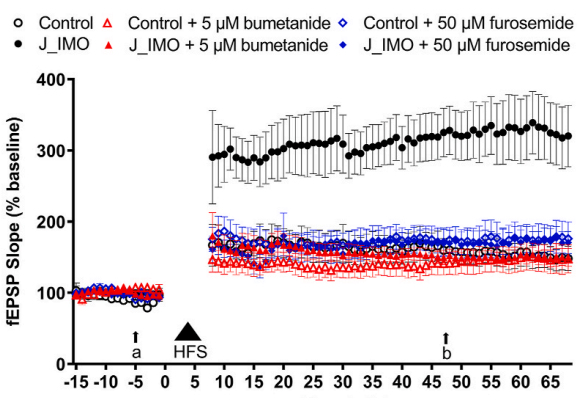
Suprafusion of bumetanide and Furosemide (50 μM ; 65 min) inhibited LTP formation in the hippocampus, with typical traces in the right panels. Points a and b represent high-frequency stimulation (HFS) for 5 min before induction and 40 min after induction, respectively.
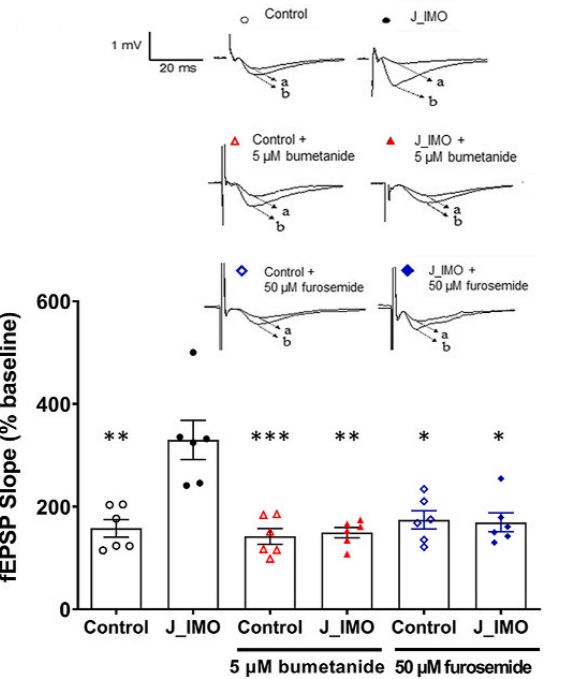
Furosemide hydrochloride purchased from MedChemExpress. Usage Cited in: Eur J Pharmacol. 2025 Jun 5:996:177447. [Abstract]
At the 40-min time point (b), hippocampal LTP was measured with suprafusion of 5 μM bumetanide or 50 μM Furosemide.
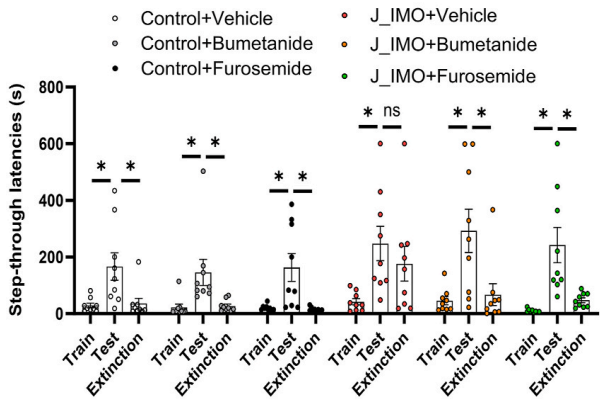
Furosemide hydrochloride purchased from MedChemExpress. Usage Cited in: Eur J Pharmacol. 2025 Jun 5:996:177447. [Abstract]
In the inhibitory avoidance test, each group received intraperitoneal injections of either a vehicle, 15.2 mg/kg bumetanide, or 152 mg/kg Furosemide (dissolved in 1.1% DMSO in PBS) 30 min prior to the extinction phase (n = 9 per group).
-
-
iScience
Heart failure pleural fluid impairs endothelial barrier through miR 501-3p mediated ZO 1 remodeling. [Abstract]2026 Apr 2;29(5):115549. PMID: 42058897 -
iScience
2025 Nov 12;28(12):114030. PMID: 41377656 -
J Orthop Surg Res
Several first-line anti-hypertensives act on fibrosarcoma progression and PD1ab blockade therapy. [Abstract]2024 Feb 19;19(1):147. PMID: 38373964
Furosemide hydrochloride purchased from MedChemExpress. Usage Cited in: J Orthop Surg Res. 2024 Feb 19;19(1):147. [Abstract]
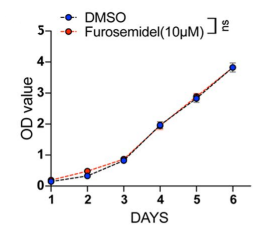
Furosemide (10 μM; 1-6 days) had no effect on MCA-205 growth. CCK8 experiment was used to detect the proliferation ability of MCA-205 after Furosemide treatment.
Furosemide hydrochloride purchased from MedChemExpress. Usage Cited in: J Orthop Surg Res. 2024 Feb 19;19(1):147. [Abstract]
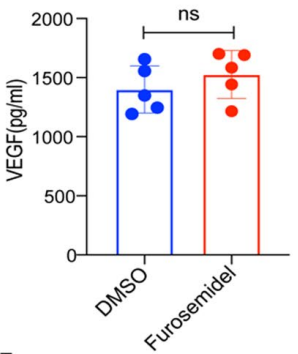
Furosemide (10 μM; 24 h) did not significantly alter the level of VEGF produced by MCA-205. Elisa kit was used to detect the VEGF production after furosemide treatment.
Furosemide hydrochloride purchased from MedChemExpress. Usage Cited in: J Orthop Surg Res. 2024 Feb 19;19(1):147. [Abstract]
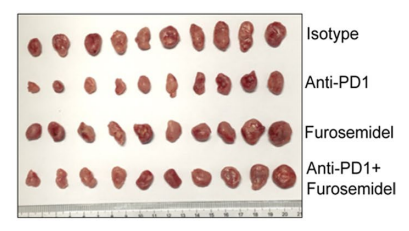
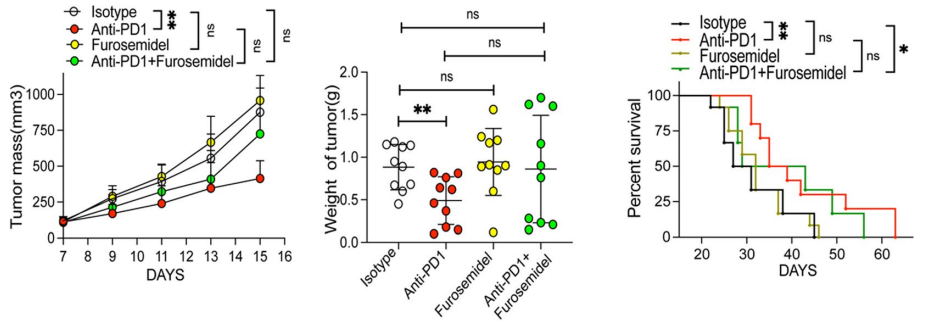
Furosemide (200 mg/kg; ip; every other day) did not inhibit MCA-205 fibrosarcoma growth.
Furosemide hydrochloride purchased from MedChemExpress. Usage Cited in: J Orthop Surg Res. 2024 Feb 19;19(1):147. [Abstract]
Furosemide (200 mg/kg; ip; every other day) combination of PD1ab (250 µg/mice; ip; every other day, 4 times) displayed a weaker therapeutic impact on tumor growth when compared with PD1ab single therapy.
Furosemide hydrochloride purchased from MedChemExpress. Usage Cited in: J Orthop Surg Res. 2024 Feb 19;19(1):147. [Abstract]
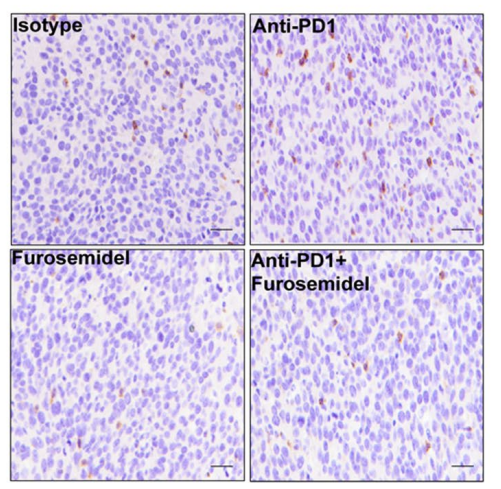
Furosemide (200 mg/kg; ip; every other day) combination with PD1ab (250 µg/mice; ip; every other day, 4 times) showed no impact on the level of infiltrating CD8+ T cells compared with control. Compared with PD1ab treatment alone, the combination of both agents showed a decreasing impact on the level of infiltrating CD8+ T cells.
-
Nanotoxicology
Polystyrene nanoplastics promote tumor lung metastasis by inducing sodium overload in macrophages in an NMDAR-dependent way. [Abstract]2026 May 19:1-18. PMID: 42154607 -
J Pharm Biomed Anal
Screening method of mildronate and over 300 doping agents by reversed-phase liquid chromatography-high resolution mass spectrometry. [Abstract]2021 Feb 20:195:113870. PMID: 33453569


Purity & Documentation
References

Calculators
Concentration (start) × Volume (start) = Concentration (final) × Volume (final)


Furosemide hydrochloride Related Classifications
HY-B0135B Related Classifications
 Powered by Bioz