



GSK2245035
Based on 2 publication(s) in Google Scholar
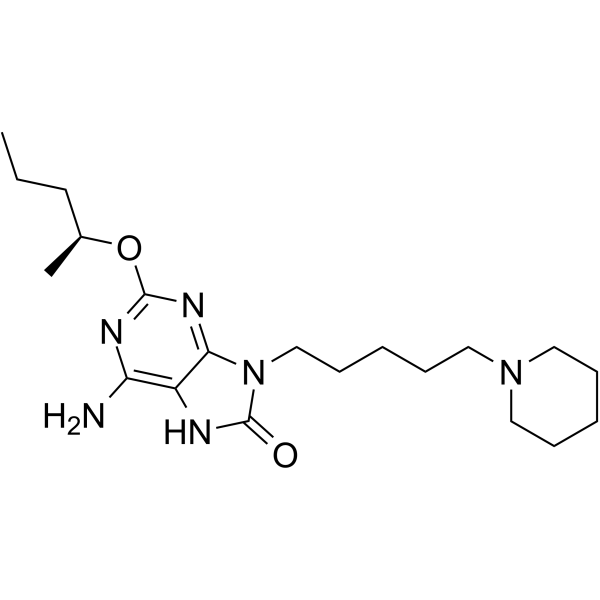
GSK2245035 is a highly potent and selective intranasal Toll-Like receptor 7 (TLR7) agonist with preferential Type-1 interferon (IFN)-stimulating properties. GSK2245035 has pEC50s of 9.3 and 6.5 for IFNα and TFNα. GSK2245035 effectively suppresses allergen-induced Th2 cytokine production in human peripheral blood cell cultures. GSK2245035 is used for asthma.
For research use only. We do not sell to patients.
- Purity : 99.79%
- CAS No.: 1207629-49-9
- Formula: C20H34N6O2
- Molecular Weight:390.52
-
Storage:Powder -20°C, 3 years , 4°C, 2 years ; In solvent -80°C, 6 months , -20°C, 1 month

To place orders, for customer services and technical support, please contact: MedChemExpress USA
Tel: 609-228-6898 E-mail: [email protected] [email protected]


-
 Biological Activity
-
Chemical Information
-
Solvent & Solubility
- Protocols
- Purity & Documentation
- References
-
 Help & FAQs


-
HY-13773
MotolimodTLR8 Agonist -
HY-117066
CL075TLR8 Agonist -
HY-131454
SR-717STING Agonist -
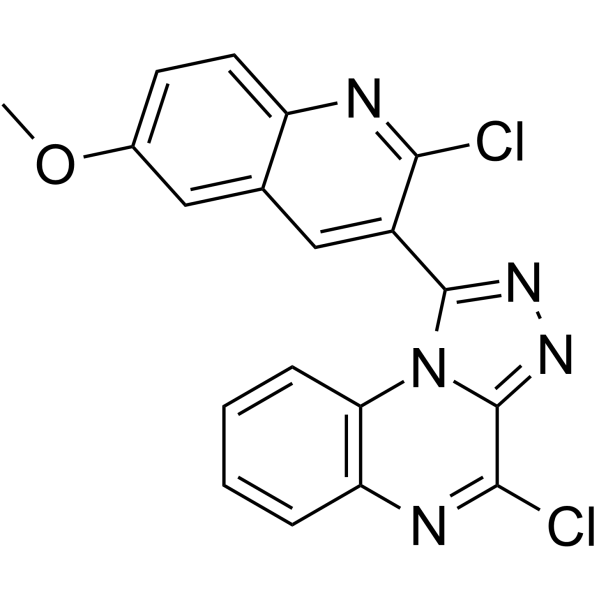
HY-131994
STING agonist-16STING Agonist -
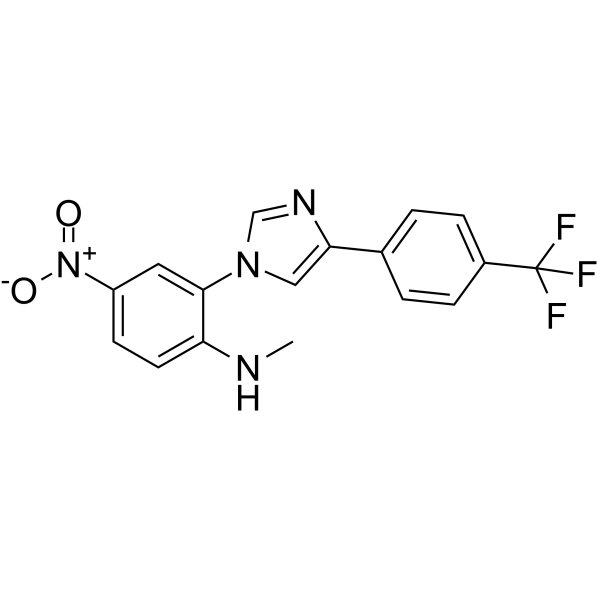
HY-110353
CU-T12-9TLR1/2 Agonist -

HY-13773R
Motolimod (Standard)TLR8 Agonist -
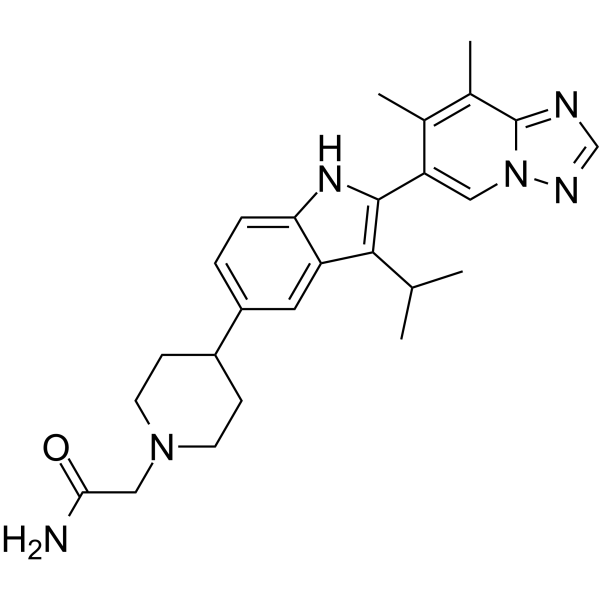
HY-139567
AfimetoranTLR7/8 Antagonist -
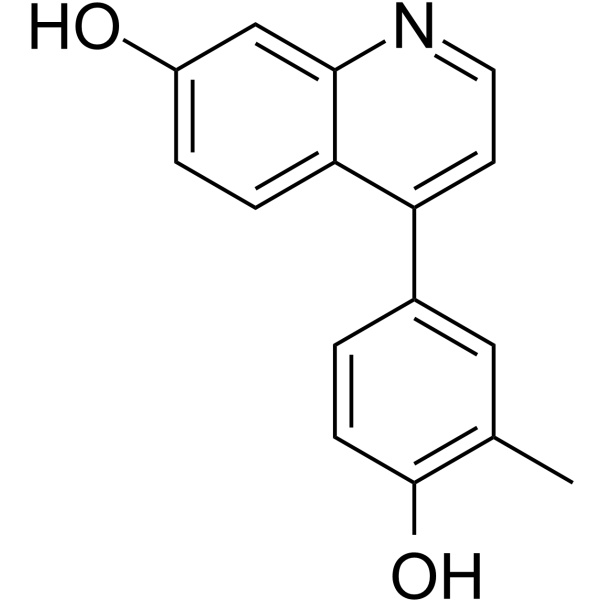
HY-112051
CU-CPT9bTLR8 Antagonist -
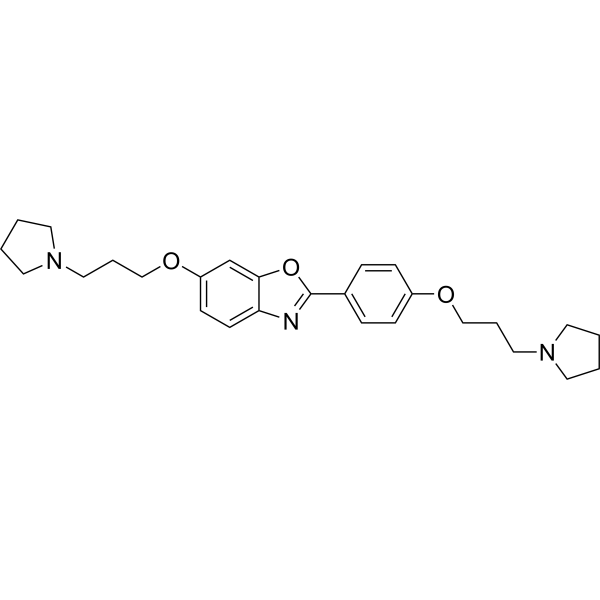
HY-12756
E6446TLR/SCD1 Inhibitor -
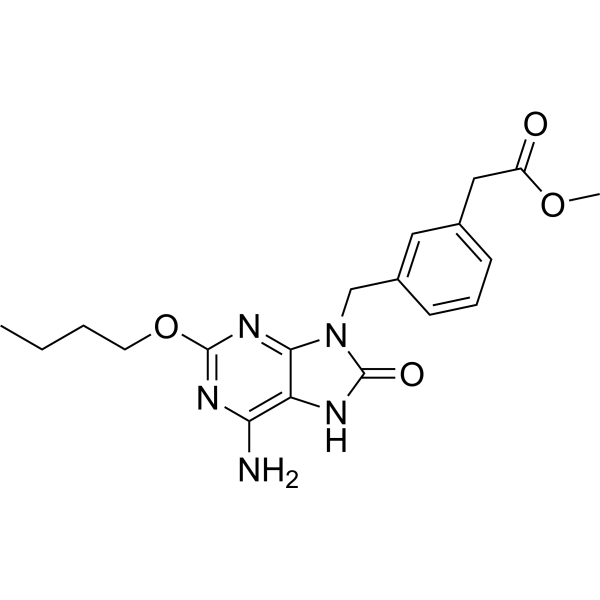
HY-110207
SM-324405TLR7 Agonist -
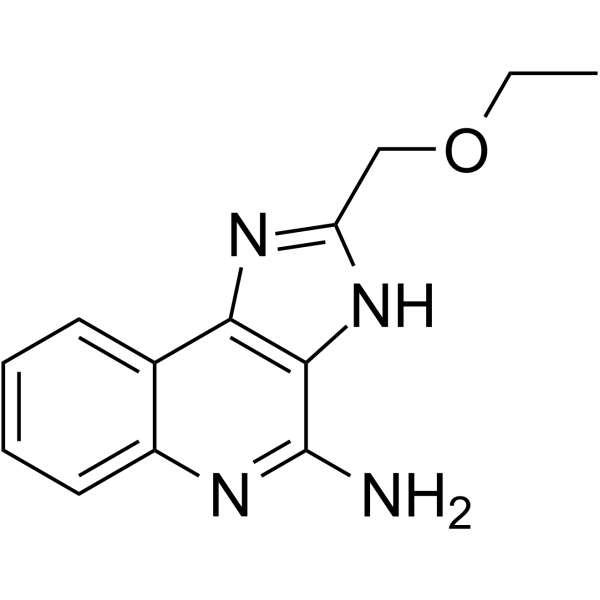
HY-128799
CL097TLR7/8 Agonist -
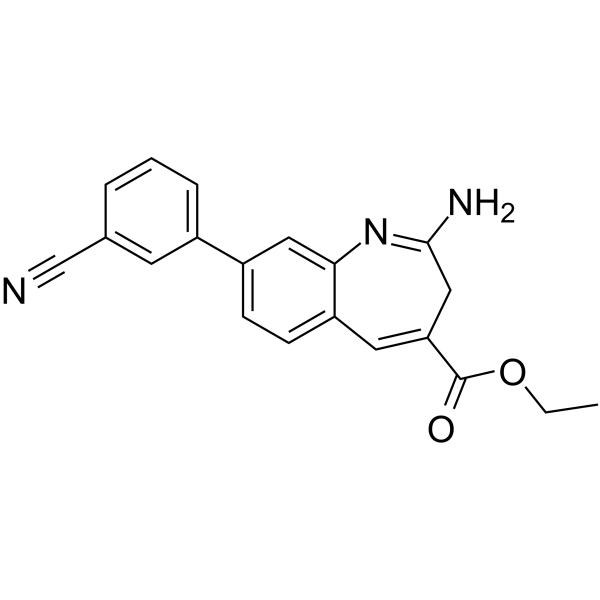
HY-20457
TL8-506TLR8 Agonist
Publications Citing Use of MedChemExpress (MCE) GSK2245035
More

Biological Activity
Description
IC50 & Target
[1]|
TLR7 |
IFNα 9.3 (pEC50) |
CD40 6.5 (pEC50) |
In Vitro
GSK2245035 (0.01, 0.1, 1, 10, 100, 1000, 10000 nM; 6 days) reduces levels of the Th2 cytokines IL-5 and IL-13 released in response to Timothy grass or house dust mite in human PBMC cultures derived from individuals allergic to these allergens, in a dose-dependent manner[1].
MedChemExpress (MCE) has not independently confirmed the accuracy of these methods. They are for reference only. Further protocols information, click here.
In Vivo
? GSK2245035 (3, 30, 300, 3000 ng/kg; 6 hours) treatment can make plasma IP-10 provided the most sensitive biomarker of target engagement with raised levels of this chemokine detected at doses of 30 ng/kg and above in the cynomolgus monkey[1].
MedChemExpress (MCE) has not independently confirmed the accuracy of these methods. They are for reference only.
-
Animal Model:Female BALB/c mice[1]
-
Dosage:0.03, 0.1, 0.3, 1 mg/kg
-
Administration:Intranasally (i.n.); 6 hours
-
Result:Dose-related increases in IFNα levels in serum were detected at doses of 0.3 mg/kg and above at the 2 h time point which had subsided at 6 h.
Clinical Trial
| NCT Number | Sponsor | Condition | Start Date |
Phase

|
|---|---|---|---|---|
| NCT01329991 | Plexxikon| | 2011-05 | PHASE1 |


Chemical Information
-
CAS No. 1207629-49-9
-
Appearance Solid
-
Molecular Weight 390.52
-
Formula C20H34N6O2
-
Color Off-white to light yellow
-
SMILES
O=C1NC2=C(N=C(N=C2N1CCCCCN3CCCCC3)O[C@H](CCC)C)N
-
Shipping
Room temperature in continental US; may vary elsewhere.
-
Storage
Powder -20°C 3 years 4°C 2 years In solvent -80°C 6 months -20°C 1 month


Publications (2)
-
Journal Impact Factor
-
Most Recent


Solvent & Solubility
In Vitro:
DMSO : 125 mg/mL (320.09 mM; Need ultrasonic; Hygroscopic DMSO has a significant impact on the solubility of product, please use newly opened DMSO)
Please refer to the solubility information to select the appropriate solvent. Once prepared, please aliquot and store the solution to prevent product inactivation from repeated freeze-thaw cycles.
Storage method and period of stock solution: -80°C, 6 months; -20°C, 1 month. When stored at -80°C, please use it within 6 months. When stored at -20°C, please use it within 1 month.
Please refer to the solubility information to select the appropriate solvent. Once prepared, please aliquot and store the solution to prevent product inactivation from repeated freeze-thaw cycles.
Storage method and period of stock solution: -80°C, 6 months; -20°C, 1 month. When stored at -80°C, please use it within 6 months. When stored at -20°C, please use it within 1 month.
Concentration (start) × Volume (start) = Concentration (final) × Volume (final)
In Vivo:
Select the appropriate dissolution method based on your experimental animal and administration route.
- For the following dissolution methods, please ensure to first prepare a clear stock solution using an In Vitro approach and then sequentially add co-solvents:
- To ensure reliable experimental results, the clarified stock solution can be appropriately stored based on storage conditions. As for the working solution for In Vivo experiments, it is recommended to prepare freshly and use it on the same day.
- The percentages shown for the solvents indicate their volumetric ratio in the final prepared solution. If precipitation or phase separation occurs during preparation, heat and/or sonication can be used to aid dissolution.
Add each solvent one by one: 10% DMSO 40% PEG300 5% Tween-80 45% Saline
Solubility: ≥ 2.08 mg/mL (5.33 mM); Clear solution
This protocol yields a clear solution of ≥ 2.08 mg/mL (saturation unknown).
Taking 1 mL working solution as an example, add 100 μL DMSO stock solution (20.8 mg/mL) to 400 μL PEG300, and mix evenly; then add 50 μL Tween-80 and mix evenly; then add 450 μL Saline to adjust the volume to 1 mL.
Preparation of Saline: Dissolve 0.9 g sodium chloride in ddH₂O and dilute to 100 mL to obtain a clear Saline solution.
Add each solvent one by one: 10% DMSO 90% (20% SBE-β-CD in Saline)
Solubility: ≥ 2.08 mg/mL (5.33 mM); Clear solution
This protocol yields a clear solution of ≥ 2.08 mg/mL (saturation unknown).
Taking 1 mL working solution as an example, add 100 μL DMSO stock solution (20.8 mg/mL) to 900 μL 20% SBE-β-CD in Saline, and mix evenly.
Preparation of 20% SBE-β-CD in Saline (4°C, storage for one week): 2 g SBE-β-CD powder is dissolved in 10 mL Saline, completely dissolve until clear.
In Vivo Dissolution Calculator
Please enter the basic information of animal experiments:
-
-
-
-
Recommended: Prepare an additional quantity of animals to account for potential losses during experiments.
Please enter your animal formula composition:
-
%DMSO +
Recommended: Keep the proportion of DMSO in working solution below 2% if your animal is weak.
-
%+
-
+%Tween-80 + +
-
%Saline +
The co-solvents required include: DMSO, . All of co-solvents are available by MedChemExpress (MCE). , Tween 80. All of co-solvents are available by MedChemExpress (MCE).
Working solution concentration: 0.22 mg/mL
Method for preparing stock solution: mg drug dissolved in μL DMSO. Stock solution concentration: mg/mL.
1. Take μL DMSO stock solution;
2. Add μL .
μL , mix evenly;
3. Then add μL Tween 80, mix evenly;
4. Then add μL
Please ensure that the stock solution in the first step is dissolved to a clear state, and add co-solvents in sequence. You can use ultrasonic heating (ultrasonic cleaner, recommended frequency 20-40 kHz), vortexing, etc. to assist dissolution.

Protocols
-
Naïve CD4+ T-cell subset differentiation/polarization
Naïve CD4+ T-cell subset differentiation/polarization is an in vitro assay in which purified naïve CD4+ T cells are activated through TCR and CD28 costimulation and cultured with defined cytokines and neutralizing antibodies to generate Th0, Th1, Th2, Th17, or induced Treg-like populations. Differentiation is detected by subset-associated cytokines and transcription factors: IFN-γ/T-bet for Th1, IL-4/GATA3 for Th2, IL-17A/RORγt for Th17, and Foxp3 for induced Treg cells. The assay readout is usually generated by intracellular cytokine staining after restimulation, transcription-factor staining by flow cytometry, ELISA of secreted cytokines, or gene-expression analysis. The result reflects cytokine-directed lineage commitment or polarization rather than antigen-specific immune protection by itself.
-
Research Protocol for Inflammation-related Diseases
The NLRP3 inflammasome is a cytosolic innate immune signaling platform that integrates priming signals and danger-signal activation to promote caspase-1 activation, maturation of IL-1β and IL-18, and gasdermin D-mediated pyroptotic cell death. The core experimental logic is to determine whether inflammatory disease phenotypes are driven by increased NLRP3 expression, ASC-containing inflammasome assembly, caspase-1 cleavage, GSDMD cleavage, and extracellular release of IL-1β/IL-18 rather than by nonspecific cell injury alone. The pathway is strongly linked to inflammation-related disease phenotypes because monosodium urate crystals activate NALP3/NLRP3 inflammasome signaling in gout-like crystal inflammation, cholesterol crystals activate NLRP3 inflammasomes in atherogenesis models, and DSS-induced intestinal inflammation has been reported to involve NLRP3 inflammasome activity. However, experimental colitis studies also show context-dependent protective effects of NLRP3 inflammasome co


Purity & Documentation
-
Data Sheet (275 KB)
-
SDS (557 KB)
- English - EN (557 KB)
- Français - FR (557 KB)
- Deutsch - DE (557 KB)
- Norwegian - NO (557 KB)
- Español - ES (557 KB)
- Swedish - SV (557 KB)
- Italian - IT (557 KB)
- Korean - KR (557 KB)
- Portuguese - PT (557 KB)
-
Handling Instructions (2659 KB)
References


Complete Stock Solution Preparation Table
Please refer to the solubility information to select the appropriate solvent. Once prepared, please aliquot and store the solution to prevent product inactivation from repeated freeze-thaw cycles.
Storage method and period of stock solution: -80°C, 6 months; -20°C, 1 month. When stored at -80°C, please use it within 6 months. When stored at -20°C, please use it within 1 month.
| Optional Solvent | Concentration Solvent Mass | 1 mg | 5 mg | 10 mg | 25 mg |
|---|---|---|---|---|---|
| DMSO | 1 mM | 2.5607 mL | 12.8034 mL | 25.6069 mL | 64.0172 mL |
| 5 mM | 0.5121 mL | 2.5607 mL | 5.1214 mL | 12.8034 mL | |
| 10 mM | 0.2561 mL | 1.2803 mL | 2.5607 mL | 6.4017 mL | |
| 15 mM | 0.1707 mL | 0.8536 mL | 1.7071 mL | 4.2678 mL | |
| 20 mM | 0.1280 mL | 0.6402 mL | 1.2803 mL | 3.2009 mL | |
| 25 mM | 0.1024 mL | 0.5121 mL | 1.0243 mL | 2.5607 mL | |
| 30 mM | 0.0854 mL | 0.4268 mL | 0.8536 mL | 2.1339 mL | |
| 40 mM | 0.0640 mL | 0.3201 mL | 0.6402 mL | 1.6004 mL | |
| 50 mM | 0.0512 mL | 0.2561 mL | 0.5121 mL | 1.2803 mL | |
| 60 mM | 0.0427 mL | 0.2134 mL | 0.4268 mL | 1.0670 mL | |
| 80 mM | 0.0320 mL | 0.1600 mL | 0.3201 mL | 0.8002 mL | |
| 100 mM | 0.0256 mL | 0.1280 mL | 0.2561 mL | 0.6402 mL |


GSK2245035 Related Classifications
HY-118250 Related Classifications
 Powered by Bioz