



Hyocholic acid
Based on 2 publication(s) in Google Scholar
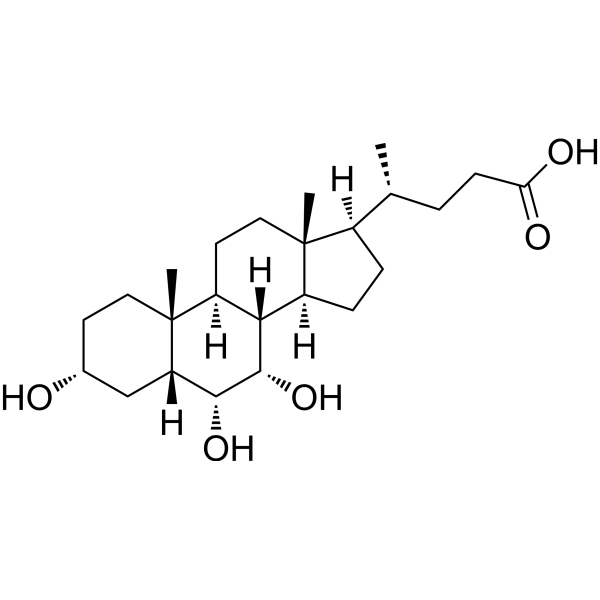
Hyocholic Acid is a bile acid found in pig. Hyocholic Acid can also be found in urine samples from patients with cholestasis. Hyocholic Acid promotes GLP-1 secretion via activating TGR5 and inhibiting FXR in enteroendocrine cells. Hyocholic Acid is known for its exceptional resistance to type 2 diabetes .
For research use only. We do not sell to patients.
- Purity : 99.46%
- CAS No.: 547-75-1
- Formula: C24H40O5
- Molecular Weight:408.57
-
Storage:Powder -20°C, 3 years , 4°C, 2 years ; In solvent -80°C, 6 months , -20°C, 1 month

To place orders, for customer services and technical support, please contact: MedChemExpress USA
Tel: 609-228-6898 E-mail: [email protected] [email protected]


-
 Biological Activity
-
Chemical Information
-
Solvent & Solubility
- Protocols
- Purity & Documentation
- References
-
 Help & FAQs


-
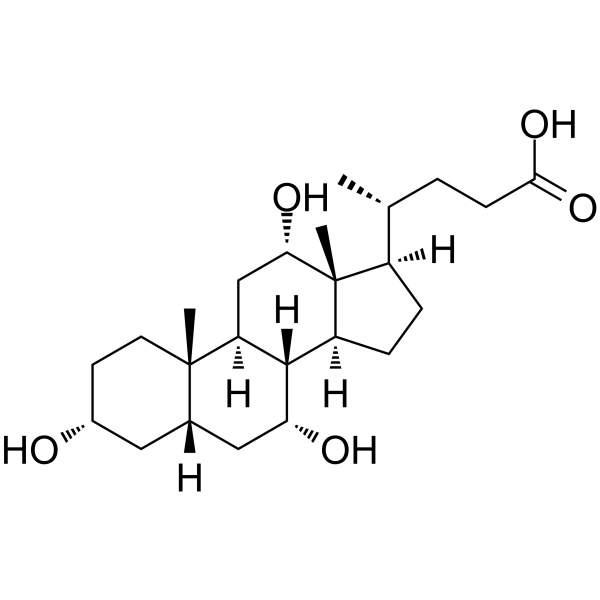
HY-N0324
Cholic acidEndogenous Metabolite -
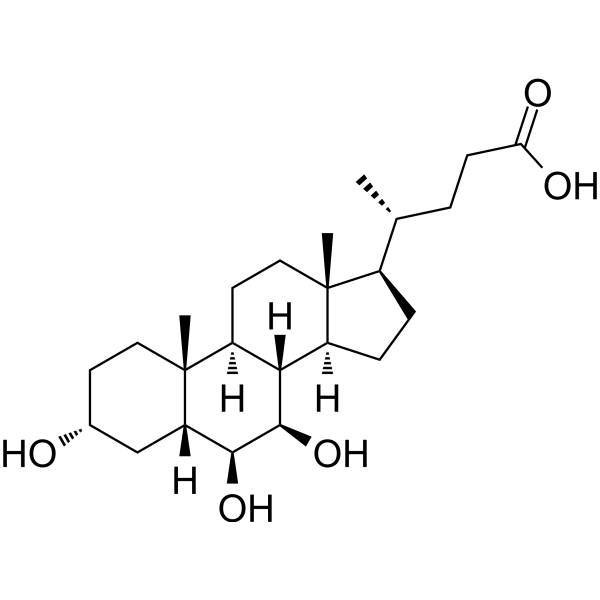
HY-133707
β-Muricholic acidBiliary Cholesterol-Desaturating Agent -
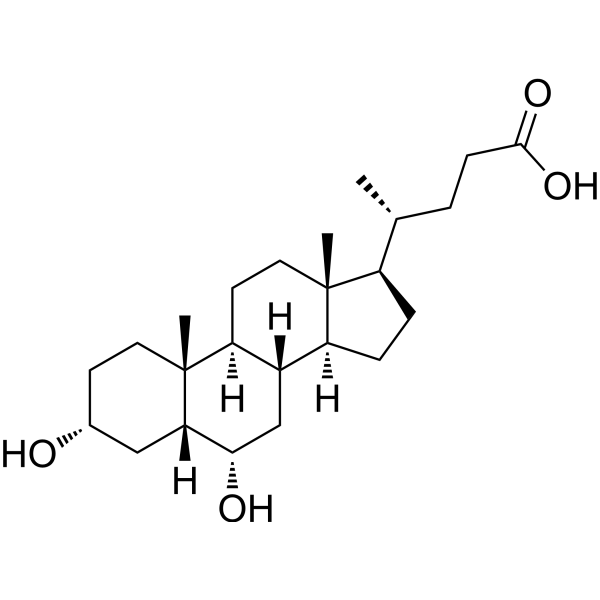
HY-N0169
Hyodeoxycholic acidGPBAR1 Agonist -
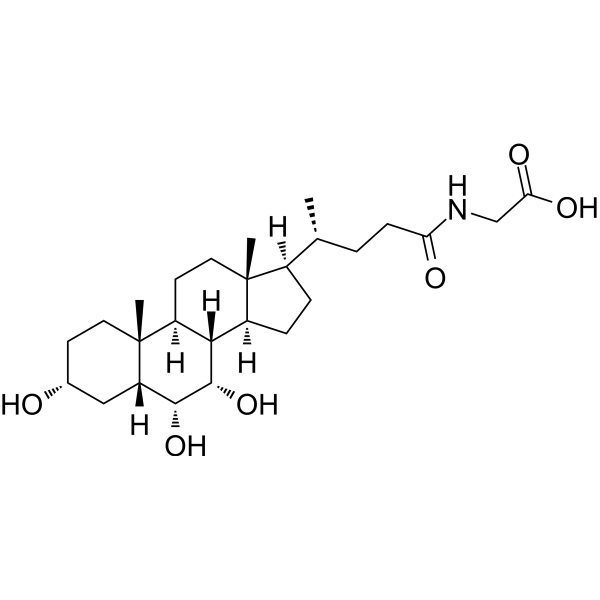
HY-122141
Glycohyocholic acidConjugated Bile Acid -
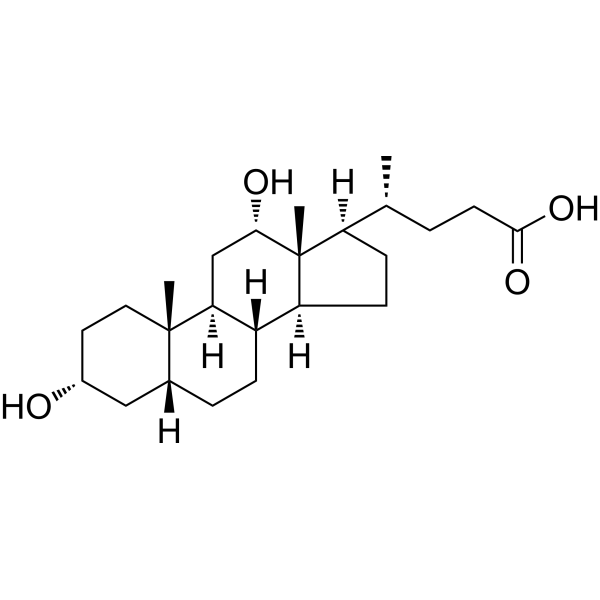
HY-N0593
Deoxycholic acidBile Acid Receptor Activator -
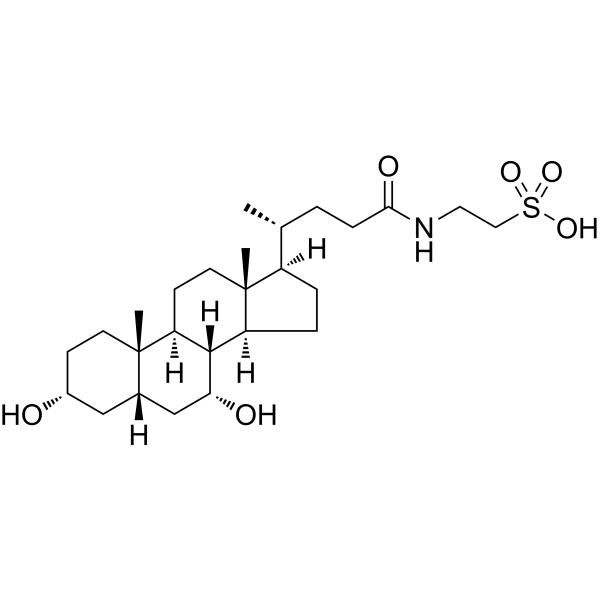
HY-N2027
Taurochenodeoxycholic acidEndogenous Metabolite -
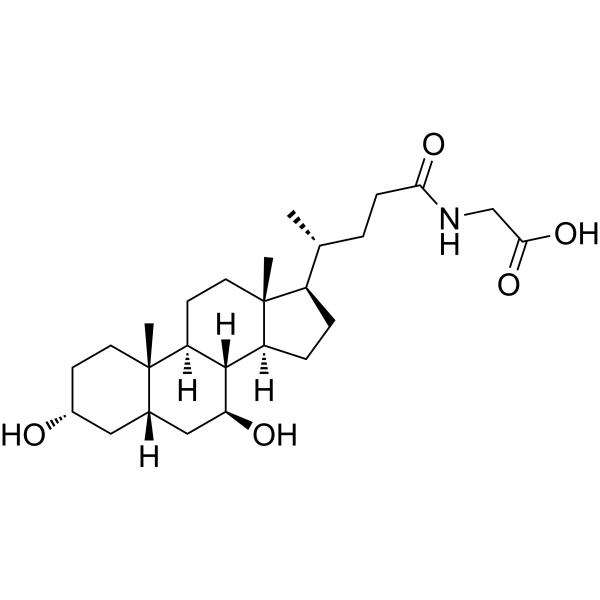
HY-N1424
Glycoursodeoxycholic acidEndogenous Metabolite -
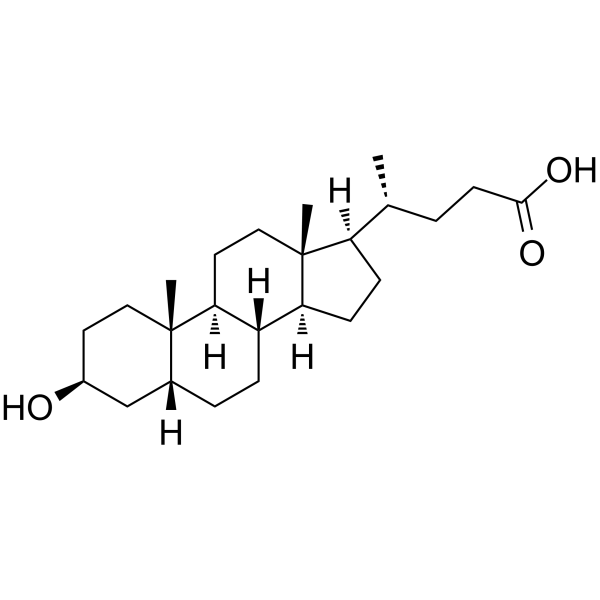
HY-B0172B
Isolithocholic acidBile Acid -
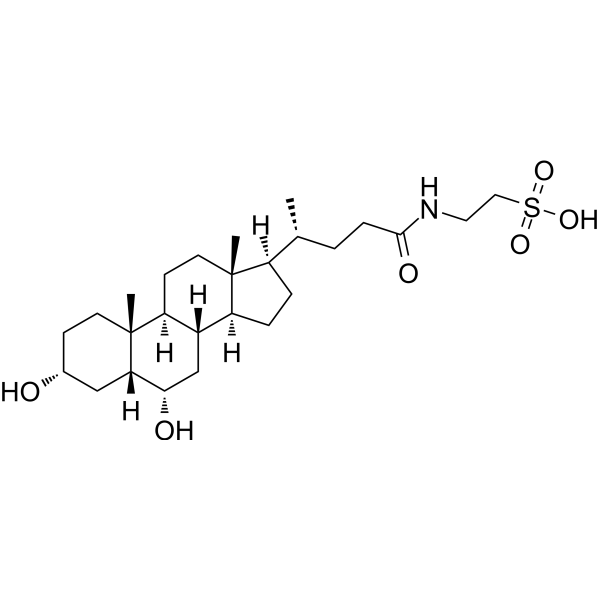
HY-114360
Taurohyodeoxycholic acidEndogenous Metabolite -
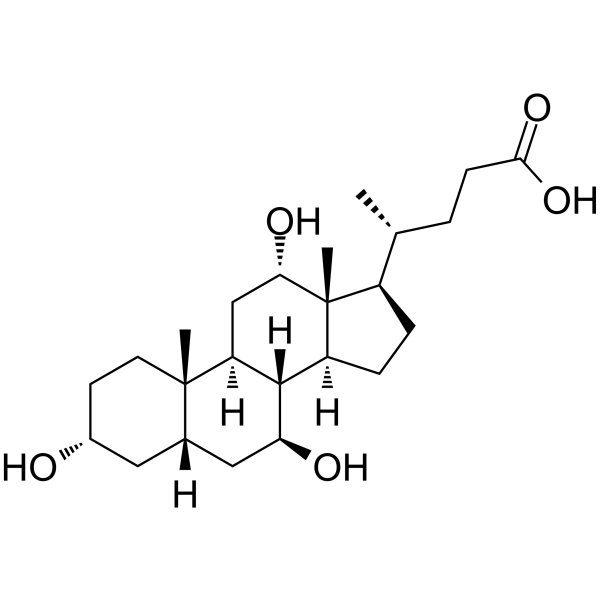
HY-113212
Ursocholic acidEndogenous Metabolite -
HY-B0172
Lithocholic acidAutophagy Inducer -
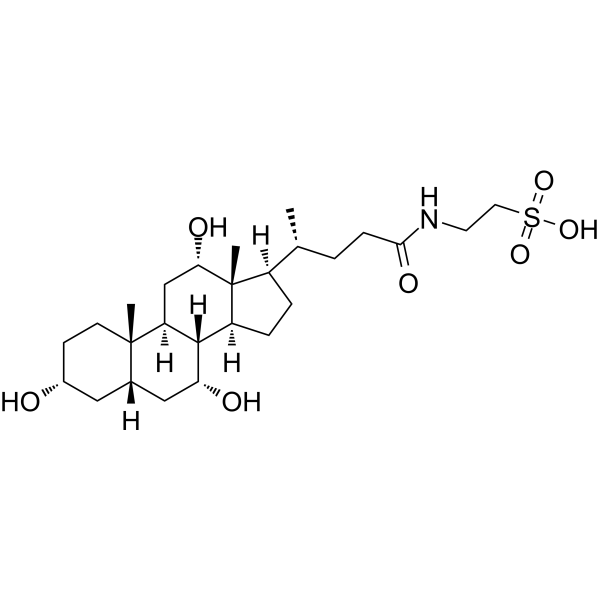
HY-B1788
Taurocholic acidImmunoregulation Agent
Publications Citing Use of MedChemExpress (MCE) Hyocholic acid
More

Biological Activity
Description
In Vitro
HCA (25 and 50 μM, 24 h) upregulates GLP-1 protein secretion in STC-1 and NCI-H716 cells[3].
HCA (25 and 50 μM, 24 h) upregulates proglucagon gene transcription in STC-1 and NCI-H716 cells[3].
MedChemExpress (MCE) has not independently confirmed the accuracy of these methods. They are for reference only.
-
Cell Line:NCI-H716 cells
-
Concentration:50 μM
-
Incubation Time:48 h
-
Result:Inhibited the high expression of SHP (small heterodimer partner) induced by the FXR agonist.
In Vivo
Hyocholic Acid (100 mg/kg/day, p.o.) improves serum fasting GLP-1 secretion and glucose homeostasis in diabetic mouse models[3].
MedChemExpress (MCE) has not independently confirmed the accuracy of these methods. They are for reference only.
-
Animal Model:BA depletion pigs[3]
-
Dosage:20 mg/kg
-
Administration:Oral administration (p.o.)
-
Result:Attenuated the increased blood glucose levels corresponding with GLP-1 decrease.
-
Animal Model:db/db model, and the high-fat diet and streptozotocin (HFD+STZ) induced diabetic model[3]
-
Dosage:100 mg/kg/day
-
Administration:Oral administration (p.o.)
-
Result:Improved oral glucose tolerances shown by lower glucose levels.
Increased circulating active GLP-1 levels and fasting insulin levels.


Chemical Information
-
CAS No. 547-75-1
-
Appearance Solid
-
Molecular Weight 408.57
-
Formula C24H40O5
-
Color White to light yellow
-
SMILES
C[C@@H]([C@]1(CC[C@]2([C@@]3([C@@H]([C@@H]([C@@]4(C[C@@H](CC[C@@]4([C@]3(CC[C@@]21C)[H])C)O)[H])O)O)[H])[H])[H])CCC(O)=O
-
Shipping
Room temperature in continental US; may vary elsewhere.
-
Storage
Powder -20°C 3 years 4°C 2 years In solvent -80°C 6 months -20°C 1 month


Publications (2)
-
Journal Impact Factor
-
Most Recent
-
mBio
Intestinal epithelial Tet2 deficiency reprograms the gut microbiota through bile acid metabolic alterations. [Abstract]2026 Jan 26:e0356225. PMID: 41586521 -
J Nutr
Bile Acid Supplementation Reduced Hepatic Lipid Deposition and Modulated Bile Acid Metabolism and the Gut Microbiota in Weaned Piglets. [Abstract]2025 Nov 14:S0022-3166(25)00705-9. PMID: 41242434


Solvent & Solubility
In Vitro:
DMSO : 62.5 mg/mL (152.97 mM; ultrasonic and warming and heat to 60°C; Hygroscopic DMSO has a significant impact on the solubility of product, please use newly opened DMSO)
Please refer to the solubility information to select the appropriate solvent. Once prepared, please aliquot and store the solution to prevent product inactivation from repeated freeze-thaw cycles.
Storage method and period of stock solution: -80°C, 6 months; -20°C, 1 month. When stored at -80°C, please use it within 6 months. When stored at -20°C, please use it within 1 month.
Please refer to the solubility information to select the appropriate solvent. Once prepared, please aliquot and store the solution to prevent product inactivation from repeated freeze-thaw cycles.
Storage method and period of stock solution: -80°C, 6 months; -20°C, 1 month. When stored at -80°C, please use it within 6 months. When stored at -20°C, please use it within 1 month.
Concentration (start) × Volume (start) = Concentration (final) × Volume (final)
In Vivo:
Select the appropriate dissolution method based on your experimental animal and administration route.
- For the following dissolution methods, please ensure to first prepare a clear stock solution using an In Vitro approach and then sequentially add co-solvents:
- To ensure reliable experimental results, the clarified stock solution can be appropriately stored based on storage conditions. As for the working solution for In Vivo experiments, it is recommended to prepare freshly and use it on the same day.
- The percentages shown for the solvents indicate their volumetric ratio in the final prepared solution. If precipitation or phase separation occurs during preparation, heat and/or sonication can be used to aid dissolution.
Add each solvent one by one: 10% DMSO 40% PEG300 5% Tween-80 45% Saline
Solubility: ≥ 2.5 mg/mL (6.12 mM); Clear solution
This protocol yields a clear solution of ≥ 2.5 mg/mL (saturation unknown).
Taking 1 mL working solution as an example, add 100 μL DMSO stock solution (25.0 mg/mL) to 400 μL PEG300, and mix evenly; then add 50 μL Tween-80 and mix evenly; then add 450 μL Saline to adjust the volume to 1 mL.
Preparation of Saline: Dissolve 0.9 g sodium chloride in ddH₂O and dilute to 100 mL to obtain a clear Saline solution.
Add each solvent one by one: 10% DMSO 90% (20% SBE-β-CD in Saline)
Solubility: ≥ 2.5 mg/mL (6.12 mM); Clear solution
This protocol yields a clear solution of ≥ 2.5 mg/mL (saturation unknown).
Taking 1 mL working solution as an example, add 100 μL DMSO stock solution (25.0 mg/mL) to 900 μL 20% SBE-β-CD in Saline, and mix evenly.
Preparation of 20% SBE-β-CD in Saline (4°C, storage for one week): 2 g SBE-β-CD powder is dissolved in 10 mL Saline, completely dissolve until clear.
In Vivo Dissolution Calculator
Please enter the basic information of animal experiments:
-
-
-
-
Recommended: Prepare an additional quantity of animals to account for potential losses during experiments.
Please enter your animal formula composition:
-
%DMSO +
Recommended: Keep the proportion of DMSO in working solution below 2% if your animal is weak.
-
%+
-
+%Tween-80 + +
-
%Saline +
The co-solvents required include: DMSO, . All of co-solvents are available by MedChemExpress (MCE). , Tween 80. All of co-solvents are available by MedChemExpress (MCE).
Working solution concentration: 0.22 mg/mL
Method for preparing stock solution: mg drug dissolved in μL DMSO. Stock solution concentration: mg/mL.
1. Take μL DMSO stock solution;
2. Add μL .
μL , mix evenly;
3. Then add μL Tween 80, mix evenly;
4. Then add μL
Please ensure that the stock solution in the first step is dissolved to a clear state, and add co-solvents in sequence. You can use ultrasonic heating (ultrasonic cleaner, recommended frequency 20-40 kHz), vortexing, etc. to assist dissolution.


Purity & Documentation
-
Data Sheet (279 KB)
-
SDS (254 KB)
- English - EN (254 KB)
- Français - FR (254 KB)
- Deutsch - DE (254 KB)
- Norwegian - NO (254 KB)
- Español - ES (254 KB)
- Swedish - SV (254 KB)
- Italian - IT (254 KB)
- Korean - KR (254 KB)
- Portuguese - PT (254 KB)
-
Handling Instructions (2659 KB)
References
[1]. Zheng X, et al. Hyocholic acid species as novel biomarkers for metabolic disorders. Nat Commun. 2021 Mar 5;12(1):1487. [Content Brief]
[3]. Xiaojiao Zheng, et al. Hyocholic acid species improve glucose homeostasis through a distinct TGR5 and FXR signaling mechanism. Cell Metab. 2021 Apr 6;33(4):791-803.e7. [Content Brief]


Complete Stock Solution Preparation Table
Please refer to the solubility information to select the appropriate solvent. Once prepared, please aliquot and store the solution to prevent product inactivation from repeated freeze-thaw cycles.
Storage method and period of stock solution: -80°C, 6 months; -20°C, 1 month. When stored at -80°C, please use it within 6 months. When stored at -20°C, please use it within 1 month.
| Optional Solvent | Concentration Solvent Mass | 1 mg | 5 mg | 10 mg | 25 mg |
|---|---|---|---|---|---|
| DMSO | 1 mM | 2.4476 mL | 12.2378 mL | 24.4756 mL | 61.1890 mL |
| 5 mM | 0.4895 mL | 2.4476 mL | 4.8951 mL | 12.2378 mL | |
| 10 mM | 0.2448 mL | 1.2238 mL | 2.4476 mL | 6.1189 mL | |
| 15 mM | 0.1632 mL | 0.8159 mL | 1.6317 mL | 4.0793 mL | |
| 20 mM | 0.1224 mL | 0.6119 mL | 1.2238 mL | 3.0595 mL | |
| 25 mM | 0.0979 mL | 0.4895 mL | 0.9790 mL | 2.4476 mL | |
| 30 mM | 0.0816 mL | 0.4079 mL | 0.8159 mL | 2.0396 mL | |
| 40 mM | 0.0612 mL | 0.3059 mL | 0.6119 mL | 1.5297 mL | |
| 50 mM | 0.0490 mL | 0.2448 mL | 0.4895 mL | 1.2238 mL | |
| 60 mM | 0.0408 mL | 0.2040 mL | 0.4079 mL | 1.0198 mL | |
| 80 mM | 0.0306 mL | 0.1530 mL | 0.3059 mL | 0.7649 mL | |
| 100 mM | 0.0245 mL | 0.1224 mL | 0.2448 mL | 0.6119 mL |


Hyocholic acid Related Classifications
HY-121238 Related Classifications
 Powered by Bioz