



I-CBP112 hydrochloride
Based on 5 publication(s) in Google Scholar
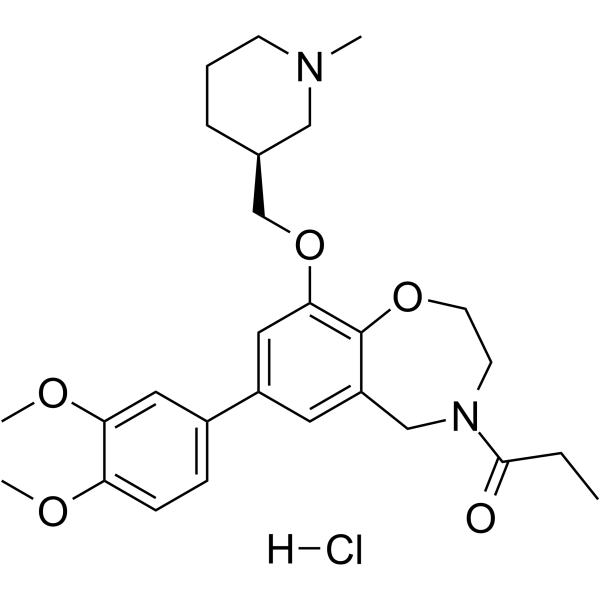
I-CBP112 hydrochloride is a selective inhibitor of CBP/P300 that directly binds their bromodomains (Kds = 142 and 625 nM, respectively). I-CBP112 significantly reduces the leukemia-initiating potential of MLL-AF9(+) acute myeloid leukemia cells in a dose-dependent manner in vitro and in vivo. I-CBP112 increases the cytotoxic activity of BET bromodomain inhibitor JQ1 as well as doxorubicin.
For research use only. We do not sell to patients.
- CAS No.: 2147701-33-3
- Formula: C27H37ClN2O5
- Molecular Weight:505.05
-
Storage:
Please store the product under the recommended conditions in the Certificate of Analysis.

To place orders, for customer services and technical support, please contact: MedChemExpress USA
Tel: 609-228-6898 E-mail: [email protected] [email protected]


-
 Biological Activity
-
Chemical Information
- Protocols
- Purity & Documentation
- References
-
 Help & FAQs


-
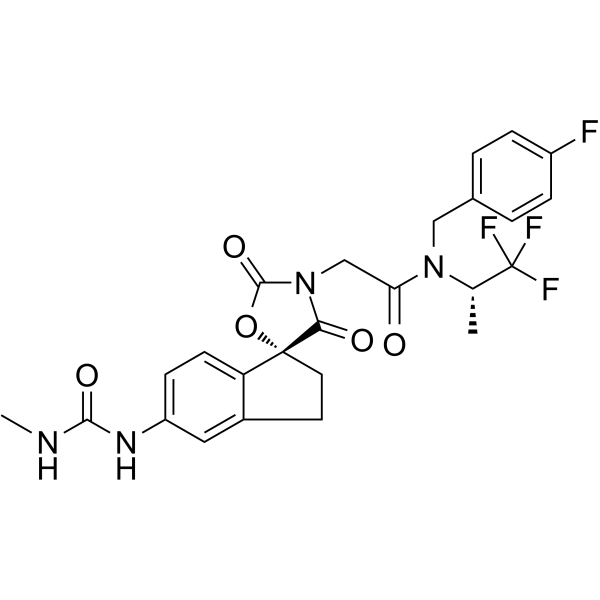
HY-107455
A-485p300/CBP Inhibitor -

HY-107455R
A-485 (Standard)Reference Standard -
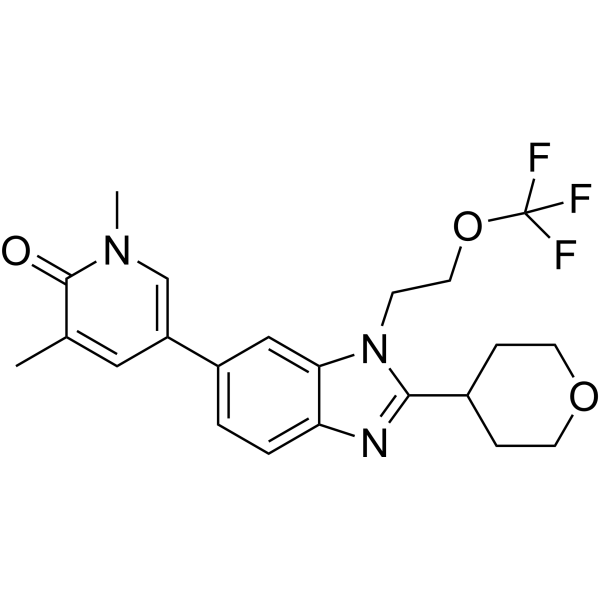
HY-136938
NEO2734p300(CBP)/BET Inhibitor -
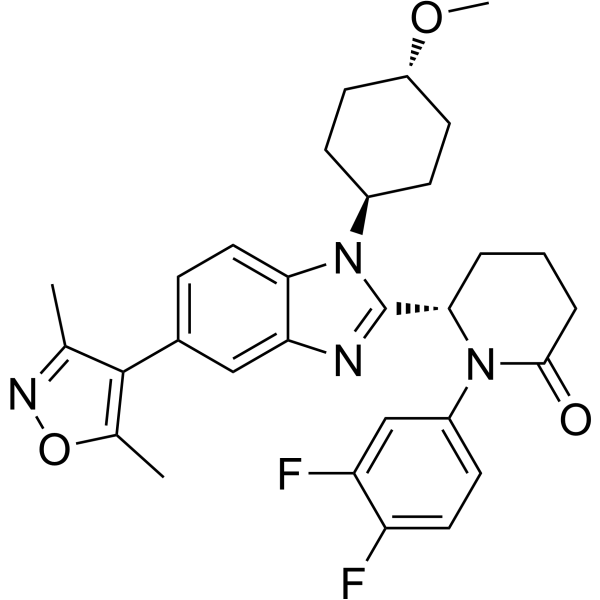
HY-111784
Inobrodibp300/CBP Inhibitor -
HY-136570
GSK778BET BD1 Inhibitor -
HY-117997
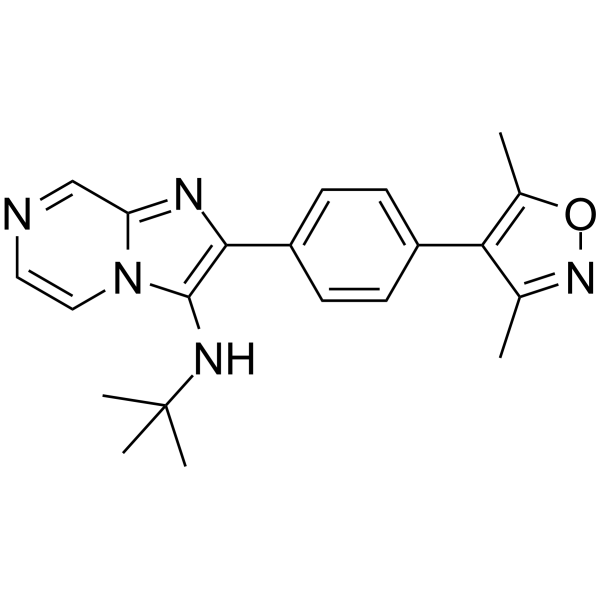
UMB-32BRD4 Inhibitor -
HY-114205A
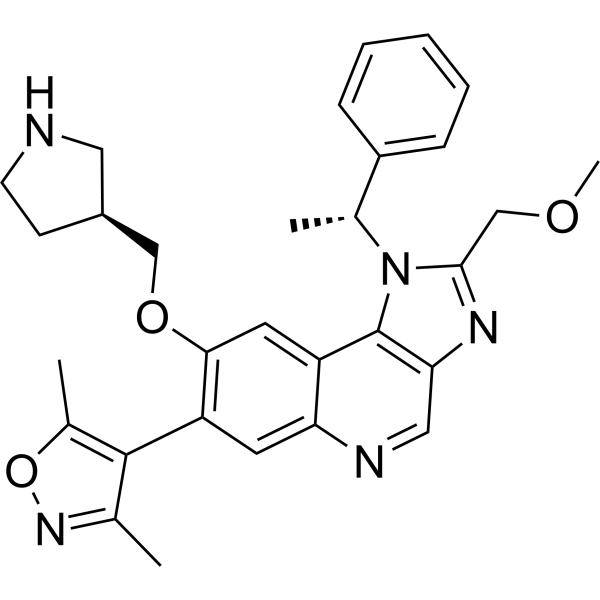
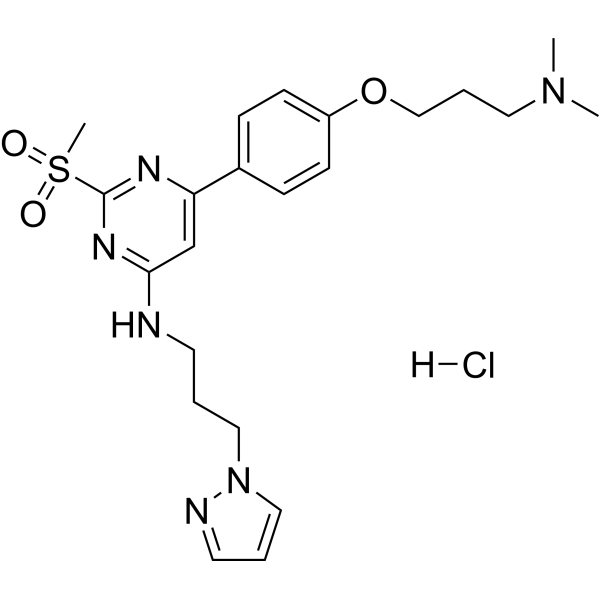
TP-238 hydrochlorideCECR2/BPTF Inhibitor -
HY-100726
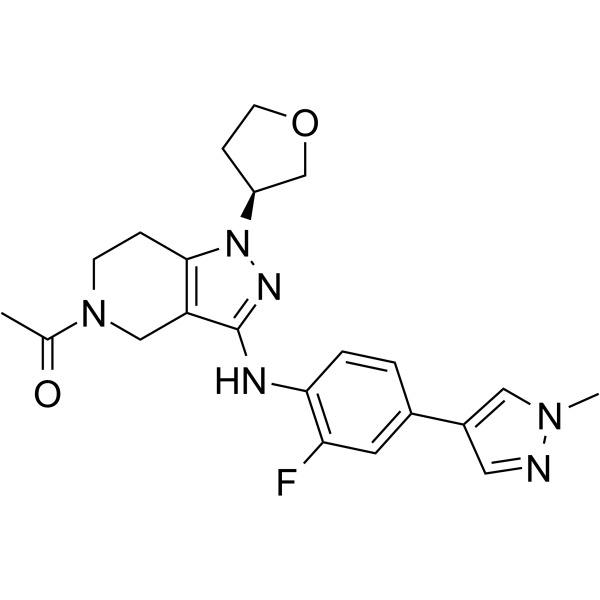
GNE-272CBP/EP300 Inhibitor -

HY-100726R
GNE-272 (Standard)CBP/EP300 Inhibitor
Publications Citing Use of MedChemExpress (MCE) I-CBP112 hydrochloride
More

Biological Activity
Description


Chemical Information
-
CAS No. 2147701-33-3
-
Molecular Weight 505.05
-
Formula C27H37ClN2O5
-
SMILES
CCC(N1CCOC2=C(OC[C@@H]3CN(C)CCC3)C=C(C4=CC=C(OC)C(OC)=C4)C=C2C1)=O.[H]Cl
-
Shipping
Room temperature in continental US; may vary elsewhere.
-
Storage
Please store the product under the recommended conditions in the Certificate of Analysis.


Publications (5)
-
Journal Impact Factor
-
Most Recent
-
Cell
Fibroblasts of disparate developmental origins harbor anatomically variant scarring potential. [Abstract]2026 Feb 5;189(3):783-799.e20. PMID: 41576949 -
Cell Res
2021 Mar;31(3):291-311. PMID: 33299139 -
Nat Commun
Human iPSC-based Modeling of Pulmonary Fibrosis Reveals p300/CBP Inhibition Suppresses Alveolar Transitional Cell State. [Abstract]2026 Feb 12;17(1):1214. PMID: 41680175 -
iScience
Transcriptional synergy in human aortic endothelial cells is vulnerable to combination p300/CBP and BET bromodomain inhibition. [Abstract]2024 May 16;27(6):110011. PMID: 38868181 -

Protocols
-
Cell Cytotoxicity Assay
Cytotoxicity assays are usually based on the assessment of cell membrane damage, which can also be indirectly detected by measuring cell viability. Detection methods include MTT assay, CKK-8 assay, LDH assay and ATP assay, etc.
-
Cell Viability Determination by MTT Colorimetric Assay
The following protocol uses the MTT colorimetric assay as a classic literature-established method for assessing cell viability/metabolic activity in cultured mammalian cells. MTT[3-(4,5-dimethylthiazol-2-yl)-2,5-diphenyltetrazolium bromide] is reduced by metabolically active cells to a colored formazan product; the amount of formazan is quantified spectrophotometrically and provides an indirect measure of metabolically active viable cells. Importantly, MTT reduction reflects cellular oxidoreductase/metabolic activity rather than an absolute direct count of living cells, so changes in cellular metabolism can alter the signal independently of cell number.


Purity & Documentation
References

Calculators
Concentration (start) × Volume (start) = Concentration (final) × Volume (final)


I-CBP112 hydrochloride Related Classifications
HY-19541A Related Classifications
 Powered by Bioz