



T326
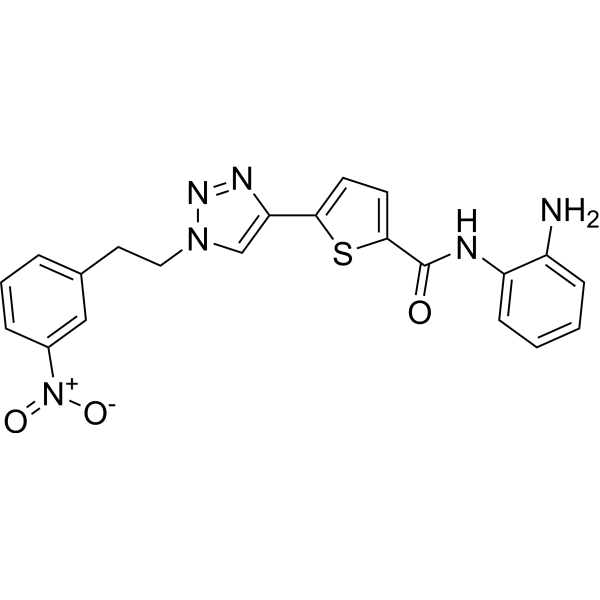
T326 is a potent and selective HDAC3 inhibitor, with an IC50 of 0.26 μM. T326 can be used for the research of cancer and HIV infection.
For research use only. We do not sell to patients.
- CAS No.: 1451042-19-5
- Formula: C21H18N6O3S
- Molecular Weight:434.47
-
Storage:
Please store the product under the recommended conditions in the Certificate of Analysis.

To place orders, for customer services and technical support, please contact: MedChemExpress USA
Tel: 609-228-6898 E-mail: [email protected] [email protected]


-
 Biological Activity
-
Chemical Information
- Protocols
- Purity & Documentation
- References
-
 Help & FAQs




Biological Activity
Description
Cellular Effect
|
Cell Line

|
Type | Value | Description | References |
|---|---|---|---|---|
| Sf9 | IC50 |
>100 μM
Compound: 74
|
Inhibition of recombinant human full length C-terminal GST-tagged HDAC1 expressed in baculovirus Sf9 insect cells using HDAC Glo I/II substrate by Kinase Glo luminescence assay
Inhibition of recombinant human full length C-terminal GST-tagged HDAC1 expressed in baculovirus Sf9 insect cells using HDAC Glo I/II substrate by Kinase Glo luminescence assay
|
[PMID: 31050421] |
| Sf9 | IC50 |
>100 μM
Compound: 74
|
Inhibition of recombinant human full length C-terminal GST-tagged HDAC4 (627 to end residues) expressed in baculovirus Sf9 insect cells using HDAC class 2a substrate incubated for 30 mins by fluorescence assay
Inhibition of recombinant human full length C-terminal GST-tagged HDAC4 (627 to end residues) expressed in baculovirus Sf9 insect cells using HDAC class 2a substrate incubated for 30 mins by fluorescence assay
|
[PMID: 31050421] |
Clinical Trial
| NCT Number | Sponsor | Condition | Start Date |
Phase
|
|---|---|---|---|---|
| NCT01329991 | 2011-05 | PHASE1 |


Chemical Information
-
CAS No. 1451042-19-5
-
Molecular Weight 434.47
-
Formula C21H18N6O3S
-
SMILES
O=C(NC1=CC=CC=C1N)C2=CC=C(S2)C3=CN(CCC4=CC=CC([N+]([O-])=O)=C4)N=N3
-
Shipping
Room temperature in continental US; may vary elsewhere.
-
Storage
Please store the product under the recommended conditions in the Certificate of Analysis.


Purity & Documentation
References

Calculators
Concentration (start) × Volume (start) = Concentration (final) × Volume (final)


T326 Related Classifications
HY-119690 Related Classifications
 Powered by Bioz