



Chitosan oligosaccharide
Based on 5 publication(s) in Google Scholar
Chitosan oligosaccharide (COS) is an oligomer of β-(1→4)-linked D-glucosamine. Chitosan oligosaccharide (COS) activates AMPK and inhibits inflammatory signaling pathways including NF-κB and MAPK pathways.
商品は「研究用試薬」です。人や動物の医療用・臨床診断用・食品用の製品ではありません。
研究用途以外に使用した場合、当社は一切の責任を負いかねます。
- 純度 : 91.0%
- CAS 番号: 148411-57-8
-
保管条件:Powder -20°C, 3 years , 4°C, 2 years ; In solvent -80°C, 6 months , -20°C, 1 month

To place orders, for customer services and technical support, please contact: MedChemExpress USA
Tel: 609-228-6898 E-mail: [email protected] [email protected]


-
 生物活性
生物活性
-
化学情報
-
溶剤 & 溶解度
- プロトコル
- 純度とドキュメンテーション
- 参考文献
-
 Help & FAQs


-
HY-17364
TemozolomideDNA Alkylator -
HY-126389
Chitin, from crab carapace (powder),biomedical research gradeBiochemical Assay Reagent -
HY-50662
A-769662AMPK Activator -
HY-112233
O-304AMPK Activator -
HY-N6631
7-MethoxyisoflavoneAMPK Activator -
HY-12831
AmpkinoneAMPK Activator -
HY-112769
EX229AMPK Activator -
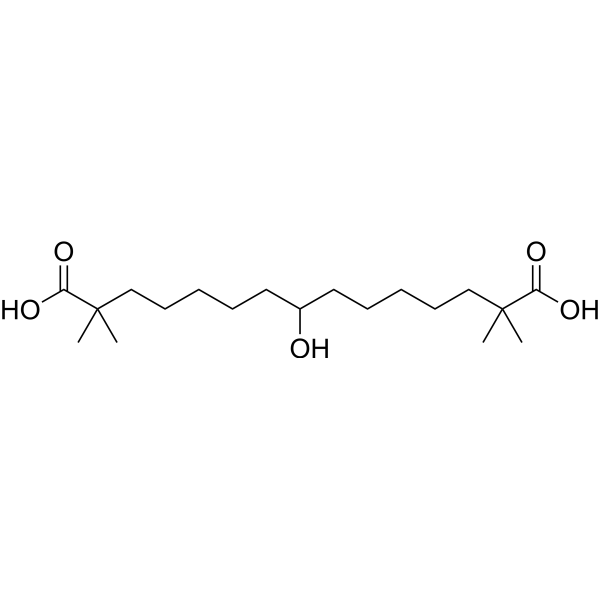
HY-12357
Bempedoic acidACL Inhibitor/AMPK Activator -
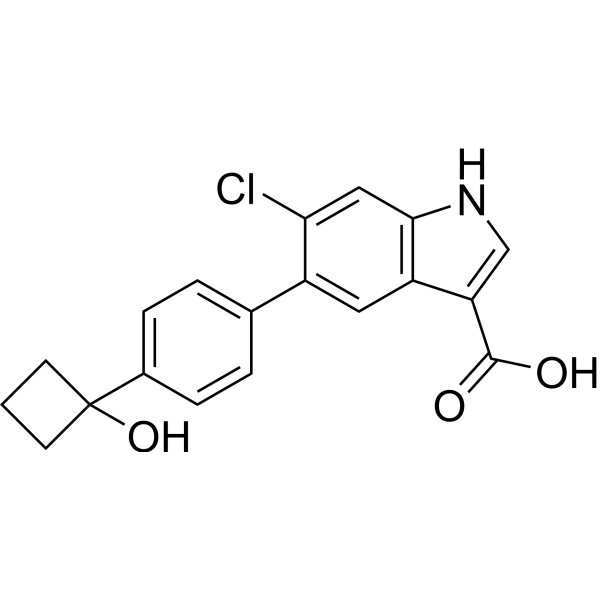
HY-103683
PF-06409577AMPK Activator -
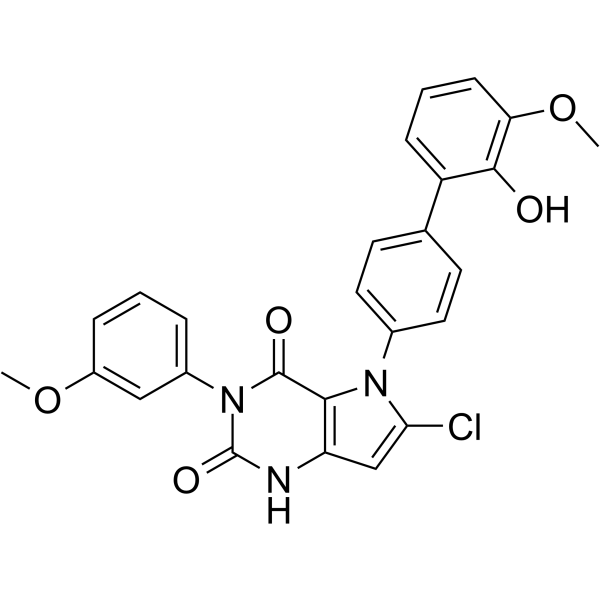
HY-100548
GSK621AMPK Activator -
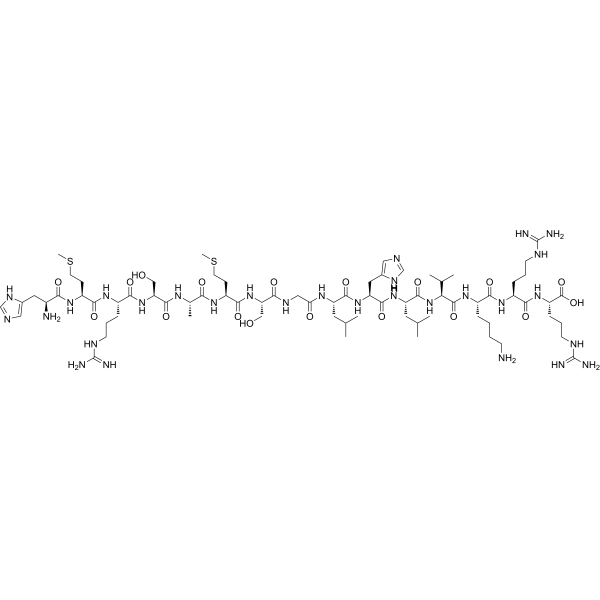
HY-P0136
SAMSAMPK Substrate -
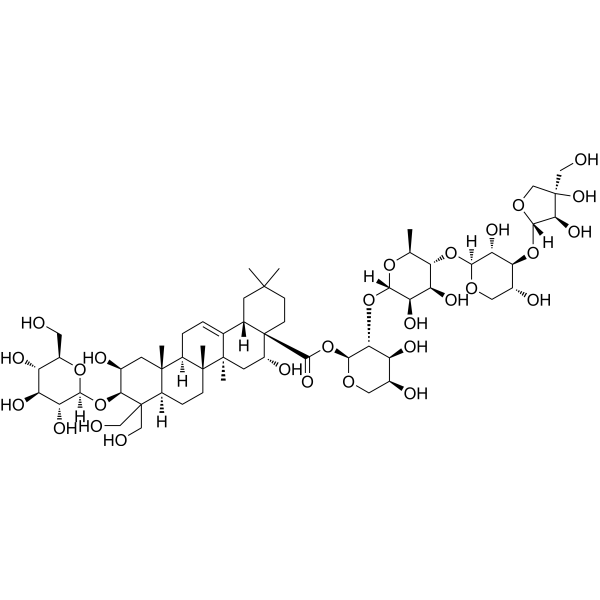
HY-N1411
Platycodin DAMPK Activator
MedChemExpress(MCE)の使用を引用している文献 Chitosan oligosaccharide
MoreAMPK アイソフォーム固有の製品をすべて表示
MoreEndogenous Metabolite アイソフォーム固有の製品をすべて表示
More

生物活性
製品説明
IC50 & Target
AMPK[1]
体外実験
Chitosan oligosaccharide (COS) represents a class of natural polymers that holds therapeutic promise in several diseases due to not only its physiochemical properties including water-solubility and low viscosity but also its favorable pharmacological properties including good pharmacokinetics and safety profiles and diverse beneficial biological activities. Activation of AMPK and inhibition of inflammatory signaling pathways including NF-κB and MAPK pathways are recognized as major mechanisms responsible for several effects of Chitosan oligosaccharide (COS) including anti-inflammation, anti-cancer, and anti-diabetes. COS can interrupt cancer progression at multiple stages by modulating several signaling proteins/pathways including NF-κB, AMPK, mTOR, caspase-3, CD147, MMP-2, MMP-9, and VEGF. In vitro experiments have demonstrated that Chitosan oligosaccharide (COS) induced the death of several cancer cell types including ascites, bladder cancer, prostate cancer, lung cancer, liver cancer, leukemia, cervical cancer and colorectal cancer. The values of IC50 of Chitosan oligosaccharide (COS) in inducing cytotoxicity are 25 μg/mL-50 μg/mL depending on types of cancer cells[1].
MedChemExpress (MCE) has not independently confirmed the accuracy of these methods. They are for reference only.
体内実験
MedChemExpress (MCE) has not independently confirmed the accuracy of these methods. They are for reference only.


化学情報
-
CAS 番号 148411-57-8
-
性状 Solid
-
Color Light yellow to yellow
-
SMILES
[Chitosan oligosaccharide]
-
別名
COS; キトサンオリゴ糖乳酸塩
-
Structure Classification
-
Initial Source
-
輸送条件
Room temperature in continental US; may vary elsewhere.
-
保管条件
Powder -20°C 3 years 4°C 2 years In solvent -80°C 6 months -20°C 1 month


Publications (5)
-
Journal Impact Factor
-
Most Recent
-
Adv Sci (Weinh)
An Apple Susceptibility-Related LRR Receptor-Like Kinase MdRLKT21 Activates Plant Immunity by Hijacking a Trans-Kingdom Fungal microRNA-Like RNA. [Abstract]2025 Aug 4:e17426. PMID: 40755370 -
Acta Pharmacol Sin
Pretreatment with chitosan oligosaccharides attenuate experimental severe acute pancreatitis via inhibiting oxidative stress and modulating intestinal homeostasis. [Abstract]2021 Jun;42(6):942-953. PMID: 33495520 -
Nutrients
2022 Nov 7;14(21):4699. PMID: 36364961 -
J Biomed Mater Res A
Macrophage polarization in vitro and in vivo modified by contact with fragmented chitosan hydrogel. [Abstract]2022 Apr;110(4):773-787. PMID: 34723433 -


溶剤 & 溶解度
体外:
DMSO : 50 mg/mL (Need ultrasonic; Hygroscopic DMSO has a significant impact on the solubility of product, please use newly opened DMSO)
H2O : 50 mg/mL (Need ultrasonic)
体内:
Select the appropriate dissolution method based on your experimental animal and administration route.
- For the following dissolution methods, please ensure to first prepare a clear stock solution using an In Vitro approach and then sequentially add co-solvents:
- To ensure reliable experimental results, the clarified stock solution can be appropriately stored based on storage conditions. As for the working solution for In Vivo experiments, it is recommended to prepare freshly and use it on the same day.
- The percentages shown for the solvents indicate their volumetric ratio in the final prepared solution. If precipitation or phase separation occurs during preparation, heat and/or sonication can be used to aid dissolution.
Add each solvent one by one: 10% DMSO 40% PEG300 5% Tween-80 45% Saline
Solubility: ≥ 2.5 mg/mL; Clear solution
This protocol yields a clear solution of ≥ 2.5 mg/mL (saturation unknown).
Taking 1 mL working solution as an example, add 100 μL DMSO stock solution (25.0 mg/mL) to 400 μL PEG300, and mix evenly; then add 50 μL Tween-80 and mix evenly; then add 450 μL Saline to adjust the volume to 1 mL.
Preparation of Saline: Dissolve 0.9 g sodium chloride in ddH₂O and dilute to 100 mL to obtain a clear Saline solution.
Add each solvent one by one: 10% DMSO 90% (20% SBE-β-CD in Saline)
Solubility: ≥ 2.5 mg/mL; Clear solution
This protocol yields a clear solution of ≥ 2.5 mg/mL (saturation unknown).
Taking 1 mL working solution as an example, add 100 μL DMSO stock solution (25.0 mg/mL) to 900 μL 20% SBE-β-CD in Saline, and mix evenly.
Preparation of 20% SBE-β-CD in Saline (4°C, storage for one week): 2 g SBE-β-CD powder is dissolved in 10 mL Saline, completely dissolve until clear.
For the following dissolution methods, please prepare the working solution directly:
It is recommended to prepare fresh solutions and use them promptly within a short period of time.
The percentages shown for the solvents indicate their volumetric ratio in the final prepared solution. If precipitation or phase separation occurs during preparation, heat and/or sonication can be used to aid dissolution.
Add each solvent one by one: PBS
Solubility: 100 mg/mL; Clear solution; Need ultrasonic
In Vivo Dissolution Calculator
Please enter the basic information of animal experiments:
-
-
-
-
Recommended: Prepare an additional quantity of animals to account for potential losses during experiments.
Working solution concentration: 0.22 mg/mL
This product has good water solubility, please refer to the measured solubility data in water/PBS/Saline for details.


純度とドキュメンテーション
-
データシート (273 KB)
-
SDS (251 KB)
- English - EN (251 KB)
- Français - FR (251 KB)
- Deutsch - DE (251 KB)
- Norwegian - NO (251 KB)
- Español - ES (251 KB)
- Swedish - SV (251 KB)
- Italian - IT (251 KB)
- Korean - KR (251 KB)
- Portuguese - PT (251 KB)
-
取扱説明書 (2659 KB)
参考文献
[1]. Muanprasat C, et al. Chitosan oligosaccharide: Biological activities and potential therapeutic applications. Pharmacol Ther. 2017 Feb;170:80-97 [Content Brief]
[2]. Kong SZ, et al. Anti-photoaging effects of chitosan oligosaccharide in ultraviolet-irradiated hairless mouse skin. Exp Gerontol. 2018 Mar;103:27-34. [Content Brief]

Calculators
濃度 (開始) × 体積 (開始) = 濃度 (終了) × 体積 (終了)


Chitosan oligosaccharide 関連分類
HY-112108 関連分類
 Powered by Bioz