



Retinyl acetate
Based on 4 publication(s) in Google Scholar
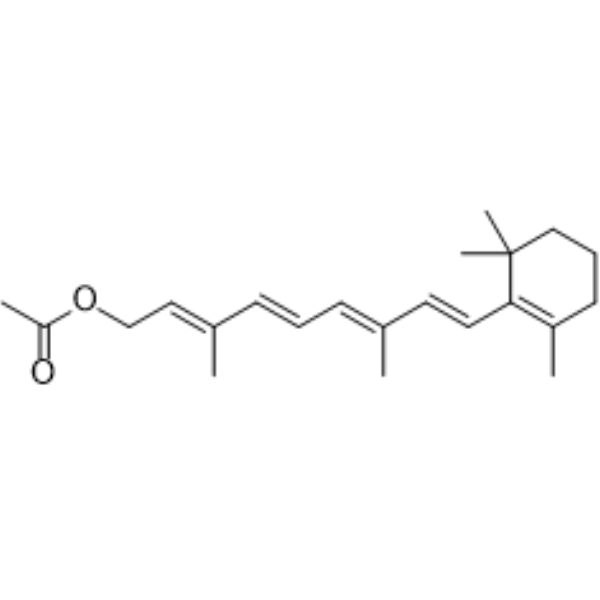
Retinyl acetate is a synthetic acetate ester form derived from retinol and has potential antineoplastic and chemo preventive activities.
商品は「研究用試薬」です。人や動物の医療用・臨床診断用・食品用の製品ではありません。
研究用途以外に使用した場合、当社は一切の責任を負いかねます。
- 純度 : 99.30%
- CAS 番号: 127-47-9
- 分子式: C22H32O2
- 分子量:328.49
-
保管条件:Powder -20°C, 3 years ; In solvent -80°C, 6 months , -20°C, 1 month

To place orders, for customer services and technical support, please contact: MedChemExpress USA
Tel: 609-228-6898 E-mail: [email protected] [email protected]


-
 生物活性
生物活性
-
化学情報
-
溶剤 & 溶解度
- 純度とドキュメンテーション
- 参考文献
-
 Help & FAQs


-
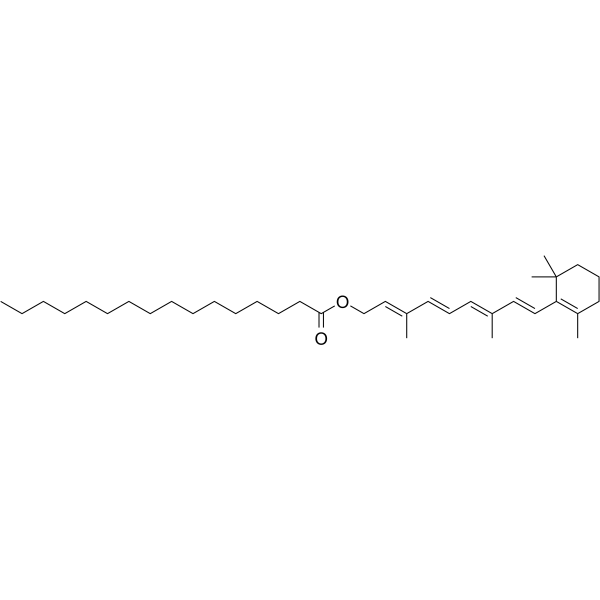
HY-B1384
Retinyl palmitateEndogenous Metabolite -
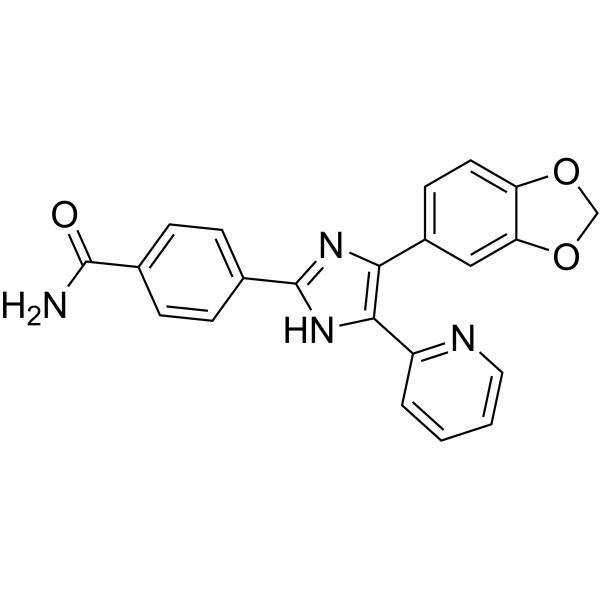
HY-10431
SB-431542TGF-β Receptor Kinase Inhibitor -
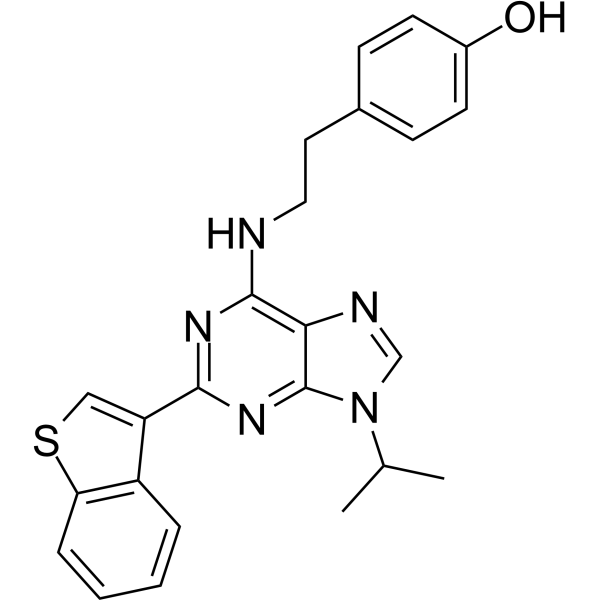
HY-15001
Stemregenin 1AhR Antagonist -
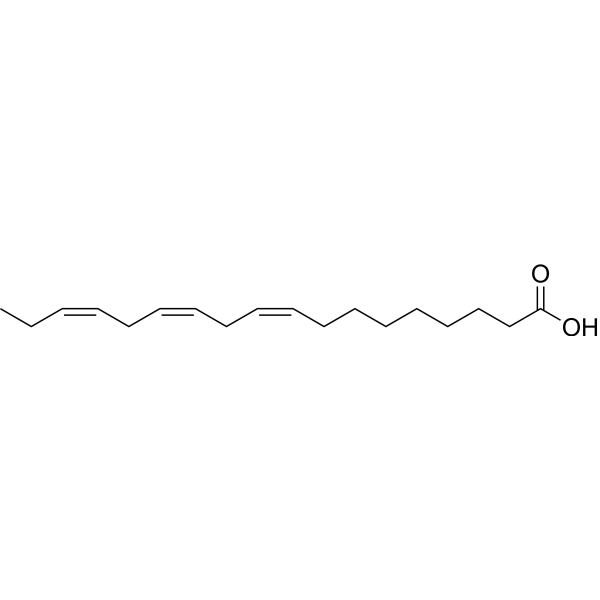
HY-N0728
α-Linolenic acidEssential Fatty Acid -
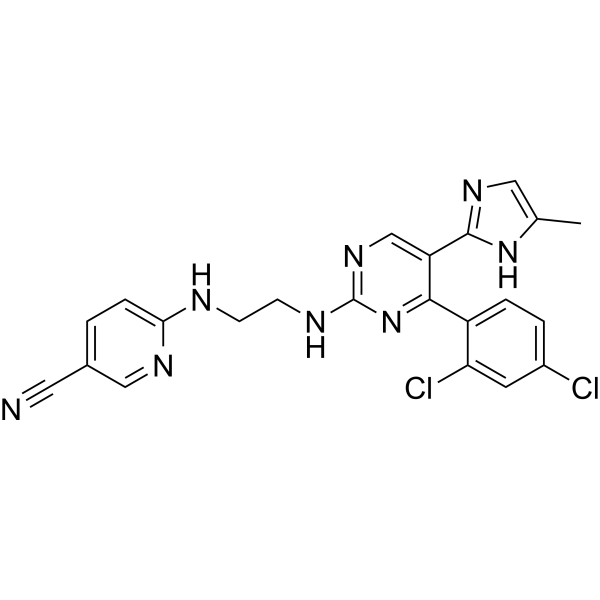
HY-10182
LaduviglusibGSK-3 Inhibitor -

HY-B1342
Vitamin A -
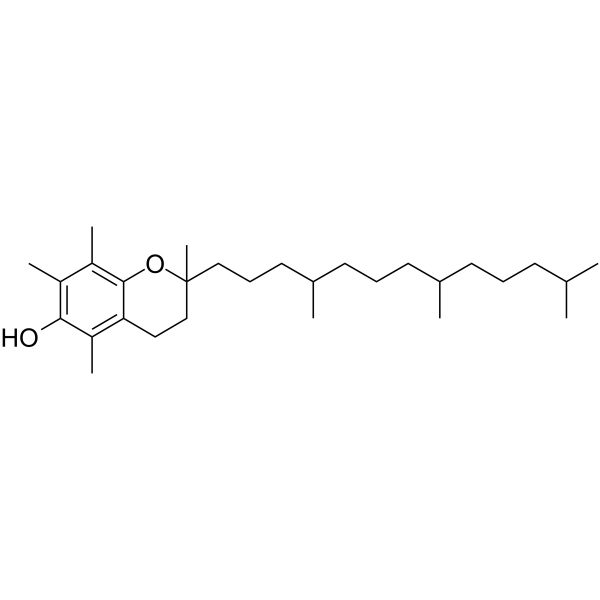
HY-W020044
DL-alpha-TocopherolVitamin E -
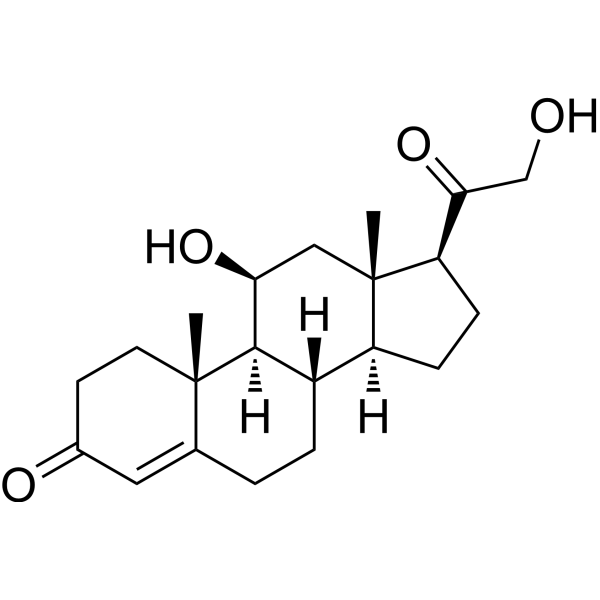
HY-B1618
CorticosteroneEndogenous Glucocorticoids -
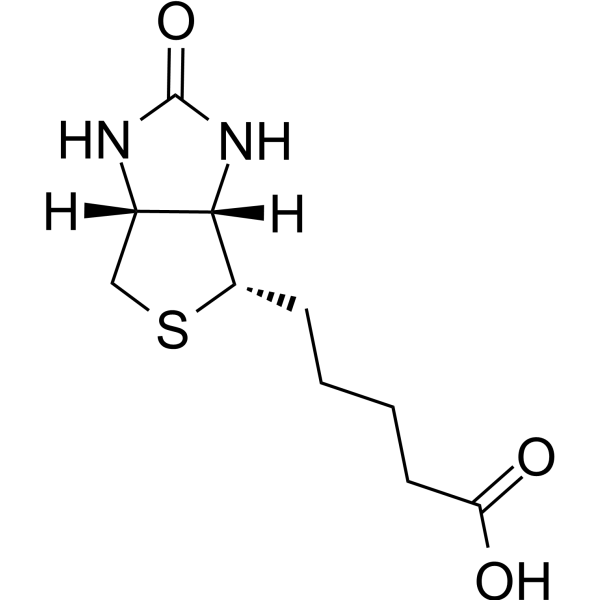
HY-B0511
BiotinVitamin B7 -
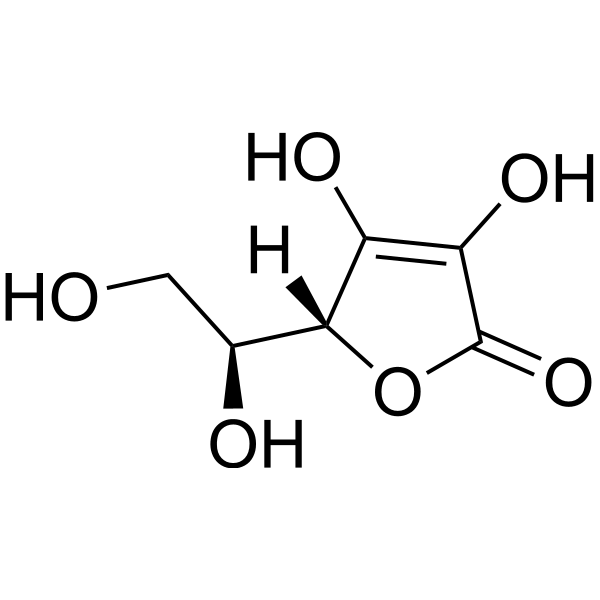
HY-B0166
L-Ascorbic acidAntioxidant -
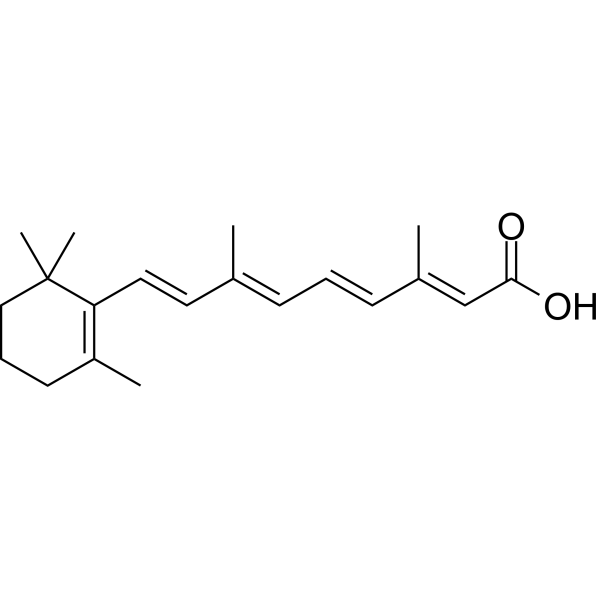
HY-14649
Retinoic acidRAR Agonist -
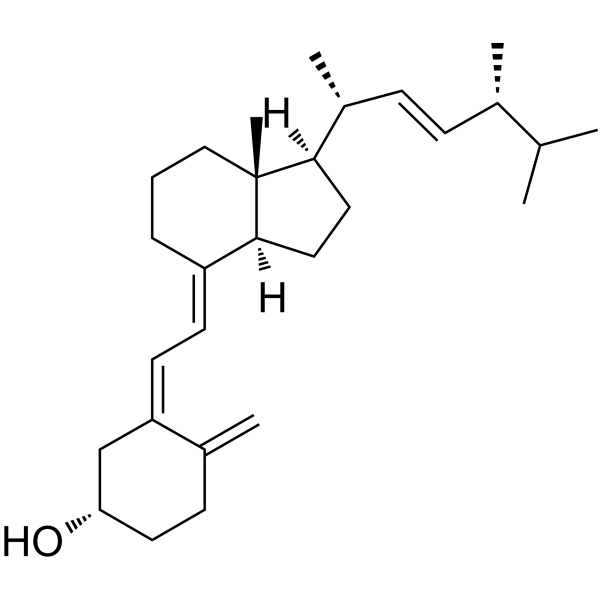
HY-76542
Vitamin D2Vitamin D Supplement
MedChemExpress(MCE)の使用を引用している文献 Retinyl acetate
More Customer Validation & Images

-
Cell Imaging/Staining
-
RT-PCR


生物活性
製品説明
体外実験
体内実験
MedChemExpress (MCE) has not independently confirmed the accuracy of these methods. They are for reference only.


化学情報
-
CAS 番号 127-47-9
-
性状 Solid
-
分子量 328.49
-
分子式 C22H32O2
-
Color Off-white to light yellow
-
SMILES
CC(/C=C/C=C(/C=C/C1=C(CCCC(C)1C)C)C)=C\COC(C)=O
-
別名
Retinol acetate; ビタミン A アセテート; レチノール酢酸エステル; Vitamin A acetate; 酢酸レチニル
-
Structure Classification
-
Initial Source
-
輸送条件
Room temperature in continental US; may vary elsewhere.
-
保管条件
Powder -20°C 3 years In solvent -80°C 6 months -20°C 1 month


Publications (4)
-
Journal Impact Factor
-
Most Recent
-
Commun Biol
DNA methyltransferase Dnmt3ba-mediated epigenetic modulation of Integrin signaling is essential for hematopoietic stem and progenitor cell development. [Abstract]2025 Nov 19;8(1):1612. PMID: 41261168 -
Nutrients
Assessing the Interactions between Zinc and Vitamin A on Intestinal Functionality, Morphology, and the Microbiome In Vivo (Gallus gallus). [Abstract]2023 Jun 15;15(12):2754. PMID: 37375657 -
Int J Mol Sci
Hif1α/Dhrs3a Pathway Participates in Lipid Droplet Accumulation via Retinol and Ppar-γ in Fish Hepatocytes. [Abstract]2023 Jun 16;24(12):10236. PMID: 37373386
Retinyl acetate purchased from MedChemExpress. Usage Cited in: Int J Mol Sci. 2023 Jun 16;24(12):10236. [Abstract]
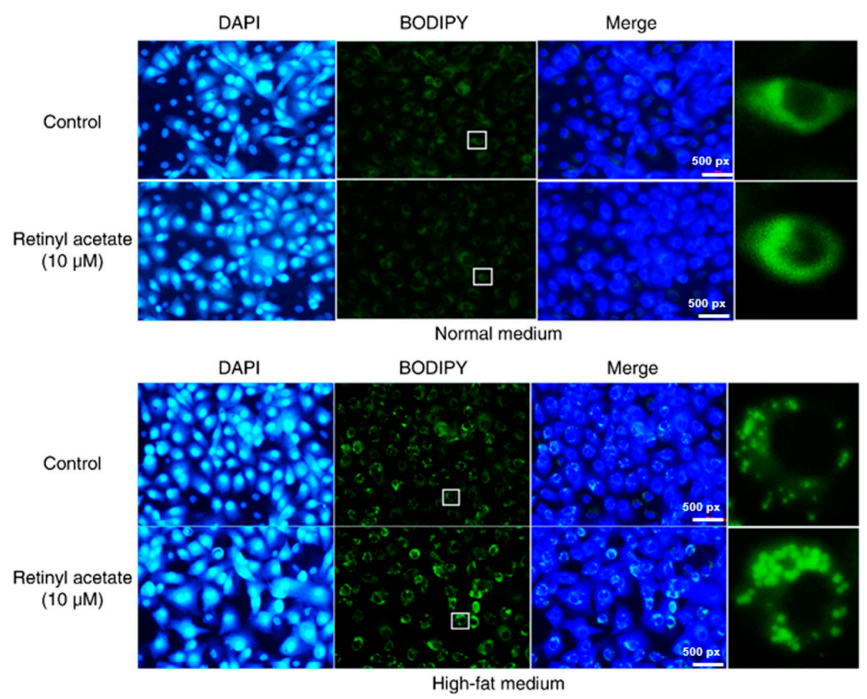
Cells were treated with or without Retinyl acetate (10 μM) in either NM or HFM for 24 h, and the cells were stained with BODIPY (LDs, green) or DAPI (nuclei, blue). The white box delineates the magnified cells.
Retinyl acetate purchased from MedChemExpress. Usage Cited in: Int J Mol Sci. 2023 Jun 16;24(12):10236. [Abstract]
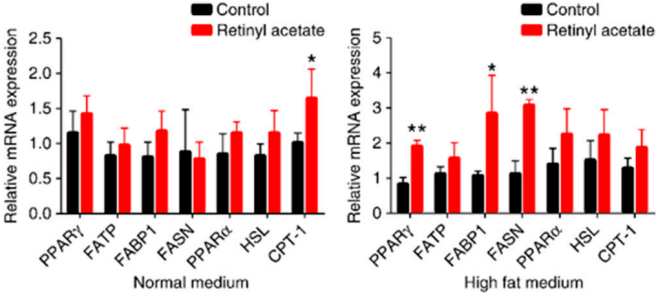
Relative mRNA expression of lipid metabolism-related genes in cells treated with or without Retinyl acetate (10 μM) in either NM or HFM for 24 h (n = 3). The results showed that Retinyl acetate increased the expression of lipid synthesis-related genes, including pparg, fatty acid-binding protein 1 (fabp1), and fasn, especially in the HFM group.
-
J Biol Chem
A cell-based assay for retinaldehyde dehydrogenase activity: Retinoid quantification as an alternative to current fluorescence-based approaches. [Abstract]2026 Jan 29;302(3):111211. PMID: 41617028


溶剤 & 溶解度
体外:
DMSO : 50 mg/mL (152.21 mM; Need ultrasonic; Hygroscopic DMSO has a significant impact on the solubility of product, please use newly opened DMSO)
H2O : < 0.1 mg/mL (insoluble)
Please refer to the solubility information to select the appropriate solvent. Once prepared, please aliquot and store the solution to prevent product inactivation from repeated freeze-thaw cycles.
Storage method and period of stock solution: -80°C, 6 months; -20°C, 1 month. When stored at -80°C, please use it within 6 months. When stored at -20°C, please use it within 1 month.
Please refer to the solubility information to select the appropriate solvent. Once prepared, please aliquot and store the solution to prevent product inactivation from repeated freeze-thaw cycles.
Storage method and period of stock solution: -80°C, 6 months; -20°C, 1 month. When stored at -80°C, please use it within 6 months. When stored at -20°C, please use it within 1 month.
濃度 (開始) × 体積 (開始) = 濃度 (終了) × 体積 (終了)
体内:
Select the appropriate dissolution method based on your experimental animal and administration route.
- For the following dissolution methods, please ensure to first prepare a clear stock solution using an In Vitro approach and then sequentially add co-solvents:
- To ensure reliable experimental results, the clarified stock solution can be appropriately stored based on storage conditions. As for the working solution for In Vivo experiments, it is recommended to prepare freshly and use it on the same day.
- The percentages shown for the solvents indicate their volumetric ratio in the final prepared solution. If precipitation or phase separation occurs during preparation, heat and/or sonication can be used to aid dissolution.
Add each solvent one by one: 10% DMSO 40% PEG300 5% Tween-80 45% Saline
Solubility: ≥ 2.5 mg/mL (7.61 mM); Clear solution
This protocol yields a clear solution of ≥ 2.5 mg/mL (saturation unknown).
Taking 1 mL working solution as an example, add 100 μL DMSO stock solution (25.0 mg/mL) to 400 μL PEG300, and mix evenly; then add 50 μL Tween-80 and mix evenly; then add 450 μL Saline to adjust the volume to 1 mL.
Preparation of Saline: Dissolve 0.9 g sodium chloride in ddH₂O and dilute to 100 mL to obtain a clear Saline solution.
For the following dissolution methods, please prepare the working solution directly:
It is recommended to prepare fresh solutions and use them promptly within a short period of time.
The percentages shown for the solvents indicate their volumetric ratio in the final prepared solution. If precipitation or phase separation occurs during preparation, heat and/or sonication can be used to aid dissolution.
Add each solvent one by one: PBS
Solubility: 2 mg/mL (6.09 mM); Clear solution; Need ultrasonic and warming and heat to 60°C
In Vivo Dissolution Calculator
Please enter the basic information of animal experiments:
-
-
-
-
Recommended: Prepare an additional quantity of animals to account for potential losses during experiments.
Please enter your animal formula composition:
-
%DMSO +
Recommended: Keep the proportion of DMSO in working solution below 2% if your animal is weak.
-
%+
-
+%Tween-80 + +
-
%Saline +
The co-solvents required include: DMSO, . All of co-solvents are available by MedChemExpress (MCE). , Tween 80. All of co-solvents are available by MedChemExpress (MCE).
Working solution concentration: 0.22 mg/mL
Method for preparing stock solution: mg drug dissolved in μL DMSO. Stock solution concentration: mg/mL.
1. Take μL DMSO stock solution;
2. Add μL .
μL , mix evenly;
3. Then add μL Tween 80, mix evenly;
4. Then add μL
Please ensure that the stock solution in the first step is dissolved to a clear state, and add co-solvents in sequence. You can use ultrasonic heating (ultrasonic cleaner, recommended frequency 20-40 kHz), vortexing, etc. to assist dissolution.


純度とドキュメンテーション
-
データシート (269 KB)
-
SDS (418 KB)
- English - EN (418 KB)
- Français - FR (418 KB)
- Deutsch - DE (418 KB)
- Norwegian - NO (418 KB)
- Español - ES (418 KB)
- Swedish - SV (418 KB)
- Italian - IT (418 KB)
- Korean - KR (418 KB)
- Portuguese - PT (418 KB)
-
取扱説明書 (2659 KB)
参考文献
[1]. Moon, Richard C, et al. Retinyl acetate inhibits mammary carcinogenesis induced by N-methyl-N-nitrosourea. Nature. 1977 Jun 16;267(5612):620-1. [Content Brief]
[2]. Lotan R, Nicolson GL. Inhibitory effects of retinoic acid or retinyl acetate on the growth of untransformed, transformed, and tumor cells in vitro. J Natl Cancer Inst. 1977 Dec;59(6):1717-22. [Content Brief]


Complete Stock Solution Preparation Table
Please refer to the solubility information to select the appropriate solvent. Once prepared, please aliquot and store the solution to prevent product inactivation from repeated freeze-thaw cycles.
Storage method and period of stock solution: -80°C, 6 months; -20°C, 1 month. When stored at -80°C, please use it within 6 months. When stored at -20°C, please use it within 1 month.
| Optional Solvent | Concentration Solvent Mass | 1 mg | 5 mg | 10 mg | 25 mg |
|---|---|---|---|---|---|
| DMSO | 1 mM | 3.0442 mL | 15.2212 mL | 30.4423 mL | 76.1058 mL |
| 5 mM | 0.6088 mL | 3.0442 mL | 6.0885 mL | 15.2212 mL | |
| 10 mM | 0.3044 mL | 1.5221 mL | 3.0442 mL | 7.6106 mL | |
| 15 mM | 0.2029 mL | 1.0147 mL | 2.0295 mL | 5.0737 mL | |
| 20 mM | 0.1522 mL | 0.7611 mL | 1.5221 mL | 3.8053 mL | |
| 25 mM | 0.1218 mL | 0.6088 mL | 1.2177 mL | 3.0442 mL | |
| 30 mM | 0.1015 mL | 0.5074 mL | 1.0147 mL | 2.5369 mL | |
| 40 mM | 0.0761 mL | 0.3805 mL | 0.7611 mL | 1.9026 mL | |
| 50 mM | 0.0609 mL | 0.3044 mL | 0.6088 mL | 1.5221 mL | |
| 60 mM | 0.0507 mL | 0.2537 mL | 0.5074 mL | 1.2684 mL | |
| 80 mM | 0.0381 mL | 0.1903 mL | 0.3805 mL | 0.9513 mL | |
| 100 mM | 0.0304 mL | 0.1522 mL | 0.3044 mL | 0.7611 mL |


Retinyl acetate 関連分類
HY-N0679 関連分類
 Powered by Bioz