



KPLH1130
Based on 2 publication(s) in Google Scholar
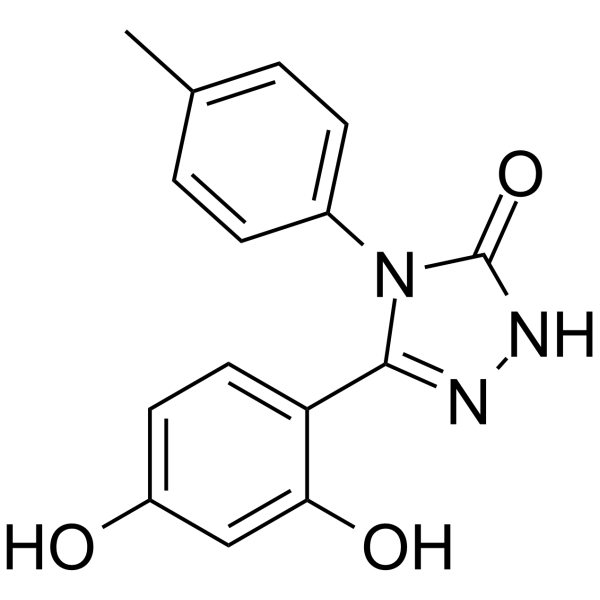
KPLH1130 is a pyruvate dehydrogenase kinase (PDK) inhibitor. KPLH1130 potently inhibits M1 macrophage polarization by reducing the expression of pro-inflammatory cytokines, decreasing the levels of M1 phenotype markers (HIF-1α, iNOS) and nitric oxide (NO) production. KPLH1130 prevents the reduction of mitochondrial oxygen consumption rate (OCR) induced by inflammatory stimuli (LPS ((HY-D1056) + IFN-γ) in various macrophage types. KPLH1130 improves glucose tolerance in HFD-fed mice. KPLH1130 can be used for the study of obesity-associated metabolic disorders and other inflammatory conditions.
For research use only. We do not sell to patients.
- Purity : 99.86%
- CAS No.: 906669-07-6
- Formula: C15H13N3O3
- Molecular Weight:283.28
-
Storage:Powder -20°C, 3 years , 4°C, 2 years ; In solvent -80°C, 2 years , -20°C, 1 year

To place orders, for customer services and technical support, please contact: MedChemExpress USA
Tel: 609-228-6898 E-mail: [email protected] [email protected]


-
 Biological Activity
-
Chemical Information
-
Solvent & Solubility
- Protocols
- Purity & Documentation
- References
-
 Help & FAQs


Publications Citing Use of MedChemExpress (MCE) KPLH1130
More

Biological Activity
Description
IC50 & Target
PDK[1]
In Vitro
KPLH1130 (1-10 μM, 12 h) significantly reduces the mRNA expression of pro-inflammatory cytokines (TNFα, IL-6, IL-1) and the secretion of corresponding pro-inflammatory effectors in in Zymosan (HY-159069)-elicited peritoneal macrophages (ZEPMs) and LPS-elicited peritoneal macrophages (LEPMs) stimulated with LPS (HY-D1056) + IFN-γ[1].
KPLH1130 (1-10 μM, 12 h) notably decreases the protein levels of M1 macrophage markers (HIF-1α, iNOS) and the production of nitric oxide (NO) in LPS + IFN-γ-stimulated PMs[1].
KPLH1130 (10 μM, 3 h) prevents the reduction of basal and maximal oxygen consumption rate (OCR) in bone marrow-derived macrophages (BMDMs) induced by M1 polarization (LPS 100 ng/mL + IFN-γ 10 ng/mL), improving mitochondrial respiration function[1].
MedChemExpress (MCE) has not independently confirmed the accuracy of these methods. They are for reference only. Further protocols information, click here.
-
Cell Line:Zymosan-elicited peritoneal macrophages (ZEPMs) and LPS-elicited peritoneal macrophages (LEPMs) stimulated with LPS (HY-D1056) + IFN-γ
-
Concentration:1, 5, 10 μM
-
Incubation Time:12 h
-
Result:Reduced the mRNA expression of pro-inflammatory cytokines (TNFα, IL-6, IL-1) and the secretion of corresponding pro-inflammatory effectors.
In Vivo
MedChemExpress (MCE) has not independently confirmed the accuracy of these methods. They are for reference only.


Chemical Information
-
CAS No. 906669-07-6
-
Appearance Solid
-
Molecular Weight 283.28
-
Formula C15H13N3O3
-
Color Off-white to gray
-
SMILES
OC1=CC=C(C2=NNC(N2C3=CC=C(C)C=C3)=O)C(O)=C1
-
Shipping
Room temperature in continental US; may vary elsewhere.
-
Storage
Powder -20°C 3 years 4°C 2 years In solvent -80°C 2 years -20°C 1 year


Publications (2)
-
Journal Impact Factor
-
Most Recent
-
Poult Sci
ROS-mediated M1 polarization-necroptosis crosstalk involved in Di-(2-ethylhexyl) phthalate-induced chicken liver injury. [Abstract]2025 Jan;104(1):104558. PMID: 39631278 -
Biol Pharm Bull
Chronic Corticosterone Treatment Decreases Extracellular pH and Increases Lactate Release via PDK4 Upregulation in Cultured Astrocytes. [Abstract]2024;47(9):1542-1549. PMID: 39313390


Solvent & Solubility
In Vitro:
DMSO : 135 mg/mL (476.56 mM; Need ultrasonic; Hygroscopic DMSO has a significant impact on the solubility of product, please use newly opened DMSO)
Please refer to the solubility information to select the appropriate solvent. Once prepared, please aliquot and store the solution to prevent product inactivation from repeated freeze-thaw cycles.
Storage method and period of stock solution: -80°C, 2 years; -20°C, 1 year. When stored at -80°C, please use it within 2 years. When stored at -20°C, please use it within 1 year.
Please refer to the solubility information to select the appropriate solvent. Once prepared, please aliquot and store the solution to prevent product inactivation from repeated freeze-thaw cycles.
Storage method and period of stock solution: -80°C, 2 years; -20°C, 1 year. When stored at -80°C, please use it within 2 years. When stored at -20°C, please use it within 1 year.
Concentration (start) × Volume (start) = Concentration (final) × Volume (final)
In Vivo:
Select the appropriate dissolution method based on your experimental animal and administration route.
- For the following dissolution methods, please ensure to first prepare a clear stock solution using an In Vitro approach and then sequentially add co-solvents:
- To ensure reliable experimental results, the clarified stock solution can be appropriately stored based on storage conditions. As for the working solution for In Vivo experiments, it is recommended to prepare freshly and use it on the same day.
- The percentages shown for the solvents indicate their volumetric ratio in the final prepared solution. If precipitation or phase separation occurs during preparation, heat and/or sonication can be used to aid dissolution.
Add each solvent one by one: 10% DMSO 40% PEG300 5% Tween-80 45% Saline
Solubility: ≥ 2.25 mg/mL (7.94 mM); Clear solution
This protocol yields a clear solution of ≥ 2.25 mg/mL (saturation unknown).
Taking 1 mL working solution as an example, add 100 μL DMSO stock solution (22.5 mg/mL) to 400 μL PEG300, and mix evenly; then add 50 μL Tween-80 and mix evenly; then add 450 μL Saline to adjust the volume to 1 mL.
Preparation of Saline: Dissolve 0.9 g sodium chloride in ddH₂O and dilute to 100 mL to obtain a clear Saline solution.
In Vivo Dissolution Calculator
Please enter the basic information of animal experiments:
-
-
-
-
Recommended: Prepare an additional quantity of animals to account for potential losses during experiments.
Please enter your animal formula composition:
-
%DMSO +
Recommended: Keep the proportion of DMSO in working solution below 2% if your animal is weak.
-
%+
-
+%Tween-80 + +
-
%Saline +
The co-solvents required include: DMSO, . All of co-solvents are available by MedChemExpress (MCE). , Tween 80. All of co-solvents are available by MedChemExpress (MCE).
Working solution concentration: 0.22 mg/mL
Method for preparing stock solution: mg drug dissolved in μL DMSO. Stock solution concentration: mg/mL.
1. Take μL DMSO stock solution;
2. Add μL .
μL , mix evenly;
3. Then add μL Tween 80, mix evenly;
4. Then add μL
Please ensure that the stock solution in the first step is dissolved to a clear state, and add co-solvents in sequence. You can use ultrasonic heating (ultrasonic cleaner, recommended frequency 20-40 kHz), vortexing, etc. to assist dissolution.

Protocols
-
RNA extraction experimental
By lysing cells, releasing RNA, and removing impurities such as proteins and DNA, high-purity RNA products are finally obtained. The commonly used traditional method is the guanidine isothiocyanate/phenol/chloroform method (Trizol), which is suitable for a variety of animal materials including animal tissues, microorganisms, cultured cells, etc., and most plant materials.
-
LPS-Induced Endotoxemia/Systemic Inflammation
Lipopolysaccharide (LPS)-induced endotoxemia is a widely used in vivo model of acute systemic inflammation in which LPS, a Gram-negative bacterial endotoxin, activates innate immune signaling primarily through TLR4, leading to rapid and transient induction of pro-inflammatory cytokines such as TNF-α, IL-6, and IL-1β in circulation and tissues. This cytokine surge is commonly used as a measurable readout of systemic inflammatory activation and immune dysregulation, and is typically assessed within hours after intraperitoneal LPS administration in mouse models of endotoxemia. The model captures key features of systemic inflammatory response syndrome, including cytokine release, immune cell activation, and downstream tissue responses, and has been used to evaluate anti-inflammatory interventions such as cytokine modulation, lipid mediators, and immune cell-targeting therapies.
-
Primary monocyte-to-macrophage differentiation
Primary human monocytes can be differentiated ex vivo into monocyte-derived macrophages by culturing purified blood monocytes for approximately 5-7 days in macrophage-supporting cytokine conditions; M-CSF commonly yields CD14^high/CD163^high macrophages, while GM-CSF yields a phenotypically distinct macrophage population, so the cytokine condition should be chosen according to the downstream model. The readout of successful differentiation is a combined change in morphology, adherence, surface phenotype, and function: differentiated macrophages become adherent, enlarge, acquire macrophage-associated markers such as CD14, CD68, CD163, CD206, or HLA-DR depending on culture condition, and show increased phagocytic capacity compared with starting monocytes.
-
Research Protocol for Inflammation-related Diseases
The NLRP3 inflammasome is a cytosolic innate immune signaling platform that integrates priming signals and danger-signal activation to promote caspase-1 activation, maturation of IL-1β and IL-18, and gasdermin D-mediated pyroptotic cell death. The core experimental logic is to determine whether inflammatory disease phenotypes are driven by increased NLRP3 expression, ASC-containing inflammasome assembly, caspase-1 cleavage, GSDMD cleavage, and extracellular release of IL-1β/IL-18 rather than by nonspecific cell injury alone. The pathway is strongly linked to inflammation-related disease phenotypes because monosodium urate crystals activate NALP3/NLRP3 inflammasome signaling in gout-like crystal inflammation, cholesterol crystals activate NLRP3 inflammasomes in atherogenesis models, and DSS-induced intestinal inflammation has been reported to involve NLRP3 inflammasome activity. However, experimental colitis studies also show context-dependent protective effects of NLRP3 inflammasome co
-
Research Protocol for Metabolic Diseases
AMP-activated protein kinase, AMPK, is a conserved cellular energy sensor that responds to reduced cellular energy status and coordinates metabolism by increasing ATP-generating catabolic pathways while suppressing ATP-consuming anabolic processes. In metabolic disease research, the AMPK pathway is experimentally relevant because it regulates hepatic lipid synthesis, fatty acid oxidation, glucose production, skeletal-muscle glucose disposal, mTORC1-linked biosynthesis, autophagy, mitochondrial homeostasis, and whole-body energy balance. The central pathway logic is that energy stress, metformin, exercise-like stimulation, or direct AMPK activators increase AMPKα Thr172 phosphorylation and downstream substrate phosphorylation, including ACC and RAPTOR. Phosphorylation of ACC suppresses lipogenesis and supports fatty acid oxidation, whereas phosphorylation of RAPTOR suppresses mTORC1 signaling and links cellular energy status to growth and protein synthesis control. The pathway is linked


Purity & Documentation
-
Data Sheet (282 KB)
-
SDS (251 KB)
- English - EN (251 KB)
- Français - FR (251 KB)
- Deutsch - DE (251 KB)
- Norwegian - NO (251 KB)
- Español - ES (251 KB)
- Swedish - SV (251 KB)
- Italian - IT (251 KB)
- Korean - KR (251 KB)
- Portuguese - PT (251 KB)
-
Handling Instructions (2659 KB)
References


Complete Stock Solution Preparation Table
Please refer to the solubility information to select the appropriate solvent. Once prepared, please aliquot and store the solution to prevent product inactivation from repeated freeze-thaw cycles.
Storage method and period of stock solution: -80°C, 2 years; -20°C, 1 year. When stored at -80°C, please use it within 2 years. When stored at -20°C, please use it within 1 year.
| Optional Solvent | Concentration Solvent Mass | 1 mg | 5 mg | 10 mg | 25 mg |
|---|---|---|---|---|---|
| DMSO | 1 mM | 3.5301 mL | 17.6504 mL | 35.3008 mL | 88.2519 mL |
| 5 mM | 0.7060 mL | 3.5301 mL | 7.0602 mL | 17.6504 mL | |
| 10 mM | 0.3530 mL | 1.7650 mL | 3.5301 mL | 8.8252 mL | |
| 15 mM | 0.2353 mL | 1.1767 mL | 2.3534 mL | 5.8835 mL | |
| 20 mM | 0.1765 mL | 0.8825 mL | 1.7650 mL | 4.4126 mL | |
| 25 mM | 0.1412 mL | 0.7060 mL | 1.4120 mL | 3.5301 mL | |
| 30 mM | 0.1177 mL | 0.5883 mL | 1.1767 mL | 2.9417 mL | |
| 40 mM | 0.0883 mL | 0.4413 mL | 0.8825 mL | 2.2063 mL | |
| 50 mM | 0.0706 mL | 0.3530 mL | 0.7060 mL | 1.7650 mL | |
| 60 mM | 0.0588 mL | 0.2942 mL | 0.5883 mL | 1.4709 mL | |
| 80 mM | 0.0441 mL | 0.2206 mL | 0.4413 mL | 1.1031 mL | |
| 100 mM | 0.0353 mL | 0.1765 mL | 0.3530 mL | 0.8825 mL |


KPLH1130 Related Classifications
HY-128578 Related Classifications
 Powered by Bioz