



Isovitexin
Based on 7 publication(s) in Google Scholar
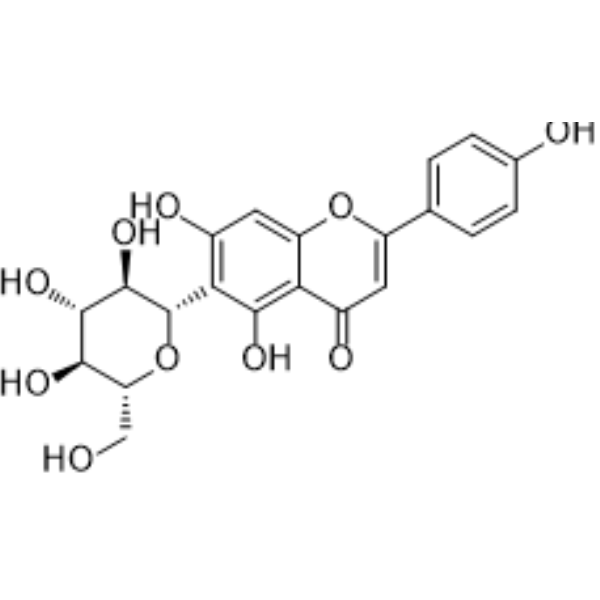
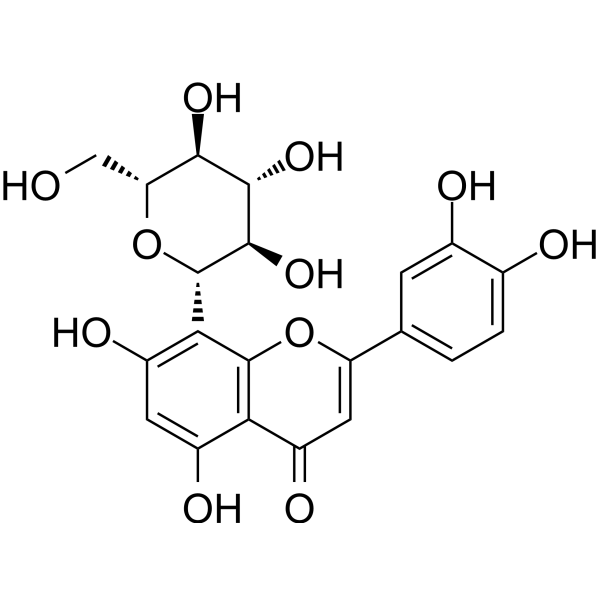
Isovitexin is a flavonoid isolated from passion flower, Cannabis and, and the palm, possesses anti-inflammatory and anti-oxidant activities; Isovitexin acts like a JNK1/2 inhibitor and inhibits the activation of NF-κB.
For research use only. We do not sell to patients.
- Purity : 99.90%
- CAS No.: 38953-85-4
- Formula: C21H20O10
- Molecular Weight:432.38
-
Storage:Powder -20°C, 3 years , 4°C, 2 years ; In solvent -80°C, 2 years , -20°C, 1 year

To place orders, for customer services and technical support, please contact: MedChemExpress USA
Tel: 609-228-6898 E-mail: [email protected] [email protected]


-
 Biological Activity
-
Chemical Information
-
Solvent & Solubility
- Protocols
- Purity & Documentation
- References
-
 Help & FAQs


-
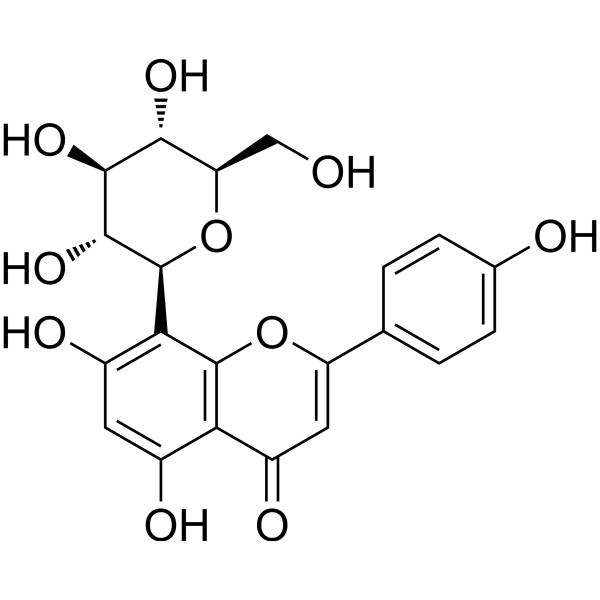
HY-N0013
VitexinAutophagy -
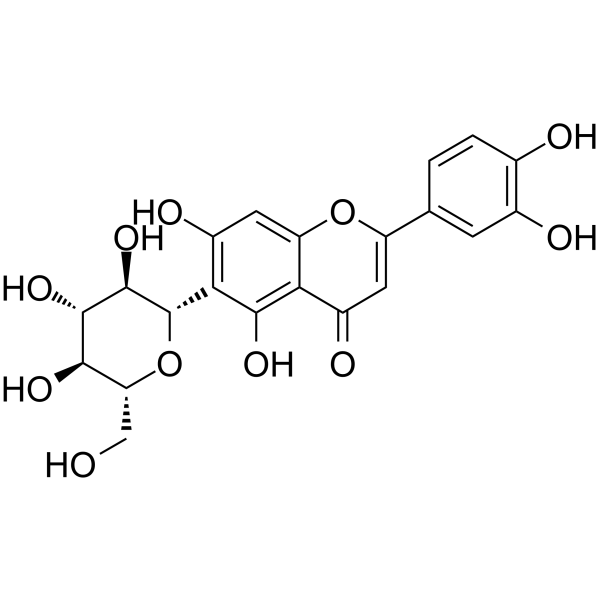
HY-N0767
IsoorientinCOX Inhibitor -
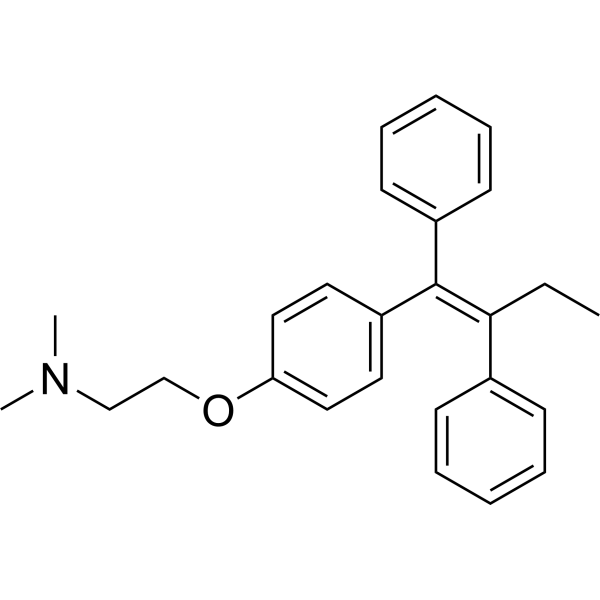
HY-13757A
TamoxifenEstrogen Receptor Modulator -
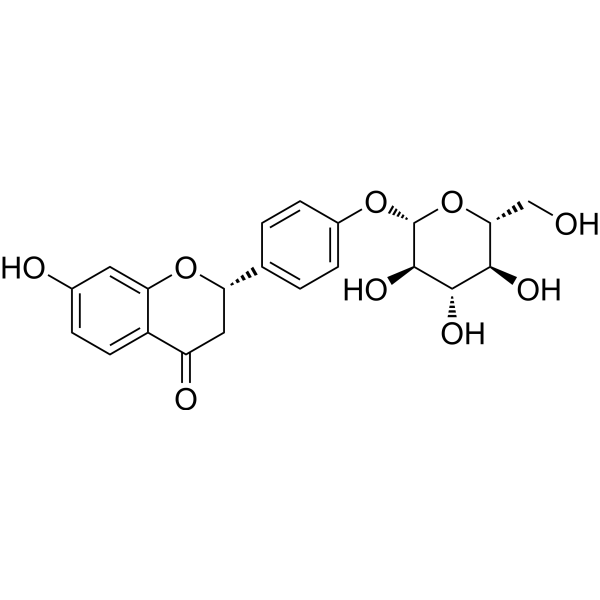
HY-N0376
LiquiritinAKR1C1 Inhibitor -
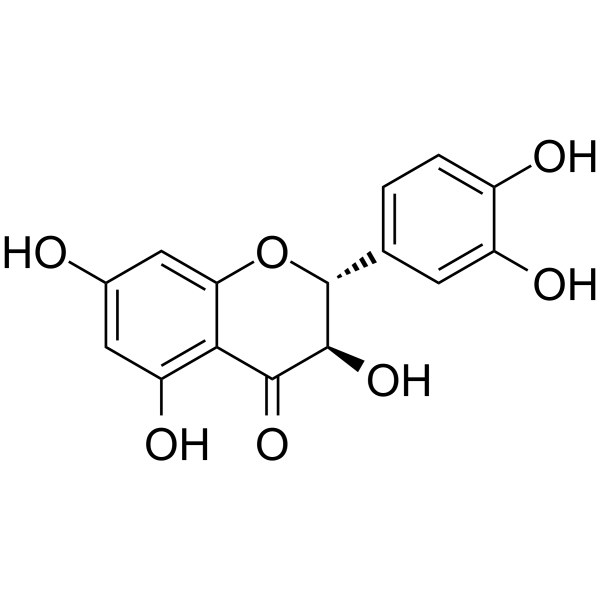
HY-N0136
TaxifolinAntifibrotic Agent -
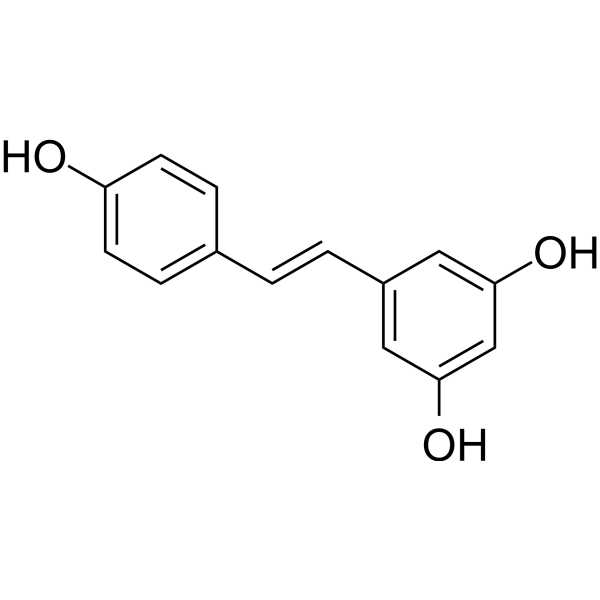
HY-16561
ResveratrolPolyphenolic Phytoalexin -
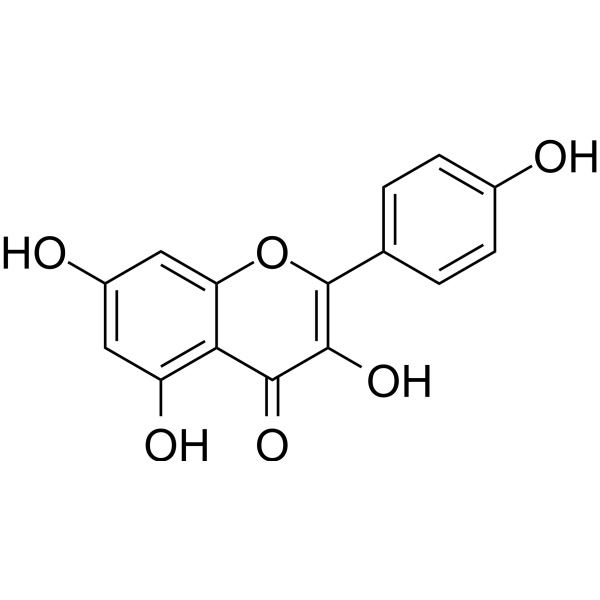
HY-14590
KaempferolEstrogen Receptor α Inhibitor -
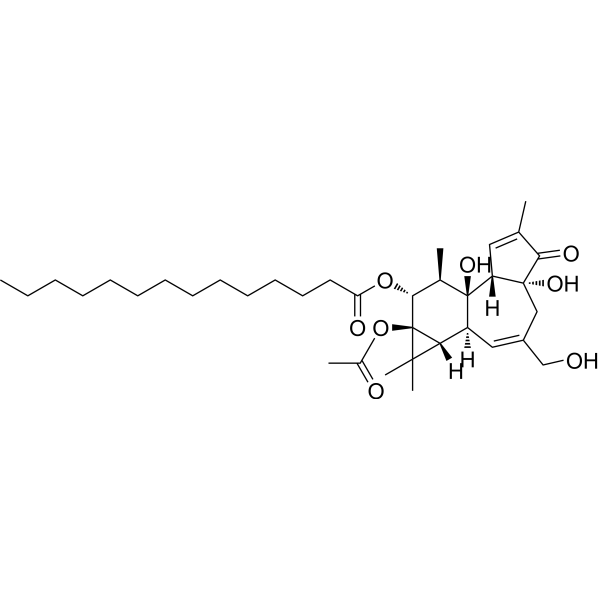
HY-18739
Phorbol 12-myristate 13-acetatePKC Activator -
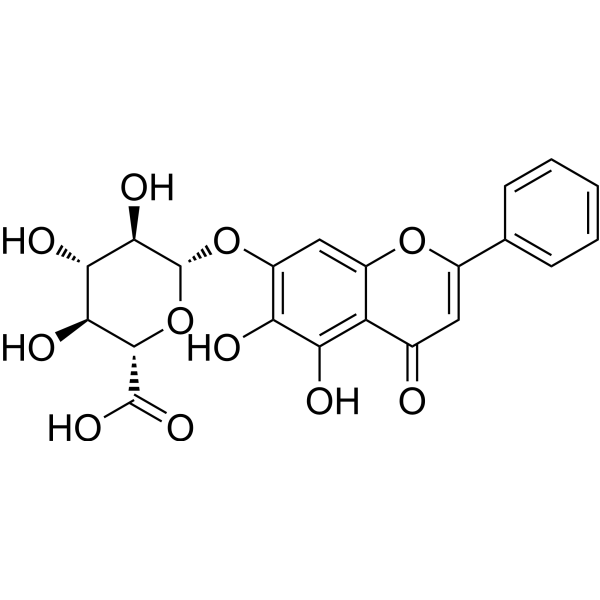
HY-N0197
BaicalinAutophagy Inducer -
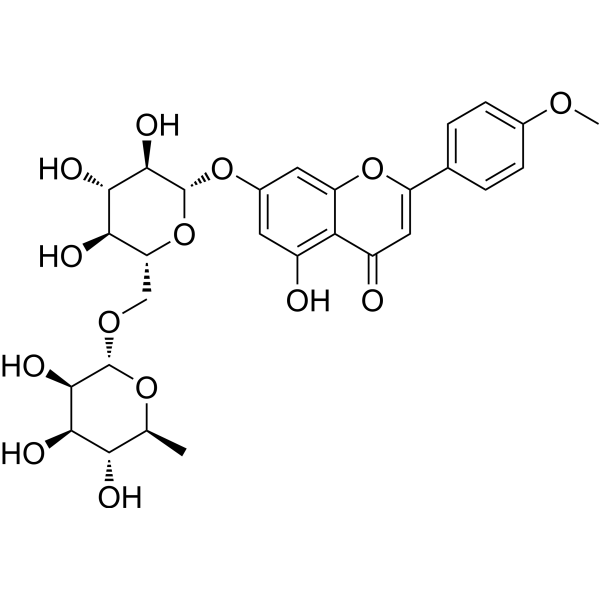
HY-N0528
LinarinAChE Inhibitor -
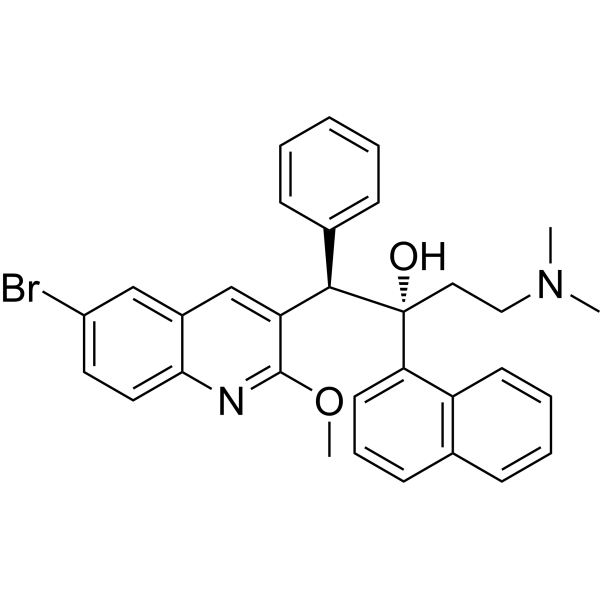
HY-14881
BedaquilineAnti-tuberculosis Agent -
HY-N0405
OrientinNeuroprotective Agent
Publications Citing Use of MedChemExpress (MCE) Isovitexin
More- Acta Pharm Sin B. 2021 Jan;11(1):143-155. [Abstract]
- Food Chem. 2022 May 1:375:131872. [Abstract]
- J Agric Food Chem. 2026 Feb 4;74(4):4059-4071. [Abstract]
- Med Oncol. 2025 Mar 26;42(5):137. [Abstract]
- J Inflamm Res. 2021 Apr 13:14:1403-1414. [Abstract]
- Tissue Cell. 2025 Dec:97:103100. [Abstract]
- Fitoterapia. 2026 Sep:193:107388.
 Customer Validation & Images

-
Cell Proliferation/Viability Assay
-
WB
-
RT-PCR
-
ELISA
-
IF


Biological Activity
Description
IC50 & Target
[1]|
JNK1 |
JNK2 |
NF-κB |
Cellular Effect
|
Cell Line

|
Type | Value | Description | References |
|---|---|---|---|---|
| HCT-116 | IC50 |
29.79 μM
Compound: 39; Isov
|
Antiproliferative activity against human HCT-116 cells assessed as inhibition of cell viability measured after 24 hrs by CCK-8 method
Antiproliferative activity against human HCT-116 cells assessed as inhibition of cell viability measured after 24 hrs by CCK-8 method
|
[PMID: 38142509] |
| HCT-15 | IC50 |
>50 μM
Compound: 7
|
Cytotoxicity against human HCT15 cells assessed as cell viability after 24 hrs by MTT assay
Cytotoxicity against human HCT15 cells assessed as cell viability after 24 hrs by MTT assay
|
[PMID: 23206866] |
| HepG2 | IC50 |
>50 μM
Compound: 7
|
Cytotoxicity against human HepG2 cells assessed as cell viability after 24 hrs by MTT assay
Cytotoxicity against human HepG2 cells assessed as cell viability after 24 hrs by MTT assay
|
[PMID: 23206866] |
| HL-60 | IC50 |
>50 μM
Compound: 7
|
Cytotoxicity against human HL60 cells assessed as cell viability after 24 hrs by MTT assay
Cytotoxicity against human HL60 cells assessed as cell viability after 24 hrs by MTT assay
|
[PMID: 23206866] |
| HT-29 | IC50 |
37.24 μM
Compound: 39; Isov
|
Antiproliferative activity against human HT-29 cells assessed as inhibition of cell viability measured after 24 hrs by CCK-8 method
Antiproliferative activity against human HT-29 cells assessed as inhibition of cell viability measured after 24 hrs by CCK-8 method
|
[PMID: 38142509] |
| Jurkat | IC50 |
>50 μM
Compound: 7
|
Cytotoxicity against human Jurkat cells assessed as cell viability after 24 hrs by MTT assay
Cytotoxicity against human Jurkat cells assessed as cell viability after 24 hrs by MTT assay
|
[PMID: 23206866] |
| THP-1 | IC50 |
>50 μM
Compound: 7
|
Cytotoxicity against human THP1 cells assessed as cell viability after 24 hrs by MTT assay
Cytotoxicity against human THP1 cells assessed as cell viability after 24 hrs by MTT assay
|
[PMID: 23206866] |
| U-937 | IC50 |
>50 μM
Compound: 7
|
Cytotoxicity against human U937 cells assessed as cell viability after 24 hrs by MTT assay
Cytotoxicity against human U937 cells assessed as cell viability after 24 hrs by MTT assay
|
[PMID: 23206866] |
In Vitro
Isovitexin protects against LPS-induced oxidative damage by suppressing intracellular ROS generation, and also attenuates the effect of H2O2 on cell viability. Isovitexin (0-100 μg/mL) with LPS (2 μg/mL) is not cytotoxic to RAW 264.7 cells, but 200 μg/mL Isovitexin shows significant cytotoxicity. Isovitexin (25, 50 μg/mL) inhibits LPS-induced increases in TNF-α, IL-6, iNOS, and COX-2 levels. Isovitexin (25, 50 μg/mL) also suppresses the IκBα phosphorylation and degradation in RAW 264.7 cells, and such an effect is consistent with that of JNK1/2 inhibitor[1].
MedChemExpress (MCE) has not independently confirmed the accuracy of these methods. They are for reference only.
In Vivo
MedChemExpress (MCE) has not independently confirmed the accuracy of these methods. They are for reference only.


Chemical Information
-
CAS No. 38953-85-4
-
Appearance Solid
-
Molecular Weight 432.38
-
Formula C21H20O10
-
Color Light yellow to yellow
-
SMILES
OC1=C(C2=O)C(OC(C3=CC=C(O)C=C3)=C2)=CC(O)=C1[C@@H]([C@@H]([C@@H](O)[C@@H]4O)O)O[C@@H]4CO
-
Synonyms
Saponaretin; Homovitexin
-
Structure Classification
-
Shipping
Room temperature in continental US; may vary elsewhere.
-
Storage
Powder -20°C 3 years 4°C 2 years In solvent -80°C 2 years -20°C 1 year


Publications (7)
-
Journal Impact Factor
-
Most Recent
-
Acta Pharm Sin B
Chrysin serves as a novel inhibitor of DGK α/FAK interaction to suppress the malignancy of esophageal squamous cell carcinoma (ESCC). [Abstract]2021 Jan;11(1):143-155. PMID: 33532186 -
Food Chem
New insights into the influences of baking and storage on the nonvolatile compounds in oolong tea: A nontargeted and targeted metabolomics study. [Abstract]2022 May 1:375:131872. PMID: 34953237 -
J Agric Food Chem
Identification and Functional Characterization of a Novel C-Glycosyltransferase from Euscaphis konishii Hayata and Its Role in C-Glycoside Biosynthesis. [Abstract]2026 Feb 4;74(4):4059-4071. PMID: 41568575 -
Med Oncol
Identification of Isovitexin as a novel CYP17A1 inhibitor through virtual screening and evaluation of its anti-cancer effects in MCF-7 breast cancer cells. [Abstract]2025 Mar 26;42(5):137. PMID: 40138050 -
J Inflamm Res
Isovitexin Depresses Osteoarthritis Progression via the Nrf2/NF-κB Pathway: An in vitro Study. [Abstract]2021 Apr 13:14:1403-1414. PMID: 33883918
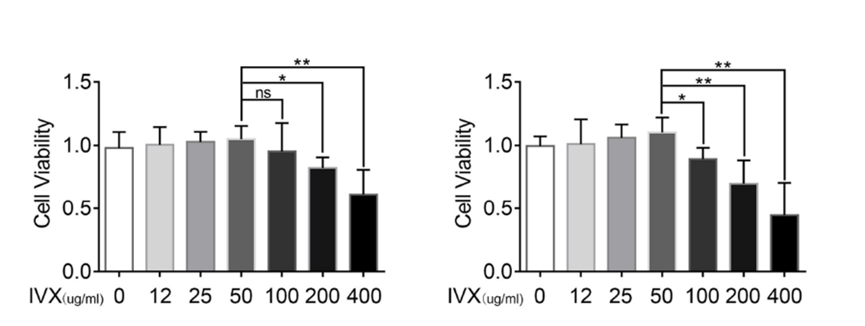
Isovitexin purchased from MedChemExpress. Usage Cited in: J Inflamm Res. 2021 Apr 13:14:1403-1414. [Abstract]
Assessment of IVX chondrocytic cells cytotoxicity, using differing concentrations of Isovitexin (IVX) (12, 25, 50, 100, 200, 400 μg/mL) for 24 hr and 48 hr.
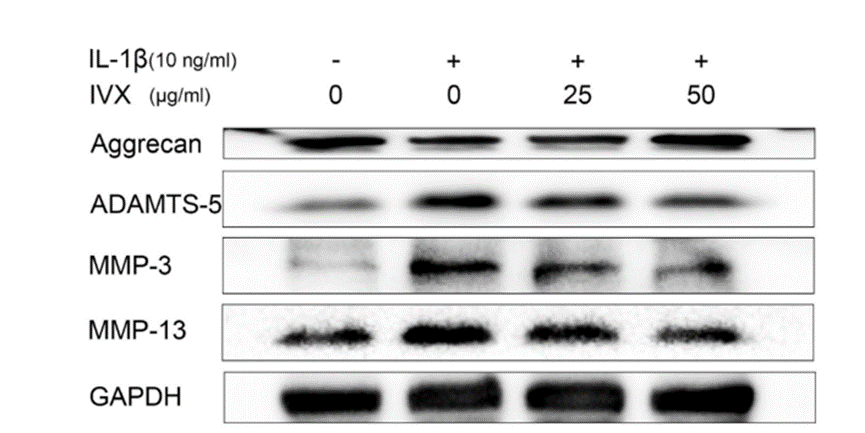
Isovitexin purchased from MedChemExpress. Usage Cited in: J Inflamm Res. 2021 Apr 13:14:1403-1414. [Abstract]
Evaluation of ECM catabolic and anabolic protein expression in IL-1β- and Isovitexin (IVX) (25, 50 μg/mL)-treated chondrocytes, relative to control.
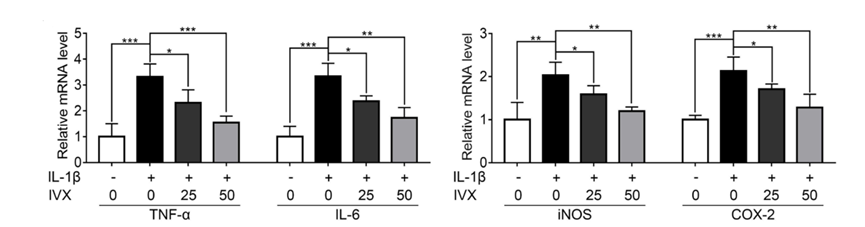
Isovitexin purchased from MedChemExpress. Usage Cited in: J Inflamm Res. 2021 Apr 13:14:1403-1414. [Abstract]
PCR analysis of inflammation-related transcripts after treated with Isovitexin (IVX) (25, 50 μg/mL).
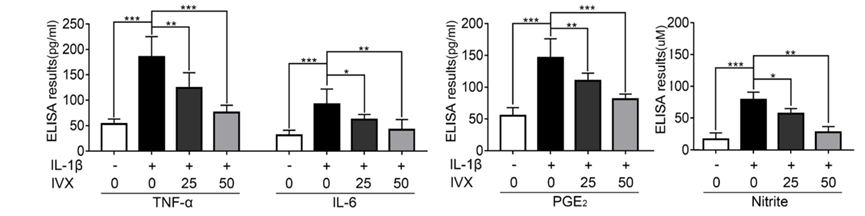
Isovitexin purchased from MedChemExpress. Usage Cited in: J Inflamm Res. 2021 Apr 13:14:1403-1414. [Abstract]
Detection of inflammation-related protein expression, using ELISA after treated with Isovitexin (IVX) (25, 50 μg/mL).
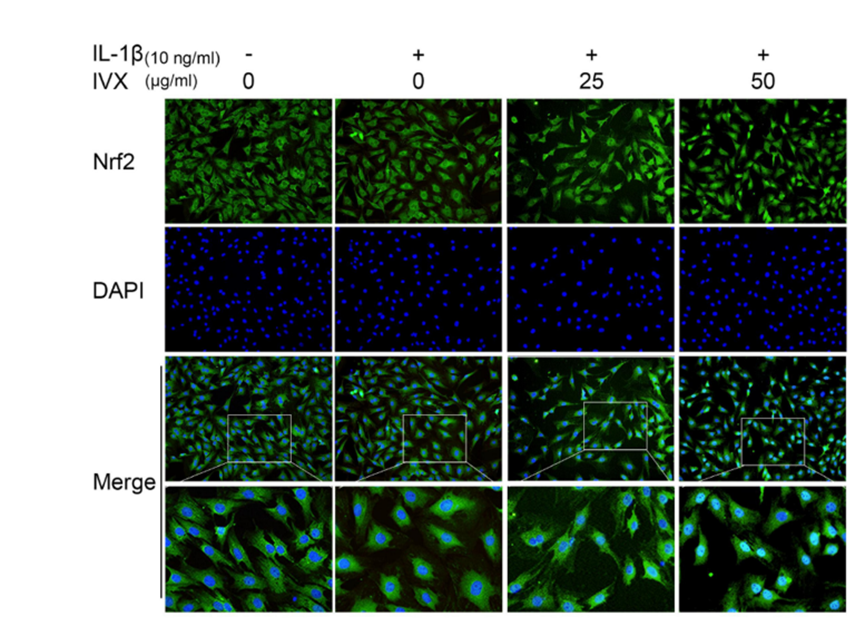
Isovitexin purchased from MedChemExpress. Usage Cited in: J Inflamm Res. 2021 Apr 13:14:1403-1414. [Abstract]
Immunofluorescence demonstrated significant Nrf2 translocation to the nucleus, upon Isovitexin (IVX) (25, 50 μg/mL) treatment.
-
Tissue Cell
Isovitexin accelerates diabetic wound repair via coordinated angiogenesis and collagen remodeling: Mechanistic insights from cellular and streptozotocin-induced SD rat models. [Abstract]2025 Dec:97:103100. PMID: 40882326 -


Solvent & Solubility
In Vitro:
DMSO : 23.33 mg/mL (53.96 mM; Need ultrasonic; Hygroscopic DMSO has a significant impact on the solubility of product, please use newly opened DMSO)
Please refer to the solubility information to select the appropriate solvent. Once prepared, please aliquot and store the solution to prevent product inactivation from repeated freeze-thaw cycles.
Storage method and period of stock solution: -80°C, 2 years; -20°C, 1 year. When stored at -80°C, please use it within 2 years. When stored at -20°C, please use it within 1 year.
Please refer to the solubility information to select the appropriate solvent. Once prepared, please aliquot and store the solution to prevent product inactivation from repeated freeze-thaw cycles.
Storage method and period of stock solution: -80°C, 2 years; -20°C, 1 year. When stored at -80°C, please use it within 2 years. When stored at -20°C, please use it within 1 year.
Concentration (start) × Volume (start) = Concentration (final) × Volume (final)
In Vivo:
Select the appropriate dissolution method based on your experimental animal and administration route.
- For the following dissolution methods, please ensure to first prepare a clear stock solution using an In Vitro approach and then sequentially add co-solvents:
- To ensure reliable experimental results, the clarified stock solution can be appropriately stored based on storage conditions. As for the working solution for In Vivo experiments, it is recommended to prepare freshly and use it on the same day.
- The percentages shown for the solvents indicate their volumetric ratio in the final prepared solution. If precipitation or phase separation occurs during preparation, heat and/or sonication can be used to aid dissolution.
Add each solvent one by one: 10% DMSO 40% PEG300 5% Tween-80 45% Saline
Solubility: ≥ 2.08 mg/mL (4.81 mM); Clear solution
This protocol yields a clear solution of ≥ 2.08 mg/mL (saturation unknown).
Taking 1 mL working solution as an example, add 100 μL DMSO stock solution (20.8 mg/mL) to 400 μL PEG300, and mix evenly; then add 50 μL Tween-80 and mix evenly; then add 450 μL Saline to adjust the volume to 1 mL.
Preparation of Saline: Dissolve 0.9 g sodium chloride in ddH₂O and dilute to 100 mL to obtain a clear Saline solution.
Add each solvent one by one: 10% DMSO 90% (20% SBE-β-CD in Saline)
Solubility: ≥ 2.08 mg/mL (4.81 mM); Clear solution
This protocol yields a clear solution of ≥ 2.08 mg/mL (saturation unknown).
Taking 1 mL working solution as an example, add 100 μL DMSO stock solution (20.8 mg/mL) to 900 μL 20% SBE-β-CD in Saline, and mix evenly.
Preparation of 20% SBE-β-CD in Saline (4°C, storage for one week): 2 g SBE-β-CD powder is dissolved in 10 mL Saline, completely dissolve until clear.
In Vivo Dissolution Calculator
Please enter the basic information of animal experiments:
-
-
-
-
Recommended: Prepare an additional quantity of animals to account for potential losses during experiments.
Please enter your animal formula composition:
-
%DMSO +
Recommended: Keep the proportion of DMSO in working solution below 2% if your animal is weak.
-
%+
-
+%Tween-80 + +
-
%Saline +
The co-solvents required include: DMSO, . All of co-solvents are available by MedChemExpress (MCE). , Tween 80. All of co-solvents are available by MedChemExpress (MCE).
Working solution concentration: 0.22 mg/mL
Method for preparing stock solution: mg drug dissolved in μL DMSO. Stock solution concentration: mg/mL.
1. Take μL DMSO stock solution;
2. Add μL .
μL , mix evenly;
3. Then add μL Tween 80, mix evenly;
4. Then add μL
Please ensure that the stock solution in the first step is dissolved to a clear state, and add co-solvents in sequence. You can use ultrasonic heating (ultrasonic cleaner, recommended frequency 20-40 kHz), vortexing, etc. to assist dissolution.


Purity & Documentation
-
Data Sheet (281 KB)
-
SDS (393 KB)
- English - EN (393 KB)
- Français - FR (393 KB)
- Deutsch - DE (393 KB)
- Norwegian - NO (393 KB)
- Español - ES (393 KB)
- Swedish - SV (393 KB)
- Italian - IT (393 KB)
- Korean - KR (393 KB)
- Portuguese - PT (393 KB)
-
Handling Instructions (2659 KB)
References
[1]. Lv H, et al. Isovitexin Exerts Anti-Inflammatory and Anti-Oxidant Activities on Lipopolysaccharide-Induced Acute Lung Injury by Inhibiting MAPK and NF-κB and Activating HO-1/Nrf2 Pathways. Int J Biol Sci. 2016 Jan 1;12(1):72-86. [Content Brief]
[2]. Hu JJ, et al. Isovitexin alleviates liver injury induced by lipopolysaccharide/d-galactosamine by activating Nrf2 and inhibiting NF-κB activation. Microb Pathog. 2018 Mar 29;119:86-92. [Content Brief]


Complete Stock Solution Preparation Table
Please refer to the solubility information to select the appropriate solvent. Once prepared, please aliquot and store the solution to prevent product inactivation from repeated freeze-thaw cycles.
Storage method and period of stock solution: -80°C, 2 years; -20°C, 1 year. When stored at -80°C, please use it within 2 years. When stored at -20°C, please use it within 1 year.
| Optional Solvent | Concentration Solvent Mass | 1 mg | 5 mg | 10 mg | 25 mg |
|---|---|---|---|---|---|
| DMSO | 1 mM | 2.3128 mL | 11.5639 mL | 23.1278 mL | 57.8195 mL |
| 5 mM | 0.4626 mL | 2.3128 mL | 4.6256 mL | 11.5639 mL | |
| 10 mM | 0.2313 mL | 1.1564 mL | 2.3128 mL | 5.7820 mL | |
| 15 mM | 0.1542 mL | 0.7709 mL | 1.5419 mL | 3.8546 mL | |
| 20 mM | 0.1156 mL | 0.5782 mL | 1.1564 mL | 2.8910 mL | |
| 25 mM | 0.0925 mL | 0.4626 mL | 0.9251 mL | 2.3128 mL | |
| 30 mM | 0.0771 mL | 0.3855 mL | 0.7709 mL | 1.9273 mL | |
| 40 mM | 0.0578 mL | 0.2891 mL | 0.5782 mL | 1.4455 mL | |
| 50 mM | 0.0463 mL | 0.2313 mL | 0.4626 mL | 1.1564 mL |


Isovitexin Related Classifications
HY-N0773 Related Classifications
 Powered by Bioz