2438 Results for "

decrease

" in MedChemExpress (MCE) Product Catalog:
Products (2438)

2438 Results for "decrease" in MCE Product Catalog:

Cat. No.: HY-176531
CAS No.: 3049804-05-6
Target:  

Others

연구분야:  

Infection

Antiviral agent 69 (Compound L2) is a capsid protein residue THR155-targeting inhibitor of phytoviral intercellular traffic. Antiviral agent 69 has an excellent antiviral activity against Potato virus Y (PVY) with an EC50 of 128.10 μg/mL for inactivation effect. Antiviral agent 69 effectively decreases viral accumulation in host plant Nicotiana benthamiana, promising for novel pesticide research and development .
loading...
    loading...
Cat. No.: HY-176554
CAS No.: 3084814-46-7
sEH-IN-21 is an orally active sEH inhibitor with IC50s of 0.1 nM for hsEH and msEH. sEH-IN-21 potently inhibits NF-κB signaling pathways. sEH-IN-21 shows a strong anti-inflammatory activity, decreases the release of IL-6 and TNF-α and maintained the integrity of the intestinal barrier. sEH-IN-21 can be used for the study of inflammatory bowel disease (IBD) .
loading...
    loading...
Cat. No.: HY-179443
CAS No.: 3092446-09-5
Target:  

SOS1 Ras

연구분야:  

Cancer

SOS1-IN-25 is an SOS1 inhibitor. SOS1-IN-25 exhibits inhibitory activity against KRAS G12C/SOS1 complex formation (IC50 = 11.11 nM). SOS1-IN-25 leads to a dose-dependent decrease in pERK levels. SOS1-IN-25 can be used for the study of leukemia .
loading...
    loading...
Cat. No.: HY-183919
CAS No.: 2237229-78-4
ACC2-IN-1 is an orally active, selective inhibitor of acetyl-CoA carboxylase 2 (ACC2), with an IC50 of 1.9 nM against human targets. ACC2-IN-1 acts as a reducing agent to decrease malonyl-CoA levels in skeletal muscle and exhibits a favorable CYP450 inhibition profile. ACC2-IN-1 can be used in the research of type 2 diabetes .
loading...
    loading...
Cat. No.: HY-186178
CAS No.: 2766686-04-6
Target:  

CD38

CD38-IN-6 is an orally active CD38 inhibitor. CD38-IN-6 regulates NAD + metabolite levels in the liver of aged obese mice by increasing NAD + and NMN levels, and decreasing NAM and ADPR levels. CD38-IN-6 alleviates inflammatory responses in mice. CD38-IN-6 can be used for research related to obesity and inflammation .
loading...
    loading...
Cat. No.: HY-189691
Target:  

VEGFR Apoptosis

연구분야:  

Cancer

MIH-36 is a VEGFR-2 modulator and anticancer agent. MIH-36 decreases VEGFR-2 surface expression in cells while upregulating VEGFR-2 mRNA. MIH-36 induces Apoptosis. MIH-36 exhibits selective anticancer activity against luminal and triple-negative breast cancer. MIH-36 can be used for research on breast cancer .
loading...
    loading...
Cat. No.: HY-19150
CAS No.: 139681-18-8
Synonyms: FOX-988
연구분야:  

Metabolic Disease

SDZ-FOX-988 (FOX-988) is an orally active antidiabetic agent. SDZ-FOX-988 sequesters mitochondrial coenzyme A to inhibit carnitine palmitoyltransferase II. SDZ-FOX-988 induces mitochondrial injury. SDZ-FOX-988 causes a decrease in serum β-hydroxybutyrate or glucose. SDZ-FOX-988 can be used in the research of type 2 diabetes .
loading...
    loading...
Cat. No.: HY-203233
CAS No.: 126111-99-7
Rhodamine-DHPE is a fluorescently labeled phosphatidylethanolamine lipid that labels phospholipid bilayers. Rhodamine-DHPE serves as a fluorescence quenching substrate and membrane stain. The fluorescence lifetime of Rhodamine-DHPE decreases significantly in the presence of Cu 2+-PS complexes. Rhodamine-DHPE effectively stains the membranes of human red blood cells and mouse fibroblasts, and supports lifetime-resolved imaging via pump-probe fluorescence microscopy .
loading...
    loading...
Cat. No.: HY-34154
CAS No.: 619-60-3
Target:  

Lactate Dehydrogenase

연구분야:  

Others

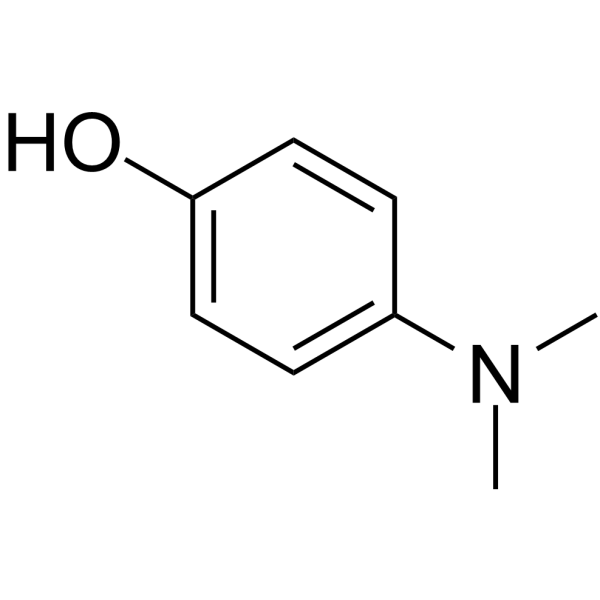
4-(Dimethylamino)phenol is a potent cyanide antidote. 4-(Dimethylamino)phenol increases the extracellular lactate dehydrogenase (LDH) without markedly affecting gluconeogenesis. 4-(Dimethylamino)phenol cannot decreases the ATP content until the membrane becomes permeable to LDH. 4-(Dimethylamino)phenol’s toxicity is related to its reaction with glutathione and formation of covalent complexes, leading to impaired cellular function .
loading...
    loading...
Cat. No.: HY-A0060R
CAS No.: 59937-28-9
Synonyms: NKK 105 (Standard)
연구분야:  

Cancer

Malotilate (Standard) is the analytical standard of Malotilate. This product is intended for research and analytical applications. Malotilate (NKK 105), an orally active hepatotropic agent and an anti-fibrotic substance, selectively inhibits the 5-lipoxygenase (5-LOX) (IC50=4.7 μM). Malotilate prevents the development of hepatocytic injury in alcohol-pyrazole hepatitis by decreasing hepatic acetaldehyde levels and preventing the retention of transferrin in the hepatocytes .
loading...
    loading...
Cat. No.: HY-B0185BR
CAS No.: 6108-05-0
Synonyms: Lignocaine hydrochloride hydrate (Standard)
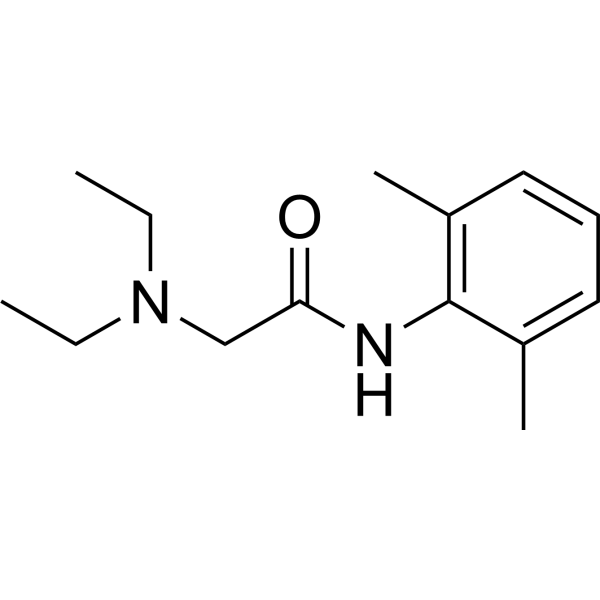
Lidocaine (hydrochloride hydrate) (Standard) is the analytical standard of Lidocaine (hydrochloride hydrate). This product is intended for research and analytical applications. Lidocaine (Lignocaine) hydrochloride hydrate inhibits sodium channels involving complex voltage and using dependence. Lidocaine hydrochloride hydrate decreases growth, migration and invasion of gastric carcinoma cells via up-regulating miR-145 expression and further inactivation of MEK/ERK and NF-κB signaling pathways. Lidocaine hydrochloride hydrate is an amide derivative and has potential for the research of ventricular arrhythmia .
loading...
    loading...
Cat. No.: HY-B0185R
CAS No.: 137-58-6
Synonyms: Lignocaine (Standard)
Lidocaine (Standard) is the analytical standard of Lidocaine. This product is intended for research and analytical applications. Lidocaine (Lignocaine) inhibits sodium channels involving complex voltage and using dependence . Lidocaine decreases growth, migration and invasion of gastric carcinoma cells via up-regulating miR-145 expression and further inactivation of MEK/ERK and NF-κB signaling pathways. Lidocaine is an amide derivative and has potential for the research of ventricular arrhythmia .
loading...
    loading...
Cat. No.: HY-B0185S2
CAS No.: 1215823-29-2
Synonyms: Lignocaine-d6
Lidocaine-d6 (Lignocaine-d6) is deuterium labeled Lidocaine. Lidocaine (Lignocaine) inhibits sodium channels involving complex voltage and using dependence . Lidocaine decreases growth, migration and invasion of gastric carcinoma cells via up-regulating miR-145 expression and further inactivation of MEK/ERK and NF-κB signaling pathways. Lidocaine is an amide derivative and has potential for the research of ventricular arrhythmia .
loading...
    loading...
Cat. No.: HY-B1452R
CAS No.: 156897-06-2
Synonyms: ML-3000 (Standard)
Licofelone (Standard) is the analytical standard of Licofelone. This product is intended for research and analytical applications. Licofelone (ML-3000) is a dual COX/5-lipoxygenase (5-LOX) inhibitor (IC50=0.21/0.18 μM, respectively) for the treatment of osteoarthritis. Licofelone exerts anti-inflammatory and anti-proliferative effects. Licofelone induces apoptosis, and decreases the production of proinflammatory leukotrienes and prostaglandins .
loading...
    loading...
Cat. No.: HY-N0831R
CAS No.: 18085-97-7
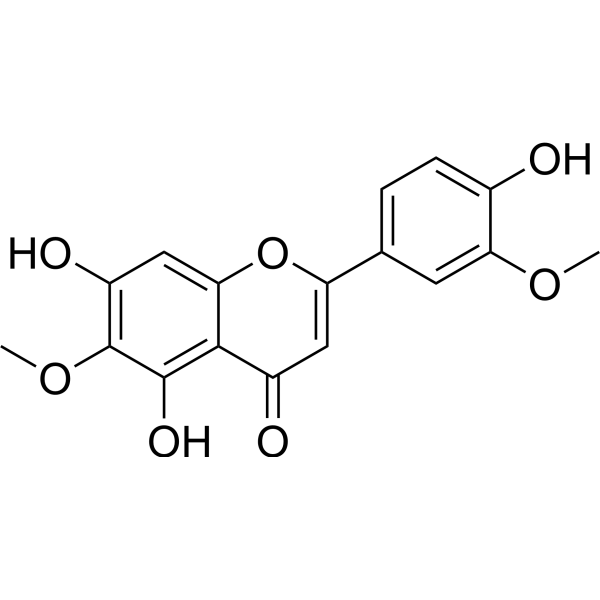
Jaceosidin (Standard) is the analytical standard of Jaceosidin. This product is intended for research and analytical applications. Jaceosidin is a flavonoid isolated from Artemisia vestita, induces apoptosis in cancer cells, activates Bax and down-regulates Mcl-1 and c-FLIP expression . Jaceosidin exhibits anti-cancer , anti-inflammatory activities, decreases leves of inflammatory markers, and suppresses COX-2 expression and NF-κB activation .
loading...
    loading...
Cat. No.: HY-N20390
Scrophularia ningpoensis extract is an orally effective hypoglycemic and antioxidant agent. Scrophularia ningpoensis extract reduces fasting blood glucose levels, increases plasma insulin levels, ameliorates impaired antioxidant status, scavenges free radicals, inhibits lipid peroxidation, and decreases elevated serum creatinine and serum urea levels. Scrophularia ningpoensis extract reduces the risk of developing diabetic complications. Scrophularia ningpoensis extract is applicable to diabetes-related research .
loading...
    loading...
Cat. No.: HY-N21956
CAS No.: 96657-95-3
Merenskine N-oxide is a jacobine-like chlorinated 1,2-unsaturated pyrrolizidine alkaloid N-oxide with a hydroxyl group at the α-position. Merenskine N-oxide has a halohydrin side-chain configuration and serves as a substrate for epoxidation reactions. The transfer rate of Merenskine N-oxide into black tea leachate is pH-dependent, and its transfer rate decreases significantly under alkaline conditions .
loading...
    loading...
Cat. No.: HY-P10617
CAS No.: 624735-23-5
Target:  

Endogenous Metabolite

연구분야:  

Cardiovascular Disease

Salusin-β is an endogenous bioactive peptide with significant hemodynamic and mitogenic activity. Salusin-β can stimulate the proliferation of quiescent vascular smooth muscle cells (VSMCs) and fibroblasts, leading to a rapid and significant decrease in blood pressure and heart rate. In addition, Salusin-β can stimulate the release of arginine vasopressin from the pituitary gland in rats. This makes Salusin-β have important application potential in cardiovascular disease research .
loading...
    loading...
Cat. No.: HY-P10798
CAS No.: 2883634-40-8
Synonyms: LY-3841136
연구분야:  

Metabolic Disease

Eloralintide (LY-3841136) is an amylin receptor agonist with human AMY1R EC50 23.9 pM and human AMY3R EC50 253.8 pM. Eloralintide induces decreased appetite, reduced food intake, body weight and fat mass loss, prolonged plasma calcium 2+ reduction, and weak conditioned taste avoidance. Eloralintide can be used for the research of obesity .
loading...
    loading...
Cat. No.: HY-P2260A
Target:  

Autophagy HIV

연구분야:  

Infection

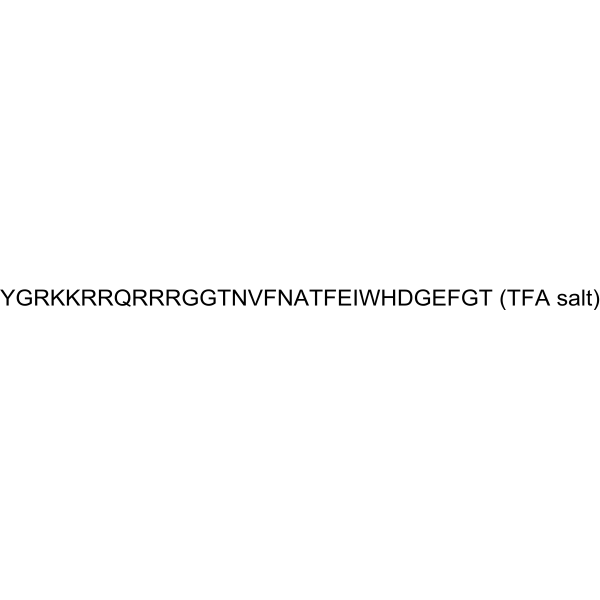
Tat-beclin 1 TFA, a peptide derived from a region of the autophagy protein (beclin 1), is a potent inducer of autophagy and interacts with negative regulator of autophagy, GAPR-1 (GLIPR2). Tat-beclin 1 TFA decreases the accumulation of polyglutamine expansion protein aggregates and the replication of several pathogens (including HIV-1) in vitro, and reduces mortality in mice infected with chikungunya (CHIKV) or West Nile virus (WNV) .
loading...
    loading...

