



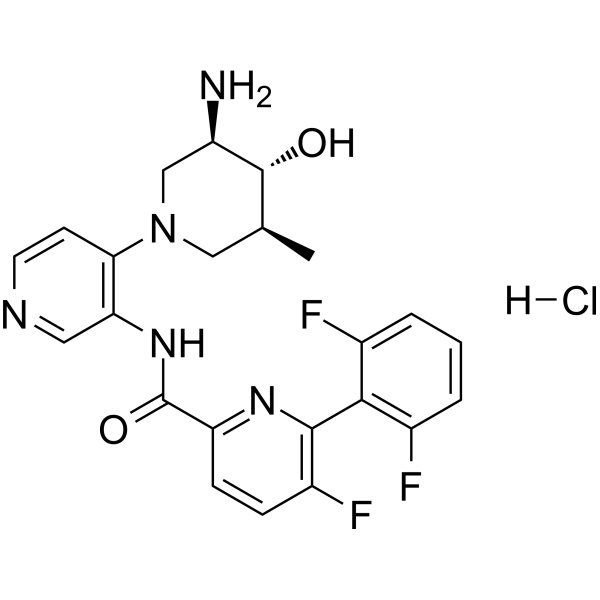
LGB321 monohydrochloride
LGB321 monohydrochloride is a potent, selective, orally active and ATP competitive inhibitor of all three PIM kinases. LGB321 monohydrochloride inhibits proliferation, mTOR-C1 signaling and phosphorylation of BAD in a number of cell lines derived from diverse hematologic malignancies. LGB321 monohydrochloride can be used for the research of hematologic malignancies.
For research use only. We do not sell to patients.
- CAS No.: 1469925-36-7
- Formula: C23H23ClF3N5O2
- Molecular Weight:493.91
-
Storage:
Please store the product under the recommended conditions in the Certificate of Analysis.

To place orders, for customer services and technical support, please contact: MedChemExpress USA
Tel: 609-228-6898 E-mail: [email protected] [email protected]


-
 Biological Activity
-
Chemical Information
- Protocols
- Purity & Documentation
- References
-
 Help & FAQs


-
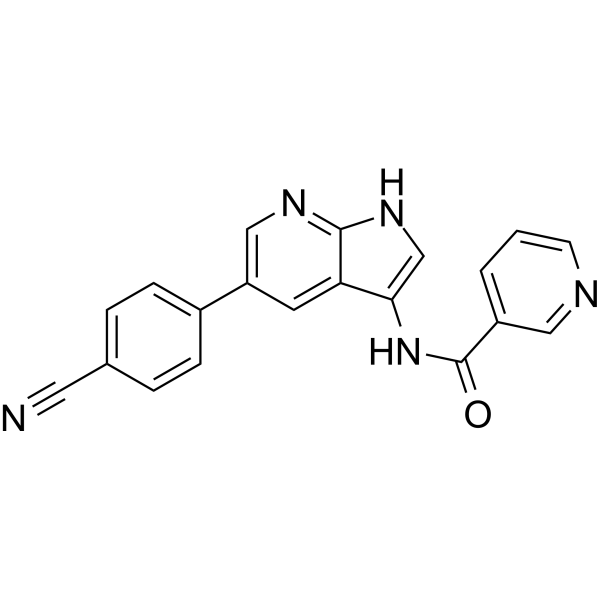
HY-10371
Pim1/AAK1-IN-1Pim1/AKK1/MST2/LKB1 Inhibitor -
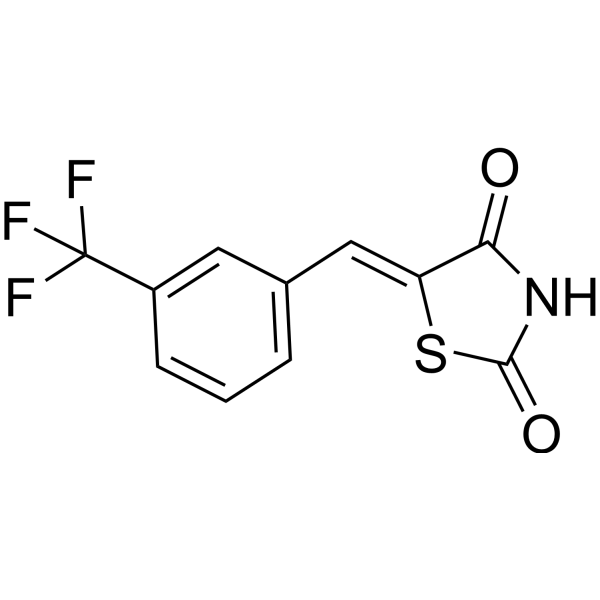
HY-16576A
SMI-4aPim-1 Inhibitor -
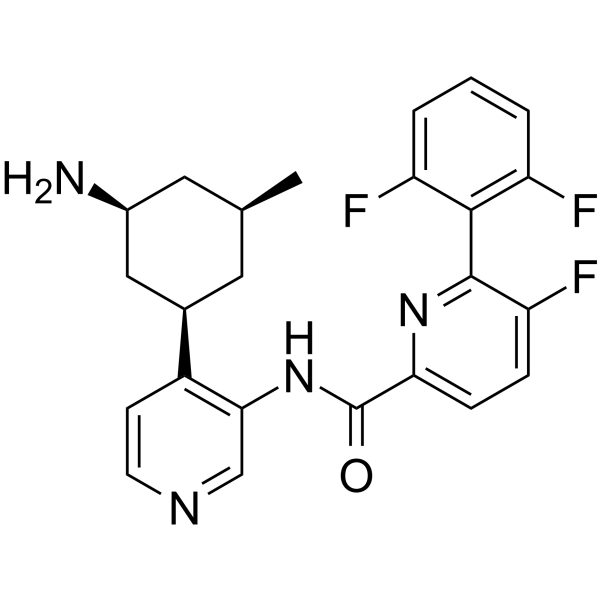
HY-19322
PIM447PIM Kinase Inhibitor -
HY-101126
NuvisertibPIM Kinase Inhibitor -
HY-18095
CX-6258Pim Kinases Inhibitor -
HY-18086
TCS PIM-1 1Pim-1 Inhibitor -
HY-101947
SMI-16aPim Kinase Inhibitor -
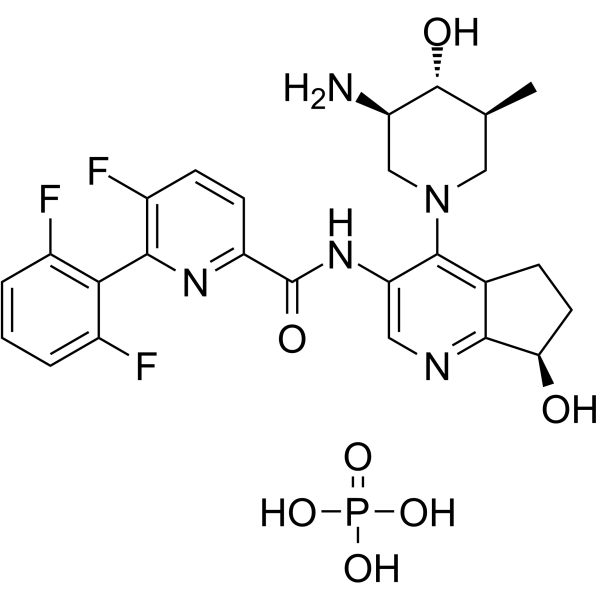
HY-101870B
Uzansertib phosphatePIM Inhibitor -
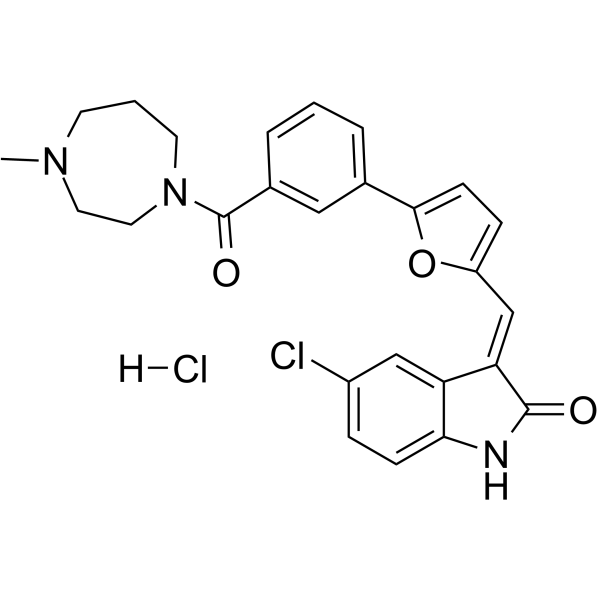
HY-18095B
CX-6258 hydrochloridePim Kinases Inhibitor -
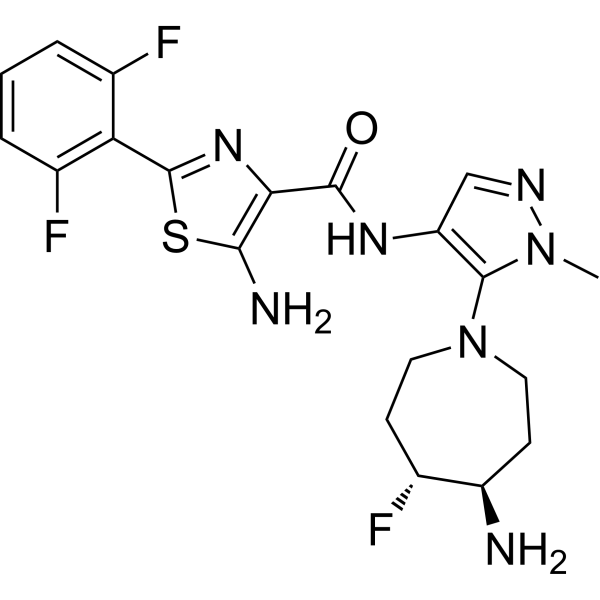
HY-16976
GDC-0339 -
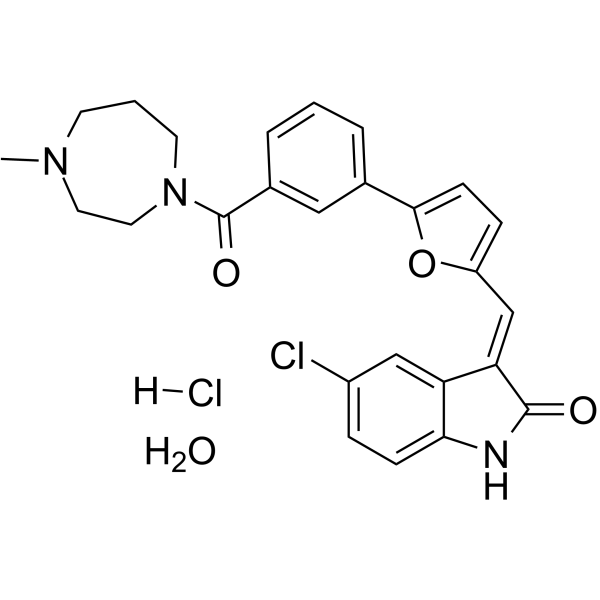
HY-18095A
CX-6258 hydrochloride hydratePim Kinases Inhibitor -
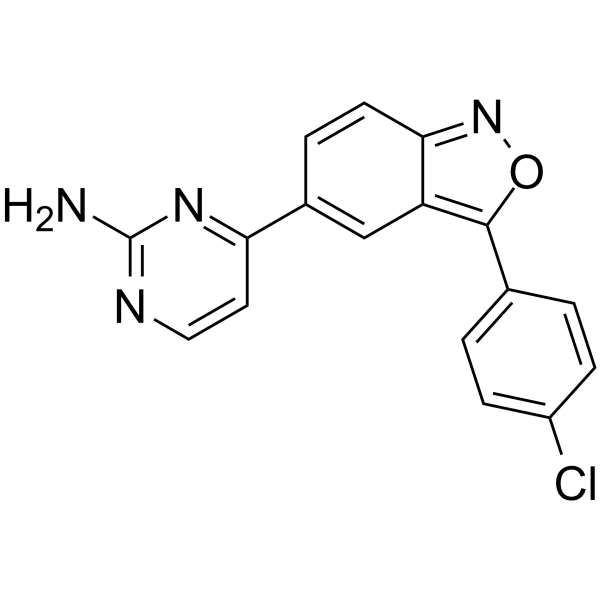
HY-108605
PIM1-IN-2Pim-1 Inhibitor


Biological Activity
Description


Chemical Information
-
CAS No. 1469925-36-7
-
Molecular Weight 493.91
-
Formula C23H23ClF3N5O2
-
SMILES
O=C(C1=NC(C2=C(F)C=CC=C2F)=C(F)C=C1)NC3=C(N4C[C@@H](N)[C@H](O)[C@@H](C)C4)C=CN=C3.[H]Cl
-
Shipping
Room temperature in continental US; may vary elsewhere.
-
Storage
Please store the product under the recommended conditions in the Certificate of Analysis.


Purity & Documentation
References

Calculators
Concentration (start) × Volume (start) = Concentration (final) × Volume (final)


LGB321 monohydrochloride Related Classifications
HY-15901A Related Classifications
 Powered by Bioz