



NG25 trihydrochloride
Based on 24 publication(s) in Google Scholar
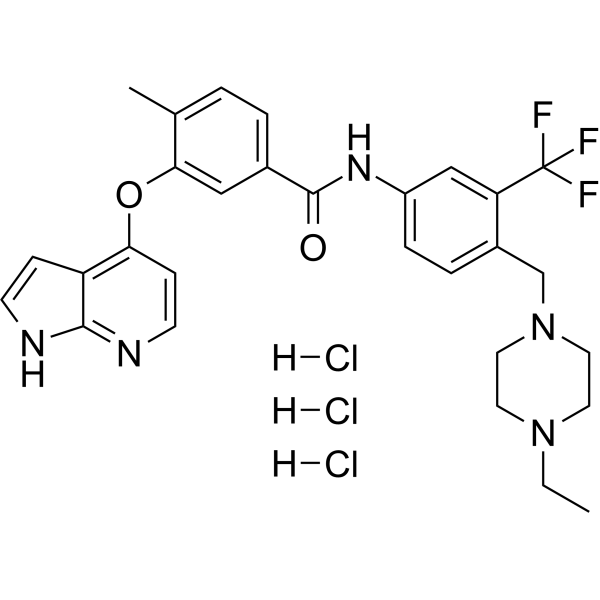
NG25 trihydrochloride is a dual TAK1 and MAP4K2 inhibitor (IC50: 149 nM and 21.7 nM respectively). NG25 sensitizes the breast cancer cells to Doxorubicin (HY-15142A), and enhances apoptosis. NG25 trihydrochloride can be used for research of various cancers.
For research use only. We do not sell to patients.
- CAS No.: 2108554-00-1
- Formula: C29H33Cl3F3N5O2
- Molecular Weight:646.96
-
Storage:
Please store the product under the recommended conditions in the Certificate of Analysis.

To place orders, for customer services and technical support, please contact: MedChemExpress USA
Tel: 609-228-6898 E-mail: [email protected] [email protected]


-
 Biological Activity
-
Chemical Information
- Protocols
- Purity & Documentation
- References
-
 Help & FAQs



Publications Citing Use of MedChemExpress (MCE) NG25 trihydrochloride
More- Nat Cell Biol. 2017 Oct;19(10):1248-1259. [Abstract]
- Cell Death Differ. 2019 Dec;26(12):2520-2534. [Abstract]
- Cell Death Dis. 2022 Apr 30;13(4):421. [Abstract]
- Int J Biol Sci. 2024 Jan 1;20(2):606-620. [Abstract]
- Proc Natl Acad Sci U S A. 2023 Dec 12;120(50):e2313148120. [Abstract]
- Oncogene. 2017 Oct 5;36(40):5620-5630. [Abstract]
- Sci Signal. 2018 Jul 10;11(538):eaan5850. [Abstract]
- J Cell Biol. 2018 Aug 6;217(8):2727-2742. [Abstract]
- J Am Heart Assoc. 2021 Feb 16;10(4):e014311. [Abstract]
- Biofactors. 2020 Sep;46(5):813-820. [Abstract]
- Mol Med Rep. 2018 Jan;17(1):1710-1716. [Abstract]
- J Mol Cell Cardiol. 2021 Feb:151:31-43. [Abstract]
- Sci Rep. 2016 Sep 7:6:32737. [Abstract]
- J Cell Mol Med. 2020 Sep;24(18):10946-10957. [Abstract]
- J Immunol. 2015 Aug 1;195(3):1100-11. [Abstract]
- Biochem Biophys Res Commun. 2014 Oct 10;453(1):106-11. [Abstract]
- BMC Res Notes. 2022 Nov 26;15(1):352. [Abstract]
- Oncotarget. 2021 Oct 12;12(21):2158-2168. [Abstract]
- Universität Stuttgart. 2020 Sep.
- Norwegian University of Science and Technology. 2020 Jul.
- Oncotarget. 2017 Nov 1;8(61):104330-104346. [Abstract]
- Oncotarget. 2016 Oct 25;7(43):69173-69187. [Abstract]
- University of North Carolina. 2016.
- Harvard Medical School LINCS LIBRARY
 Customer Validation & Images

-
WB
-
WB
-
WB
-
WB
-
WB
All MAP3K Isoforms
MoreAll MAP4K Isoforms
More

Biological Activity
Description


Chemical Information
-
CAS No. 2108554-00-1
-
Molecular Weight 646.96
-
Formula C29H33Cl3F3N5O2
-
SMILES
O=C(NC1=CC=C(CN2CCN(CC)CC2)C(C(F)(F)F)=C1)C3=CC=C(C)C(OC4=C5C(NC=C5)=NC=C4)=C3.[H]Cl.[H]Cl.[H]Cl
-
Shipping
Room temperature in continental US; may vary elsewhere.
-
Storage
Please store the product under the recommended conditions in the Certificate of Analysis.


Publications (24)
-
Journal Impact Factor
-
Most Recent
-
Nat Cell Biol
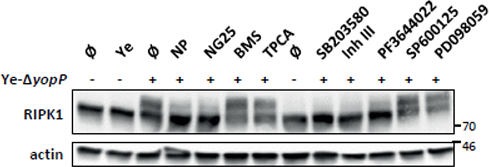
p38MAPK/MK2-dependent phosphorylation controls cytotoxic RIPK1 signalling in inflammation and infection. [Abstract]2017 Oct;19(10):1248-1259. PMID: 28920954
NG25 trihydrochloride purchased from MedChemExpress. Usage Cited in: Nat Cell Biol. 2017 Oct;19(10):1248-1259. [Abstract]
Immortalized RIPK1 +/+ fetal liver mouse macrophages were infected with YopP-negative Ye-ΔyopP in presence of inhibitors for TAK1 (NP, NG25), IKKβ, IKK, p38, MK2, JNK, or MEK1/ERK. The phosphorylation of RIPK1 is analyzed by immunoblotting in cell lysates prepared after 75 min of infection.
-
Cell Death Differ
TAK1 suppresses RIPK1-dependent cell death and is associated with disease progression in melanoma. [Abstract]2019 Dec;26(12):2520-2534. PMID: 30850732 -
Cell Death Dis
GCN5-mediated regulation of pathological cardiac hypertrophy via activation of the TAK1-JNK/p38 signaling pathway. [Abstract]2022 Apr 30;13(4):421. PMID: 35490166 -
Int J Biol Sci
TXNIP in liver sinusoidal endothelial cells ameliorates alcohol-associated liver disease via nitric oxide production. [Abstract]2024 Jan 1;20(2):606-620. PMID: 38169654 -
Proc Natl Acad Sci U S A
ALPK1 mutants causing ROSAH syndrome or Spiradenoma are activated by human nucleotide sugars. [Abstract]2023 Dec 12;120(50):e2313148120. PMID: 38060563 -
Oncogene
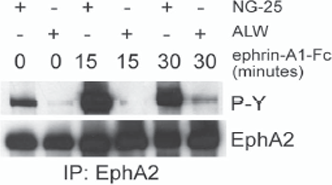
Targeting EphA2 impairs cell cycle progression and growth of basal-like/triple-negative breast cancers. [Abstract]2017 Oct 5;36(40):5620-5630. PMID: 28581527
NG25 trihydrochloride purchased from MedChemExpress. Usage Cited in: Oncogene. 2017 Oct 5;36(40):5620-5630. [Abstract]
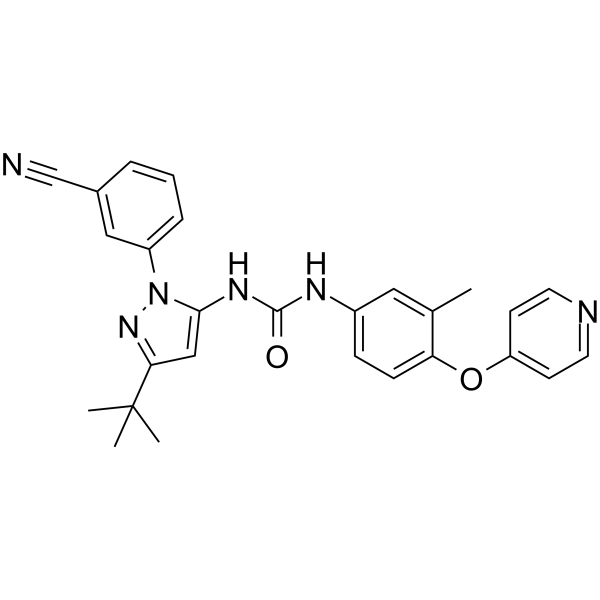
C3-TAg cells are starved and stimulated for 0, 15 and 30 min with ephrin-A1-Fc (EphA2 ligand; 1 μg/mL) in the presence or absence of ALW-II-41-27 or NG-25 control. EphA2 is immunoprecipitated and products probed for tyrosine phosphorylation and EphA2. ALW-II-41-27 significantly reduces basal and ephrin-A1-Fc induced tyrosine phosphorylation.
-
Sci Signal
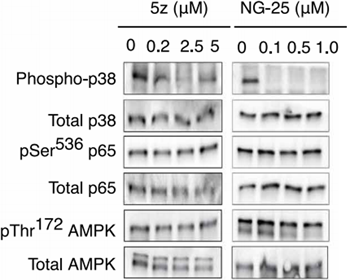
IKK promotes cytokine-induced and cancer-associated AMPK activity and attenuates phenformin-induced cell death in LKB1-deficient cells. [Abstract]2018 Jul 10;11(538):eaan5850. PMID: 29991651
NG25 trihydrochloride purchased from MedChemExpress. Usage Cited in: Sci Signal. 2018 Jul 10;11(538):eaan5850. [Abstract]
A549 cells are treated for 30 min with either 5z-7-oxozeanol or NG-25 to inhibit TAK1 and immunoblotted with the indicated antibodies.
-
J Cell Biol
Endosomal TLR3, TLR7, and TLR8 control neuronal morphology through different transcriptional programs. [Abstract]2018 Aug 6;217(8):2727-2742. PMID: 29777026 -
J Am Heart Assoc
2021 Feb 16;10(4):e014311. PMID: 33522247 -
Biofactors
2020 Sep;46(5):813-820. PMID: 32525617 -
Mol Med Rep
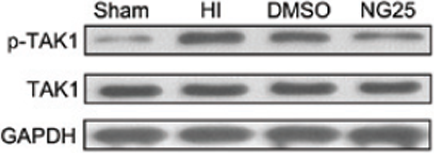
NG25, an inhibitor of transforming growth factor‑β‑activated kinase 1, ameliorates neuronal apoptosis in neonatal hypoxic‑ischemic rats. [Abstract]2018 Jan;17(1):1710-1716. PMID: 29138854
NG25 trihydrochloride purchased from MedChemExpress. Usage Cited in: Mol Med Rep. 2018 Jan;17(1):1710-1716. [Abstract]
Expression level of p TAK1 and downstream targets following NG25 treatment. Western blot detection of p TAK1 and TAK1 expression levels in the sham group, and samples from HI, DMSO treated and NG25 treated rat brain cortexes.
-
J Mol Cell Cardiol
FBXW5 acts as a negative regulator of pathological cardiac hypertrophy by decreasing the TAK1 signaling to pro-hypertrophic members of the MAPK signaling pathway. [Abstract]2021 Feb:151:31-43. PMID: 32971071 -
Sci Rep
2016 Sep 7:6:32737. PMID: 27599572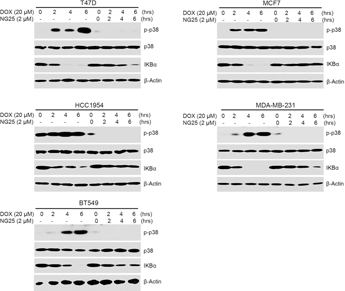
NG25 trihydrochloride purchased from MedChemExpress. Usage Cited in: Sci Rep. 2016 Sep 7:6:32737. [Abstract]
TAK1 inhibition inhibits Dox-induced p38 activation and IκBα degradation. Breast cancer cell lines T-47D, MCF7, HCC1954, MDA-MB-231, and BT-549 are treated with Dox (20 μM) alone or combined with NG25 (2 μM) for 0, 2 h, 4 h or 6 h. The protein extracts are subjected to SDS-PAGE and immunoblotted with the antibodies against p-p38, p38, and IκBα. β-actin are detected as loading controls for whole cell extracts.
-
J Cell Mol Med
Ubiquitin-specific protease 19 blunts pathological cardiac hypertrophy via inhibition of the TAK1-dependent pathway. [Abstract]2020 Sep;24(18):10946-10957. PMID: 32798288 -
J Immunol
TLR8 Senses Staphylococcus aureus RNA in Human Primary Monocytes and Macrophages and Induces IFN-β Production via a TAK1-IKKβ-IRF5 Signaling Pathway. [Abstract]2015 Aug 1;195(3):1100-11. PMID: 26085680 -
Biochem Biophys Res Commun
Identification of TGF-β-activated kinase 1 as a possible novel target for renal cell carcinoma intervention. [Abstract]2014 Oct 10;453(1):106-11. PMID: 25261726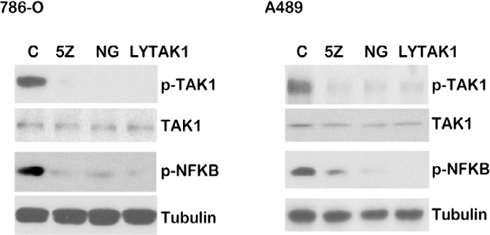
NG25 trihydrochloride purchased from MedChemExpress. Usage Cited in: Biochem Biophys Res Commun. 2014 Oct 10;453(1):106-11. [Abstract]
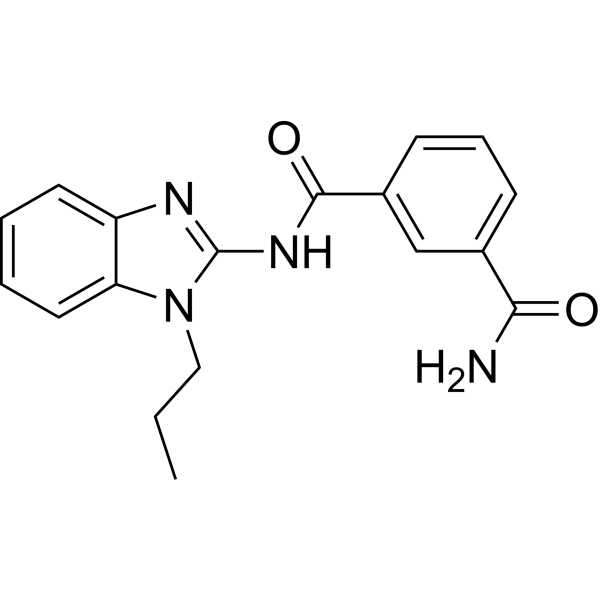
786-O/A489 RCC cells are treated with LYTAK1 (100 nM), 5Z-7-oxozeanol (5Z, 0.25 lM) or NG-25 (NG-25, 2.5 lM) for 24 h, Western blots are applied to tested list proteins.
-
BMC Res Notes
2022 Nov 26;15(1):352. PMID: 36435864 -
Oncotarget
TAK1-inhibitors are cytotoxic for multiple myeloma cells alone and in combination with melphalan. [Abstract]2021 Oct 12;12(21):2158-2168. PMID: 34676048 -
-
-
Oncotarget
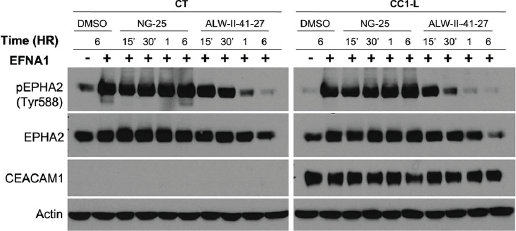
EphA2 signaling is impacted by carcinoembryonic antigen cell adhesion molecule 1-L expression in colorectal cancer liver metastasis in a cell context-dependent manner. [Abstract]2017 Nov 1;8(61):104330-104346. PMID: 29262644
NG25 trihydrochloride purchased from MedChemExpress. Usage Cited in: Oncotarget. 2017 Nov 1;8(61):104330-104346. [Abstract]
MC38-CT or -CC1-L cells are treated with 1 μM of DMSO, or the non-specific NG-25 or specific ALW-II-41-27 EPHA2 receptor inhibitor for indicated periods of time, followed by stimulation with EFNA1-Fc (2 μg/mL) in the last 15 min of treatments. Protein lysates are prepared and subjected to immunoblotting using antibodies to determine the effect of kinase inhibitors on EPHA2 activation.
-
Oncotarget
2016 Oct 25;7(43):69173-69187. PMID: 27732951 -
-
Harvard Medical School LINCS LIBRARY

Protocols
-
Apoptosis
Apoptosis, also called programmed cell death, is generally characterized by distinct morphological characteristics.
-
TUNEL staining for apoptotic DNA fragmentation
TUNEL staining detects DNA strand breaks by using terminal deoxynucleotidyl transferase to add labeled nucleotides to exposed 3′-OH DNA termini, generating either microscopic staining in fixed cells or tissue sections, or fluorescence/cytometric signal in cell suspensions. TUNEL positivity reflects DNA fragmentation but should not be interpreted alone as definitive apoptosis, because TUNEL can also label necrotic, autolytic, mechanically damaged, or DNA-repair-associated DNA breaks.
-
Cell Cytotoxicity Assay
Cytotoxicity assays are usually based on the assessment of cell membrane damage, which can also be indirectly detected by measuring cell viability. Detection methods include MTT assay, CKK-8 assay, LDH assay and ATP assay, etc.
-
Annexin V plus membrane-impermeant dye apoptosis staining
Annexin V-based apoptosis assays rely on the detection of phosphatidylserine (PS) externalization from the inner leaflet of the plasma membrane to the outer leaflet, an early biochemical hallmark of apoptosis. Fluorescently labeled Annexin V binds PS in a calcium-dependent manner, enabling identification of early apoptotic cells by flow cytometry or fluorescence microscopy. When combined with a membrane-impermeant DNA-binding dye (e. g. , propidium iodide), this approach allows discrimination between viable (Annexin V−/dye−), early apoptotic (Annexin V+/dye−), and late apoptotic or necrotic (Annexin V+/dye+) cell populations by assessing membrane integrity and PS exposure.
-
Apoptosis Solutions
Apoptosis is a regulated, generally non-lytic cell-death pathway that removes unwanted, damaged, infected, or abnormal cells through coordinated morphological changes, caspase activation, DNA fragmentation, and membrane remodeling. The intrinsic apoptosis pathway is controlled mainly by mitochondrial outer membrane permeabilization, BCL-2 family proteins, cytochrome c release, apoptosome formation, caspase-9 activation, and downstream executioner caspase-3/7 activation. The extrinsic apoptosis pathway is initiated by death receptors such as Fas, TNFR, and TRAIL receptors, which recruit adaptor proteins and activate caspase-8 before engaging executioner caspases or mitochondrial amplification through BID cleavage. Apoptosis is linked to many phenotypes, including cancer cell killing, tissue homeostasis, immune regulation, neurodegeneration, infection response, and treatment-induced cytotoxicity; unresolved questions include how apoptosis interacts with necroptosis, pyroptosis, ferroptos
-
Breast Cancer Modeling
Breast cancer is a heterogeneous cancer, and it has been distinguished into four subtypes: luminal A, luminal B, HER2-positive and basal-like. Molecular mutations, epigenetic alterations, hormone exposure and immune microenvironment are related to the progression of breast cancer.


Purity & Documentation
References
[1]. Tan L, et al. Discovery of type II inhibitors of TGFβ-activated kinase 1 (TAK1) and mitogen-activated protein kinase kinase kinase kinase 2 (MAP4K2). J Med Chem. 2015 Jan 8;58(1):183-96. [Content Brief]
[2]. Wang Z, et al. TAK1 inhibitor NG25 enhances doxorubicin-mediated apoptosis in breast cancer cells. Sci Rep. 2016 Sep 7;6:32737. [Content Brief]

Calculators
Concentration (start) × Volume (start) = Concentration (final) × Volume (final)


NG25 trihydrochloride Related Classifications
HY-15434A Related Classifications
 Powered by Bioz