



Limaprost
Based on 1 publication(s) in Google Scholar
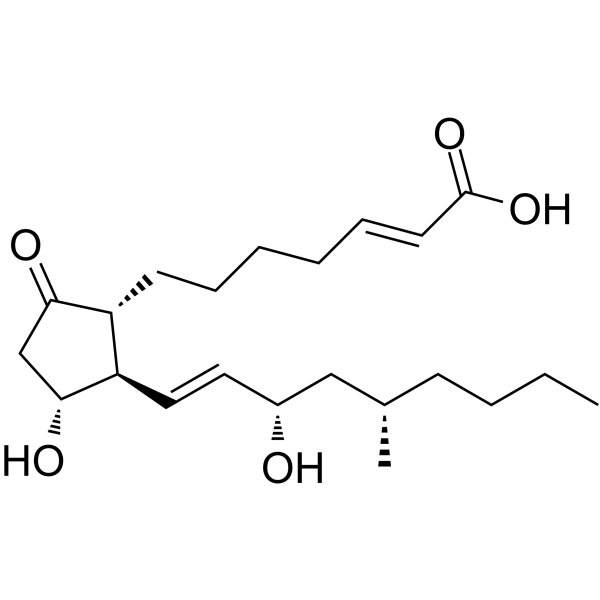
Limaprost (OP1206) is a PGE1 analogue and a potent and orally active vasodilator. Limaprost increases blood flow and inhibits platelet aggregation. Limaprost pain relief, has antianginal effects, and can be used for ischaemic symptoms research.
For research use only. We do not sell to patients.
- Purity : 99.78%
- CAS No.: 74397-12-9
- Formula: C22H36O5
- Molecular Weight:380.52
-
Storage:Powder -20°C, 3 years , 4°C, 2 years ; In solvent -80°C, 2 years , -20°C, 1 year

To place orders, for customer services and technical support, please contact: MedChemExpress USA
Tel: 609-228-6898 E-mail: [email protected] [email protected]


-
 Biological Activity
-
Chemical Information
-
Solvent & Solubility
- Purity & Documentation
- References
-
 Help & FAQs


-
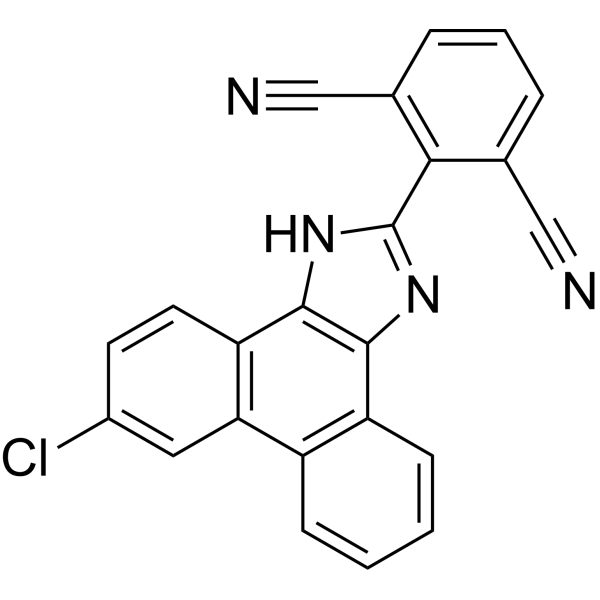
HY-13283
MF63MF63 Inhibitor -
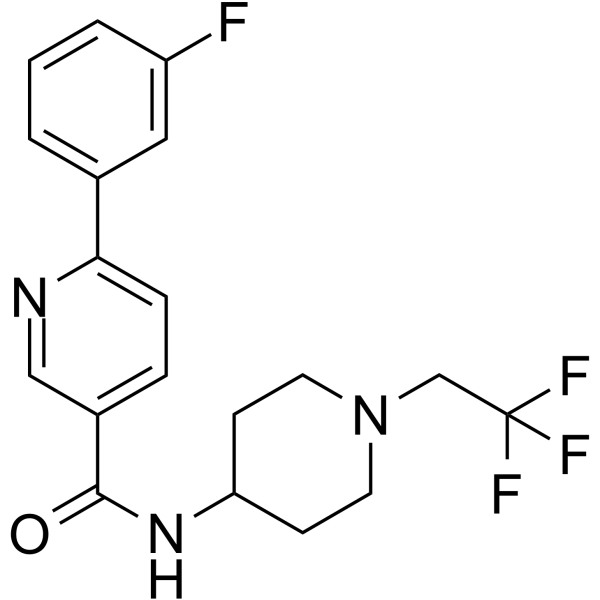
HY-10439
HPGDS inhibitor 1HPGDS Inhibitor -
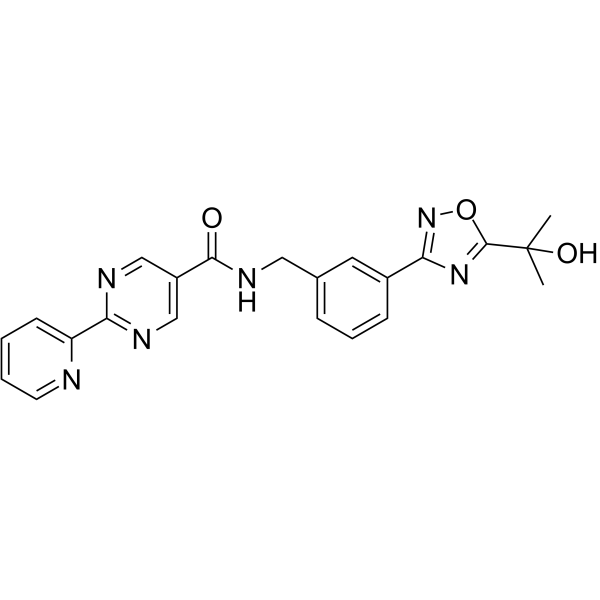
HY-12791
hPGDS-IN-1hPGDS Inhibitor -
HY-B0890
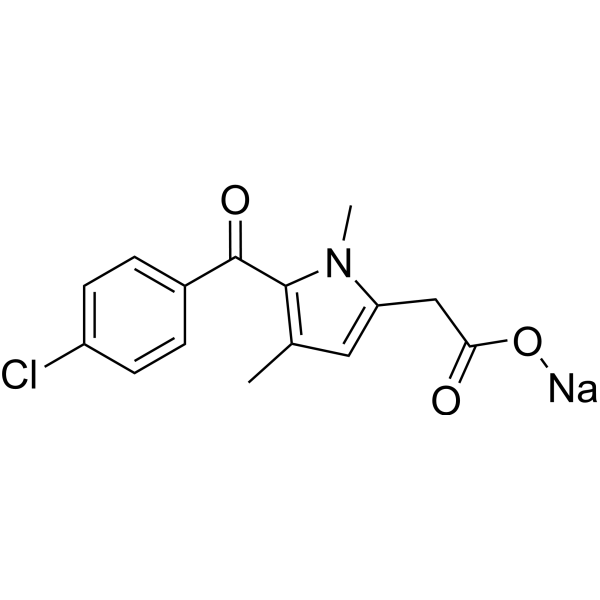
Zomepirac sodium saltProstaglandin Synthetase Inhibitor -
HY-N0297
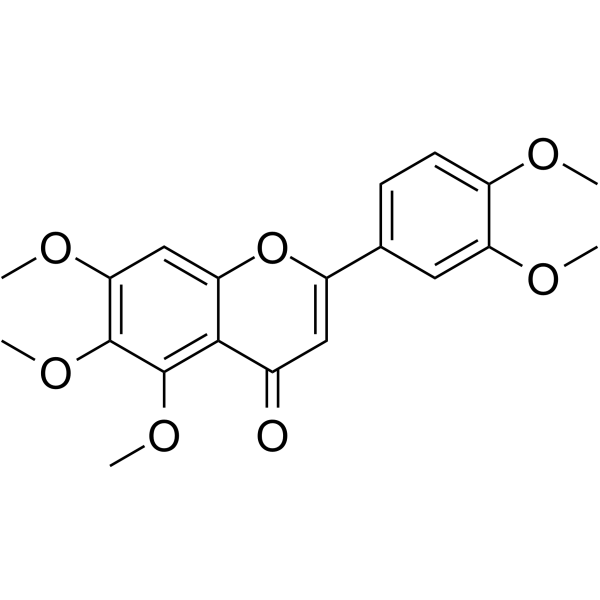
SinensetinTNF Receptor Inhibitor -
HY-108259
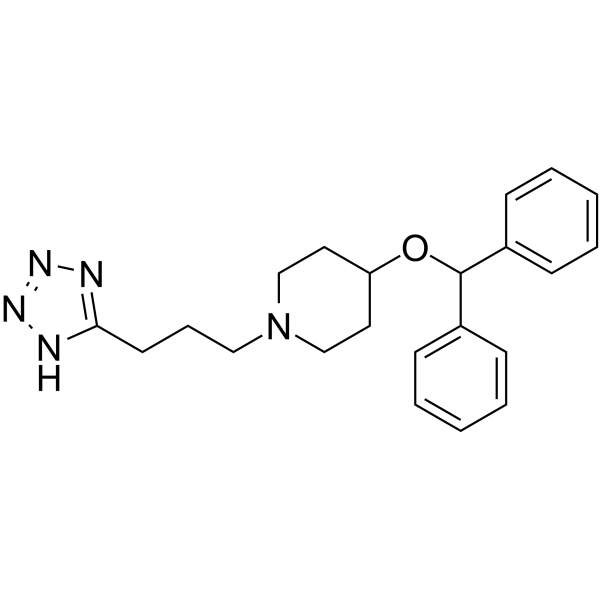
HQL-79Prostaglandin D Synthase Inhibitor -
HY-126134
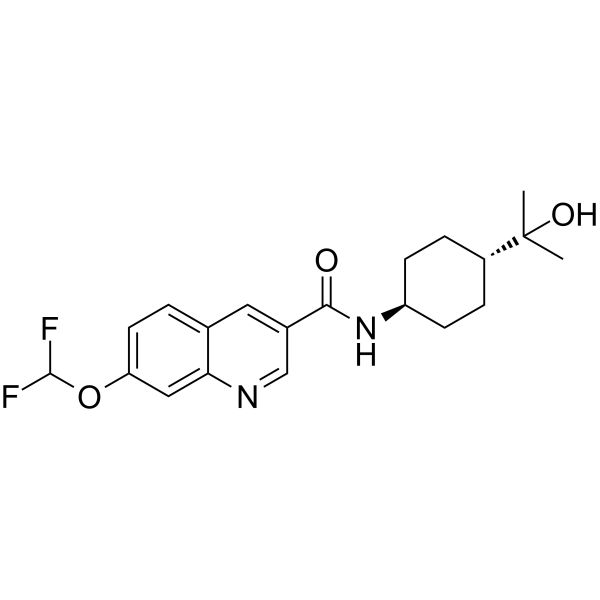
HPGDS inhibitor 2 -
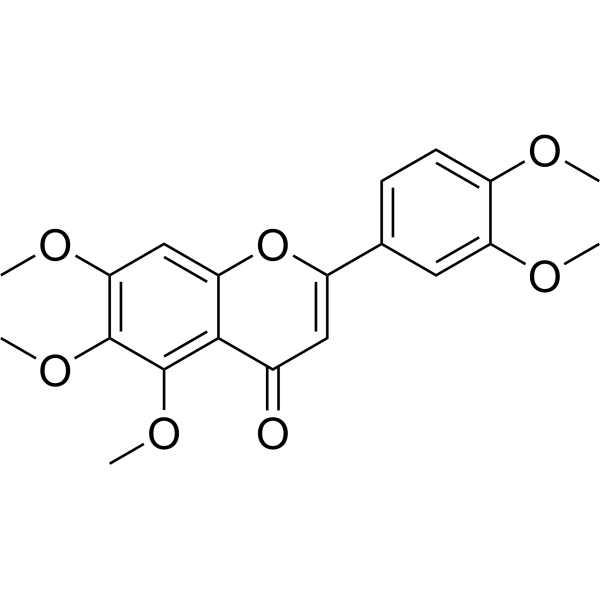
HY-N0297R
Sinensetin (Standard) -
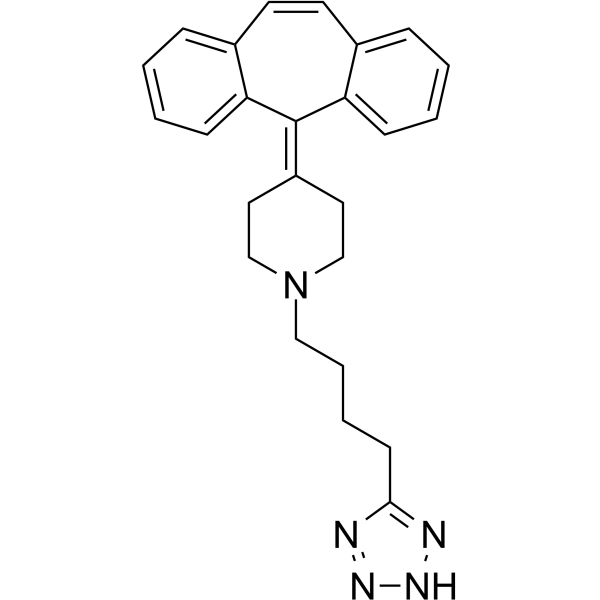
HY-13988
AT-56L-PGDS Inhibitor -
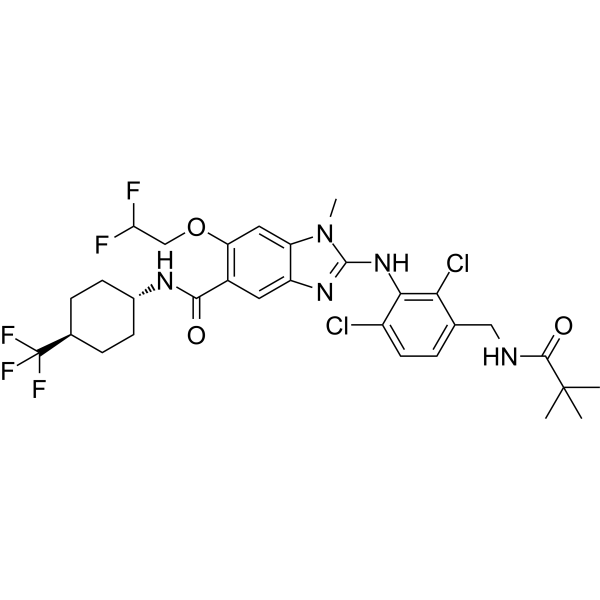
HY-147416
VipoglanstatmPGES-1 Inhibitor -
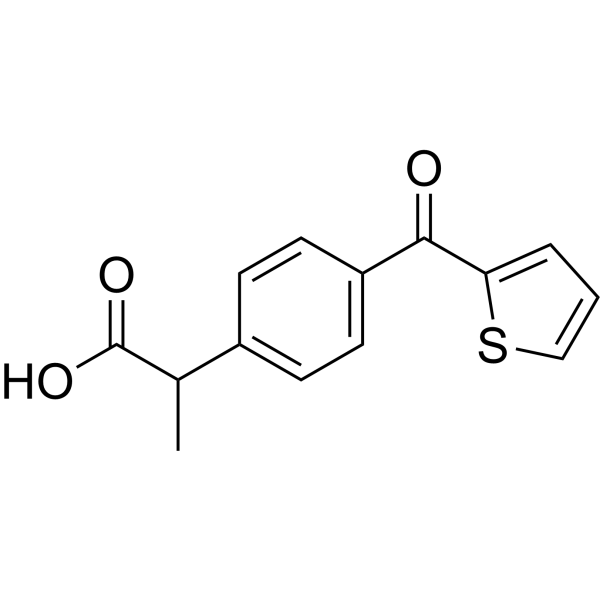
HY-B0270
SuprofenPGE synthase Inhibitor
Publications Citing Use of MedChemExpress (MCE) Limaprost
More

Biological Activity
Description
In Vitro
Limaprost inhibits the IL-1-mediated induction of nerve growth factor (NGF) in a concentration-dependent manner with an IC50 value of 70.9 ?nM human IVD cells[3].
MedChemExpress (MCE) has not independently confirmed the accuracy of these methods. They are for reference only. .
In Vivo
Intra-coronary injection of Limaprost (OP1206; 1-100 ng/kg) in dogs results in a remarkable increase of coronary blood flow without any influence on heart rate, blood pressure, myocardial oxygen consumption and redox potential[1].
Resistance in both large and small vessels of dog coronary artery is decreased by intravenous injection of Limaprost (OP1206; 1-3 mg/kg)[1].
Platelet aggregation, adhesiveness, bleeding time, and thrombocytopenia induced by ADP and collagen infusion in guinea-pigs are inhibited by oral administration of Limaprost (OP1206) at the same doses or doses less than those relieving Argipressin-induced ST depression of ECG[1].
MedChemExpress (MCE) has not independently confirmed the accuracy of these methods. They are for reference only.
Clinical Trial
| NCT Number | Sponsor | Condition | Start Date |
Phase

|
|---|---|---|---|---|
| NCT01329991 | Plexxikon| | 2011-05 | PHASE1 |


Chemical Information
-
CAS No. 74397-12-9
-
Appearance Solid
-
Molecular Weight 380.52
-
Formula C22H36O5
-
Color White to off-white
-
SMILES
O=C(O)/C=C/CCCC[C@@H]1[C@@H](/C=C/[C@@H](O)C[C@@H](C)CCCC)[C@H](O)CC1=O
-
Synonyms
17α,20-dimethyl-δ2-PGE1; ONO1206; OP1206
-
Shipping
Room temperature in continental US; may vary elsewhere.
-
Storage
Powder -20°C 3 years 4°C 2 years In solvent -80°C 2 years -20°C 1 year


Publications (1)
-
Journal Impact Factor
-
Most Recent
-
Technol Cancer Res Treat
Nicotine Induces Progressive Properties of Lung Adenocarcinoma A549 Cells by Inhibiting Cystic Fibrosis Transmembrane Conductance Regulator (CFTR) Expression and Plasma Membrane Localization. [Abstract]2018 Jan 1:17:1533033818809984. PMID: 30384810


Solvent & Solubility
In Vitro:
DMSO : ≥ 40 mg/mL (105.12 mM; Hygroscopic DMSO has a significant impact on the solubility of product, please use newly opened DMSO)
* "≥" means soluble, but saturation unknown.
Please refer to the solubility information to select the appropriate solvent. Once prepared, please aliquot and store the solution to prevent product inactivation from repeated freeze-thaw cycles.
Storage method and period of stock solution: -80°C, 2 years; -20°C, 1 year. When stored at -80°C, please use it within 2 years. When stored at -20°C, please use it within 1 year.
Please refer to the solubility information to select the appropriate solvent. Once prepared, please aliquot and store the solution to prevent product inactivation from repeated freeze-thaw cycles.
Storage method and period of stock solution: -80°C, 2 years; -20°C, 1 year. When stored at -80°C, please use it within 2 years. When stored at -20°C, please use it within 1 year.
Concentration (start) × Volume (start) = Concentration (final) × Volume (final)
In Vivo:
Select the appropriate dissolution method based on your experimental animal and administration route.
- For the following dissolution methods, please ensure to first prepare a clear stock solution using an In Vitro approach and then sequentially add co-solvents:
- To ensure reliable experimental results, the clarified stock solution can be appropriately stored based on storage conditions. As for the working solution for In Vivo experiments, it is recommended to prepare freshly and use it on the same day.
- The percentages shown for the solvents indicate their volumetric ratio in the final prepared solution. If precipitation or phase separation occurs during preparation, heat and/or sonication can be used to aid dissolution.
Add each solvent one by one: 10% DMSO 40% PEG300 5% Tween-80 45% Saline
Solubility: ≥ 2.08 mg/mL (5.47 mM); Clear solution
This protocol yields a clear solution of ≥ 2.08 mg/mL (saturation unknown).
Taking 1 mL working solution as an example, add 100 μL DMSO stock solution (20.8 mg/mL) to 400 μL PEG300, and mix evenly; then add 50 μL Tween-80 and mix evenly; then add 450 μL Saline to adjust the volume to 1 mL.
Preparation of Saline: Dissolve 0.9 g sodium chloride in ddH₂O and dilute to 100 mL to obtain a clear Saline solution.
Add each solvent one by one: 10% DMSO 90% (20% SBE-β-CD in Saline)
Solubility: ≥ 2.08 mg/mL (5.47 mM); Clear solution
This protocol yields a clear solution of ≥ 2.08 mg/mL (saturation unknown).
Taking 1 mL working solution as an example, add 100 μL DMSO stock solution (20.8 mg/mL) to 900 μL 20% SBE-β-CD in Saline, and mix evenly.
Preparation of 20% SBE-β-CD in Saline (4°C, storage for one week): 2 g SBE-β-CD powder is dissolved in 10 mL Saline, completely dissolve until clear.
In Vivo Dissolution Calculator
Please enter the basic information of animal experiments:
-
-
-
-
Recommended: Prepare an additional quantity of animals to account for potential losses during experiments.
Please enter your animal formula composition:
-
%DMSO +
Recommended: Keep the proportion of DMSO in working solution below 2% if your animal is weak.
-
%+
-
+%Tween-80 + +
-
%Saline +
The co-solvents required include: DMSO, . All of co-solvents are available by MedChemExpress (MCE). , Tween 80. All of co-solvents are available by MedChemExpress (MCE).
Working solution concentration: 0.22 mg/mL
Method for preparing stock solution: mg drug dissolved in μL DMSO. Stock solution concentration: mg/mL.
1. Take μL DMSO stock solution;
2. Add μL .
μL , mix evenly;
3. Then add μL Tween 80, mix evenly;
4. Then add μL
Please ensure that the stock solution in the first step is dissolved to a clear state, and add co-solvents in sequence. You can use ultrasonic heating (ultrasonic cleaner, recommended frequency 20-40 kHz), vortexing, etc. to assist dissolution.


Purity & Documentation
-
Data Sheet (277 KB)
-
SDS (480 KB)
- English - EN (480 KB)
- Français - FR (480 KB)
- Deutsch - DE (480 KB)
- Norwegian - NO (480 KB)
- Español - ES (480 KB)
- Swedish - SV (480 KB)
- Italian - IT (480 KB)
- Korean - KR (480 KB)
- Portuguese - PT (480 KB)
-
Handling Instructions (2659 KB)
References
[1]. Tsuboi T, et al. Pharmacological evaluation of OP 1206, a prostaglandin E1 derivative, as an antianginal agent. Arch Int Pharmacodyn Ther. 1980 Sep;247(1):89-102. [Content Brief]
[2]. Swainston Harrison T, et al. Limaprost. Drugs. 2007;67(1):109-18; discussion 119-20. [Content Brief]
[3]. Murata K, et al. PGE1 Attenuates IL-1β-induced NGF Expression in Human Intervertebral Disc Cells. Spine (Phila Pa 1976). 2016 Jun;41(12):E710-6. [Content Brief]


Complete Stock Solution Preparation Table
Please refer to the solubility information to select the appropriate solvent. Once prepared, please aliquot and store the solution to prevent product inactivation from repeated freeze-thaw cycles.
Storage method and period of stock solution: -80°C, 2 years; -20°C, 1 year. When stored at -80°C, please use it within 2 years. When stored at -20°C, please use it within 1 year.
| Optional Solvent | Concentration Solvent Mass | 1 mg | 5 mg | 10 mg | 25 mg |
|---|---|---|---|---|---|
| DMSO | 1 mM | 2.6280 mL | 13.1399 mL | 26.2798 mL | 65.6996 mL |
| 5 mM | 0.5256 mL | 2.6280 mL | 5.2560 mL | 13.1399 mL | |
| 10 mM | 0.2628 mL | 1.3140 mL | 2.6280 mL | 6.5700 mL | |
| 15 mM | 0.1752 mL | 0.8760 mL | 1.7520 mL | 4.3800 mL | |
| 20 mM | 0.1314 mL | 0.6570 mL | 1.3140 mL | 3.2850 mL | |
| 25 mM | 0.1051 mL | 0.5256 mL | 1.0512 mL | 2.6280 mL | |
| 30 mM | 0.0876 mL | 0.4380 mL | 0.8760 mL | 2.1900 mL | |
| 40 mM | 0.0657 mL | 0.3285 mL | 0.6570 mL | 1.6425 mL | |
| 50 mM | 0.0526 mL | 0.2628 mL | 0.5256 mL | 1.3140 mL | |
| 60 mM | 0.0438 mL | 0.2190 mL | 0.4380 mL | 1.0950 mL | |
| 80 mM | 0.0328 mL | 0.1642 mL | 0.3285 mL | 0.8212 mL | |
| 100 mM | 0.0263 mL | 0.1314 mL | 0.2628 mL | 0.6570 mL |


Limaprost Related Classifications
HY-B0683 Related Classifications
 Powered by Bioz