



Ophthalmic acid

Based on 1 Customer Validation
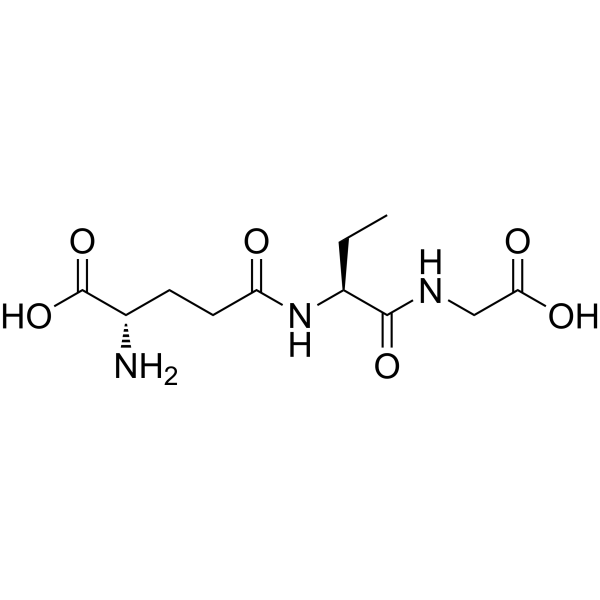
Ophthalmic acid is a ubiquitous metabolite and glutathione modulator, with a Ki of 0.95 mM for glyoxalase I. Ophthalmic acid competitively inhibits glyoxalase I, glutathione S-transferase, glutaredoxin, glutamate-cysteine ligase, protein disulfide reductase (glutathione), as well as non-selective cation channels. Ophthalmic acid is applicable in diabetes-related research.
Nos produits utilisent uniquement pour la recherche. Nous ne vendons pas aux patients.
- Pureté : 99.91%
- CAS No.: 495-27-2
- Formule: C11H19N3O6
- Masse moléculaire:289.29
-
Stockage:
-20°C, sealed storage, away from moisture
* In solvent : -80°C, 6 months; -20°C, 1 month (sealed storage, away from moisture)

To place orders, for customer services and technical support, please contact: MedChemExpress USA
Tel: 609-228-6898 E-mail: [email protected] [email protected]


-
 Activité biologique
-
Chemical Information
-
Solvant et solubilité
- Protocole
- Pureté et documentation
- Références
-
 Help & FAQs


-
HY-W028393
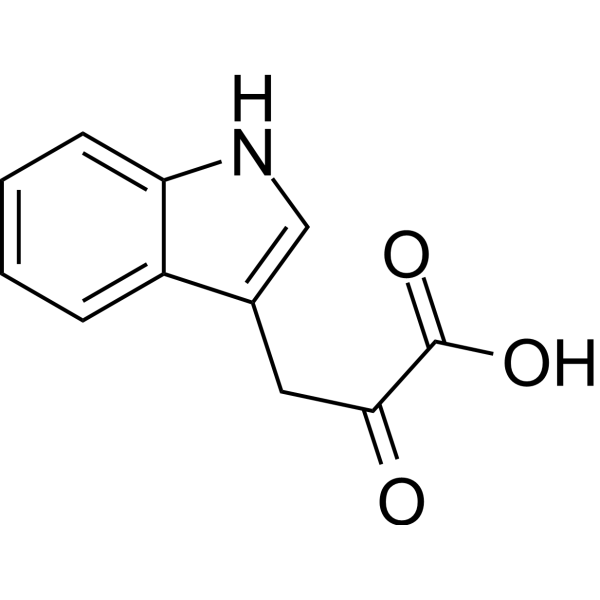
Indole-3-pyruvic acidAHR Agonist -
HY-N0593
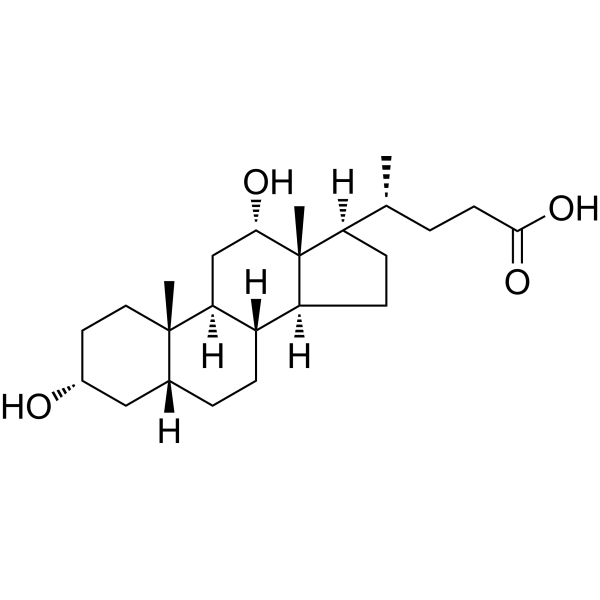
Deoxycholic acidBile Acid Receptor Activator -
HY-10071
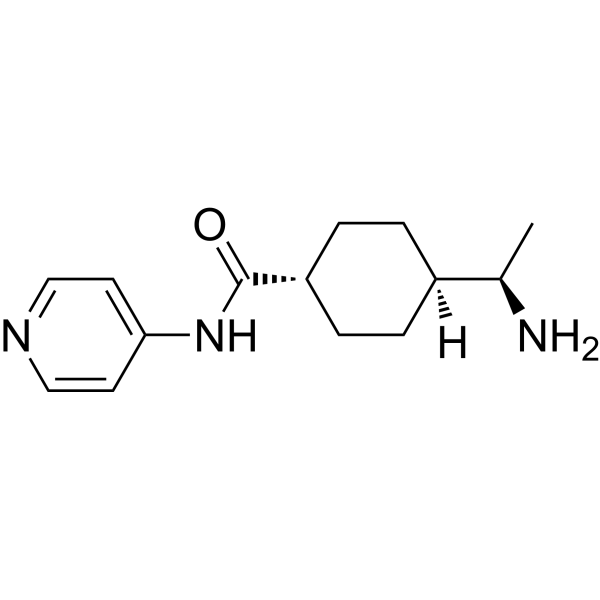
Y-27632ROCK Inhibitor -
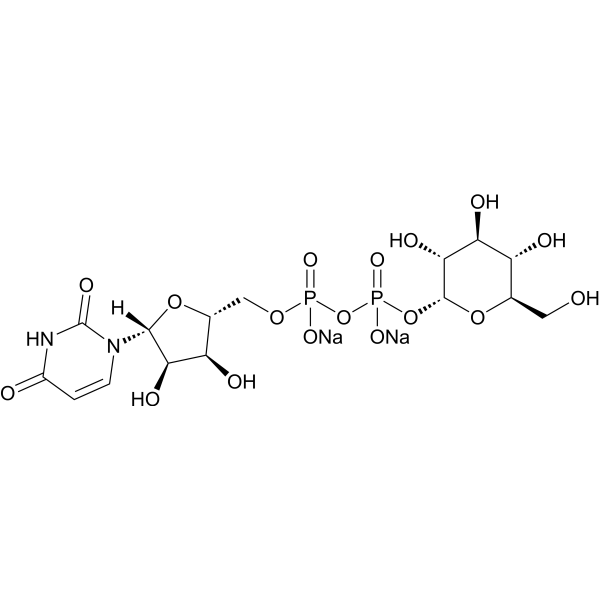
HY-N7032
Uridine 5′-diphosphoglucose disodiumP2Y14 Agonist -
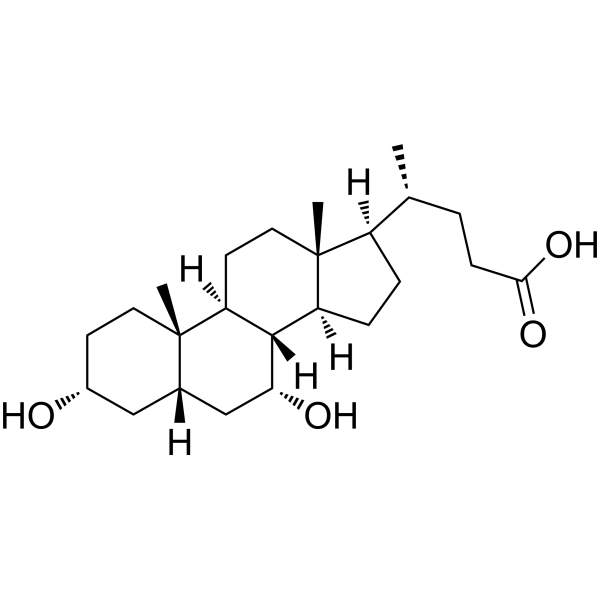
HY-76847
Chenodeoxycholic AcidEndogenous Metabolite -
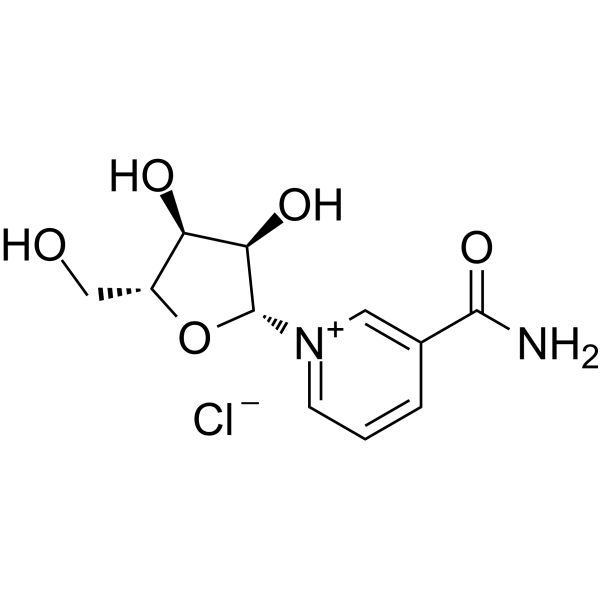
HY-123033A
Nicotinamide riboside chlorideEndogenous Metabolite -
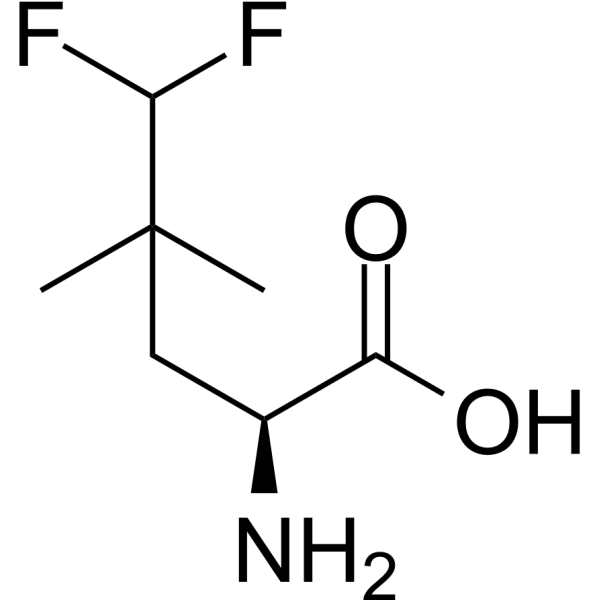
HY-114384
MefluleucinemTORC1 Activator -
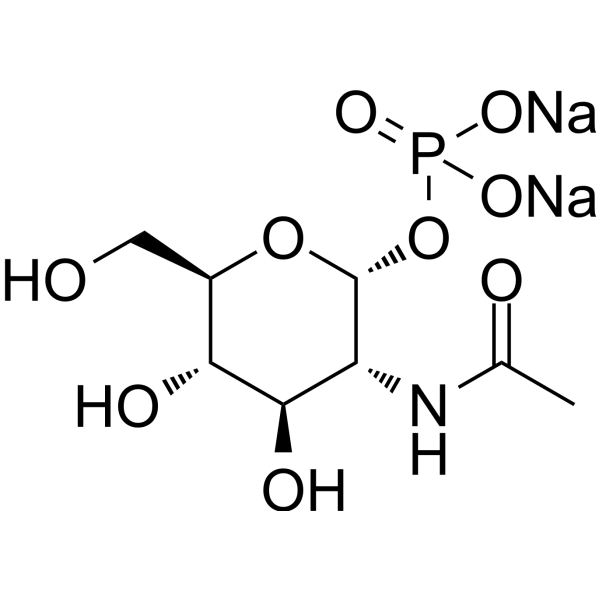
HY-147063
N-Acetyl-α-D-glucosamine 1-phosphate disodiumEctopic Sugar Phosphate -
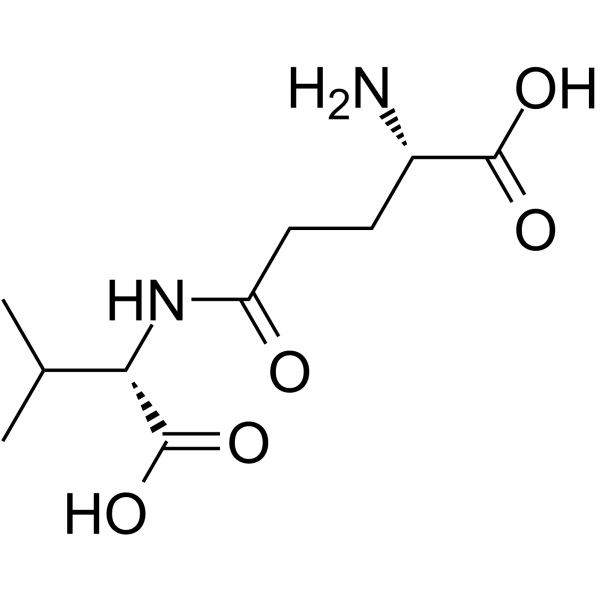
HY-12557
γ-GlutamylvalineCaSR Activator -

HY-126752R
Ophthalmic acid (Standard)Reference Standard


Activité biologique
Description
In Vitro
Ophthalmic acid (5 μM-millimolar concentrations) exerts pleiotropic effects on GSH utilizing enzymes: it induces glutathione reductases, inhibits glutaredoxins (60% reduction at 5 μM) and millimolar-concentration exposed glutathione S-transferases, and does not affect glutathione peroxidases[1].
Ophthalmic acid competitively inhibits the glyoxalase I reaction[1].
Ophthalmic acid inhibits the activation of non-selective cation channels by intracellular NAD+ via mimicry of GSH's tripeptide structure[1].
Ophthalmic acid competitively inhibits GSH uptake in yeast[1].
Ophthalmic acid competitively inhibits purified glyoxalase I enzyme activity with an inhibitor equilibrium constant (Ki) of 0.95 mM[2].
MedChemExpress (MCE) has not independently confirmed the accuracy of these methods. They are for reference only. Further protocols information, click here.
In Vivo
Ophthalmic acid elevates liver ophthalmic acid levels 20-fold while depleting hepatic glutathione in Cystathionine β-synthase-deficient mice with genetic homocystinuria[1].
MedChemExpress (MCE) has not independently confirmed the accuracy of these methods. They are for reference only.


Chemical Information
-
CAS No. 495-27-2
-
Appearance Solid
-
Masse moléculaire 289.29
-
Formule C11H19N3O6
-
Color White to off-white
-
SMILES
OC(CNC([C@H](CC)NC(CC[C@H](N)C(O)=O)=O)=O)=O
-
Structure Classification
-
Initial Source
animal kingdom
-
Livraison
Room temperature in continental US; may vary elsewhere.
-
Stockage
-20°C, sealed storage, away from moisture
* In solvent : -80°C, 6 months; -20°C, 1 month (sealed storage, away from moisture)


Solvant et solubilité
In Vitro:
DMSO : 100 mg/mL (345.67 mM; Need ultrasonic; Hygroscopic DMSO has a significant impact on the solubility of product, please use newly opened DMSO)
H2O : 100 mg/mL (345.67 mM; Need ultrasonic)
Please refer to the solubility information to select the appropriate solvent. Once prepared, please aliquot and store the solution to prevent product inactivation from repeated freeze-thaw cycles.
Storage method and period of stock solution: -80°C, 6 months; -20°C, 1 month (sealed storage, away from moisture). When stored at -80°C, please use it within 6 months. When stored at -20°C, please use it within 1 month.
* Note: If you choose water as the stock solution, please dilute it to the working solution, then filter and sterilize it with a 0.22 μm filter before use.
Please refer to the solubility information to select the appropriate solvent. Once prepared, please aliquot and store the solution to prevent product inactivation from repeated freeze-thaw cycles.
Storage method and period of stock solution: -80°C, 6 months; -20°C, 1 month (sealed storage, away from moisture). When stored at -80°C, please use it within 6 months. When stored at -20°C, please use it within 1 month.
* Note: If you choose water as the stock solution, please dilute it to the working solution, then filter and sterilize it with a 0.22 μm filter before use.
Concentration (start) × Volume (start) = Concentration (final) × Volume (final)
In Vivo:
Select the appropriate dissolution method based on your experimental animal and administration route.
- For the following dissolution methods, please ensure to first prepare a clear stock solution using an In Vitro approach and then sequentially add co-solvents:
- To ensure reliable experimental results, the clarified stock solution can be appropriately stored based on storage conditions. As for the working solution for In Vivo experiments, it is recommended to prepare freshly and use it on the same day.
- The percentages shown for the solvents indicate their volumetric ratio in the final prepared solution. If precipitation or phase separation occurs during preparation, heat and/or sonication can be used to aid dissolution.
Add each solvent one by one: 10% DMSO 40% PEG300 5% Tween-80 45% Saline
Solubility: ≥ 2.5 mg/mL (8.64 mM); Clear solution
This protocol yields a clear solution of ≥ 2.5 mg/mL (saturation unknown).
Taking 1 mL working solution as an example, add 100 μL DMSO stock solution (25.0 mg/mL) to 400 μL PEG300, and mix evenly; then add 50 μL Tween-80 and mix evenly; then add 450 μL Saline to adjust the volume to 1 mL.
Preparation of Saline: Dissolve 0.9 g sodium chloride in ddH₂O and dilute to 100 mL to obtain a clear Saline solution.
Add each solvent one by one: 10% DMSO 90% (20% SBE-β-CD in Saline)
Solubility: ≥ 2.5 mg/mL (8.64 mM); Clear solution
This protocol yields a clear solution of ≥ 2.5 mg/mL (saturation unknown).
Taking 1 mL working solution as an example, add 100 μL DMSO stock solution (25.0 mg/mL) to 900 μL 20% SBE-β-CD in Saline, and mix evenly.
Preparation of 20% SBE-β-CD in Saline (4°C, storage for one week): 2 g SBE-β-CD powder is dissolved in 10 mL Saline, completely dissolve until clear.
In Vivo Dissolution Calculator
Please enter the basic information of animal experiments:
-
-
-
-
Recommended: Prepare an additional quantity of animals to account for potential losses during experiments.
Working solution concentration: 0.22 mg/mL
This product has good water solubility, please refer to the measured solubility data in water/PBS/Saline for details.

Protocole
-
Research Protocol for Metabolic Diseases
AMP-activated protein kinase, AMPK, is a conserved cellular energy sensor that responds to reduced cellular energy status and coordinates metabolism by increasing ATP-generating catabolic pathways while suppressing ATP-consuming anabolic processes. In metabolic disease research, the AMPK pathway is experimentally relevant because it regulates hepatic lipid synthesis, fatty acid oxidation, glucose production, skeletal-muscle glucose disposal, mTORC1-linked biosynthesis, autophagy, mitochondrial homeostasis, and whole-body energy balance. The central pathway logic is that energy stress, metformin, exercise-like stimulation, or direct AMPK activators increase AMPKα Thr172 phosphorylation and downstream substrate phosphorylation, including ACC and RAPTOR. Phosphorylation of ACC suppresses lipogenesis and supports fatty acid oxidation, whereas phosphorylation of RAPTOR suppresses mTORC1 signaling and links cellular energy status to growth and protein synthesis control. The pathway is linked


Pureté et documentation
-
Fiche technique (277 KB)
-
SDS (394 KB)
- English - EN (394 KB)
- Français - FR (394 KB)
- Deutsch - DE (394 KB)
- Norwegian - NO (394 KB)
- Español - ES (394 KB)
- Swedish - SV (394 KB)
- Italian - IT (394 KB)
- Korean - KR (394 KB)
- Portuguese - PT (394 KB)
-
Instruction de manipulation (2659 KB)
Références


Complete Stock Solution Preparation Table
Please refer to the solubility information to select the appropriate solvent. Once prepared, please aliquot and store the solution to prevent product inactivation from repeated freeze-thaw cycles.
Storage method and period of stock solution: -80°C, 6 months; -20°C, 1 month (sealed storage, away from moisture). When stored at -80°C, please use it within 6 months. When stored at -20°C, please use it within 1 month.
| Optional Solvent | Concentration Solvent Mass | 1 mg | 5 mg | 10 mg | 25 mg |
|---|---|---|---|---|---|
| DMSO / H2O | 1 mM | 3.4567 mL | 17.2837 mL | 34.5674 mL | 86.4185 mL |
| 5 mM | 0.6913 mL | 3.4567 mL | 6.9135 mL | 17.2837 mL | |
| 10 mM | 0.3457 mL | 1.7284 mL | 3.4567 mL | 8.6418 mL | |
| 15 mM | 0.2304 mL | 1.1522 mL | 2.3045 mL | 5.7612 mL | |
| 20 mM | 0.1728 mL | 0.8642 mL | 1.7284 mL | 4.3209 mL | |
| 25 mM | 0.1383 mL | 0.6913 mL | 1.3827 mL | 3.4567 mL | |
| 30 mM | 0.1152 mL | 0.5761 mL | 1.1522 mL | 2.8806 mL | |
| 40 mM | 0.0864 mL | 0.4321 mL | 0.8642 mL | 2.1605 mL | |
| 50 mM | 0.0691 mL | 0.3457 mL | 0.6913 mL | 1.7284 mL | |
| 60 mM | 0.0576 mL | 0.2881 mL | 0.5761 mL | 1.4403 mL | |
| 80 mM | 0.0432 mL | 0.2160 mL | 0.4321 mL | 1.0802 mL | |
| 100 mM | 0.0346 mL | 0.1728 mL | 0.3457 mL | 0.8642 mL |
* Note: If you choose water as the stock solution, please dilute it to the working solution, then filter and sterilize it with a 0.22 μm filter before use.


Ophthalmic acid Related Classifications
HY-126752 Related Classifications
 Powered by Bioz
Keywords
- Ophthalmic acid
- 495-27-2
- Reactive Oxygen Species (ROS)
- Hydra littoralis
- protein-disulfide reductase (glutathione)
- glyoxalase I
- non-selective cation channels
- glutathione reductase
- glutamate-cysteine ligase
- glutaredoxin
- colon cancer cells
- glutathione S-transferase
- rat liver cell canalicular membranes
- Inhibitor
- inhibitor
- inhibit