



Palonosetron
Based on 2 publication(s) in Google Scholar
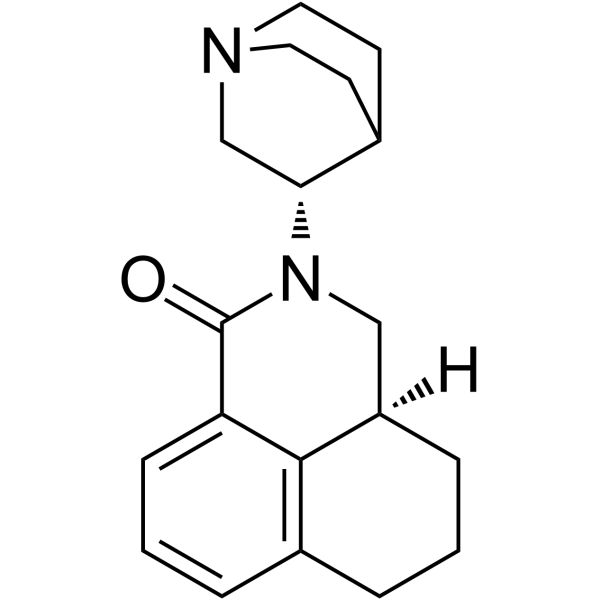
Palonosetron is a 5-HT3 antagonist primarily used to prevent acute, delayed, and overall chemotherapy-induced nausea and vomiting. Palonosetron exhibits moderate anti-flavivirus activity and potent anti-Zika virus activity in mammalian cells. Palonosetron also possesses antidepressant activity.
For research use only. We do not sell to patients.
- CAS No.: 135729-61-2
- Formula: C19H24N2O
- Molecular Weight:296.41
-
Storage:
Please store the product under the recommended conditions in the Certificate of Analysis.

To place orders, for customer services and technical support, please contact: MedChemExpress USA
Tel: 609-228-6898 E-mail: [email protected] [email protected]


-
 Biological Activity
-
Chemical Information
- Protocols
- Purity & Documentation
- References
-
 Help & FAQs


-
HY-N0145
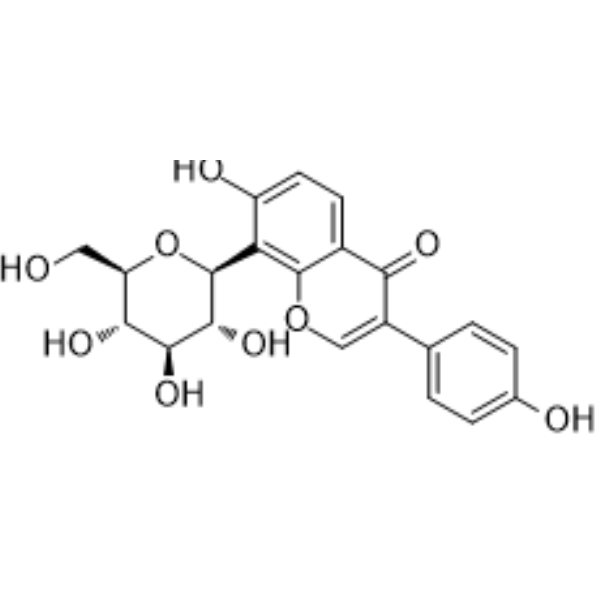
Puerarin5-HT Receptor Antagonist -
HY-14544
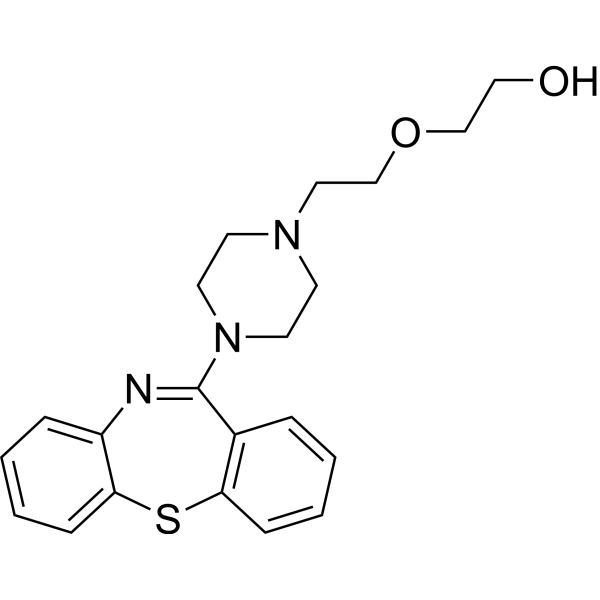
Quetiapine5-HT Agonist/D2 Antagonist -
HY-B0071
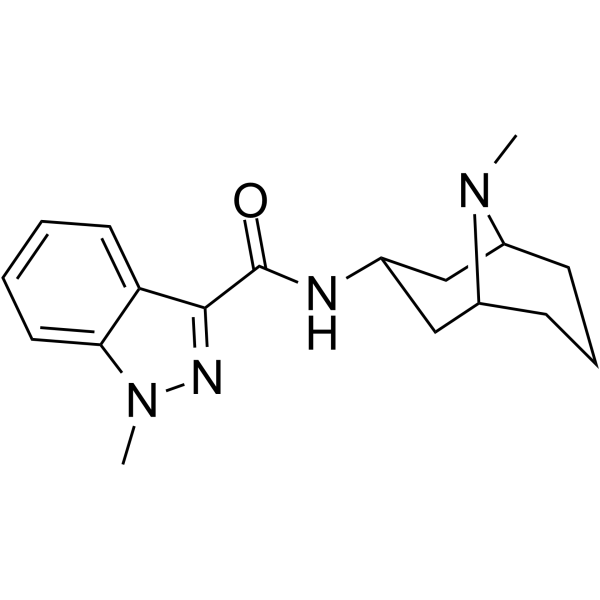
Granisetron5-HT Receptor Antagonist -
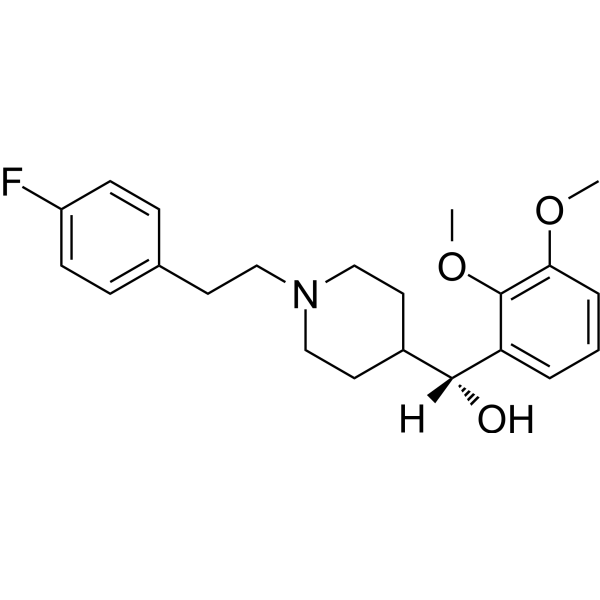
HY-14940
Volinanserin5-HT2 Receptor Antagonist -
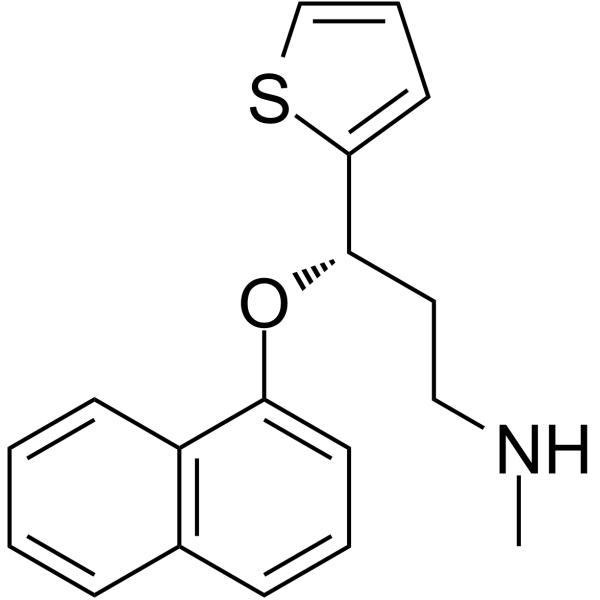
HY-B0161
DuloxetineSerotonin-norepinephrine Reuptake Inhibitor -
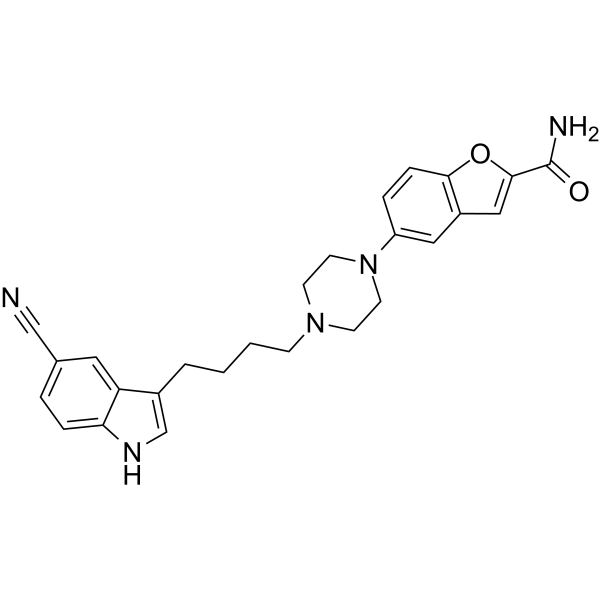
HY-14262
VilazodoneSerotonin Reuptake Inhibitor -

HY-14544R
Quetiapine (Standard)5-HT Agonist/D2 Antagonist -

HY-N0145R
Puerarin (Standard)5-HT Receptor Antagonist -
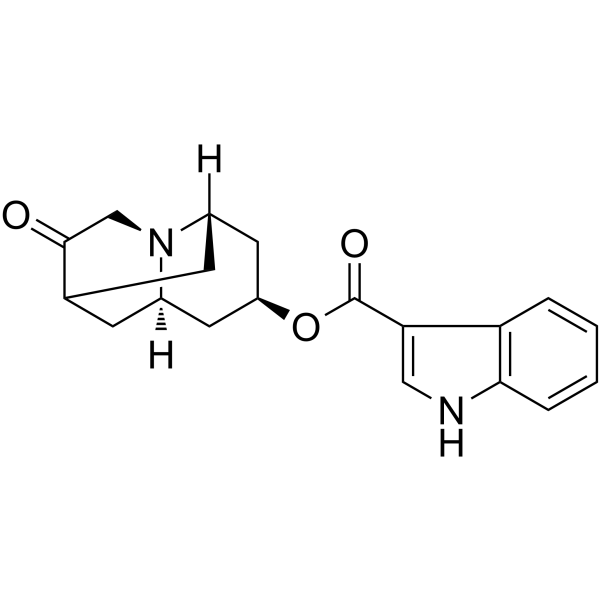
HY-B0750
Dolasetron5-HT3 Antagonist -
HY-B0072
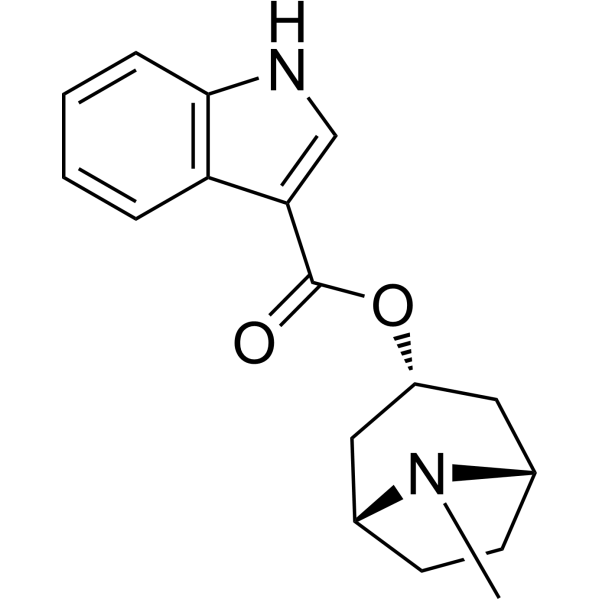
Tropisetron5-HT3R antagonist -
HY-17637
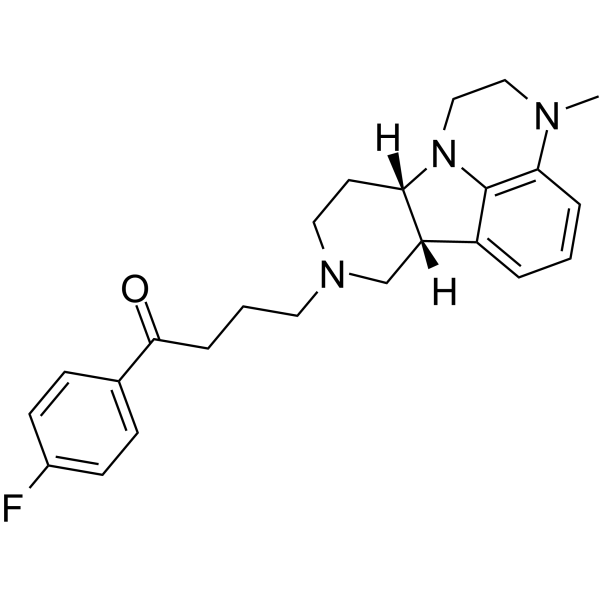
Lumateperone5-HT2A Receptor Antagonist -
HY-10121
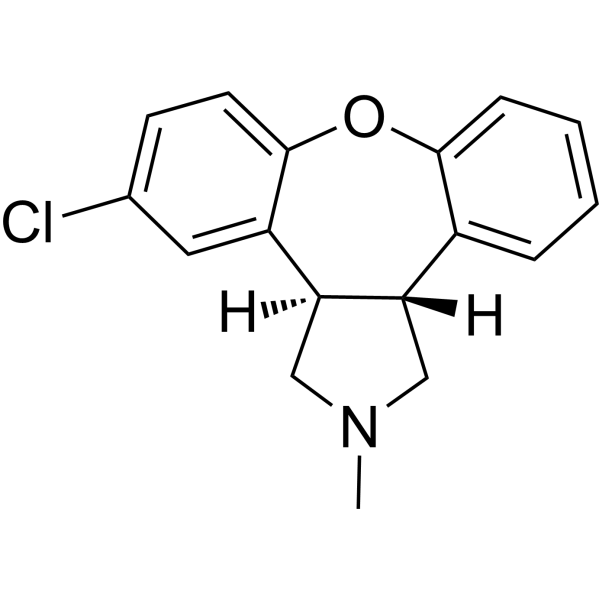
Asenapine5-HT/Dopamine/Histamine/Adrenergic Receptors Antagonist
Publications Citing Use of MedChemExpress (MCE) Palonosetron
MoreAll 5-HT Receptor Isoforms
More

Biological Activity
Description
IC50 & Target
|
5-HT3 Receptor |
Cellular Effect
|
Cell Line

|
Type | Value | Description | References |
|---|---|---|---|---|
| HEK293 | IC50 |
0.83 nM
Compound: Palonosetron, Aloxi
|
Antagonist activity at human wild type 5-HT3A receptor expressed in HEK293 cells assessed as inhibition of 5-HT-induced response after 45 mins by FLIPR assay
Antagonist activity at human wild type 5-HT3A receptor expressed in HEK293 cells assessed as inhibition of 5-HT-induced response after 45 mins by FLIPR assay
|
[PMID: 24128813] |
| HEK293 | IC50 |
0.88 nM
Compound: Palonosetron, Aloxi
|
Antagonist activity at human wild type 5-HT3A/5-HT3B receptor expressed in HEK293 cells assessed as inhibition of 5-HT-induced response after 45 mins by FLIPR assay
Antagonist activity at human wild type 5-HT3A/5-HT3B receptor expressed in HEK293 cells assessed as inhibition of 5-HT-induced response after 45 mins by FLIPR assay
|
[PMID: 24128813] |
In Vitro
Palonosetron (10 nM, 2 hours) inhibits the enhancement effect of 5-HT on substance P (SP)-induced calcium release in NG108-15 cells, increasing the EC50 of SP from 0.62 µM to 3.7 µM[6].
MedChemExpress (MCE) has not independently confirmed the accuracy of these methods. They are for reference only. Further protocols information, click here.
In Vivo
MedChemExpress (MCE) has not independently confirmed the accuracy of these methods. They are for reference only.
-
Animal Model:Swiss albino mice (25-40 g)[5]
-
Dosage:0.025 and 0.05 mg/kg
-
Administration:Intraperitoneal injection (i.p.), single dose, efficacy tested after 1 hour and 24 hours
-
Result:Reduced immobility time in a dose-dependent manner. The 0.05 mg/kg dose significantly reduced immobility time after 1 hour and 24 hours.
-
Animal Model:Cisplatin-induced emesis model in adult male Sprague-Dawley rats (270-350 g)[6]
-
Dosage:30 µg/kg, 100 µg/kg, 300 µg/kg
-
Administration:Intravenous injection (i.v.), single dose
-
Result:Dose-dependently inhibited the Cisplatin (HY-17394)-induced enhancement of neuronal response to substance P (SP) in the nodose ganglia.
Clinical Trial
| NCT Number | Sponsor | Condition | Start Date |
Phase
|
|---|---|---|---|---|
| NCT01329991 | Plexxikon| | 2011-05 | PHASE1 |


Chemical Information
-
CAS No. 135729-61-2
-
Molecular Weight 296.41
-
Formula C19H24N2O
-
SMILES
O=C1N(C[C@@]([H])(CCC2)C3=C2C=CC=C13)[C@@H]4CN5CCC4CC5
-
Shipping
Room temperature in continental US; may vary elsewhere.
-
Storage
Please store the product under the recommended conditions in the Certificate of Analysis.


Publications (2)
-
Journal Impact Factor
-
Most Recent
-
PLoS Negl Trop Dis
Identification of anti-flaviviral drugs with mosquitocidal and anti-Zika virus activity in Aedes aegypti. [Abstract]2019 Aug 20;13(8):e0007681. PMID: 31430351 -
Virus Res
Ondansetron exhibits potent antiviral activity against enterovirus 71 infection in vitro and in vivo. [Abstract]2026 Jun 25:370:199771. PMID: 42349797

Protocols
-
Protocol for Tail Suspension Test (TST)
The Tail Suspension Test is a mouse behavioral assay in which an animal is suspended by the tail in an inescapable position, causing alternating escape-directed activity and immobility; the main readout is immobility time, and antidepressant-like treatments generally reduce immobility compared with vehicle controls. The assay detects behavioral response to acute inescapable stress rather than a molecular event; immobility is interpreted as passive stress-coping behavior, while reduced immobility is used as a predictive screen for antidepressant-like activity, with important limitations related to strain, locomotor activity, and tail-climbing behavior.
-
Protocol for Forced Swim Test (FST)
The Forced Swim Test is a rodent behavioral assay in which a mouse or rat is placed in an inescapable cylinder of water, and the main readout is the time spent immobile versus active escape-related behaviors such as swimming or climbing. Reduced immobility after treatment has historically been interpreted as antidepressant-like activity, but the assay should be interpreted as a behavioral response to acute inescapable stress rather than a complete model of human depression.


Purity & Documentation
References
[1]. Barrows, et al. "A screen of FDA-approved drugs for inhibitors of Zika virus infection." Cell host & microbe 20.2 (2016): 259-270. [Content Brief]
[2]. Rojas, et al. "Palonosetron exhibits unique molecular interactions with the 5-HT3 receptor." Anesthesia & Analgesia 107.2 (2008): 469-478. [Content Brief]
[4]. Sepúlveda-Vildósola, et al. "Palonosetron hydrochloride is an effective and safe option to prevent chemotherapy-induced nausea and vomiting in children." Archives of medical research 39.6 (2008): 601-606. [Content Brief]
[6]. Rojas C, et al. The antiemetic 5-HT3 receptor antagonist Palonosetron inhibits substance P-mediated responses in vitro and in vivo. J Pharmacol Exp Ther. 2010 Nov;335(2):362-8. [Content Brief]

Calculators
Concentration (start) × Volume (start) = Concentration (final) × Volume (final)


Palonosetron Related Classifications
HY-A0018 Related Classifications
 Powered by Bioz