



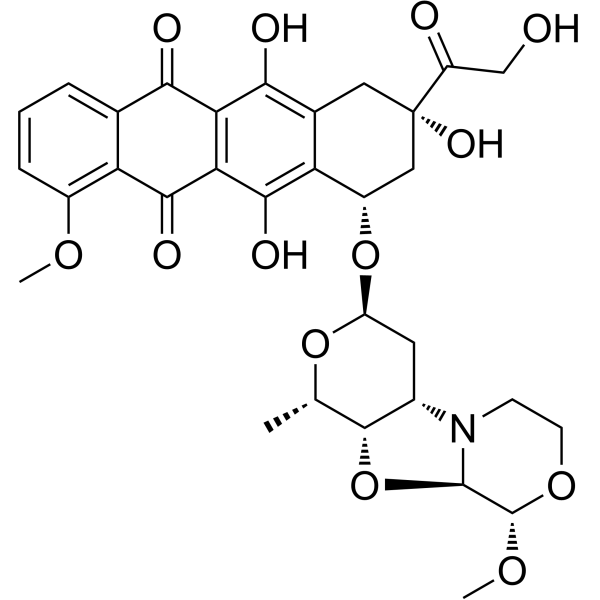
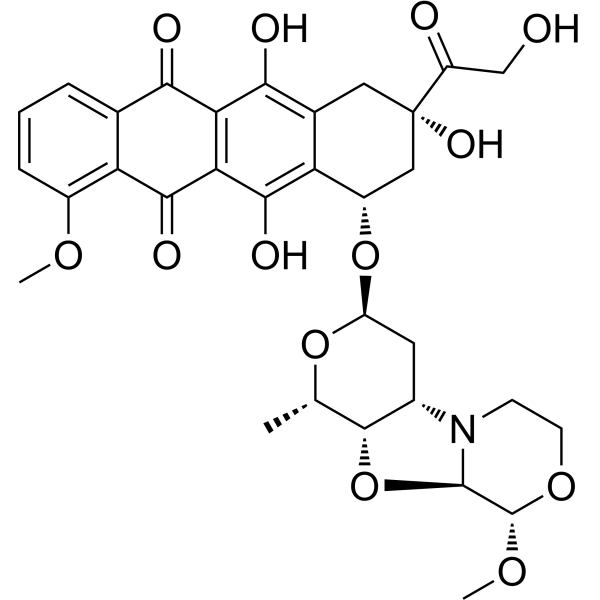
PNU-159682 GMP is a GMP grade PNU-159682 (HY-16700). PNU-159682, a metabolite of the anthracycline Nemorubicin, is a highly potent DNA topoisomerase II inhibitor with excellent cytotoxicity. PNU-159682 acts as a more potent and tolerated ADC cytotoxin than Doxorubicin for ADC synthesis. PNU-159682 can be used in EDV-nanocell technology to overcome agent resistance.
For research use only. We do not sell to patients.
- CAS No.: 202350-68-3
- Formula: C32H35NO13
- Molecular Weight:641.62
-
Storage:
Please store the product under the recommended conditions in the Certificate of Analysis.

To place orders, for customer services and technical support, please contact: MedChemExpress USA
Tel: 609-228-6898 E-mail: [email protected] [email protected]


-
 Biological Activity
-
Chemical Information
- Protocols
- Purity & Documentation
- References
-
 Help & FAQs


-
HY-16700
PNU-159682ADC Cytotoxin -
HY-13631E
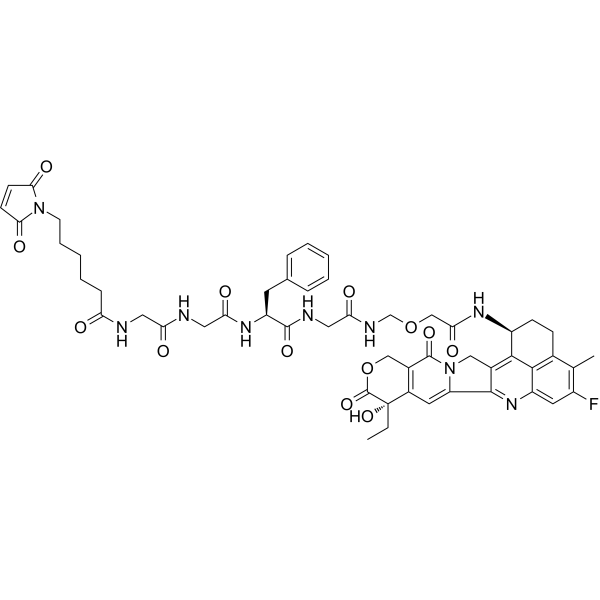
DeruxtecanDrug-Linker Conjugates for ADC -
HY-79256
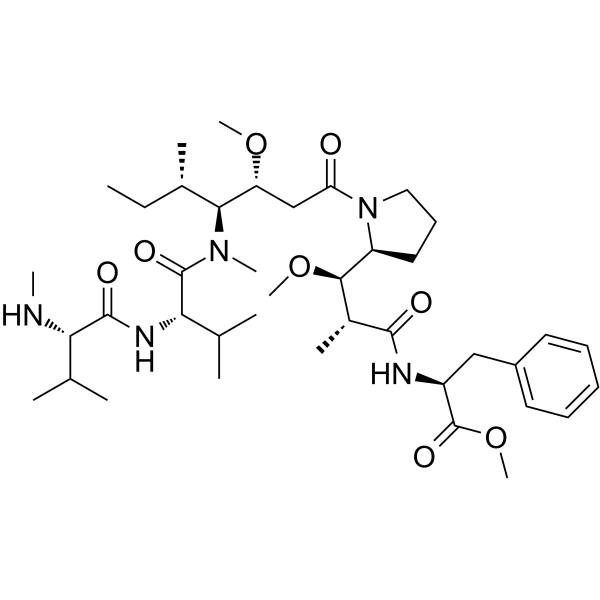
MMAF-OMeADC Cytotoxin -
HY-17364
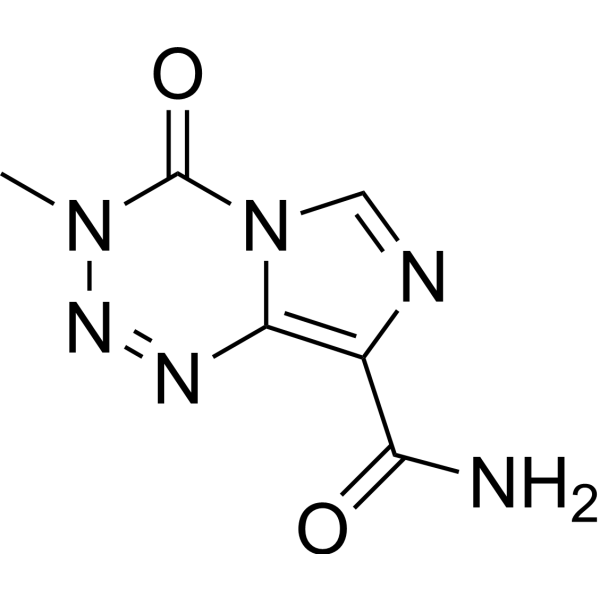
TemozolomideDNA Alkylator -
HY-20336
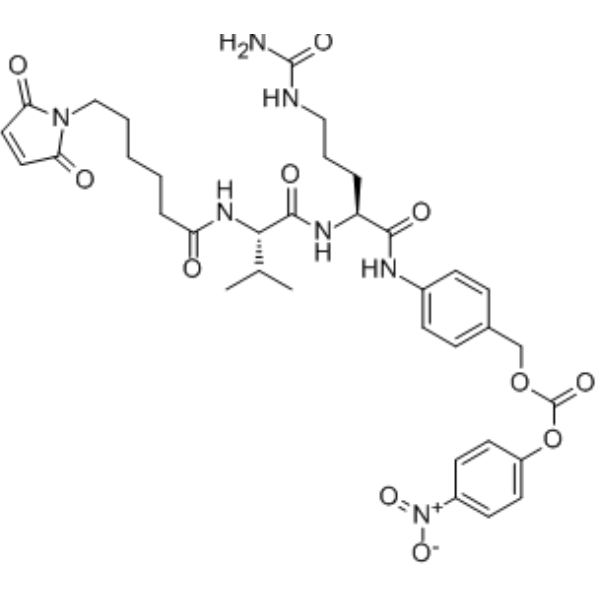
Mc-Val-Cit-PABC-PNPADC Linker -
HY-13631D
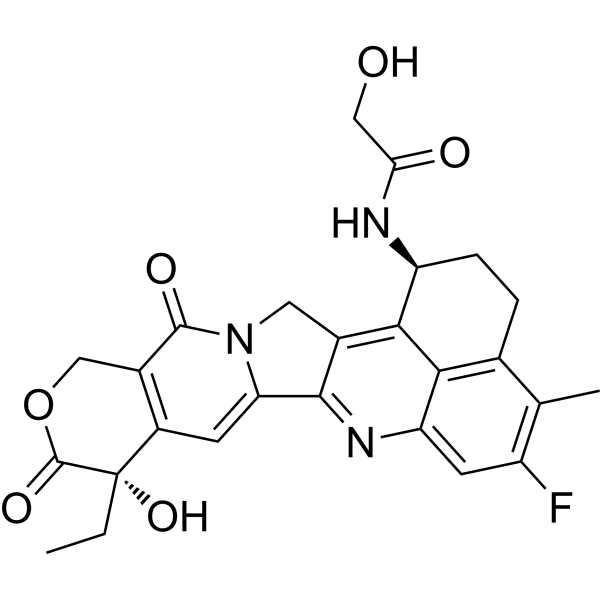
DXdTopoisomerase I Inhibitor -

HY-13631EG
Deruxtecan (GMP)Drug-Linker Conjugates for ADC -
HY-B0015
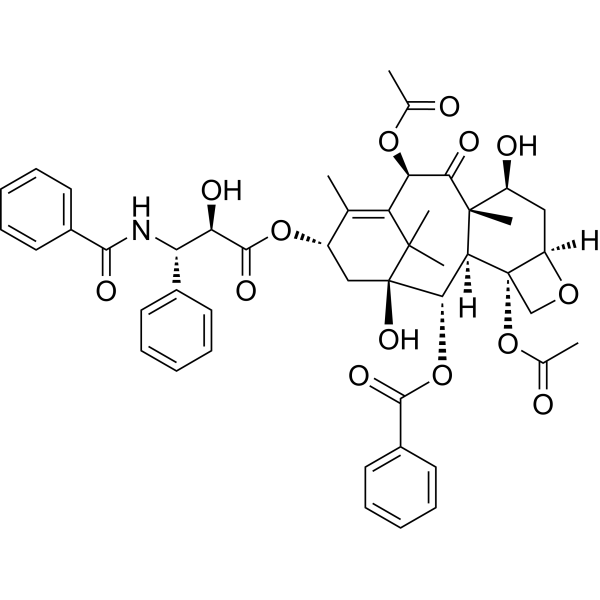
PaclitaxelAntitumor Agent -
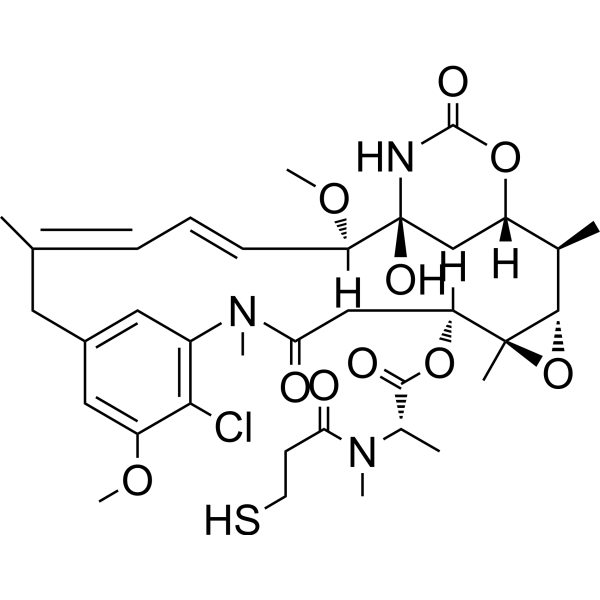
HY-19792
MertansineMicrotubule-Targeted Cytotoxin -
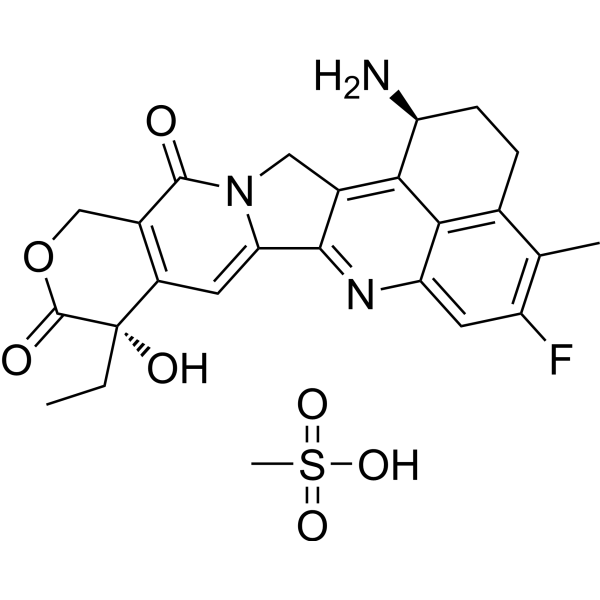
HY-13631A
Exatecan mesylateTopoisomerase I Inhibitor -
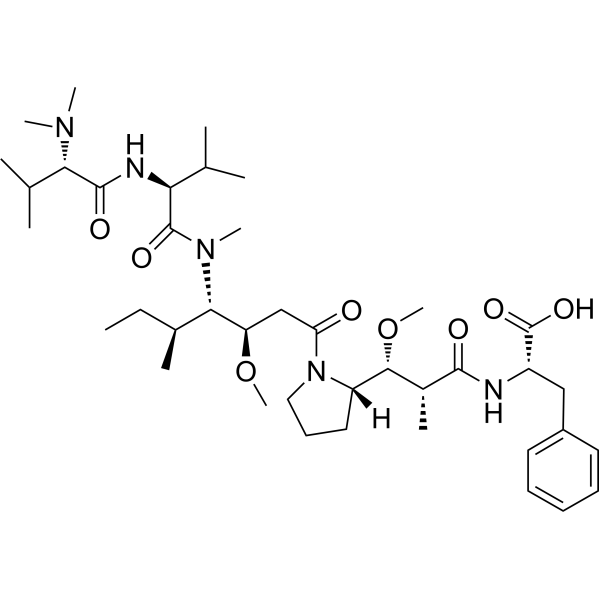
HY-15583
Auristatin FCytotoxin
All Topoisomerase Isoforms
More

Biological Activity
Description
Cellular Effect
|
Cell Line

|
Type | Value | Description | References |
|---|---|---|---|---|
| HEK-293T | EC50 |
0.37 pM
Compound: 1; PNU-159682
|
Cytotoxicity against HEK293T cells assessed as reduction in cell viability
Cytotoxicity against HEK293T cells assessed as reduction in cell viability
|
[PMID: 33127540] |
| MES-SA | EC50 |
0.2 pM
Compound: 1; PNU-159682
|
Cytotoxicity against human MES-SA cells assessed as reduction in cell viability
Cytotoxicity against human MES-SA cells assessed as reduction in cell viability
|
[PMID: 33127540] |
| MES-SA/Dx5 | EC50 |
0.38 pM
Compound: 1; PNU-159682
|
Cytotoxicity against human MES SA/DX5 cells assessed as reduction in cell viability
Cytotoxicity against human MES SA/DX5 cells assessed as reduction in cell viability
|
[PMID: 33127540] |


Chemical Information
-
CAS No. 202350-68-3
-
Molecular Weight 641.62
-
Formula C32H35NO13
-
SMILES
COC1=C(C(C(C(O)=C([C@@H](O[C@H]2C[C@H]3[C@H](O[C@H]4N3CCO[C@@H]4OC)[C@H](C)O2)C[C@@](C(CO)=O)(O)C5)C5=C6O)=C6C7=O)=O)C7=CC=C1
-
Shipping
Room temperature in continental US; may vary elsewhere.
-
Storage
Please store the product under the recommended conditions in the Certificate of Analysis.

Protocols
-
Cell Cytotoxicity Assay
Cytotoxicity assays are usually based on the assessment of cell membrane damage, which can also be indirectly detected by measuring cell viability. Detection methods include MTT assay, CKK-8 assay, LDH assay and ATP assay, etc.
-
Mammalian live/dead viability and cytotoxicity staining
Live/dead viability and cytotoxicity staining assays are based on the simultaneous detection of intracellular esterase activity in metabolically active (viable) cells and membrane integrity loss in non-viable cells. In commonly used dual-staining approaches, membrane-permeant fluorogenic substrates are converted by intracellular esterases into fluorescent products in live cells, while impermeant DNA-binding dyes selectively enter cells with compromised plasma membranes and label nucleic acids in dead or dying cells, enabling discrimination between viable and non-viable populations by fluorescence microscopy or flow cytometry.
-
Cell Viability Determination by MTT Colorimetric Assay
The following protocol uses the MTT colorimetric assay as a classic literature-established method for assessing cell viability/metabolic activity in cultured mammalian cells. MTT[3-(4,5-dimethylthiazol-2-yl)-2,5-diphenyltetrazolium bromide] is reduced by metabolically active cells to a colored formazan product; the amount of formazan is quantified spectrophotometrically and provides an indirect measure of metabolically active viable cells. Importantly, MTT reduction reflects cellular oxidoreductase/metabolic activity rather than an absolute direct count of living cells, so changes in cellular metabolism can alter the signal independently of cell number.


Purity & Documentation
References
[1]. Quintieri L, et al. Formation and antitumor activity of PNU-159682, a major metabolite of nemorubicin in human liver microsomes. Clin Cancer Res. 2005 Feb 15;11(4):1608-17. [Content Brief]
[2]. Cazzamalli S, et al. Acetazolamide Serves as Selective Delivery Vehicle for Dipeptide-Linked Drugs to Renal Cell Carcinoma. Mol Cancer Ther. 2016 Dec;15(12):2926-2935. [Content Brief]
[3]. Pengxuan Zhao, et al. Recent advances of antibody drug conjugates for clinical applications. Acta Pharm Sin B. 2020 Sep;10(9):1589-1600. [Content Brief]

Calculators
Concentration (start) × Volume (start) = Concentration (final) × Volume (final)


PNU-159682 (GMP) Related Classifications
HY-16700G Related Classifications
 Powered by Bioz