
225 Results for "

beta-lactam

" in MedChemExpress (MCE) Product Catalog:
Products (225)

225 Results for "beta-lactam" in MCE Product Catalog:

Cat. No.: HY-B0712R
CAS No.: 73384-59-5
Synonyms: Ro 13-9904 free acid (Standard)
Ceftriaxone (Standard) is the analytical standard of Ceftriaxone. This product is intended for research and analytical applications. Ceftriaxone (Ro 13-9904 free acid) is a broad spectrum β-lactam third-generation cephalosporin antibiotic, which has good antibacterial activity against a variety of gram-negative and positive bacteria. Ceftriaxone is a covalent inhibitor of GSK3β with IC50 value of 0.78 μM. Ceftriaxone is an inhibitor of Aurora B. Ceftriaxone has anti-inflammatory, antitumor and antioxidant activities. Ceftriaxone can be used in the study of bacterial infections and meningitis[1][2][3][4][5][6][7].
loading...
    loading...
Cat. No.: HY-B2091
CAS No.: 17243-38-8
Target:  

Antibiotic Bacterial

Research Areas:  

Infection

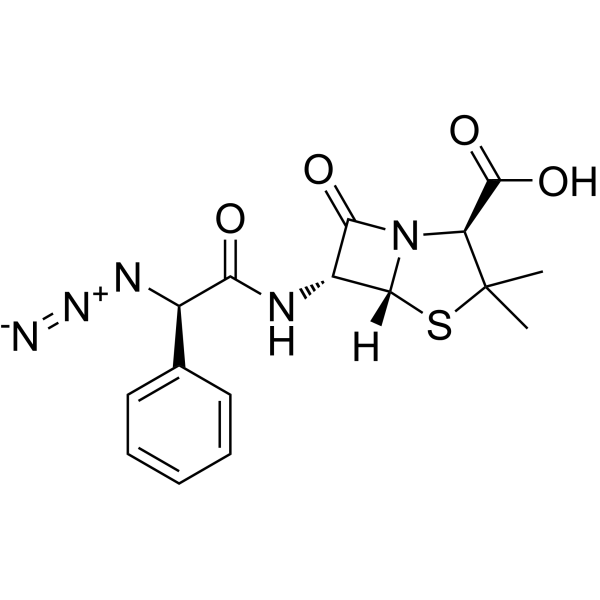
Azidocillin, a semi-synthetic Penicillin, is an orally active β-lactam antibiotic. Azidocillin bears an azide functionality and retains on-target activity within bacteria. Azidocillin can be used to research osteitis caused by dental surgery, otitis media, enterococcal septicemia and other bacterial infectious diseases . Azidocillin is a click chemistry reagent, it contains an Azide group and can undergo copper-catalyzed azide-alkyne cycloaddition reaction (CuAAc) with molecules containing Alkyne groups. It can also undergo strain-promoted alkyne-azide cycloaddition (SPAAC) reactions with molecules containing DBCO or BCN groups.
loading...
    loading...
Cat. No.: HY-B2091A
CAS No.: 35334-12-4
Target:  

Bacterial Antibiotic

Research Areas:  

Infection

Azidocillin sodium, a semi-synthetic Penicillin, is an orally active β-lactam antibiotic. Azidocillin sodium bears an azide functionality and retains on-target activity within bacteria. Azidocillin sodium can be used to research osteitis caused by dental surgery, otitis media, enterococcal septicemia and other bacterial infectious diseases . Azidocillin sodium is a click chemistry reagent, it contains an Azide group and can undergo copper-catalyzed azide-alkyne cycloaddition reaction (CuAAc) with molecules containing Alkyne groups. It can also undergo strain-promoted alkyne-azide cycloaddition (SPAAC) reactions with molecules containing DBCO or BCN groups.
loading...
    loading...
Cat. No.: HY-156264
CAS No.: 86482-18-0
Synonyms: Ticarcillin-clavulanic acid mixt.; BRL28500
Research Areas:  

Infection

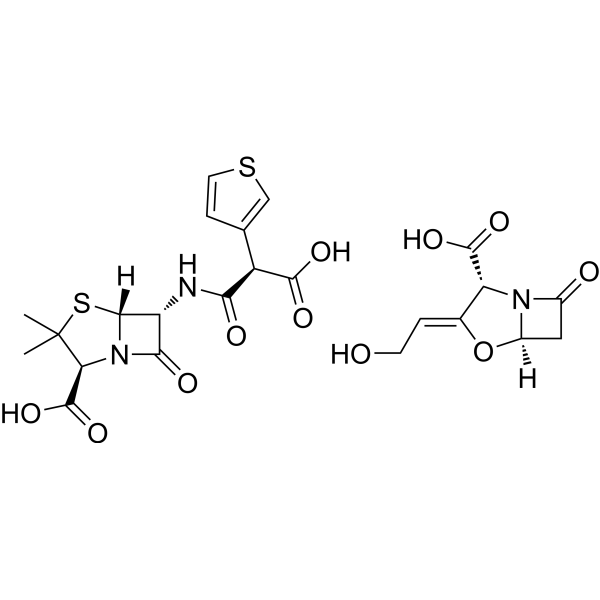
Augpenin (Ticarcillin-clavulanic acid mixt.; BRL28500) is a compound β-lactam antibacterial mixture of Ticarcillin (HY-139805) and Clavulanic acid (HY-A0256) in a 15:1 ratio. Ticarcillin in Augpenin acts on bacterial penicillin-binding proteins, while Clavulanic acid acts as an irreversible β-lactamase inhibitor that protects Ticarcillin from hydrolysis and restores its inhibitory activity against resistant strains. Augpenin significantly reduces the bacterial load of Legionella pneumophila in lung tissue of Cyclophosphamide (HY-17420)-induced neutropenic young rats. Augpenin can be used in research related to bacterial infections .
loading...
    loading...
Cat. No.: HY-P10278
CAS No.: 133658-45-4
Target:  

Inhibitory Antibodies

Research Areas:  

Endocrinology

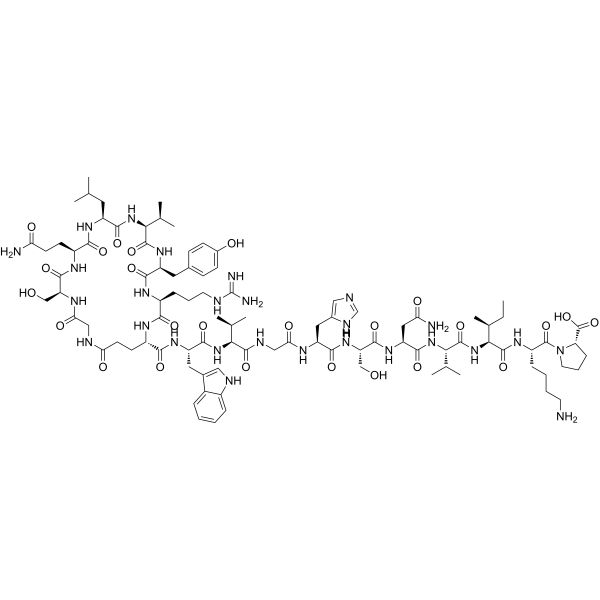
Anantin binds competitively to the receptor of atrial natriuretic factor (ANF) from bovine adrenal cortex (Kd = 0.6 μM) and acts as natriuretic peptide receptor A antagonist .
loading...
    loading...
Cat. No.: HY-P1195
CAS No.: 1315378-73-4
Target:  

iGluR

Research Areas:  

Neurological Disease

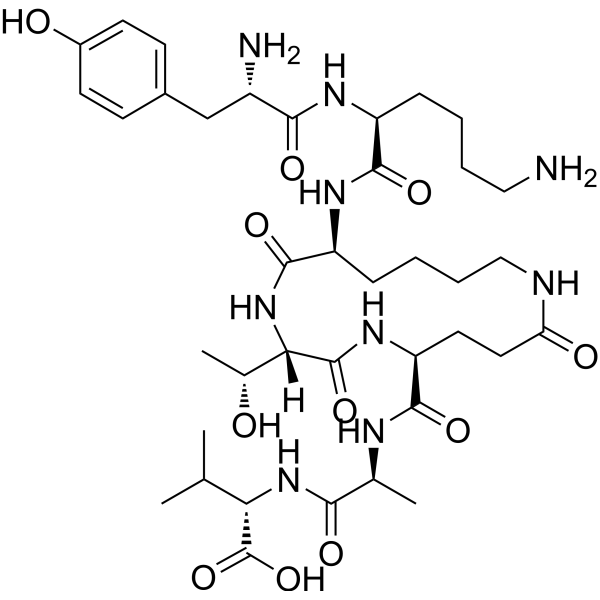
PDZ1 Domain inhibitor peptide, a cyclic peptide, incorporates a β-Ala lactam side chain linker and targets the PDZ1 domains of the postsynaptic density protein 95 (PSD-95). PDZ1 Domain inhibitor peptide disrupts the GluR6/PSD-95 interaction and is very efficient in competing against the C terminus of GluR6 for the PDZ1 domain .
loading...
    loading...
Cat. No.: HY-P1195A
Target:  

iGluR

Research Areas:  

Neurological Disease

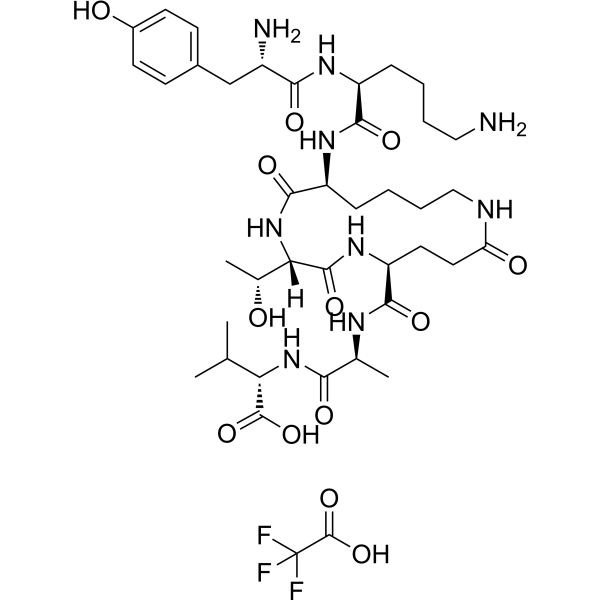
PDZ1 Domain inhibitor peptide TFA, a cyclic peptide, incorporates a β-Ala lactam side chain linker and targets the PDZ1 domains of the postsynaptic density protein 95 (PSD-95). PDZ1 Domain inhibitor peptide TFA disrupts the GluR6/PSD-95 interaction and is very efficient in competing against the C terminus of GluR6 for the PDZ1 domain .
loading...
    loading...
Cat. No.: HY-B0712S1
Synonyms: Ro 13-9904-13C2,d32 triethylammonium salt
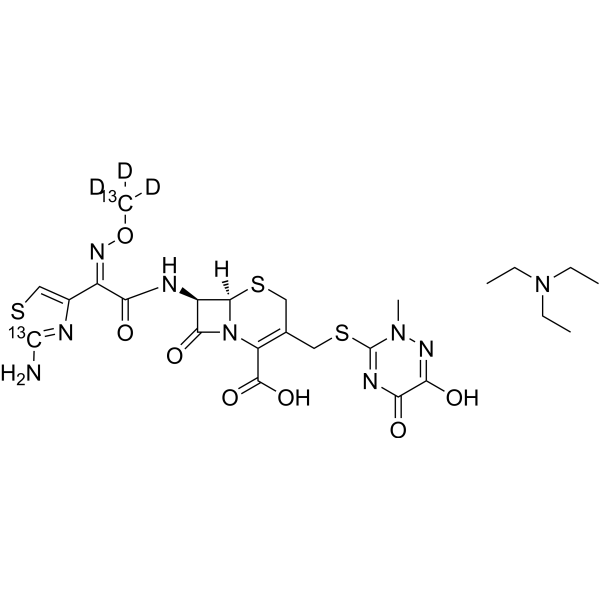
Ceftriaxone-13C2,d3 triethylammonium salt is 13C and deuterated labeled Ceftriaxone (HY-B0712). Ceftriaxone (Ro 13-9904 free acid) is a broad spectrum β-lactam third-generation cephalosporin antibiotic, which has good antibacterial activity against a variety of gram-negative and positive bacteria. Ceftriaxone is a covalent inhibitor of GSK3β with IC50 value of 0.78 mM. Ceftriaxone is an inhibitor of Aurora B. Ceftriaxone has anti-inflammatory, antitumor and antioxidant activities. Ceftriaxone can be used in the study of bacterial infections and meningitis .
loading...
    loading...
Cat. No.: HY-P2834
CAS No.: 9014-06-6
Synonyms: PGA
Research Areas:  

Others

Penicillin amidase, E. coli (Immobilized) (PGA) is an amidohydrolase commonly used in industrial biocatalysis. Penicillin amidase, E. coli (Immobilized) serves as a starting material in the synthesis of semi-synthetic penicillins. Penicillin amidase, E. coli (Immobilized) promotes the production of semi-synthetic β-lactam antibiotics, participates in peptide synthesis, and catalyzes the formation of chiral compounds. Penicillin amidase, E. coli (Immobilized) is regulated by temperature and phenylacetic acid in E. coli. In free E. coli, it participates in the assimilation of aromatic compounds as a carbon source. Penicillin amidase, E. coli (Immobilized) is hypothesized to act as a scavenging enzyme for phenylacetyl-containing compounds in microbial metabolism and is associated with bacterial quorum sensing .
loading...
    loading...
Cat. No.: HY-P10135
CAS No.: 151308-34-8
Target:  

Endothelin Receptor

Research Areas:  

Cardiovascular Disease

RES-701-1 is a cyclic peptide composed of 16 common L-amino acids, acting as a specific antagonist for the ETB receptor. RES-701-1 can inhibit the binding of 125I-ET-1 (125I-labeled Endothelin (ET)-1) to the ETB receptor, with an IC50 value of 10 nM .
loading...
    loading...
Cat. No.: HY-P2064
CAS No.: 732286-09-8
Target:  

Bacterial

Research Areas:  

Infection

Lariatins is a novel anti-mycobacterial peptides with a lasso structure produced by Rhodococcus jostii K01-B0171 .
loading...
    loading...
Cat. No.: HY-B1127R
CAS No.: 3440-28-6
Synonyms: N-Benzoyl-β-alanine (Standard)
Betamipron (Standard) is the analytical standard of Betamipron (HY-B1127). This product is intended for research and analytical applications. Betamipron (N-benzoyl-β-alanine) is a carbapenem β-lactam antibiotic with antibacterial activity against most Gram-positive and Gram-negative aerobic and anaerobic bacteria. Betamipron can target and inhibit renal organic anion transporters, alleviate renal injury caused by Cisplatin (HY-17394), without interfering with the biological activity of cisplatin. Betamipron is often used in combination with panipenem, which can attenuate the renal effects induced by panipenem and slightly promote the proliferation of Clostridium difficile in the cecum. Betamipron can be used in studies related to renal injury and bacterial infection .
loading...
    loading...
Cat. No.: HY-P0007
CAS No.: 60731-46-6
Synonyms: Carbocalcitonin
Target:  

Drug Intermediate

Research Areas:  

Metabolic Disease

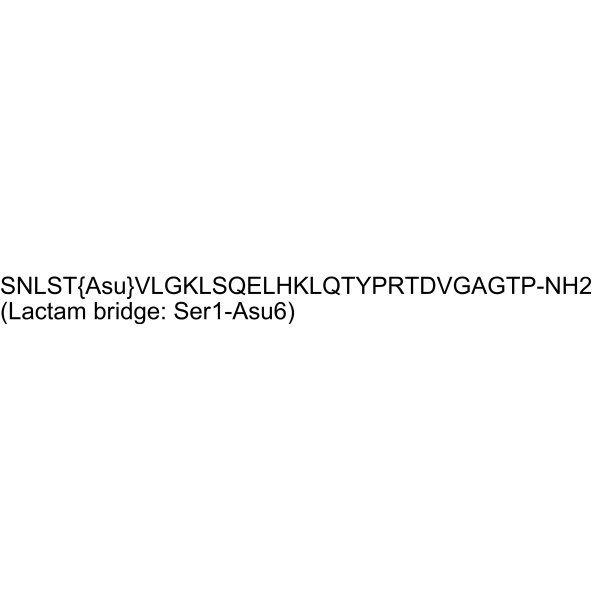
Elcatonin (Carbocalcitonin) is a synthetic analog of eel calcitonin. Elcatonin increases bone mineral density, inhibits bone resorption and processes a central analgesic effect .
loading...
    loading...
Cat. No.: HY-185351
Synonyms: Ampicillin/Sulbactam combination
Target:  

Bacterial Antibiotic

Research Areas:  

Infection

Ampicillin sodium and Sulbactam sodium are formed by mixing HY-B0522A Ampicillin sodium with HY-B0334A Sulbactam sodium (each 1.5 g of this product contains 1 g amoxicillin sodium and 0.5 g sulbactam sodium). Ampicillin is a β-lactam antimicrobial, whereas sulbactam is a β-lactamase inhibitor. Ampicillin has a broad spectrum of bactericidal activity against many gram-positive and gram-negative aerobic and anaerobic bacteria. However, ampicillin is degraded by beta-lactamases. The combination of ampicillin and sulbactam demonstrates synergy in addressing bacterial strains resistant to ampicillin, thus providing broader coverage. Bacteria susceptible to ampicillin/sulbactam include Haemophilus influenzae, Escherichia coli, Acinetobacter, Klebsiella, Staphylococcus aureus, Enterobacter, and anaerobes.
loading...
    loading...
Cat. No.: HY-W923278
CAS No.: 73547-70-3
Synonyms: GR20263 dihydrochloride
Target:  

Antibiotic Bacterial

Research Areas:  

Infection

Ceftazidime (GR20263) dihydrochloride is a cephalosporin β-lactam antibiotic. Ceftazidime dihydrochloride exhibits activity against susceptible Enterobacteriaceae, multidrug-resistant Gram-negative bacteria, Pseudomonas aeruginosa, and bacteria producing Ambler class A, C, and some class D β-lactamases, but shows no activity against microorganisms producing metallo-β-lactamases. Ceftazidime dihydrochloride reduces bacterial loads in mouse models of splenic, hepatic, and thigh infections, but has low efficacy against ESBL- and KPC-producing Enterobacteriaceae. Ceftazidime dihydrochloride can be used in research related to complicated urinary tract infections, complicated intra-abdominal infections, hospital-acquired pneumonia, carbapenemase-producing Klebsiella pneumoniae infections, carbapenem-resistant Enterobacterales infections, and severe Gram-negative bacterial infections .
loading...
    loading...
Cat. No.: HY-19882
CAS No.: 941285-15-0
Research Areas:  

Infection

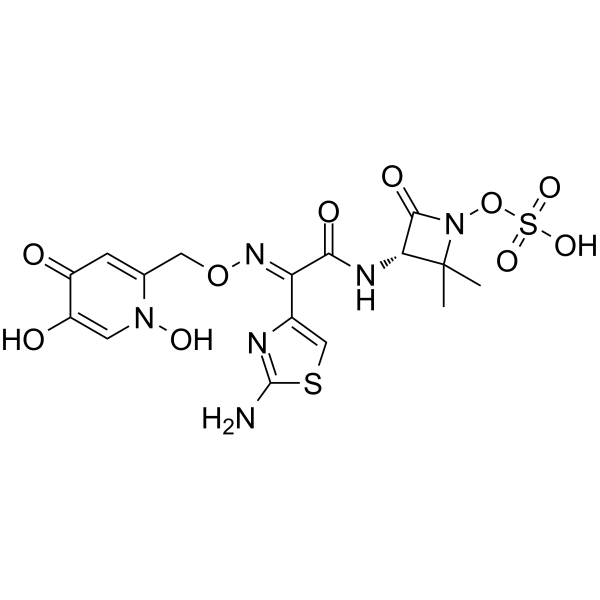
BAL-30072 is a siderophore-bearing monocyclic β-lactam antibiotic with antibacterial activity. BAL-30072 inhibits penicillin-binding proteins 1a, 1b, and 3, thereby disrupting bacterial cell wall synthesis. BAL-30072 inhibits mitochondrial electron transport chain complex II and complex III, while also inhibiting glycolysis and mitochondrial fatty acid β-oxidation. BAL-30072 induces mitochondrial ROS production, cellular ATP depletion, reduces mitochondrial membrane potential, and triggers hepatocyte apoptosis via caspase-3/7 activation. BAL-30072 is a substrate of the hepatic uptake transporters OAT1 and OAT3. BAL-30072 can be used in research related to bacterial infections .
loading...
    loading...
Cat. No.: HY-P10768
CAS No.: 159427-08-4
Target:  

PACAP Receptor

Research Areas:  

Inflammation/Immunology

Ro 25-1553 is a selective VIP2 receptor (VPAC2 receptor) agonist. Ro 25-1553 exhibits bronchodilatory effects on tracheal smooth muscle contractions induced by nerve stimulation or Carbachol (HY-B1208). Ro 25-1553 produces a superimposed effect when combined with Formoterol and Salmeterol (HY-14302). Ro 25-1553 can be used for the study of bronchoconstriction .
loading...
    loading...
Cat. No.: HY-P10768A
Target:  

PACAP Receptor

Research Areas:  

Inflammation/Immunology

Ro 25-1553 TFA is a 31 amino acid vasoactive intestinal peptide (VIP) analog, that acts as an agonist for VIP2 receptor (VPAC2 receptor). Ro 25-1553 TFA exhibits a bronchodilator effect in nerve-induced or Carbachol (HY-B1208)-induced tracheal smooth muscle contraction in guinea pig model .
loading...
    loading...
Cat. No.: HY-P10768B
Target:  

PACAP Receptor

Research Areas:  

Inflammation/Immunology

Ro 25-1553 acetate is a selective VIP2 receptor (VPAC2 receptor) agonist. Ro 25-1553 acetate exhibits bronchodilatory effects on tracheal smooth muscle contractions induced by nerve stimulation or Carbachol (HY-B1208). Ro 25-1553 acetate produces a superimposed effect when combined with Formoterol and Salmeterol (HY-14302). Ro 25-1553 acetate can be used for the study of bronchoconstriction .
loading...
    loading...
Cat. No.: HY-B1325
CAS No.: 64544-07-6
Target:  

Bacterial Antibiotic

Research Areas:  

Infection Inflammation/Immunology

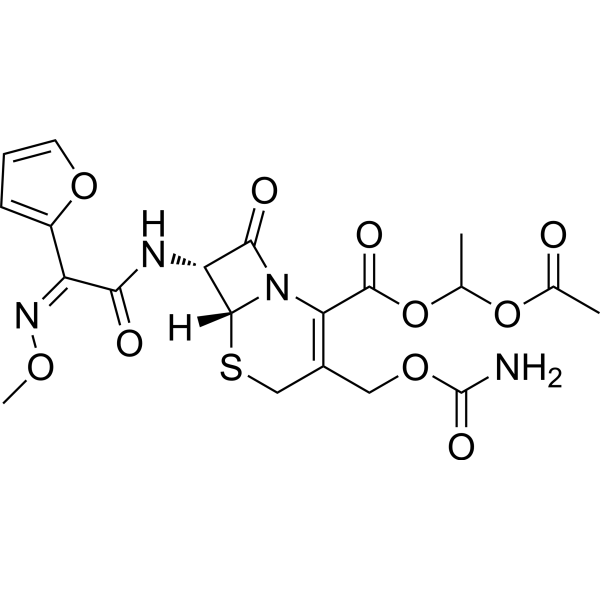
Cefuroxime axetil is an orally effective broad-spectrum β-lactam antibiotic that targets bacterial penicillin-binding proteins (PBPs, such as PBP3 and PBP1). Cefuroxime axetil inhibits cell wall synthesis, leading to bacterial lysis and death, with a minimum inhibitory concentration (MIC) of 0.12-4 mg/L for non-typeable Haemophilus influenzae (NTHi). Cefuroxime axetil is hydrolyzed by esterase to the active ingredient Cefuroxime (HY-B1256A) after oral absorption. Topical administration of Cefuroxime via bioadhesive nanoparticles (BNPs) can prolong the drug's retention time in the middle ear (≥7 days). Cefuroxime axetil can be used in the study of otitis media (especially NTHi infection). Cefuroxime axetil can achieve precise antibacterial effects through oral or topical nano-delivery systems, reducing systemic exposure and the risk of antibiotic resistance .
loading...
    loading...

