300 Results for "

Prostate Cancer Tumor

" in MedChemExpress (MCE) Product Catalog:
Products (300)

300 Results for "Prostate Cancer Tumor" in MCE Product Catalog:

Cat. No.: HY-104040R
CAS No.: 1338934-59-0
Synonyms: Orin1001 (Standard)
Research Areas:  

Cancer

MKC8866 (Standard) is the analytical standard of MKC8866 (HY-104040). This product is intended for research and analytical applications. MKC8866, a salicylaldehyde analog, is a potent, selective IRE1 RNase inhibitor with an IC50 of 0.29 μM in human vitro. MKC8866 strongly inhibits Dithiothreitol-induced X-box-binding protein 1-spliced (XBP1s) expression with an EC50 of 0.52 μM and unstresses RPMI 8226 cells with an IC50 of 0.14 μM . MKC8866 inhibits IRE1 RNase in breast cancer cells leading to the decreased production of pro-tumorigenic factors and it can inhibits prostate cancer (PCa) tumor growth .
loading...
    loading...
Cat. No.: HY-131498
CAS No.: 140430-53-1
Purity:  99.67%
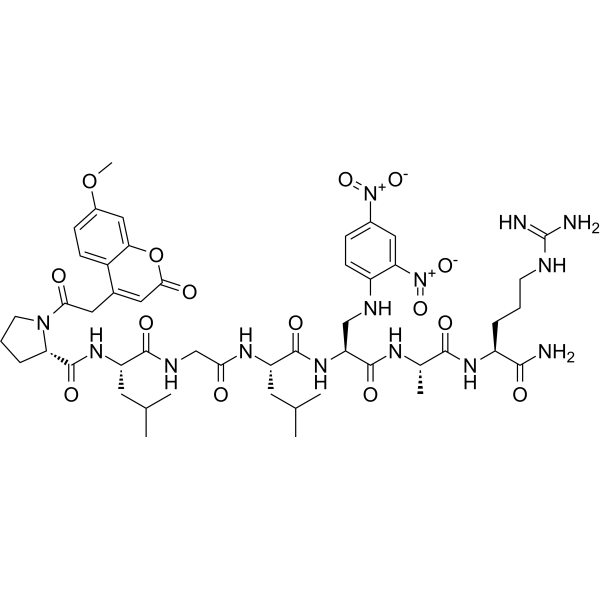
Synonyms: Mca-Pro-Leu-Gly-Leu-Dpa-Ala-Arg-NH2
Target:  

Fluorescent Dye MMP

Research Areas:  

Cancer

MOCAc-PLGL (Dpa) AR (Mca-Pro-Leu-Gly-Leu-Dpa-Ala-Arg-NH2) is a synthetic fluorescent substrate mainly used for in vitro enzymatic activity assays of MMP-7 (detection at 393 nm after excitation at 328 nm). MOCAc-PLGL (Dpa) AR is specifically cleaved and hydrolyzed by MMP-7 at the Gly-Leu peptide bond, allowing enzymatic activity to be monitored via fluorometry or HPLC (DMSO is usually added to ensure sufficient dissolution when determining kinetic parameters). MOCAc-PLGL (Dpa) AR is used to accurately evaluate the catalytic activity and pH dependence of recombinant mature human MMP-7 in vitro. MOCAc-PLGL (Dpa) AR is suitable for research on the mechanisms of tumor metastasis and invasion, particularly in fields such as prostate cancer, colon cancer, lung cancer and breast cancer .\n
loading...
    loading...
Cat. No.: HY-168201
CAS No.: 3105406-14-9
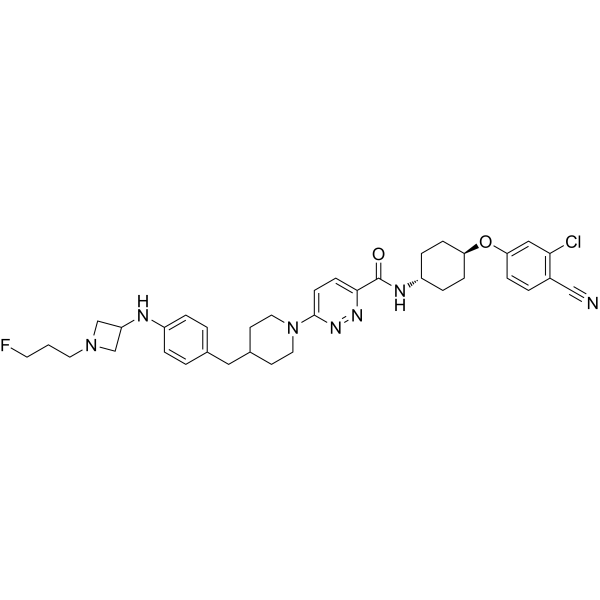
MJP6412 is a p300 and CBP PROTAC degrader that potently degrades p300 and CBP in 22Rv1 cells with DC50 values of 1.6 nM and 1.2 nM, respectively. MJP6412 downregulates the expression of AR-FL, AR-V7 and c-MYC, as well as androgen receptor target genes (KLK3, FKBP5, TMPRSS2). MJP6412 completely abolishes p300/CBP-dependent histone acetylation (H3K27Ac and H2BNTAC) and induces G1 cell cycle arrest. MJP6412 inhibits cancer cell proliferation and tumor growth. MJP6412 can be used in prostate cancer-related research .
loading...
    loading...
Cat. No.: HY-176128
BWA-6047 is an oral active PROTAC degrader targeting AR/AR-V7 and GSPT1 with DC50 values of 3.7, 3.0 and 1.2 nM in 22Rv1 cells. BWA-6047 suppresses the expression of AR downstream target genes and and transcriptional activity. BWA-6047 inhibits cancer cells proliferation, causes G1 phase cell cycle arrest and induces apoptosis. BWA-6047 increases cleaved-PARP-1 and cleaved-caspase-3 levels. BWA-6047 reduces growth of LNCaP xenograft tumors in mice models without obvious toxicity. BWA-6047 can be used for the research of prostate cancer .
loading...
    loading...
Cat. No.: HY-178343
Target:  

Aurora Kinase Apoptosis

Research Areas:  

Cancer

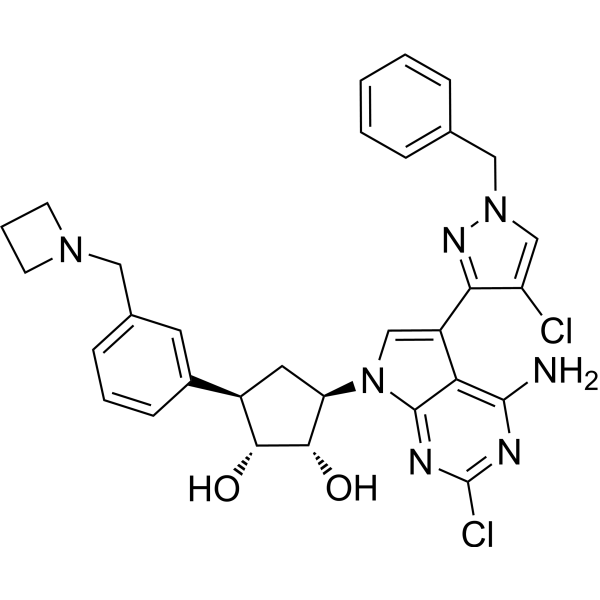
Aurora A-IN-5 is a potent and highly selective Aurora A inhibitor (IC50 = 0.02 μM), showing 362-fold selectivity for over Aurora B. Aurora A-IN-5 shows its selectivity through unique C−H/π interactions, enhanced hydrophobic contacts, an open binding pocket, and tighter protein packing. Aurora A-IN-5 suppresses Aurora A autophosphorylation, thereby inhibiting cancer cell proliferation by inducing G2/M phase arrest, triggering apoptosis, and suppressing colony formation. Aurora A-IN-5 inhibits tumor growth in MDA-MB-231 xenograft mouse models. Aurora A-IN-5 can be used for breast, cervical, prostate, and lymphoma cancer research .
loading...
    loading...
Cat. No.: HY-163510
CAS No.: 2964558-54-9
Target:  

Androgen Receptor

Research Areas:  

Cancer

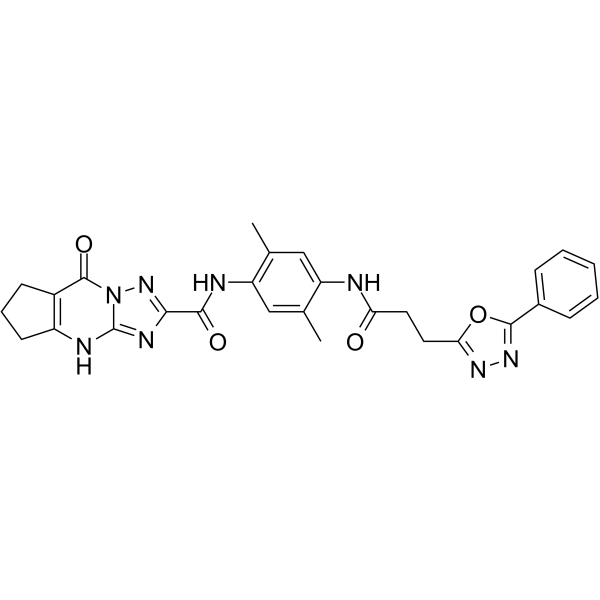
AR/AR-V7-IN-1 (Compound 20i) is an AR/ARV7 inhibitor (IC50 = 172.85 nM). AR/AR-V7-IN-1 potently inhibits cell growth with IC50 values of 4.87 and 2.07 μM in the LNCaP and 22RV1 cell lines, respectively. AR/AR-V7-IN-1 exhibits effective tumor growth inhibition in the 22RV1 xenograft study. AR/AR-V7-IN-1 can be used for the research of prostate cancer .
loading...
    loading...
Cat. No.: HY-176521A
Research Areas:  

Cancer

AR/BRD4 RIPTAC-1 (Compound II-5) TFA is an orally active Regulatory-inducible proximity-targeting chimera (RIPTAC). AR/BRD4 RIPTAC-1 TFA induces the formation of a stable ternary complex between the androgen receptor (AR) and BRD4, thereby blocking BRD4 function. AR/BRD4 RIPTAC-1 TFA inhibits the growth and proliferation of tumor cells. AR/BRD4 RIPTAC-1 TFA holds promise for use in prostate cancer research .
loading...
    loading...
Cat. No.: HY-P990688
CAS No.: 2559056-68-5
Synonyms: AMG-509

Target:  

CD3

Research Areas:  

Cancer

Xaluritamig (AMG-509) is a bispecific T cell engager and cytolytic agent with a Kd of 27.6 nM for human CD3ε. Xaluritamig binds to CD3ε via an anti-CD3 single-chain variable fragment (scFv) domain, and to STEAP1 via a bispecific anti-STEAP1 antigen-binding fragment (Fab) domain, thereby recruiting and activating T cells and forming a bridge between T cells and STEAP1-expressing cancer cells. Xaluritamig induces T cell-mediated redirected cytotoxicity, tumor cell lysis, cytokine release, CD8 + T cell activation and expansion, as well as tumor stasis or regression. Xaluritamig contains an Fc domain with no effector function, which prolongs serum half-life, exhibits only minimal activity against cells with low STEAP1 expression and normal cells, and shows extremely low target-related off-tumor toxicity in cynomolgus monkeys. Xaluritamig is used in STEAP1×CD3 XmAb 2+1 immunotherapy and in research on metastatic castration-resistant prostate cancer and Ewing sarcoma .
loading...
    loading...
Cat. No.: HY-157486
Purity:  98.00%
Research Areas:  

Cancer

KMI169 is a potent and selective inhibitor targeting lysine methyl-transferase (KMT9) (IC50 = 0.05 μM, Kd = 0.025 μM). KMI169 functions as a bi-substrate inhibitor targeting the cofactor S-5’-adenosyl-L-methionine (SAM) and substrate binding pockets of KMT9. KMI169 can downregulate target genes involved in cell cycle regulation and impair proliferation of tumor cells by inhibiting KMT9. KMI169 is a valuable tool to probe cellular KMT9 functions and can be research for combating diseases including prostate, lung, colon, and invasive bladder cancer .
loading...
    loading...
Cat. No.: HY-174377

PeS-9 is an Androgen Receptor (AR) degrader that induces androgen receptor degradation PeS-9 induces mitochondrial and ER stress by promoting cytotoxic ROS production, leading to the release of mitochondrial cytochrome C and AIF. PeS-9 subsequently activates caspases-9 and -3, causing DNA fragmentation and apoptotic cell death. PeS-9 has anticancer activity against prostate cancer and exerts in vivo antitumor and antimetastatic activity with minor side effects. PeS-9 can be used for the study of targeting monotherapy against GLUT-1-overexpressing tumors .

loading...
    loading...
Cat. No.: HY-170820
CAS No.: 3006788-11-7
XYD049 is a CRBN-based molecular glue degrader targeting GSPT1, with a DC50 of 19 nM. XYD049 mediates the formation of a ternary complex between CRBN and GSPT1, thereby triggering CRBN- and proteasome-dependent degradation of GSPT1. By degrading GSPT1, XYD049 downregulates castration-resistant prostate cancer (CRPC)-related oncogenes, including BCL2, CDK2, E2F3, EGFR, HSP90B1, TMPRSS2, AR, AR-V7, PSA and c-Myc. XYD049 inhibits cancer cell growth and suppresses tumor growth in mice. XYD049 can be used for research on castration-resistant prostate cancer. XYD049 consists of a linker (black part) NH2-C5-NH-Boc (HY-W004710), a CRBN-based E3 ligase ligand (blue part) Thalidomide 4-fluoride (HY-41547), and a target protein ligand (red part) GSPT1 ligand-1 (HY-170821), among which the E3 ligase ligand plus linker forms the conjugate E3 Ligase Ligand-linker Conjugate 158 (HY-170822) .
loading...
    loading...
Cat. No.: HY-101126A
CAS No.: 1418143-09-5
Synonyms: TP-3654 hydrochloride
Research Areas:  

Cancer

Nuvisertib hydrochloride (TP-3654 hydrochloride) is an orally active second-generation pan-PIM kinase inhibitor with Ki values of 5 nM, 239 nM, and 42 nM against PIM-1, PIM-2, and PIM-3, respectively. Nuvisertib hydrochloride inhibits JAK-independent inflammatory and survival signaling pathways, reduces the production of proinflammatory cytokines, restores apoptotic sensitivity, inhibits mTORC1, MYC, and TGF-β signaling pathways, and decreases the expression of fibrosis markers. Nuvisertib hydrochloride selectively impairs the transport function of ABCG2, resensitizes multidrug-resistant cancer cells to cytotoxic drugs, and overcomes JAK2 inhibitor resistance. Nuvisertib hydrochloride can be used in research related to myelofibrosis, renal cell carcinoma, multidrug-resistant cancer, advanced solid tumors, urothelial carcinoma, and prostate adenocarcinoma .
loading...
    loading...
Cat. No.: HY-119062
CAS No.: 681245-85-2
Target:  

MetAP CDK

Research Areas:  

Cancer

A-800141 is an orally active, selective, sulfonamide-based MetAP2 inhibitor (IC50=12 nM) that binds reversibly to MetAP2 and interacts with its manganese ions. A-800141 induces the production of N-terminal methionine-unprocessed GAPDH variants, which in turn triggers G1-phase cell cycle arrest, elevates p21 levels, and reduces the levels of phosphorylated Rb and total cyclin A. A-800141 exhibits anti-angiogenic and tumor growth inhibitory effects, and produces synergistic effects when combined with cytotoxic inhibitors or BCL-2 inhibitors. A-800141 has been widely used in scientific research related to B-cell lymphoma, neuroblastoma, prostate cancer, colon cancer, melanoma and other fields .
loading...
    loading...
Cat. No.: HY-124813
CAS No.: 2083618-79-3
Purity:  99.29%
Synonyms: 113B7
Target:  

FAK EGFR MMP NF-κB SDCBP

Research Areas:  

Cancer

PDZ1i (113B7) is a inhibitor of MDA-9/Syntenin, with selective binding to the PDZ1 domain. PDZ1i inhibits radiation-induced invasion of glioblastoma (GBM) cells, radiosensitizes GBM cells, and impairs GBM-related signaling pathways (including Src/EphA2, EGFRvIII/FAK, and NF-κB). PDZ1i reduces radiation-induced secretion of invasion-related proteases (MMP-2, MMP-9, ADAM9). PDZ1i shows anti-tumor effects in nude mice bearing intracranial U1242-luc xenografts or GBM xenografts. PDZ1i can be used for the study of glioblastoma (GBM), breast cancer and prostate cancer .
loading...
    loading...
Cat. No.: HY-B1817A
CAS No.: 557-34-6
Synonyms: Zinc(II) acetate, 99.99% trace metals basis
Zinc (Zinc (II)) acetate, 99.99% trace metals basis is a heme oxygenase 1 (HO-1) activator and apoptosis inducer with cytotoxic and anticancer activities. Zinc acetate, 99.99% trace metals basis enhances HO-1 expression, alters the microRNA profile, and increases the level of caspase-cleaved cytokeratin 18. Zinc acetate, 99.99% trace metals basis also regulates the expression of Cdk2/cyclin E and interferes with cell cycle progression. Zinc acetate, 99.99% trace metals basis effectively inhibits cancer cell proliferation and induces their rapid death, with no significant cytotoxicity to non-tumor tissues. Zinc acetate, 99.99% trace metals basis has been widely used in studies related to hepatocellular carcinoma, prostate cancer, and other conditions .
loading...
    loading...
Cat. No.: HY-160777
CAS No.: 1630820-51-7
Synonyms: Galeterone 3β-imidazole
Research Areas:  

Cancer

VNPP433-3β (Galeterone 3β-imidazole) is an orally active molecular glue degrader, which degrades androgen receptor (AR) and its splice variants (AR-Vs) and MAP kinase-interacting serine/threonine protein kinase Mnk1/2. VNPP433-3β induces cell apoptosis. VNPP433-3β inhibits tumor growth in the CWR22Rv1 xenograft mouse model. VNPP433-3β can be used for the study of castration resistant prostate cancer (CRPC) and pancreatic ductal adenocarcinoma (PDAC) .
loading...
    loading...
Cat. No.: HY-160777A
CAS No.: 3026905-92-7
Synonyms: Galeterone 3β-imidazole dihydrochloride
Research Areas:  

Cancer

VNPP433-3β (Galeterone 3β-imidazole) dihydrochloride is an orally active molecular glue degrader, which degrades androgen receptor (AR) and its splice variants (AR-Vs) and MAP kinase-interacting serine/threonine protein kinase Mnk1/2. VNPP433-3β dihydrochloride induces cell apoptosis. VNPP433-3β dihydrochloride inhibits tumor growth in the CWR22Rv1 xenograft mouse model. VNPP433-3β dihydrochloride can be used for the study of castration resistant prostate cancer (CRPC) and pancreatic ductal adenocarcinoma (PDAC) .
loading...
    loading...
Cat. No.: HY-160777B
CAS No.: 3026905-91-6
Synonyms: Galeterone 3β-imidazole hydrochloride
Research Areas:  

Cancer

VNPP433-3β (Galeterone 3β-imidazole) hydrochloride is an orally active molecular glue degrader, which degrades androgen receptor (AR) and its splice variants (AR-Vs) and MAP kinase-interacting serine/threonine protein kinase Mnk1/2. VNPP433-3β hydrochloride induces cell apoptosis. VNPP433-3β hydrochloride inhibits tumor growth in the CWR22Rv1 xenograft mouse model. VNPP433-3β hydrochloride can be used for the study of castration resistant prostate cancer (CRPC) and pancreatic ductal adenocarcinoma (PDAC) .
loading...
    loading...
Cat. No.: HY-174447
CAS No.: 3047557-92-3
Target:  

PARP

Research Areas:  

Cancer

ADP-ribose/PARP-IN-1 (Compound Ex.16) is a conjugated compound. ADP-ribose/PARP-IN-1 contains disease targeting moieties, PARP inhibitor moieties, cleavable linkers, chelators. ADP-ribose/PARP-IN-1 targets specific targets through the disease targeting moiety and selectively delivers PARP inhibitors to tumor cells. The cleavable linker of ADP-ribose/PARP-IN-1 releases the PARP inhibitor under appropriate conditions, inhibiting PARP to prevent DNA damage repair, while the radionuclide carried by the chelator exerts a killing effect. ADP-ribose/PARP-IN-1 can be used in the research of prostate cancer .
loading...
    loading...
Cat. No.: HY-W714933
CAS No.: 78362-05-7
Synonyms: (4,8)-(+)-Gallocatechin-(+)-catechin
Target:  

Caspase Apoptosis

Research Areas:  

Inflammation/Immunology Cancer

Prodelphinidin B3 is a proanthocyanidin compound that exhibits significant anti-tumor activity. Prodelphinidin B3 induces cell cycle arrest at the G1/G0 phase in PC-3 cells, activates caspase-3, and promotes apoptosis. Prodelphinidin B3 can induce the differentiation of leukemia cells and synergistically enhance retinoic acid (HY-14649)-induced granulocytic differentiation and sodium butyrate (HY-B0350A)-induced monocytic differentiation in HL-60 cells. Prodelphinidin B3 also possesses antioxidant activity. Prodelphinidin B3 is used in research on prostate cancer and leukemia .
loading...
    loading...

