300 Results for "

Prostate Cancer Tumor

" in MedChemExpress (MCE) Product Catalog:
Products (300)

300 Results for "Prostate Cancer Tumor" in MCE Product Catalog:

Cat. No.: HY-P1793
CAS No.: 83471-50-5
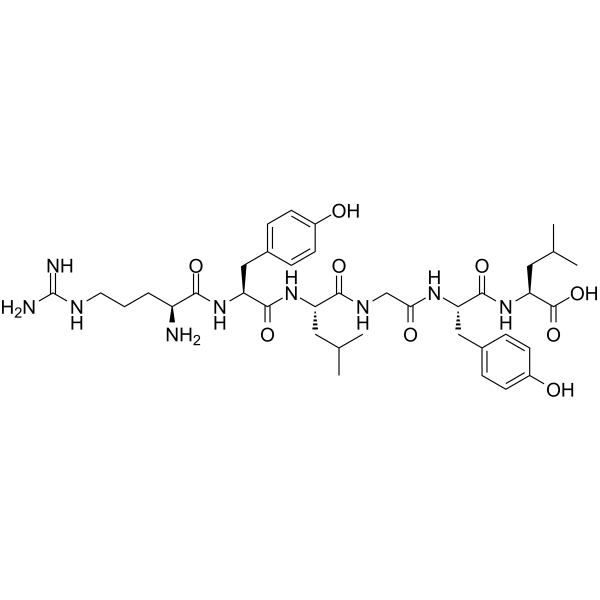
α-Casein (90-95) is a partial agonist of opioid receptors and a copper ion ligand, with opioid activity. α-Casein (90-95) inhibits the secretion of β-hexosaminidase by rat peritoneal mast cells (PMC) with IC50= 0.1 μM. α-Casein (90-95) inhibits the proliferation of prostate cancer cells LNCaP, DU145, and PC3 with IC50 of 0.94 nM, 137 nM, and 6.92 nM, respectively. α-Casein (90-95) activates Gi-like proteins through a membrane-assisted, receptor-independent pathway, or reversibly binds to opioid receptors, inducing intracellular calcium release and conformational changes, and exerts the activity of promoting mast cell secretion and inhibiting tumor cell proliferation. α-Casein (90-95) can be used in the study of the mechanisms of allergic diseases and prostate cancer .
loading...
    loading...
Cat. No.: HY-P1793A
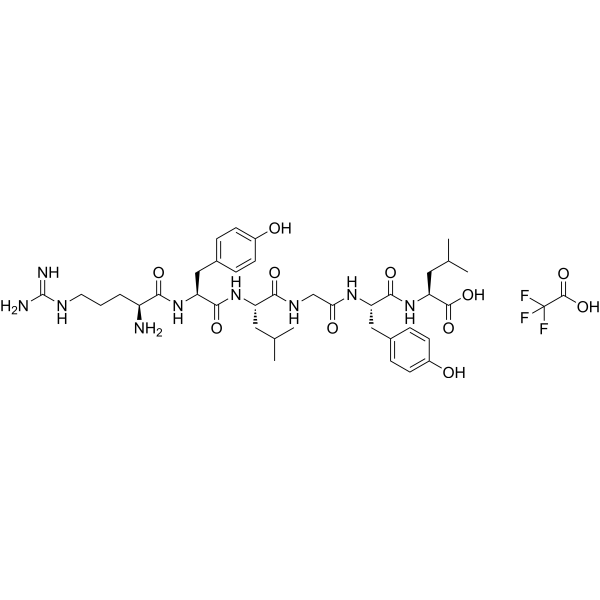
α-Casein (90-95) TFA is a partial agonist of opioid receptors and a copper ion ligand, with opioid activity. α-Casein (90-95) TFA inhibits the secretion of β-hexosaminidase by rat peritoneal mast cells (PMC) with IC50= 0.1 μM. α-Casein (90-95) TFA inhibits the proliferation of prostate cancer cells LNCaP, DU145, and PC3 with IC50 of 0.94 nM, 137 nM, and 6.92 nM, respectively. α-Casein (90-95) TFA activates Gi-like proteins through a membrane-assisted, receptor-independent pathway, or reversibly binds to opioid receptors, inducing intracellular calcium release and conformational changes, and exerts the activity of promoting mast cell secretion and inhibiting tumor cell proliferation. α-Casein (90-95) TFA can be used in the study of the mechanisms of allergic diseases and prostate cancer .
loading...
    loading...
Cat. No.: HY-182447
CAS No.: 69095-83-6
Synonyms: DL111-IT
Target:  

CDK Apoptosis

Research Areas:  

Endocrinology Cancer

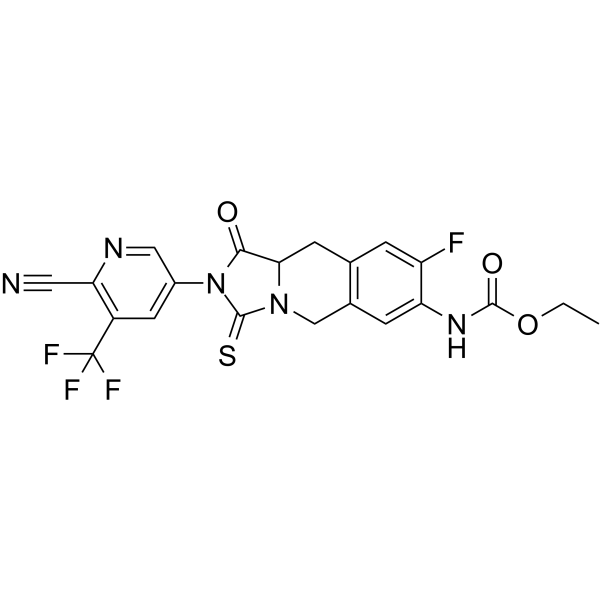
Contragestazol (DL111-IT) is a non-hormonal antifertility agent. Contragestazol reduces the expression of Cyclin D1 and CDK4, increases the expression of total retinoblastoma protein (pRb), and decreases the level of hyperphosphorylated pRb. Contragestazol induces G0/G1 phase cell cycle arrest. Contragestazol inhibits embryonic development by inducing luteal cell apoptosis and reducing intrauterine polyamine levels. Contragestazol exhibits antitumor activity against prostate cancer, S180 tumor and H22 tumor. Contragestazol shows extremely potent activity in terminating early pregnancy in animals .
loading...
    loading...
Cat. No.: HY-168534
CAS No.: 2929223-35-6
Target:  

SF3B1 Apoptosis FOXA

Research Areas:  

Cancer

WX-02-23 is a small-molecule probe that stereoselectively and site-specifically binds to C258 of FOXA1 and C1111 of SF3B1. WX-02-23 remodels FOXA1's chromatin binding and pioneer activity in a DNA-dependent manner, disrupts spliceosome assembly, and enhances the thermal stability of SF3B1. WX-02-23 inhibits tumor cell proliferation and induces apoptosis. WX-02-23 can be used for research on cancers such as prostate cancer .
loading...
    loading...
Cat. No.: HY-180574
CAS No.: 2619847-12-8
Target:  

DYRK

Research Areas:  

Cancer

TSL2109 is an orally active and selective DYRK2 and CDK4/6 inhibitor with an IC50 value of 22 nM for DYRK2. TSL2109 exhibits high kinase selectivity over 93%. TSL2109 arrests cell cycle and induces apoptosis in virto. TSL2109 effectively overcomes Enzalutamide (HY-70002) resistance by suppressing tumor growth in vivo and virto. TSL2109 also shows CDK4/6 inhibitor resistance.TSL2109 demonstrates safety profile. TSL2109 can be used for prostate cancer research and breast cancer [1][2].
loading...
    loading...
Cat. No.: HY-P11863
Target:  

c-Met/HGFR

Research Areas:  

Infection Cancer

SMIC-1014 is a cellular mesenchymal-epithelial transition factor (c-Met) ligand. SMIC-1014 binds to the c-Met ectodomain without activating c-Met phosphorylation or inducing receptor internalization. SMIC-1014, when radiolabeled as [ 68Ga]Ga-SMIC-1014, acts as a positron emission tomography (PET) probe with defined pharmacokinetics, achieves specific tumor uptake in xenografts, and functions as a c-Met-targeted diagnostic probe. SMIC-1014 can be used for the research of colon cancer, hepatocellular carcinoma, prostate cancer .
loading...
    loading...
Cat. No.: HY-P11864
Research Areas:  

Cancer

DOTA-SMIC-1014 is a DOTA chelator-conjugated precursor of the c-Met-targeting peptide SMIC-1014 (HY-P11863). DOTA-SMIC-1014 binds to the extracellular domain of c-Met (Kd = 42.83 nM). After radiolabeling to [ 68Ga]Ga-SMIC-1014, DOTA-SMIC-1014 acts as a positron emission tomography (PET) probe that achieves specific tumor uptake in xenografts and functions as a diagnostic probe targeting c-Met. SMIC-1014 can be used in research related to colon cancer, hepatocellular carcinoma, and prostate cancer .
loading...
    loading...
Cat. No.: HY-146494
CAS No.: 2586195-28-8
Target:  

Androgen Receptor

Research Areas:  

Cancer

Androgen receptor antagonist 5 (compound 42f) is a potent androgen receptor (AR) antagonist with an IC50 value of 6.17 μM. Androgen receptor antagonist 5 can effectively impair AR nuclear translocation, reducing the levels of nuclear AR, and disrupts AR-mediated gene regulation. Androgen receptor antagonist 5 has antiproliferative activity against LNCaP and exhibits antitumor activity in LNCaP xenograft tumor mice model. Androgen receptor antagonist 5 can be used for researching prostate cancer .
loading...
    loading...
Cat. No.: HY-150268
CAS No.: 2089390-09-8
Synonyms: OPN-2853; PLX2853; BET-IN-16
Research Areas:  

Cancer

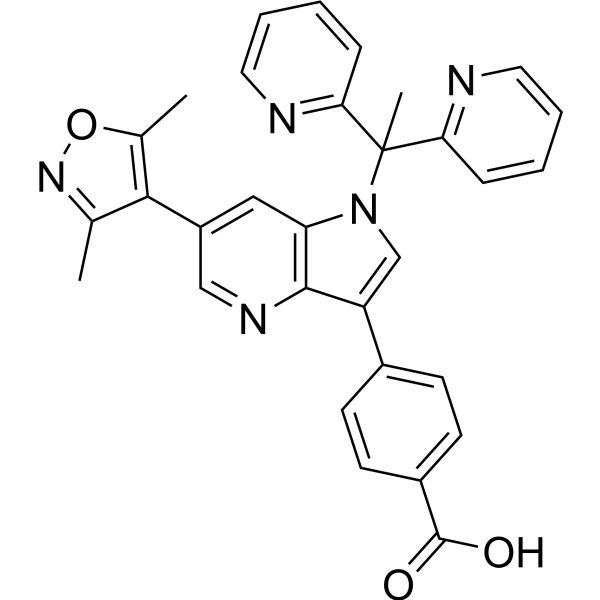
Zavabresib (OPN-2853; PLX2853; BET-IN-16) is an orally active inhibitor of the BET family of proteins. Zavabresib blocks bromodomain-mediated interactions, reduces BRD4 enrichment at the regulatory regions of transcription factors in T cells, exerts tumor growth inhibitory effects, and enhances the efficacy of immunotherapy. Zavabresib is applicable to research on chronic lymphocytic leukemia, castration-resistant prostate cancer, diffuse large B-cell lymphoma, colon adenocarcinoma, and myelofibrosis .
loading...
    loading...
Cat. No.: HY-187654
CAS No.: 27542-17-2
Erioflorin is a sesquiterpene lactone compound originally isolated from plants of the Asteraceae family (such as Eriophyllum confertiflorum and species of the Podanthus genus). Erioflorin acts as a selective β-TrCP1 modulator. Erioflorin induces cell apoptosis by increasing intracellular reactive oxygen species (ROS) production and decreasing mitochondrial membrane potential, inhibits the NF-κB signaling pathway by blocking the phosphorylation of IκBα, and prevents the ubiquitination and degradation of the tumor suppressor Pdcd4 by inhibiting the interaction between Pdcd4 and the E3 ubiquitin ligase β-TrCP1. Erioflorin can be used in research related to breast cancer, colon cancer, advanced prostate cancer, and Chagas disease .
loading...
    loading...
Cat. No.: HY-P991243

Target:  

EGFR Akt

Research Areas:  

Cancer

MP-RM-1 is an antibody-based, non-competitive ErbB-3 inhibitor with a Kd value of 32.7 nM. MP-RM-1 inhibits both ligand-dependent and ligand-independent ErbB-3 activation, blocks ErbB-2/ErbB-3 heterodimerization, induces ErbB-3 internalization and degradation, and suppresses the phosphorylation of downstream Akt. MP-RM-1 exerts its antagonistic effect through a non-competitive mechanism. MP-RM-1 inhibits tumor growth in melanoma and prostate cancer xenograft models in nude mice and reduces the proliferative activity of tumor cells .
loading...
    loading...
Cat. No.: HY-153356
CAS No.: 2803881-11-8
Purity:  99.91%
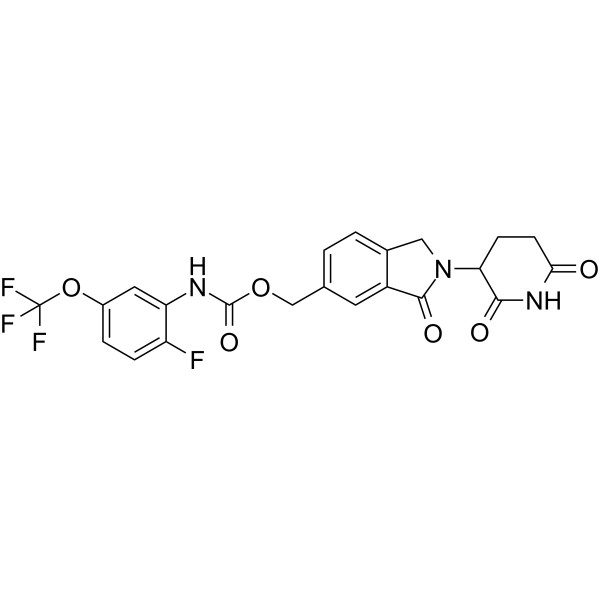
MRT-2359 is an orally active and selective GSPT1 molecular glue degrader, with a DC50 of 5 nM. MRT-2359 induces CRBN/GSPT1 ternary complex formation to drive CRBN- and degron-dependent proteasomal GSPT1 degradation, with selectivity for wild-type GSPT1 over the GSPT1G575N mutant. MRT-2359 disrupts protein translation, induces ribosome stalling, downregulates MYC family proteins and their transcriptional output, reduces proliferation, and induces apoptosis in cancer cells. MRT-2359 can be used for the research of non-small cell lung cancer (NSCLC), small cell lung cancer (SCLC), neuroendocrine lung cancer, high grade neuroendocrine cancers, diffuse large B-cell lymphoma, prostate cancer, and MYC-driven solid tumors .
loading...
    loading...
Cat. No.: HY-187719
CAS No.: 318262-42-9
Target:  

Proton Pump Apoptosis

Research Areas:  

Cancer

NIK-12192 is an orally active inhibitor of vacuolar H +-ATPase. NIK-12192 reduces intracellular pH, decreases lysosomal volume and acidity, and alters the intracellular localization of V-ATPase by inhibiting proton pumps . NIK-12192 induces αvβ5 integrin polarization, cytoskeletal disruption, cell detachment, anoikis-mediated delayed apoptosis and necrosis, a delayed reduction in mitochondrial membrane potential, and lysosomal/phagosomal accumulation. NIK-12192 inhibits tumor cell migration, invasion, and three-dimensional spheroid growth, and enhances the activity of Topotecan (HY-13768). NIK-12192 suppresses spontaneous lung metastasis in vivo. NIK-12192 is used in research related to colon cancer, ovarian cancer, lung cancer, breast cancer, renal cancer, prostate cancer, acute myeloid leukemia, and melanoma .
loading...
    loading...
Cat. No.: HY-170951
CAS No.: 3068489-78-8
Target:  

Androgen Receptor

Research Areas:  

Cancer

AR antagonist 10 (Compound Y5) is potent and orally active androgen receptor (AR) antagonist with an IC50 of 0.04 μM. AR antagonist 10 demonstrates dual mechanisms of action, antagonizes AR by disrupting AR dimerization, and induces AR degradation via the ubiquitin-proteasome pathway. AR antagonist 10 exhibits excellent activity against variant drug-resistant AR mutants. AR antagonist 10 effectively suppresses the tumor growth of the LNCaP xenograft. AR antagonist 10 is potential to be used for drug-resistant prostate cancer .
loading...
    loading...
Cat. No.: HY-175248
Target:  

PSMA

Research Areas:  

Cancer

PSMA-DIM is a dimeric PSMA ligand with a Kd of 37.09 nM for LNCaP cells. PSMA-DIM can be radiolabeled with [ 68Ga]Ga to form [ 68Ga]Ga-PSMA-DIM. [ 68Ga]Ga-PSMA-DIM can effectively distinguish between cells and animal models with different expression levels of PSMA. [ 68Ga]Ga-PSMA-DIM exhibits high LNCaP cells uptake and tumor uptake peak values. PSMA-DIM can be used for the study of prostate cancer (PCa) .
loading...
    loading...
Cat. No.: HY-177903
CAS No.: 2003231-25-0
Research Areas:  

Cancer

Triptolide-6-succinate-β-D-glucose (Compound 2) is a glucose-conjugated derivative of Triptolide (HY-32735). Triptolide-6-succinate-β-D-glucose is a tumor-selective prodrug targeting glucose transporters ( GLUT). Triptolide-6-succinate-β-D-glucose can induce the degradation of the RPB subunit of RNA polymerase II. Triptolide-6-succinate-β-D-glucose inhibits the proliferation of HEK293T cells with an IC50 value of 268 nM. Triptolide-6-succinate-β-D-glucose can be used for the research of cancer, such as prostatic cancer .
loading...
    loading...
Cat. No.: HY-P990279

Target:  

CD276/B7-H3 Apoptosis STAT

Research Areas:  

Inflammation/Immunology Cancer

Anti-Mouse CD276/B7-H3 Antibody (MJ18) is a rat-derived anti-mouse CD276/B7-H3 IgG1 monoclonal antibody. Anti-Mouse CD276/B7-H3 Antibody (MJ18) can inhibit CD276/B7-H3 and induce tumor cell apoptosis. Anti-Mouse CD276/B7-H3 Antibody (MJ18) enhances anti-tumor immune response by reducing immunosuppressive cells and promoting T cell activation. Anti-Mouse CD276/B7-H3 Antibody (MJ18) can be used for research on cancer such as breast cancer and prostate cancer .
loading...
    loading...
Cat. No.: HY-118874H
Research Areas:  

Cancer

G4232 is an immune-silent BCL2 antisense oligonucleotide that binds to BCL2 mRNA to induce target degradation and inhibit Bcl-2 protein translation. G4232 carries 5'-methylcytosine in its two CpG motifs, which eliminates CpG-mediated immunostimulatory activity and does not cause significant splenomegaly or elevated plasma IL-12 levels in SCID mice. G4232 induces Apoptosis. G4232 inhibits tumor growth in a melanoma xenograft model. G4232 can be used in studies of melanoma and prostate cancer .
loading...
    loading...
Cat. No.: HY-169349
CAS No.: 6605-17-0
Target:  

Androgen Receptor

Research Areas:  

Cancer

Androgen receptor antagonist 12 (Compound EF2) is an orally active Androgen receptor (AR) antagonist (IC50: 0.30 μM). Androgen receptor antagonist 12 inhibits transcriptional activity of variant AR mutants and and the proliferation of AR-positive PCa cell lines. Androgen receptor antagonist 12 blocks AR nuclear translocation. Androgen receptor antagonist 12 inhibits tumor growth in a C4-2B xenograft mouse model. Androgen receptor antagonist 12 can be used for prostate cancer (PCa) research .
loading...
    loading...
Cat. No.: HY-176521
CAS No.: 3083307-42-7
Research Areas:  

Cancer

AR/BRD4 RIPTAC-1 (Compound II-5) is an orally active Regulatory-inducible proximity-targeting chimera (RIPTAC). AR/BRD4 RIPTAC-1 induces the formation of a stable ternary complex between the androgen receptor (AR) and BRD4, thereby blocking BRD4 function. AR/BRD4 RIPTAC-1 inhibits the growth and proliferation of tumor cells. AR/BRD4 RIPTAC-1 holds promise for use in prostate cancer research .
loading...
    loading...

