345 Results for "

paracolon bacillus

" in MedChemExpress (MCE) Product Catalog:
Products (345)

345 Results for "paracolon bacillus" in MCE Product Catalog:

Cat. No.: HY-118965
CAS No.: 1397-84-8
Target:  

Antibiotic Parasite

Research Areas:  

Infection Cancer

Alazopeptin is a non-ribosomal tripeptide azoamino acid antibiotic isolated from various Streptomyces species, with significant anti-tumor, antibacterial and trypanocidal activities. Alazopeptin exhibits cytotoxicity against mouse leukemia cells and S-180 tumor cells, inhibits the growth of Bacillus subtilis, and shows activity against Trypanosoma brucei. Alazopeptin can be widely used in studies related to mouse leukemia, S-180 tumor, human African trypanosomiasis and nagana .
loading...
    loading...
Cat. No.: HY-121497R
CAS No.: 5813-86-5
Synonyms: 3-MBA (Standard)
Research Areas:  

Cancer

3-Methoxybenzamide (Standard) is the analytical standard of 3-Methoxybenzamide. This product is intended for research and analytical applications. 3-Methoxybenzamide (3-MBA), an inhibitor of ADP-ribosyltransferase (ADPRTs) and PARP, inhibits cell division in Bacillus subtilis, leading to filamentation and eventually lysis of cells . 3-Methoxybenzamide (3-MBA) enhances in vitro plant growth, microtuberization, and transformation efficiency of blue potato (Solanum tuberosum L. subsp. andigenum) .
loading...
    loading...
Cat. No.: HY-168378
CAS No.: 63589-93-5
Synonyms: S-2251
Target:  

Fluorescent Dye

Research Areas:  

Others

D-Val-Leu-Lys-pNA (S-2251) is a chromogenic peptide substrate that serves as a characteristic substrate for plasmin and plasminogen. D-Val-Leu-Lys-pNA acts as a sensitive substrate for the DFE27 serine protease derived from Bacillus subtilis DC27. Catalyzed by plasmin, D-Val-Leu-Lys-pNA binds and hydrolyzes to release p-nitroaniline (pNA), which can be detected colorimetrically at 405 nm as a measure of fibrinolytic activity .
loading...
    loading...
Cat. No.: HY-168378A
Synonyms: S-2251 acetate
Target:  

Fluorescent Dye

Research Areas:  

Others

D-Val-Leu-Lys-pNA acetate (S-2251 acetate) is a chromogenic peptide substrate that serves as a characteristic substrate for plasmin and plasminogen. D-Val-Leu-Lys-pNA acetate acts as a sensitive substrate for the DFE27 serine protease derived from Bacillus subtilis DC27. Catalyzed by plasmin, D-Val-Leu-Lys-pNA acetate binds and hydrolyzes to release p-nitroaniline (pNA), which can be detected colorimetrically at 405 nm as a measure of fibrinolytic activity .
loading...
    loading...
Cat. No.: HY-E70004
CAS No.: 9068-59-1
Research Areas:  

Others

Microbial neutral proteinase is a zinc-containing metalloproteinase mainly produced by Bacillus and fungi. Its catalytic activity is highly dependent on divalent cations, and it remains active within the pH range of 5-8. Microbial neutral proteinase can specifically cleave peptide bonds within polypeptide chains, thereby degrading macromolecular proteins into small peptides or amino acids. It can be applied in various industrial fields including food processing, brewing, detergents, and light industry .
loading...
    loading...
Cat. No.: HY-N16392
CAS No.: 3085255-21-3
14-epi-Berkeleylactone F (Compound 8) is a C-14 epimer of Berkeleylactone F (HY-N8386). 14-epi-Berkeleylactone F can be isolated from Penicillium turbatum NRRL 5630. 14-epi-Berkeleylactone F has no significant biological activity against bacterium (Staphylococcus aureus, Bacillus subtilis and E. coli), fungi Candida albicans, the parasite Giardia duodenalis and NS-1 murine myeloma cells .
loading...
    loading...
Cat. No.: HY-N17734
CAS No.: 821799-76-2
2-Deethoxy-2-hydroxyphantomolin, Germacranolide, is an Antifungal and Antibacterial agent. 2-Deethoxy-2-hydroxyphantomolin can be isolated from Elephantopus tomentosus Linn and E. mollis. 2-Deethoxy-2-hydroxyphantomolin is moderately active against Candida albicans (14 mm clearing zone) and slightly active against Escherichia coli (12 mm), Pseudomonas aeruginosa (12 mm), Bacillus subtilis (14 mm), and Trichophyton mentagrophytes (13 mm) .
loading...
    loading...
Cat. No.: HY-N8507
CAS No.: 66081-36-5
Tunicamycin B is a Tunicamycin (HY-A0098) derivative with antimicrobial activity. Tunicamycin B shows antibacterial activity against Bacillus thuringiensis BT01 and B. thuringiensis W102 (MICs of 0.125 and 0.063 μg/mL, respectively) and antifungal activity against Candida albicans ATCC 96901 and C. albicans CMCC (F) 98001 (MICs of 8.0 and 4.0 μg/mL, respectively). Tunicamycin B can be used for antimicrobial research .
loading...
    loading...
Cat. No.: HY-113737
CAS No.: 993-86-2
Trichlorfon ethyl is an analog of Trichlorfon (HY-B1220), as well as an inhibitor of Butyrylcholinesterase and Bacillus subtilis Esterase. Trichlorfon ethyl acts as a prenatal brain growth inhibitor, causing mild reductions in total brain weight, medulla oblongata weight and tectum weight in newborn guinea pigs, without affecting cerebellar weight. Trichlorfon ethyl does not induce severe prenatal brain hypoplasia in guinea pig offspring. Trichlorfon ethyl can be used in studies related to brain hypoplasia .
loading...
    loading...
Cat. No.: HY-131050
CAS No.: 6325-94-6
Target:  

Bacterial Fungal

Research Areas:  

Infection

Aspergillus niger-IN-1 (Compound 17), a derivative of thiazolidine-2,4-dione, acts as an antimicrobial agent. Aspergillus niger-IN-1 exhibited antimicrobial activity against various bacterial and fungal strains, including Bacillus subtilis, Staphylococcus aureus, Klebsiella pneumonia, Escherichia coli, Salmonella typhi, Candida albicans and Aspergillus niger, with MIC values of 11.3, 5.65, 11.3, 5.65, 5.65, 5.65, and 5.65 μM/mL, respectively .
loading...
    loading...
Cat. No.: HY-131409
CAS No.: 62354-43-2
Purity:  99.55%
Synonyms: D-Val-Leu-Lys-p-itoailide dihydrochloride; D-VLK-pNA dihydrochloride; S 2251 dihydrochloride
Target:  

Fluorescent Dye

Research Areas:  

Others

D-Val-Leu-Lys-pNA (D-Val-Leu-Lys-p-nitroanilide) dihydrochloride is a chromogenic peptide substrate that serves as a characteristic substrate for plasmin and plasminogen. D-Val-Leu-Lys-pNA dihydrochloride acts as a sensitive substrate for the DFE27 serine protease derived from Bacillus subtilis DC27. Catalyzed by plasmin, D-Val-Leu-Lys-pNA dihydrochloride binds and hydrolyzes to release p-nitroaniline (pNA), which can be detected colorimetrically at 405 nm as a measure of fibrinolytic activity .
loading...
    loading...
Cat. No.: HY-136537A
CAS No.: 58077-93-3
Purity:  99.94%
Synonyms: NBAD hydrochloride
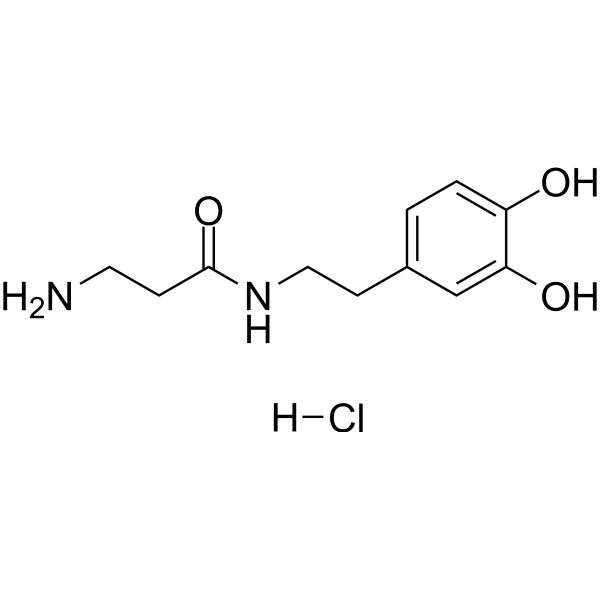
N-β-alanyldopamine hydrochloride (NBAD hydrochloride) is a tyrosine metabolite, Antibacterial agent and Antifungal agent. N-β-alanyldopamine hydrochloride exists in the hemolymph and cuticle during pupal cuticle tanning of the tobacco hornworm (Manduca sexta). N-β-alanyldopamine hydrochloride is the preferred substrate for pupal cuticular o-Diphenol oxidase during insect pupal cuticle tanning. N-β-alanyldopamine hydrochloride inhibits the growth of Escherichia coli, Bacillus megaterium and Saccharomyces cerevisiae in vitro. N-β-alanyldopamine hydrochloride can be used in studies related to microbial infections .
loading...
    loading...
Cat. No.: HY-181686
Research Areas:  

Infection

Antibacterial agent 326 is a bactericide that inhibits the growth of various bacterial strains. Antibacterial agent 326 inhibits biofilm formation in Escherichia coli, disrupts bacterial cell membranes, induces oxidative stress and lipid peroxidation in Escherichia coli, increases ROS levels, and reduces GSH activity. Antibacterial agent 326 can be used in studies of bacterial infections, including those caused by Escherichia coli, Staphylococcus aureus, Enterococcus faecalis, Listeria spp., Bacillus subtilis, Serratia marcescens, Salmonella enteritidis and Acinetobacter calcoaceticus .
loading...
    loading...
Cat. No.: HY-N16699
CAS No.: 120727-36-8
4'-O-Methyl-8-prenylnaringenin is a prenylated flavonoid compound with antibacterial activity, which can be isolated from propolis of the Solomon Islands. 4'-O-Methyl-8-prenylnaringenin exerts its antibacterial activity by enhancing cell penetration and damaging bacterial cell membranes or cell walls. The minimum inhibitory concentrations (MICs) against Staphylococcus aureus, Bacillus subtilis, and Pseudomonas aeruginosa are 32 μg/mL, 32 μg/mL, and 128 μg/mL, respectively .
loading...
    loading...
Cat. No.: HY-N19183
CAS No.: 2886723-48-2
Target:  

Bacterial

C5-O-Demethyl K41-A is a K41-A polyether ionophore derivative found in Streptomyces cacaoi, with anti-bacteria activity. C5-O-Demethyl K41-A exhibits antibacterial activity against Bacillus subtilis and methicillin-resistant Staphylococcus aureus. C5-O-Demethyl K41-A can be used in studies related to bacterial infections .
loading...
    loading...
Cat. No.: HY-N20697
Ariestatin A is an antibacterial agent that exhibits significant inhibitory effects against a variety of Gram-positive bacteria, including Bacillus subtilis, Staphylococcus aureus, and methicillin-resistant Staphylococcus aureus. Ariestatin A is extracted from the fungus Austroacremonium gemini MST-FP2131, and it is a glycosylated hybrid polyketide with a saturated C15 alkyl side chain. Ariestatin A shows no cytotoxic activity against mammalian cells and does not affect the growth of Saccharomyces cerevisiae. Ariestatin A can be used for bacterial infections caused by the aforementioned Gram-positive bacteria .
loading...
    loading...
Cat. No.: HY-L254
71 compounds

Bacteria-derived natural products have long been recognized as an important resource for innovative drug discovery due to their remarkable structural diversity and broad spectrum of biological activities. Microorganisms such as actinomycetes, Bacillus species, and marine bacteria can produce a wide range of small molecules with unique chemical scaffolds, showing extensive application potential in anti-infective, anticancer, immunomodulatory, and metabolic disease research. Many classic drugs, including Streptomycin, Tetracycline, and Doxorubicin, are derived from bacteria-related natural products.

Cat. No.: HY-K1044

MCE Polymyxin B (1,000×), Sterile (50 mg/mL) is a filtered and sterilized antibiotic solution that can be used directly in cell culture. Polymixin B is a mixture of B1 and B2 polypeptides obtained from different strains of Bacillus polymyxa, with antibacterial activity against gram-negative bacteria. It can bind lipopolysaccharide (LPS) of the outer membrane of gram-negative bacteria and disrupts the cytoplasmic membrane by inducing large pores to allow nucleotide leakage in bacterial walls. This disrupts the permeability of the cytoplasmic membrane.

loading...
    loading...
Cat. No.: HY-P702162
Purity:  ≥ 90%, as determined by reducing SDS-PAGE.
Synonyms: IDO1; Indoleamine-Pyrrole 2,3-Dioxygenase; Prev. INDO; Indolamine 2,3 Dioxygenase; Prev. IDO; Indole 2,3-Dioxygenase; IDO-1; Indoleamine 2,3-Dioxygenase 1; Indoleamine-Pyrrole 2,3 Dioxygenase
Species:  
Others
Source:  
E. coli
loading...
    loading...
Cat. No.: HY-P702163
Purity:  ≥ 90%, as determined by reducing SDS-PAGE.
Synonyms: IDO1; Indoleamine-Pyrrole 2,3-Dioxygenase; Prev. INDO; Indolamine 2,3 Dioxygenase; Prev. IDO; Indole 2,3-Dioxygenase; IDO-1; Indoleamine 2,3-Dioxygenase 1; Indoleamine-Pyrrole 2,3 Dioxygenase
Species:  
Others
Source:  
E. coli
loading...
    loading...

