345 Results for "

paracolon bacillus

" in MedChemExpress (MCE) Product Catalog:
Products (345)

345 Results for "paracolon bacillus" in MCE Product Catalog:

Cat. No.: HY-126770
CAS No.: 114301-25-6
Rhizocticin A is a natural antifungal phosphonate oligopeptide produced by Bacillus subtilis ATCC 6633 that targets threonine synthase (TS). Rhizocticin A enters sensitive fungal cells via oligopeptide transport systems and releases its active (S,Z)-APPA moiety through hydrolysis by intracellular peptidases. Rhizocticin A exhibits antifungal activity against yeasts and filamentous fungi, with a MIC of 0.35 μg/mL against Saccharomyces cerevisiae, Saccharomycopsis lipolytica and Schizosaccharomyces pombe. Rhizocticin A can be used in studies related to fungal infections, oligopeptide transport and threonine biosynthesis .
loading...
    loading...
Cat. No.: HY-E71305D
Target:  

Glycosidase

Research Areas:  

Others

β-Glucosidase 1A, Bacillus halodurans (EC 3.2.1.21) is a glucosidase enzyme that acts upon β1->4 bonds linking two glucose or glucose-substituted molecules (i.e., the disaccharide cellobiose) . β-Glucosidase is one of the cellulases, enzymes involved in the decomposition of cellulose and related polysaccharides; more specifically, an exocellulase with specificity for a variety of beta-D-glycoside substrates. It catalyzes the hydrolysis of terminal non-reducing residues in beta-D-glucosides with release of glucose.
loading...
    loading...
Cat. No.: HY-N3686
CAS No.: 488-82-4
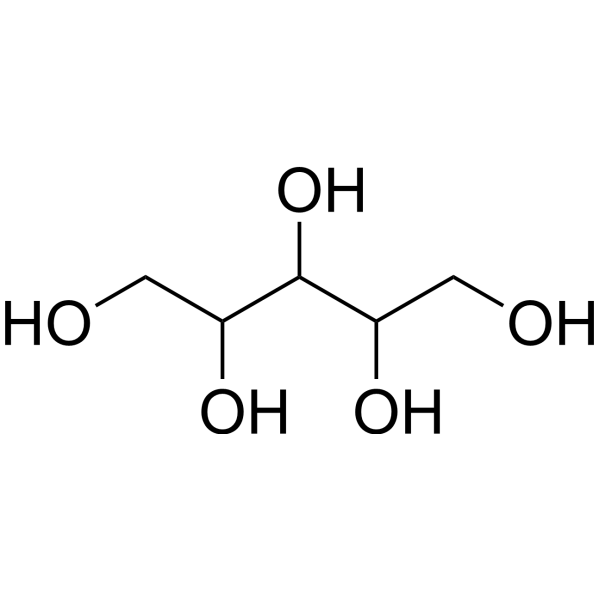
D-Arabitol is an orally active D-enantiomer of arabitol. D-Arabitol modulates the composition of gut microbiota, increases short-chain fatty acids, and promotes AMPK-PGC-1α-related browning of white adipose tissue. D-Arabitol improves weight gain, fat accumulation, insulin resistance, lipid deposition and inflammatory responses. D-Arabitol serves as the sole carbon/energy source for Bacillus methanolicus MGA3, a strain that can co-utilize it with mannitol. D-Arabitol is applicable to obesity-related research .
loading...
    loading...
Cat. No.: HY-N3887
CAS No.: 522-11-2
Synonyms: Haplophytin B; Haplophytine B
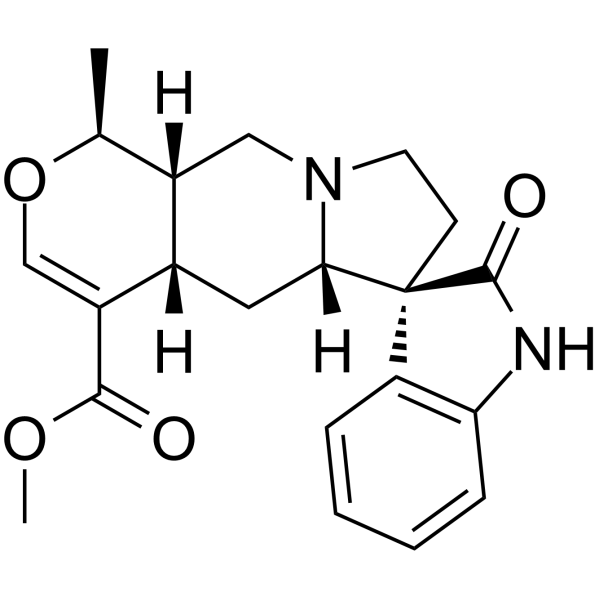
Evoxine (Haplophytin B) is a compound that selectively inhibits CO2-induced immunosuppression and has activity in inhibiting the expression of interleukin-6 and chemokine CCL2 in human THP-1 macrophages. Evoxine shows antimicrobial activity against a wide range of bacteria, especially performing well in minimum inhibitory concentration (MIC) tests against Escherichia coli, Bacillus subtilis, and Staphylococcus aureus. Evoxine extracts may find application in crude drug preparations in West Africa, provided that their in vivo toxicity results are negative .
loading...
    loading...
Cat. No.: HY-W773487
CAS No.: 676995-91-8
Target:  

Bacterial

Research Areas:  

Infection

FtsZ-IN-10 is a bacterial division inhibitor that interferes with the normal assembly of FtsZ. FtsZ-IN-10 specifically binds to Bacillus subtilis FtsZ monomers, thereby affecting their polymerization behavior. FtsZ-IN-10 may also activate nucleotide-free archaeal FtsZ to form ordered polymers. FtsZ-IN-10 can hinder the localization of FtsZ in the Z ring and inhibit bacterial cell division. Chlorinated analogs of FtsZ-IN-10 show the ability to inhibit the growth of antibiotic-resistant clinical isolates such as Staphylococcus aureus and Enterococci .
loading...
    loading...
Cat. No.: HY-101399SA
Synonyms: H-γ-Glu-Phe-OH-13C9,15N TFA; γ-Glutamylphenylalanine-13C9,15N TFA
γ-Glu-(Phe-13C9,15N) (γ-Glutamylphenylalanine-13C9,15N) TFA is the 13C- and 15N-labeled γ-Glu-Phe TFA (HY-101399A). γ-Glu-Phe TFA is synthesized by Bacillus amyloliquefaciens (GBA) and Aspergillus oryzae (GAO). γ-Glu-Phe TFA or the post-enzymatic reaction mixture enhances the umami intensity of commercial soy sauce and model chicken broth .
loading...
    loading...
Cat. No.: HY-116863
CAS No.: 865285-47-8
Purity:  95.70%
Target:  

Bacterial

Research Areas:  

Infection

KKL-40 is a small molecule inhibitor that targets the trans-transcription process and is effective against methicillin-sensitive and -resistant Staphylococcus aureus (S. aureus) as well as other Gram-positive pathogens including vancomycin-resistant Enterococcus faecium, Bacillus subtilis, and Streptococcus pyogenes. KKL-40 synergizes with the human antimicrobial peptide LL-37 to inhibit S. aureus, but does not synergize with other antibiotics such as daptomycin, kanamycin, or erythromycin. Trans-transcription is an extreme form of recoding, and KKL-40 inhibits trans-transcription but is nontoxic to HeLa cells .
loading...
    loading...
Cat. No.: HY-B0914B
CAS No.: 35322-29-3
Synonyms: Undecylenic acid (copper)
10-Undecenoic acid copper (Undecylenic acid copper) is an antifungal agent. 10-Undecenoic acid copper inhibits Aβ oligomerization, scavenges ROS and inhibits μ-calpain activity. 10-Undecenoic acid copper has neuroprotective effects. 10-Undecenoic acid copper has anticancer effects on a variety of tumors. 10-Undecenoic acid copper inhibits C. albicans biofilm formation and MRSA infection. 10-Undecenoic acid copper inhibits quorum sensing signals of Bacillus subtilis and Pseudomonas aeruginosa .
loading...
    loading...
Cat. No.: HY-N12230
CAS No.: 1418291-70-9
Penicolinate B is a picolinic acid derivative that can be isolated from Penicillium sp. Penicolinate B exhibits antimalarial activity (IC50: 1.40 μg/mL), antitubercular activity (MIC: 25.0 μg/mL), activity against Bacillus cereus (IC50: 25.0 μg/mL), and activity against Candida albicans (IC50: 1.45 μg/mL). Penicolinate B also has certain cytotoxicity against cancer cells such as MCF-7, KB, and NCI-H187. Penicolinate B can be used in research on malaria, tuberculosis, bacterial/fungal infections and tumors .
loading...
    loading...
Cat. No.: HY-N4157
CAS No.: 5171-37-9
Isopteropodine is a positive modulator that selectively acts on muscarinic M1 and 5-HT2 receptors. Isopteropodine has an EC50 of 9.92 μM for acetylcholine and 14.5 μM for 5-HT. Isopteropodine also has antibacterial activity against Gram-positive bacteria, with MICs of 150 μg/mL and 250 μg/mL for Staphylococcus aureus and Bacillus subtilis, respectively. Isopteropodine enhances receptor function by increasing the affinity of agonists for receptors and can also inhibit the growth of specific Gram-positive bacteria, and can be used in cognitive impairment and antibacterial research .
loading...
    loading...
Cat. No.: HY-W013272R
CAS No.: 52806-53-8
Synonyms: HFT (Standard)
Hydroxyflutamide (Standard) (HFT (Standard)) is the analytical standard of Hydroxyflutamide (HY-W013272). This product is intended for research and analytical applications. Hydroxyflutamide (HFT) is the active metabolite of Flutamide (HY-B0022) and exhibits oral activity. Hydroxyflutamide is a potent androgen receptor antagonist with an IC50 of 700 nM. Hydroxyflutamide can affect embryonic development and reproductive tract development in mice. Additionally, Hydroxyflutamide can enhance the efficacy of Bacillus Calmette-Guérin (BCG) to better inhibit the progression of bladder cancer. Hydroxyflutamide can be used in research related to tumors and reproductive diseases .
loading...
    loading...
Cat. No.: HY-W114954
CAS No.: 7382-59-4
Target:  

Drug Derivative

Research Areas:  

Others

Guaiacylglycerol-beta-guaiacyl ether is a phenolic β-O-4 type lignin model compound that mimics the most common β-O-4 aryl ether linkages in plant lignin. Guaiacylglycerol-beta-guaiacyl ether can be degraded by Bacillus amyloliquefaciens CotA. Guaiacylglycerol-beta-guaiacyl ether is a commonly used model compound for studying the β-O-4 inter-unit linkage, the most abundant substructure in lignin, and can be applied to investigate the reaction pathway of vanillin preparation via alkaline nitrobenzene oxidation .
loading...
    loading...
Cat. No.: HY-W588249
CAS No.: 546-79-2
Sabinene hydrate is a volatile organic compound of a bicyclic monoterpene alcohol. Sabinene hydrate, as a plant secondary metabolite, is naturally present in various plants and their essential oils. Sabinene hydrate exhibits broad-spectrum but varying-intensity antibacterial activity, with the greatest sensitivity to Gram-positive bacteria, especially Bacillus subtilis (MIC = 0.0312 mg/mL) and Staphylococcus aureus (MIC = 0.0625 mg/mL). Sabinene hydrate also shows certain sensitivity to Escherichia coli and Candida albicans, with MIC values of 0.125 mg/mL for both. Sabinene hydrate can be used in the research of the ecological functions of plant defense substances .
loading...
    loading...
Cat. No.: HY-100908R
CAS No.: 1016-47-3
Synonyms: N10-Acetyltryptamine (Standard); Nb-Acetyltryptamine (Standard); Nω-Acetyltryptamine (Standard)
Research Areas:  

Others

N-Acetyltryptamine (Standard) (N10-Acetyltryptamine (Standard); Nb-Acetyltryptamine (Standard); Nω-Acetyltryptamine (Standard)) is the analytical standard of N-Acetyltryptamine (HY-100908). This product is intended for research and analytical applications. N-Acetyltryptamine (N10-Acetyltryptamine) is a mixed agonist-antagonist of the melatonin receptor. N-Acetyltryptamine inhibits acetylserotonin methyltransferase, blocks the conversion of N-acetylserotonin to melatonin, and inhibits neuronal firing activity in suprachiasmatic nucleus neurons. N-Acetyltryptamine is a physiological constituent of mammalian blood. N-Acetyltryptamine is a metabolite of tryptamine in Bacillus cereus .
loading...
    loading...
Cat. No.: HY-137502
CAS No.: 1542213-67-1
Target:  

Bacterial

Research Areas:  

Infection

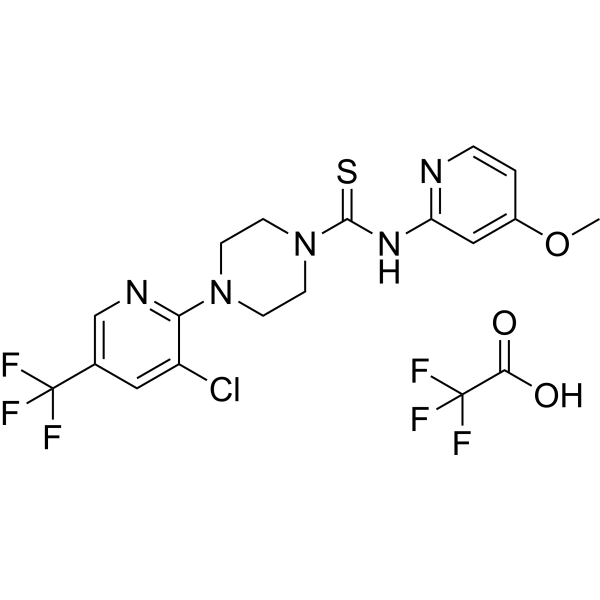
ML267 is a blood-brain barrier permeable Antibacterial agent and bacterial phosphopantetheinyl transferase (PPTase) inhibitor, with an IC50 of 0.29 μM against Bacillus subtilis Sfp-PPTase and an IC50 of 8.1 μM against bacterial AcpS-PPTase. ML267 attenuates bacterial secondary metabolism, activity, and the production of Sfp-PPTase-dependent metabolites. ML267 inhibits the growth of Gram-positive bacteria, including Methicillin (HY-121544)-resistant Staphylococcus aureus. ML267 is applicable to research related to bacterial infections, including methicillin-resistant Staphylococcus aureus infections .
loading...
    loading...
Cat. No.: HY-162818
Research Areas:  

Infection

Antibacterial agent 237 (compound Ru-8) is a bacteriostatic agent for Staphylococcus aureus, with MIC of 0.78-1.56 μg/mL. Antibacterial agent 237 destroys bacterial cell membranes, changes their permeability, and induces bacteria to produce Reactive Oxygen Species, leading to bacterial death without causing drug resistance. Antibacterial agent 237 has low hemolytic toxicity to rabbit red blood cells and Raw 264.7 cells, and has significant antibacterial effects against Staphylococcus aureus in mouse skin wound infection models and Bacillus major larvae infection models .
loading...
    loading...
Cat. No.: HY-184287
Research Areas:  

Infection

Antibacterial agent 352 is an orally active Antibacterial agent. Antibacterial agent 352 binds to the active cavity of Staphylococcus aureus DNA gyrase via hydrogen bonding, π-π stacking and hydrophobic interactions, thereby blocking bacterial DNA synthesis. Antibacterial agent 352 exhibits antibacterial activity against Gram-positive bacteria including Staphylococcus aureus, Bacillus pumilus, Staphylococcus epidermidis and Enterococcus faecalis. Antibacterial agent 352 can disrupt established Staphylococcus aureus biofilms and inhibit the formation of Staphylococcus aureus biofilms. Antibacterial agent 352 can be used in the research of Staphylococcus aureus wound infections .
loading...
    loading...
Cat. No.: HY-30215R
CAS No.: 13748-90-8
Synonyms: (S)-2-Hydroxy-4-methylpentanoic acid (Standard)
(S)-Leucic acid (Standard) ((S)-2-Hydroxy-4-methylpentanoic acid (Standard)) is the analytical standard of (S)-Leucic acid (HY-30215). This product is intended for research and analytical applications. (S)-Leucic acid ((S)-2-Hydroxy-4-methylpentanoic acid) is an α-hydroxy acid found in the fermentation products of Bacillus granulobacter pectinovorum. (S)-Leucic acid is an isomer of Leucic acid (HY-30216A) and a leucine metabolite. (S)-Leucic acid acts as a D-unit subunit precursor in the biosynthesis of cryptophycins in the Nostoc cyanobacterial symbiont. (S)-Leucic acid is used in metabolism-related studies .
loading...
    loading...
Cat. No.: HY-N20744
CAS No.: 10387-49-2
Synonyms: Acetylumbelliferone
7-Acetoxycoumarin (Acetylumbelliferone) is an anti-inflammatory inhibitor with antibacterial and amoebicidal activities. 7-Acetoxycoumarin reduces the phosphorylation levels of ERK, JNK, NF-κB and p38 MAPK. 7-Acetoxycoumarin downregulates the protein and mRNA expression levels of iNOS and COX-2. 7-Acetoxycoumarin inhibits the production of IL-1β, IL-6, TNF-α, NO and PG2. 7-Acetoxycoumarin reduces the degradation of IκBα. 7-Acetoxycoumarin can be used in studies related to amoebiasis and Bacillus lentus infection .
loading...
    loading...
Cat. No.: HY-N3686S
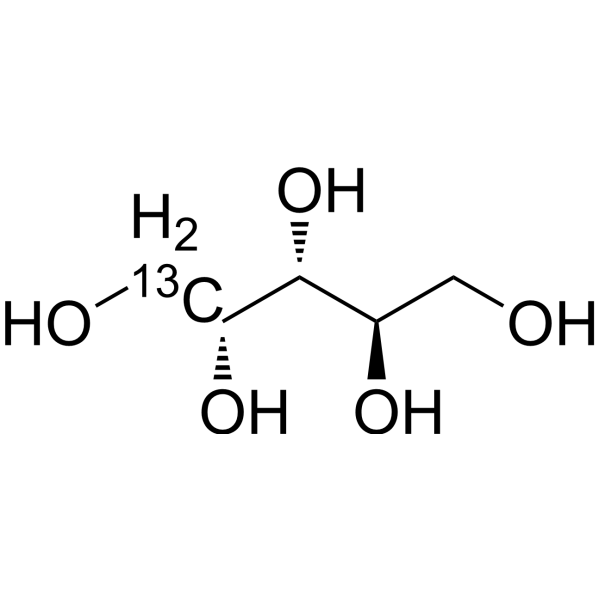
D-Arabitol- 13C is the 13C labeled D-Arabitol. D-Arabitol is an orally active D-enantiomer of arabitol. D-Arabitol modulates the composition of gut microbiota, increases short-chain fatty acids, and promotes AMPK-PGC-1α-related browning of white adipose tissue. D-Arabitol improves weight gain, fat accumulation, insulin resistance, lipid deposition and inflammatory responses. D-Arabitol serves as the sole carbon/energy source for Bacillus methanolicus MGA3, a strain that can co-utilize it with mannitol. D-Arabitol is applicable to obesity-related research.
loading...
    loading...

