307 Results for "

pump

" in MedChemExpress (MCE) Product Catalog:
Products (307)

307 Results for "pump" in MCE Product Catalog:

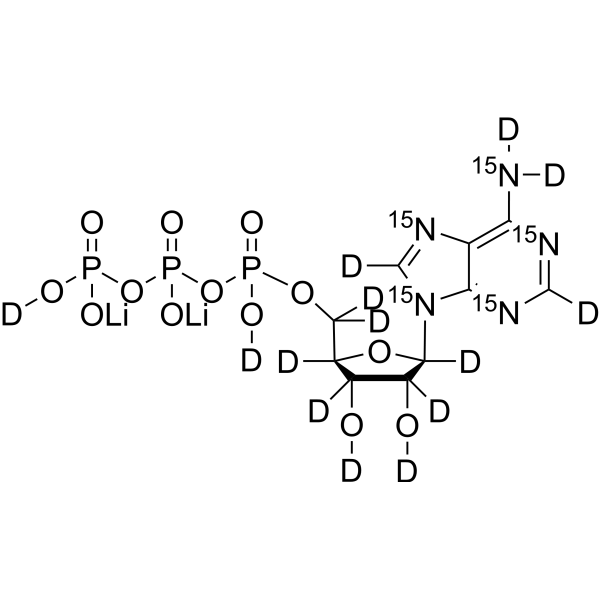
Cat. No.: HY-B2176S8
Synonyms: Adenosine 5'-triphosphate-13C10,15N5,d14 dilithium
ATP- 13C10, 15N5,d14 (Adenosine 5'-triphosphate- 13C10, 15N5,d14) dilithium is the 13C-, 15N- and deuterium labeled ATP dilithium. ATP (Adenosine 5'-triphosphate) is a central component of energy storage and metabolism in vivo. ATP provides the metabolic energy to drive metabolic pumps and serves as a coenzyme in cells. ATP is an important endogenous signaling molecule in immunity and inflammation. ATP can activate the NLRP3 inflammasome and induce IL-1β and chemokines secretion. ATP has anti-bacterial infection effects and can protect mice against bacterial infection in mice.
loading...
    loading...
Cat. No.: HY-D0180
CAS No.: 17455-13-9
Synonyms: 18C6; 1,4,7,10,13,16-Hexaoxacyclooctadecane
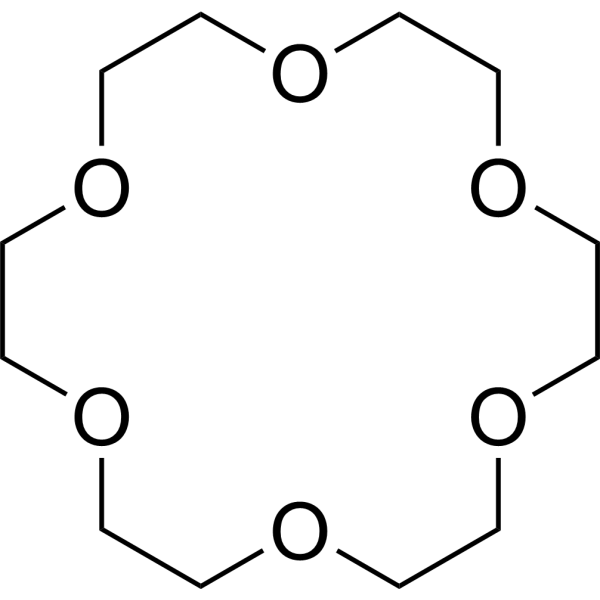
18-Crown-6-ether is a type of crown ether compound and a specific structure dissociating agent. 18-Crown-6-ether can compete with K + for binding to G-quadruplexes, disrupting their stable structure to regulate the functions of related systems. 18-Crown-6-ether combines with K + and other metal ions to achieve precise ion transmembrane transport. 18-Crown-6-ether can act as an "susceptibility substrate" for the multi-drug efflux pump EmrE (a bacterial multidrug resistance transporter), ultimately inhibiting bacterial growth. 18-Crown-6-ether can be used in microcapsule controlled release and the research on developing antibacterial enhancers .
loading...
    loading...
Cat. No.: HY-N17304
CAS No.: 314744-17-7
10S,13aR-Antofine N-oxide is a phenanthroindolizidine N-oxide alkaloid and cytotoxic agent found in Cynanchum vincetoxicum. 10S,13aR-Antofine N-oxide exerts cytotoxic effects in drug-sensitive (KB-3-1, IC50 = 0.11 μM) and multi-drug-resistant (KB-V1, IC50 = 0.16 μM) carcinoma cells. 10S, 13aR-Antofine N-oxide acts as a poor substrate for the P-glycoprotein (P-170) efflux pump. 10S,13aR-Antofine N-oxide can be used for the research of cancers .
loading...
    loading...
Cat. No.: HY-N4314R
CAS No.: 1168-42-9
Synonyms: 4',5,6,7-Tetramethoxyflavone (Standard)
Scutellarein tetramethyl ether (Standard) is the analytical standard of Scutellarein tetramethyl ether. This product is intended for research and analytical applications. Scutellarein tetramethyl ether (4',5,6,7-Tetramethoxyflavone) is a bioactive compound extracted from Eupatorium odoratum. Scutellarein tetramethyl ether exhibits anti-inflammatory, antibacterial, pro-coagulant, and anti-tumor activities. Scutellarein tetramethyl ether exerts its anti-inflammatory effects by modulating the NF-κB pathway and regulates bacterial resistance through the inhibition of efflux pumps. Additionally, Scutellarein tetramethyl ether accelerates coagulation time via the endogenous coagulation pathway. Studies have shown that Scutellarein tetramethyl ether can effectively inhibit the growth of the liver cancer cell line HepG2 (IC50= 20.08 μg/mL) .
loading...
    loading...
Cat. No.: HY-P812033
Synonyms: ATP6V1E1; ATPase H+ Transporting V1 Subunit E1; ATP6E2; P31; ATP6E; Vma4; ATPase, H+ Transporting, Lysosomal 31kDa, V1 Subunit E1; V-Type Proton ATPase Subunit E 1; Vacuolar Proton pump Subunit E 1; V-ATPase 31 KDa Subunit; V-ATPase Subunit E 1; ATP6V1E; ATPase, H+ Transporting, Lysosomal 31kDa, V1 Subunit E Isoform 1; ATPase, H+ Transporting, Lysosomal (Vacuolar Proton pump) 31kD; H(+)-Transporting Two-Sector ATPase, 31kDa Subunit; H+-Transporting ATP Synthase Chain E, Vacuolar; V-ATPase Subunit E1; V-ATPase, Subunit E; ARCL2C

Host:  

Rabbit

Application:  

WB

Reactivity:  

Human, Mouse, Rat

loading...
    loading...
Cat. No.: HY-P812033A
Synonyms: ATP6V1E1; ATPase H+ Transporting V1 Subunit E1; ATP6E2; P31; ATP6E; Vma4; ATPase, H+ Transporting, Lysosomal 31kDa, V1 Subunit E1; V-Type Proton ATPase Subunit E 1; Vacuolar Proton pump Subunit E 1; V-ATPase 31 KDa Subunit; V-ATPase Subunit E 1; ATP6V1E; ATPase, H+ Transporting, Lysosomal 31kDa, V1 Subunit E Isoform 1; ATPase, H+ Transporting, Lysosomal (Vacuolar Proton pump) 31kD; H(+)-Transporting Two-Sector ATPase, 31kDa Subunit; H+-Transporting ATP Synthase Chain E, Vacuolar; V-ATPase Subunit E1; V-ATPase, Subunit E; ARCL2C

Host:  

Rabbit

Application:  

WB

Reactivity:  

Human, Mouse, Rat

loading...
    loading...
Cat. No.: HY-109546
CAS No.: 95382-33-5
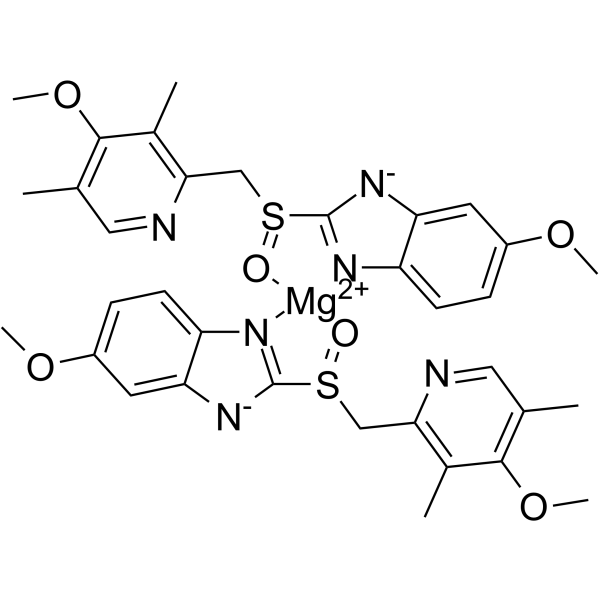
Omeprazole (H 16868) magnesium is an orally active H +,K +-ATPase inhibitor and a proton pump inhibitor. Omeprazole magnesium competitively inhibits CYP2C19, CYP3A4, and CYP2C9 activity. Omeprazole magnesium inhibits gastric acid secretion and can be used for acid-related gastrointestinal disorders. Omeprazole magnesium inhibits pancreatic cancer cell proliferation, induces apoptosis, autophagosome accumulation (elevated LC3-I and LC3-II levels), oxidative stress, and cytogenetic imbalance, modulates lysosomal transport, reduces inflammatory cytokines. Omeprazole magnesium alters small intestinal morphology and magnesium absorption, and induces gastric mucosa morphologic changes. Omeprazole magnesium also has neuroprotective and antibacterial effects .
loading...
    loading...
Cat. No.: HY-122416
CAS No.: 68236-11-3
Synonyms: Lonchocarpol A; Senegalensin
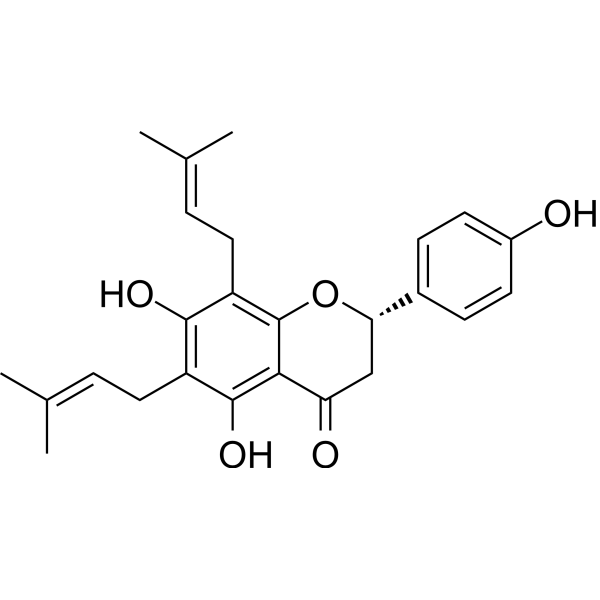
6,8-Diprenylnaringenin (Lonchocarpol A; Senegalensin) is a potent BCRP/ABCG2 inhibitor (IC50 = 0.410 μM) and a non-competitive allosteric PTP1B inhibitor (IC50 = 1.04 μM; Ki = 1.56 μM) that is isolated from Humulus lupulus. 6,8-Diprenylnaringenin produces non-competitive allosteric inhibition by locking the WPD catalytic loop of PTP1B in an inactive open conformation, while simultaneously binding to and inhibiting the ABCG2 drug efflux pump. 6,8-Diprenylnaringenin also exhibits antibacterial activity against MRSA (MIC = 6-13 μM) and antioxidant activity. 6,8-Diprenylnaringenin is used in research on type 2 diabetes, obesity, MRSA infection, and atherosclerosis .
loading...
    loading...
Cat. No.: HY-165569
CAS No.: 115717-83-4
Target:  

Potassium Channel

Research Areas:  

Neurological Disease

AU-1421 is a potassium ion (K⁺) site-directed regulator that specifically acts on various cation transport ATPases. AU-1421 can distinguish between two different K⁺-sensitive phosphorylation intermediate (E2P) states: for non-K⁺ transport type ATPases (such as the sarcoplasmic reticulum Ca²⁺-ATPase), after binding to AU-1421, it mimics the agonistic effect of K⁺, significantly accelerating the hydrolysis (dephosphorylation) of E2P. For K⁺ transport type ATPases (such as the gastric mucosa H⁺/K⁺-ATPase and the renal Na⁺/K⁺-ATPase), after binding to AU-1421, it inhibits the hydrolysis of E2P, stabilizing the phosphorylated intermediate, thereby blocking the ion transport cycle. AU-1421 can be used to study the mechanism of the potassium ion pump .
loading...
    loading...
Cat. No.: HY-183390
CAS No.: 136565-26-9
Scopadulciol is an orally effective β-catenin degrader, HSV-TK activator and proton pump inhibitor. By inducing β-catenin degradation, Scopadulciol downregulates the expression of downstream target genes such as cyclin D1, c-myc, and survivin; it also upregulates DR4/DR5 and downregulates Bcl-2, thereby exerting cytotoxicity and inducing apoptosis in cancer cells. Scopadulciol enhances the tumor-killing and bystander effects of prodrugs via activating HSV-TK, and can inactivate HSV-1. It shows synergistic antiviral effects when combined with Acyclovir (HY-17422) or Ganciclovir (HY-13637), with no cytotoxicity as a single agent. Scopadulciol can be applied in research related to bladder cancer, cervical cancer, glioblastoma, and digestive system cancers .
loading...
    loading...
Cat. No.: HY-B0113AR
CAS No.: 95510-70-6
Synonyms: H 16868 sodium (Standard)
Omeprazole (sodium) (Standard) is the analytical standard of Omeprazole (sodium). This product is intended for research and analytical applications. Omeprazole sodium (H 16868) is an orally active H +,K +-ATPase inhibitor and a proton pump inhibitor. Omeprazole sodium competitively inhibits CYP2C19, CYP3A4, and CYP2C9 activity. Omeprazole sodium inhibits gastric acid secretion and can be used for acid-related gastrointestinal disorders. Omeprazole sodium inhibits pancreatic cancer cell proliferation, induces apoptosis, autophagosome accumulation (elevated LC3-I and LC3-II levels), oxidative stress, and cytogenetic imbalance, modulates lysosomal transport, reduces inflammatory cytokines. Omeprazole sodium alters small intestinal morphology and magnesium absorption, and induces gastric mucosa morphologic changes. Omeprazole sodium also has neuroprotective and antibacterial effects .
loading...
    loading...
Cat. No.: HY-B0113R
CAS No.: 73590-58-6
Synonyms: H 16868 (Standard)
Omeprazole (Standard) is the analytical standard of Omeprazole. This product is intended for research and analytical applications. Omeprazole (H 16868) is an orally active H +,K +-ATPase inhibitor and a proton pump inhibitor. Omeprazole competitively inhibits CYP2C19, CYP3A4, and CYP2C9 activity. Omeprazole inhibits gastric acid secretion and can be used for acid-related gastrointestinal disorders. Omeprazole inhibits pancreatic cancer cell proliferation, induces apoptosis, autophagosome accumulation (elevated LC3-I and LC3-II levels), oxidative stress, and cytogenetic imbalance, modulates lysosomal transport, reduces inflammatory cytokines. Omeprazole alters small intestinal morphology and magnesium absorption, and induces gastric mucosa morphologic changes. Omeprazole also has neuroprotective and antibacterial effects .
loading...
    loading...
Cat. No.: HY-B0113S4
Synonyms: H 16868-d3 sodium
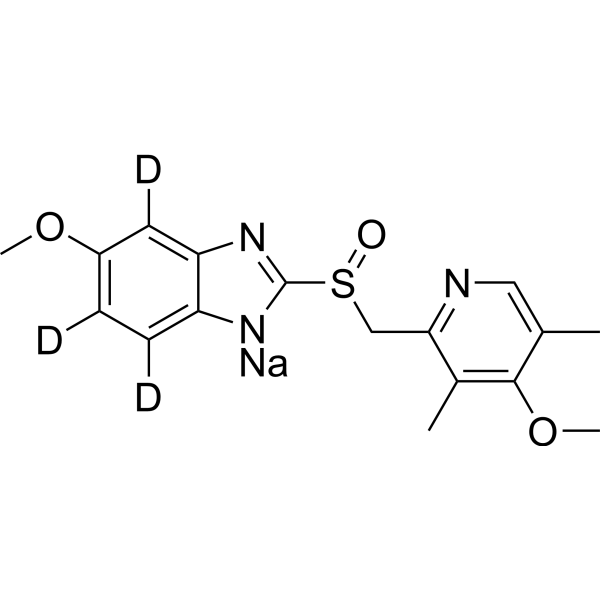
Omeprazole-d3 sodium is deuterated labeled Omeprazole (HY-B0113). Omeprazole sodium (H 16868) is an orally active H +,K +-ATPase inhibitor and a proton pump inhibitor. Omeprazole sodium competitively inhibits CYP2C19, CYP3A4, and CYP2C9 activity. Omeprazole sodium inhibits gastric acid secretion and can be used for acid-related gastrointestinal disorders. Omeprazole sodium inhibits pancreatic cancer cell proliferation, induces apoptosis, autophagosome accumulation (elevated LC3-I and LC3-II levels), oxidative stress, and cytogenetic imbalance, modulates lysosomal transport, reduces inflammatory cytokines. Omeprazole sodium alters small intestinal morphology and magnesium absorption, and induces gastric mucosa morphologic changes. Omeprazole sodium also has neuroprotective and antibacterial effects .
loading...
    loading...
Cat. No.: HY-B2176S3
Synonyms: Adenosine 5'-triphosphate-15N5,d14 dilithium
ATP- 15N5,d14 (Adenosine 5'-triphosphate-ATP- 15N5,d14) dilithium is the 15N5,d14-labeled ATP (HY-B2176). ATP is a central component of energy storage and metabolism in vivo. ATP provides the metabolic energy to drive metabolic pumps and serves as a coenzyme in cells. ATP is an important endogenous signaling molecule in immunity and inflammation. ATP can activate the NLRP3 inflammasome and induce IL-1β and chemokines secretion. ATP has anti-bacterial infection effects and can protect mice against bacterial infection in mice .
loading...
    loading...
Cat. No.: HY-187719
CAS No.: 318262-42-9
Target:  

Proton Pump Apoptosis

Research Areas:  

Cancer

NIK-12192 is an orally active inhibitor of vacuolar H +-ATPase. NIK-12192 reduces intracellular pH, decreases lysosomal volume and acidity, and alters the intracellular localization of V-ATPase by inhibiting proton pumps . NIK-12192 induces αvβ5 integrin polarization, cytoskeletal disruption, cell detachment, anoikis-mediated delayed apoptosis and necrosis, a delayed reduction in mitochondrial membrane potential, and lysosomal/phagosomal accumulation. NIK-12192 inhibits tumor cell migration, invasion, and three-dimensional spheroid growth, and enhances the activity of Topotecan (HY-13768). NIK-12192 suppresses spontaneous lung metastasis in vivo. NIK-12192 is used in research related to colon cancer, ovarian cancer, lung cancer, breast cancer, renal cancer, prostate cancer, acute myeloid leukemia, and melanoma .
loading...
    loading...
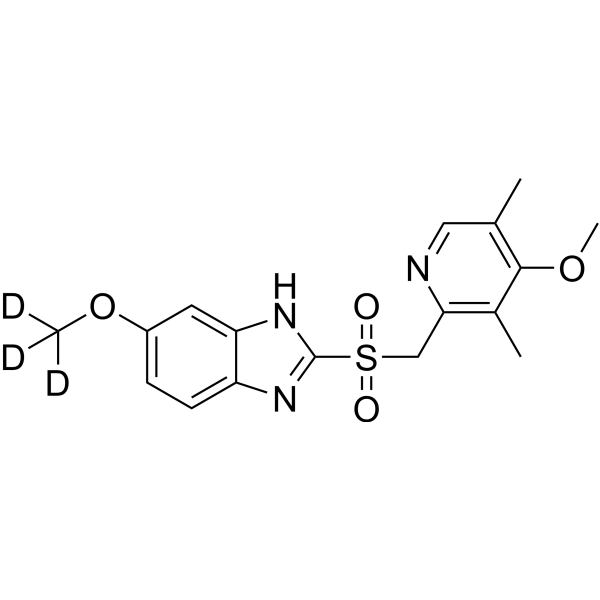
Cat. No.: HY-B0113S2
CAS No.: 1189891-71-1
Synonyms: Omeprazole sulphone (methoxy-d3)
Omeprazole sulfone (methoxy-d3) is the deuterium labeled Omeprazole sulfone. Omeprazole sulfone (H 16868) is an orally active H +,K +-ATPase inhibitor and a proton pump inhibitor. Omeprazole sulfone competitively inhibits CYP2C19, CYP3A4, and CYP2C9 activity. Omeprazole sulfone inhibits gastric acid secretion and can be used for acid-related gastrointestinal disorders. Omeprazole sulfone inhibits pancreatic cancer cell proliferation, induces apoptosis, autophagosome accumulation (elevated LC3-I and LC3-II levels), oxidative stress, and cytogenetic imbalance, modulates lysosomal transport, reduces inflammatory cytokines. Omeprazole sulfone alters small intestinal morphology and magnesium absorption, and induces gastric mucosa morphologic changes. Omeprazole sulfone also has neuroprotective and antibacterial effects .
loading...
    loading...
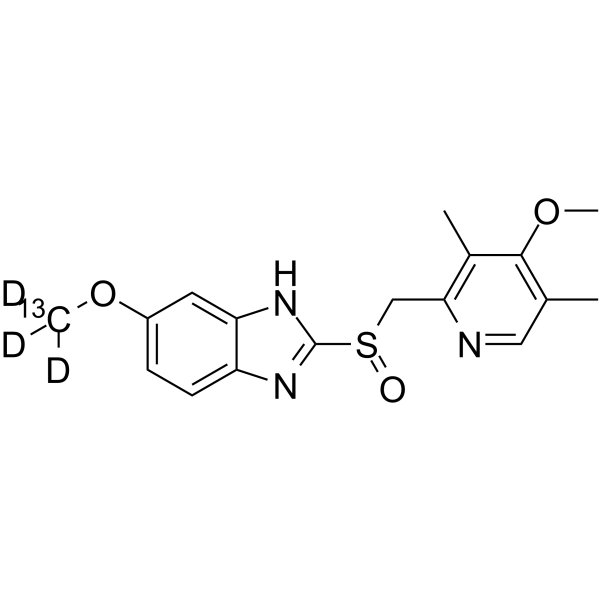
Cat. No.: HY-B0113S3
CAS No.: 1261395-28-1
Synonyms: H 16868-13C,d3
Omeprazole- 13C,d3 is a 13C-labeled and deuterium labeled Omeprazole. Omeprazole (H 16868) is an orally active H +,K +-ATPase inhibitor and a proton pump inhibitor. Omeprazole competitively inhibits CYP2C19, CYP3A4, and CYP2C9 activity. Omeprazole inhibits gastric acid secretion and can be used for acid-related gastrointestinal disorders. Omeprazole inhibits pancreatic cancer cell proliferation, induces apoptosis, autophagosome accumulation (elevated LC3-I and LC3-II levels), oxidative stress, and cytogenetic imbalance, modulates lysosomal transport, reduces inflammatory cytokines. Omeprazole alters small intestinal morphology and magnesium absorption, and induces gastric mucosa morphologic changes. Omeprazole also has neuroprotective and antibacterial effects .
loading...
    loading...
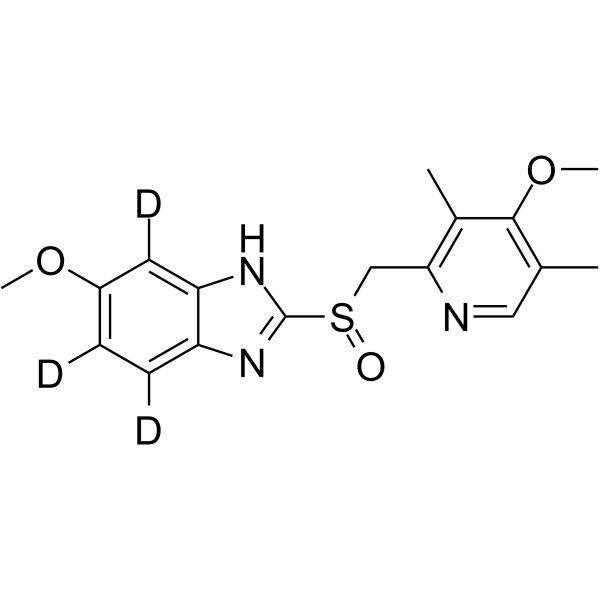
Cat. No.: HY-B0113S5
CAS No.: 922731-02-0
Synonyms: H 16868-d6
Omeprazole-d6 (H 16868-d6) is deuterium labeled Omeprazole. Omeprazole (H 16868) is an orally active H +,K +-ATPase inhibitor and a proton pump inhibitor. Omeprazole competitively inhibits CYP2C19, CYP3A4, and CYP2C9 activity. Omeprazole inhibits gastric acid secretion and can be used for acid-related gastrointestinal disorders. Omeprazole inhibits pancreatic cancer cell proliferation, induces apoptosis, autophagosome accumulation (elevated LC3-I and LC3-II levels), oxidative stress, and cytogenetic imbalance, modulates lysosomal transport, reduces inflammatory cytokines. Omeprazole alters small intestinal morphology and magnesium absorption, and induces gastric mucosa morphologic changes. Omeprazole also has neuroprotective and antibacterial effects .
loading...
    loading...
Cat. No.: HY-N0805AR
CAS No.: 18649-93-9
Alisol B (Standard) is the analytical standard of Alisol B (HY-N0805A). This product is intended for research and analytical applications. Alisol B is a triterpene with diverse biological activities. Alisol B binds human soluble epoxide hydrolase (sEH) with a Ki of 5.97 μM and reduces sEH activity. Alisol B inhibits RANKL-induced JNK phosphorylation, NFATc1 and c-Fos expression, osteoclast formation, mature osteoclast pit-forming and actin ring activity, and SERCA pump activity. Alisol B induces calcium mobilization, CaMKK-AMPK-mTOR pathway activation, autophagic flux, autophagosome formation, G1 phase cell cycle arrest, endoplasmic reticulum stress, unfolded protein responses, and cancer cell apoptosis. Alisol B can be used for the research of hypercalcemia, osteoporosis, rheumatoid arthritis, periodontitis, acute kidney injury, and breast cancer.
loading...
    loading...
Cat. No.: HY-B0113S1
CAS No.: 934293-92-2
Synonyms: H 16868-d3-1
Omeprazole-d3-1 is the deuterium labeled Omeprazole. Omeprazole-1 (H 16868) is an orally active H +,K +-ATPase inhibitor and a proton pump inhibitor. Omeprazole-1 competitively inhibits CYP2C19, CYP3A4, and CYP2C9 activity. Omeprazole-1 inhibits gastric acid secretion and can be used for acid-related gastrointestinal disorders. Omeprazole-1 inhibits pancreatic cancer cell proliferation, induces apoptosis, autophagosome accumulation (elevated LC3-I and LC3-II levels), oxidative stress, and cytogenetic imbalance, modulates lysosomal transport, reduces inflammatory cytokines. Omeprazole-1 alters small intestinal morphology and magnesium absorption, and induces gastric mucosa morphologic changes. Omeprazole-1 also has neuroprotective and antibacterial effects .
loading...
    loading...

