3394 Results for "

Antibacterials

" in MedChemExpress (MCE) Product Catalog:
Products (3394)

3394 Results for "Antibacterials" in MCE Product Catalog:

Cat. No.: HY-W012572R
CAS No.: 351-50-8
D-Histidine (Standard) is the analytical standard of D-Histidine (HY-W012572). This product is intended for research and analytical applications. D-Histidine is an anti-biofilm agent that targets bacterial quorum sensing systems (such as RhlI/RhlR pathway) and has antibacterial activity. D-Histidine works by non-covalently binding to bacterial regulatory factors or copper ion complexes, selectively inhibiting bacterial biofilm formation and motility. D-Histidine downregulates quorum sensing-related gene expression, reduces the synthesis of virulence factors (such as alginate and proteases), and interferes with bacterial membrane stability, inhibiting biofilm formation, promoting the disintegration of mature biofilms, and enhancing antibiotic sensitivity. D-Histidine is also an efficient catalyst for the salt-induced peptide formation (SIPF) reaction, which promotes the condensation of amino acids to form dipeptides (such as dialanine and dilysine) by forming a complex with copper ions (Cu 2+) .
loading...
    loading...
Cat. No.: HY-W018798
CAS No.: 4005-51-0
1,3,4-Thiadiazol-2-amine is a 1,3,4-thiadiazole antitumor agent with the potential to penetrate the blood-brain barrier. 1,3,4-Thiadiazol-2-amine can induce hyperuricemia, and this effect is blocked by Nicotinamide (HY-B0150). 1,3,4-Thiadiazol-2-amine supports the simultaneous administration of Allopurinol (HY-B0219), and their combined use prevents hyperuricemia without reducing antitumor activity.\n1,3,4-Thiadiazol-2-amine is a condensation precursor for the synthesis of antibacterial Schiff bases and their Co/Cu/Ni/Zn (II) complexes. 1,3,4-Thiadiazol-2-amine is used in research related to tumors and bacterial infections .
loading...
    loading...
Cat. No.: HY-L253
91 compounds

For thousands of years, natural products have always been an important source for drug discovery. Fungi, due to their unique and diverse secondary metabolic capabilities, have become a valuable resource for natural active molecules. Since the discovery of penicillin, natural products derived from fungi have demonstrated significant application value in areas such as anti-infection, anti-tumor, immune regulation, and metabolic disease research. A large number of clinical drugs, such as antibiotics, immunosuppressants, and lipid-lowering drugs, are derived from fungal metabolites or their structurally optimized derivatives.

MCE fungal-derived compound library contains 91 structurally diverse and bioactive fungal natural products and their derivatives. It can be widely applied in various research fields such as antibacterial, anti-tumor, anti-inflammatory, immune regulation, epigenetics, and cell signaling pathways, providing high-quality tools for natural product drug development and high-throughput screening.

Cat. No.: HY-L138
6,553 compounds

Heterocyclic compounds are cyclic organic compounds which contain at least one hetero atom, the most common heteroatoms are nitrogen, oxygen ,and sulfur. Heterocycles are common in biology, featuring a wide range of structures from enzyme co-factors to amino acids and proteins. On the one hand, heterocycles are common structural units in approved drugs and in medicinal chemistry targets in the drug discovery process. In addition, heterocycles have been found as a key structure in medical chemistry and also they are frequently found in large percent of biomolecules such as vitamins, natural products ,and biologically active compounds including antifungal, anti-inflammatory, antibacterial, antioxidant, antiallergic, anti-HIV, antidiabetic, anticancer activity.

MCE offers a unique collection of 6,553 heterocyclic compounds which can be used for drug discovery for high throughput screening (HTS) and high content screening (HCS). MCE heterocyclic compound library is critical for drug discovery and development.

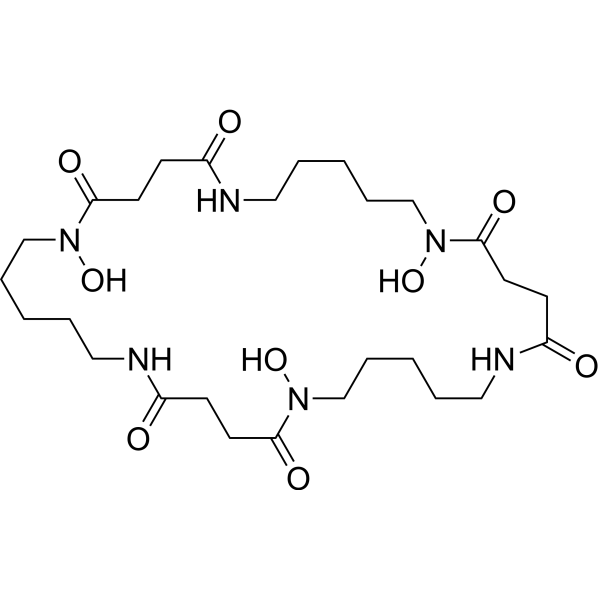
Cat. No.: HY-124452
CAS No.: 26605-16-3
Purity:  95.00%
Synonyms: Desferrioxamine E; Nocardamin
Nocardamine (Desferrioxamine E; Nocardamin) is a cyclic trihydroxamate siderophore with iron ion chelation, antioxidant, antibacterial and other activities. Nocardamine is synthesized by Pseudomonas stutzeri under iron-deficient conditions, and excessive iron ions significantly inhibit its biosynthesis process. Nocardamine increases the level of phosphorylated ERK protein, promotes nuclear translocation of β-catenin, and restores the downregulated expression of SIRT1 protein. Nocardamine alleviates cellular oxidative stress, reduces ROS content, and simultaneously repairs the ability to form mineralized nodules and the expression of osteogenic markers. Nocardamine induces FoxA gene transcription and protein expression to assist Pseudomonas aeruginosa in iron ion uptake; it also selectively inhibits the proliferation of mycobacteria. Nocardamine induces spindle-shaped morphological changes in BM-N4 insect cells, and sufficient iron ions inhibit this cellular morphological change. Nocardamine is suitable for research related to bacterial infections .
loading...
    loading...
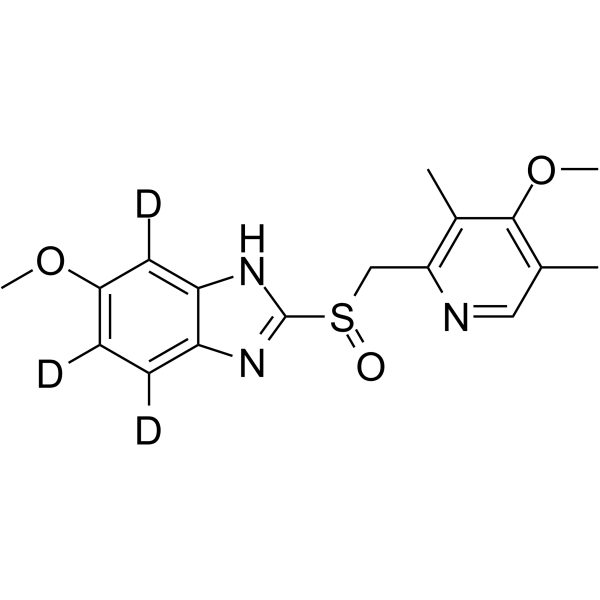
Cat. No.: HY-B0113S1
CAS No.: 934293-92-2
Synonyms: H 16868-d3-1
Omeprazole-d3-1 is the deuterium labeled Omeprazole. Omeprazole-1 (H 16868) is an orally active H +,K +-ATPase inhibitor and a proton pump inhibitor. Omeprazole-1 competitively inhibits CYP2C19, CYP3A4, and CYP2C9 activity. Omeprazole-1 inhibits gastric acid secretion and can be used for acid-related gastrointestinal disorders. Omeprazole-1 inhibits pancreatic cancer cell proliferation, induces apoptosis, autophagosome accumulation (elevated LC3-I and LC3-II levels), oxidative stress, and cytogenetic imbalance, modulates lysosomal transport, reduces inflammatory cytokines. Omeprazole-1 alters small intestinal morphology and magnesium absorption, and induces gastric mucosa morphologic changes. Omeprazole-1 also has neuroprotective and antibacterial effects .
loading...
    loading...
Cat. No.: HY-B1173R
CAS No.: 464-49-3
Synonyms: D-(+)-Camphor (Standard); (1R)-(+)-Camphor (Standard)
(+)-Camphor (Standard) is the analytical standard of (+)-Camphor. This product is intended for research and analytical applications. (+)-Camphor (D-(+)-Camphor; (1R)-(+)-Camphor) is an isomer of Camphor. Camphor is an agonist of monoterpenoid transient receptor potential (TRP) channels (such as TRPV1, TRPV3, TRPM8) and an inhibitor of TRPA1 channels. Camphor's derivatives have multiple biological activities, including antibacterial, antiviral, antioxidant, analgesic and anticancer. Camphor can selectively activate cold-sensitive TRP channels and inhibit TRPA1-mediated nociceptive signals. Camphor stimulates the cold-sensing nerve endings in the skin and regulates the activity of ion channels to exert analgesic, anti-inflammatory and anti-itching effects. It also has anti-proliferative and anti-mutagenic activities on tumor cells, which may be related to inhibiting ribosome function or inducing cell apoptosis. Camphor can be absorbed through the skin and (+)-Camphor can be used in the study of muscle and joint pain and inflammation .
loading...
    loading...
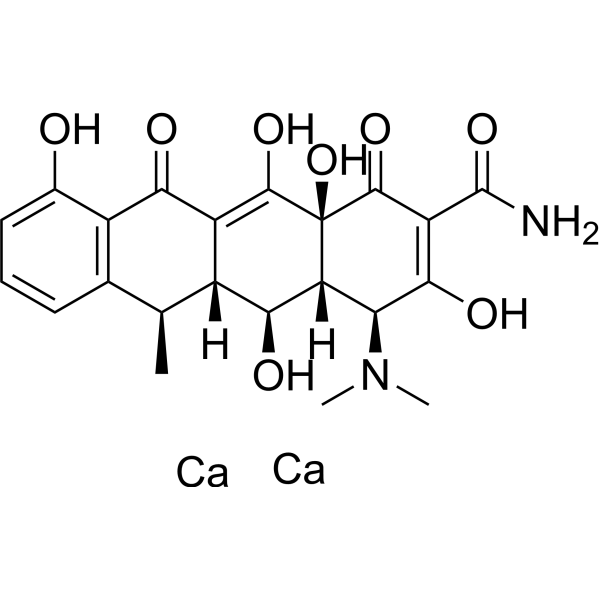
Cat. No.: HY-N0565C
CAS No.: 94088-85-4
Doxycycline calcium is an orally active highly lipophilic, tissue-permeable MMP inhibitor with broad-spectrum antibacterial activity. Doxycycline calcium is also a semi-synthetic antibiotic with chelating properties, which blocks bacterial protein synthesis and inhibits extracellular matrix degradation through interactions with zinc and calcium atoms. Doxycycline calcium also inhibits mitochondrial biogenesis, translation, and the expression of respiratory chain proteins. Doxycycline calcium induces apoptosis, inhibits autophagy and EMT, downregulates stem cell markers, and activates the PI3K-AKT pathway, thereby effectively inhibiting the viability and proliferation of cancer cells such as breast cancer cells. Doxycycline calcium also promotes the survival and self-renewal of embryonic stem cells and neural stem cells, and reduces the frequency of medium changes in culture. Doxycycline calcium has been applied in studies related to breast cancer, prostate cancer, bladder cancer, and other cancers .
loading...
    loading...
Cat. No.: HY-N0565D
CAS No.: 83038-87-3
Doxycycline fosfatex is an orally active highly lipophilic, tissue-permeable MMP inhibitor with broad-spectrum antibacterial activity. Doxycycline fosfatex is also a semi-synthetic antibiotic with chelating properties, which blocks bacterial protein synthesis and inhibits extracellular matrix degradation through interactions with zinc and fosfatex atoms. Doxycycline fosfatex also inhibits mitochondrial biogenesis, translation, and the expression of respiratory chain proteins. Doxycycline fosfatex induces apoptosis, inhibits autophagy and EMT, downregulates stem cell markers, and activates the PI3K-AKT pathway, thereby effectively inhibiting the viability and proliferation of cancer cells such as breast cancer cells. Doxycycline fosfatex also promotes the survival and self-renewal of embryonic stem cells and neural stem cells, and reduces the frequency of medium changes in culture. Doxycycline fosfatex has been applied in studies related to breast cancer, prostate cancer, bladder cancer, and other cancers .
loading...
    loading...
Cat. No.: HY-N0570R
CAS No.: 10597-60-1
Synonyms: DOPET (Standard); 3,4-Dihydroxyphenethyl alcohol (Standard); 3-Hydroxytyrosol (Standard)
Hydroxytyrosol (Standard) (DOPET (Standard)) is the analytical standard of Hydroxytyrosol (HY-N0570). This product is intended for research and analytical applications. Hydroxytyrosol is an orally active, blood-brain barrier-permeable multi-active compound with multiple effects including antibacterial, antioxidant, anti-platelet aggregation, and neuroprotective activities. Hydroxytyrosol not only inhibits the growth of Vibrio by increasing bacterial membrane permeability, but also interacts with DNA and mediates supercoiled DNA relaxation. Meanwhile, Hydroxytyrosol effectively reduces thrombosis and inhibits lipid oxidation by inhibiting COX activity and promoting vascular nitric oxide production. In terms of neuroprotection, Hydroxytyrosol significantly alleviates neuronal apoptosis and inflammatory responses by up-regulating the expression level of ERβ, thereby improving cognitive function in Alzheimer's disease models. Hydroxytyrosol has been widely used in scientific research related to Vibrio infection, arterial thrombosis, Alzheimer's disease and other related fields .
loading...
    loading...
Cat. No.: HY-N10342
CAS No.: 61020-70-0
Cajanol is an isoflavanone that can be isolated from the roots of Cajanus cajan (L.) Millsp. . Cajanol inhibits cancer cell proliferation and induces cancer cell apoptosis. Cajanol promotes the expression of Bax, inhibits the expression of Bcl-2, activates caspase-9 and caspase-3, induces PARP cleavage, arrests the cell cycle at the G2/M phase, generates ROS, disrupts mitochondrial membrane potential and triggers cytochrome c release. Cajanol induces bacterial DNA damage, disrupts bacterial cell membranes, and exerts antibacterial activity in vitro. Cajanol reduces the expression of PI3K, inhibits the phosphorylation of Akt and NF-κB, downregulates the expression and transport function of P-gp, restores the sensitivity of drug-resistant cancer cells to Paclitaxel, and inhibits the growth of Paclitaxel-resistant metastatic ovarian tumors. Cajanol is applicable to research related to breast cancer, ovarian cancer and bacterial infections .
loading...
    loading...
Cat. No.: HY-N1957R
CAS No.: 31271-07-5
Synonyms: γ-Mangostin (Standard)
Gamma-Mangostin (Standard) is the analytical standard of Gamma-Mangostin. This product is intended for research and analytical applications. Gamma-Mangostin is a novel competitive 5-hydroxytryptamine 2A (5-HT2A) receptor antagonist and potent epoxidase 2 (COX-2) inhibitor, as well as a transthyroxin protein (TTR) profibrosis inhibitor. Gamma-Mangostin binds to the thyroxine (T4)-binding sites and stabilized the TTR tetramer . Gamma-Mangostin inhibits [3H] spiperone binding to cultured rat aortic myocytes (IC50=3.5 nM) and reduces The perfusion pressure response of rat coronary artery to 5-HT2A (IC50=0.32 μM). Gamma-Mangostin has anti-inflammatory, antibacterial, antioxidant and anticancer activities, and can be used in the study of metabolic disorders such as diabetes .
loading...
    loading...
Cat. No.: HY-N19735
CAS No.: 144678-18-2
MS-347a is an inhibitor of myosin light chain kinase (MLCK) and protein kinase C (PKC), with IC50 values of 9.2 μM, 31 μM and 16 μM against calmodulin-dependent MLCK, calmodulin-independent MLCK and PKC, respectively. MS-347a binds to the catalytic domain of MLCK and blocks both calmodulin-dependent and calmodulin-independent MLCK activity. MS-347a inhibits the growth of drug-sensitive fission yeast and multiple ascomycete phytopathogenic fungi. MS-347a exhibits fungicidal activity against a variety of phytopathogenic fungi and protective activity against Magnaporthe oryzae in rice seedlings. MS-347a shows antibacterial activity against specific Gram-positive bacteria and Proteus vulgaris. MS-347a can be used in studies related to rice blast, bacterial infections and phytopathogenic fungal diseases .
loading...
    loading...
Cat. No.: HY-N20707
CAS No.: 24312-00-3
Castalagin is an orally active natural product with multiple biological activities including antibacterial activity against bacteria and anti-leishmanial activity against Leishmania aethiopica. Castalagin exhibits inhibitory activity against PARP1 and DNA topoisomerase II, with an IC50 of 0.86 μM for bovine PARP1. Castalagin reduces poly (ADP-ribosyl) ation modification in cells. Castalagin binds to the cell envelope of Ruminococcus bromii, increases the ratio of CD8+/FOXP3+CD4+ T cells in the tumor microenvironment, and acts as a prebiotic to enhance the activity of anti-PD-1 therapy. Castalagin induces morphological changes in Leishmania aethiopica promastigotes and inhibits their proliferation. Castalagin inhibits PBP2a-mediated peptidoglycan layer stabilization, disrupts bacterial peptidoglycan assembly, and inhibits and disintegrates bacterial biofilms. Castalagin can be used in research related to diseases such as cancer, leishmaniasis, and bacterial infections .
loading...
    loading...
Cat. No.: HY-N20708
CAS No.: 89353-99-1
Chiisanogenin is an orally active triterpenoid. Chiisanogenin reduces postprandial blood glucose by promoting GLUT4 translocation and glucose uptake via activation of the IRS-1/PI3K/Akt signaling pathway. Chiisanogenin binds to MLKL and inhibits its phosphorylation and oligomerization, maintains lysosomal integrity, restores autophagic flux, and suppresses NLRP3 inflammasome activation and pyroptosis. Chiisanogenin inhibits xanthine oxidase activity and regulates oxidative stress and ion pump activity. Chiisanogenin binds to or inhibits PKA, H +/K +-ATPase and β-glucuronidase. Chiisanogenin possesses multiple pharmacological activities, including broad-spectrum antibacterial activity, anticancer, anti-inflammatory, antirheumatic, renoprotective, cardioprotective and antiarrhythmic effects. Chiisanogenin can be used in research related to type 2 diabetes, rheumatoid arthritis, myocardial injury, hepatocellular carcinoma and ventricular arrhythmia .
loading...
    loading...
Cat. No.: HY-N7101S
Synonyms: U-76-d7,252-d7; CS-807-d7
Cefpodoxime proxetil-d7 (U-76-d7,252-d7; CS-807-d7) is the deuterium labeled Cefpodoxime Proxetil (HY-N7101). Cefpodoxime Proxetil is an orally active broad spectrum third-generation cephalosporin with potent antibacterial activity against both Gram-positive and Gram-negative bacteria including staphylococci, streptococci, Haemophilus influenzae, Neisseria gonorrhoeae, Escherichia coli, Klebsiella pnuemoniae, Citrobacter spp, and Proteus spp. Cefpodoxime Proxetil binds to penicillin binding proteins (PBPs), which inhibits peptidoglycan synthesis, finally results in interfering bacterial cell wall biosynthesis. Cefpodoxime Proxetil can be used against skin structure infections, acute otitis media, pharyngitis, tonsillitis, upper respiratory tract infection, urinary tract infections and sexually transmitted diseases .
loading...
    loading...
Cat. No.: HY-N7368R
CAS No.: 55366-56-8
Hibifolin (Standard) is the analytical standard of Hibifolin. This product is intended for research and analytical applications. Hibifolin is a flavonol glycoside that can be isolated from Helicteres isora. Hibifolin is an inhibitor of adenosine deaminase (ADA) (Ki = 49.92 μM). Hibifolin protects neurons against β-amyloid-induced neurotoxicity. Hibifolin possesses a potent protective activity against cell death induced by aggregated Aβ. Hibifolin can abolish Aβ-induced caspase-3 and caspase-7 activation. Hibifolin induces Akt phosphorylation in cortical neurons. Hibifolin is also a natural sortase A (SrtA) inhibitor (IC50 = 31.2 μM) through direct binding to SrtA protein. Hibifolin attenuates the pathogenic behavior of Staphylococcus aureus including adhesion, invasion, and biofilm formation. Hibifolin improves the survival of pneumonia induced by Staphylococcus aureus in mouse model and alleviates pathological damage. Hibifolin shows a synergistic antibacterial effect with Cefotaxime (HY-A0088A) .
loading...
    loading...
Cat. No.: HY-W008923R
CAS No.: 17086-28-1
Doxycycline monohydrate (Standard) is the analytical standard of Doxycycline monohydrate (HY-W008923). Doxycycline monohydrate is an orally active highly lipophilic, tissue-permeable MMP inhibitor with broad-spectrum antibacterial activity. Doxycycline monohydrate is also a semi-synthetic antibiotic with chelating properties, which blocks bacterial protein synthesis and inhibits extracellular matrix degradation through interactions with zinc and calcium atoms. Doxycycline monohydrate also inhibits mitochondrial biogenesis, translation, and the expression of respiratory chain proteins. Doxycycline monohydrate induces apoptosis, inhibits autophagy and EMT, downregulates stem cell markers, and activates the PI3K-AKT pathway, thereby effectively inhibiting the viability and proliferation of cancer cells such as breast cancer cells. Doxycycline monohydrate also promotes the survival and self-renewal of embryonic stem cells and neural stem cells, and reduces the frequency of medium changes in culture. Doxycycline monohydrate has been applied in studies related to breast cancer, prostate cancer, bladder cancer, and other cancers .
loading...
    loading...
Cat. No.: HY-W012832
CAS No.: 15707-23-0
2-Ethyl-3-methylpyrazine is a GABAA receptor potentiator, Antibacterial agent and Antifungal agent, with a Kp of 1.14 mM for GABAA. 2-Ethyl-3-methylpyrazine forms via the Maillard reaction in sunflower seeds and also exists in the crust of wheat bread. 2-Ethyl-3-methylpyrazine regulates mood or states of consciousness via central GABAA receptors. 2-Ethyl-3-methylpyrazine inhibits the growth of Ralstonia solanacearum and Magnaporthe oryzae. 2-Ethyl-3-methylpyrazine acts as an anxiolytic. 2-Ethyl-3-methylpyrazine is one of the sources of cocoa aroma, imparting nutty, corn-like, burnt, cereal, roasted and earthy flavors to foods. 2-Ethyl-3-methylpyrazine can be used in studies related to anxiety disorders and plant bacterial, fungal and oomycete infections .
loading...
    loading...
Cat. No.: HY-W250308A
Synonyms: Epsilon-polylysine hydrochloride (MV 2000-5000); ε-Polylysine hydrochloride (MV 2000-5000); ε-PL hydrochloride (MV 2000-5000)
ε-Poly-L-lysine (Epsilon-polylysine; ε-Polylysine) hydrochloride (MV 2000-5000) is a polycationic antibacterial agent with broad-spectrum activity against Gram-positive bacteria, Gram-negative bacteria, fungi, yeasts and specific bacteriophages. ε-Poly-L-lysine hydrochloride (MV 2000-5000) exerts bactericidal effects through mechanisms such as disrupting microbial membranes, inducing ROS production, inhibiting metabolism and spore germination. ε-Poly-L-lysine hydrochloride (MV 2000-5000) also regulates the expression of multiple key genes including sodA, oxyR and recA. ε-Poly-L-lysine hydrochloride (MV 2000-5000) exhibits properties such as low eukaryotic cytotoxicity, thermal stability and pH stability, and supports tissue regeneration and anti-tumor applications. ε-Poly-L-lysine hydrochloride (MV 2000-5000) can be applied in research fields including bacterial and fungal infections, diabetic ulcers, and methicillin-resistant Staphylococcus aureus infections .
loading...
    loading...

