59 Results for "

DNA binding agent

" in MedChemExpress (MCE) Product Catalog:
Products (59)

59 Results for "DNA binding agent" in MCE Product Catalog:

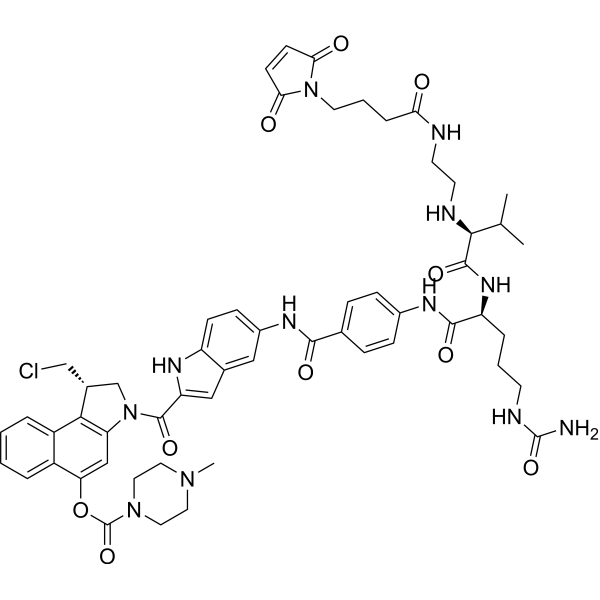
Cat. No.: HY-136289
CAS No.: 932744-62-2
Research Areas:  

Cancer

MB-VC-MGBA is a agent-linker conjugate for ADC with potent antitumor activity by using MGBA (minor-groove-binding DNA-alkylating agent), linked via the ADC linker MB-VC .
loading...
    loading...
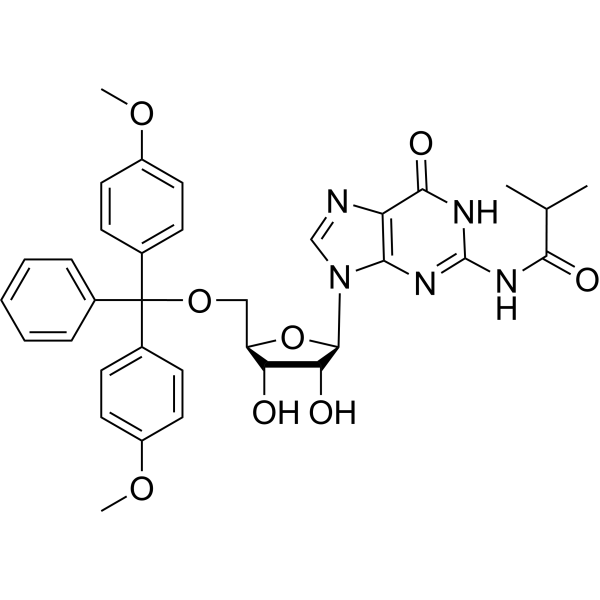
Cat. No.: HY-43058
CAS No.: 81246-83-5
Synonyms: 5'-O-DMT-N2-isobutyrylguanosine
5'-O-DMT-ibu-rG (5'-O-DMT-N2-isobutyrylguanosine) is a chemically modified guanosine derivative that can be used as a novel DNA-binding molecule for the development of effective and selective anti-cancer agents.
loading...
    loading...
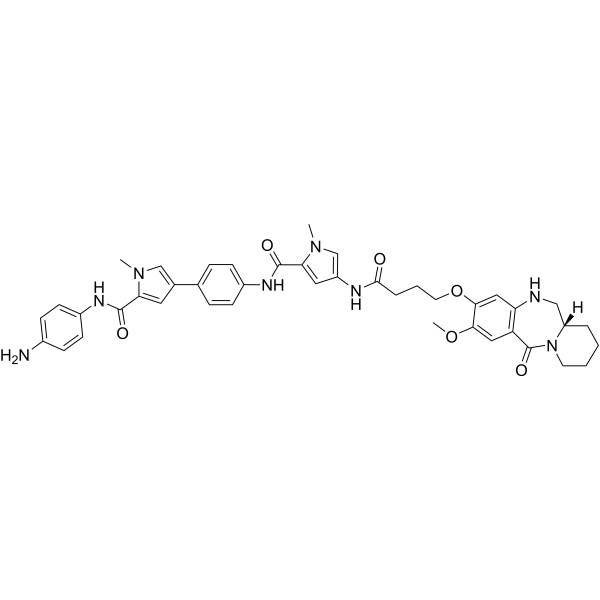
Cat. No.: HY-135900
CAS No.: 2412923-79-4
Target:  

ADC Payloads Bacterial

Research Areas:  

Cancer

Aniline-MPB-amino-C3-PBD is a cytotoxic agent comprised non-alkylating group. Aniline-MPB-amino-C3-PBD is a sequence-selective DNA minor-groove binding agent. Aniline-MPB-amino-C3-PBD acts as the payload for ADCs. Antimicrobial activity .
loading...
    loading...
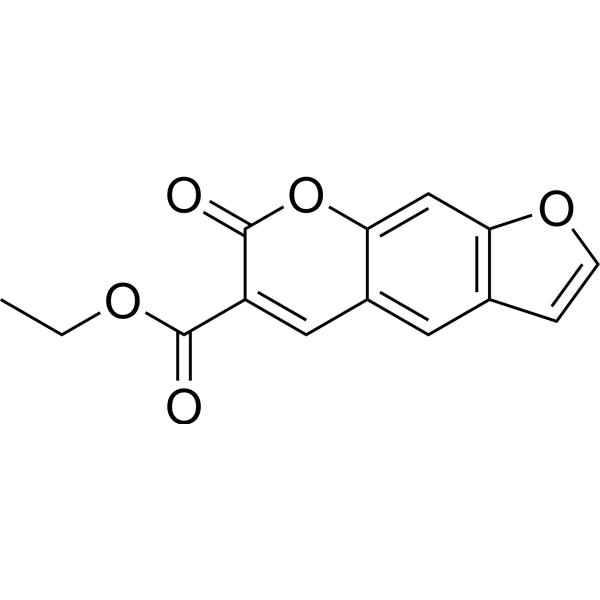
Cat. No.: HY-U00265
CAS No.: 20073-24-9
Synonyms: 3-Carbethoxypsoralen; 3-Ethoxycarbonylpsoralen
Target:  

Bacterial

Research Areas:  

Infection

3-CPs is a monofunctional furanocoumarin and a photoprotective agent targeting Staphylococcus aureus DNA, possessesing anti-UVB lethal activity. 3-CPs competitively intercalates into DNA, forming exclusively 4',5'-furan-side mono-adducts upon UVB irradiation, and irreversibly inhibits the formation of cyclobutane pyrimidine dimers. 3-CPs prevents UVB-induced DNA damage by preferentially binding to strong (AT)n sites within the DNA, without inducing lethal interstrand DNA cross-links; the limited number of mono-adducts it induces can be efficiently repaired by bacteria. 3-CPs holds potential for use in the development of photoprotective formulations for skin diseases, as well as in studies investigating bacterial DNA photodamage repair mechanisms and the optimization of photochemotherapy safety .
loading...
    loading...
Cat. No.: HY-12888
CAS No.: 907543-25-3
Target:  

Topoisomerase Bacterial

Research Areas:  

Infection

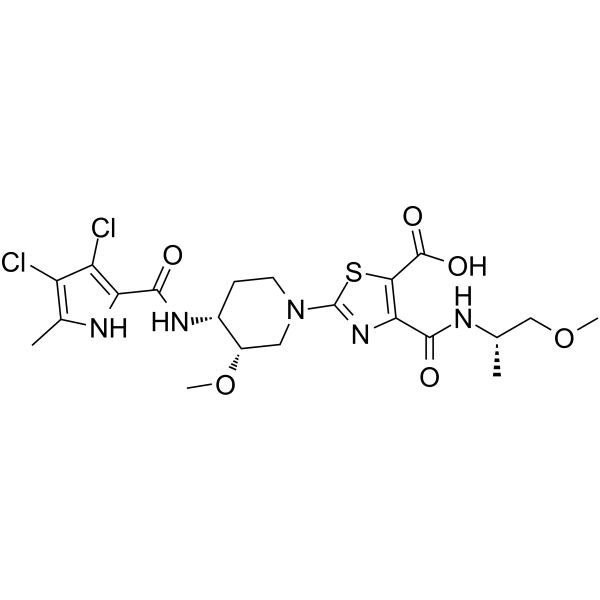
AZD5099 is an orally effective pyrrole amide inhibitor and antibacterial agent. AZD5099 shows over 10000-fold higher selectivity for bacterial type II topoisomerases than for human topoisomerase IIα, with a IC50 value of 0.032 μmol/L against Staphylococcus aureus GyrB, a IC50 of 0.760 μmol/L against Escherichia coli GyrB, a IC50 of 73 nM against Escherichia coli ParE, a Kd of 83.8 nmol/L for Staphylococcus aureus GyrB, and a IC50 of >50 μM against human topoisomerase IIα. AZD5099 inhibits rat Mrp2 ATPase activity, competitively binds to the ATP-binding site of bacterial type II topoisomerases, blocks enzyme activity, reduces bacterial DNA and RNA synthesis, disrupts DNA replication and transcription processes, and induces mitochondrial toxicity. AZD5099 exhibits activity against Gram-positive bacteria, fastidious Gram-negative bacteria and drug-resistant strains, reduces bacterial loads in mouse infection models, and has a low spontaneous resistance frequency. AZD5099 can be used in studies related to infections caused by Gram-positive bacteria and fastidious Gram-negative bacteria, methicillin-resistant Staphylococcus aureus infections, Streptococcus pneumoniae pulmonary infections, as well as Staphylococcus aureus and Escherichia coli infections .
loading...
    loading...
Cat. No.: HY-160129
CAS No.: 413577-16-9
Synonyms: ML-970; AS-I-145; NSC 716970
Research Areas:  

Cancer

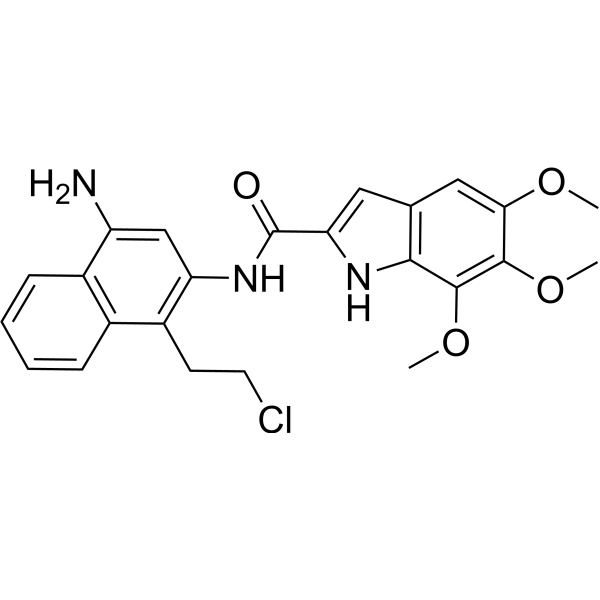
Centanamycin (ML-970; AS-I-145; NSC 716970) is a novel DNA-binding agent, and shows cytotoxic activity, with an average GI50 of 34 nM in NCI-60 cell line screening .
loading...
    loading...
Cat. No.: HY-W264454
CAS No.: 5342-95-0
Target:  

Bacterial

Research Areas:  

Infection

Antibacterial agent 303 (compound 3) is an antibacterial agent exhibiting potent antibacterial activity against MDR strains, with MICs of 10 and 100 µg/mL against Pseudomonas aeruginosa MDR1 and Staphylococcus aureus MDR strains, respectively. Antibacterial agent 303 displays strong binding affinities to E. coli DNA gyrase and Candida albicans lanosterol 14α-demethylase. Antibacterial agent 303 can be used for drug-resistant infections research .
loading...
    loading...
Cat. No.: HY-121352
CAS No.: 934464-79-6
Target:  

Drug Derivative

Research Areas:  

Cancer

Kibdelone C is a hexacyclic tetrahydroxanthone natural product and anticancer agent with sub-nanomolar GI50 activity against human SR leukemia and SN12C renal carcinoma cell lines. Kibdelone C disrupts the actin cytoskeleton in human cancer cells, leading to cell contraction and actin stress fiber formation, without direct actin binding, actin polymerization effects, topoisomerase I/II inhibition, or DNA binding. Kibdelone C can be used for the research of leukemia, and renal cell carcinoma .
loading...
    loading...
Cat. No.: HY-13550A
CAS No.: 70711-40-9
Synonyms: NSC 196473 acetate; NSC 290813 acetate
Target:  

DNA/RNA Synthesis

Research Areas:  

Cancer

Ametantrone acetate (NSC 196473 acetate) is an antineoplastic drug with topoisomerase II inhibitory activity. Ametantrone acetate causes covalent cross-linking of DNA. The pharmacokinetic profile of Ametantrone acetate has been confirmed in clinical trials, and its elimination pathway in the body indicates the existence of a major metabolic pathway .
loading...
    loading...
Cat. No.: HY-106091B
CAS No.: 88303-61-1
Synonyms: CI 941 hydrochloride; DUP 94 hydrochloride
Research Areas:  

Cancer

Losoxantrone hydrochloride (CI 941 hydrochloride) is a DNA-binding agent. Losoxantrone hydrochloride has broad-spectrum antitumour activity. Losoxantrone hydrochloride induces dose-dependent leukopenia .
loading...
    loading...
Cat. No.: HY-161890
Research Areas:  

Infection

Antimycobacterial agent-8 (Compound 49) is an inhibitor for DNA gyrase. Antimycobacterial agent-8 exhibits antibacterial activity against Mycobacterium tuberculosis and M. abscessus with MIC90 of 2.5 μM and 0.63 μM. Antimycobacterial agent-8 exhibits good plasma protein binding ability in mice .
loading...
    loading...
Cat. No.: HY-149925
CAS No.: 3034242-80-0
Research Areas:  

Infection

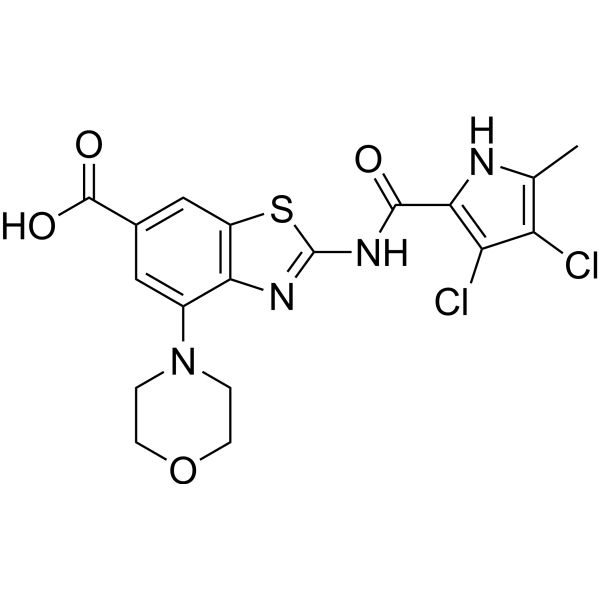
Antibacterial agent 138 is a benzothiazole inhibitor of bacterial DNA gyrase and topoisomerase IV. Antibacterial agent 138 exhibits favorable solubility and plasma protein binding. Antibacterial agent 138 has antibacterial activity against Gram-positive and Gram-negative strains. Antibacterial agent 138 is a dual GyrB and ParE inhibitor .
loading...
    loading...
Cat. No.: HY-122069
CAS No.: 80261-18-3
Synonyms: NSC 1
Target:  

Bacterial

Research Areas:  

Infection Neurological Disease Cancer

NSC177365 (NSC 1) is a CcrM inhibitor. NSC177365 is a competitive DNA inhibitor and disrupts DNA binding. NSC177365 has antibacterial activity, with IC50s of 2.3 and 14.6 μM for C. crescentus and M. lincolnii respectively. NSC177365 reverses several neurodegenerative disorders and serve as an anticancer agent .
loading...
    loading...
Cat. No.: HY-144823
CAS No.: 2416909-42-5
Target:  

Bacterial

Research Areas:  

Infection

Anti-MRSA agent 3 (compound 18) has highly inhibitory activity against Methicillin-resistant Staphylococcus aureus (MRSA) with MIC of 0.098 μg/ml, and low cytotoxicity in normal cells. Anti-MRSA agent 3 has relatively strong ability to destroy bacterial cell wall and membrane, high binding affinity to bacterial genomic DNA .
loading...
    loading...
Cat. No.: HY-170965
Target:  

CDK DNA/RNA Synthesis

Research Areas:  

Cancer

Anticancer agent 264 (Compound 5w) is an anticancer agent that exhibits significant antiproliferative activity across tumor cell lines, with an IC50 range of 7.5-33.67 μM. Anticancer agent 264 significantly induces G2/M phase arrest in MDA-MB-231, MIA PaCa-2, and DU-145 cell lines. Anticancer agent 264 reduces the expression of key cell cycle proteins, including CDK1, CDK2, and Cyclin B1, in a dose-dependent manner, and shows strong binding affinity with inhibitor of differentiation (ID) proteins and DNA-binding proteins. Anticancer agent 264 can be used for research in the field of cancer-related diseases .
loading...
    loading...
Cat. No.: HY-173318
Target:  

Bacterial

Research Areas:  

Infection

Anti-MRSA agent 25 (Compound 10c) is an antibacterial agent with a MIC of 0.25 μg/mL against methicillin-resistant Staphylococcus aureus (MRSA). Anti-MRSA agent 25 exerts its antibacterial activity by inhibiting biofilm formation, disrupting the cell wall (interacting with peptidoglycan and lipoteichoic acids), acting on the cell membrane (causing depolarization, increasing permeability, and disrupting integrity), reducing metabolic activity, interfering with cellular redox homeostasis, and binding to DNA. Anti-MRSA agent 25 is expected to be used in the research of the anti-infection field .
loading...
    loading...
Cat. No.: HY-161364
Target:  

Bacterial

Research Areas:  

Inflammation/Immunology

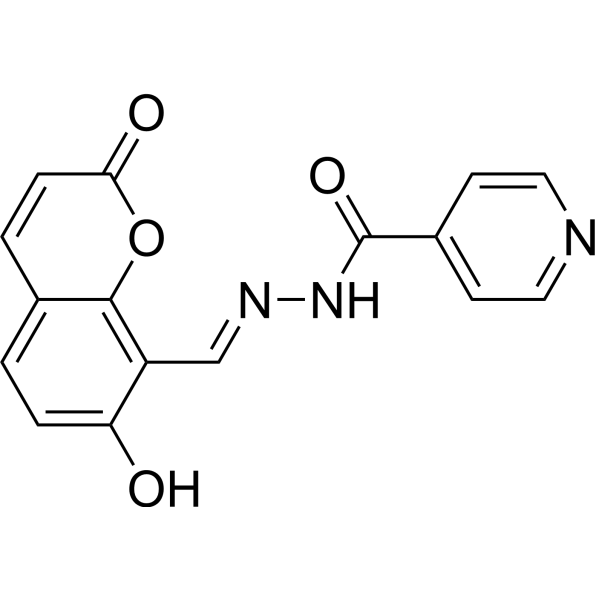
Antibacterial agent 200 (pyridyl HH 7), a unique hydrazyl hydroxycoumarin (HH), has strong antibacterial efficacy and broad antibacterial spectrum with MIC values ranging from 0.5 to 32 μg/mL for Gram-positive and Gram-negative bacteria. Antibacterial agent 200 exhibits a good inhibition against Pseudomonas aeruginosa 27853 with a low MIC value of 0.5 μg/mL. Antibacterial agent 200 can eradicate the integrity of bacterial membrane, result in the leakage of intracellular proteins, and interact with bacterial DNA gyrase via non-covalent binding .
loading...
    loading...
Cat. No.: HY-162775
CAS No.: 50566-97-7
Target:  

Bacterial Antibiotic

Research Areas:  

Infection

TST1N-224 is a potent response regulator VraRC inhibitor. TST1N-224 can disrupt VraRC-DNA complex formation (IC50=60.2 μM). TST1N-224 exhibits interference with VraRC binding to its cognate DNA through a fast-on-fast-off binding mechanism (KD=23.4 μM). TST1N-224 predominantly interacts with the α9- and α10-helixes of the DNA-binding domain of VraR. TST1N-224 inhibits the growths of S. aureus (SA; MIC>126 μM), Methicillin-resistant S. aureus (MRSA; MIC>126 μM), and Vancomycin-intermediate S. aureus (VISA; MIC=63 μM). TST1N-224, an antimicrobial agent, evidently enhances the susceptibility of VISA to both Vancomycin (HY-B0671) and Methicillin (HY-B0974) .
loading...
    loading...
Cat. No.: HY-12404R
CAS No.: 908-54-3
Synonyms: Diminazene diaceturate (Standard)
Diminazene (aceturate) (Standard) is the analytical standard of Diminazene (aceturate). This product is intended for research and analytical applications. Diminazene aceturate (Diminazene diaceturate) is an anti-trypanosome agent for livestock. The main biochemical mechanism of the trypanocidal actions of Diminazene aceturate is by binding to trypanosomal kinetoplast DNA (kDNA) in a non-intercalative manner through specific interaction with sites rich in adenine-thymine base pairs. Diminazene aceturate is also an angiotensin-converting enzyme 2 (ACE2) activator and has strong and potent anti-inflammatory properties .
loading...
    loading...
Cat. No.: HY-128744R
CAS No.: 4408-78-0
Phosphonoacetic acid Standard is the analytical standard of Phosphonoacetic acid (HY-128744). This product is intended for research and analytical applications. Phosphonoacetic acid is a potent antiviral agent. Phosphonoacetic acid inhibits a variety of herpesviruses, orthopoxviruses, and retroviruses. Phosphonoacetic acid strongly inhibits viral and cellular DNA polymerase, reverse transcriptase, and terminal deoxynucleotidyl transferase activities in a non-competitive or uncompetitive manner by binding to the pyrophosphate site of the enzyme. Phosphonoacetic acid is useful for research related to lymphoid leukemia, herpesvirus infection, and vaccinia virus skin lesions .
loading...
    loading...

