58 Results for "

HT22 Cell

" in MedChemExpress (MCE) Product Catalog:
Products (58)

58 Results for "HT22 Cell" in MCE Product Catalog:

Cat. No.: HY-N8412
CAS No.: 13323-67-6
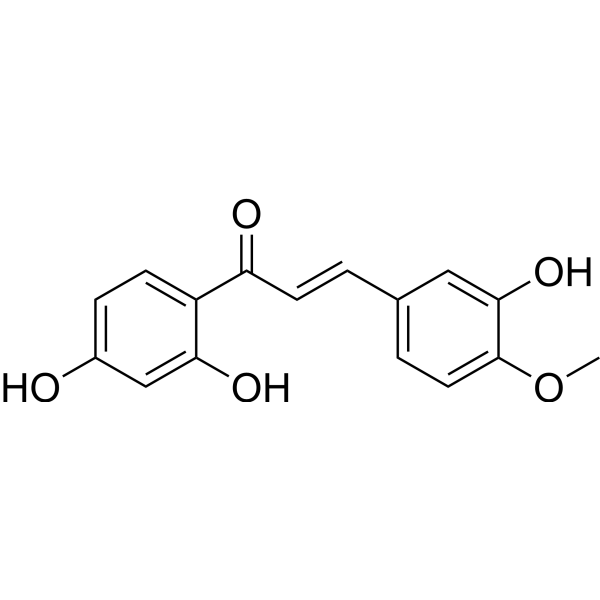
4-O-Methylbutein is a phenolic glucoside that can be isolated from Elsholtzia ciliata.4-O-Methylbutein exhibits neuroprotective effects against glutamate-induced HT22 cell death with an EC50 of 35.2 μM .
loading...
    loading...
Cat. No.: HY-175675
CAS No.: 3104888-50-5
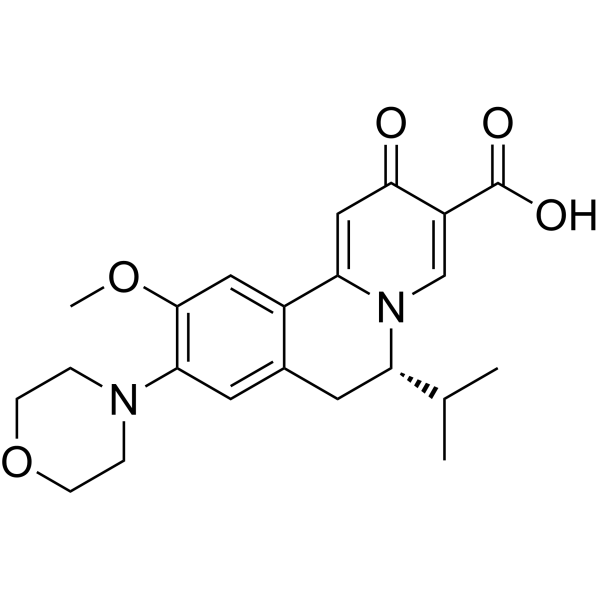
P2Y1 antagonist 4 is a selective P2Y1 receptor antagonist with excellent blood-brain barrier (BBB) penetration. P2Y1 antagonist 4 inhibits P2Y1 receptor-mediated cytosolic Ca 2+ increase (IC50 = 1.95 μM) and platelet aggregation (IC50 = 3.24 μM) induced by ADP in rabbit washed platelets. P2Y1 antagonist 4 significantly upregulates the level of nuclear Nrf2 protein in H2O2-treated HT22 cells. P2Y1 antagonist 4 reduces myocardial infarct size in a mouse acute myocardial infarction (MI) model. P2Y1 antagonist 4 can be used for the study of ischemic stroke and myocardial infarction .
loading...
    loading...
Cat. No.: HY-161327
Target:  

HBV

Research Areas:  

Infection

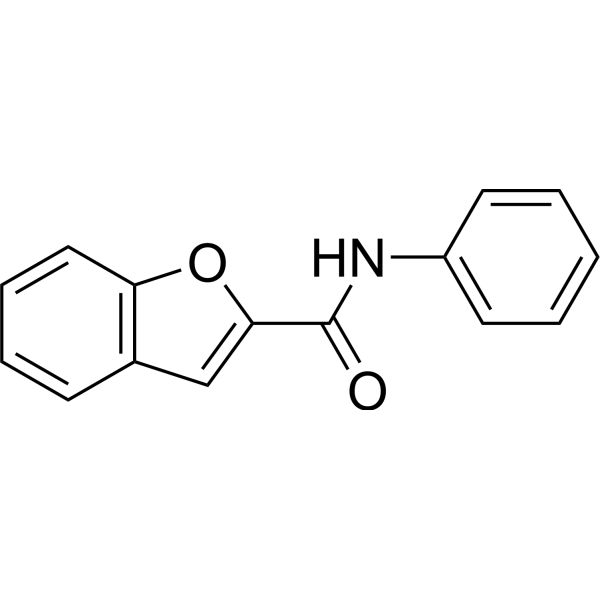
HBV-IN-44 (Compound (S)-2a) is a HBV inhibitor with a IC50 value of 23 nM for HbsAg. HBV-IN-44 is less toxic to the neurite growth of HT22 cells and DRG neurons in vitro .
loading...
    loading...
Cat. No.: HY-139382
CAS No.: 1607447-79-9
Target:  

Cytochrome P450

Research Areas:  

Neurological Disease

2-(Isopentylamino)naphthalene-1,4-dione (compound 3d), a Vitamin K (HY-B2172) analogue, shows protection in Pentylenetetrazole (PTZ)-induced seizure model. 2-(Isopentylamino)naphthalene-1,4-dione significantly increases ATP levels in zebrafish as well as HT-22 cells. 2-(Isopentylamino)naphthalene-1,4-dione shows excellent permeability into the brain .
loading...
    loading...
Cat. No.: HY-149763
CAS No.: 50635-12-6
Purity:  99.90%
Target:  

Amyloid-β

Research Areas:  

Neurological Disease

Aβ42 agonist-1 is a compound that can promote Aβ42 aggregation. Aβ42 agonist-1 can interact with Aβ42 oligomers and pentamers to promote nontoxic aggregate self-assembly and rapid fibril formation. Aβ42 agonist-1 prevents Aβ42-induced cytotoxicity in HT22 hippocampal neuronal cells .
loading...
    loading...
Cat. No.: HY-W670700
CAS No.: 22089-12-9
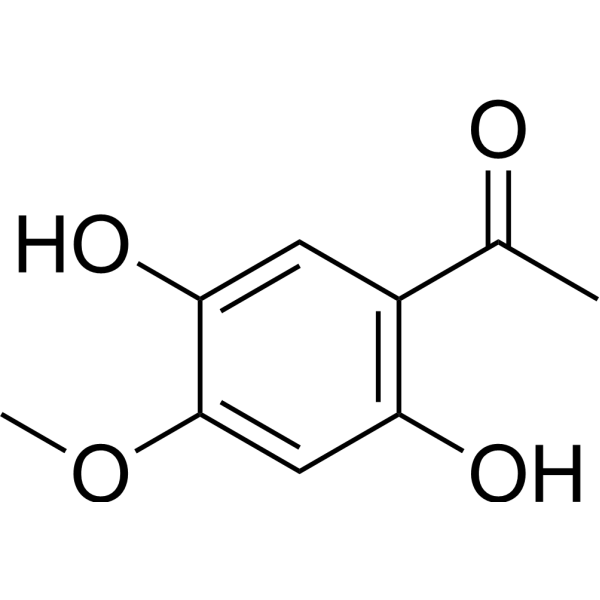
2,5-Dihydroxy-4-methoxyacetophenone (compounds 3) can be isolated from the 80% methanol extract of roots of Cynanchum paniculatum Kitagawa. 2,5-Dihydroxy-4-methoxyacetophenone inhibits glutamate-induced cytotoxicity in hippocampal HT22 cell line . 2,5-Dihydroxy-4-methoxyacetophenone significantly inhibites MMP-13 expression in SW1353 cells, and have the potential for alleviating cartilage degradation .
loading...
    loading...
Cat. No.: HY-174339
CAS No.: 2522599-69-3
Neuroprotective agent 12 is an orally active and BBB-penetrable neuroprotective agent. Neuroprotective agent 12 has potent neuroprotective effects with robust anti-oxidation and anti-inflammation. Neuroprotective agent 12 significantly inhibits glutamate- and acrolein-induced cell death, reduces PDE4B expression but increases the HO-1, p-CREB and BDNF levels. Neuroprotective agent 12 exhibits potent neuroprotection in traumatic brain injury (TBI) mice model, promising for TBI and other central nervous system diseases .
loading...
    loading...
Cat. No.: HY-178352
CAS No.: 3098883-91-8
MAO-B-IN-49 is a selective and reversible MAO-B inhibitor (IC50 of 1 nM for human MAO-B). MAO-B-IN-49 shows much higher selectivity for MAO-B than for MAO-A (IC50 = 633.9 μM). MAO-B-IN-49 can reduce ROS production induced by Lipopolysaccharides (HY-D1056) (LPS) in HT22 cells. MAO-B-IN-49 demonstrates substantial neuroprotective properties and significantly improves motor dysfunction in MPTP (HY-W114750)-induced mouse models of Parkinson’s disease (PD). MAO-B-IN-49 can be used for the study of PD .
loading...
    loading...
Cat. No.: HY-170562
CAS No.: 3098824-77-9
STEP-IN-1 (Compound 14b) is a potent and selective STEP inhibitor with an IC50 of 5.27 μM. STEP-IN-1 has a neuroprotective effect, which can protect nerve cells from glutamate-induced toxicity, reduce cellular ROS accumulation, and inhibit apoptosis. STEP-IN-1 can be used in the study of neurodegenerative diseases .
loading...
    loading...
Cat. No.: HY-180327
CAS No.: 313051-12-6
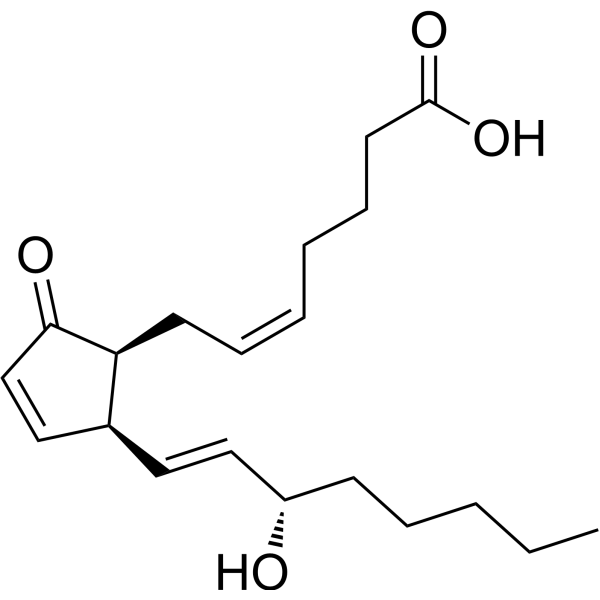
NEPP11 is a cyclopentenone prostaglandin analogue. NEPP11 can inhibit glutamate-induced HT22 cell death in mouse hippocampus and prevent manganese-induced apoptosis in PC12 cells. NEPP11 can activate Nrf2 and maintain MEK1/2 and ERK1/2 activity by inhibiting c-Raf downregulation. NEPP11 exerts a neuroprotective effect in a mouse model of focal cerebral ischemia caused by permanent middle cerebral artery occlusion .
loading...
    loading...
Cat. No.: HY-114892
CAS No.: 474391-66-7
Synonyms: 8-iso Prostaglandin A2
Research Areas:  

Endocrinology

15-A2t-Isoprostane (8-iso Prostaglandin A2) is an isoprostaglandin produced by the non-enzymatic oxidation of arachidonic acid .
loading...
    loading...
Cat. No.: HY-180806
CAS No.: 3065634-42-3
RIPK1-IN-39 (compound 2) is a potent and selective RIPK1 inhibitor (IC50 = 69.40 nM) exhibiting >100-fold selectivity over RIPK3 (IC50 = 6946 nM). RIPK1-IN-39 protects HT-22 and HT-29 cells from necroptosis by inhibiting the phosphorylation and activation of the RIPK1-RIPK3-MLKL pathway. RIPK1-IN-39 demonstrates neuroprotective effects in a rat model of middle cerebral artery occlusion (MCAO). RIPK1-IN-39 can be used for acute ischemic stroke (AIS) research .
loading...
    loading...
Cat. No.: HY-174260
CAS No.: 3081915-81-0
Research Areas:  

Neurological Disease

Neuroprotective agent 11 (Compound 1a) is an orally active polyphenol compound with significant protective effects against cerebral ischemia. The main activities of Neuroprotective agent 11 include inhibiting neuronal inflammation and apoptosis, reducing cerebral infarction volume, and improving behavioral symptoms of cerebral ischemic mice. Neuroprotective agent 11 exerts its regulatory mechanism by downregulating the expression of inflammatory factors (iNOSCOX-2) and apoptotic proteins (cleaved-Caspase3, p53). Neuroprotective agent 11 can be used in the study of cerebral ischemia-related diseases (such as ischemic stroke) .
loading...
    loading...
Cat. No.: HY-174126
Target:  

P2Y Receptor

Research Areas:  

Cardiovascular Disease

P2Y1 antagonist 2 (Compound 19) is a P2Y1 receptor antagonist (IC50: 0.49 μM). P2Y1 antagonist 2 has significant antiplatelet aggregation activity and exerts its effects by inhibiting P2Y1 receptor. P2Y1 antagonist 2 can upregulate nuclear Nrf2 protein levels, exhibit neuroprotective effects, and resist oxidative stress damage. P2Y1 antagonist 2 can effectively reduce cerebral infarction area and improve neurobehavioral function, and can be used in the study of ischemic stroke .
loading...
    loading...
Cat. No.: HY-402805
CAS No.: 2416195-65-6
Target:  

DYRK CDK Tau Protein

Research Areas:  

Cancer

DYRK2-IN-2 (Compound C17) is a selective inhibitor of DYRK2, with its IC50 value being 40.3 nM. The inhibitory activity of DYRK2-IN-2 on DYRK1A (IC50 = 1842 nM), DYRK1B (IC50 = 1335 nM), DYRK4 (IC50 = 1931 nM), DYRK3 (IC50 = 112 nM), and CLKs (IC50 = 540-6496 NM) is relatively low. DYRK2-IN-2 inhibits the phosphorylation of Tau protein at Thr212 and shows moderate cytotoxicity in HT22 cells. DYRK2-IN-2 can be used in cancer research .
loading...
    loading...
Cat. No.: HY-180197
PICK1 PDZ-IN-1 (Compound 6b) is a selective and brain-penetrant protein interacting with C kinase 1 (PICK1) PDZ domain inhibitor with a Ki of 27.73 μM. PICK1 PDZ-IN-1 can competitively inhibit the interaction between PICK1 and the GluA2 subunit of AMPA receptors. PICK1 PDZ-IN-1 can increase the survival rate of HT22 cells and primary cortical neuron cells induced by glutamate and inhibit ROS production. PICK1 PDZ-IN-1 exhibits neuroprotective effect and reduces the area of cerebral infarction. PICK1 PDZ-IN-1 can be used for the research of ischemic stroke .
loading...
    loading...
Cat. No.: HY-172604
Neuroprotective agent 10 is an orally active, blood-brain barrier permeable neuroprotective agent. Neuroprotective agent 10 scavenges ABTS, DPPH and superoxide anion free radicals. Neuroprotective agent 10 inhibits abnormal electrical discharges. At the cellular level, Neuroprotective agent 10 alleviates H2O2-induced oxidative damage and LPS (HY-D1056)-induced neuroinflammation, and relieves epileptic symptoms and oxidative damage in mice. Neuroprotective agent 10 can be used in the research of epilepsy .
loading...
    loading...
Cat. No.: HY-170976
Target:  

Cholinesterase (ChE)

Research Areas:  

Neurological Disease

BuChE-IN-16 (Compound 6a) is an orally active, BBB-permeable, and selective BuChE inhibitor with an IC50 of 0.33 μM. BuChE-IN-16 has anti-inflammatory and neuroprotective effects. BuChE-IN-16 can improve the cognitive function of zebrafish with Alzheimer's disease (AD) and alleviate memory impairment in mice induced by Scopolamine (HY-N0296). BuChE-IN-16 can be used for the research of AD .
loading...
    loading...
Cat. No.: HY-181589
Research Areas:  

Neurological Disease

PDE11A4-IN-2 is a selective PDE11A4 inhibitor with an IC50 of 33 nM. PDE11A4-IN-2 functionally inhibits PDE11A4-mediated catalytic activities of cAMP and cGMP in cellular models. PDE11A4-IN-2 is applicable to the research of age-related cognitive decline .
loading...
    loading...
Cat. No.: HY-175824
PSD-95/nNOS PPI-IN-1 is a inhibitor targeting the PSD-95/nNOS interaction with potential blood-brain barrier penetration. PSD-95/nNOS PPI-IN-1 binds to the PSD-95 PDZ2 domain with high affinity (Ki = 19.45 μM). PSD-95/nNOS PPI-IN-1 inhibits glutamate-induced excitotoxicity by reducing intracellular ROS levels and inhibiting apoptosis. PSD-95/nNOS PPI-IN-1 significantly reduces cerebral infarct volume in rat tMCAO models. PSD-95/nNOS PPI-IN-1 can be used for the study of acute ischemic stroke .
loading...
    loading...

