


93 Results for "

T-cell lymphomas

" in MedChemExpress (MCE) Product Catalog:
Products (93)

93 Results for "T-cell lymphomas" in MCE Product Catalog:

  • Categories Recommended:
    More
Cat. No.: HY-156730
CAS No.: 2502186-79-8
Purity:  96.17%
Target:  

Molecular Glues STAT

Research Areas:  

Cancer

KT-333 is a molecular glues that degrades STAT3 protein. KT-333 mediates the selective degradation of STAT3 through the ubiquitin-proteasome system by binding to STAT3 protein and E3 ubiquitin ligase von Hippel-Lindau protein (VHL). KT-333 has strong selectivity for STAT3 protein degradation and good antitumor activity. KT-333 can be used in the study of hematologic malignancies such as large granular lymphocytic leukemia (LGL-L), peripheral T-cell lymphoma (PTCL), and cutaneous T-cell lymphoma (CTCL) .
loading...
    loading...
Cat. No.: HY-P991028
CAS No.: 2892667-02-4
Synonyms: AZD0486; TNB-486

Research Areas:  

Cancer

Surovatamig (AZD0486; TNB-486) is a fully human anti-CD19/CD3 IgG4 bispecific antibody. Surovatamig triggers T cell activation, releases cytotoxic granules, and induces T cell-dependent cellular cytotoxicity and tumor cell lysis. Surovatamig can reduces release of pro-inflammatory cytokines including IL-2, IFNγ, TNF. Surovatamig can be used for the research of cancer, such as B cell non-Hodgkin lymphoma .
loading...
    loading...
Cat. No.: HY-172736
CAS No.: 3005272-36-3
Synonyms: BMS-986458
Target:  

PROTACs BCL6 CD20

Research Areas:  

Cancer

Toviblideg (BMS-986458) is a highly selective, orally active cereblon-based BCL6 PROTAC degrader and antitumor agent. Toviblideg selectively degrades BCL6 by binding cereblon to the BTB domain of BCL6, thereby regulating the cell cycle, antiproliferative and interferon signaling pathways, and upregulating the expression and distribution of CD20. Toviblideg modulates the phenotype of follicular helper T cells and reduces circulating tumor DNA levels. The combination of Toviblideg with CD20xCD3 bispecific antibody also enhances the efficiency of T cell tumor infiltration and expansion. Toviblideg induces regression of BCL6-positive tumors and prolongs survival, and it is suitable for research related to B-cell non-Hodgkin lymphoma, diffuse large B-cell lymphoma, follicular lymphoma, and relapsed/refractory lymphoma .
loading...
    loading...
Cat. No.: HY-P99369
CAS No.: 2187368-16-5
Synonyms: IPH 4102; Anti-KIR3DL2/CD158k Reference Antibody (lacutamab)

Target:  

MHC

Research Areas:  

Cancer

Lacutamab (IPH 4102) is a humanized monoclonal antibody targeting KIR3DL2/CD158k, which eliminates KIR3DL2-expressing cells via antibody-dependent cellular cytotoxicity and phagocytosis. Lacutamab is applicable to research related to mycosis fungoides, relapsed or refractory peripheral T-cell lymphoma, and relapsed or refractory cutaneous T-cell lymphoma .
loading...
    loading...
Cat. No.: HY-P990710
CAS No.: 2738880-26-5
Synonyms: AFM13

Target:  

TNF Receptor

Research Areas:  

Cancer

Acimtamig (AFM13) is a CD30/CD16A bispecific innate cell engager. Acimtamig binds to the CD16A expressed on natural killer (NK) cells and binds to CD30 on CD30-expressing tumor cells, thereby selectively cross-linking tumor and NK cells. Acimtamig can be used for the study of eripheral T-cell lymphoma (PTCL) .
loading...
    loading...
Cat. No.: HY-P99914
CAS No.: 2559704-23-1
Synonyms: GNC-038
Emfizatamab (GNC-038) is a monoclonal antibody against CD19/CD3E/TNFRSF9/PD-L1. Emfizatamab exhibits antitumor activity, being capable of activating CD3 and 4-1BB signals on T cells, as well as targeting the high expression of CD19 or PD-L1 on tumor cells. Emfizatamab functions as a CD19-specific T cell engager by mediating direct antitumor activity. Emfizatamab can also overcome the inhibition of T cells by PD-L1. Emfizatamab can be used in the research of tumors such as R/R non-Hodgkin lymphoma or acute lymphoblastic leukemia .
loading...
    loading...
Cat. No.: HY-P99266
CAS No.: 652153-01-0
Synonyms: Anti-Human CD4 Recombinant Antibody
Zanolimumab (Anti-Human CD4 Recombinant Antibody) is a fully human monoclonal antibody targets CD4. Zanolimumab effectively inhibits T-cell receptor (TCR) signal transduction. Zanolimumab can be used for the research of heumatoid arthritis, psoriasis, melanoma, cutaneous and peripheral T-cell lymphoma .
loading...
    loading...
Cat. No.: HY-P99922
CAS No.: 2173096-82-5

Target:  

LAG-3

Research Areas:  

Cancer

Encelimab is an anti-LAG3 antibody. Encelimab blocks the interaction between LAG-3 and MHC II, and enhances T-cell activation. Encelimab alone or in combination with an anti-PD-1 antibody reduces tumor size in a lymphoma mice model (A20 cell xenograft) .
loading...
    loading...
Cat. No.: HY-N4053
CAS No.: 2880-49-1
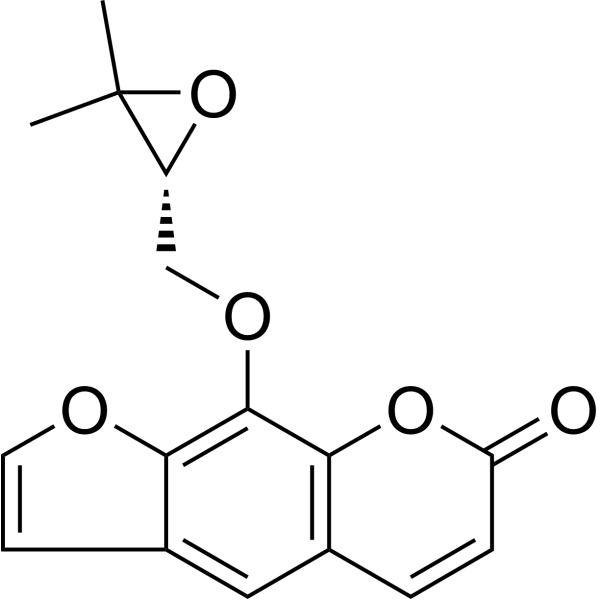
Heraclenin is a linear furanocoumarin natural product. Heraclenin binds to the type III effector protein XopQ and chitin deacetylase, exhibits antibacterial activity against Xanthomonas oryzae pv. oryzae, and displays antifungal activity against Colletotrichum lindemuthianum. Heraclenin stimulates Runx2 mRNA expression, induces osteoblast differentiation and mineralization. Heraclenin induces Chk1 phosphorylation, G2/M cell cycle arrest, DNA fragmentation, apoptosis, chromosomal aberrations, sister chromatid exchange, and inhibits proliferation. Heraclenin can be used for research on osteoporosis, melanoma, T-cell lymphoma, and leukemia .
loading...
    loading...
Cat. No.: HY-119715
CAS No.: 486414-35-1
Target:  

CDK Apoptosis

Research Areas:  

Inflammation/Immunology Cancer

AG-012986 is a pan-CDK inhibitor with Ki values of 44 nM (CDK1), 9.2 nM (CDK4), 94 nM (CDK2), and IC50 values of 22 nM (CDK5), 4 nM (CDK9). AG-012986 causes apoptosis of T-cells by targeting upstream kinases in the p38 Mitogen-activated protein kinase (MAPK) pathway and impairing cellular survival. AG-012986 induces cell cycle arrest, retinoblastoma protein hypophosphorylation, and reduces Ki-67 expression. AG-012986 exerts antiproliferative activity in tumor cells, demonstrates antitumor efficacy in human xenograft models, and causes retinal and peripheral neurotoxicity, plus immune cell toxicity. AG-012986 can be used for the research of colon carcinoma, non-small cell lung carcinoma, lung carcinoma, breast carcinoma, ovarian tumor, pancreatic carcinoma, osteosarcoma, lymphoma, leukemia, retinotoxicity .
loading...
    loading...
Cat. No.: HY-174371
CAS No.: 3032576-92-1
INNO-220 is an orally active, CRBN-dependent molecular glue degrader targeting CK1α. INNO-220 induces cell cycle arrest at G0/G1 phase and triggers apoptosis by degrading CK1α. INNO-220 disrupts the assembly and function of the CARD11/BCL10/MALT1 complex, thereby inhibiting NF-κB signaling in stimulated T cells and lymphoma cells that harbor an activating mutation in CARD11. INNO-220 provides a new direction for lymphoma research.
loading...
    loading...
Cat. No.: HY-P11107
CAS No.: 2375823-45-1
Target:  

Apoptosis TNF Receptor

Research Areas:  

Inflammation/Immunology Cancer

RP-832c is a synthetic analogue of host defense peptides (HDP), targeting the mannose receptor CD206 on the surface of M2 polarized macrophages (Kd = 3.5 μM). RP-832c binding to CD206 induces a significant conformational change in the receptor, activating signaling pathways that lead to rapid apoptosis and repolarization of CD206-positive M2 macrophages to an M1 phenotype. RP-832c treatment significantly reduces CD206 gene expression in M2 macrophages while transiently increasing expression of TNF-α, a marker for M1 macrophages. RP-832c is used for the studies of T-cell lymphoma (CTCL) and idiopathic pulmonary fibrosis (IPF) .
loading...
    loading...
Cat. No.: HY-117433S
CAS No.: 1246816-71-6
Purity:  ≥95.0%
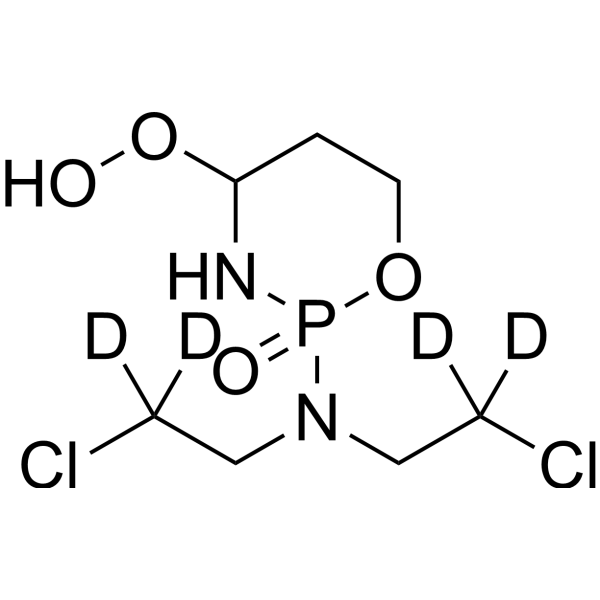
4-Hydroperoxy Cyclophosphamide-d4 is the deuterium labeled 4-Hydroperoxy cyclophosphamide. 4-Hydroperoxy cyclophosphamide is the active metabolite form of the proagent Cyclophosphamide. 4-Hydroperoxy cyclophosphamide crosslinks DNA and induces T cell apoptosis independent of death receptor activation, but activates mitochondrial death pathways through production of reactive oxygen species (ROS). 4-Hydroperoxy cyclophosphamide has the potential for lymphomas and autoimmune disorders .
loading...
    loading...
Cat. No.: HY-P991176
Synonyms: RO7443904

Target:  

CD19 CD28

Research Areas:  

Cancer

RG-6333 is a bispecific agonist targeting CD19 and CD28. RG-6333 specifically recognizes and binds to the CD19 antigen on the surface of B-cell malignancies to locate tumor cells. RG-6333 activates T cells by binding to CD28, overcoming activation barriers to enhance anti-tumor immunity. RG-6333 can be used in the study of relapsed/refractory non-Hodgkin's lymphoma. The recommended isotype control is human IgG1 kappa, isotype control (HY-P99001) .
loading...
    loading...
Cat. No.: HY-P99119

Research Areas:  

Inflammation/Immunology Cancer

Anti-Mouse 4-1BB/CD137 Antibody (3H3) is an anti-mouse 4-1BB/CD137 IgG2a κ agonistic monoclonal antibody. Anti-Mouse 4-1BB/CD137 Antibody (3H3) can effectively activate memory T cells and inhibit tumors by increasing Bcl-xL and granzyme B levels. Anti-Mouse 4-1BB/CD137 Antibody (3H3) can be used for research on cancer such as lymphoma and colon cancer .
loading...
    loading...
Cat. No.: HY-P99759
CAS No.: 1622189-43-8
Synonyms: IL-15N72D

Target:  

Interleukin Related

Research Areas:  

Inflammation/Immunology Cancer

Nogapendekin alfa his tag is an immunostimulant that binds to the IL-2RβγC complex on immune cells. Nogapendekin alfa his tag stimulates the proliferation and activation of natural killer cells and CD8 + T cells, upregulates the expression of granzyme B and perforin, and activates the innate and adaptive immune branches. Nogapendekin alfa his tag forms ALT-803 with IL-15RαSuFc; this complex has an extended biological half-life, improved biodistribution and retention in lymphoid tissues, enhances natural killer cell-mediated rituximab-dependent cellular cytotoxicity, and reduces tumor burden and improves survival when combined with anti-CD20 monoclonal antibody therapy. Nogapendekin alfa his tag can be used in the research of non-Hodgkin's lymphoma .
loading...
    loading...
Cat. No.: HY-14171S
CAS No.: 2182068-00-2
Purity:  99.11%
Synonyms: LGD1069 d4
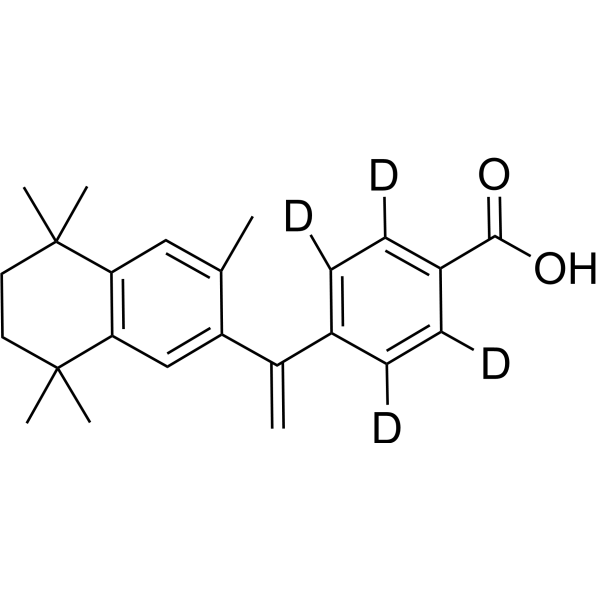
Bexarotene-d4 is a deuterium labeled Bexarotene (LGD1069). Bexarotene (LGD1069) is a selective retinoid X receptors (RXR) agonist for the treatment of cutaneous T-cell lymphoma .
loading...
    loading...
Cat. No.: HY-156730A
CAS No.: 2839758-34-6
Target:  

Molecular Glues STAT

Research Areas:  

Cancer

KT-333 ammonium (Compound A) is a molecular glues that degrades STAT3 protein. KT-333 ammonium mediates the selective degradation of STAT3 through the ubiquitin-proteasome system by binding to STAT3 protein and E3 ubiquitin ligase von Hippel-Lindau protein (VHL). KT-333 ammonium has strong selectivity for STAT3 protein degradation and good antitumor activity. KT-333 ammonium can be used in the study of hematologic malignancies such as large granular lymphocytic leukemia (LGL-L), peripheral T-cell lymphoma (PTCL), and cutaneous T-cell lymphoma (CTCL) .
loading...
    loading...
Cat. No.: HY-155477
Target:  

E1/E2/E3 Enzyme

Research Areas:  

Cancer

Cbl-b-IN-15 (compound 25) is an inhibitor of the RING finger E3 ligase Cbl (IC50: 15 nM). Cbl-b refers to Casitas B-lineage lymphoma proto-oncogene-b, which inhibits T-cell, natural killer (NK) cell, and B-cell activation. Cbl-b-IN-15 activates T cell function with EC50=0.41 μM .
loading...
    loading...
Cat. No.: HY-175453
CAS No.: 3050683-03-6
Target:  

Molecular Glues

Research Areas:  

Cancer

MRT-23227 is a CRBN-recruiting molecular glue degrader targeting VAV1. MRT-23227 binds to the tryptophan triad pocket of CRBN, forms a ternary complex with the SH3c domain of VAV1, and induces proteasomal degradation of VAV1 through hydrogen-bond interactions between CRBN residues and the RT loop and side chains of VAV1. MRT-23227 can be used in the research of T-cell leukemia and lymphoma .
loading...
    loading...

