93 Results for "

pentose

" in MedChemExpress (MCE) Product Catalog:
Products (93)

93 Results for "pentose" in MCE Product Catalog:

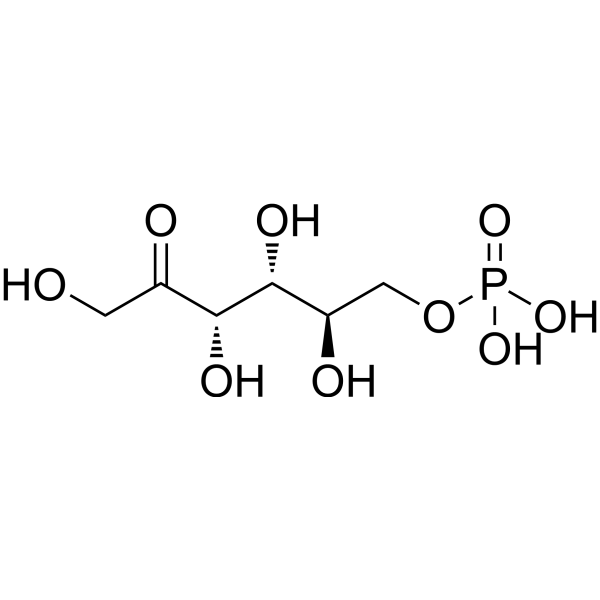
Cat. No.: HY-113407
CAS No.: 643-13-0
D-Fructose 6-phosphate is an endogenous metabolite. D-Fructose 6-phosphate can be obtained by hydrolysis of Fructose-1,6-bisphosphatase (FBPase). D-Fructose-6-phosphate is a sugar intermediate in the glycolysis pathway and the pentose phosphate pathway. D-Fructose-6-phosphate can be used to detect glucosamine-6-phosphate synthase and TAL activities. D-Fructose 6-phosphate can be used to study Lewy body dementia .
loading...
    loading...
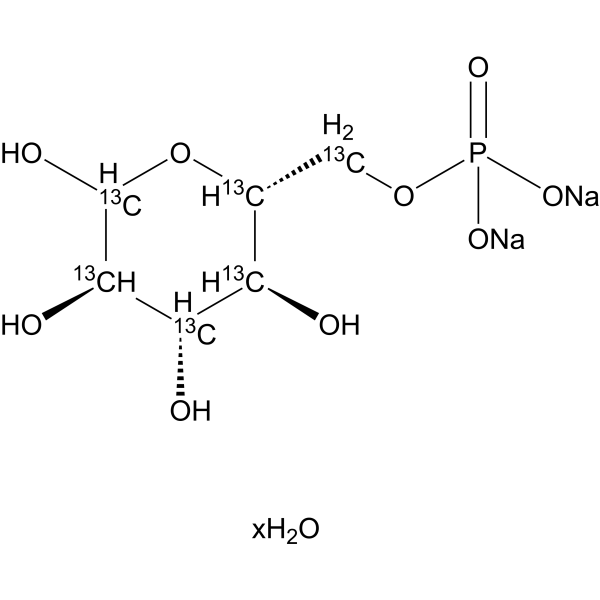
Cat. No.: HY-112537S1
Purity:  ≥98.0%
D-Glucose 6-Phosphate- 13C6 disodium xhydrate is a 13C-labeled D-Glucose 6-phosphate disodium xhydrate. D-Glucose 6-phosphate disodium xhydrate is a key central node metabolite in sugar metabolism, serving as the initial metabolite of glycolysis and pentose phosphate pathway, and also a substrate for glycogen synthesis. D-Glucose 6-phosphate disodium xhydrate can act as a metabolic stress signal, especially when phosphoglucomutase (PGI) is inhibited, activating the mTOR pathway, promoting protein synthesis, and thereby participating in the remodeling process of the heart. D-Glucose 6-phosphate disodium xhydrate can be used in research related to non-insulin-dependent diabetes and heart failure.
loading...
    loading...
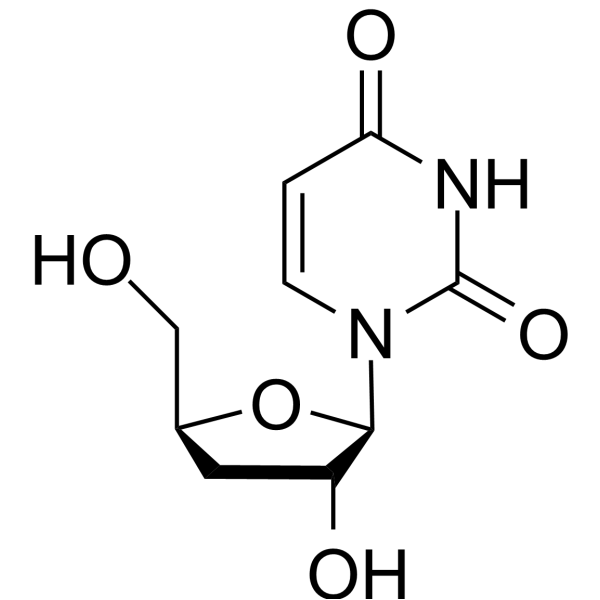
Cat. No.: HY-W012282
CAS No.: 7057-27-4
Target:  

HCV

Research Areas:  

Infection

3′-Deoxyuridine is a 3'-deoxynucleoside analog and a 2',3'-dideoxynucleoside. 3′-Deoxyuridine does not inhibit the replication of HCV-like RNA templates or luciferase levels in human cells at the tested concentrations. 3′-Deoxyuridine serves as a substrate for microbial dideoxyribosylation reactions to generate various 2',3'-dideoxynucleosides, but cannot be converted into 2',3'-dideoxycytidine by resting E. coli AJ 2595 cells. 3′-Deoxyuridine can be formed by the deamination of 3'-deoxycytidine by E. coli BM-11 cytidine deaminase, and can also undergo phosphorolytic cleavage to produce uracil and the corresponding pentose phosphate. 3′-Deoxyuridine has been used in research related to HCV and other relevant fields .
loading...
    loading...
Cat. No.: HY-100582R
CAS No.: 488-81-3
Synonyms: Adonitol (Standard); Adonite (Standard); BBP-418 (Standard)
Ribitol (Standard) is the analytical standard of Ribitol. This product is intended for research and analytical applications. Ribitol is a crystalline pentose alcohol formed by the reduction of ribose. Enhancing the flux of D-glucose to the pentose phosphate pathway in Saccharomyces cerevisiae for the production of D-ribose and ribitol.
loading...
    loading...
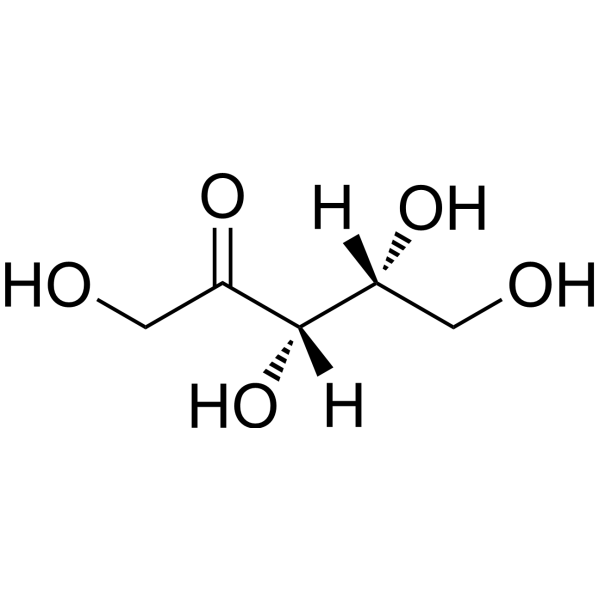
Cat. No.: HY-W010256
CAS No.: 551-84-8
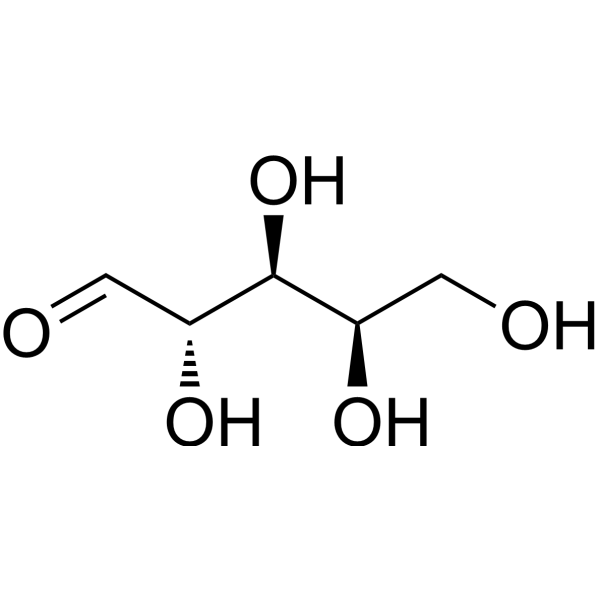
D-Xylulose is a toxic pentose. D-Xylulose does not induce pentitol production in cells. D-Xylulose can induce ATP and intracellular Pi depletion through the accumulation of Sedoheptulose 7-P .
loading...
    loading...
Cat. No.: HY-128753
CAS No.: 1114-34-7
Purity:  ≥98.0%
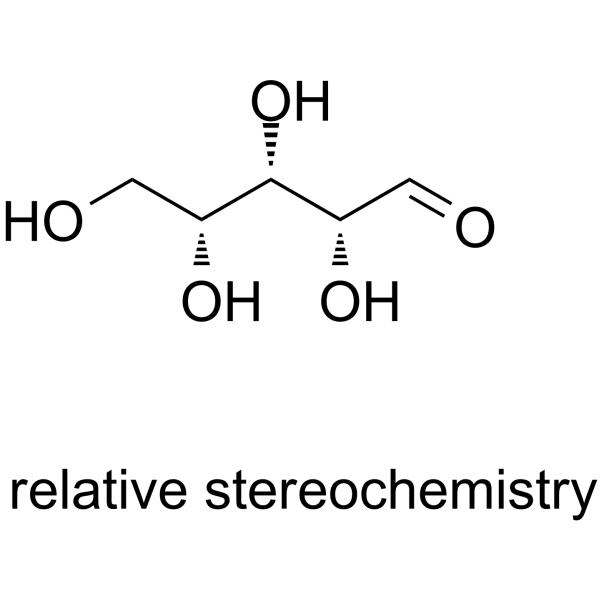
D-Lyxose is an endogenous metabolite. D-Lyxose is a rare pentose with significant potential for pharmaceutical synthesis. D-Lyxose serves as a starting material for antitumor agents (such as α-galactosylceramide-based immunostimulants). D-Lyxose acts as a precursor for L-nucleoside analogs used in the development of antiviral drugs. D-Lyxose can be used as a synthetic intermediate for other rare sugars (such as L-ribose) .
loading...
    loading...
Cat. No.: HY-128788
CAS No.: 2279171-34-3
ddhCTP is an endogenously produced pyrimidine base analog with a Kd of 17.0 nM for LLDH and an IC50 of 55.8 μM for GAPDH. By inhibiting key metabolic enzymes such as GAPDH, ddhCTP reduces glycolytic flux and shifts metabolic flow toward the pentose phosphate pathway, thereby regulating the redox balance of cells. As a competitive CTP analog, ddhCTP terminates RNA synthesis by flavivirus RdRps and SARS-CoV-2 RdRp, and inhibits Zika virus replication in vivo. ddhCTP can be used in studies related to viral infections, COVID-19 and Zika virus infections.
loading...
    loading...
Cat. No.: HY-W587796
CAS No.: 2641-81-8
Synonyms: 6-PGδL; 6-Phosphonoglucono-D-lactone
6-Phosphoglucono-δ-lactone (6-PGδL), a reversal substrate of glucose-6-phosphate dehydrogenase (G6PD), is an intermediate compound in the oxidative branch of the pentose phosphate pathway (PPP). 6-Phosphoglucono-δ-lactone produced from D-glucose-6-phosphate by glucose-6-phosphate dehydrogenase (G6PDH) and is converted to 6-phosphoglutonate by lactonase. 6-Phosphoglucono-δ-lactone can be used for heart failure, type 2 diabetes and cancers research .
loading...
    loading...
Cat. No.: HY-B1070
CAS No.: 25990-60-7
Synonyms: (±)-Xylos
DL-Xylose ((±)-Xylos) is a carbohydrate metabolite found in the leaves of Murraya plants. DL-Xylose is a metabolic intermediate in the interconversion pathway between pentoses and glucuronic acid, and it can be interconverted with related pentoses through enzymatic reactions. D-Xylose can be used as a low-calorie sweetener and serves as a precursor for xylitol production. DL-Xylose can serve as a candidate warning biomarker for severe progression in diabetic patients co-infected with SARS-CoV-2. DL-Xylose can be used in research related to severe COVID-19 in diabetes .
loading...
    loading...
Cat. No.: HY-W779019
CAS No.: 1262683-58-8
Synonyms: D-(+)-Xylose-13C5; (+)-Xylose-13C5; Wood sugar-13C5
Xylose- 13C5 (D-(+)-Xylose- 13C5) is 13C labeled Xylose. Xylose (D-(+)-Xylose) is a natural pentose sugar that is catalyzed by xylose isomerase to form xylulose, which is a key step in the anaerobic ethanol fermentation of Xylose. Xylose can be used by microorganisms to produce fuels, chemicals, and bulk industrial enzymes. Xylose provides the substances and energy for cells, as a carbon source for the biosynthesis of high-value chemicals and biofuel. Xylose can be used to fully explore lignocellulose resources and provide a new direction for microbia fermentation .
loading...
    loading...
Cat. No.: HY-100582S
Purity:  99.51%
Synonyms: Adonitol-1-13C; Adonite-1-13C; BBP-418-1-13C
Research Areas:  

Others

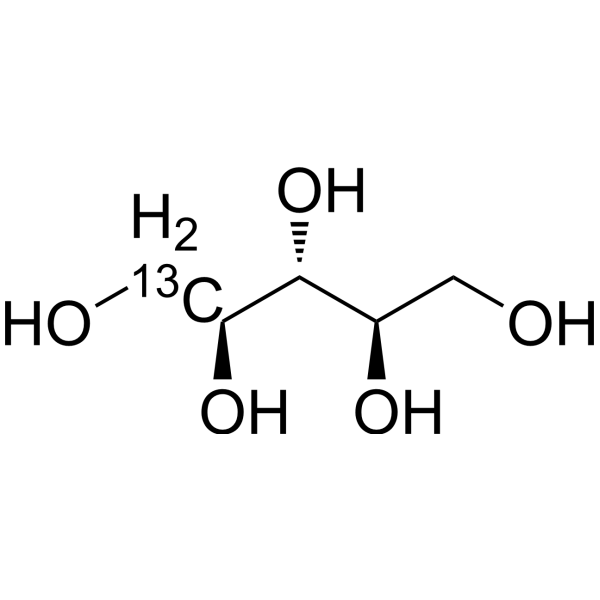
Ribitol-1- 13C is the 13C labeled Ribitol. Ribitol is a crystalline pentose alcohol formed by the reduction of ribose. Enhancing the flux of D-glucose to the pentose phosphate pathway in Saccharomyces cerevisiae for the production of D-ribose and ribitol .
loading...
    loading...
Cat. No.: HY-N11189
CAS No.: 34980-65-9
α-D-Ribose-5-phosphate is an important intermediate metabolite in the pentose phosphate pathway and in the purine metabolism pathway .
loading...
    loading...
Cat. No.: HY-W587841
CAS No.: 4212-65-1
Target:  

Drug Intermediate

Research Areas:  

Metabolic Disease

D-Xylulose 5-phosphate is a sugar phosphate ester intermediate and also a core metabolite of the pentose phosphate pathway. D-Xylulose 5-phosphate can be used in the research of metabolic diseases .
loading...
    loading...
Cat. No.: HY-113076R
CAS No.: 154-87-0
Synonyms: Cocarboxylase (Standard)
Thiamine pyrophosphate (Standard) is the analytical standard of Thiamine pyrophosphate. This product is intended for research and analytical applications. Thiamine pyrophosphate is the coenzyme form of Vitamin B1, and is a required intermediate in the pyruvate dehydrogenase complex and the ketoglutarate dehydrogenase complex. Thiamine pyrophosphate is necessary for oxidative phosphorylation and the pentose phosphate pathway by acting as a cofactor for α-ketoacid dehydrogenases .
loading...
    loading...
Cat. No.: HY-W009162S5
CAS No.: 2483830-57-3
Synonyms: 5'-Cytidylic acid-13C9,15N3 dilithium; 5'-CMP-13C9,15N3 dilithium
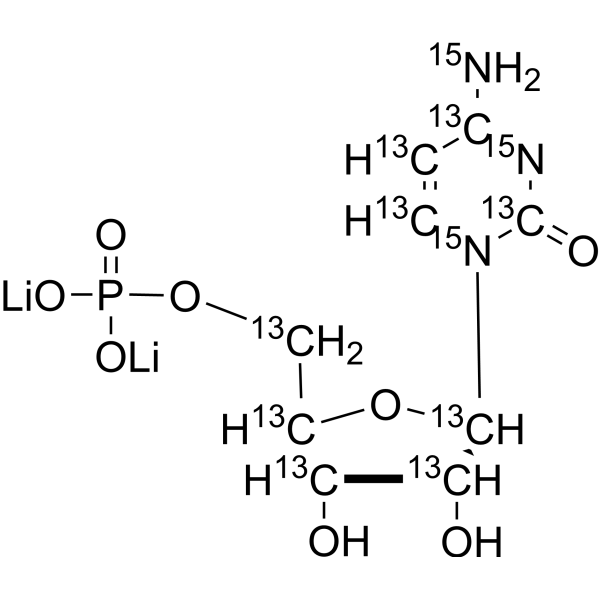
Cytidine 5′-monophosphate- 13C9, 15N3 (5'-Cytidylic acid- 13C9, 15N3 dilithium; 5'-CMP- 13C9, 15N3) dilithium is 13C and 15N-labeled Cytidine 5'-monophosphate (HY-W009162). Cytidine 5'-monophosphate (5'-Cytidylic acid) is a nucleotide which is used as a monomer in RNA. Cytidine 5'-monophosphate consists of the nucleobase cytosine, the pentose sugar ribose, and the phosphate group.
loading...
    loading...
Cat. No.: HY-W012530R
CAS No.: 156-06-9
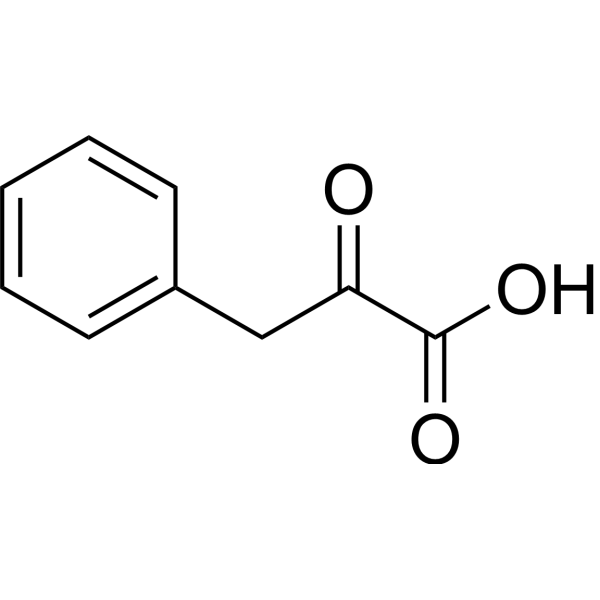
Phenylpyruvic acid (Standard) is the analytical standard of Phenylpyruvic acid. This product is intended for research and analytical applications. Phenylpyruvic acid is a precursor of the antifungal compound phenyllactic acid. Phenylpyruvic acid can improve the antifungal activity of eight lactic acid bacterial strains through the addition into a dedined growth medium. Phenylpyruvic acid demonstrates improved inhibitory activity against fungal bread contaminants Aspergillus niger and Penicillium roqueforti. Phenylpyruvic acid affects enzyme activity of the pentose phosphate pathway involved in the oxidative phase in rat brain homogenates. Phenylpyruvic acid can reduce glucose-6-phosphate dehydrogenase activity .
loading...
    loading...
Cat. No.: HY-W016203
CAS No.: 114-76-1
Synonyms: Sodium phenylpyruvate
Research Areas:  

Infection Metabolic Disease

Phenylpyruvic acid sodium is a endogenous metabolite that participates in the synthesis of 3-phenyllactic acid (PLA) by lactate dehydrogenase. Phenylpyruvic acid is a precursor of the antifungal compound phenyllactic acid. Phenylpyruvic acid can improve the antifungal activity of eight lactic acid bacterial strains through the addition into a dedined growth medium. Phenylpyruvic acid demonstrates improved inhibitory activity against fungal bread contaminants Aspergillus niger and Penicillium roqueforti. Phenylpyruvic acid affects enzyme activity of the pentose phosphate pathway involved in the oxidative phase in rat brain homogenates. Phenylpyruvic acid can reduce glucose-6-phosphate dehydrogenase activity .
loading...
    loading...
Cat. No.: HY-N0537S3
CAS No.: 131771-69-2
Synonyms: D-(+)-Xylose-2-13C; (+)-Xylose-2-13C; Wood sugar-2-13C
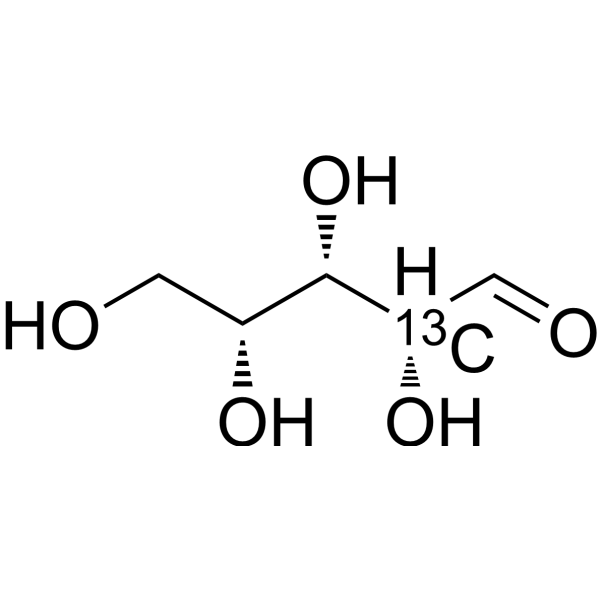
Xylose-2- 13C (D-(+)-Xylose-2- 13C) is the 13C labeled Xylose (HY-N0537). Xylose (D-(+)-Xylose) is a natural pentose sugar that is catalyzed by xylose isomerase to form xylulose, which is a key step in the anaerobic ethanol fermentation of Xylose. Xylose can be used by microorganisms to produce fuels, chemicals, and bulk industrial enzymes. Xylose provides the substances and energy for cells, as a carbon source for the biosynthesis of high-value chemicals and biofuel. Xylose can be used to fully explore lignocellulose resources and provide a new direction for microbia fermentation .
loading...
    loading...
Cat. No.: HY-112537S2
D-Glucose 6-phosphate- 13C is 13C labeled D-Glucose 6-phosphate (HY-112537). D-Glucose 6-phosphate is a key central node metabolite in glucose metabolism. It serves as the initiating metabolite for glycolysis and the pentose phosphate pathway, as well as a substrate for glycogen synthesis. D-Glucose 6-phosphate acts as a metabolic stress signal, which activates the mTOR pathway to promote protein synthesis, especially when phosphoglucose isomerase (PGI) is inhibited, thereby participating in cardiac remodeling processes. D-Glucose 6-phosphate can be used in research related to non-insulin-dependent diabetes mellitus and heart failure.
loading...
    loading...
Cat. No.: HY-W010918R
CAS No.: 58-64-0
Synonyms: Adenosine diphosphate (Standard); ADP (Standard)
Adenosine 5'-diphosphate (Standard) is the analytical standard of Adenosine 5'-diphosphate. This product is intended for research and analytical applications. Adenosine 5'-diphosphate (Adenosine diphosphate) is a nucleoside diphosphate. Adenosine 5'-diphosphate is the product of ATP dephosphorylation by ATPases. Adenosine 5'-diphosphate induces human platelet aggregation and inhibits stimulated adenylate cyclase by an action at P2T-purinoceptors. In Vitro: Adenosine 5'-diphosphate consists of the pyrophosphate group, the pentose sugar ribose, and the nucleobase adenine. Adenosine 5'-diphosphate is the product of ATP dephosphorylation by ATPases. ADP is converted back to ATP by ATP synthases. ATP is an important energy transfer molecule in cells. Adenosine 5'-diphosphate is utilized in a wide number of cellular processes, including respiration, biosynthetic reactions, motility, and cell division.
loading...
    loading...

