

359 Results for "

phosphorylates

" in MedChemExpress (MCE) Product Catalog:
Products (359)

359 Results for "phosphorylates" in MCE Product Catalog:

2
2 Cited Publications
Cat. No.: HY-126750
CAS No.: 1003019-41-7
Purity:  99.86%
Target:  

Phosphatase

Research Areas:  

Inflammation/Immunology

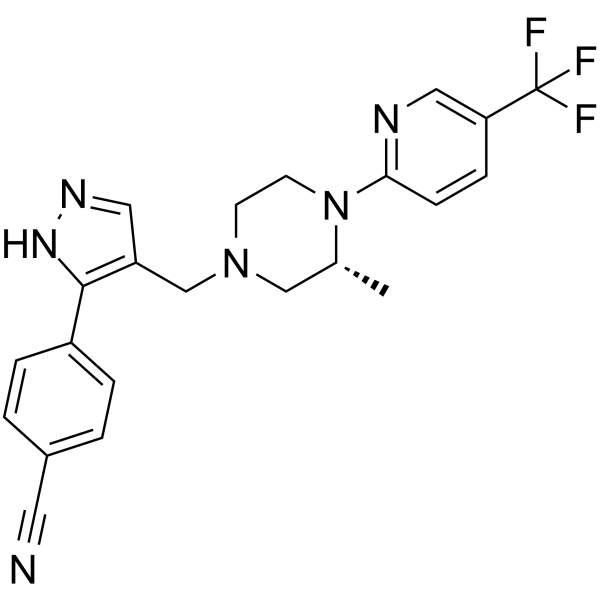
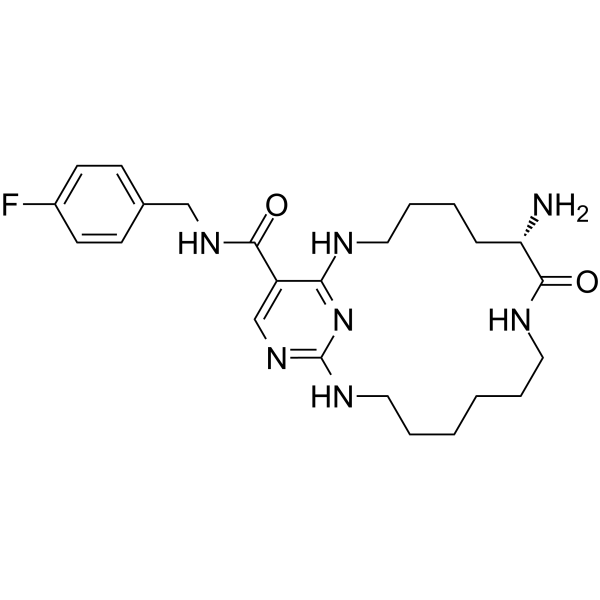
GNF362 is a selective, potent, and orally bioavailable inhibitor of inositol trisphosphate 3’ kinase B (Itpkb) with an IC50 of 9 nM. GNF362 also inhibits Itpka and Itpkc with IC50 values of 20 nM and 19 nM, respectively. Inositol trisphosphate 3’ kinase B (Itpkb) is a Ca 2+-dependent kinase, which phosphorylates the 3’ position of Ins (1,4,5) P3 to generate inositol 1,3,4,5-tetrakisphosphate [Ins (1,3,4,5) P4] .
loading...
    loading...
2
2 Cited Publications
Cat. No.: HY-P1821
CAS No.: 126768-94-3
Synonyms: MHP4-14
Target:  

PKC

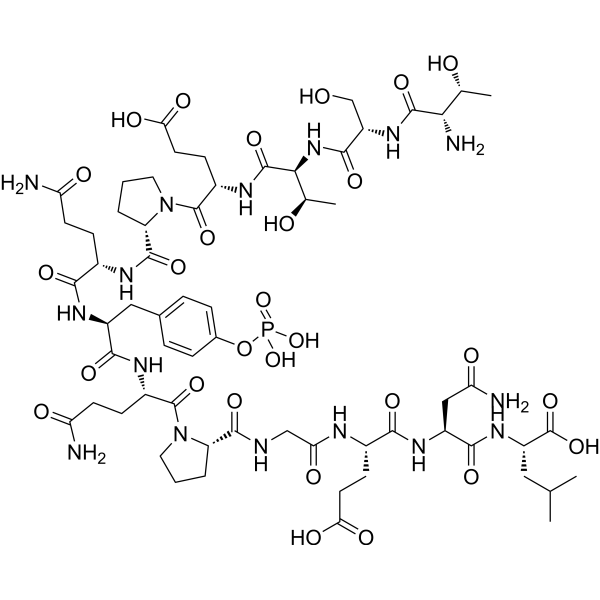
Myelin basic protein 4-14 (MHP4-14), a synthetic peptide comprising residues 4-14 of myelin basic protein, is a very selective PKC substrate (Km=7 μM). Myelin Basic Protein is not phosphorylated by cyclic AMP-dependent protein kinase, casein kinases I and II, Ca 2+/calmodulin-dependent protein kinase II, or phosphorylase kinase, and can be routinely used for the assay of protein kinase C with low background in the crude tissue extracts .
loading...
    loading...
2
2 Cited Publications
Cat. No.: HY-P1821A
Synonyms: MHP4-14 TFA
Target:  

PKC

Research Areas:  

Neurological Disease

Myelin Basic Protein (MHP4-14) TFA, a synthetic peptide comprising residues 4-14 of myelin basic protein, is a very selective PKC substrate (Km=7 μM). Myelin Basic Protein TFA is not phosphorylated by cyclic AMP-dependent protein kinase, casein kinases I and II, Ca 2+/calmodulin-dependent protein kinase II, or phosphorylase kinase, and can be routinely used for the assay of protein kinase C with low background in the crude tissue extracts .
loading...
    loading...
2
2 Cited Publications
Cat. No.: HY-119272
CAS No.: 342808-40-6
Purity:  99.34%
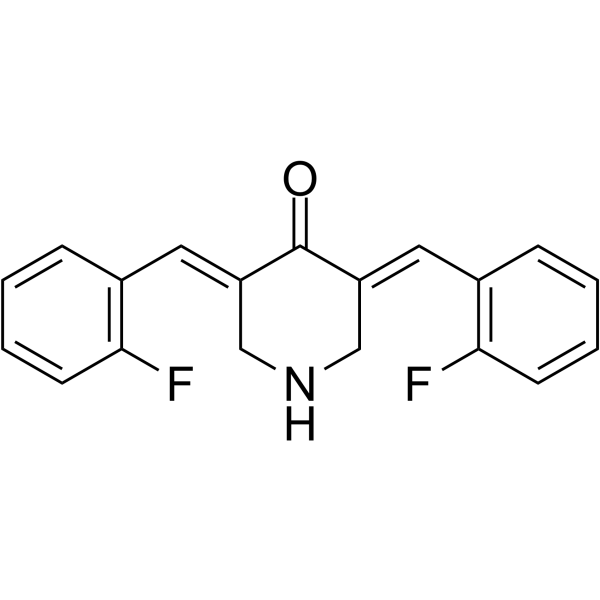
EF24, a curcumin analogue, is an NF-kB inhibitor with great anti-tumor efficacy and oral bioavailability via deactivation of the MAPK/ERK signaling pathway in oral squamous cell carcinoma (OSCC). EF24 is active against melanoma and breast cancer cell lines with GI50 values of 0.7 μM and 0.8 μM, respectively. EF24 induces cell cycle arrest and apoptosis in MDA-MB-231 human breast cancer cells and DU-145 human prostate cancer cells. EF24 increases the levels of activated caspase 3 and 9, and decreases the phosphorylated forms of MEK1 and ERK .
loading...
    loading...
2
2 Cited Publications
Cat. No.: HY-N0026
CAS No.: 94492-24-7
Synonyms: 2'-AA
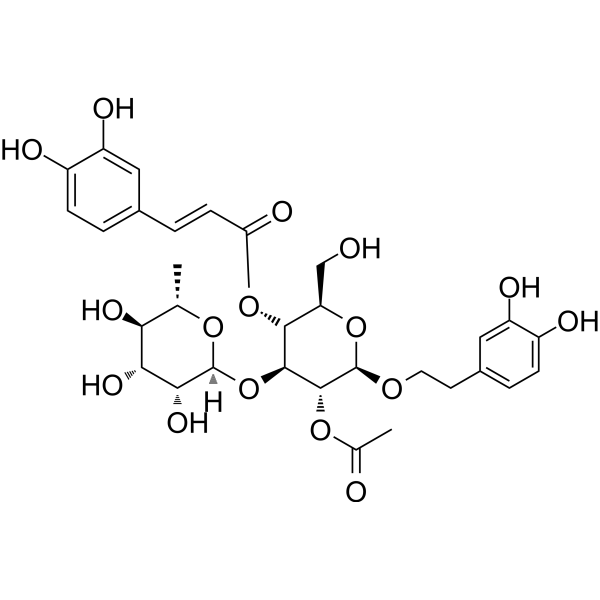
2'-Acetylacteoside (2'-AA) is a natural compound with oral activity and blood-brain barrier permeability. 2'-Acetylacteosideexhibits MAO‑B inhibitory activity (IC50 = 17.71 μM, Ki = 13.81 μM). 2'-Acetylacteoside downregulates the expression of RANK, TRAF6, NF‑κB, NFATc1 and IKKβ, disrupts the RANKL/RANK interaction, blocks downstream signaling pathways, and increases the level of phosphorylated Akt. 2'-Acetylacteoside possesses potent anti-osteoclastogenic, anti-bone resorptive, pro-neurogenic, neuroprotective and antioxidant activities. 2'-Acetylacteoside can be used in the research of osteoporosis, ischemic stroke and Parkinson's disease .
loading...
    loading...
1
1 Cited Publications
Cat. No.: HY-P1199
CAS No.: 149299-77-4
Target:  

Inhibitory Antibodies

Research Areas:  

Others

pp60 c-src (521-533) (phosphorylated) is a peptide corresponding to the pp60c-src carboxy terminal regulatory domain, phosphorylated at Tyr527 .
loading...
    loading...
1
1 Cited Publications
Cat. No.: HY-131043
CAS No.: 2250019-95-3
Purity:  99.2%
Target:  

PAK

Research Areas:  

Cancer

NVS-PAK1-C is a potent, ATP-competitive and specific allosteric PAK1 inhibitor probe with IC50 values of 5 nM and 6 nM for dephosphorylated PAK1 and phosphorylated PAK1, respectively. NVS-PAK1-C is also against dephosphorylated PAK2 (IC50=270 nM) and phosphorylated PAK2 (IC50=720 nM) .
loading...
    loading...
1
1 Cited Publications
Cat. No.: HY-135867F
Purity:  98.80%
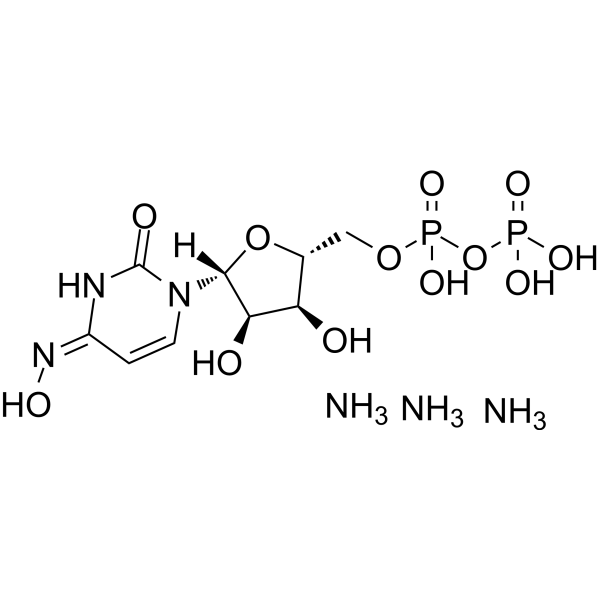
NHC-diphosphate triammonium is an active phosphorylated intracellular metabolite of β-d-N4-Hydroxycytidine (NHC) (HY-125033) as a diphosphate form . NHC-diphosphate triammonium is a weak alternative substrate for the viral polymerase and can be incorporated into HCV replicon RNA .
loading...
    loading...
1
1 Cited Publications
Cat. No.: HY-107469
CAS No.: 66-72-8
Purity:  99.61%
Synonyms: Pyridoxaldehyde
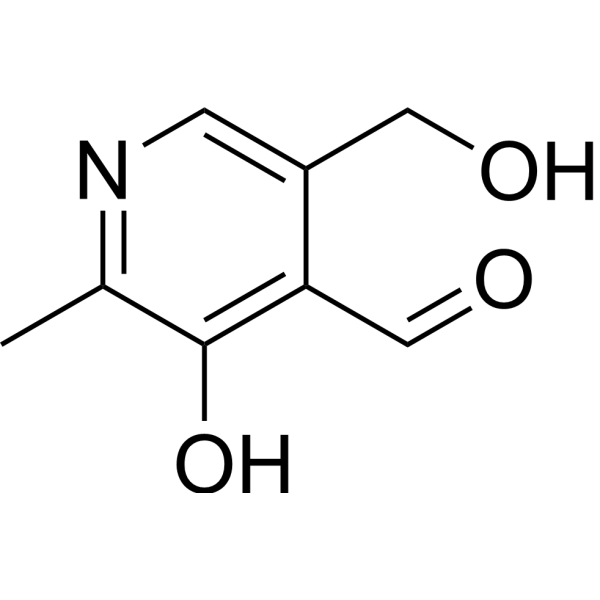
Pyridoxal is a neuroprotectant. Pyridoxal is one of the main forms of vitamin B6. Pyridoxal is phosphorylated by pyridoxal kinase to pyridoxal phosphate (HY-B1744). Pyridoxal is oxidized by the liver to 4-pyridoxic acid (HY-113493) and excreted in the urine. Pyridoxal has shown promise in the study of carpal tunnel syndrome (CTS) .
loading...
    loading...
1
1 Cited Publications
Cat. No.: HY-12736A
CAS No.: 2341796-81-2
Purity:  99.37%
Target:  

Syk ERK

Research Areas:  

Inflammation/Immunology Cancer

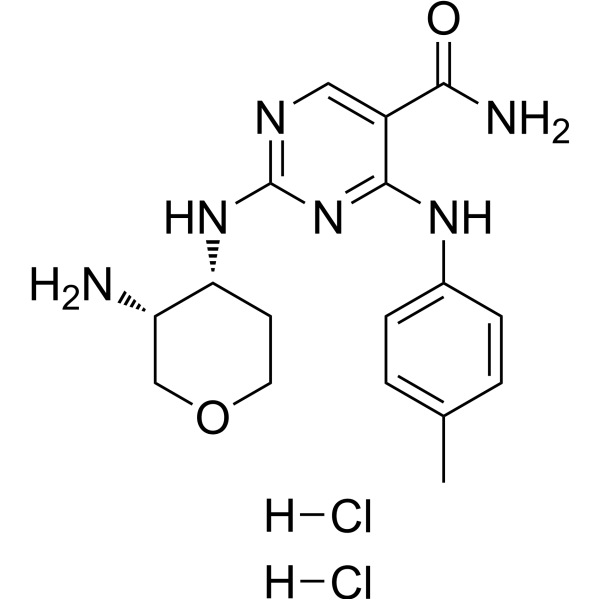
GSK143 dihydrochloride is an orally active and highly selective spleen tyrosine kinase (SYK) inhibitor with a pIC50 of 7.5. GSK143 dihydrochloride inhibits phosphorylated Erk (pErk: pIC50=7.1) . GSK143 dihydrochloride reduces inflammation and prevents recruitment of immune cells in the intestinal muscularis in mice .
loading...
    loading...
1
1 Cited Publications
Cat. No.: HY-125510
CAS No.: 1612782-86-1
Purity:  99.71%
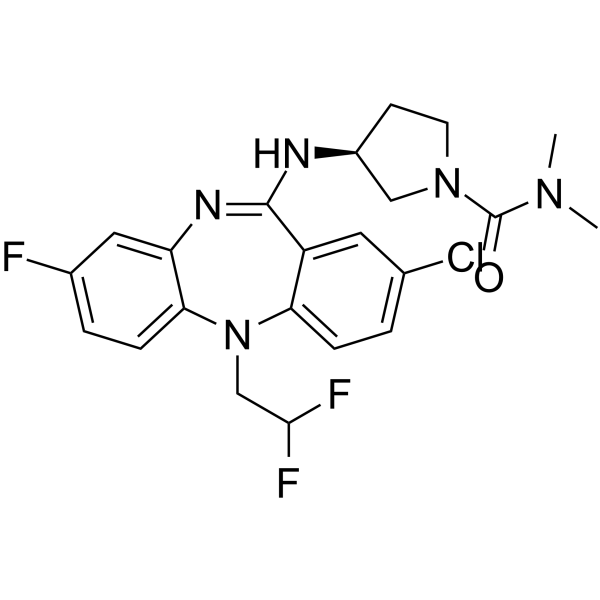
UNC2541 is a potent and Mer tyrosine kinase (MerTK)-specific inhibitor, binds in the MerTK ATP pocket, with an IC50 of 4.4 nM, more selective over Axl, Tyro3 and Flt3. UNC2541 inhibits phosphorylated MerTK (pMerTK; EC50, 510 nM). UNC2541 abolishes the analgesic and anti-inflammatory effects of ozone in vivo and in vitro .
loading...
    loading...
1
1 Cited Publications
Cat. No.: HY-135867D
CAS No.: 39023-73-9
Purity:  98.80%
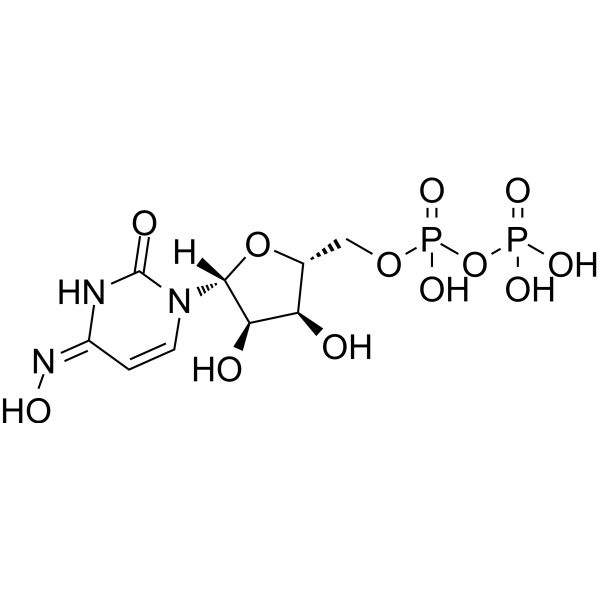
NHC-diphosphate is an active phosphorylated intracellular metabolite of β-d-N4-Hydroxycytidine (NHC) (HY-125033) as a diphosphate form . NHC is a pyrimidine ribonucleoside and behaves as a potent anti-virus agent. NHC effectively inhibits the replication of venezuelan equine encephalitis virus (VEEV), Chikungunya virus (CHIKV) and hepatitis C virus (HCV) .
loading...
    loading...
1
1 Cited Publications
Cat. No.: HY-P1597
CAS No.: 86555-35-3
Target:  

PKA PKC

Research Areas:  

Cancer

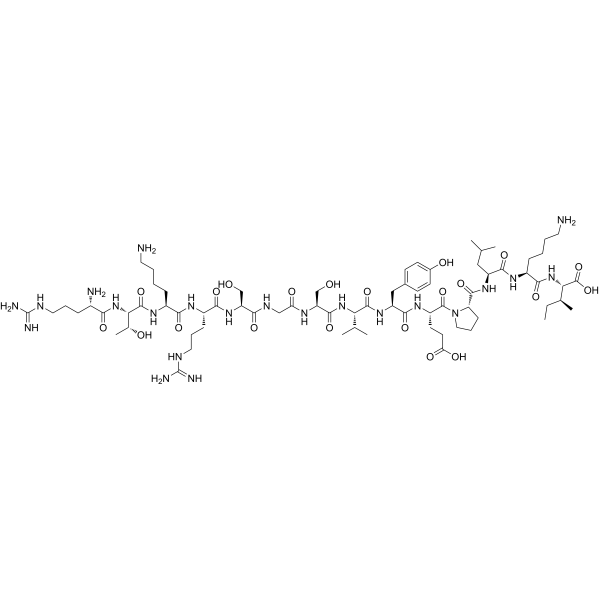
Malantide is a synthetic dodecapeptide derived from the site phosphorylated by cAMP-dependent protein kinase (PKA) on the β-subunit of phosphorylase kinase. Malantide is a highly specific substrate for PKA with a Km of 15 μM and shows protein inhibitor (PKI) inhibition >90% substrate phosphorylation in various rat tissue extracts . Malantide is also an efficient substrate for PKC with a Km of 16 μM .
loading...
    loading...
1
1 Cited Publications
Cat. No.: HY-W145649
CAS No.: 15673-79-7
Research Areas:  

Others

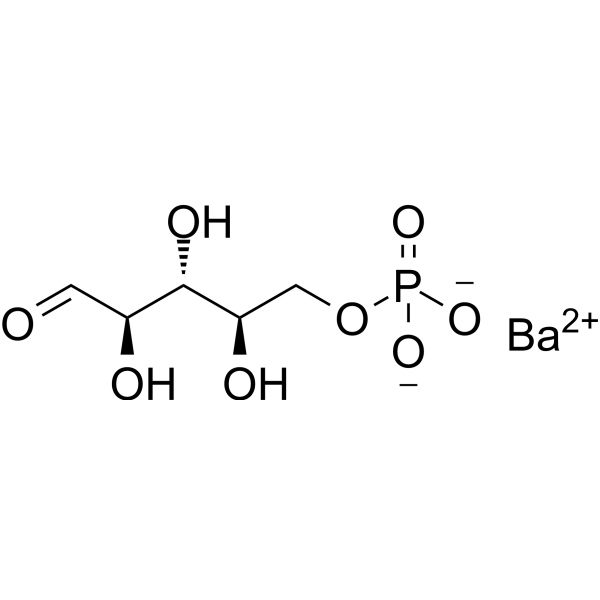
Ribose-5-phosphate Barium Salt is an organic compound that belongs to the monosaccharide phosphate family. It is commonly used as an intermediate in various biochemical pathways, especially in the biosynthesis of nucleotides and coenzymes. Ribose-5-phosphate Barium Salt has several applications in biochemical research, including as a precursor for the synthesis of other phosphorylated sugars and as a substrate for enzymes involved in the pentose phosphate pathway. In addition, it can be used as an energy source and dietary supplement for certain microorganisms.
loading...
    loading...
1
1 Cited Publications
Cat. No.: HY-107469R
CAS No.: 66-72-8
Synonyms: Pyridoxaldehyde (Standard)
Pyridoxal (Standard) is the analytical standard of Pyridoxal. This product is intended for research and analytical applications. Pyridoxal is a neuroprotectant. Pyridoxal is one of the main forms of vitamin B6. Pyridoxal is phosphorylated by pyridoxal kinase to pyridoxal phosphate (HY-B1744). Pyridoxal is oxidized by the liver to 4-pyridoxic acid (HY-113493) and excreted in the urine. Pyridoxal has shown promise in the study of carpal tunnel syndrome (CTS)[1][2][3].
loading...
    loading...
1
1 Cited Publications
Cat. No.: HY-110077
CAS No.: 36707-00-3
Purity:  99.62%
Target:  

Akt Apoptosis Caspase PARP

Research Areas:  

Cancer

API-1 is a potent selective Akt/PKB inhibitor that reduces the level of phosphorylated Akt (IC50 = 0.8 μM). API-1 binds to the PH domain and inhibits Akt membrane translocation. API-1 induces c-FLIP degradation. API-1 reduces cell proliferation and induces apoptosis. API-1 decreases tumor growth in mouse xenograft model .
loading...
    loading...
1
1 Cited Publications
Cat. No.: HY-155974
CAS No.: 2308548-54-9
Purity:  99.84%
Target:  

MDM-2/p53

Research Areas:  

Cancer

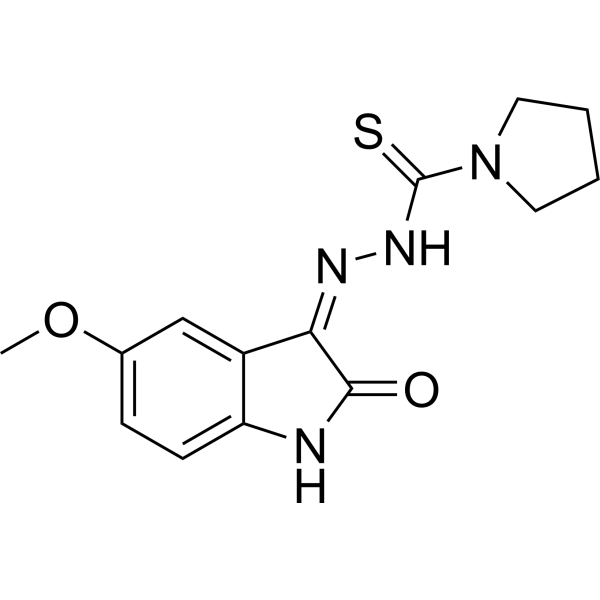
MeOIstPyrd is an anti-skin cancer agent. MeOIstPyrd inhibits cell proliferation, migration, and spheroid formation by activating the mitochondrial intrinsic apoptotic pathway. MeOIstPyrd induces DNA damage. MeOIstPyrd activates p53, and increases the half-life of p53 and stabilizes p53 by phosphorylating it at ser15. MeOIstPyrd binds to MDM2 in the p53 sub-pocket and blocks p53-MDM2 interaction .
loading...
    loading...
1
1 Cited Publications
Cat. No.: HY-W027446
CAS No.: 65-22-5
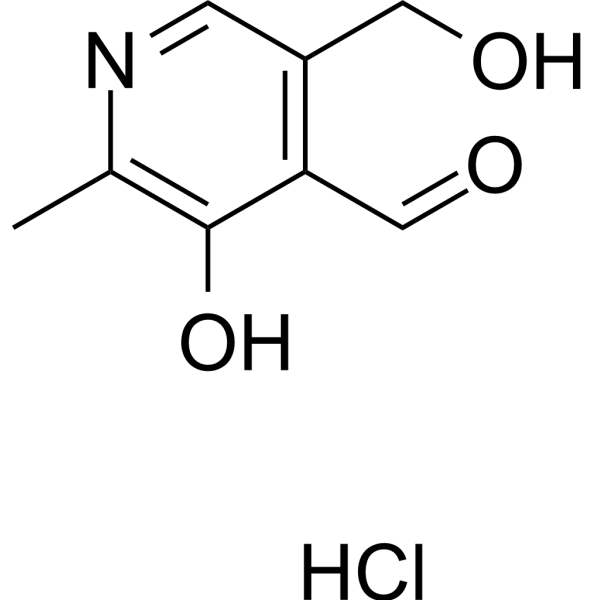
Pyridoxal hydrochloride, the hydrochloride form of Pyridoxal (HY-107469), is a newly developed neuroprotective agent. Pyridoxal hydrochloride is one of the major forms of vitamin B6. Pyridoxal hydrochloride is solvolyzed in methanol to form pyridoxal monomethylacetal. Pyridoxal is phosphorylated by pyridoxal kinase to Pyridoxal phosphate (HY-B1744). Pyridoxal is oxidized by the liver to 4-Pyridoxic acid (HY-113493) which is excreted in the urine. Pyridoxal hydrochloride is proming for research of carpal tunnel syndrome (CTS) .
loading...
    loading...
1
1 Cited Publications
Cat. No.: HY-111126
CAS No.: 2046250-48-8
Purity:  98.26%
Target:  

p62 Keap1-Nrf2

Research Areas:  

Cancer

K67 is a selective the interaction between Keap1 and S349 phosphorylated p62 inhibitor, with an IC50 of 1.5 μM. K67 has a weaker inhibitory effect on the interaction between Keap1 and Nrf2 (IC50 is 6.2 μM). K67 competitively binds to the binding site of Keap1 with p-p62, blocking the abnormal activation of the p62-dependent Nrf2 pathway. K67 inhibits tumor cell proliferation and enhances the sensitivity of hepatocellular carcinoma (HCC) to chemotherapeutic drugs by restoring Keap1-mediated ubiquitination and degradation of Nrf2 .
loading...
    loading...
1
1 Cited Publications
Cat. No.: HY-W017540
CAS No.: 35404-50-3
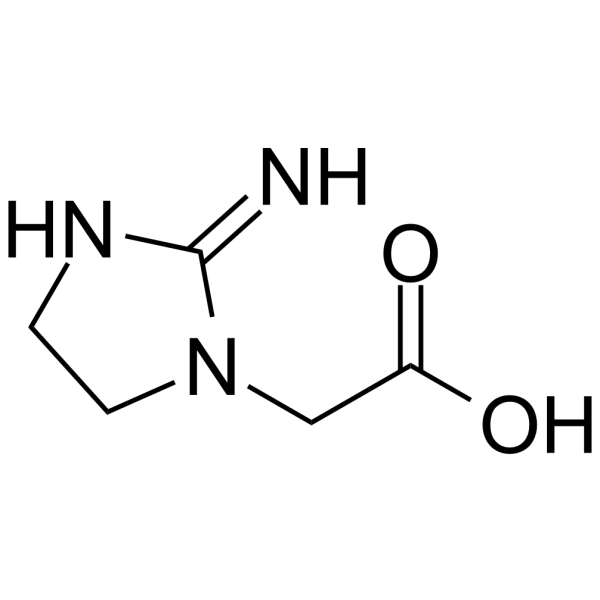
Cyclocreatine, a creatine analogue, acts as a brain-penetrant and potent bioenergetic protective agent by providing high levels of ATP. Cyclocreatine can be phosphorylated and dephosphorylated by creatine kinases. Cyclocreatine suppresses creatine metabolism ameliorating the cognitive, autistic and epileptic phenotype in a mouse model of creatine transporter defciency. Cyclocreatine protects against ischemic injury and enhances cardiac recovery during early reperfusion in dogs and rats. Cyclocreatine decreases plaque-adjacent neuronal dystrophy in TREM2-deficient mice with amyloid-β pathology. Cyclocreatine is proming for research of ischemic heart disease, cardiovascular diseases, Alzheimer’s disease and other neurodegenerative diseases associated with microglial dysfunction, prostate cancer .
loading...
    loading...

