68 Results for "

GABA binding

" in MedChemExpress (MCE) Product Catalog:
Products (68)

68 Results for "GABA binding" in MCE Product Catalog:

Cat. No.: HY-106316
CAS No.: 111205-55-1
Purity:  99.80%
Target:  

GABA Receptor

Research Areas:  

Neurological Disease

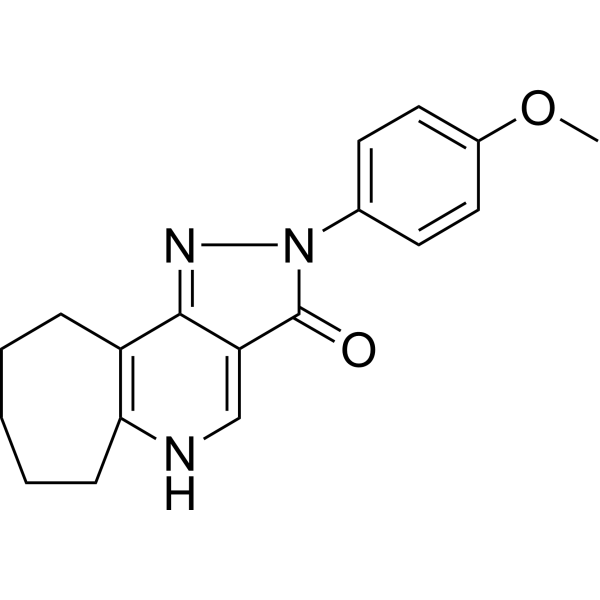
CGS 20625 is a potent, selective and orally active partial agonist for the central benzodiazepine receptor. CGS 20625 inhibits [3H]-flunitrazepam binding to central benzodiazepine receptors with an IC50 of 1.3 nM. CGS 20625 enhances GABA in Xenopus laevis oocytes . CGS 20625 can be used for the research of pentylenetetrazol-induced seizures and anxiety .
loading...
    loading...
Cat. No.: HY-D2341
CAS No.: 3055969-34-8
6FC-GABA-Taxol is a fluorescent probe with cell permeability, which is formed by connecting 6FC to the anticancer drug Taxol (HY-B0015) via γ-aminobutyric acid (GABA). 6FC-GABA-Taxol can bind to microtubules in living cells and image them through confocal microscopy. Additionally, 6FC-GABA-Taxol enables the quantification of microtubule binding using flow cytometry without the addition of efflux inhibitors .
loading...
    loading...
Cat. No.: HY-13031
CAS No.: 146135-18-4
GW 841819X is a benzodiazepine inhibitor of bromodomains of the BET family (BRD2, BRD3, BRD4) that inhibits the binding of Diazepam to central GABA receptors. GW 841819X can be used in the research of BET bromodomain-related diseases, such as cancer .
loading...
    loading...
Cat. No.: HY-B0696B
CAS No.: 145821-57-4
Synonyms: NO050328 hydrochloride hydrate; NO328 hydrochloride hydrate; TGB hydrochloride hydrate
Target:  

GABA Receptor

Research Areas:  

Neurological Disease

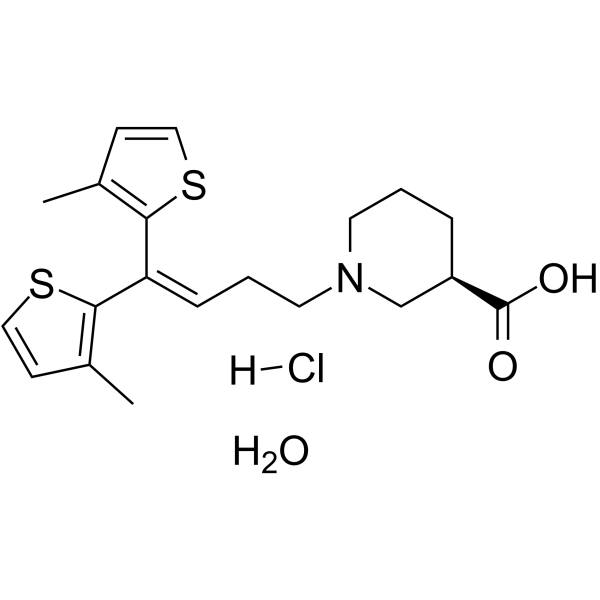
Tiagabine (NO050328; NO328; TGB) hydrochloride hydrate is an orally active, highly selective, and reversible GAT-1 inhibitor and anticonvulsant that crosses the blood-brain barrier. By blocking the reuptake of GABA in neurons and glial cells, tiagabine increases extracellular GABA levels to enhance inhibitory signal transduction, thereby exerting multiple activities such as anticonvulsant, neuroprotective, and antioxidant effects. Tiagabine hydrochloride hydrate exhibits linear pharmacokinetic properties. Although it is metabolized by CYP3A and has a high protein binding rate, it carries a low risk of cognitive impairment. Tiagabine hydrochloride hydrate is widely used in research on related diseases including epilepsy (including refractory partial seizures), alcohol withdrawal symptoms, and Huntington's disease .
loading...
    loading...
Cat. No.: HY-122489A
CAS No.: 2688-77-9
Purity:  99.95%
(S)-Laudanosine is an alkaloid that can be found in poppies and is the S-enantiomer of Laudanosine. Laudanosine acts on the central nervous system and cardiovascular system, inhibiting low-affinity GABA receptors with an IC50 value of 10 μM, and can cause seizures, hypotension, and bradycardia. Additionally, Laudanosine exerts analgesic effects by competitively binding to the opioid Mu-1 receptor (Ki = 2.7 μM) .
loading...
    loading...
Cat. No.: HY-167822
CAS No.: 1531600-36-8
Target:  

iGluR GABA Receptor

Research Areas:  

Neurological Disease

Caramboxin is a phenylalanine-like α-amino acid neurotoxin found in star fruit (Averrhoa carambola) with glutamatergic ionotropic action. Caramboxin activates NMDA, AMPA, and kainate receptors while inhibiting GABA binding to synaptic membranes, shifting the CNS toward an excitatory state and exerting neurotoxic effects linked to star fruit ingestion. Caramboxin can be used for research on neurotoxicity and as a reference standard for toxicological studies .
loading...
    loading...
Cat. No.: HY-10061
CAS No.: 344413-67-8
Synonyms: AZD-3355
Target:  

GABA Receptor

Research Areas:  

Metabolic Disease

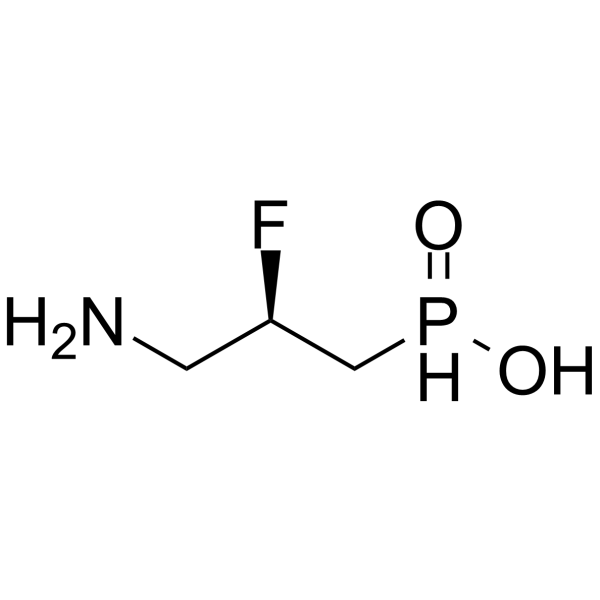
Lesogaberan (AZD-3355) is a potent and selective GABAB receptor agonist with an EC50 of 8.6 nM for human recombinant GABAB receptors. The affinity (Kis) of Lesogaberan for rat GABAB and GABAA receptors, as measured by displacement of [ 3H]GABA binding in brain membranes: 5.1 nM and 1.4 μM, respectively. Lesogaberan inhibits transient lower esophageal sphincter relaxation through a peripheral mode of action .
loading...
    loading...
Cat. No.: HY-W722556
CAS No.: 7657-50-3
Synonyms: 3α,5α-Androstanol
5α-Androstan-3α-ol is a γ-aminobutyric acid (GABA) receptor agonist. 5α-Androstan-3α-ol can inhibit the transcriptional activity of the orphan nuclear receptor CAR (constitutive androstane receptor). 5α-Androstan-3α-ol negatively regulates the activity of CAR by binding to CAR and promoting its dissociation from coactivator proteins. 5α-Androstan-3α-ol can be used to study nuclear receptor-mediated hormone metabolism and drug detoxification mechanisms .
loading...
    loading...
Cat. No.: HY-W103105R
CAS No.: 53786-28-0
Research Areas:  

Neurological Disease

R 29676 is a neuroleptic agent and inhibits sodium-dependent GABA binding (GABA uptake) .
loading...
    loading...
Cat. No.: HY-103513
CAS No.: 1236105-75-1
Target:  

GABA Receptor

Research Areas:  

Others

GABAA receptor agent 2 (compound 13) is a compound used to study the structure and orthosteric ligand binding of GABA(A) receptors. The relevant model of GABAA receptor agent 2 can be used to understand the details of orthosteric ligand binding, and a detailed binding mode hypothesis was created through structure-activity relationships with two homologous series of orthosteric GABA(A)R antagonists.
loading...
    loading...
Cat. No.: HY-111298
CAS No.: 850339-33-2
Target:  

GABA Receptor

Research Areas:  

Neurological Disease

TG 41 is positive modulator of GABAA receptor. TG 41 enhances the binding both of GABA and of Flunitrazepam to rat cerebral cortical membranes .
loading...
    loading...
Cat. No.: HY-108035
CAS No.: 1013427-48-9
Synonyms: MR04A3
Target:  

GABA Receptor

Research Areas:  

Neurological Disease

(-)-JM-1232 (MR04A3) targets GABA A receptors and exerts its analgesic effects by binding to the benzodiazepine binding site of GABA A receptors. (-)-JM-1232 demonstrates potent analgesic effects in mice against acute thermal stimuli, mechanically induced pain, and visceral pain, with CI50 values of 2.96, 3.06, and 2.27 mg/kg, respectively. (-)-JM-1232 can be used in research related to pain and analgesia .
loading...
    loading...
Cat. No.: HY-129927
CAS No.: 62020-54-6
Target:  

GABA Receptor

Research Areas:  

Others

Thiomuscimol is a GABAA receptor agonist (IC50=19 nM). It has been used as a photoaffinity label for the purification and identification of GABA binding sites within the GABAA receptor complex.
loading...
    loading...
Cat. No.: HY-106469
CAS No.: 81428-04-8
Synonyms: MY-117
Target:  

Drug Derivative

Research Areas:  

Neurological Disease

Taltrimide (MY-117), a lipophilic derivative of Taurine (HY-B0351), strongly inhibits the sodium-independent binding of Taurine to synaptic membranes of brain, the effects on the binding of GABA being less pronounced. Taltrimide exhibits definitive anticonvulsive effects in experimental epilepsy models .
loading...
    loading...
Cat. No.: HY-P5305A
Target:  

GABA Receptor

Research Areas:  

Metabolic Disease

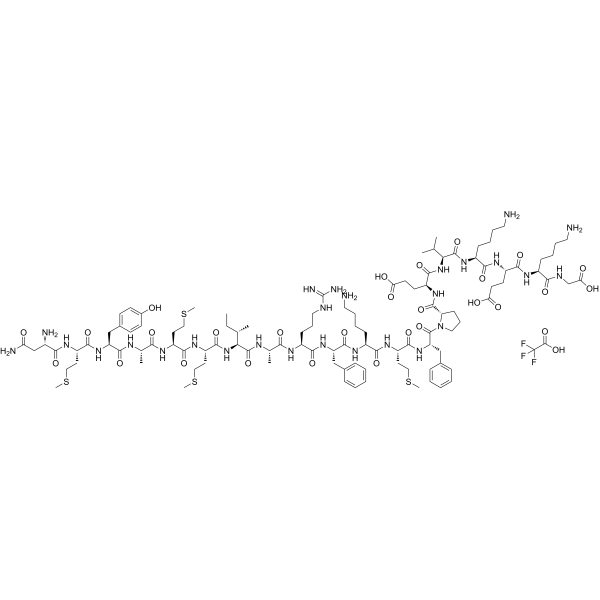
GAD65(247-266) epitope TFA is the T cell epitopes of islet antigens,binding to I-A g7 (type I diabetes-associated molecule) competitively with poor affinity. GAD65 refers to Glutamic Acid Decarboxylase 65,involved in the conversion of glutamate to gamma-aminobutyric acid (GABA) .
loading...
    loading...
Cat. No.: HY-N0067S2
CAS No.: 107022-06-0
Synonyms: 4-Aminobutyric acid-4,4-d2
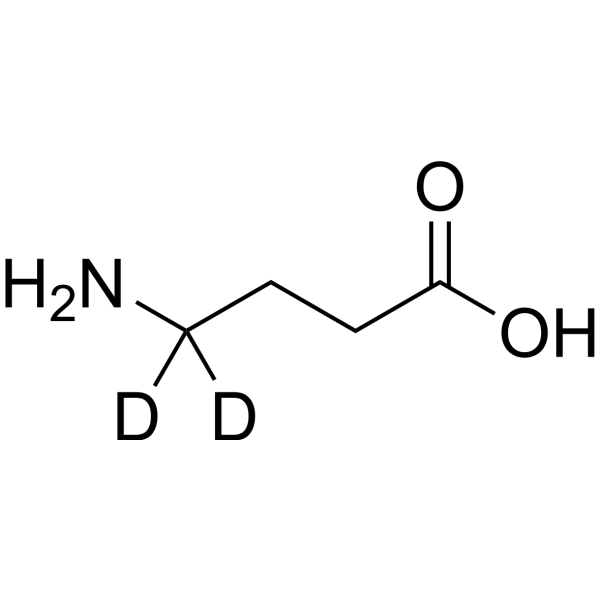
γ-Aminobutyric acid-4,4-d2 is the deuterium labeled γ-Aminobutyric acid. γ-Aminobutyric acid (4-Aminobutyric acid) is a major inhibitory neurotransmitter in the adult mammalian brain[1][2], binding to the ionotropic GABA receptors (GABAA receptors) and metabotropic receptors (GABAB receptors)[2].
loading...
    loading...
Cat. No.: HY-Y1840R
CAS No.: 150-19-6
3-Methoxyphenol (Standard) is the analytical standard of 3-Methoxyphenol (HY-Y1840). This product is intended for research and analytical applications. 3-Methoxyphenol is an environmental pollutant. 3-Methoxyphenol occurs in the aroma components of dried bonito. 3-Methoxyphenol potentially enhances GABA-evoked responses of α1β1 GABAA receptors by increasing the affinity of GABA binding sites. 3-Methoxyphenol is used as a flavoring substance in food and animal feed. 3-Methoxyphenol prolongs pentobarbital-induced sleeping time and reduces elevated plus maze behavior .
loading...
    loading...
Cat. No.: HY-Y1840S
CAS No.: 104714-88-7
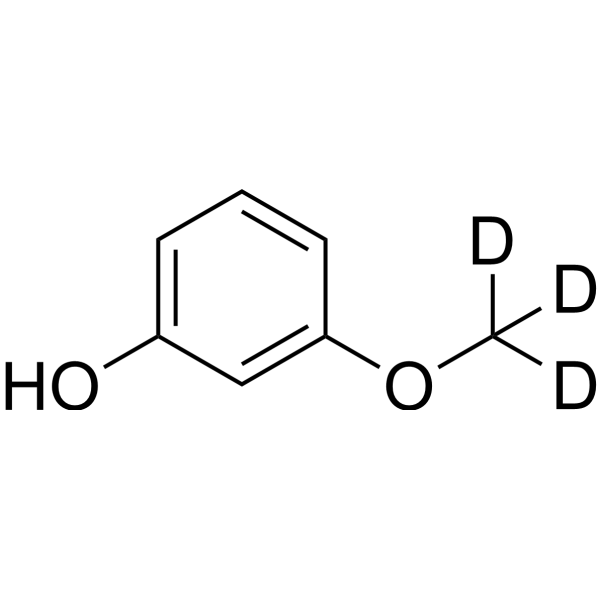
3-Methoxyphenol-d3 is the d3-labeled 3-Methoxyphenol (HY-Y1840). 3-Methoxyphenol is an environmental pollutant. 3-Methoxyphenol occurs in the aroma components of dried bonito. 3-Methoxyphenol potentially enhances GABA-evoked responses of α1β1 GABAA receptors by increasing the affinity of GABA binding sites. 3-Methoxyphenol is used as a flavoring substance in food and animal feed. 3-Methoxyphenol prolongs pentobarbital-induced sleeping time and reduces elevated plus maze behavior .
loading...
    loading...
Cat. No.: HY-147735
Target:  

GABA Receptor

Research Areas:  

Neurological Disease

GABAA receptor agonist 1 (compound 3e) is a potent GABAA receptor agonist. GABAA receptor agonist 1 shows anti-depression activities in classical mouse models of depression of FST and TST. GABAA receptor agonist 1 binds at the GABA binding site of GABAA receptor in order to produce GABAergic effects. GABAA receptor agonist 1 has the potential for the research of depression .
loading...
    loading...
Cat. No.: HY-147736
Target:  

GABA Receptor

Research Areas:  

Neurological Disease

GABAA receptor agonist 2 (compound 4c) is a potent GABAA receptor agonist. GABAA receptor agonist 2 shows anti-depression activities in classical mouse models of depression of FST and TST. GABAA receptor agonist 2 binds at the GABA binding site of GABAA receptor in order to produce GABAergic effects. GABAA receptor agonist 2 has the potential for the research of depression .
loading...
    loading...

