


121 Results for "

cell membrane structure

" in MedChemExpress (MCE) Product Catalog:
Products (121)

121 Results for "cell membrane structure" in MCE Product Catalog:

1
1 Cited Publications
Cat. No.: HY-156675A
Purity:  99.34%
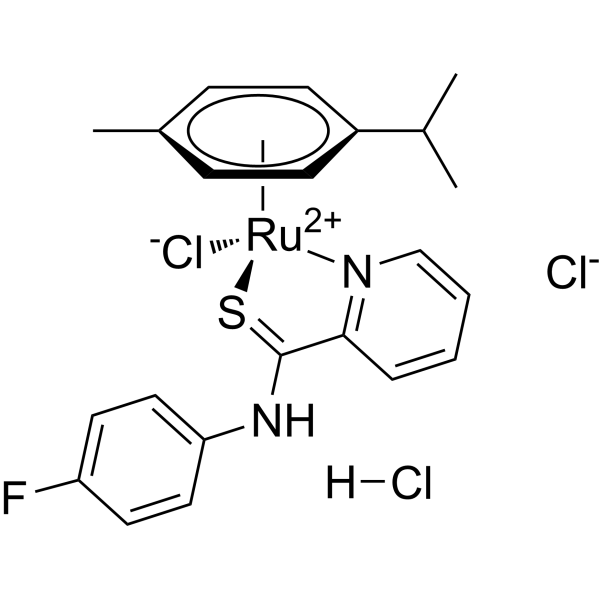
Plecstatin-1 hydrochloride is a metal complex that drives the aggregation and collapse of the plectin network, and disrupts the cytoskeletal structures of α‑tubulin and F‑actin. Plecstatin-1 hydrochloride triggers oxidative stress, mediates the phosphorylation of eIF2α, and induces molecular features associated with immunogenic cell death, including calreticulin membrane exposure, membrane localization of HSP70/HSP90, ATP secretion, and HMGB‑1 release. Plecstatin-1 hydrochloride induces apoptosis via the intrinsic mitochondrial pathway and exerts anti-invasive activity. Plecstatin-1 hydrochloride inhibits sphere proliferation and reduces clonogenicity in the 3D tumor spheroid model of colon cancer cells. Plecstatin-1 hydrochloride is applicable to relevant research on colorectal cancer .
loading...
    loading...
1
1 Cited Publications
Cat. No.: HY-N2382
CAS No.: 81917-50-2
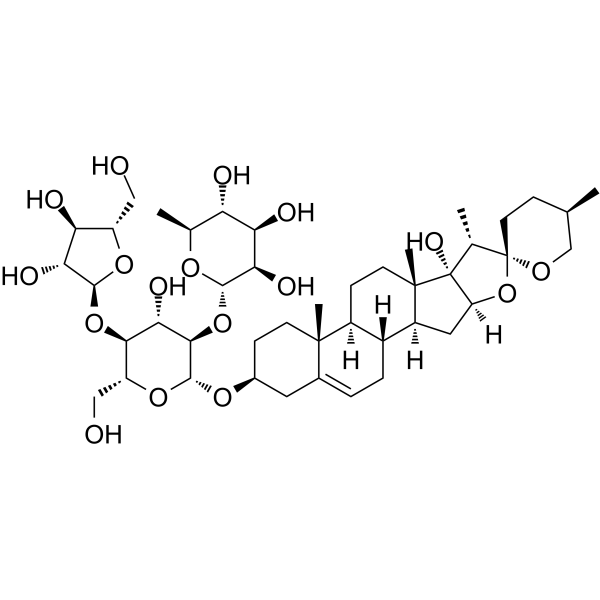
Polyphyllin H is a steroidal saponin. Polyphyllin H is isolated from Paris polyphylla. Polyphyllin H potently inhibits the activities of CYP1A2 (IC50 = 6.44 μM, competitive), CYP2D6 (IC50 = 13.88 μM, competitive) and CYP3A4 (IC50 = 4.52 μM, non-competitive, time-dependent). Polyphyllin H downregulates the expression of ABCB1 and ABCC3. Polyphyllin H binds to membrane cholesterol and disrupts lipid raft structures. Polyphyllin H restores the sensitivity of paclitaxel-resistant breast cancer cells to paclitaxel .
loading...
    loading...
Cat. No.: HY-141613
CAS No.: 90693-88-2
Purity:  ≥98.0%
Synonyms: DOPS-NA
Target:  

Liposome

Research Areas:  

Others

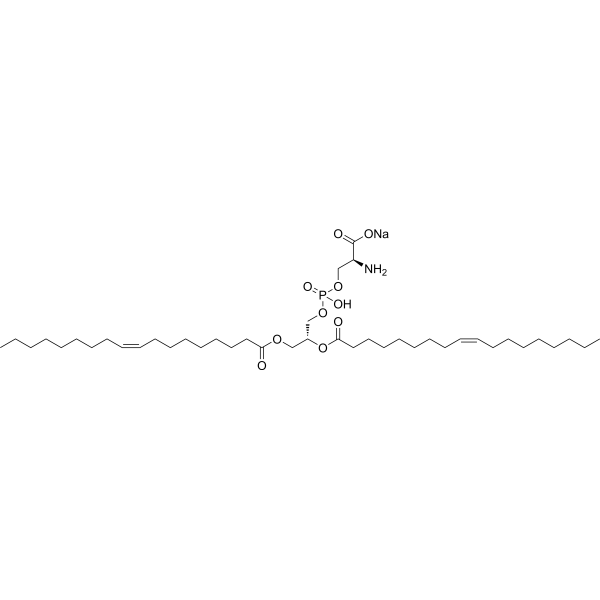
1,2-Dioleoyl-sn-glycero-3-phospho-L-serine sodium (DOPS-NA) is a ubstitute for Phosphoserine/phosphatidylserine. 1,2-Dioleoyl-sn-glycero-3-phospho-L-serine sodium can be used together with DOPC and DOPE in lipid mixtures for the synthesis of liposomes. 1,2-Dioleoyl-sn-glycero-3-phospho-L-serine sodium can self-assemble into single-layer or double-layer membrane structures, similar to cell membranes, and possesses high membrane fluidity and flexibility. 1,2-Dioleoyl-sn-glycero-3-phospho-L-serine is widely applied in membrane biology, cell membrane research, lipid preparation, and drug delivery systems .
loading...
    loading...
Cat. No.: HY-DY1040
CAS No.: 231946-72-8
LysoTracker Red (solution) is a Red fluorescently labeled lysosomal probe with a maximum excitation/emission wavelength of 577/590 nm. The structure is composed of a fluorescein group and linked weak bases, which can freely cross the cell membrane and gather on spherical organelles. It is suitable for observing the internal biosynthesis and related pathogenesis of lysosomes .
Solvent and concentration: DMSO: 1 mM
loading...
    loading...
Cat. No.: HY-B2235B
CAS No.: 8002-43-5
Synonyms: L-α-Phosphatidylcholine (egg yolk, Type XVI-E), 99%, lyophilized powder; 1,2-Diacyl-sn-glycero-3-phosphocholine (egg yolk, Type XVI-E), 99%; egg yolk Lecithins, Type XVI-E, 99%
L-α-Lecithin (egg yolk, Type XVI-E), 99% (L-α-Phosphatidylcholine (egg yolk, Type XVI-E), 99%) is an active biomaterial. L-α-Lecithin (egg yolk, Type XVI-E), 99% forms liposomes with compounds (PF or BA). L-α-Lecithin (egg yolk, Type XVI-E), 99% increases membrane fluidity and affects microemulsion stability and fluorescence intensity stained with Nile red (HY-D0718). L-α-Lecithin (egg yolk, Type XVI-E), 99% It can be used for cell membrane structure research, biological membrane potential research, and liposome research .
loading...
    loading...
Cat. No.: HY-B2235A
CAS No.: 8002-43-5
Synonyms: L-α-Phosphatidylcholine (egg yolk), 75%; 1,2-Diacyl-sn-glycero-3-phosphocholine (egg yolk), 75%; egg yolk Lecithins, 75%
L-α-Lecithin (egg yolk), 75% is a kind of biological materials. L-α-Lecithin (egg yolk), 75% can be used for studying cell membrane structure, biofilm potential, liposome research, etc .
loading...
    loading...
Cat. No.: HY-P10932A
Research Areas:  

Neurological Disease

pGk13a TFA is an azide (azide group can be combined with fluorophore)-containing amphiphilic membrane labeling probe. pGk13a TFA enables high-resolution imaging of cell membranes in the ultrastructural membrane expansion microscopy (umExM) technique, facilitating the observation of membrane-associated structures and proteins. pGk13a TFA can be used for neuronal structural studies .
loading...
    loading...
Cat. No.: HY-145795
CAS No.: 1883431-67-1
Purity:  ≥98.0%
Target:  

Liposome

Research Areas:  

Others

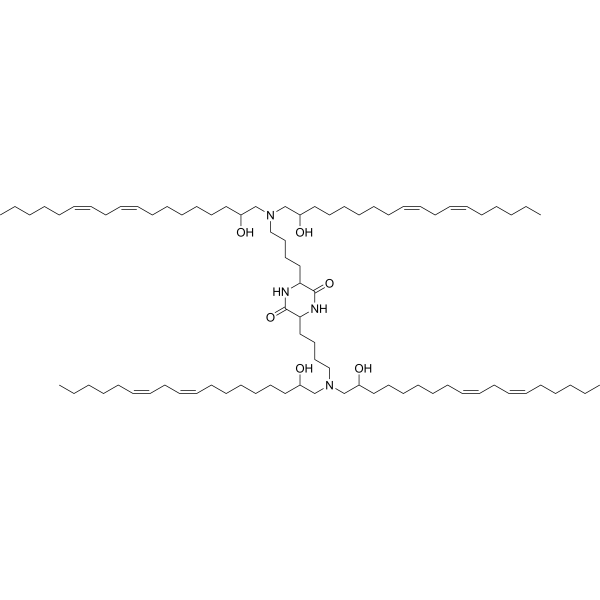
OF-02 is an ionizable lipid for mRNA delivery and a key component of lipid nanoparticles (LNPs). OF-02 is protonated in the acidic endosomal environment to promote endosomal escape of mRNA and efficiently induce protein expression in target cells. OF-02 relies on the pH-responsive membrane fusion properties to form a complex with mRNA and destroy the endosomal membrane structure to achieve mRNA release in the cytoplasm. OF-02 is mainly used in the development of mRNA vaccines, gene editing, and protein replacement therapy[1][2][3].
loading...
    loading...
Cat. No.: HY-107343
CAS No.: 81926-94-5
Purity:  96.22%
Synonyms: Ethyl docosahexaenoate
Target:  

COX

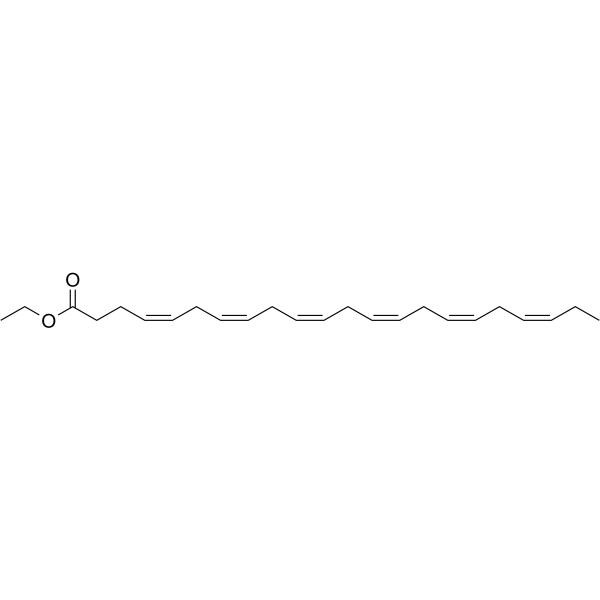
Docosahexaenoic acid ethyl ester (Ethyl docosahexaenoate) is a 90% concentrated ethyl ester of docosahexaenoic acid manufactured from the microalgal oil. Docosahexaenoic acid ethyl ester enhances 6-hydroxydopamine-induced neuronal damage by induction of lipid peroxidation in mouse striatum. Docosahexaenoic acid (DHA) is a key component of the cell membrane, and its peroxidation is inducible due to the double-bond chemical structure. Docosahexaenoic acid has neuroprotective effects .
loading...
    loading...
Cat. No.: HY-P4121
CAS No.: 1898254-09-5
Target:  

Potassium Channel

Research Areas:  

Inflammation/Immunology Cancer

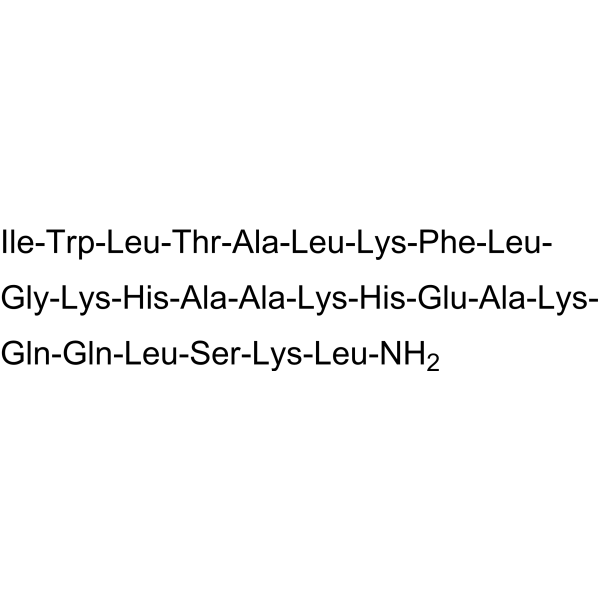
L17E is an attenuated cationic amphiphilic lytic (ACAL) peptide that can be used to deliver a variety of macromolecules, including proteins, antibodies, and DNA nanostructures. L17E inserts and cleaves the membrane structure through electrostatic interaction, enabling intracellular escape. The efficiency of L17E-mediated delivery is strongly correlated with the expression level of KCNN4 (the gene encoding the calcium-activated potassium channel KCa3.1). L17E also promotes the cellular uptake of macromolecules by inducing micropinocytosis. L17E can be further optimized and improved through dimerization strategies and in combination with other delivery systems, such as nuclear localization signal peptides and cell membrane-coated nanoparticles .
loading...
    loading...
Cat. No.: HY-DY1031
CAS No.: 162112-35-8
FM4-64 (solution) is a very lipophilic, water-soluble styrene dyes, can specifically bind to cell membranes and inner membrane organelles to produce fluorescence. FM4-64 is widely used in endocytic and exospic membrane structure markers.
Solvent and concentration: DMSO: 5 mM
loading...
    loading...
Cat. No.: HY-148123
CAS No.: 39382-08-6
Purity:  88.59%
Research Areas:  

Neurological Disease

Glycerophospholipids and cephalins are a class of phospholipid compounds and important components of neural membranes. Glycerophospholipids and cephalins are hydrolysis substrates of phospholipase (such as PLA2, PLC, and PLD). After complete hydrolysis, they produce 1 mol of glycerol, phosphate, ethanolamine, and 2 mol of fatty acids, respectively. Glycerophospholipids and cephalins can maintain membrane structure, fluidity, and ion permeability, and serve as precursors of second messengers such as arachidonic acid and diacylglycerol. Glycerophospholipids and cephalins can regulate signal transduction, cell apoptosis, and membrane transport, and are used in the study of neurodegenerative diseases (such as Alzheimer's disease) .
loading...
    loading...
Cat. No.: HY-P3508
CAS No.: 1159861-00-3
Target:  

MDM-2/p53

Research Areas:  

Cancer

PNC-27, a chimeric p53-penetratin peptide binds to HDM-2 in a p53 peptide-like structure, induces selective membrane-pore formation and leads to cancer cell lysis. PNC-27 is an anticancer peptide. PNC-27 can be used in acute myeloid leukemia research .
loading...
    loading...
Cat. No.: HY-112959
CAS No.: 372151-71-8
Synonyms: TD-6424
Target:  

Antibiotic Bacterial

Research Areas:  

Infection

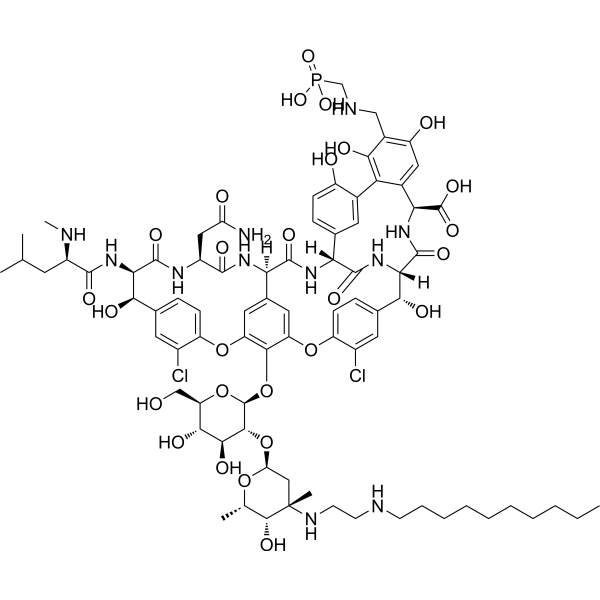
Telavancin (TD-6424) is a semisynthetic lipoglycopeptide vancomycin-derivative, is a novel antimicrobial agent developed by Theravance for overcoming resistant Gram-positive bacterial infections, specifically methicillin-resistant Staphylococcus aureus (MRSA). Telavancin disrupts cell membrane integrity, can be used for research of complicated skin and skin structure infections (cSSSIs) caused by Gram-positive bacteria .
loading...
    loading...
Cat. No.: HY-DY1059
CAS No.: 149838-22-2
FM1-43 (solution) is a very lipophilic, water-soluble styrene dyes, can specifically bind to cell membranes and inner membrane organelles to produce fluorescence. FM1-43 is widely used in endocytic and exospic membrane structure markers.
Solvent and concentration: DMSO: 10 mM
loading...
    loading...
Cat. No.: HY-NP163A
Synonyms: WGA-AF488
Wheat germ agglutinin-AF488 (WGA-AF488) is a cell membrane-specific staining agent prepared by conjugating wheat germ agglutinin with the Alexa Fluor 488 (HY-D1304) fluorescent dye, and it binds to cell surface glycoproteins with high affinity. Wheat germ agglutinin-AF488 is applied in fluorescence microscopy and confocal imaging techniques, and it can clearly label the membrane structures of various cells including breast cancer cells, enabling high-resolution visual observation. Wheat germ agglutinin-AF488 is used in studies of breast cancer and triple-negative breast cancer to observe cell morphology and membrane dynamic changes .
loading...
    loading...
Cat. No.: HY-148978
CAS No.: 321883-23-2
Purity:  99.62%
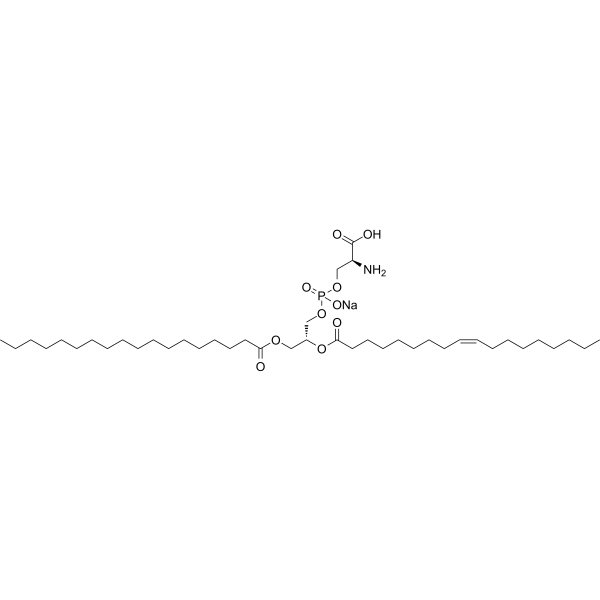
18:0,18:1 PS sodium is the dominant phosphatidylserine subtype in cells, exosomes and HIV particles. It is abundant in the brain and is essential for maintaining membrane structure, lipid raft organization and intracellular trafficking. 18:0,18:1 PS sodium mediates interleaflet membrane coupling through cholesterol-dependent interactions with very long-chain sphingolipids, and can induce the clustering of glycosylphosphatidylinositol-anchored proteins. In addition, clusters formed by the binding of 18:0,18:1 PS sodium to cholesterol not only facilitate the proper distribution of cholesterol in lipid bilayers, but also effectively protect cholesterol from oxidative damage .
loading...
    loading...
Cat. No.: HY-P5589
CAS No.: 131463-18-8
Synonyms: PlnA
Plantaricin A is an antimicrobial peptide that can be derived from Lactobacillus plantarum. Plantaricin A has a synergistic effect with Ciprofloxacin. Plantaricin A shows anti-microbial activity. Plantaricin A increases the membrane potential of S. aureus and the level of intracellular ROS. Plantaricin A inhibits the function of the efflux pump by binding it and altering the structure of MepA, NorA, and LmrS. Plantaricin A significantly relieves inflammation, and promotes wound healing. Plantaricin A permeabilizes cancerous rat pituitary cells [1][2].
loading...
    loading...
Cat. No.: HY-P1889
CAS No.: 721885-31-0
Target:  

Bcl-2 Family Amyloid-β

Research Areas:  

Neurological Disease

Bim BH3, Peptide IV is an 42-binding peptide and the pro-apoptotic BH3 domain of the BIM protein. Bim BH3, Peptide IV binds 42 with a Kd of 7.1 μM. Bim BH3, Peptide IV modulates 42 structure, fibrillization pathways, aggregate morphology, and membrane interactions, inhibiting fibril formation while enhancing protofibril assembly. Bim BH3, Peptide IV promotes 42 β-sheet formation and accelerates aggregation. Bim BH3, Peptide IV enhances 42 membrane internalization and bilayer stiffening. Bim BH3, Peptide IV induces neuronal cell death by enhancing BH3-induced membrane interactions of 42 prefibrillar species. Bim BH3, Peptide IV can be used for research on Alzheimer's disease .
loading...
    loading...
Cat. No.: HY-P3508A
Target:  

MDM-2/p53

Research Areas:  

Cancer

PNC-27 acetate, a chimeric p53-penetratin peptide binds to HDM-2 in a p53 peptide-like structure, induces selective membrane-pore formation and leads to cancer cell lysis. PNC-27 acetate is an anticancer peptide. PNC-27 acetate can be used in acute myeloid leukemia research .
loading...
    loading...

