590 Results for "

M phase

" in MedChemExpress (MCE) Product Catalog:
Products (590)

590 Results for "M phase" in MCE Product Catalog:

Cat. No.: HY-168437
Target:  

MicroRNA

Research Areas:  

Cancer

LIN28-IN-2 is a Lin28 inhibitor with activity against Lin28a, Lin28b, and their zinc knuckle domain. LIN28-IN-2 blocks Lin28-RNA substrate binding, perturbs zinc knuckle domain conformation. LIN28-IN-2 inhibits cancer cell proliferation, spheroid growth, and induces G2/M phase arrest. LIN28-IN-2 suppresses cancer stem cell phenotypes, Lin28-mediated stress granule formation, let-7 target genes, cancer stem cell biomarkers, and neuroendocrine biomarkers expression in cancer cells. LIN28-IN-2 can be used for the research of cancer .
loading...
    loading...
Cat. No.: HY-170924
Research Areas:  

Cancer

Tubulin polymerization-IN-76 (compound 20b) is a potent and orally active Tubulin polymerization inhibitor. Tubulin polymerization-IN-76 inhibits Tubulin polymerization with an IC50 of 2.505 μM by acting on the colchicine binding site, thereby disrupting intracellular Microtubule networks and interfering with cell mitosis. Tubulin polymerization-IN-76 demonstrates exceptional efficacy against MGC-803 and HGC-27 cells with IC50s of 1.61 and 1.82 nM, respectively. Tubulin polymerization-IN-76 effectively inhibits the colony formation and cell migration activities, and induces G2/M phase cycle arrest and Apoptosis in MGC-803 and HGC-27 cells.Tubulin polymerization-IN-76 shows a broad-spectrum antiproliferative activity .
loading...
    loading...
Cat. No.: HY-174428
Target:  

PROTACs JAK STAT Apoptosis

Research Areas:  

Cancer

PROTAC JAK2 degrader-1 is a JAK2 PROTAC degrader, with a DC50 of 27.35 nM. PROTAC JAK2 degrader-1 induces JAK2 degradation via the ubiquitin-proteasome pathway. PROTAC JAK2 degrader-1 inhibits the JAK2-STAT signaling pathway. PROTAC JAK2 degrader-1 induces G2/M phase arrest and apoptosis in cancer cells. PROTAC JAK2 degrader-1 exhibits antiproliferative activity against cancer cells. PROTAC JAK2 degrader-1 inhibits recombinant human erythropoietin (rhEPO)-mediated polycythemia and splenomegaly in mice. PROTAC JAK2 degrader-1 can be used for research on myeloproliferative neoplasms, including polycythemia vera .
loading...
    loading...
Cat. No.: HY-181061
Research Areas:  

Cancer

COX/5-LO-IN-2 is a COX2, EGFR, COX1, 5-LOX, BRAF and FAK inhibitor with IC50 of 1.22 μM, 2.5 μM, 2.95 μM, 4.65 μM, 7.4 μM, 12.2 μM, respectively. COX/5-LO-IN-2 induces cell growth arrest at G2/M phase. COX/5-LO-IN-2 triggers apoptotic activity by up-regulating proapoptotic proteins p53, Bax, and caspase-7 and down-regulating anti-apoptotic protein Bcl-2. COX/5-LO-IN-2 can be used for the research of breast cancer .
loading...
    loading...
Cat. No.: HY-182795
Research Areas:  

Metabolic Disease

Colchicine derivative-1 is a colchicine derivative. Colchicine derivative-1 exhibits cytotoxicity against various cells. Colchicine derivative-1 arrests cancer cells at the G2/M phase of the cell cycle. Colchicine derivative-1 increases the levels of MMP-2, MMP-8, MMP-9, IL-2, IL-6, IL-17A, IL-22, IL-4, and IL-5 in the blood, inhibits the gene expression of hepatic fibrinogen α, β, γ and TGF-β1, and alleviates hepatic fibrosis symptoms in mice. Colchicine derivative-1 has antifibrotic activity and can be used in studies related to hepatic fibrosis .
loading...
    loading...
Cat. No.: HY-208742
CAS No.: 2414418-56-5
ZNL-02-096 is a selective Wee1 PROTAC degrader. ZNL-02-096 binds to CRBN and Wee1 to form a ternary complex, inducing CRBN- and proteasome-dependent ubiquitination and proteasomal degradation of Wee1. ZNL-02-096 inhibits recombinant PLK1 with an IC50 of 102 nM, but does not induce its degradation in cells. ZNL-02-096 induces G2/M phase arrest, Apoptosis, transient integrated stress response, upregulation of ATF4, and phosphorylation of GCN2. ZNL-02-096 reduces Tyr15 phosphorylation of CDK1. ZNL-02-096 can be used in research related to ovarian cancer, acute lymphoblastic leukemia, triple-negative breast cancer, multiple myeloma, and pancreatic ductal adenocarcinoma .
loading...
    loading...
Cat. No.: HY-N12124
CAS No.: 1011244-19-1
Synonyms: Monascinol
Monascuspiloin (Monascinol) is an orally active compound extracted from red mold-fermented rice, with multiple biological activities including anti-androgenic, anti-inflammatory, hypolipidemic, and anti-cancer properties. Monascuspiloin attenuates the PI3K/Akt/mTOR signaling pathway, enhances AMPK phosphorylation, downregulates FASN/SREBP2, induces apoptosis, G2/M phase arrest and autophagy in prostate cancer cells, interferes with dihydrotestosterone-receptor binding, enhances radiation-induced DNA damage, stimulates endoplasmic reticulum stress, and alleviates hepatic oxidative stress. Monascuspiloin regulates hepatic metabolic pathways and modulates the expression of genes and proteins related to hepatic lipid metabolism. Monascuspiloin can be used in studies related to prostate cancer and alcoholic liver injury .
loading...
    loading...
Cat. No.: HY-N16771
CAS No.: 28384-44-3
Clausenidin is a selective inhibitor targeting apoptosis-related pathways, including the mitochondrial pathway and death receptor pathway, and vascular endothelial growth factor (VEGF). Clausenidin induces mitochondrial membrane depolarization by activating caspase-3, caspase-8 and caspase-9, upregulating the pro-apoptotic protein Bax and downregulating the anti-apoptotic protein Bcl-2. Clausenidin also inhibits VEGF expression and blocks angiogenesis, exerting anti-tumor activity. Clausenidin has inhibitory effects against Mycobacterium tuberculosis (MIC=200 μg/mL). Clausenidin can induce apoptosis in liver cancer cells, arrest the cell cycle in the G2/M phase, and inhibit tumor angiogenesis. Clausenidin can be used in the research of malignant tumors such as liver cancer .
loading...
    loading...
Cat. No.: HY-143462
CAS No.: 2740495-53-6
Target:  

HDAC c-Met/HGFR Apoptosis

Research Areas:  

Cancer

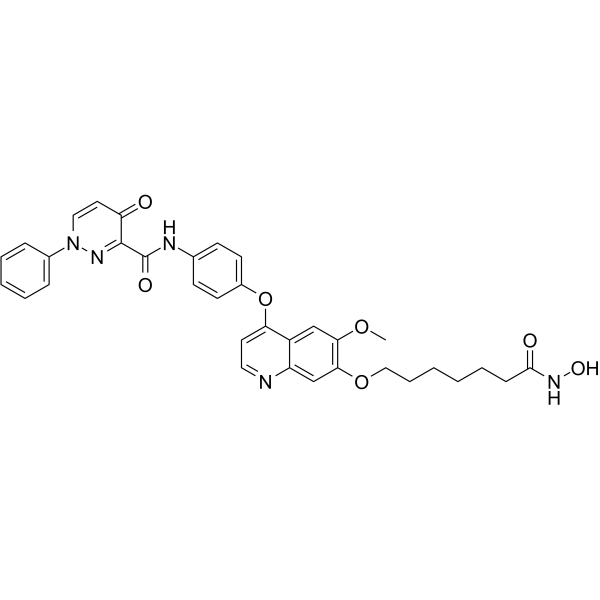
c-Met/HDAC-IN-2 is a highly potent c-Met and HDAC dual inhibitor with IC50s of 18.49 nM and 5.40 nM for HDAC1 and c-Met, respectively. c-Met/HDAC-IN-2 has antiproliferative activities against certain cancer cell lines. c-Met/HDAC-IN-2 can cause G2/M-phase arrest and induce apoptosis in HCT-116. c-Met/HDAC-IN-2 can be used for researching anti-cancer resistance .
loading...
    loading...
Cat. No.: HY-163288
CAS No.: 3033571-35-3
Research Areas:  

Cancer

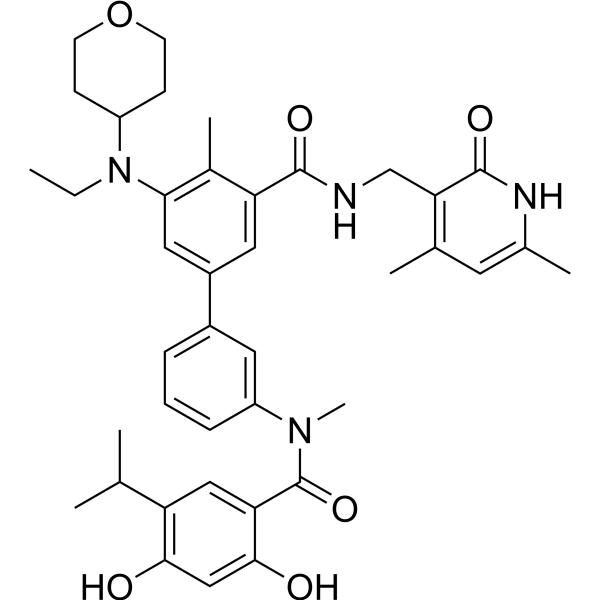
EZH2/HSP90-IN-29 is a dual inhibitor for EZH2 and HSP90, with IC50s of 6.29 nM and 60.1 nM, for EZH2 and HSP90, respectively. EZH2/HSP90-IN-29 increases apoptosis/necrosis-related gene expression, induces cell cycle arrest at M phase and inhibits reactive oxygen species (ROS) catabolism pathway. EZH2/HSP90-IN-29 is able to cross the blood-brain-barrier (BBB) .
loading...
    loading...
Cat. No.: HY-173118
CAS No.: 2463197-87-5
Target:  

EGFR Apoptosis

Research Areas:  

Cancer

EGFR-IN-152 (compound D4) is a potent EGFR tyrosine kinase inhibitor, exhibiting potent EGFR L858R/T790M/C797S inhibition activity (IC50 = 40 nM). EGFR-IN-152 induces G0/G1 phase cell cycle arrest and apoptosis, thereby inhibiting colony formation and cell proliferation of non-small cell lung cancer (NSCLC) cells. EGFR-IN-152 can be used for NSCLC research .
loading...
    loading...
Cat. No.: HY-114214
CAS No.: 626252-75-3
CKD-712 is an orally active multi-target tetrahydroisoquinoline derivatived and a potent inhibitor of the NF-κB pathway . CKD-712 selectively inhibits MMP-9 with no effect on MMP-2, downregulates the expression of TNF-α, IL-6, cyclin A, cyclin B, CDK-1 and other proteins, and activates the PI3K/Akt signaling pathway . CKD-712 blocks the activation and nuclear translocation of NF-κB, downregulates inflammatory factors and pro-tumor metastatic proteins, and induces G2/M phase arrest in tumor cells and thereby inhibits the invasion of cancer cells . CKD-712 can be used for the research of sepsis, myocardial ischemia-reperfusion injury and non-small cell lung cancer .
loading...
    loading...
Cat. No.: HY-120339
CAS No.: 1578247-29-6
STK899704 is a tubulin polymerization inhibitor. STK899704 exhibits broad-spectrum inhibitory activity against various cancer cell lines with IC50 values ​​ranging from 0.2 to 1.0 μM. STK899704 disrupts the mitotic spindle structure, inducing G2/M phase cell cycle arrest. STK899704 inhibits the migration ability of HT29 cells by downregulating the FAK-MEK-ERK signaling pathway, thereby suppressing the expression and activity of MMP-2 and MMP-9. STK899704 activates caspase-3/7/8/9, leading to PARP cleavage and inducing apoptosis. STK899704 induces cellular senescence through the p53 pathway. STK899704 can be used in research on skin cancer, lung cancer, colon cancer, and other cancers .
loading...
    loading...
Cat. No.: HY-168895A
CAS No.: 3125025-29-5
Target:  

Drug Isomer

Research Areas:  

Cancer

(E,E)-c-Fos-IN-1 is the active stereoisomer of c-Fos-IN-1 (HY-168895) in which both double bonds are in the trans configuration. c-Fos-IN-1 (Compound P16) is a c-Jun inhibitor, and decreases mRNA levels and protein levels of c-Fos. c-Fos-IN-1 also inhibits the phosphorylation activity of ERK and the transcriptional activity of AP-1. c-Fos-IN-1 shows anticancer activity by inhibiting ERK/c-Fos/Jun pathway. c-Fos-IN-1 inhibits the proliferation and migration of gastric cancer cells (IC50: 2.31 μM for MGC-803 cell). c-Fos-IN-1 arrests cell cycle at G2/M phase and induces cancer cell apoptosis. c-Fos-IN-1 inhibits gastric cancer tumor growth .
loading...
    loading...
Cat. No.: HY-170329
CAS No.: 3044108-04-2
Research Areas:  

Cancer

PROTAC AR Degrader-8 is the PROTAC degrader for androgen receptor (AR) that degrades AR-FL with DC50s of 0.018 μM and 0.14 μM in 22Rv1 cell and LNCaP cell, degrades AR-V7 with DC50 of 0.026 μM in 22Rv1 cell. PROTAC AR Degrader-8 inhibits the proliferation of cancer cell 22Rv1 and LNCaP with IC50 values of 0.038 μM and 1.11 μM. PROTAC AR Degrader-8 arrests cell cycle at G2/M phase, induces apoptosis in 22Rv1 cell. PROTAC AR Degrader-8 exhibits anticancer efficacy in mouse and zebrafish model. PROTAC AR Degrader-8 can be used for the research of prostate cancer, castration-resistant prostate cancer .
loading...
    loading...
Cat. No.: HY-180119
Target:  

IKK NF-κB Autophagy

Research Areas:  

Cancer

IKKβ-IN-5 is an orally active and selective IKKβ inhibitor with an IC50 of 7.5 nM. IKKβ-IN-5 directly inhibits IKKβ phosphorylation and attenuates NF κB mediated inflammatory and survival signals while promoting autophagy flux. IKKβ-IN-5 exhibits a 6-fold selectivity forIKKβ over the homologous kinase IKKα. IKKβ-IN-5 exerts robust antiproliferative effects through a dual mechanism involving G₂/M phase cell cycle arrest and autophagy activation, even under inflammatory stimulation in vitro. IKKβ-IN-5 demonstrates favorable pharmacokinetics and suppresses tumor growth in vivo. IKKβ-IN-5 can be used for colorectal cancer and potentially other inflammation driven malignancies research .
loading...
    loading...
Cat. No.: HY-182281
Target:  

FLT3 STAT Akt ERK Apoptosis

Research Areas:  

Cancer

FLT3-IN-41 is a highly potent FLT3 inhibitor. The IC50 values of FLT3-IN-41 against human FLT3-ITD and FLT3-WT are 3.16 nM and 294.7 nM, respectively. By binding to the ATP-binding pockets of FLT3-ITD and FLT3-WT and forming hydrogen bonds with hinge region residues and Phe830, FLT3-IN-41 inhibits the STAT5, Akt and Erk signaling pathways. FLT3-IN-41 induces G2/M phase arrest and promotes apoptosis in FLT3-ITD-positive acute myeloid leukemia cells, exhibiting significant antiproliferative activity. FLT3-IN-41 serves as a valuable tool for the study of acute myeloid leukemia .
loading...
    loading...
Cat. No.: HY-184116
A2AR/EGFR-IN-1 is a dual A2AR/EGFR inhibitor, with an IC50 of 0.037 μM against A2AR and an IC50 of 8.37 μM against EGFR. A2AR/EGFR-IN-1 induces cell cycle arrest at S and G2/M phases. A2AR/EGFR-IN-1 upregulates the expression of TP53, Caspase3 and Bax, downregulates the expression of Bcl2, and promotes cell Apoptosis. A2AR/EGFR-IN-1 restores colon crypt structure in an azoxymethane (HY-111375)-induced colorectal cancer model in vivo. A2AR/EGFR-IN-1 can be used for research related to colorectal cancer .
loading...
    loading...
Cat. No.: HY-N11846
CAS No.: 68978-09-6
4′-O-Methylglabridin is an apoptosis inducer with antioxidant, cell cycle-disrupting and anticancer cytotoxic activities. 4′-O-Methylglabridin inhibits various cancer cell lines including liver cancer, breast cancer and colorectal cancer cell lines. By reducing the expression levels of phosphorylated Rb (Ser807/811) and p21 proteins, 4′-O-Methylglabridin promotes cell accumulation at the subG1 and G2/M phases, and triggers caspase-dependent apoptosis via cytochrome C release and caspase-9 activation. 4′-O-Methylglabridin also exerts antioxidant effects by inhibiting lipid peroxide levels and reducing β-carotene consumption, thereby blocking LDL oxidation. 4′-O-Methylglabridin can be used in the research of various cancers and atherosclerotic diseases .
loading...
    loading...
Cat. No.: HY-178939
Target:  

EGFR Akt PERK Apoptosis

Research Areas:  

Neurological Disease Cancer

EGFR-IN-181 is an orally active, potent, brain-penetrant EGFRL858R/T790M/C797S triple mutations inhibitor (IC50 = 1.32 nM). EGFR-IN-181 can inhibit EGFR phosphorylation (p-EGFR) and phosphorylation of its downstream signaling proteins AKT (p-AKT) and ERK (p-ERK). EGFR-IN-181 can induce apoptosis and cause G2 phase arrest. EGFR-IN-181 can be used for the study of non-small cell lung cancer (NSCLC) and brain metastases .
loading...
    loading...

