137 Results for "

Human prostate cell

" in MedChemExpress (MCE) Product Catalog:
Products (137)

137 Results for "Human prostate cell" in MCE Product Catalog:

Cat. No.: HY-70006A
CAS No.: 1239339-17-3
Synonyms: TOK-001 hydrochloride; VN-124-1 hydrochloride
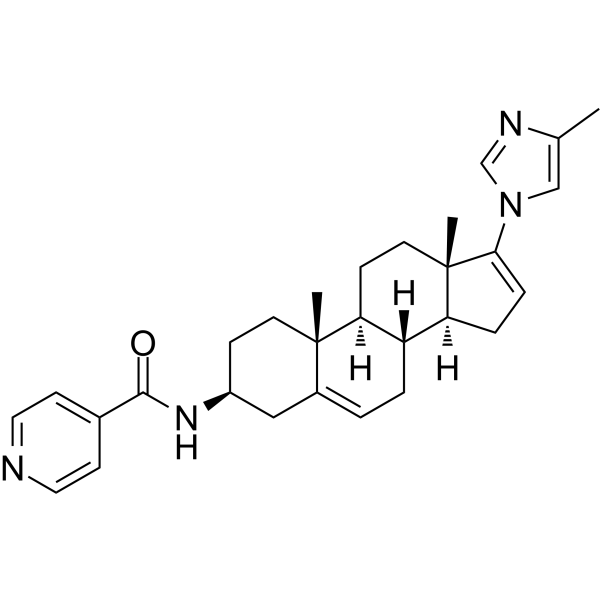
Galeterone (TOK-001) hydrochloride is a potent, orally active molecular glue degrader, which degrades androgen receptor (AR) and its splice variants (AR-Vs) and MAP kinase-interacting serine/threonine protein kinase Mnk1/2. Galeterone hydrochloride also functions as a CYP17 inhibitor (IC50 = 47 nM). Galeterone hydrochloride induces cell apoptosis. Galeterone hydrochloride inhibits tumor growth in human prostate cancer xenograft mouse models. Galeterone hydrochloride can be used for castration resistant prostate cancer (CRPC) and pancreatic ductal adenocarcinoma (PDAC) research [1][2].
loading...
    loading...
Cat. No.: HY-103367
CAS No.: 838823-31-7
Research Areas:  

Cancer

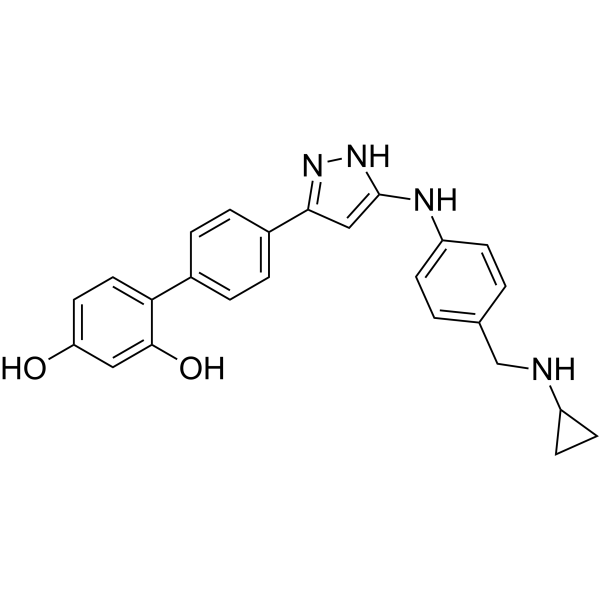
CHK1-IN-7 (Compound 10c) is a potent human CHK1 inhibitor. CHK1-IN-7 shows no single agent effect, potentiates the antiproliferative effect of Gemcitabine HY-17026 in both prostate and breast cancer cell lines. CHK1-IN-7 can be used for the research of cancer .
loading...
    loading...
Cat. No.: HY-N16066
CAS No.: 81474-59-1
Synonyms: CHNQD-0803
Candidusin A (CHNQD-0803) (Compound 4) is a AMPK activator with a KD of 47.28 nM. Candidusin A can be isolated from marine fungus Aspergillus candidus. Candidusin A has cytotoxic activity and induces apoptosis in human prostate cancer cells (22Rv1, PC-3 and LNCaP cells). Candidusin A reduces adipogenesis genes expression and fat deposition, negatively regulates the NF-κB-TNFα inflammatory axis to suppress inflammation, and ameliorates liver injury and fibrosis. Candidusin A can be used for non-alcoholic steatohepatitis (NASH) research .
loading...
    loading...
Cat. No.: HY-118091A
CAS No.: 148905-78-6
Synonyms: LY300502
Target:  

5 alpha Reductase

Research Areas:  

Cancer

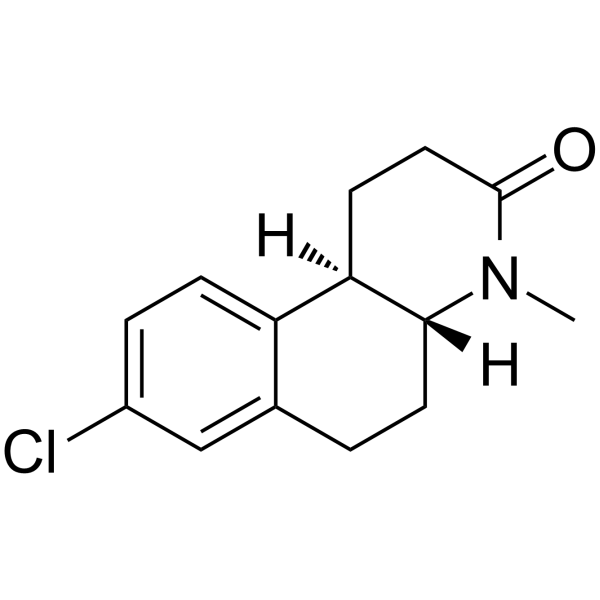
Bexlosteride (LY300502) is a benzoquinolinone human type I 5α-reductase inhibitor. Bexlosteride shows metabolic inhibitory, antiproliferative, and antisecretory effects in LNCaP human prostatic adenocarcinoma cell cultures. Bexlosteride can be used for the research of prostatic cancer .
loading...
    loading...
Cat. No.: HY-N15449
CAS No.: 33211-22-2
Vicanicin is a depsidone compound found in lichens. Vicanicin inhibits the expression of Hsp70, regulates the redox-sensitive mechanisms within cells, promotes the increase of reactive oxygen species (ROS) in cancer cells, changes the Bax/Bcl-2 ratio, activates caspase-3, and triggers apoptosis. Vicanicin inhibits cell growth and induces apoptosis in androgen-sensitive (LNCaP) and androgen-insensitive (DU-145) human prostate cancer cells. Vicanicin is promising for research of prostate cancer .
loading...
    loading...
Cat. No.: HY-141830
CAS No.: 2379410-19-0
Research Areas:  

Cancer

SYY-B029-2 is a potent histone acetyltransferase (HAT) inhibitor with an IC50 of 1.4 nM. SYY-B029-2 cell growth of human mantle cell lymphoma (MCL) cell line MAVER-1 and human castration resistant prostate cancer cell line LNCaP clone FGC, with IC50 values of 15 nM and 13 nM, respectively .
loading...
    loading...
Cat. No.: HY-173186
Target:  

TLK Apoptosis

Research Areas:  

Cancer

TLK1-IN-1 is a TLK1B inhibitor with a human IC50 of 7.2 μM. TLK1-IN-1 causes accumulation of DNA damage and induces apoptotic cell death in cancer cells. TLK1-IN-1 can be used for the research of metastatic castration-resistant prostate cancer .
loading...
    loading...
Cat. No.: HY-153396
CAS No.: 1005497-03-9
Purity:  ≥99.0%
Target:  

Ceramidase

Research Areas:  

Cancer

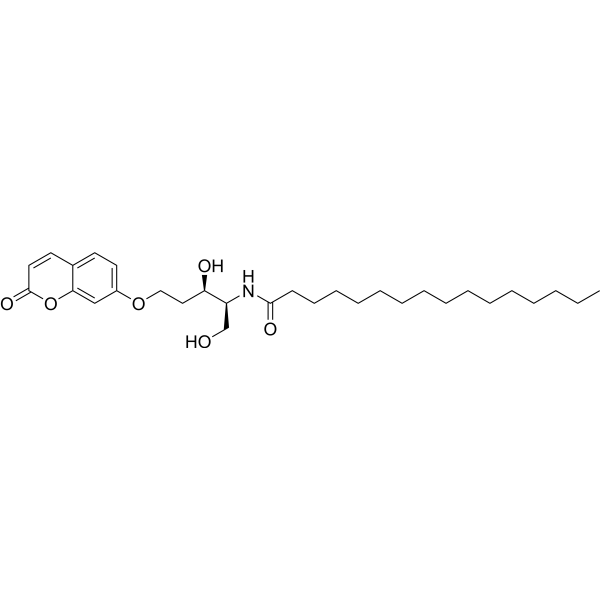
Acid Ceramidase-IN-2 (compound 1) is an acid ceramidase inhibitor with potentially antiproliferative and cytostatic activities. Moreover, human acid ceramidase is overexpressed in prostate cancer cells, indicating potential anti-tumor effect of Acid Ceramidase-IN-2. And Acid Ceramidase-IN-2 hydrolysis can be inhibited by 3 a-ketoamides GT85, GT98 and GT99 inhibits in vitro .
loading...
    loading...
Cat. No.: HY-17473R
CAS No.: 550-24-3
Synonyms: Embelic acid (Standard); Emberine (Standard); NSC 91874 (Standard)
Embelin (Standard) is the analytical standard of Embelin. This product is intended for research and analytical applications. Embelin (Embelic acid), a potent, nonpeptidic XIAP inhibitor (IC50=4.1 μM), inhibits cell growth, induces apoptosis, and activates caspase-9 in prostate cancer cells with high levels of XIAP. Embelin blocks NF-kappaB signaling pathway leading to suppression of NF-kappaB-regulated antiapoptotic and metastatic gene products. Embelin also induces autophagic and apoptotic cell death in human oral squamous cell carcinoma cells .
loading...
    loading...
Cat. No.: HY-W700452
Y-27632-d4 hydrochloride hydrate is the deuterium labeled Y-27632 hydrochloride hydrate (HY-10071A). Y-27632 hydrochloride hydrate is an orally active, ATP-competitive inhibitor of ROCK-I and ROCK-II, with Kis of 220 and 300 nM, respectively. Y-27632 hydrochloride hydrate attenuates Doxorubicin-induced apoptosis of human cardiac stem cells. Y-27632 hydrochloride hydrate also suppresses dissociation-induced apoptosis of murine prostate stem/progenitor cells. Y-27632 hydrochloride hydrate primes human induced pluripotent stem cells (hIPSCs) to selectively differentiate towards mesendodermal lineage via epithelial-mesenchymal transition-like modulation .
loading...
    loading...
Cat. No.: HY-P10622
SHLP-3 is a mitochondrial derived peptide encoded by the 16S ribosomal RNA (MT-RNR2) gene. SHLP-3 increases cell viability and reduces apoptosis in insulinoma NIT-1β cells and human prostate cancer 22Rv1 cells. SHLP-3 increases mitochondrial function and exerts cytoprotective effects by increasing mitochondrial oxygen consumption rate (OCR), cellular ATP and reducing the ability to produce ROS. SHLP-3 can be used in the study of diabetes and cancer .
loading...
    loading...
Cat. No.: HY-117953
CAS No.: 155180-53-3
Target:  

Androgen Receptor

Research Areas:  

Cancer

RU 59063 is a high-affinity, selective nonsteroidal androgen receptor (AR) ligand that acts as a partial AR agonist/antagonist in CV-1 cell transcription assays. RU 59063 has a Ka value of 6.2×10 9 M -1 for human AR. RU 59063 induces a conformation of AR that can bind to the androgen response element (ARE), triggers partial AR-dependent transcriptional activation, and antagonizes testosterone-induced AR transcriptional activity. RU 59063 inhibits testosterone propionate-induced ornithine decarboxylase activity in mouse kidneys and testosterone propionate-induced prostate weight gain in rats. RU 59063 can be used in studies related to prostate cancer .
loading...
    loading...
Cat. No.: HY-135794R
CAS No.: 32694-37-4
Synonyms: 11-KDHT (Standard); 5α-Dihydro-11-keto testosterone (Standard)
Research Areas:  

Endocrinology

11-Ketodihydrotestosterone (Standard) is the analytical standard of 11-Ketodihydrotestosterone. This product is intended for research and analytical applications. 11-Ketodihydrotestosterone (11-KDHT; 5α-Dihydro-11-keto testosterone) is an endogenous steroid and a metabolite of 11β-Hydroxyandrostenedione. 11-Ketodihydrotestosterone is an active androgen and is also a potent androgen receptor (AR) agonist with a Ki of 20.4 nM and an EC50 of 1.35 nM for human AR. 11-Ketodihydrotestosterone drives gene regulation, protein expression and cell growth in androgen-dependent prostate cancer cells .
loading...
    loading...
Cat. No.: HY-143882
CAS No.: 2376137-29-8
Target:  

PROTACs Akt Apoptosis

Research Areas:  

Cancer

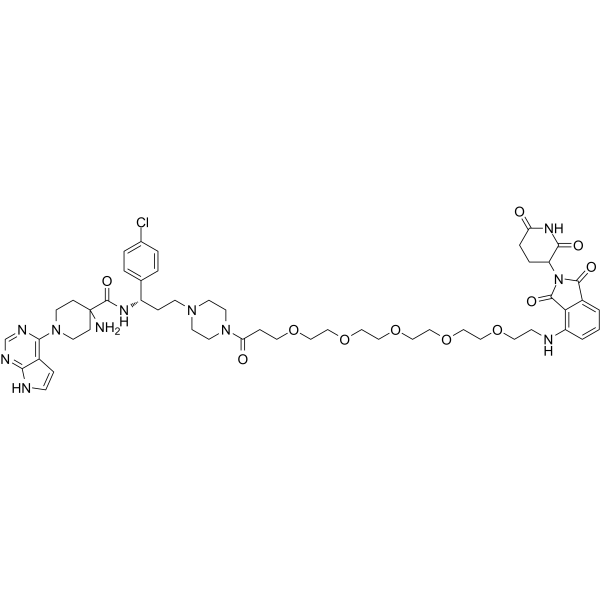
MS5033 is a CRBN-recruiting PROTAC degrader that targets AKT1. The IC50 values of MS5033 against human AKT range from 1.3 nM to 798 nM, with Kd values ranging from 4.8 nM to 160 nM. MS5033 inhibits downstream AKT signaling pathways, including the phosphorylation of PRAS40, thereby suppressing cancer cell proliferation and colony formation and inducing cancer cell apoptosis. MS5033 can be used in research on glioma, prostate cancer, triple-negative breast cancer, breast cancer and solid tumors .
loading...
    loading...
Cat. No.: HY-113332R
CAS No.: 544-64-9
Myristoleic acid (Standard) is the analytical standard of Myristoleic acid. This product is intended for research and analytical applications. Myristoleic acid, a cytotoxic component in the extract from Serenoa repens, induces apoptosis and necrosis in human prostatic LNCaP cells[1].
loading...
    loading...
Cat. No.: HY-78884
CAS No.: 592542-61-5
Research Areas:  

Cancer

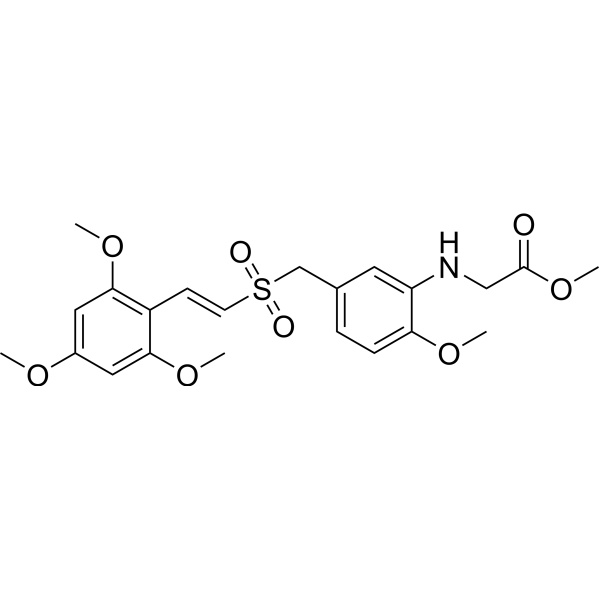
Anticancer agent 9, a glycine derivative, is an anticancer agent. Anticancer agent 9 can inhibit tumor cells viability of myelogenous leukemia and human prostate cancer .
loading...
    loading...
Cat. No.: HY-N10265
CAS No.: 360765-75-9
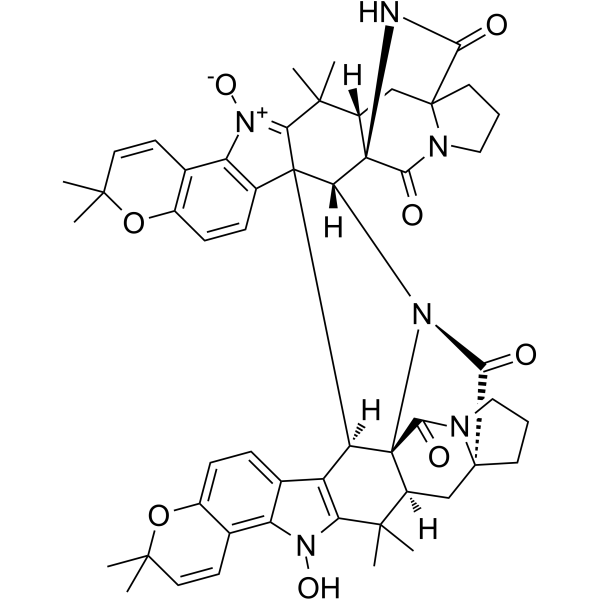
Stephacidin B is a fungal metabolite. Stephacidin B shows in vitro cytotoxicity against a panel of human tumor cell lines. Stephacidin B shows the strongest cytotoxicity against testosterone-dependent prostate LNCaP cancer cells .
loading...
    loading...
Cat. No.: HY-176160
Synonyms: Methyl jacarate; SFE 19:3
Target:  

Apoptosis

Research Areas:  

Cancer

Jacaric acid methyl ester is a methyl ester form of the conjugated PUFA jacaric acid. Jacaric acid can induce apoptosis selectively in human prostate cancer cells. Jacaric acid induces concentration- and time-dependent LNCaP cell death. Jacaric acid methyl ester can be studied in anticancer research .
loading...
    loading...
Cat. No.: HY-W154265
CAS No.: 15131-80-3
Research Areas:  

Cancer

2,2′-Dihydroxychalcone, a flavonoid, is a glutathione S-transferase (GST) inhibitor with an IC50 of 28.9 μM in human colon cancer cells. 2,2′-Dihydroxychalcone induces cell cycle arrest and apoptosis in prostate cancer cells. 2,2′-Dihydroxychalcone has anticancer and anti-inflammatory properties .
loading...
    loading...
Cat. No.: HY-151266
CAS No.: 2883447-45-6
Target:  

Androgen Receptor

Research Areas:  

Cancer

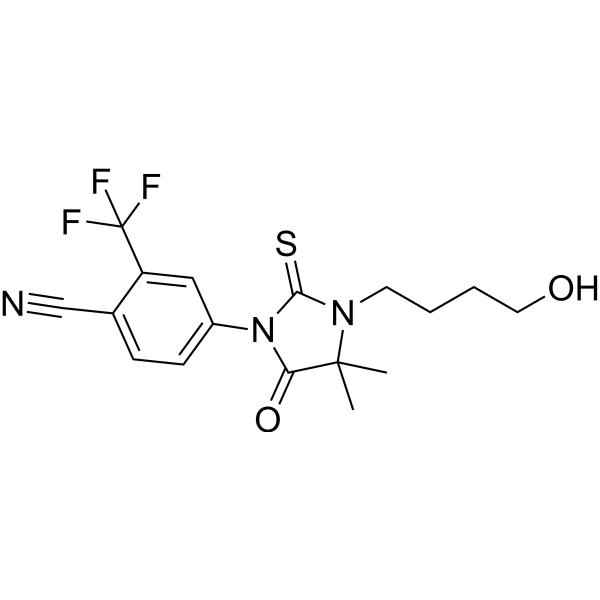
AR antagonist 4 is an orally active androgen receptor (AR) antagonist with a DC50 of 2.84 μM in LNCaP human prostate cancer cells. AR antagonist 4 inhibits dihydrotestosterone-induced AR transcriptional activity, promotes proteasome-dependent AR degradation, and dose-dependently promotes AR-V7 degradation. AR antagonist 4 can be used for the research of metastatic castration-resistant prostate cancer .
loading...
    loading...

