74 Results for "

viral DNA replication

" in MedChemExpress (MCE) Product Catalog:
Products (74)

74 Results for "viral DNA replication" in MCE Product Catalog:

Cat. No.: HY-117999
CAS No.: 247037-81-6
Target:  

HBV

Research Areas:  

Infection

BAY39-5493 is a non-nucleoside inhibitor that inhibits HBV replication. BAY39-5493 inhibits viral DNA replication by preventing the formation of viral core particles (nucleocapsids). The IC50 value of BAY39-5493 against HBV in stably transfected HepG2.2.15 cells is 0.03 μM .
loading...
    loading...
Cat. No.: HY-B1318R
CAS No.: 63585-09-1
Synonyms: Trisodium phosphonoformate (Standard); Phosphonoformic acid trisodium salt (Standard)
Research Areas:  

Infection

Foscarnet (sodium) (Standard) is the analytical standard of Foscarnet (sodium). This product is intended for research and analytical applications. Foscarnet sodium (Trisodium phosphonoformate) is a viral DNA polymerase activity inhibitor, leading to reversible suppression of viral replication. Foscarnet sodium is an antiherpesvirus agent used in cytomegalovirus retinitis .
loading...
    loading...
Cat. No.: HY-W676876
CAS No.: 548-31-2
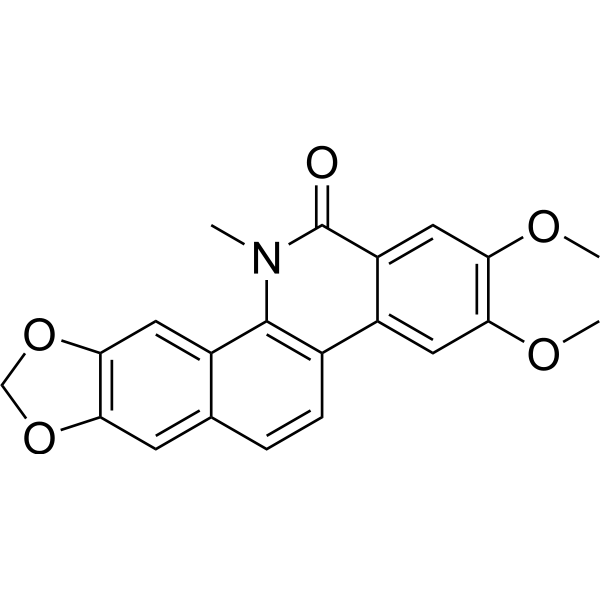
Oxynitidine is an HBV inhibitor (ID50=30.8 µg/mL), which can effectively inhibit the DNA replication activity of HBV. Oxynitidine can be used in the study of viral infections .
loading...
    loading...
Cat. No.: HY-N0093R
CAS No.: 10212-25-6
Synonyms: Cyclocytidine hydrochloride (Standard); Cyclo-CMP hydrochloride (Standard); Cyclo-C (Standard)
Ancitabine hydrochloride (Standard) is the analytical standard of Ancitabine hydrochloride. This product is intended for research and analytical applications. Ancitabine (Cyclocytidine) hydrochloride is a cytarabine derivative that inhibits viral replication. Ancitabine hydrochloride blocks vaccinia virus DNA replication, the progression of viral protein synthesis from early to late stages, and one-step growth of vaccinia virus. Ancitabine hydrochloride is applicable to research related to vaccinia virus infection, leukemia, human cytomegalovirus infection and colorectal cancer .
loading...
    loading...
Cat. No.: HY-B0307A
CAS No.: 17140-71-5
Synonyms: 5-Iodo-2′-deoxyuridine hydrate; 5-IUdR hydrate; IdUrd hydrate
Research Areas:  

Infection Cancer

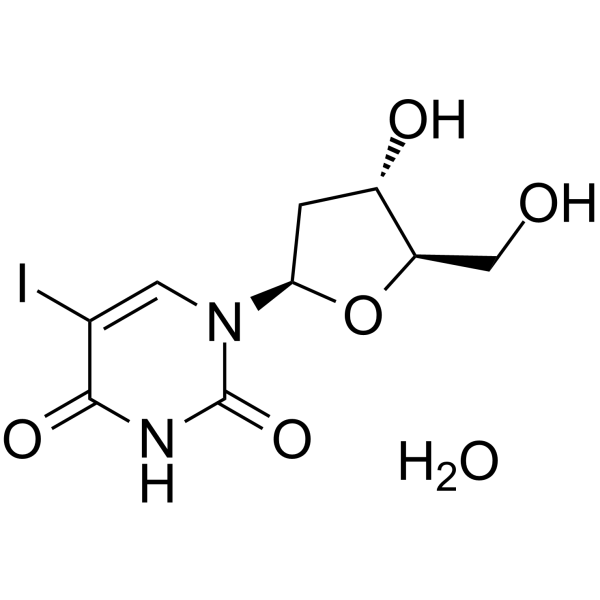
Idoxuridine (5-Iodo-2′-deoxyuridine, 5-IUdR, IdUrd) hydrate is an iodinated thymidine analogue that competitively inhibits phosphorylases. Idoxuridine can inhibit viral activity, particularly viral eye infections, including herpes simplex keratitis, by inhibiting DNA polymerase and affecting viral replication. Idoxuridine against feline herpesvirus has the IC50 value of 4.3 μM .
loading...
    loading...
Cat. No.: HY-170605
CAS No.: 1362113-74-3
Target:  

HBV

Research Areas:  

Infection

BA-AZT1 is the inhibitor for HBV polymerase and sodium taurocholate cotransporting polypeptide (NTCP). BA-AZT1 inhibits the secretion of viral capsid protein HBsAg and HBeAg with IC50 of 0.65 µM and 13.42 µM, inhibits the HBV DNA replication with an IC50 of 0.70 µM .
loading...
    loading...
Cat. No.: HY-167911
CAS No.: 127749-27-3
Synonyms: GS 0504 sodium; HPMPC sodium; (S)-HPMPC sodium
Cidofovir sodium is an acyclic monophosphate nucleotide analogue and CMV inhibitor with antiviral activity. Cidofovir sodium inhibits cytomegalovirus (CMV) replication by selectively inhibiting viral DNA polymerase. Cidofovir sodium induces apoptosis and can be used in studies of AIDS cytomegalovirus retinitis, herpes, and cancer . Cidofovir sodium also has anti-orthopoxvirus and anti-variola activities .
loading...
    loading...
Cat. No.: HY-116758
CAS No.: 41692-24-4
Synonyms: di-Me-PGA1
Target:  

DNA/RNA Synthesis HIV HSV

Research Areas:  

Infection Cancer

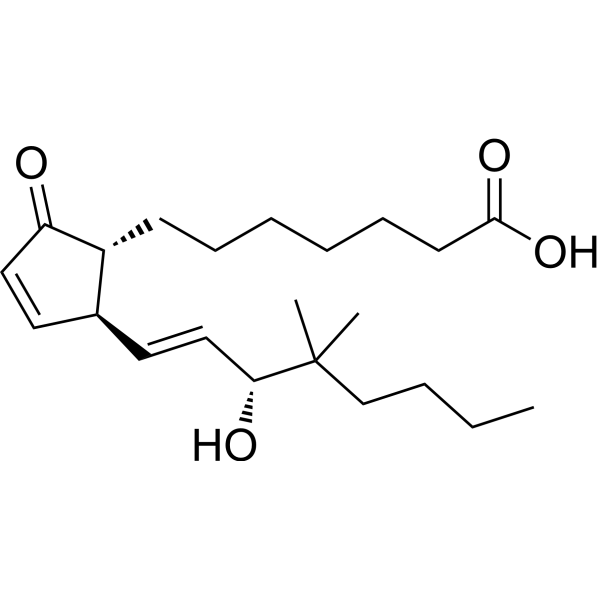
16,16-Dimethyl prostaglandin A1 (di-Me-PGA1) is a prostaglandin analog that can inhibit DNA synthesis in Lewis lung carcinoma and B 16 amelanotic melanoma cells. 16,16-Dimethyl prostaglandin A1 also inhibits viral replication in both HSV and HIV-1 infection systems .
loading...
    loading...
Cat. No.: HY-N6666R
CAS No.: 24356-66-9
Vidarabine monohydrate (Standard) is the analytical standard of Vidarabine monohydrate (HY-N6666). This product is intended for research and analytical applications. Vidarabine monohydrate is a Purine nucleoside derivative and Antiviral agent. The triphosphate derivative of Vidarabine monohydrate competitively inhibits DNA polymerase, incorporates into the terminus of elongating DNA molecules, and interferes with the early steps of viral DNA synthesis. Vidarabine monohydrate inhibits the replication of herpes simplex virus, varicella-zoster virus, cytomegalovirus, Epstein-Barr virus and vaccinia virus, reduces viral shedding, and accelerates skin healing. Vidarabine monohydrate is metabolized to arabinosyl hypoxanthine, causes minimal impairment of corneal wound healing in rabbit models, and is associated with recurrence of herpes simplex encephalitis. Vidarabine monohydrate can be used in the research of herpetic keratoconjunctivitis, herpes simplex encephalitis, herpetic uveitis, and chronic active hepatitis associated with hepatitis B virus .
loading...
    loading...
Cat. No.: HY-B0277AR
CAS No.: 29984-33-6
Synonyms: ara-AMP (Standard); ara-A 5'-monophosphate (Standard)
Vidarabine phosphate (ara-AMP; ara-A 5'-monophosphate) (Standard) is the analytical standard of Vidarabine phosphate. This product is intended for research and analytical applications. Vidarabine phosphate is a purine nucleoside antiviral agent and a prodrug of Vidarabine (HY-B0277). Vidarabine phosphate is rapidly converted into the antiviral active Vidarabine in vivo, which selectively inhibits viral DNA polymerase and cellular ribonucleotide reductase, thereby blocking viral replication. Vidarabine phosphate also exhibits antifungal activity, induces late-stage cellular apoptosis, and causes cell cycle arrest. Vidarabine phosphate can be used in research related to severe chronic active Epstein-Barr virus (EBV) infection, herpes infection, and candidiasis.
loading...
    loading...
Cat. No.: HY-128744R
CAS No.: 4408-78-0
Phosphonoacetic acid Standard is the analytical standard of Phosphonoacetic acid (HY-128744). This product is intended for research and analytical applications. Phosphonoacetic acid is a potent antiviral agent. Phosphonoacetic acid inhibits a variety of herpesviruses, orthopoxviruses, and retroviruses. Phosphonoacetic acid strongly inhibits viral and cellular DNA polymerase, reverse transcriptase, and terminal deoxynucleotidyl transferase activities in a non-competitive or uncompetitive manner by binding to the pyrophosphate site of the enzyme. Phosphonoacetic acid is useful for research related to lymphoid leukemia, herpesvirus infection, and vaccinia virus skin lesions .
loading...
    loading...
Cat. No.: HY-W013403S
CAS No.: 362049-50-1
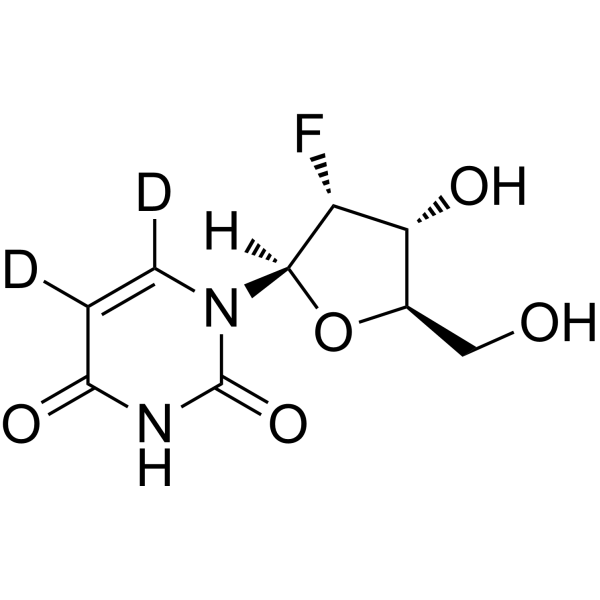
2'-Deoxy-2'-fluorouridine-d2 is the deuterium labeled 2'-Deoxy-2'-fluorouridine . 2'-Deoxy-2'-fluorouridine is a derivative of the pyrimidine nucleoside uridine. 2'-Deoxy-2'-fluorouridine is a nucleoside analog that inhibits the replication of wild-type viruses by binding to the viral RNA. Hepatitis C polyU/UC RNA strands containing 2'-Deoxy-2'-fluorouridine, bind to RIG-I but do not activate RIG-I signaling in a reporter assay using Huh7 cells. 2'-Deoxy-2'-fluorouridine also has been used as a starting material in the synthesis of respiratory syncytial virus (RSV) polymerase inhibitors. 2'-Deoxy-2'-fluorouridine can incorporate into DNA and RNA in rat and woodchuck model upon administration. 2'-Deoxy-2'-fluorouridine can be studied in anti-viral research .
loading...
    loading...
Cat. No.: HY-N1401R
CAS No.: 112246-15-8
20(R)-Ginsenoside Rh2 (Standard) is the analytical standard of 20(R)-Ginsenoside Rh2. This product is intended for research and analytical applications. 20(R)-Ginsenoside Rh2 is an orally active protopanaxadiol-type saponin with multiple biological activities. 20(R)-Ginsenoside Rh2 exerts a significant inhibitory effect on non-small cell lung cancer and liver cancer by inducing cell cycle arrest and promoting apoptosis. 20(R)-Ginsenoside Rh2 exerts anti-γ-herpesvirus effects by inhibiting viral DNA replication. 20(R)-Ginsenoside Rh2 inhibits inflammatory mediators by reducing the levels of NO, PGE2, and ROS; it can delay skin photoaging by reducing ROS and inhibiting MMP-9/2 activity. 20(R)-Ginsenoside Rh2 accelerates the recovery after muscle injury by activating the Akt1/PKB signaling pathway. 20(R)-Ginsenoside Rh2 can inhibit osteoclast formation and exert an anti-osteoporosis effect.
loading...
    loading...
Cat. No.: HY-186273
CAS No.: 848217-46-9
Target:  

CMV

Research Areas:  

Infection

MLS8091 is a highly selective inhibitor of the human cytomegalovirus (HCMV) helicase-primase complex with antiviral activity. MLS8091 inhibits HCMV replication during the early and late stages of the virus, and suppresses viral DNA replication as well as all HCMV viral proteins. MLS8091 inhibits guinea pig cytomegalovirus replication, and exerts an additive effect when combined with Letermovir (HY-15233). MLS8091 can be used in studies related to human cytomegalovirus infection .
loading...
    loading...
Cat. No.: HY-P11137
CAS No.: 878495-58-0
Target:  

HSV

Research Areas:  

Cancer

LANA is a KSHV latency-associated nuclear antigen. The core function of LANA is to act as an "anchor" for the viral genome, attaching it to the chromatin of the host cell. LANA ensures that the episomal DNA of KSHV replicates together with the host chromosome and is evenly distributed among the daughter cells, thereby maintaining the latent infection of the virus in the cell population. LANA can regulate the transcription of viral and host cell genes, and regulate certain host cell genes to promote cell survival. LANA can be used to study the viral DNA tethering structure .
loading...
    loading...
Cat. No.: HY-137697A
ddCTP tetrasodium is a type of chain-terminating deoxynucleotide. ddCTP tetrasodium can be incorporated into the extension primer chain that lacks the 3'-hydroxyl group, thereby terminating primer extension, viral genome replication, and DNA synthesis. ddCTP tetrasodium can distinguish almost identical RNA through distinguishable extension products in primer extension inhibition experiments. ddCTP tetrasodium is the active metabolite of Zalcitabine (HY-17392), which can competitively inhibit HIV reverse transcriptase, terminate the synthesis of viral DNA chains, and thereby inhibit HIV replication .
loading...
    loading...
Cat. No.: HY-170547A
Research Areas:  

Infection

DNA polymerase-IN-6 formic is an antiviral agent and a DNA polymerase inhibitor. DNA polymerase-IN-6 formic inhibits the replication of HCMV, HSV-1, HSV-2 and EBV. DNA polymerase-IN-6 formic exhibits low cytotoxicity in mammalian cells. DNA polymerase-IN-6 formic can be used in research related to viral infections .
loading...
    loading...
Cat. No.: HY-L044
593 compounds

Nucleoside and nucleotide analogues are synthetic, chemically modified compounds that have been developed to mimic their physiological counterparts in order to exploit cellular metabolism and subsequently be incorporated into DNA and RNA to inhibit cellular division and viral replication. In addition to their incorporation into nucleic acids, nucleoside and nucleotide analogues can interact with and inhibit essential enzymes such as human and viral polymerases (that is, DNA-dependent DNA polymerases, RNA-dependent DNA polymerases or RNA-dependent RNA polymerases), kinases, ribonucleotide reductase, DNA methyltransferases, purine and pyrimidine nucleoside phosphorylase and thymidylate synthase. These actions of nucleoside and nucleotide analogues have potential therapeutic benefits — for example, in the inhibition of cancer cell growth, the inhibition of viral replication as well as other indications.

MCE offers a unique collection of 593 nucleotide compounds including nucleotide, nucleoside and their structural analogues. MCE Nucleotide Compound Library is a useful tool to discover anti-cancer and antiviral drugs for high throughput screening (HTS) and high content screening (HCS).

Cat. No.: HY-131612
CAS No.: 19316-85-9
Target:  

Reverse Transcriptase

Research Areas:  

Infection

5'-Azido-5'-deoxythymidine (Compound 7), a nucleoside analogue, is a reverse transcriptase inhibitor. 5'-Azido-5'-deoxythymidine mimics nucleosides and is incorporated into the viral DNA chain to terminate chain elongation, inhibiting viral replication. 5'-Azido-5'-deoxythymidine is promising for research of retroviral infection diseases such as AIDS .
loading...
    loading...
Cat. No.: HY-109045AR
CAS No.: 1075281-70-7
Synonyms: BTA074 hydrochloride (Standard); AP 611074 hydrochloride (Standard)
Research Areas:  

Infection

Teslexivir hydrochloride (Standard) is the analytical standard of Teslexivir (hydrochloride) (HY-109045A). This product is intended for research and analytical applications. Teslexivir (BTA074) hydrochloride is a potent antiviral agent. Teslexivir hydrochloride is a potent and selective inhibitor of the interaction between two essential viral proteins, E1 and E2, an association that is a necessary step in the DNA replication and thus viral production for Human Papilloma Virus (HPV) 6 and 11. Teslexivir hydrochloride can be used for condyloma research .
loading...
    loading...

