
276 Results for "

fibroblast cell

" in MedChemExpress (MCE) Product Catalog:
Products (276)

276 Results for "fibroblast cell" in MCE Product Catalog:

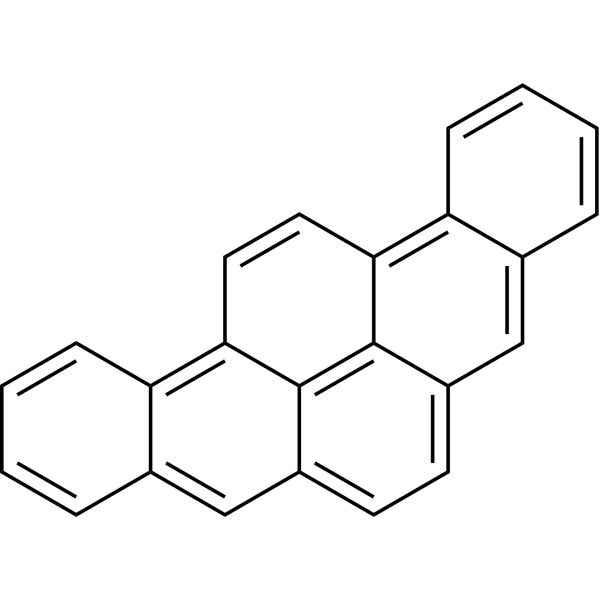
Cat. No.: HY-124211
CAS No.: 189-55-9
Purity:  ≥98.0%
Dibenzo (a,i) pyrene is a polycyclic aromatic hydrocarbon and also a carcinogenic ligand of the TCDD (Ah) receptor. Dibenzo (a,i) pyrene binds to the TCDD (Ah) receptor in rat liver. Dibenzo (a,i) pyrene induces DNA adduct formation and upregulates the protein levels of p53 and p21 WAF1 in diploid lung fibroblasts. Dibenzo (a,i) pyrene alters the cell cycle distribution of diploid lung fibroblasts, increasing the proportion of cells in the S phase, decreasing the proportions of cells in the G0/G1 and G2/M phases, and causing S phase delay/arrest. Dibenzo (a,i) pyrene is applicable for cancer research .
loading...
    loading...
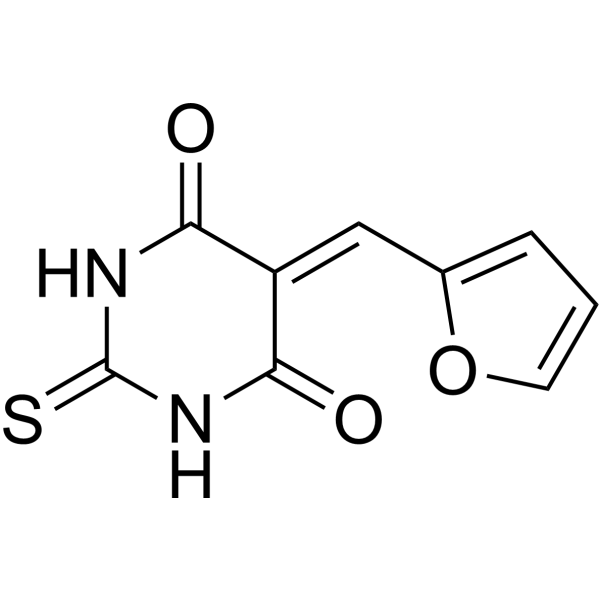
Cat. No.: HY-W177546
CAS No.: 27430-18-8
CD00509 is a tyrosyl-DNA phosphodiesterase (PDE) Tdp1 inhibitor with an IC50 of 0.71 μM. CD00509 increases DNA damage and promotes apoptosis of MCF-7 cells. CD00509 can sensitize breast cancer cells and wild-type murine embryonic fibroblasts (MEFs) to Camptothecin (CPT) (HY-16560). CD00509 can be used for the study of cancers such as breast cancer .
loading...
    loading...
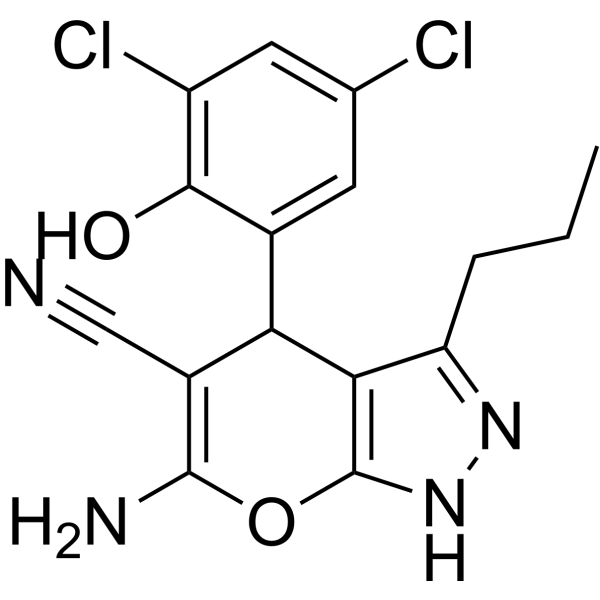
Cat. No.: HY-125987
CAS No.: 381186-64-7
Purity:  98.88%
Target:  

Ras

Research Areas:  

Cancer

RBC6 is an inhibitor of GTPases RalA. RBC6 inhibits binding of Ral to its effector RALBP1. RBC6 also inhibits Ral-mediated cell spreading of murine embryonic fibroblasts, as well as anchorage-independent growth of human cancer celllines .
loading...
    loading...
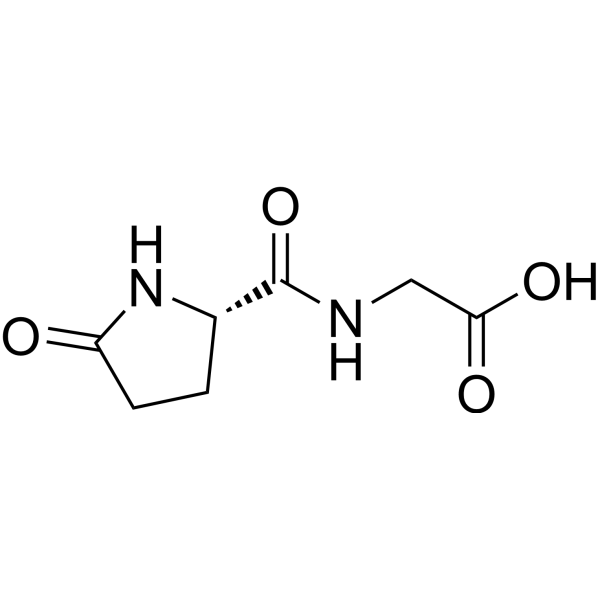
Cat. No.: HY-P4859
CAS No.: 29227-88-1
Synonyms: Pyr-Gly-OH; H-Pyr-Gly-OH
Target:  

Inhibitory Antibodies

Research Areas:  

Others

Pyr-Gly is an inhibitory peptide. Pyr-Gly inhibits proliferation of retinal pigment epithelium (RPE) cells and fibroblasts .
loading...
    loading...
Cat. No.: HY-172476
Target:  

Liposome

Research Areas:  

Cancer

DSPE-PEG2000-YIGSR is a PEG compound which composed of DSPE and a biomimetic peptide YIGSR. YIGSR interacts with the 67 kDa laminin binding protein (LBP) and promotes adhesion and spreading of a large number of cell types including endothelial cells, fibroblasts and smooth muscle cells. DSPE-PEG2000-YIGSR can be used for drug delivery .
loading...
    loading...
Cat. No.: HY-169183
Target:  

Myosin

Research Areas:  

Others

Myokinasib-II is a MLCK1 inhibitor with an IC50 of 4.4 μM. Myokinasib-II induces cell cortex softening, impairs cell migration capacity, induces multinucleation, reduces cell stiffness, alters membrane tether dynamics, decreases actomyosin tension and changes nuclear morphology. Myokinasib-II is a MLCK1 chemical biology probe with a unique structure that does not depolymerize tubulin and maintains cell viability even under high-concentration treatment in fibroblasts .
loading...
    loading...
Cat. No.: HY-124776
CAS No.: 696655-62-6
Purity:  99.92%
Target:  

p97

Research Areas:  

Cancer

NPD8733 is an inhibitor of cancer cell-enhanced fibroblast migration. NPD8733 specifically binds to valosin-containing protein (VCP)/p97, a member of the ATPase-associated with diverse cellular activities (AAA+) protein family. NPD8733 has the potential for the research of cancer diseases .
loading...
    loading...
Cat. No.: HY-128034
CAS No.: 64005-90-9
Purity:  99.79%
Target:  

PIN1

Research Areas:  

Cancer

PPIase-Parvulin inhibitor (compound B) is a cell-permeable inhibitor targeting PPIase Pin1 and Par14, with IC50s of 1.5 and 1.0 µM, respectively. PPIase-Parvulin inhibitor has anticancer activity and inhibits the growth and proliferation of mouse embryonic fibroblasts (MEFs) .
loading...
    loading...
Cat. No.: HY-W001939
CAS No.: 586-89-0
4-Acetylbenzoic acid is a Zn(II) complex. 4-Acetylbenzoic acid is a derivative of benzoic acid that is commonly used in chemical synthesis. 4-Acetylbenzoic acid has an IC50 of 331.3 μM in murine L929 fibroblasts and an IC50 of 176 μM in metastatic melanoma B16 F10 cell lines .
loading...
    loading...
Cat. No.: HY-145358
CAS No.: 2415941-98-7
Target:  

PI3K

Research Areas:  

Cancer

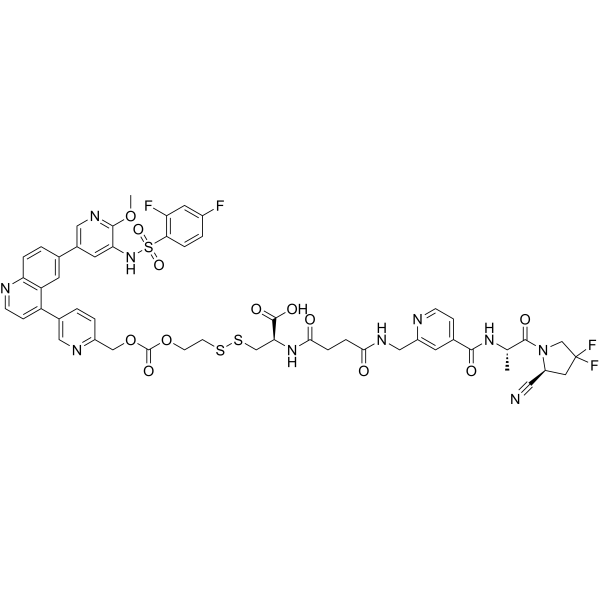
FAP-PI3KI1 is a fibroblast-activated protein (FAP)-targeted PI3K inhibitor that selectively targets FAP-expressing human idiopathic pulmonary fibrosis (IPF) cells and effectively inhibits collagen synthesis and reduces collagen deposition .
loading...
    loading...
Cat. No.: HY-N2622
CAS No.: 2643-85-8
Synonyms: (+)-Oxypeucedanin hydrate; (+)-Prangol
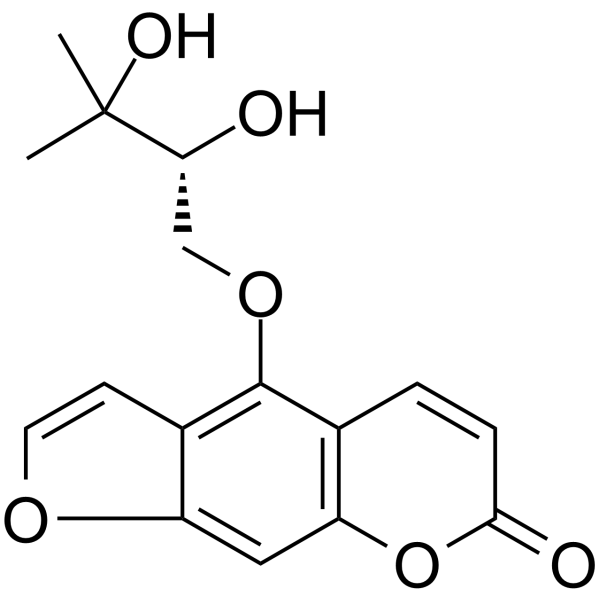
Oxypeucedanin hydrate ((+)-Oxypeucedanin hydrate) is a natural product isolated from D. anethifolia. Prangol exhibits mild toxicity on fibroblasts and parental lymphoma cells .
loading...
    loading...
Cat. No.: HY-170776
Target:  

PDGFR VEGFR FGFR Apoptosis

Research Areas:  

Cancer

AXL/Angiokinase-IN-1 (compound 11b) is an AXL/triple angiokinase inhibitor, IC50=3.75 nM (AXL expression). AXL/Angiokinase-IN-1 inhibits epithelial-mesenchymal transition (EMT) in Bxpc-3, blocking lung cancer cell metastasis. AXL/Angiokinase-IN-1 also inhibits vascular and fibroblast functions, promoting apoptosis (apoptosis) in cancer cells and fibroblasts. AXL/Angiokinase-IN-1 features low toxicity and good metabolic stability .
loading...
    loading...
Cat. No.: HY-131162
CAS No.: 97501-92-3
Target:  

Angiotensin Receptor

Research Areas:  

Cardiovascular Disease

Chymase is a protein-digester enzyme found primarily in mast cells (MC), fibroblasts, and vascular endothelial cells. Chymase is released into the extracellular stroma in the context of inflammatory signals, tissue injury and cellular stress. Chymase is also involved in angiotensin II (Ang II) production, which is used in cardiovascular disease studies .
loading...
    loading...
Cat. No.: HY-115550
CAS No.: 1202866-96-3
Purity:  ≥98.0%
Target:  

Parasite

Research Areas:  

Infection

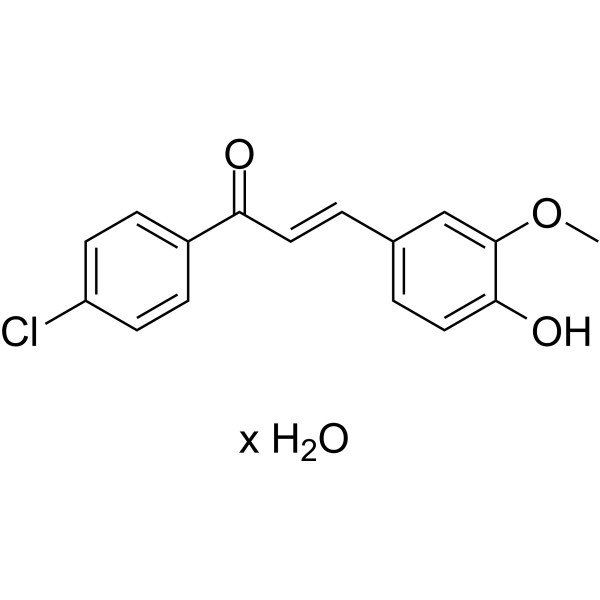
Chalcone 4 hydrate is an anti-parasitic agent. Chalcone 4 hydrate inhibits the growth and proliferation of Babesia and Theileria in vitro. Chalcone 4 hydrate reduces the viability of mammalian fibroblasts and kidney cells in vitro. Chalcone 4 hydrate can be used for the research of parasitic infections .
loading...
    loading...
Cat. No.: HY-174695
Target:  

mRNA

Research Areas:  

Cancer

Human FGF5 mRNA encodes the human fibroblast growth factor 5 (FGF5) protein, a member of the fibroblast growth factor (FGF) family. FGF5 may play an important role in the regulation of cell proliferation and cell differentiation.
loading...
    loading...
Cat. No.: HY-174711
Target:  

mRNA

Research Areas:  

Cancer

Human FGF10 mRNA encodes the human fibroblast growth factor 10 (FGF10) protein, a member of the fibroblast growth factor (FGF) family. FGF10 exhibits mitogenic activity for keratinizing epidermal cells, but essentially no activity for fibroblasts, which is similar to the biological activity of FGF7.
loading...
    loading...
Cat. No.: HY-174696
Target:  

mRNA

Research Areas:  

Cancer

Human FGF4 mRNA encodes the human fibroblast growth factor 4 (FGF4) protein, a member of the fibroblast growth factor (FGF) family. FGF4 may play an important role in the regulation of embryonic development, cell proliferation, and cell differentiation.
loading...
    loading...
Cat. No.: HY-174697
Target:  

mRNA

Research Areas:  

Cancer

Human FGF3 mRNA encodes the human fibroblast growth factor 3 (FGF3) protein, a member of the fibroblast growth factor (FGF) family. FGF3 may play an important role in the regulation of embryonic development, cell proliferation, and cell differentiation.
loading...
    loading...
Cat. No.: HY-174704
Target:  

mRNA

Research Areas:  

Cancer

Human FGF18 mRNA encodes the human fibroblast growth factor 18 (FGF18) protein, a member of the fibroblast growth factor (FGF) family. FGF18 probably plays an important role in the regulation of cell proliferation, cell differentiation and cell migration. It is also required for normal ossification and bone development.
loading...
    loading...
Cat. No.: HY-174687
Target:  

mRNA

Research Areas:  

Cancer

Human FGFR4 mRNA encodes the human fibroblast growth factor receptor 4 (FGFR4) protein, a tyrosine kinase and cell surface receptor for fibroblast growth factors. FGFR4 is involved in the regulation of several pathways, including cell proliferation, cell differentiation, cell migration, lipid metabolism, bile acid biosynthesis, vitamin D metabolism, glucose uptake, and phosphate homeostasis.
loading...
    loading...

