8086 Results for "

EC50 values

" in MedChemExpress (MCE) Product Catalog:
Products (8086)

8086 Results for "EC50 values" in MCE Product Catalog:

Cat. No.: HY-156397
Purity:  99.42%
Target:  

AMPK YAP

Research Areas:  

Cancer

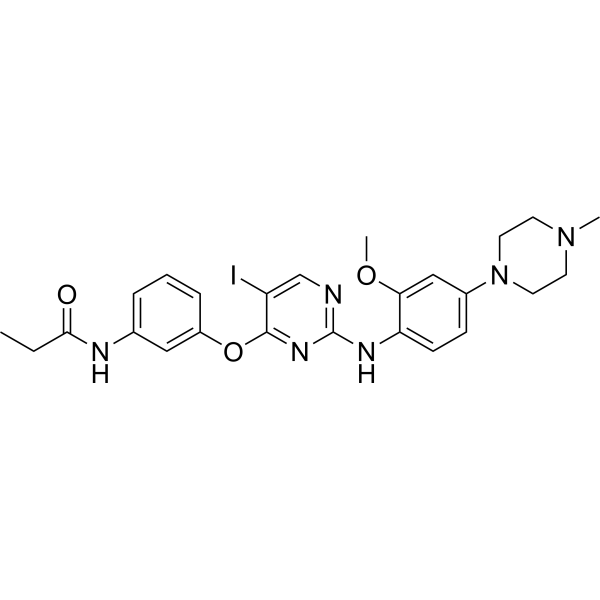
HTH-02-006 is a NUAK2 inhibitor, with an IC50 value of 126 nM. HTH-02-006 inhibits NUAK2-mediated signaling by reducing phosphorylation of its substrate MYPT1 at S445 and downstream MLC. HTH-02-006 shows growth inhibitory efficacy in YAP-high cancer cells (HuCCT-1, SNU475). HTH-02-006 significantly suppresses YAP-induced hepatomegaly (reduced liver/body weight ratio) in TetO-YAP S127A transgenic mice and demonstrates significant anti-tumor efficacy in mice bearing HMVP2 prostate cancer allografts. HTH-02-006 can be used for the study of liver cancer and prostate cancer .
loading...
    loading...
Cat. No.: HY-15800
CAS No.: 1330003-04-7
Target:  

TNK1 LRRK2

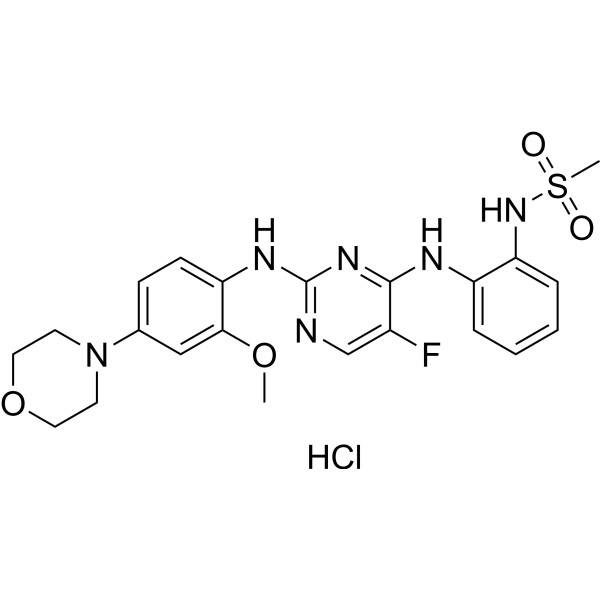
CZC-25146 hydrochloride is a potent LRRK2 inhibitor with IC50 values of 4.76 nM and 6.87 nM for wild-type LRRK2 and G2019S LRRK2, respectively. CZC-25146 hydrochloride inhibits PLK4, GAK, TNK1, CAMKK2 and PIP4K2C as well. CZC-25146 hydrochloride prevents mutant LRRK2-induced injury of neurons in vitro. CZC-25146 hydrochloride exhibits relatively favorable pharmacokinetic properties in mice. CZC-25146 hydrochloride can increase normal α-1-antitrypsin (AAT) secretion and reduce inflammatory cytokines. CZC-25146 hydrochloride can be used to research Parkinson's disease and liver diseases .
loading...
    loading...
Cat. No.: HY-15800A
CAS No.: 1191911-26-8
Purity:  99.10%
Target:  

TNK1 LRRK2

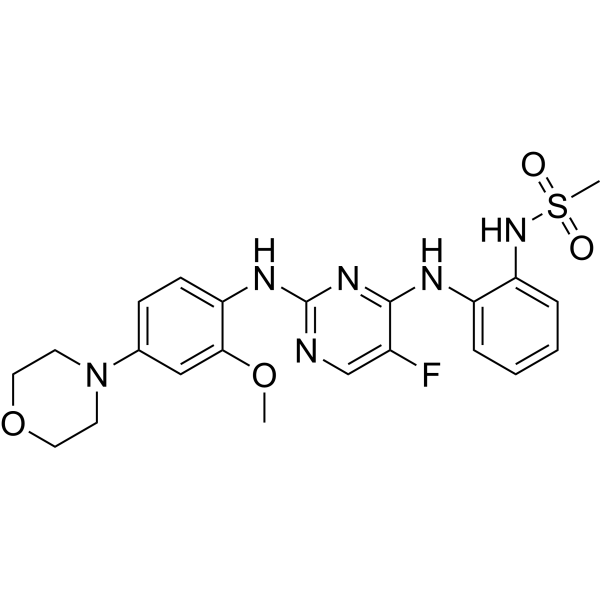
CZC-25146 is a potent and orally active LRRK2 inhibitor with IC50 values of 4.76 nM and 6.87 nM for wild-type LRRK2 and G2019S LRRK2, respectively. CZC-25146 inhibits PLK4, GAK, TNK1, CAMKK2 and PIP4K2C as well. CZC-25146 prevents mutant LRRK2-induced injury of neurons in vitro. CZC-25146 exhibits relatively favorable pharmacokinetic properties in mice. CZC-25146 can increase normal α-1-antitrypsin (AAT) secretion and reduce inflammatory cytokines. CZC-25146 can be used to research Parkinson's disease and liver diseases .
loading...
    loading...
Cat. No.: HY-158726
CAS No.: 2480150-28-3
Complex 3 is a fluorescent dithiocarbazate-copper complex with anticancer activity, which localizes to mitochondria. Complex 3 displays excitation/emission maxima of 455-495/535 nm, respectively. Complex 3 inhibits the growth of BxPC-3, AsPC-1, PANC-1, and WI38 pancreatic cancer cells with IC50 values of 0.74, 0.41, 0.62, and 2.06 µM, respectively. Complex 3 induces lipid peroxidation and mitochondrial rupture and shrinkage in AsPC-1 cells. Complex 3 also induces mitochondrial apoptosis and cytokine-cytokine receptor interaction dysfunction in AsPC-1 cells. Complex 3 reduces tumor volume in an AsPC-1 mouse xenograft model .
loading...
    loading...
Cat. No.: HY-159570
CAS No.: 2710221-08-0
XD2-149 is a ZFP91 PROTAC degrader with DC50 values of 0.08 μM and 0.06 μM, respectively. ZFP91 is a bifunctional nuclear protein with both transcription factor and E3 ubiquitin ligase activities, and is classified as an oncogenic non-canonical NF-κB pathway regulator in tumor and immune regulation. XD2-149 induces proteasome-dependent degradation of the E3 ubiquitin-protein ligase ZFP91. XD2-149 inhibits the STAT3 signaling pathway in pancreatic cancer cells and induces NQO1-dependent cell death independent of ZFP91 degradation. XD2-149 can be used for the research of pancreatic cancer .
loading...
    loading...
Cat. No.: HY-160151
Research Areas:  

Cancer

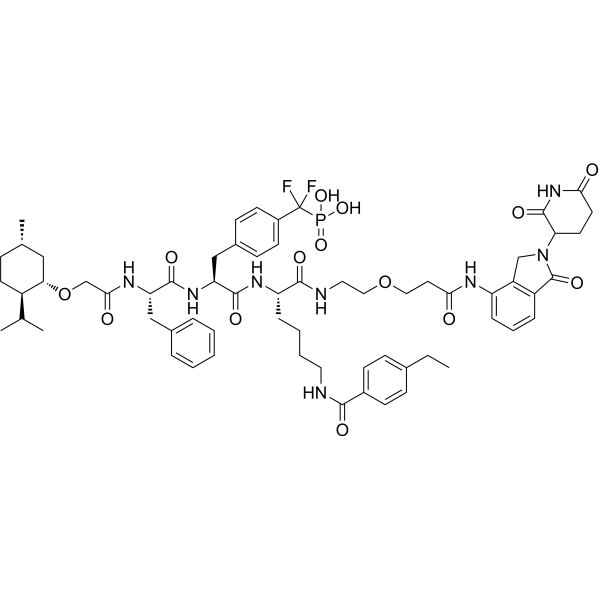
TP1L is a potent and selective T-cell protein tyrosine phosphatase (TC-PTP) PROTAC degrader, with a DC50 value of 35.8 nM. TP1L elevates the phosphorylation level of TC-PTP substrates including pSTAT1 and pJAK1. TP1L selectively enhances IFN-γ signaling and increases MHC-I expression. TP1L activates TCR signaling through increases phosphorylation of LCK. TP1L enhances CAR-T cell mediated tumor killing efficacy through activation of the CAR-T cells. TP1L can be used for the study of cancer. (Pink: TC-PTP ligand: (HY-138964), Blue: E3 ligase CRBN Ligand (HY-A0003), Black: Linker: (HY-140002)) .
loading...
    loading...
Cat. No.: HY-161275
CAS No.: 2769715-68-4
Research Areas:  

Cancer

BI-4732 is an orally active, reversible, ATP-competitive EGFR inhibitor with blood-brain barrier penetration. BI-4732 inhibits the kinase activity of EGFR L858R, T790M and C797S with IC50 values of 1 nM while sparing EGFR wild-type. BI-4732 inhibits EGFR and reduces the phosphorylation of AKT, ERK, and S6K. BI-4732 demonstrates excellent intracranial anti-tumor efficacy in YU-1097 xenograft model harboring EGFR_E19del/T790M/C797S. BI-4732 can be used for the study of non-small cell lung cancer (NSCLC) .
loading...
    loading...
Cat. No.: HY-161769
Research Areas:  

Cancer

HL435 is a BRD4 PROTAC degrader with DC50 values of 11.9 nM (MDA-MB-231 cells) and 21.9 nM (MCF-7 cells), respectively. HL435 recruits the CRL4DCAF11 E3 ubiquitin ligase complex to degrade BRD4 via the ubiquitin-proteasome system. HL435 induces cell cycle arrest and apoptosis (apoptosis) in cancer cells, downregulates the expression levels of cyclin D1 and cyclin B1, activates caspase-9, and induces PARP1 cleavage. HL435 exerts anti-tumor activity both in vitro and in mouse xenograft tumor models. HL435 can be used for the research of breast cancer and prostate cancer .
loading...
    loading...
Cat. No.: HY-165186
CAS No.: 104261-69-0
Synonyms: NE-58051
Target:  

MMP

Research Areas:  

Cancer

Homorisedronate (NE-58051) is a MMP inhibitor with high bone mineral affinity but low bone antiresorptive activity in vivo. Homorisedronate inhibits the proteolytic activity of MMP-2, MMP-9, and MMP-12 through zinc chelation and phosphonate groups, with IC50 values of 40 μM, 160 μM, and 80 μM for human MMP-2, mouse MMP-9, and rabbit MMP-12, respectively. Homorisedronate inhibits breast cancer and melanoma cell proliferation without inducing MRONJ-like lesions, altering osteoclast activity, or changing serum TRAcP-5b levels. Homorisedronate is suitable for research related to breast cancer and melanoma .
loading...
    loading...
Cat. No.: HY-167262
CAS No.: 156691-86-0
Target:  

RAR/RXR

Research Areas:  

Metabolic Disease Cancer

AGN-191659 is an orally active RAR/RXR agonist with EC50 values of 11 nM, 23 nM, and 37 nM for RXRα, RARβ, and RARγ, respectively. AGN-191659 activates RXRα, RARβ and RARγ to induce gene transcription. AGN-191659 induces tissue transglutaminase activity, inhibits ornithine decarboxylase activity induced by tumor promoters, and suppresses chondrogenesis. AGN-191659 reverses basic fibroblast growth factor-induced endothelial cell proliferation. AGN-191659 induces hypertriglyceridemia in rat models. AGN-191659 inhibits total heparin-releasable lipase activity. AGN-191659 can be used in research related to promyelocytic leukemia and hypertriglyceridemia .
loading...
    loading...
Cat. No.: HY-168201
CAS No.: 3105406-14-9
MJP6412 is a p300 and CBP PROTAC degrader that potently degrades p300 and CBP in 22Rv1 cells with DC50 values of 1.6 nM and 1.2 nM, respectively. MJP6412 downregulates the expression of AR-FL, AR-V7 and c-MYC, as well as androgen receptor target genes (KLK3, FKBP5, TMPRSS2). MJP6412 completely abolishes p300/CBP-dependent histone acetylation (H3K27Ac and H2BNTAC) and induces G1 cell cycle arrest. MJP6412 inhibits cancer cell proliferation and tumor growth. MJP6412 can be used in prostate cancer-related research .
loading...
    loading...
Cat. No.: HY-168758
CAS No.: 567-72-6
Target:  

GABA Receptor

Research Areas:  

Neurological Disease

Delta3,5-cholestadien-7-one is an oxysterol and a negative allosteric modulator of GABAA receptors. Delta3,5-cholestadien-7-one reduces GABA-induced currents in HEK cells expressing α1β1γ2 or α4β3γ2 subunit-containing GABAA receptors with IC50 values of 1.5 and 1 µM, respectively. Delta3,5-cholestadien-7-one reduces GABA-induced depolarization of peptidergic and non-peptidergic nociceptors, C-LTMRs, and cold thermosensors in isolated mouse dorsal root ganglion (DRG) neurons .
loading...
    loading...
Cat. No.: HY-169170
PARP1/BRD4-IN-3 (compound HF4) is a potent BRD4 and PARP1 inhibitor with IC50 values of 1210, 2019 nM for BRD4, PARP1, respectively. PARP1/BRD4-IN-3 shows antiproliferative activities. PARP1/BRD4-IN-3 induces apoptosis and cell cycle arrest at G0/G1 phase. PARP1/BRD4-IN-3 causes DNA damage and reduces the protein expression of Rad51. PARP1/BRD4-IN-3 shows antitumor efficacy .
loading...
    loading...
Cat. No.: HY-169921
Target:  

c-Myc Apoptosis

Research Areas:  

Cancer

c-Myc inhibitor 15 (Compound A5) is a selective c-Myc inhibitor that exerts anticancer effects by disrupting the interaction between c-Myc and Max, leading to the degradation of c-Myc protein and the induction of apoptosis. Its IC50 values are 4.08 μM and 7.86 μM in A549 and NCI-H1299 lung cancer cell lines, respectively, demonstrating strong cytotoxic activity. In a syngeneic tumor model, c-Myc inhibitor 15 exhibited outstanding antitumor efficacy, achieving a tumor growth inhibition rate of 76.4% and significantly reducing c-Myc protein expression levels. c-Myc inhibitor 15 holds promise for research related to c-Myc-driven lung cancers .
loading...
    loading...
Cat. No.: HY-171574
CAS No.: 92562-77-1
Synonyms: AZddCTP
Target:  

HIV DNA/RNA Synthesis

Research Areas:  

Infection

3′-Azido-2′,3′-dideoxy-CTP (AZddCTP) is a cytidine analog containing a 3-azido group. As a chain terminator, 3′-Azido-2′,3′-dideoxy-CTP can be incorporated into the nascent DNA chain by HIV reverse transcriptase. 3′-Azido-2′,3′-dideoxy-CTP terminates DNA synthesis due to the lack of a 3'-hydroxyl group, thereby inhibiting viral replication. 3′-Azido-2′,3′-dideoxy-CTP has IC50 values of 15.6 μM and 160.8 μM for WT HIV and AZT R HIV. 3′-Azido-2′,3′-dideoxy-CTP has antiviral activity .
loading...
    loading...
Cat. No.: HY-171906
CAS No.: 65446-08-4
Synonyms: 1-Arachidonoyl-sn-glycerol 3-phosphate; 1-Arachidonoyl LPA; LPA (20:4)
Target:  

LPL Receptor

Research Areas:  

Inflammation/Immunology

1-Arachidonoyl-2-hydroxy-sn-glycero-3-PA is a phospholipid containing arachidonic acid at the sn-1 position. It is a precursor to 1-arachidonoyl glycerol (1-Monoarachidin; HY-130567) . 1-Arachidonoyl-2-hydroxy-sn-glycero-3-PA binds to the LPA2/EDG4 receptor with an EC50 value of approximately 10 nM . It prevents TNF-α and IL-6 secretion in wild-type but not Lpa2-/- dendritic cells stimulated by LPS . It also decreases differentiation of HT-29 human colon carcinoma cells to goblet cells in the presence of sodium butyrate .
loading...
    loading...
Cat. No.: HY-172113
Target:  

PROTACs YAP c-Myc Apoptosis

Research Areas:  

Cancer

H122 is a PROTAC degrader for TEAD that degrades TEAD1 with a DC50 of 3 nM. H122 exhibits good affinity to TEAD2, TEAD3, and TEAD4 with Ki values of 2.0, 3.6 and 1.6 nM, respectively. H122 relies on binding to TEAD1 and CRBN, functional E3 ligase activity, and a functional proteasome for degradation.H122 induces degradation of TEAD3 and forms a ternary complex with TEAD4 and CRBN/DDB1 to mediate degradation.H122 downregulates expression of Myc target genes. H122 exhibits antitumor efficacy in MSTO-211H mouse xenograft models.H122 can be used for the research of malignant mesothelioma .
loading...
    loading...
Cat. No.: HY-173147
Target:  

CDK

Research Areas:  

Cancer

CDK2-IN-42 (Compound H63) is a CDK12 inhibitor with an IC50 value of 10 nM. CDK2-IN-42 has anti-ESCC (Esophageal Squamous Cell Carcinoma) cell activity. It can block transcriptional elongation, downregulate the core genes in the G1 phase to induce cell cycle arrest, and alter the CDK12-ATM/ATR-CHEK1/CHEK2 signaling axis, resulting in DNA damage. CDK2-IN-42 can effectively inhibit tumor growth in a xenograft mouse model of human ESCC KYSE150. CDK2-IN-42 holds great promise for research in the field of cancer .
loading...
    loading...
Cat. No.: HY-173280
CAS No.: 3035018-34-6
Synonyms: CHNQD-01228
Research Areas:  

Cancer

Brefeldin A 4-O-nicotinate (CHNQD-01228) is a dual inhibitor of Arf1 and BMX proteins. The IC50 value for the proliferation of T24 cells is 0.22 μM. It can also dose-dependently inhibit the migration and colony formation of T24 cells, induce G1 phase arrest and trigger Apoptosis. Brefeldin A 4-O-nicotinate exerts its anti-cancer activity by targeting the BMX protein to inhibit the AKT/p-AKT and STAT3/p-STAT3 signaling pathways, as well as by inhibiting the Arf1 protein to eliminate bladder cancer stem cells and activate anti-tumor immunity. Brefeldin A 4-O-nicotinate can be used in the research related to bladder cancer .
loading...
    loading...
Cat. No.: HY-173338
CAS No.: 1438403-50-9
Target:  

DNA/RNA Synthesis

Research Areas:  

Infection

MSRV-IN-1 (Compound M3) is an inhibitor targeting aquatic rhabdoviruses (such as MSRV, SVCV and IHNV). Its IC50 values for inhibiting MSRV, SVCV and IHNV are 0.92 μM, 2.92 μM and 2.78 μM respectively. MSRV-IN-1 does not act directly on the virions but rather inhibits viral replication by altering the cell cycle arrest state in the S phase induced by the virus and disrupting the viral replication environment. When administered intraperitoneally at a dose of 20 mg/kg, MSRV-IN-1 can significantly increase the survival rate of largemouth bass infected with MSRV by 35.98% and reduce the viral loads in the liver, spleen and kidney. MSRV-IN-1 can be used in the research of diseases related to rhabdoviruses in aquaculture .
loading...
    loading...

