79 Results for "

293T BRE-R

" in MedChemExpress (MCE) Product Catalog:
Products (79)

79 Results for "293T BRE-R" in MCE Product Catalog:

Cat. No.: HY-168384
CAS No.: 875158-73-9
M04 is an agonist of STING. It induces the expression of the IFN reporter gene in HEK293T cells expressing wild-type human STING, but does not induce this expression in HEK293T cells expressing the R71H-G230A-R293Q (HAQ) STING variant or in mouse RAW 264.7 cells, indicating that its activity is dependent on allelic and species variations. M04 induces the production of TNF-α, IL-10, IL-1β, and IL-12p70 in human peripheral blood mononuclear cells (PBMCs). At a concentration of 50 µM, M04 stimulates dendritic cells isolated from PBMCs to express the MHC class II cell surface receptor HLA-DR and co-stimulatory molecules CD40, CD80, and CD86, and also enhances their ability to activate T cells in an ex vivo assay. M04 can be used in research on inflammatory immune diseases .
loading...
    loading...
Cat. No.: HY-126489
CAS No.: 180027-84-3
Target:  

Parasite

Research Areas:  

Infection

Tetromycin B is a cysteine protease inhibitor with Ki values of 0.62, 1.42, 32.5, and 1.59 μM for rhodesain, falcipain-2, cathepsin L, and cathepsin B, respectively. It inhibits the growth of T. brucei in vitro (IC50=30.87 μM). Tetromycin B is also cytotoxic to HEK293T kidney cells and J774.1 macrophages (IC50s=71.77 and 20.2 μM, respectively).
loading...
    loading...
Cat. No.: HY-B0288BR
CAS No.: 71720-56-4
Synonyms: LILLY-53858 Calcium hydrate (Standard)
Fenoprofen (LILLY-53858 (Standard)) (Standard) Calcium hydrate is the analytical standard of Fenoprofen Calcium hydrate (HY-B0288B). This product is intended for research and analytical applications. Fenoprofen is a nonsteroidal anti-inflammatory agent (NSAID) and inhibits cyclooxygenase (COX). Fenoprofen is a melanocortin receptors (MCRs) positive allosteric modulator (PAM). Fenoprofen also increases ERK1/2 activation in HEK293T cells. Fenoprofen has anti-arthritic activities and can be used for the study of rheumatoid arthritis and osteoarthritis.
loading...
    loading...
Cat. No.: HY-186252
CAS No.: 3103571-04-3
GPR133 agonist 1 is an orally active GPR133/ADGRD1 agonist with an EC50 of 1.6 nM (293T cells). GPR133 agonist 1 activates GPR133, thereby regulating the downstream cAMP signaling pathway. GPR133 agonist 1 enhances muscle strength and endurance in mice. GPR133 agonist 1 can be used in research related to muscular atrophy, myasthenia, sarcopenia, erectile dysfunction, vestibular dysfunction, obesity, and non-alcoholic fatty liver disease .
loading...
    loading...
Cat. No.: HY-111300
CAS No.: 848952-37-4
Target:  

HSP EGFR

Research Areas:  

Cancer

G3130 is a reversible HSP90 inhibitor with a Kd value of 280 nM for the N-terminal ATP-binding domain of purified human Hsp90α. G3130 binds to the adenine site via a multi-hydrogen bond network . G3130 induces the degradation of Hsp90 client protein Her-2 in breast cancer cells. G3130 activates Hsp70 promoter-driven luciferase expression in 293T cells. G3130 can be used in breast cancer-related research .
loading...
    loading...
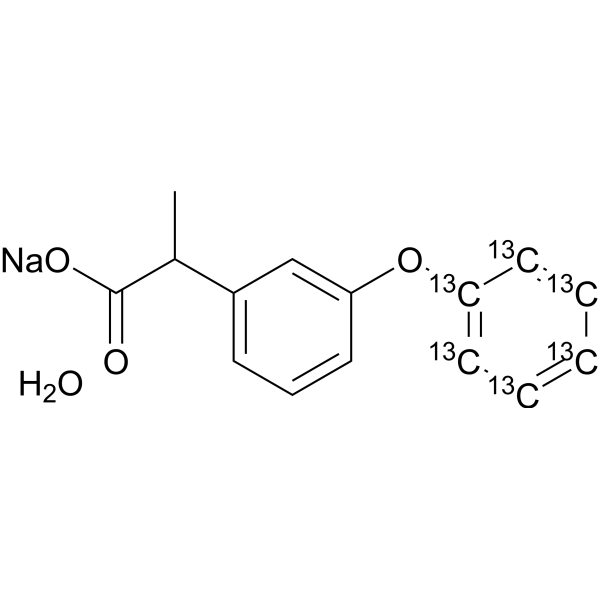
Cat. No.: HY-B1456AS
Synonyms: LILLY-53858-13C6 sodium hydrate
Fenoprofen- 13C6 (LILLY-53858- 13C6) sodium hydrate is the 13C labeled Fenoprofen (HY-B1456A).Fenoprofen (LILLY-53858) is a nonsteroidal anti-inflammatory agent (NSAID) and inhibits cyclooxygenase (COX). Fenoprofen is a melanocortin receptors (MCRs) positive allosteric modulator (PAM). Fenoprofen also increases ERK1/2 activation in HEK293T cells. Fenoprofen has anti-arthritic activities and can be used for the study of rheumatoid arthritis and osteoarthritis .
loading...
    loading...
Cat. No.: HY-162885
CAS No.: 1194235-46-5
Research Areas:  

Cancer

YSY01A is a proteasome inhibitor that can suppress cancer cell survival by inducing apoptosis (Apoptosis). Its IC50 values are 51.0 nM for HEK293T, 9.2 nM for A549, 5.2 nM for MCF-7, 8.9 nM for MGC-803, and 35.4 nM for PC-3M cells. Additionally, YSY01A eliminates constitutive STAT3 signaling by downregulating gp130 and JAK2 in human A549 lung cancer cells. YSY01A holds promise for research in the field of cancer therapy .
loading...
    loading...
Cat. No.: HY-178439
CAS No.: 2920182-91-6
Target:  

SARS-CoV

Research Areas:  

Infection

SARS-CoV-2 3CLpro-IN-33 (Compound 16) is an orally active SARS-CoV-2 3CL protease inhibitor, with an IC50 value of 1.5 nM. SARS-CoV-2 3CLpro-IN-33 shows excellent anti-SARS-CoV-2 viral activity in the HEK293T-AT cell model with an EC50 of 0.017 μM. SARS-CoV-2 3CLpro-IN-33 can be used for the study of COVID-19 infetction .
loading...
    loading...
Cat. No.: HY-162714
CAS No.: 2631659-57-7
Target:  

P-glycoprotein

Research Areas:  

Cancer

C3N-Dbn-Trp2 is an inhibitor for ATP-binding cassette transporter ABCB1. C3N-Dbn-Trp2 inhibits the ABCB1-mediated Rhodamine 123 (HY-D0816) efflux in cells HEK293T and HCT-15 with IC50 of 5.9 µM and 2.2 µM. C3N-Dbn-Trp2 inhibits the Doxorubicin (HY-15142A) efflux, enhances the cytotoxicity of Doxorubicin in ABCB1-expressing cells .
loading...
    loading...
Cat. No.: HY-172965
Target:  

SARS-CoV Virus Protease

Research Areas:  

Infection Inflammation/Immunology

SARS-CoV-2 Mpro-IN-43 (Compound 1) is a coronavirus main protease (Mpro) inhibitor (IC50: 72 μM). SARS-CoV-2 Mpro-IN-43 interacts with key residues in the active site of Mpro via non-covalent binding, exerting its anti-coronavirus effect. SARS-CoV-2 Mpro-IN-43 exhibits moderate to low cytotoxicity, with CC50 values of 13.24, 41.02, and 42.26 µM in HaCaT, HEK293T, and HepG2 cells, respectively. SARS-CoV-2 Mpro-IN-43 can be used in anti-SARS-CoV-2 research .
loading...
    loading...
Cat. No.: HY-187390
BRD4 RIMTAC-1 is a BRD4 PROTAC degrader based on the RIPK1-mediated targeted chimera (RIMTAC) technology. It hijacks the endogenous RIPK1-VHL complex via the RIPK1 inhibitor moiety to indirectly recruit the VHL E3 ligase, forming a BRD4-Compound 10-RIPK1-VHL quaternary complex, and degrades BRD4 through the ubiquitin-proteasome system (UPS). BRD4 RIMTAC-1 exhibits selectivity over other BET proteins, induces concentration- and time-dependent, reversible post-translational degradation of BRD4 without altering the target mRNA level. BRD4 RIMTAC-1 potently induces endogenous BRD4 degradation in RAW264.7 and HEK-293T cells, with DC50 values of 179.1 nM and 54.12 nM, respectively. BRD4 RIMTAC-1 can be used for the research of cancer and inflammation-related diseases .
loading...
    loading...
Cat. No.: HY-187457
CAS No.: 3036531-21-9
J594 is a BRD4 molecular glue degrader targeting RNF126, with DC50 values of 0.077 μM (long-form BRD4 in HEK293T cells) and 0.26 μM (short-form BRD4 in HEK293T cells), respectively. J594 induces proteasome- and RNF126-dependent degradation of BRD4 .
loading...
    loading...
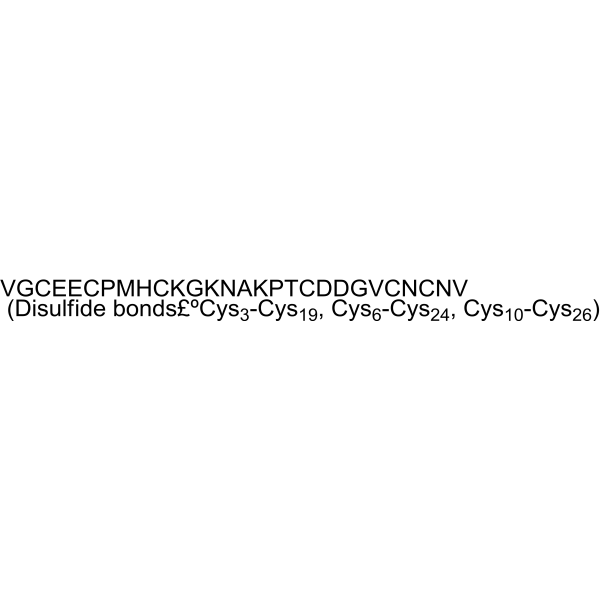
Cat. No.: HY-P5157
Target:  

Potassium Channel

Research Areas:  

Neurological Disease

BmP02 is a selective Kv1.3 channel blocker and a highly-selective Kv4.2 modulator, which can be isolated from Chinese scorpion (Buthus martensi Karsch) venom. BmP02 also delays the inactivation of Kv4.2 in HEK293T cells, with an EC50 value of ~850 nM. BmP02 inhibits the transient outward potassium currents (Ito) in ventricular muscle cells .
loading...
    loading...
Cat. No.: HY-108705R
CAS No.: 2166387-65-9
Research Areas:  

Cancer

BI-3802 (Standard) is the analytical standard of BI-3802 (HY-108705). This product is intended for research and analytical applications. BI-3802, a chemical probe, is a highly potent BCL6 degrader and inhibits the Bric-à-brac (BTB) domain of BCL6 with an IC50 of ≤3 nM. BI-3802 induces the polymerization of BCL6 and promotes BCL6 degration depended on E3 ligase SIAH1. BI-3802 has antitumor activity .
loading...
    loading...
Cat. No.: HY-189427
CAS No.: 3129164-13-9
Research Areas:  

Metabolic Disease

URAT1-IN-17 is an orally active URAT1 inhibitor with an IC50 of 5.32 μM in HEK293T cells. URAT1-IN-17 inhibits URAT1-mediated uric acid reabsorption in the renal proximal tubule, thereby reducing serum uric acid levels. URAT1-IN-17 weakly inhibits OAT1-mediated organic anion transport. URAT1-IN-17 can be used for research on hyperuricemia .
loading...
    loading...
Cat. No.: HY-180781
Target:  

ADAMTS

Research Areas:  

Inflammation/Immunology Cancer

ADAMTS-5-IN-4 (Compound 4b) is a selective ADAMTS5 inhibitor with an IC₅₀ of 9.4 μM. ADAMTS-5-IN-4 significantly inhibits the degradation of Aggrecan in the implants of the osteoarthritis model. ADAMTS-5-IN-4 effectively inhibits the pseudopod elongation and directional migration of ovarian cancer cells. ADAMTS-5-IN-4 shows significant cytotoxicity to HEK293T cells, human chondrocytes, and porcine chondrocyte implants. ADAMTS-5-IN-4 can be used for the study of osteoarthritis and ovarian cancer .
loading...
    loading...
Cat. No.: HY-177903
CAS No.: 2003231-25-0
Research Areas:  

Cancer

Triptolide-6-succinate-β-D-glucose (Compound 2) is a glucose-conjugated derivative of Triptolide (HY-32735). Triptolide-6-succinate-β-D-glucose is a tumor-selective prodrug targeting glucose transporters ( GLUT). Triptolide-6-succinate-β-D-glucose can induce the degradation of the RPB subunit of RNA polymerase II. Triptolide-6-succinate-β-D-glucose inhibits the proliferation of HEK293T cells with an IC50 value of 268 nM. Triptolide-6-succinate-β-D-glucose can be used for the research of cancer, such as prostatic cancer .
loading...
    loading...
Cat. No.: HY-L904
1,394 compounds

The MCE 1K Drug Fragment Library consists of 1,394 drug fragments. These drug fragments are derived from 2,946 FDA-approved drug molecules, and fragments from one drug can appear in other drugs, so these fragments are somewhat correlated with good PK/PD properties. Fragment-based screening can reserve enough chemical space for subsequent structural optimization. This compound library is an essential tool for drug screening based on FBDD (Fragment-Based Drug Discovery).

Cat. No.: HY-L0113V
1,000,000 compounds
A diversity compound library contains 1,000,000 compounds with drug fragments. Each compound has at least one drug fragment. These selected molecules have 702,902 Bemis-Murcko Scaffolds (BMS) with drug-like chemical space. This library is highly recommended for AI-based lead discovery, ultra-large virtual screening and novel lead discovery.

