84 Results for "

Diabetic model

" in MedChemExpress (MCE) Product Catalog:
Products (84)

84 Results for "Diabetic model" in MCE Product Catalog:

Cat. No.: HY-170233
NLRP3-IN-75 is an orally active NLRP3 inhibitor. NLRP3-IN-75 suppresses IL-1β secretion (IC50 = 23 nM). NLRP3-IN-75 selectively inhibits NLRP3 activation by disrupting inflammasome assembly without affecting NLRC4 or AIM2 inflammasomes. NLRP3-IN-75 exhibits superior efficacy in acute peritonitis, diabetic kidney disease and IBD models .
loading...
    loading...
Cat. No.: HY-P0165B
CAS No.: 1022150-16-8
Synonyms: ITM077 acetate; R1583 acetate; BIM51077 acetate
Target:  

GLP Receptor

Research Areas:  

Metabolic Disease

Taspoglutide (R1583) acetate is an agonist of the glucagon-like peptide 1 receptor (GLP-1R) with an Ki value of 1.1 nM. Taspoglutide acetate induces cAMP accumulation in CHO-K1 cells expressing human GLP-1R (EC50 = 0.06 nM). Taspoglutide acetate decreases blood levels of glucose and increases blood levels of insulin in a glucose tolerance test in Zucker diabetic obese rats. Taspoglutide acetate reduces blood levels of gastric inhibitory polypeptide (GIP), plasma levels of triglycerides, and body weight in the same model .
loading...
    loading...
Cat. No.: HY-P5396
CAS No.: 152468-44-5
Research Areas:  

Others

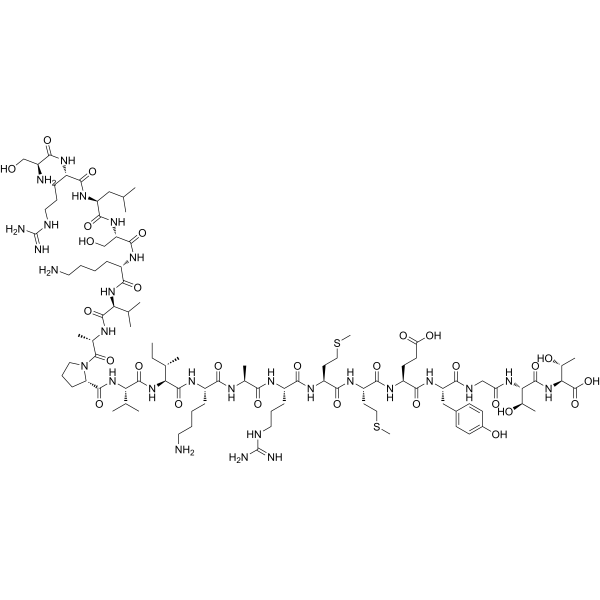
GAD65 (524-543) is a biological active peptide with amino acids 524 to 543 fragment of glutamic acid decarboxylase 65 (GAD65). GAD65 (524-543) is one of the first fragments of islet antigen to induce proliferative T cell responses in the non-obese diabetic (NOD) mouse model of spontaneous autoimmune diabetes. GAD65 (524-543) is a specific, possibly low affinity, stimulus for the spontaneously arising diabetogenic T cell clone BDC2.5. Immunization with GAD65 (524-543) increases the susceptibility of the NOD mice to type 1 diabetes induced by the adoptive transfer of BDC2.5 T cells .
loading...
    loading...
Cat. No.: HY-15195R
CAS No.: 290815-26-8
Synonyms: Ro 67-0565 (Standard); SPP-301 (Standard)
Avosentan (Standard) is the analytical standard of Avosentan (HY-15195). This product is intended for research and analytical applications. Avosentan is an orally active endothelin (ETA) receptor antagonist. Avosentan can block the ETA receptor, thereby reducing vascular contraction, and exerting a renal protective effect. Avosentan inhibits vascular contraction caused by ET-1 and alleviates the reduction in retinal and optic nerve head blood flow induced by it, lowering intraocular pressure in the glaucoma monkey model. Avosentan non-specifically blocks ETB receptors at high doses, inhibiting ETB-mediated diuresis and natriuresis, and may cause fluid retention. Avosentan can be used to reduce proteinuria with diabetic nephropathy, but induces significant fluid overload and congestive heart failure.
loading...
    loading...
Cat. No.: HY-120974
CAS No.: 691410-93-2
Target:  

GLUT

Research Areas:  

Metabolic Disease

α-Lipoic Acid Derivative 1 (Compound AN-7) is an α-lipoic acid derivative that enhances glucose transport in skeletal muscle by releasing active α-lipoic acid (LA), significantly improving glucose metabolism. In L6 skeletal muscle cells, α-Lipoic Acid Derivative 1 significantly increases glucose transport rates, approximately 12 times more potent than the parent compound α-lipoic acid (HY-N0492). In a mild diabetic mouse model, 10 mg/kg of α-Lipoic Acid Derivative 1 administered for two weeks significantly reduced blood glucose levels by 39%. α-Lipoic Acid Derivative 1 shows significant potential in research related to glucose metabolism in diabetes .
loading...
    loading...
Cat. No.: HY-W017370R
CAS No.: 99-48-9
Carveol (Standard) is the analytical standard of Carveol. This product is intended for research and analytical applications. Carveol is an orally active monoterpenoid alcohol with neuroprotective, antioxidant, anti-inflammatory, anticonvulsant, antidiabetic, hypolipidemic and hepatoprotective activities. Carveol upregulates the expression of Bcl2, downregulates the expression of caspase-3, TNF-α, IL1β and IL6, activates the Nrf2/HO-1 antioxidant signaling pathway, inhibits the RAGE/NF-κB signaling pathway, and suppresses neuroinflammation and neuronal apoptosis. Carveol inhibits α-synuclein aggregation, improves cognitive ability, and inhibits α-amylase activity. Carveol exerts neuroprotective effects in a rat model of Parkinson's disease. Carveol exhibits antidiabetic effects in alloxan-induced diabetic rats. Carveol alleviates PTZ-induced seizures in rats. Carveol can be used in research related to Parkinson's disease, epilepsy, diabetes and ischemic stroke .
loading...
    loading...
Cat. No.: HY-W027553S1
Synonyms: NIK-247-d9 free base
Ipidacrine-d9 (NIK-247-d9 (free base)) is the deuterium labeled Ipidacrine (HY-W027553). Ipidacrine is orally active and brain-penetrant AChE and BuChE inhibitors with IC50 values of 1 μM and 1.9 μM, respectively, which is also a partial agonist of M2-cholinergic receptors and a reversible cholinesterase inhibitor. Ipidacrine has a stimulating effect on neuromuscular transmission and excitation along the nerve fibres with a moderately anti-pain effect. Ipidacrine is an aminopyridines and is structurally similar to Tacrine (HY-111338). Ipidacrine is effective in various amnesia models, improves erectile function and inhibits K+ and Na+-channels in the neuronal membrane in diabetic rats. Ipidacrine is promising for research of Alzheimer’s disease, ischaemic stroke, idiopathic neuropathy of the facial nerve, diabetes mellitus-induced erectile dysfunction and other deficits in central or peripheral cholinergic deseases .
loading...
    loading...
Cat. No.: HY-N0259R
CAS No.: 110623-73-9
Synonyms: Epmedin B (Standard)
Epimedin B (Standard) (Epmedin B (Standard)) is the analytical standard of Epimedin B (HY-N0259). This product is intended for research and analytical applications. Epimedin B (Epmedin B) is a flavonoid active component found in Epimedium, with oral activity, and exhibits anti-osteoporotic and neuroprotective effects. Epimedin B inhibits RANKL-induced osteoclast differentiation, F-actin ring formation, and mature osteoclast bone resorption, inhibits the phosphorylation of JNK, p38 MAPK, PI3K, and AKT, activates the AMPK-Nrf2 antioxidant pathway, and reduces cellular and mitochondrial ROS. Epimedin B acts on ESR1 and exerts its effects via GPER. Epimedin B alleviates bone loss and improves bone microstructure in vivo, and in Parkinson's models protects dopaminergic neurons and maintains striatal dopamine levels through anti-apoptotic and anti-endoplasmic reticulum stress effects. Epimedin B can be used for research related to osteoporosis, diabetic osteoporosis, and Parkinson's disease .
loading...
    loading...
Cat. No.: HY-123974
CAS No.: 2252478-54-7
Target:  

PPAR

Research Areas:  

Metabolic Disease

BR101549 is a non-TZD agonist of PPARγ. BR101549 activates PPARγ to the level of Pioglitazone in vitro. BR101549 can control blood glucose level in mouse model. BR101549 can be studied in anti-diabetic research .
loading...
    loading...
Cat. No.: HY-182438
CAS No.: 91456-99-4
Target:  

Drug Intermediate

Research Areas:  

Metabolic Disease

SDZ 51641 is an orally active fatty acid oxidation inhibitor. By reducing fatty acid oxidation, SDZ 51641 deprives the gluconeogenesis process of required energy and cofactors, thereby lowering blood glucose levels in diabetic models. SDZ 51641 can be used in diabetes research .
loading...
    loading...
Cat. No.: HY-76383R
CAS No.: 245075-84-7
Target:  

COX

LR-90 (Standard) is the analytical standard of LR-90. This product is intended for research and analytical applications. LR-90 is an advanced glycation end product (AGE) inhibitor, inhibits inflammatory responses in human monocytes . LR-90 is also used in the research of diabetic animal model .
loading...
    loading...
Cat. No.: HY-N19615
CAS No.: 134859-90-8
Isoeucommin A is a lignan compound. Isoeucommin A activates the Nrf2/HO-1 pathway and induces phosphorylation of GSK-3β. Isoeucommin A reduces the levels of pro-inflammatory cytokines TNF-α, IL-1β and IL-6, decreases the oxidative stress marker MDA, increases the antioxidants SOD and GSH, and alleviates oxidative stress in mesangial cells. Isoeucommin A alleviates renal tissue injury, improves impaired renal function and enhances the viability of renal tubular epithelial cells in diabetic nephropathy models. Isoeucommin A can be used in the research of diabetic nephropathy .
loading...
    loading...
Cat. No.: HY-133806
CAS No.: 912569-37-0
Fumarranol, a Fumagillin (HY-B0751) analogue, is a selective type 2 methionine aminopeptidase (MetAP2) inhibitor with a human IC50 of 3.2 μM. Fumarranol inhibits proliferation of bovine aortic endothelial cells and inhibits angiogenesis in a mouse matrigel plug model. Fumarranol can be used for the researches of cancer, diabetic retinopathy, age-related macular degeneration .
loading...
    loading...
Cat. No.: HY-181094
Target:  

Glycosidase

Research Areas:  

Metabolic Disease

α-Glucosidase-IN-110 is a selective and orally active competitive inhibitor of α-Glucosidase with an IC50 of 7.09 μM and a Ki of 6.9 μM. α-Glucosidase-IN-110 can reduce fasting blood glucose levels, improve glucose tolerance, and restore the histomorphology of liver and pancreatic tissues in diabetic rat models. α-Glucosidase-IN-110 can be used for the research of diabetes .
loading...
    loading...
Cat. No.: HY-P11584
Research Areas:  

Metabolic Disease

KBP-066A is a long-acting dual amylin and calcitonin receptor agonist. KBP-066A can activate the CTR and AMY-R potently, with no off-target activity. KBP-066A reduces fasting blood glucose levels, fasting insulin levels, and body weight in diabetic rat models. KBP-066A can be used for the research of type 2 diabetes mellitus, obesity .
loading...
    loading...
Cat. No.: HY-119058
CAS No.: 463976-07-0
Synonyms: CP-744809
Target:  

Aldose Reductase

Research Areas:  

Metabolic Disease

ARI-809 (CP-744809) is a highly selective, orally active aldose reductase inhibitor with an IC50 of 1 nM. ARI-809 blocks excessive glucose flux through the polyol pathway. ARI-809 normalizes elevated sorbitol and fructose levels in sciatic nerve tissues of diabetic rat models, inhibits sorbitol accumulation in lens tissues, and brings elevated urinary albumin excretion close to normal. ARI-809 can be used in diabetes research .
loading...
    loading...
Cat. No.: HY-180527
Research Areas:  

Metabolic Disease

SGLT2-IN-5 (Compound 99) is an orally active SGLT2 inhibitor with IC₅₀ values for SGLT2, SGLT1, and DPP4 of 0.8, 23, and 58 nM respectively. SGLT2-IN-5 controls blood sugar levels in diabetic rat models and increases the levels of active GLP-1. SGLT2-IN-5 can be used for the study of type 2 diabetes .
loading...
    loading...
Cat. No.: HY-180528
Research Areas:  

Metabolic Disease

SGLT2-IN-6 (Compound 101) is an orally active SGLT2 inhibitor with IC₅₀ values for SGLT2, SGLT1, and DPP4 of 0.8, 6.7, and 72 nM respectively. SGLT2-IN-6 controls blood sugar levels in diabetic rat models and increases the levels of active GLP-1. SGLT2-IN-6 can be used for the study of type 2 diabetes .
loading...
    loading...
Cat. No.: HY-189670
Target:  

Glycosidase

Research Areas:  

Metabolic Disease

α-Glucosidase-IN-126 is a selective and competitive α-glucosidase inhibitor with an IC50 of 0.2 μM and a Ki of 200 nM. α-Glucosidase-IN-126 blocks carbohydrate hydrolysis, inhibits bovine serum albumin glycation, and dose-dependently reduces blood glucose in a diabetic zebrafish model. α-Glucosidase-IN-126 shows minimal cytotoxicity toward normal fibroblasts at low concentrations. α-Glucosidase-IN-126 can be used for research on type 2 diabetes .
loading...
    loading...
Cat. No.: HY-P992410

Target:  

PAI-1 TGF-beta/Smad

Research Areas:  

Inflammation/Immunology

MEDI-579 is a fully human monoclonal antibody against PAI-1, with a KD value of 6 pM for human PAI-1 and 105 pM for rat PAI-1. MEDI-579 restores renal plasmin activity and inhibits PAI-1-mediated intracellular signal transduction. MEDI-579 reduces albuminuria, glomerulosclerosis severity, TGF-β1 expression level, and phosphorylated Smad2 level induced in diabetic mice. MEDI-579 decreases the levels of active PAI-1 in plasma and kidneys, and increases plasma plasmin level in a mouse model of lupus nephritis. MEDI-579 can be used in research related to diabetic nephropathy and lupus nephritis. The recommended isotype control is human IgG1 kappa (HY-P99001) .
loading...
    loading...

