131 Results for "

PC3 cell

" in MedChemExpress (MCE) Product Catalog:
Products (131)

131 Results for "PC3 cell" in MCE Product Catalog:

Cat. No.: HY-159149
Research Areas:  

Cancer

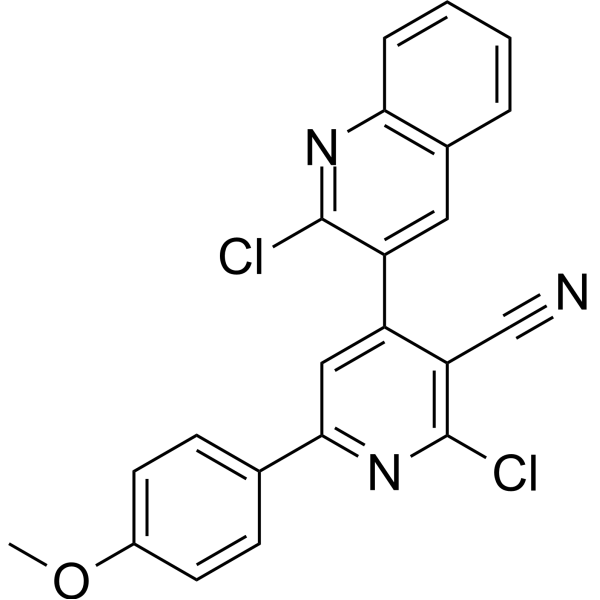
Antitumor agent-182 (Compound 12a) decreases mitochondrial membrane potential (MMP) and enhances ROS levels. Antitumor agent-182 arrests the cell cycle at G0/G1 phase, induces apoptosis in HeLa. Antitumor agent-182 inhibits the proliferation of HeLa, PC-3 and HCT-15 with IC50s of 8.83, 10.07 and 7.84 μM, respectively .
loading...
    loading...
Cat. No.: HY-N1107
CAS No.: 466-09-1
Synonyms: NSC 119993; NSC 277290; Odorigeni
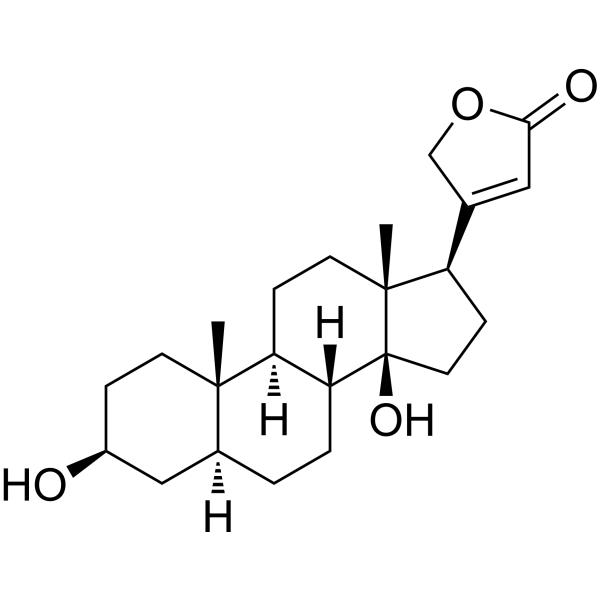
Uzarigenin (NSC 119993; NSC 277290; Odorigeni) is a carnolide can be isolated from Pergularia tomentosa and exhibits antiproliferative activity. Uzarigenin resists the proliferation of PC3 cells, HeLa cells, Calu-1 cells, MCF-7 cells and U251MG cells, with IC50 values of 0.3 μM, 3.0 μM, 8.0 μM, 6.0 μM and 6.0 μM respectively .
loading...
    loading...
Cat. No.: HY-149995
CAS No.: 2928606-67-9
Target:  

Pim

Research Areas:  

Cancer

Pim-1 kinase inhibitor 5 (Compound 4c) is a Pim-1 kinase inhibitor (IC50: 0.61 μM). Pim-1 kinase inhibitor 5 shows cytotoxicity against cancer cells, with IC50s of 6.95-20.19 μM for HepG2, MCF-7, PC3, and HCT-116 cells .
loading...
    loading...
Cat. No.: HY-179018
Topoisomerase II-IN-25 (Compound 6a) is a selective inhibitor of topoisomerase II and has no inhibitory activity on topoisomerase I. Topoisomerase II-IN-25 exhibits significant anti-PC-3 cell activity. Topoisomerase II-IN-25 significantly increases intracellular ROS levels, inducing oxidative stress. Topoisomerase II-IN-25 causes depolarization of mitochondrial membrane potential and promotes cell apoptosis. Topoisomerase II-IN-25 blocks PC-3 cells in the G2/M phase. Topoisomerase II-IN-25 can be used for the study of prostate cancer .
loading...
    loading...
Cat. No.: HY-172872
Target:  

CDK Apoptosis

Research Areas:  

Cancer

CDK2-IN-45 (Compound 8f) is a CDK2 inhibitor (IC50: 0.64 μM). CDK2-IN-45 inhibits the proliferation of DU-145 and PC-3 cell lines with IC50 of 2.20 μM and 4.17 μM, respectively. CDK2-IN-45 induces G0/G1 cell cycle arrest and apoptosis. CDK2-IN-45 can be used in prostate cancer research .
loading...
    loading...
Cat. No.: HY-N12004
CAS No.: 154083-99-5
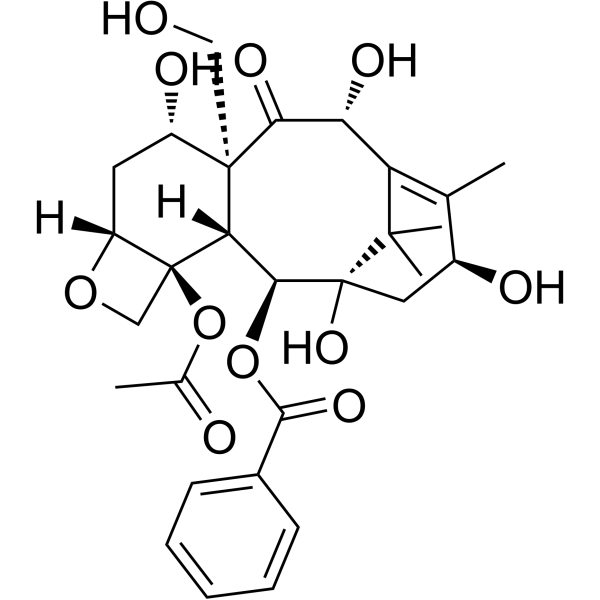
19-Hydroxy-10-deacetylbaccatin III (compound 13) is a taxane with potential antitumor activity. 19-Hydroxy-10-deacetylbaccatin III has weak cytotoxicity against A498 and NCI-H226 cell lines. The study found that the inhibition rates of 30 μg/mL 19-Hydroxy-10-deacetylbaccatin III on A498, NCI-H226 and PC-3 were 16.6% and 32% respectively .
loading...
    loading...
Cat. No.: HY-103385R
CAS No.: 287118-97-2
Synonyms: NO-Aspirin (Standard)
NCX4040 (Standard) is the analytical standard of NCX4040. This product is intended for research and analytical applications. NCX4040 (NO-Aspirin), a non-steroidal anti-inflammatory drug (NSAID), is a nitric oxide (NO) releasing form of Aspirin. NCX4040 induces apoptosis in PC3 metastatic prostate cancer cells. NCX4040 has anti-inflammatory and anti-cancer effects .
loading...
    loading...
Cat. No.: HY-115959
CAS No.: 2379335-06-3
Target:  

Bacterial

Research Areas:  

Inflammation/Immunology Cancer

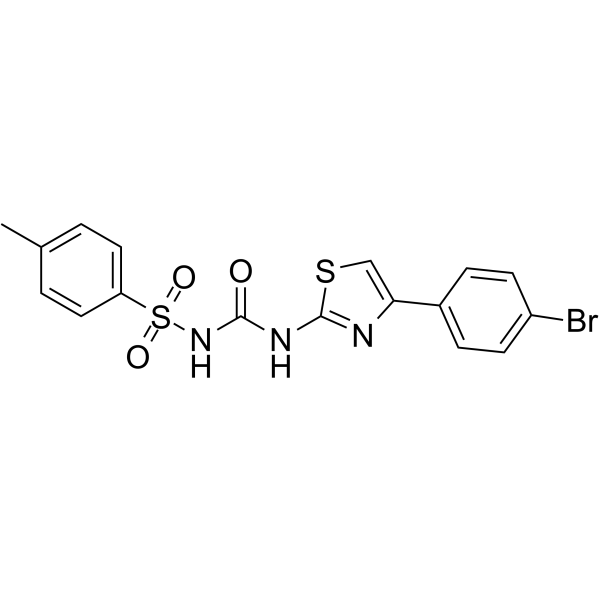
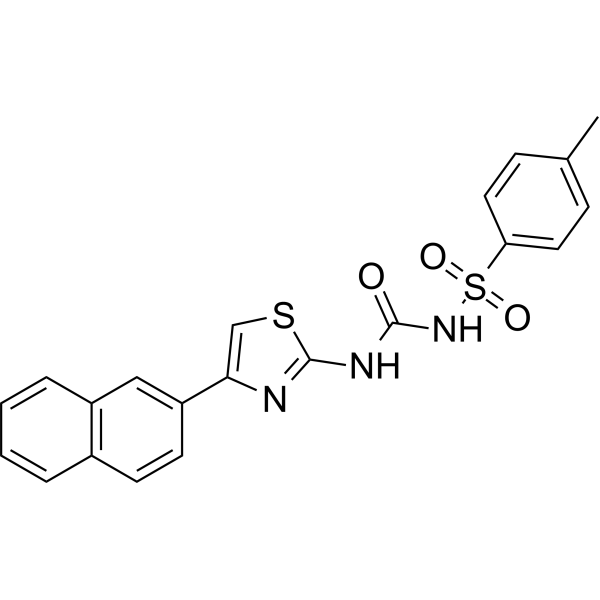
Anticancer agent 34 (compound 9), a sulfonylurea derivative, is a potent antimicrobial and anticancer agent. Anticancer agent 34 inhibits the microbial growth of B. mycoides, E. coli, and C. albicans with a MIC between 0.156 and 0.039 mg/ml. Anticancer agent 34 inhibits A549, PC3 cell growth with IC50s of 8.4 µg/ml, 7.8 µg/ml, respectively .
loading...
    loading...
Cat. No.: HY-115961
CAS No.: 2902563-76-0
Target:  

Bacterial

Research Areas:  

Inflammation/Immunology Cancer

Anticancer agent 36 (compound 11), a sulfonylurea derivative, is a potent antimicrobial and anticancer agent. Anticancer agent 36 inhibits the microbial growth of B. mycoides, E. coli, and C. albicans with a MIC between 0.156 and 0.039 mg/L. Anticancer agent 36 inhibits A549, PC3 cell growth with IC50s of 19.7 µg/mL, 11.9 µg/mL, respectively .
loading...
    loading...
Cat. No.: HY-B0530A
CAS No.: 1798-50-1
Synonyms: γ-pipradol hydrochloride
Research Areas:  

Cancer

Azacyclonol (γ-pipradol) hydrochloride is a compound with promising anticancer activity, showing effectiveness in inhibiting NOX-derived ROS in A549 human lung cancer cells. Azacyclonol hydrochloride exhibits enhanced proliferation inhibition against androgen-refractory cancer cell lines, specifically DU145 and PC-3. Azacyclonol hydrochloride demonstrates antitumor activity in DU145-xenografted chorioallantoic membrane tumor models. Azacyclonol hydrochloride also acts as a ligand for the M3 muscarinic acetylcholine receptor, which is overexpressed in ARPC. Azacyclonol hydrochloride effectively blocks carbachol-induced proliferation and NOX activity in DU145 cells. Azacyclonol hydrochloride can also be utilized for the treatment of chronic schizophrenia.
loading...
    loading...
Cat. No.: HY-P77823
Purity:  ≥ 95%, as determined by Bis-Tris PAGE.
Synonyms: MSMP; PC-3; Microseminoprotein, Prostate Associated; PC3 Prostate Cancer cell-Secreted Microprotein; PSMP; PC3-Secreted Microprotein; Prostate-Associated Microseminoprotein
Species:  
Mouse
Source:  
HEK293
loading...
    loading...
Cat. No.: HY-P78027
Purity:  ≥ 95%, as determined by Bis-Tris PAGE.
Synonyms: MSMP; PC-3; Microseminoprotein, Prostate Associated; PC3 Prostate Cancer cell-Secreted Microprotein; PSMP; PC3-Secreted Microprotein; Prostate-Associated Microseminoprotein
Species:  
Human
Source:  
HEK293
loading...
    loading...
Cat. No.: HY-N17795
CAS No.: 208997-29-9
Target:  

Others

26-Hydroxyl-20(S)-protopanaxadiol is an inhibitor of prostate cancer cell proliferation, with an IC50 value of 27.2 μM against human prostate cancer cells DU-145 and an IC50 value of 18.5 μM against PC-3 cells .
loading...
    loading...
Cat. No.: HY-181830
Target:  

PD-1/PD-L1 PSMA LYTACs

Research Areas:  

Cancer

Atz-L5 is a PD-L1 PTAC (PSMA-targeted chimera) degrader (DC50: 18 pM in PC3-PIP cells; 2 pM in LNCaP cells) and LYTAC. Atz-L5 promotes lysosomal degradation of PD-L1 in PSMA-positive prostate cancer cells. Atz-L5 is applicable to the research of prostate cancer .
loading...
    loading...
Cat. No.: HY-101947R
CAS No.: 587852-28-6
Synonyms: PIM1/2 Kinase Inhibitor VI (Standard)
Target:  

Reference Standards Pim

Research Areas:  

Cancer

SMI-16a (Standard) is the analytical standard of SMI-16a (HY-101947). This product is intended for research and analytical applications. SMI-16a is a selective Pim kinase inhibitor with IC50 values of 0.15, 0.02 and 48 μM for Pim1, Pim2 and PC3 cells, respectively.
loading...
    loading...
Cat. No.: HY-172748
CAS No.: 80657-58-5
Target:  

Drug Derivative

Research Areas:  

Neurological Disease Cancer

9β-Hydroxyhexahydrocannabinol is a synthetic cannabinoid derivative. 9β-Hydroxyhexahydrocannabinol exhibits cytotoxicity against various tumor cell lines, such as HCT-116, MCF-7, K562, MIAPaCa-2, PANC-1, A549, PC-3 and SW-620, with IC50 values ranging from 15.23 to 33.74 μM. 9β-Hydroxyhexahydrocannabinol can be used in the study of cancer .
loading...
    loading...
Cat. No.: HY-108361R
CAS No.: 1443437-74-8
Target:  

Reference Standards Ras

Research Areas:  

Inflammation/Immunology Cancer

CCG-203971 (Standard) is the analytical standard of CCG-203971 (HY-108361). This product is intended for research and analytical applications. CCG-203971 is a second-generation Rho/MRTF/SRF pathway inhibitor. CCG-203971 potently targets RhoA/C-activated SRE-luciferase (IC50 =6.4 μM). CCG-203971 inhibits PC-3 cell migration with an IC50 of 4.2 μM. Potential anti-metastasis Agent .
loading...
    loading...
Cat. No.: HY-W753557
CAS No.: 24607-08-7
Avocadene is a natural product isolated from Persea americana leaves, with anticancer, insecticidal, anti-Helicobacter pylori, and anti-inflammatory activity. Avocadene exerts antibacterial and anti‑inflammatory effects by suppressing Helicobacter pylori growth and inhibiting protein denaturation. Avocadene displays obvious cytotoxic activity against human prostate cancer PC‑3 cells with an IC50 of 0.5 μg/mL. Avocadene can be used for research of Helicobacter pylori‑associated gastrointestinal inflammation, gastroduodenal injury and prostate tumors .
loading...
    loading...
Cat. No.: HY-N17718
CAS No.: 83543-37-7
Synonyms: 3-[8'(Z), 11'(Z), 14'-Pentadecatrienyl] catechol
Ursolic acid (15:3) (Compound 4) is a type of resiniferatoxin compound that can be found in the leaves of the tree Rhus verniciflua. Ursolic acid (15:3) exhibits moderate inhibitory activity against HIV-1 reverse transcriptase (b HIV-1 reverse transcriptase), with an IC50 value of 55.36 μM. Ursolic acid (15:3) shows strong cytotoxicity against both PC-3 and MRC-5 cells. Ursolic acid (15:3) can be used in the research of anti-HIV-1 infection and prostate cancer .
loading...
    loading...
Cat. No.: HY-W714933
CAS No.: 78362-05-7
Synonyms: (4,8)-(+)-Gallocatechin-(+)-catechin
Target:  

Caspase Apoptosis

Research Areas:  

Inflammation/Immunology Cancer

Prodelphinidin B3 is a proanthocyanidin compound that exhibits significant anti-tumor activity. Prodelphinidin B3 induces cell cycle arrest at the G1/G0 phase in PC-3 cells, activates caspase-3, and promotes apoptosis. Prodelphinidin B3 can induce the differentiation of leukemia cells and synergistically enhance retinoic acid (HY-14649)-induced granulocytic differentiation and sodium butyrate (HY-B0350A)-induced monocytic differentiation in HL-60 cells. Prodelphinidin B3 also possesses antioxidant activity. Prodelphinidin B3 is used in research on prostate cancer and leukemia .
loading...
    loading...

